
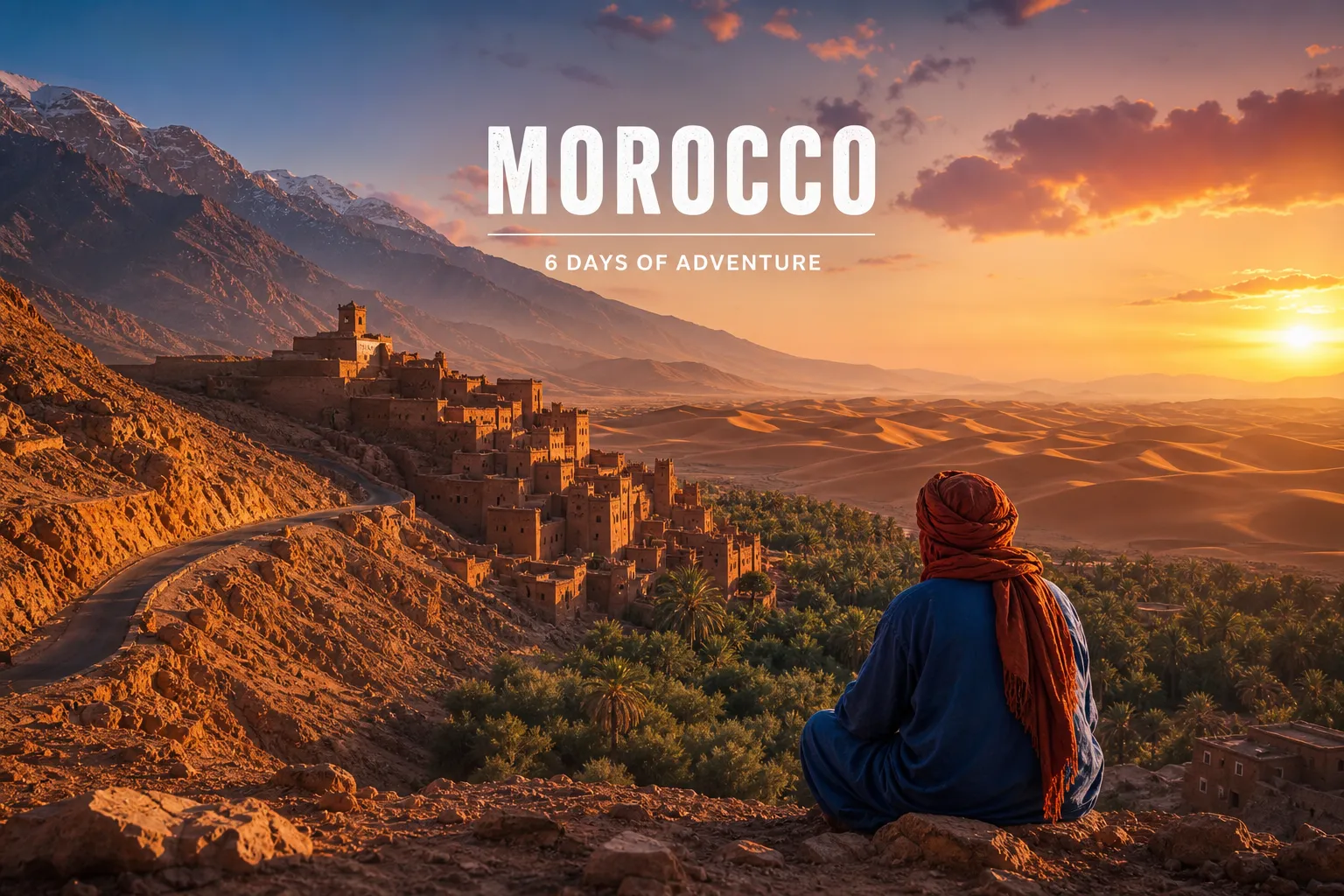
If you're wondering what is the best 6-day itinerary covering the Atlas Mountains and Merzouga Desert in Morocco,the answer comes down to pacing. Many travelers report packing too much in the early days and leaving too little time for the desert, arriving in Merzouga after dark and wondering why the Sahara felt like a checkbox instead of an experience. Six days from Marrakech to the Erg Chebbi dunes and back is genuinely enough to do this route well, but only if the schedule is honest from the start.
This guide lays out a day-by-day plan with real drive times, practical overnight recommendations, and the key decisions worth thinking through before you leave Marrakech. The team at Morocco Classic Tours, an experienced Fez-based operator that has been running and refining this exact corridor for years, shaped much of the logistics thinking here. They know where travelers rush, where they stall, and where the route quietly earns its reputation as one of the best road trips in North Africa.
What this 6-day Atlas Mountains and Merzouga Desert itinerary actually covers
The full loop runs: Marrakech, Tichka Pass, Aït Ben Haddou, Dades Valley, Todra Gorge, Merzouga and the Erg Chebbi dunes, then back to Marrakech. Total driving distance is roughly 1,300 to 1,500 km with about 20 to 25 hours of actual road time spread across six days. The route flows east after crossing the Atlas because the N10 corridor through Kasbah country connects naturally to the desert approach from the south, and the return from Merzouga to Marrakech runs cleanly on the N9 without backtracking through every stop.
Some days in this plan are longer drives with shorter sightseeing windows. Others are slow and meant to be absorbed. The guide builds in breathing room rather than stacking every hour with activities. Drive times listed below assume normal road conditions and do not include stops, so plan buffer time into each leg.
Days 1 and 2: crossing the High Atlas and settling into kasbah country
Day 1: Marrakech to Aït Ben Haddou over the Tichka Pass
Leave Marrakech by 8:00 am. The drive to Aït Ben Haddou covers roughly 180 to 190 km and takes 3.5 to 4 hours, crossing the Tichka Pass at around 2,260 meters, one of the highest paved mountain passes in Morocco. The road climbs through Berber villages and hairpin bends, with Atlas views opening wide on clear days. In winter, the pass can close briefly due to snow and ice, so December through February requires a weather check before departure. By spring and fall, the road is typically clear, and the Atlas wildflowers in late March are worth noting.
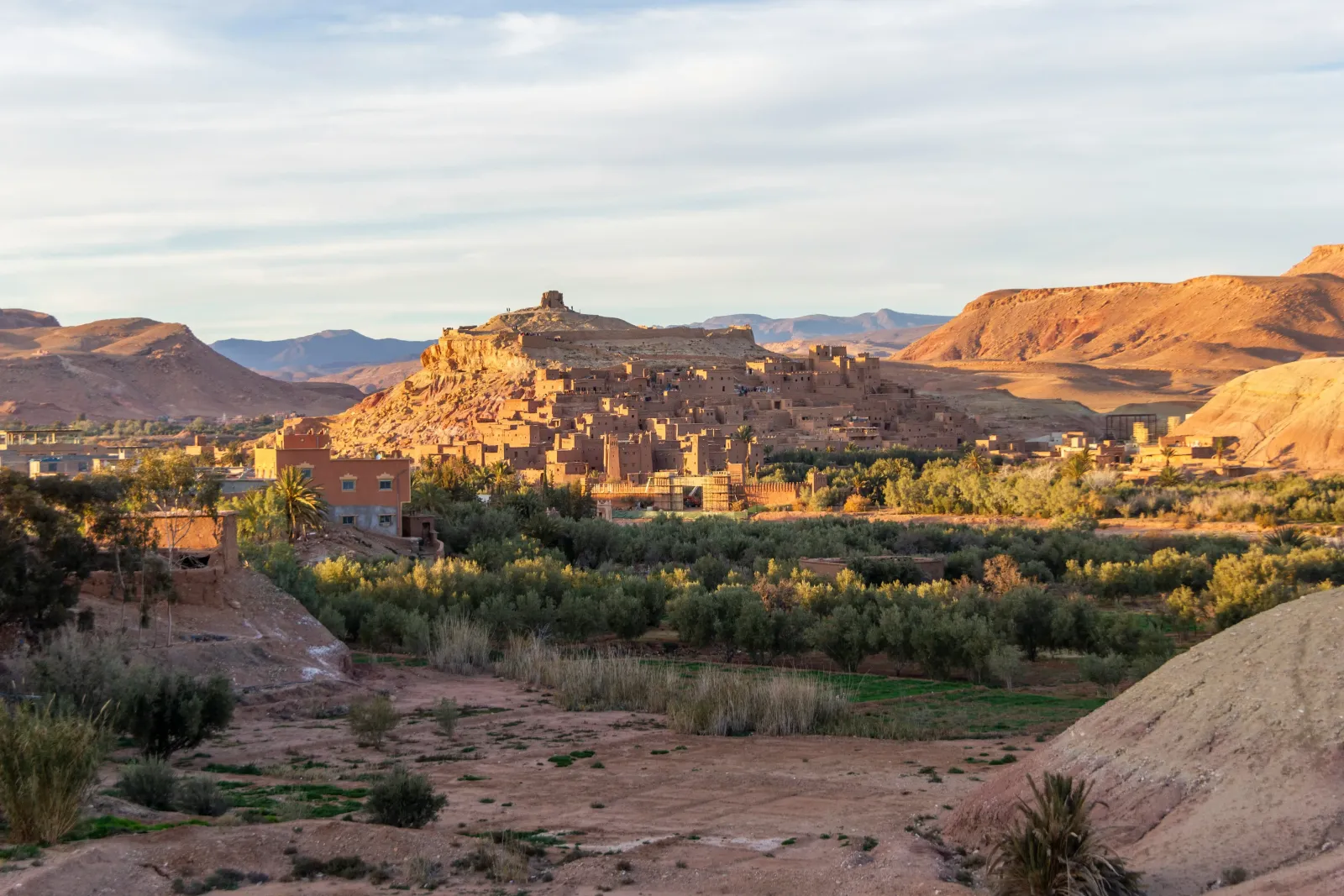
Plan to arrive at Aït Ben Haddou in the early afternoon when the light is still angled and warm on the ksar walls. Allow two to three hours minimum inside the UNESCO World Heritage site: cross the riverbed on foot, climb to the granary viewpoint above the village, and stop for tea before the light softens. Overnight in Aït Ben Haddou or nearby Ouarzazate.
Day 2: The Road of a Thousand Kasbahs into Dades Valley
The drive east along the pre-Saharan corridor from Aït Ben Haddou to the Dades Valley takes roughly 4 to 5 hours. The route passes through Skoura's dense palm grove, worth a brief stop, and strings together earthen kasbahs that define this stretch of Morocco. Kasbah Ben Moro in Skoura is a well-regarded mid-range base if you want to break the drive, though most travelers push on to the Dades Valley itself.
Use the late afternoon to drive partway into the Dades Gorge. The Monkey Fingers rock formations and the winding Tissadrine switchbacks reward even a short detour. The valley has several good mid-range kasbahs and riads, including Kasbah Tiziri and Hotel Riad Bahammou, both solid options for international travelers who want comfort and atmosphere without resort pricing.
Days 3 and 4: Todra Gorge and the push toward the Sahara
Day 3: Todra Gorge and the Tinghir palm oasis
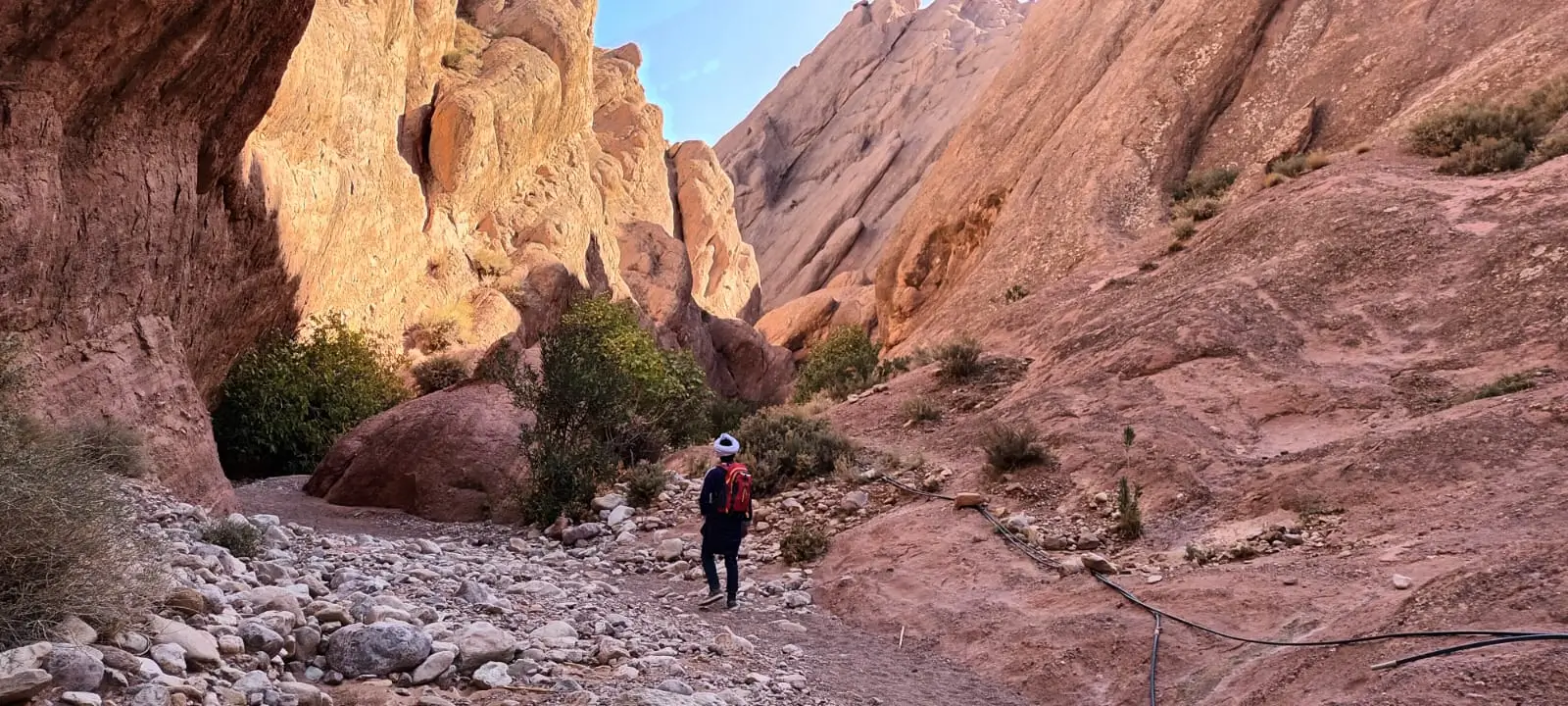
Todra Gorge sits 1.5 to 2.5 hours from the Dades Valley, making a mid-morning departure the right call. Arrive by midday and give the gorge two to four hours: walk the canyon floor under towering cliffs that rise hundreds of meters on either side, eat lunch at one of the simple cafes at the base, and consider a short hike deeper into the canyon if you have the energy. On the approach, the Tinghir palm oasis makes a natural paired stop. This is also the day when the landscape shifts to become noticeably drier and more open. The Sahara is starting to announce itself.
Day 4: arriving in Merzouga by late afternoon
The drive from Todra Gorge to Merzouga covers roughly 170 to 200 km across open desert road, with the dunes of Erg Chebbi rising on the horizon as you close in. Aim to arrive between 4:00 and 5:00 pm to catch the last light on the dunes and check in before sunset. For first-timers, the most satisfying setup is a riad on the dune edge as your base, with a sunset camel trek out to a desert camp in the evening rather than camping from the first night. It eases you into the desert experience rather than dropping you straight into it.
Days 5 and 6: the full desert experience and the long road home
Day 5: Sahara camel trek, desert camp, and Erg Chebbi sunrise
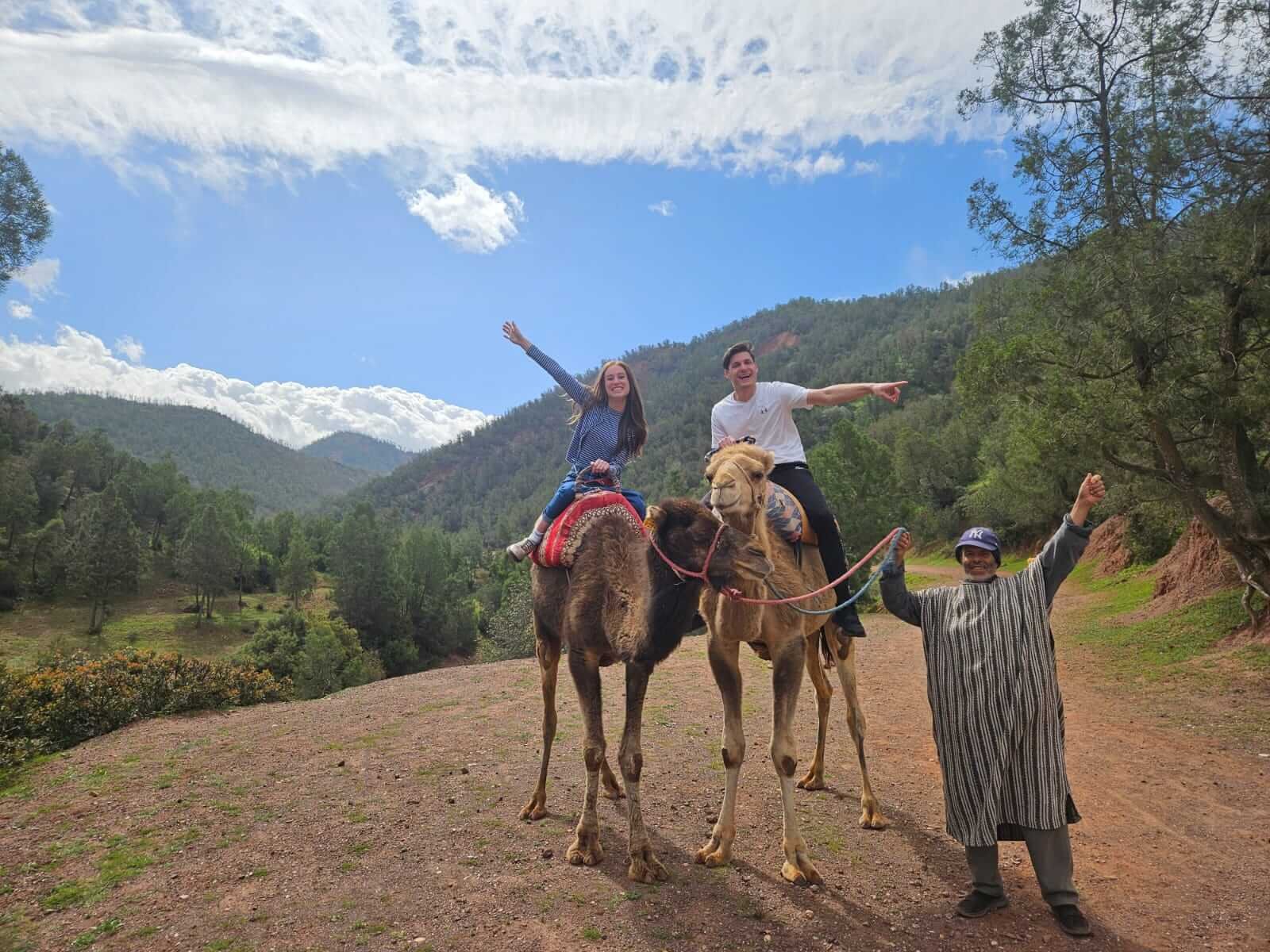
This is the day most people plan the trip around. The rhythm works like this: camel trek out to camp in the late afternoon, sunset over the dunes, dinner at camp, sleeping under the open sky, and an early wake for sunrise before trekking back. Camp pricing falls into three honest tiers. Budget camps run roughly $33 to $66 per person for shared tents with basic meals included. Mid-range runs $72 to $133 per person with better bedding and semi-private setups. Luxury camps start around $122 and can reach $255 or more per person for private tents with real beds and higher-end dining.
The extras on day five are worth building in if you have time. A 4x4 loop around the outer dunes covers ground a camel cannot; most operators run routes that last roughly an hour, though duration varies by circuit. The Gnawa village of Khamlia sits about 7 km from Merzouga and offers a short cultural visit with tea and live traditional music rooted in sub-Saharan African heritage. Most visits run three to four hours and are typically donation-based.
These additions bring real texture to what could otherwise be only a dunes-and-photos day.
Day 6: The return to Marrakech
Be honest with yourself about this day. The drive from Merzouga back to Marrakech is 9 to 11 hours, a full day behind the wheel with few shortcuts. Leave by 7:00 am if you are self-driving. Build in a lunch stop somewhere along the N9 to break up the road. This is a recovery day, not a sightseeing day. Treat it as such, and you will arrive back in Marrakech tired in a good way rather than depleted.
Self-drive or private guided tour: the honest trade-off
Self-driving this route costs roughly 20 to 40 percent less than an equivalent guided tour, depending on vehicle, accommodation, and group size. It also suits travelers who want complete flexibility and are comfortable on unfamiliar mountain roads. The trade-offs are genuine: you manage navigation through mountain passes, locate fuel in remote stretches, handle parking logistics in medinas, and carry full responsibility for every decision across six days of varied terrain.
A private guided tour makes sense for most travelers on this specific route. The remote conditions through the Atlas, the desert logistics around camp bookings and camel arrangements, and the value of a guide who knows the stops that do not appear on any map are real advantages. Morocco Classic Tours runs this exact itinerary with private transfers, pacing built around acclimatization on the mountain days, and guides with deep regional knowledge of both the Atlas corridor and the desert approach. For American travelers who want the full experience without the logistics overhead, that combination is hard to replicate independently. Private guided tours for six days typically run from around $1,000 to $2,100 per person depending on accommodation tier and group size, with Morocco Classic Tours offering packages across that range.
When to go, what to budget, and a few things to handle before you leave
The two travel windows that work best
April through May and September through October are the two reliable windows for this route. Atlas temperatures are comfortable for mountain travel, Merzouga heat is tolerable rather than extreme, and road conditions are solid throughout. Late March is viable, and the spring wildflowers on the Atlas road are a genuine bonus. Avoid July and August in the desert entirely: the heat at Erg Chebbi reaches genuinely punishing levels. December through February carries a risk of snow and temporary closures on the Tichka Pass, though the pass is usually open and the desert stays travelable, just colder overnight.
Budget ranges and what to pack
For six days all in, budget travelers can expect to spend roughly $600 to $900. Mid-range runs $1,200 to $2,000. Private guided tours with comfortable riads and a mid-range desert camp typically fall in the $1,000 to $2,100 range per person, depending on group size and inclusions; costs rise with smaller groups and higher accommodation tiers.
Before you go
US passport holders do not need a visa for Morocco for stays under 90 days, which removes one planning step entirely.
For packing, layers are non-negotiable for the Atlas crossing; mornings are cool even in spring at elevation. In the desert, light, loose clothing handles the daytime heat. A headlamp is essential for the desert camp at night. Closed-toe shoes work best for Todra Gorge; sandals are fine at the camp. That covers most of what the route actually demands.
Six days is enough: best 6-day itinerary covering the Atlas Mountains and Merzouga Desert
The structure that works is two days crossing the Atlas and settling into kasbah country, two days moving through the gorges and arriving in the desert, and two days fully in Merzouga before the long drive home. That rhythm gives each section room to register rather than blur together into a single moving window.
This route rewards travelers who let the landscape do the work. The shift from alpine green to pre-Saharan red to open golden dune is one of the more dramatic geographic transitions you can make by road anywhere in the world. You do not need to fill every hour to feel it. So if you are still asking what is the best 6-day itinerary covering the Atlas Mountains and Merzouga Desert in Morocco, this is the structure that holds up. Morocco Classic Tours handles everything from private transfers to desert camp bookings for travelers who want the experience without spending six days managing logistics. If that sounds like the right approach, they are a straightforward place to start.
Subscribe To Get Tour
Offers Monthly
Want cool tour deals and tips about Morocco? Enter your email and we’ll send them to you each month!
