Group Tour Agencies in Morocco: How to Pick the Right One
Compare Morocco group tour agencies by trip style, reviews, pace, transport and inclusions. Learn wh...
Read this article

Private, custom Morocco trips planned in Fez by AZ-ZDDINE, working in Moroccan tourism since 2012. Sahara, Atlas, medinas and coast, arranged around you.
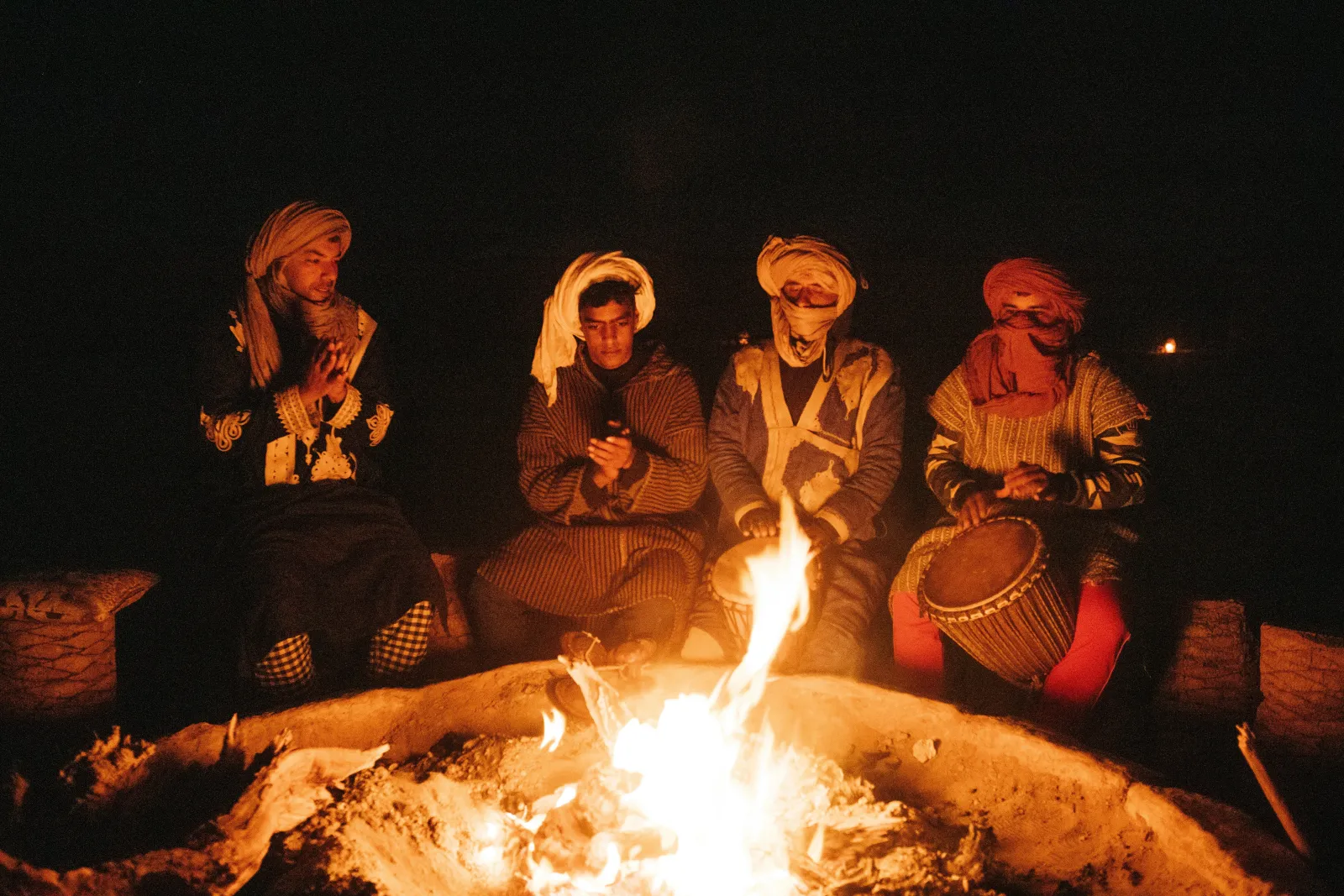
Planning a tour to the Sahara Desert in Morocco in 2026 means thinking carefully about timing, distance, budget, camp quality, packing, and safety before you book.
This guide is for travelers planning their first or return trip to Morocco who want a safe, memorable, and well-organized Sahara Desert experience. A Sahara tour is often the highlight of a Morocco trip, but requires careful planning for comfort, safety, and value. Whether you are seeking adventure, cultural immersion, or simply the breathtaking beauty of the dunes, understanding the logistics and options will help you make the most of your journey.
“Real” Sahara desert tours in morocco usually mean staying near the Erg Chebbi dunes by Merzouga, not just taking short desert tours to rocky areas near Zagora.
A 3-day / 2-night itinerary is the minimum best option from Marrakech or Fes because traveling to the main dune areas often involves a long drive of 8-12 hours.
Nights can be very cold, especially from November to February, and winter nights in the Sahara can sometimes drop below freezing.
Most reputable desert camp options have bathrooms, but the quality of accommodations and desert camps can vary significantly depending on the tour price.
You should bring basic medicine, pack for temperature extremes, and buy travel insurance before visiting remote desert regions.
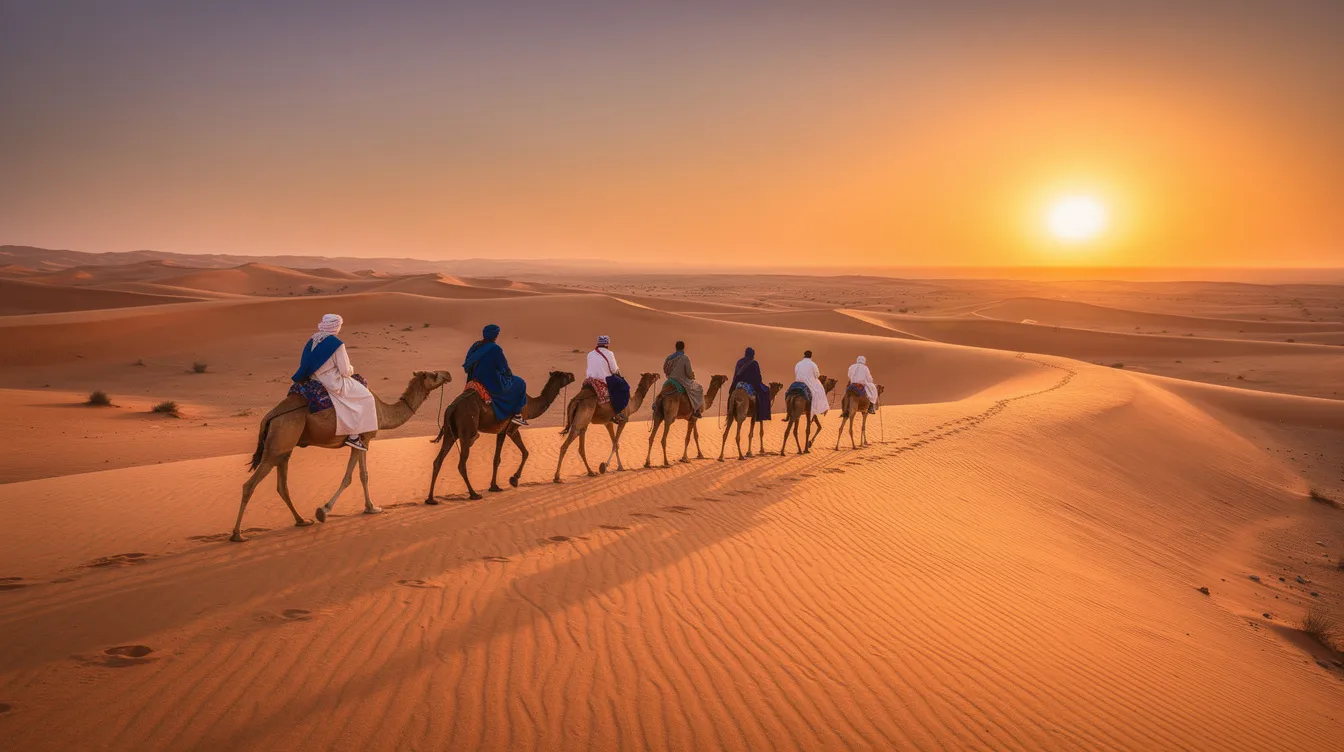
Arriving at Erg Chebbi at sunset is one of the classic sights of Morocco: orange dunes, a slow camel ride, and the sun dropping behind the Sahara like a red coin. After dark, travelers head to a Berber-style camp, drink mint tea, eat tagine or couscous, and watch the Milky Way appear over the desert. For many visitors, the night in the dunes becomes the most amazing experience of the whole trip.
The Sahara Desert spans 12 countries, but Morocco offers some of the most accessible dunes in the world. You can combine imperial cities, the Atlas Mountains, oases, canyons like Todra Gorge, and even the Atlantic coast in one journey.
In practical terms, “Sahara desert tours” in Morocco usually mean multi-day tours from Marrakech, Fes, or Agadir that include mountain roads, kasbahs, palm valleys, and at least one night in a desert camp near Merzouga. Marrakech and Fes are the two main cities where travelers often start their journey to the Sahara Desert.
You can choose a private tour, a shared group trip, a short overnight route to Zagora, or a longer guided tour that reaches the Sahara near the Algerian border. This guide is written from the perspective of a Morocco-focused travel planner: realistic, direct, and more useful than glossy brochure promises.
Reaching the “real” Sahara takes time. Merzouga is known as the gateway to the Sahara Desert and is a common starting point for many tours. The drive from Marrakech to Merzouga, the gateway to the Sahara, is approximately 565 km and can take about 9 hours. The drive from Fes to Merzouga is around 457 km and is estimated to take 7 to 10 hours, depending on stops along the way.
A 2-day / 1-night trip from Marrakech usually reaches Zagora, not Erg Chebbi. Zagora gives you a basic desert glimpse, but it is more rocky and has smaller dunes. It can suit travelers with a tight schedule, but it is not the same as sleeping beside Morocco’s largest dunes.
For most travelers, 3 days / 2 nights is the practical minimum. To truly enjoy the Sahara Desert, a minimum of three days is often recommended for tours from either Marrakech or Fes.
A typical 3-day plan looks like this:
Day | Route | What to expect |
|---|---|---|
Day 1 | Marrakech to Dades Valley | Long driving day through the Atlas Mountains, Aït Ben Haddou, Ouarzazate, and the valley |
Day 2 | Dades or Tinghir to Merzouga | Todra Gorge, Erfoud, Rissani, camel trekking, sunset, and desert camp |
Day 3 | Merzouga to Marrakech or Fes | sunrise, breakfast, then a long car journey back or onward |
If you have more time, a 4- or 5-day trip is more comfortable. You can add time in Dades Gorge, spend a second night at the dunes, visit local markets, or continue toward Essaouira or Agadir on the Atlantic coast. | ||
A single-day tour to the Sahara from Marrakech or Fes is not realistic. Any day tour marketed as “Sahara” is almost certainly visiting closer rocky landscapes, palm oases, or movie-set desert scenery instead of the big sand seas.
Both guided tours and self-drive options are possible for the Sahara Desert tours. However, traveling with a reputable tour company is strongly recommended when visiting the Sahara, especially if it is your first visit to the country.
A guided tour gives you:
A driver who knows the mountains and desert roads.
A guide who can explain history, Berber culture, and customs.
Pre-arranged camel rides, camp stays, hotel stops, and meals.
Help with language, timing, roadside stops, and local expectations.
A smoother schedule when the route includes long driving days.
A self-drive trip is possible if you rent a car in Marrakech or Fes, book hotels in Ouarzazate, Tinghir, or Merzouga, and arrange a desert excursion through your hotel. This gives independence, but you need confidence with winding roads, slow trucks, mountain passes, limited lighting, and occasional patchy GPS coverage.
Travelers are advised to avoid driving straight through the winding roads of the Atlas Mountains without planned stops due to road conditions and scenery. The views are part of the trip, and tired driving reduces both safety and enjoyment.
For first-time visitors, a guided desert tour is usually the best option. Independent trips work better for confident drivers with extra time and previous road-trip experience in Morocco or similar destinations.
You can book Sahara desert tours online in advance or after you arrive in cities like Marrakech and Fes. It is recommended to book Sahara Desert tours in advance to ensure quality and peace of mind during the holiday.
Booking ahead usually gives you:
A better chance of securing a good desert camp with private bathroom facilities.
Clear inclusions such as meals, camel ride, sandboarding, and guide services.
Fixed pricing in USD, EUR, or MAD.
More time to check reviews and compare tour operators.
On-the-spot booking in 2026 is still common. Around the medina and Jemaa el-Fna in Marrakech, you will see agencies, riad owners, and street sellers offering fast deals. A local man may promise an amazing “luxury” camp for a very low price, but ask questions before you pay.
Cheaper tours may have hidden costs, such as mandatory stops at souvenir shops and rigid schedules. Funding for cheaper tours might come from sales of souvenirs and meals, leading to a less flexible experience for guests.
Before booking, confirm:
The camp name and type of tent.
Whether the vehicle is a minivan or a 4x4.
Maximum group size.
Whether lunches, drinks, and tips are included.
Whether there is an additional cost for quad biking, sandboarding, or private transfers.
Comprehensive travel insurance is strongly recommended. It should cover medical care, emergency evacuation, and trip interruption because desert regions are remote. For health preparation, check official advice, such as the CDC Morocco travel page.
Most Morocco desert tours are either shared group tours or private tours. Group tours often include 8–16 travelers, while a private tour is arranged for one person, a couple, a family, or a small group of friends.
A private tour offers more flexibility than a group tour, making it suitable for families or those with specific preferences. It is also a good choice for photographers, couples, and travelers who want to customize a detailed itinerary.
A private tour lets you:
Leave earlier or later.
Spend longer at Todra Gorge or Aït Ben Haddou.
Stop for photography in the Ziz Valley or Dades Valley.
Adjust the schedule for children or older travelers.
Request dietary changes more easily.
Group tours can be more affordable and provide opportunities to meet other travelers during the desert experience. They are good for solo travelers, budget visitors, and people who enjoy a social atmosphere.
Ask operators whether you can upgrade to a luxury desert camp even if you join a group departure. This can be a smart compromise: lower transport cost, but better sleep and bathroom facilities at night.
A classic 3-day route from Marrakech to Erg Chebbi and back is the most popular version of a tour to the Sahara Desert in Morocco. There are also routes from Fes through the middle Atlas Mountains and longer journeys that link the Sahara with the coast.
On the first day, you usually leave Marrakech early and cross the Tizi n’Tichka pass in the High Atlas. The road climbs through mountains, villages, and dramatic landscapes before reaching Aït Ben Haddou and Ouarzazate. Ouarzazate is a significant town on the route to Merzouga, known for film studios and as a base for visiting Aït Ben Haddou. Many travelers sleep near Dades Gorge or in the Dades Valley.
On day two, you continue through Tinghir Oasis and stop at the Todra Gorge. The Todra Gorge is a famous natural landmark in Morocco known for its impressive cliffs, with walls often described as 300–400 meters high. After lunch and a short walk, the road continues via Erfoud and Rissani to Merzouga. In the late afternoon, most tours include a camel ride into the Erg Chebbi dunes before sunset.
On day three, you wake early to watch sunrise over the dunes. Watching the sunrise over the Sahara dunes creates a stunning visual experience. After breakfast, you return to Merzouga village by camel or 4x4, then begin the long drive back to Marrakech or continue toward Fes.
From Fes, the route often passes Ifrane, Azrou, Midelt, and the Ziz Valley. Ifrane is a notable stop on the way to the Sahara, known for its European alpine village appearance and cold temperatures. Midelt, the national capital of apples, offers low-priced meals and is a good stop for lunch on the journey. The Ziz Valley is a lush oasis known for its thousands of palm trees and is worth stopping for photographs during the drive. The landscapes in Morocco, such as the Ziz Valley, offer dramatic contrasts with palm trees set against rocky terrain.
There are many fascinating places to visit along the way from Marrakech or Fes to the Sahara Desert. Good tours balance driving with photo stops, short walks, and cultural experiences instead of treating these places as quick drive-by sights.
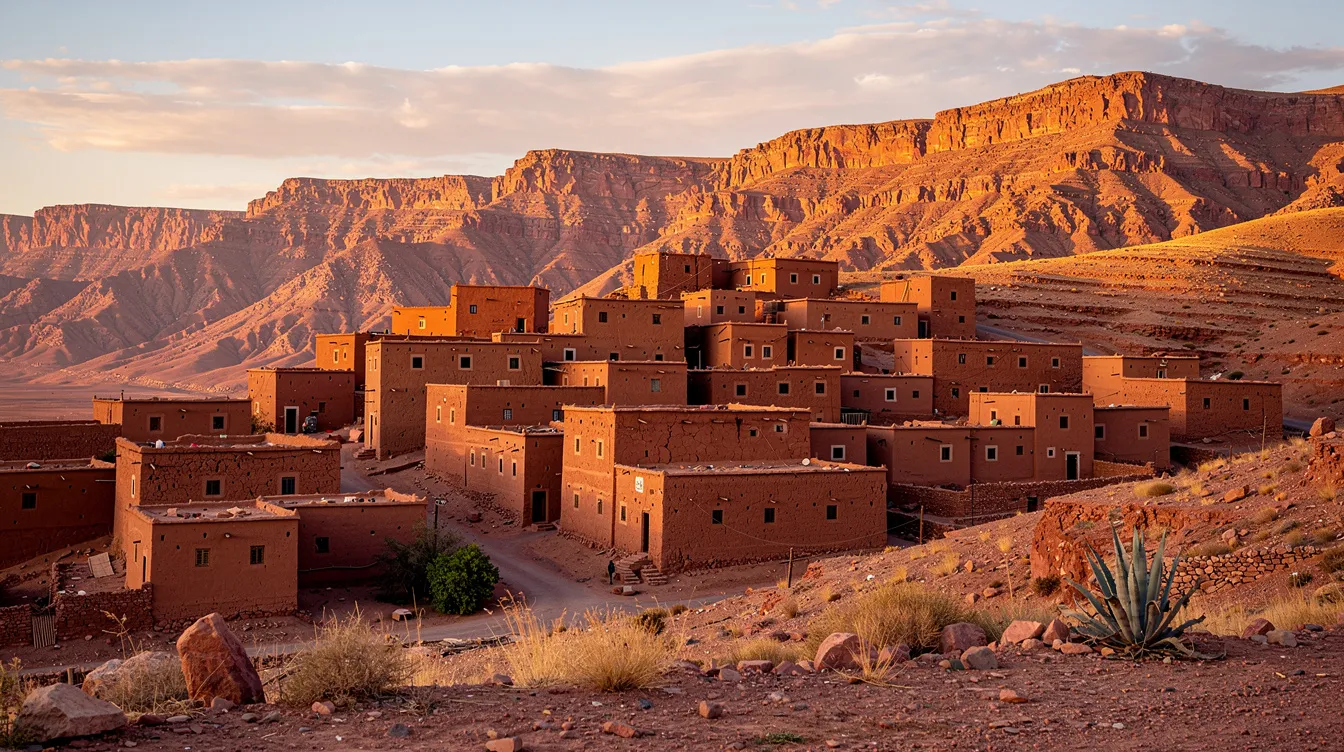
Aït Ben Haddou is a UNESCO World Heritage site and an ancient fortified mud-walled village. It served as an important stop on the Trans-Saharan trade route and is known for traditional mud architecture, narrow streets, and views over the Ounila Valley. It has also appeared in films and series, including Gladiator and “Game of Thrones.” You can read more about its protected status on the UNESCO listing for Ait-Ben-Haddou.
Local women from the Tawesna Association provide meals at Aït Ben Haddou, giving visitors a more direct connection with the community. Visitors can learn about the Berber way of life at Aït Ben Haddou and other sites, including architecture, trade history, food, and family traditions.
Todra Gorge is a highlight for walking, photography, and sometimes rock climbing. The shallow river, cliffs, and cool shade make it a welcome break after hours in the car.
Dades Gorge is recognized for its remarkable rock formations and is often included as a stop on tours to the Sahara. The Dades Valley is famous for the winding “snake road,” traditional guesthouses, and unusual rock formations nicknamed “monkey fingers.”
The Erg Chebbi dunes are the largest dunes in Morocco, located next to Merzouga. These golden dunes rise to around 150 meters and stretch for more than 20 km, making them the showpiece destination for many Sahara tours.
Many tours include camel rides to the desert camp, providing a traditional experience. Camel trekking is a popular activity in the Sahara Desert, and the usual departure is 60–90 minutes before sunset. The camel pace is slow, giving you time to take photos, feel the silence, and watch the light change over the sand.
Desert accommodation ranges from budget camps to luxury desert camps. Luxury desert camps in the Sahara offer private tents with proper showers, toilets, and electricity. Budget accommodation options may include shared tents with fewer amenities and lower-quality facilities. When staying at cheaper camps, guests might have to share tents and could miss out on basic services like drinking water.
So, do desert camps have bathrooms? Most established camps near Erg Chebbi have proper toilets and showers. Budget camps may use shared bathroom blocks a short walk from the tent, while mid-range and luxury camps often provide ensuite facilities.
At night, you can expect Moroccan dishes such as tagine and couscous, served at desert camps. Mint tea is a traditional beverage served in Berber culture. Traditional musical performances are part of the cultural experience in the Sahara, and Berbers often give a traditional musical performance around the campfire during their stay in the desert.
Berber culture is connected with the Amazigh language, traditions, and customs. Sahara visitors often interact with local Berber communities and their cultures during their trips. A guide during Sahara tours often educates visitors about Moroccan culture and customs.
Stargazing in the Sahara Desert offers breathtaking views of the night sky. If the sky is clear, the silence, stars, and firelight can turn a simple overnight stay into a great experience.
Prices vary by season, comfort, route, group size, and whether the tour is private or shared. Sahara Desert tours vary in price, ranging from about 70 USD to 700 USD per person. The price of Sahara desert tours can range from 70 USD to 700 USD per person, depending on the type of accommodation and services provided.
Here is a simple 2026 guide:
Tour type | Approx. price per person | What it usually means |
|---|---|---|
Budget shared tour | $70–$150 | Basic transport, shared or simple camp, more fixed stops |
Mid-range group tour | $180–$350 | Better hotel, cleaner camp, air-conditioned vehicle, clearer inclusions |
Private tour | $300–$700+ | Private driver, flexible schedule, upgraded camp, better pacing |
Most prices include transport, driver or guide, one or two breakfasts and dinners, and a camel ride. They often do not include lunch, drinks, tips, entrance fees, quad biking, buggy riding, horse riding, or some sandboarding sessions. | ||
Many tours offer the opportunity for sandboarding on the dunes, and hiking in the Sahara involves exploring some of its highest sand dunes and unique rock formations. Horse riding and buggy riding are additional activities that can be enjoyed in the Sahara, usually at extra cost.
Avoid choosing only by price. A very cheap trip can still be fun, but it may include crowded vehicles, rushed stops, no flexibility, basic food, and poor bedding. Paying a little more often improves the journey from “acceptable” to totally worth it.
Temperatures change dramatically by season, so timing matters. Spring (March-May) and autumn (September-October) offer the most pleasant temperatures in the Sahara. The best time to visit the Sahara Desert is generally from October to April, with spring and autumn offering the easiest balance of warm days and cool nights.
Autumn, especially October, is one of the most comfortable times to visit. Days are warm, skies are often clear, and camel rides are much easier than in midsummer.
Spring from March to May is also excellent. Days are warm without being punishing, nights are cool, and desert light is beautiful for photography.
Winter, from December to February,y has mild days but cold nights. In January, pre-dawn temperatures can be close to 0°C, and sometimes lower. Winter is still a good time to go if you are prepared with warm layers.
Summer is possible but not ideal. Summer months should be avoided due to extreme heat, with temperatures reaching up to 45°C (113°F). Guides often schedule activities very early or close to sunset, and midday becomes a time to rest in the shade. If you are traveling with young children, older adults, or anyone sensitive to heat, choose another season.
Packing smartly makes a major difference because desert weather swings between hot sun and cold night air. Before visiting the Sahara, one should plan for a multi-day trip and pack for temperature extremes.
Pack lightweight, loose-fitting clothing for sun protection and warm layers for cold nights in the desert. Respect local customs by dressing modestly in local villages and communities in the Sahara.
Bring:
Lightweight long-sleeved shirts.
Loose breathable trousers.
A fleece or down jacket for evenings.
Thermal base layers for winter.
Warm socks, beanie, and gloves in cold months.
Scarf or shemagh for sun, wind, and sand.
Wide-brim hat.
Comfortable closed shoes or trekking sandals.
Sunglasses with UV protection.
SPF 50 sunscreen and lip balm.
Reusable water bottle.
Headlamp or flashlight.
Power bank.
Wet wipes, tissues, and hand sanitizer.
Small bag to protect electronics from sand.
Does it get cold in the Sahara at night? Yes. Even in spring and autumn, the dry air can feel chilly after sunset. In winter, temperatures can drop to near 0°C, and winter nights in the Sahara can be very cold, sometimes dropping below freezing.
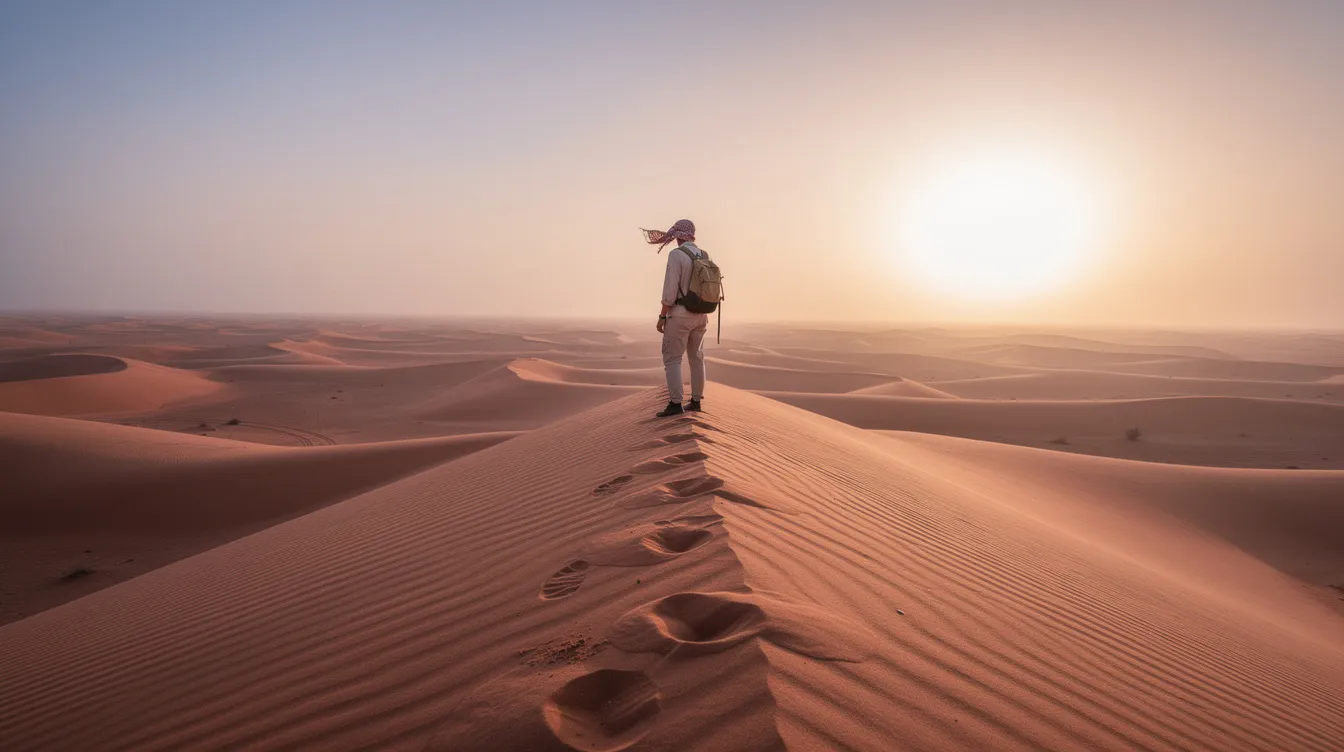
The Sahara is remote. A basic health kit, good hydration habits, and travel insurance are not optional details; they are part of being prepared.
For medicine, bring:
Personal prescription medication with enough supply.
Copies of prescriptions.
Paracetamol or ibuprofen.
Anti-diarrheal tablets.
Oral rehydration salts.
Antihistamines for allergies.
Bandages and blister pads.
Antiseptic wipes.
Eye drops or saline for sand irritation.
Sunburn gel or aloe.
Travel insurance should cover emergency medical care, evacuation from remote regions, and trip changes caused by illness or transport problems. The U.S. State Department also recommends reviewing local conditions before travel on its Morocco travel information page.
Practical safety tips:
Drink water regularly on long driving days.
Do not walk alone deep into the dunes at night.
Follow your guide’s instructions in heat, wind, or sandstorms.
Keep electronics sealed when the wind picks up.
Avoid intense activity during midday sun.
Most reputable camps and lodges have a basic first-aid kit, but you should not rely on that instead of your own medicine.
The most common access question is simple: what city in Morocco is closest to the Sahara Desert? Merzouga is the practical small town at the edge of Erg Chebbi, while Erfoud and Rissani are nearby gateway towns. Errachidia is a larger regional city with road connections and some domestic transport options.
Marrakech and Fes remain the main starting points because they connect well with international flights, hotels, tours, and onward routes. From Fes, the middle atlas mountains route includes Ifrane, cedar forests near Azrou, Midelt, and the Ziz Valley. From Marrakech, the route crosses the High Atlas and passes Ouarzazate, Aït Ben Haddou, Dades, and Tinghir.
Some operators promote a day tour to the “Sahara” from Marrakech or Fes. These trips cannot realistically reach the high dunes of Erg Chebbi. They normally visit closer rocky desert areas, palm groves, or film locations.
You can also combine the Sahara with other regions. Spend time in Marrakech, explore the medina, visit Fes before or after the desert, or add Essaouira or Agadir for cooler weather and seafood by the Atlantic coast.
So yes, you can absolutely take a trip to the Sahara Desert in Morocco in 2026. Just plan around distance, weather, budget, and comfort.
A Sahara trip is often one of the higher-cost parts of a Morocco itinerary, but it is also one of the most memorable. For most travelers with 3–5 spare days, it is totally worth the time and money if you choose the right operator.
It is worth it because you get:
True sand seas like Erg Chebbi.
A camel ride at sunset.
Berber hospitality in a desert camp.
Stargazing with minimal light pollution.
Mountain, valley, oasis, and dune landscapes in one journey.
A chance to discover Moroccan history, food, and local culture beyond the big city streets.
It may be less worthwhile if you hate long car rides, visit in extreme summer heat, or book the cheapest possible tour and expect luxury. The long driving hours are real, and the desert is not a theme park.
The better value usually comes from mid-range or higher operators with safe vehicles, licensed guides, clear inclusions, and honest camp descriptions. If you want an amazing balance of comfort and adventure, that is usually the sweet spot.
This section answers a few extra questions about comfort, facilities, seasons, and activities that often come up before travelers join a Sahara tour.
Most established camps near Erg Chebbi and popular routes now offer proper bathrooms. Budget camps usually have shared toilets and shower blocks, while mid-range and luxury camps typically provide private ensuite facilities inside each tent.
Before booking, check whether hot water and towels are included. This matters even more in colder months when a cold shower at night is not fun.
Yes, but it is not ideal. In June, July, and August, daytime temperatures often exceed 40°C (104°F), and they can reach 45°C (113°F).
In summer, guides usually schedule camel rides near sunrise or sunset, encourage midday rest, and reduce long walks on the dunes. Travelers with heat sensitivity, children, or older family members should choose spring, autumn, or winter instead.
In winter, nights can drop close to 0–5°C (32–41°F), and sometimes below freezing. In spring and autumn, nights are often around 8–15°C (46–59°F). In summer, nights are warmer but can still feel breezy.
Bring at least one warm layer year-round because the desert air makes the night feel cooler than coastal cities or daytime temperatures suggest.
No. Camel rides are traditional and included in most tours, but travelers can usually request a 4x4 transfer instead.
If you have back problems, mobility concerns, pregnancy considerations, or ethical concerns about riding a camel, tell your tour operator before booking. A good operator can adapt the transfer to the camp.
Yes. Many operators around Merzouga and the Erg Chebbi dunes offer quad biking, buggy tours, horse riding, and sandboarding at an extra cost.
Book through reputable providers, wear safety gear, and schedule activities outside the hottest hours. Done carefully, these activities add fun to the desert without making the schedule feel rushed.
Compare Morocco group tour agencies by trip style, reviews, pace, transport and inclusions. Learn wh...
Read this article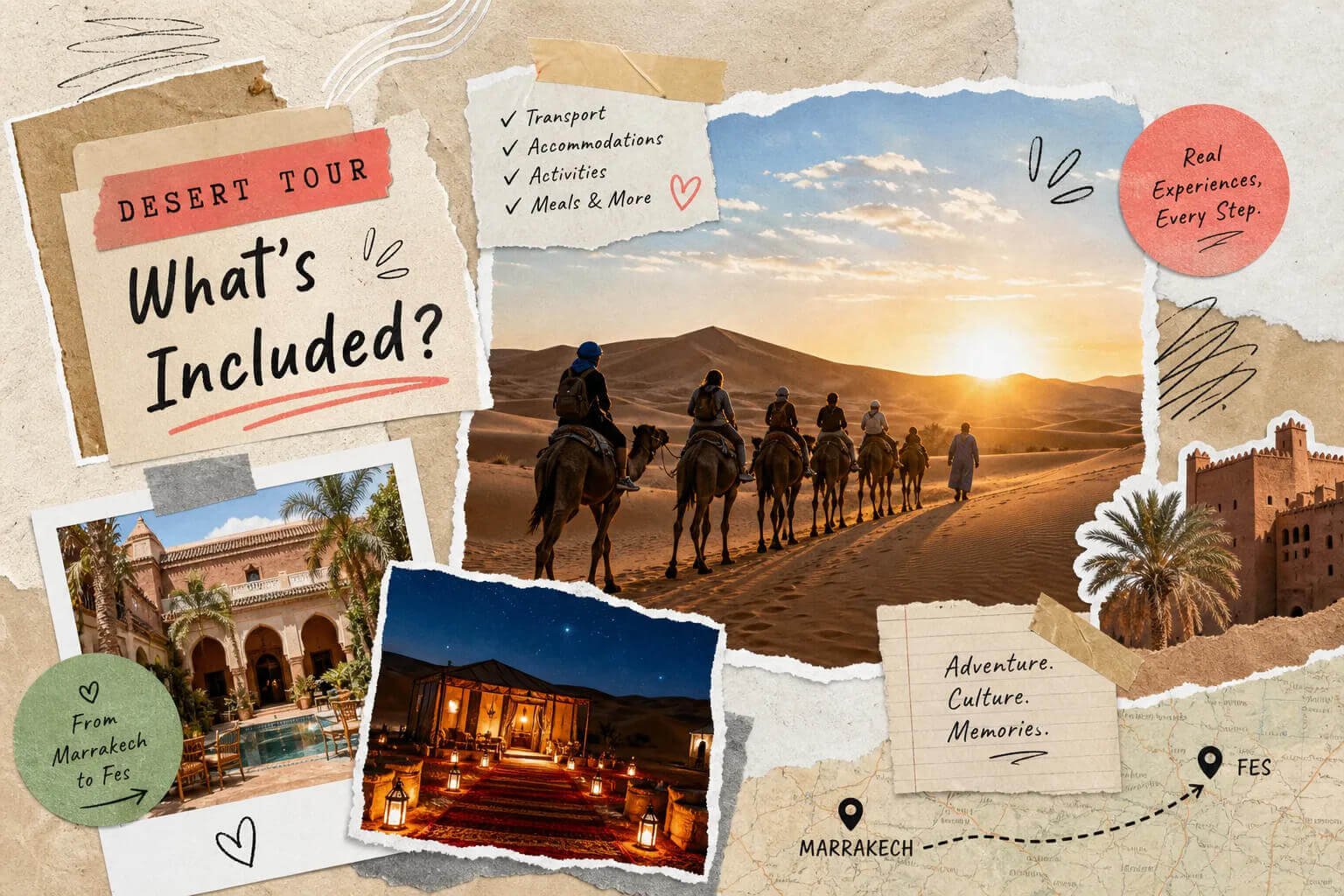
Uncover what a Marrakech to Fes desert tour offers, including camel rides, desert camps, and rich cu...
Read this article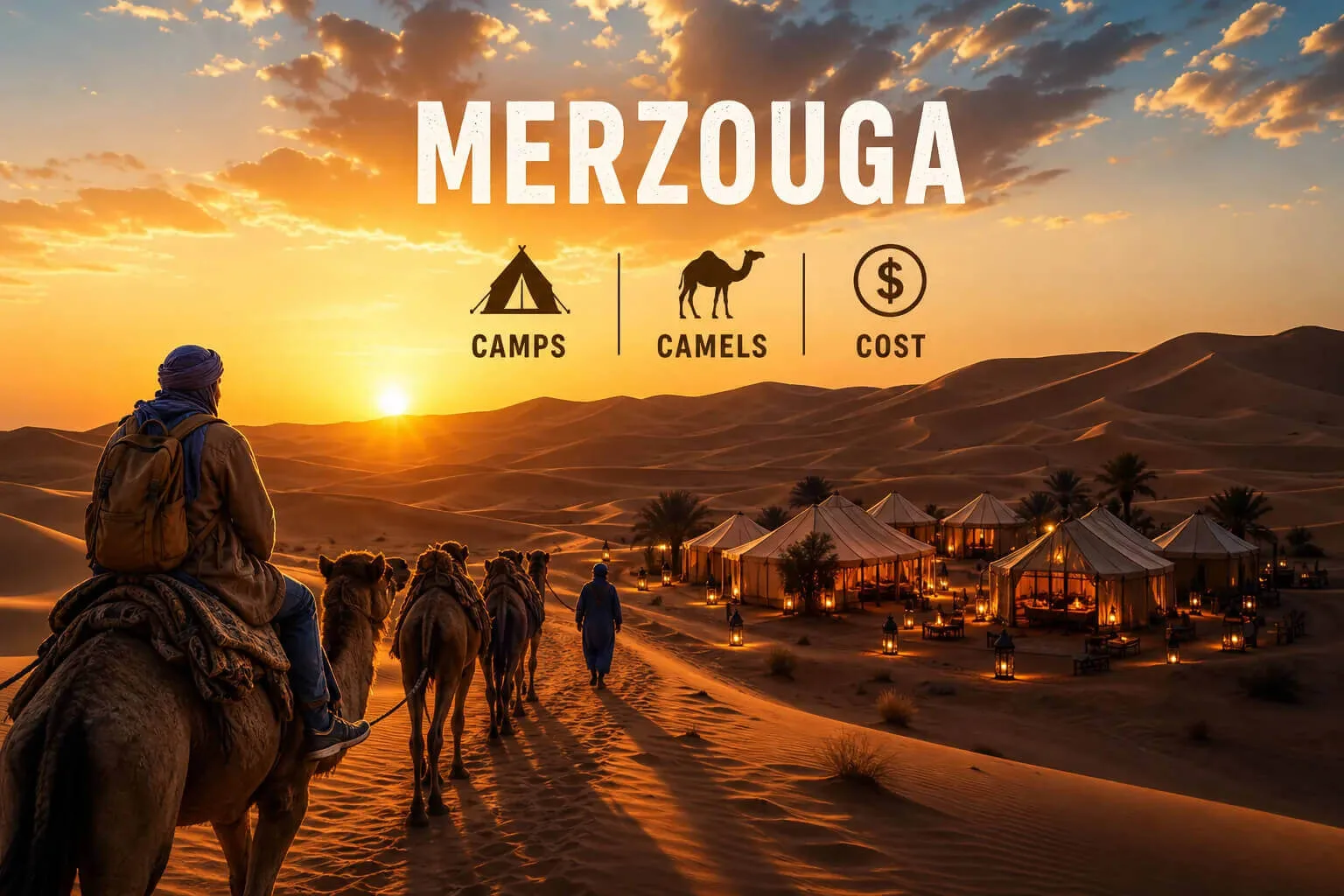
Join our Merzouga Overnight Tour for an authentic desert experience. Enjoy camel rides, comfortable ...
Read this articleWant cool tour deals and tips about Morocco? Enter your email and we’ll send them to you each month!
