Group Tour Agencies in Morocco: How to Pick the Right One
Compare Morocco group tour agencies by trip style, reviews, pace, transport and inclusions. Learn wh...
Read this article
Private, custom Morocco trips planned in Fez by AZ-ZDDINE, working in Moroccan tourism since 2012. Sahara, Atlas, medinas and coast, arranged around you.
Planning a trip to Morocco and wondering about its religious landscape? You’re not alone. Every year, millions of travelers—both Muslim and non-Muslim—research this very question before booking their flights. The answer shapes everything from what you’ll eat to what you’ll wear to which sites you’ll visit.
Morocco sits at the crossroads of Africa, the Arab world, and Europe, offering a unique blend of Islamic heritage and modern hospitality. Understanding Morocco’s religious identity isn’t just academic—it’s practical knowledge that will help you navigate your journey with confidence and respect.
Morocco is officially a Muslim country with Islam as the official religion enshrined in the 2011 constitution, and approximately 99% of the Moroccan population identifies as Sunni Muslim following the Maliki school of Islamic jurisprudence. Sunni Islam is the largest branch of Islam, and the Maliki school is one of its four main schools of jurisprudence, which shapes Morocco's religious practices and legal traditions.
Religious freedom exists for minorities: The constitution guarantees freedom of worship, allowing small Christian and Jewish communities to practice their faith, with recognized foreign churches operating in major cities such as Casablanca and Rabat.
Morocco practices moderate Islam: Hijab is not legally required, sharia law does not govern criminal matters, and tourists of all faiths—including many Christians—visit safely each year (over 14 million in 2023 alone).
Muslim-friendly travel is seamless: Halal food is the default throughout the country, mosques are found in every neighborhood, and accommodations readily provide prayer spaces and qibla indicators.
Morocco Classic Tours designs culturally sensitive itineraries for both Muslim and non-Muslim guests, handling everything from prayer time scheduling to halal dining to modest accommodation selection.
Yes, Morocco is a Muslim country. Islam is the official religion of the state, and the vast majority of Moroccans—approximately 99%—are Sunni Muslim. This isn’t a matter of cultural tradition alone; it’s constitutionally defined and shapes nearly every aspect of Moroccan life.
The current constitution, adopted by referendum in July 2011 with 95% voter approval, explicitly declares Morocco a “sovereign Muslim State, attached to its national unity.” The preamble reinforces Islam’s preeminence in national identity while also committing to values of openness, moderation, and tolerance. This constitutional framing means that Islam isn’t just the majority religion—it’s woven into the legal and political fabric of the nation.
The King of Morocco holds a dual role that underscores this Islamic identity. As head of state, Mohammed VI also carries the religious title “Amir al-Mu’minin”—Commander of the Faithful. This title traces back through the Alaouite dynasty, which has ruled Morocco since 1631 and claims descent from the Prophet Muhammad himself. The King serves as both political leader and spiritual leader, responsible for protecting Islam while also safeguarding religious tolerance across the kingdom.
Understanding the distinction between “Muslim country” and “Muslim-majority country” matters here. A Muslim country has Islam as its official religion, influencing law, culture, and governance. A Muslim-majority country has a population where most people identify as Muslim. Morocco is both officially Islamic by constitution and demographically Muslim by an overwhelming margin.
Morocco’s Islamic identity stretches back centuries. Islam arrived in the region in 680 CE via the Arab Umayyad dynasty from Damascus. The Idrissids became the first Islamic dynasty to rule Morocco, establishing a religious and cultural foundation that has shaped the country for over 1,300 years. This long history influences law, daily rituals, architecture, and the rhythms of Moroccan culture you’ll encounter as a traveler.
Despite being a Muslim country, Morocco warmly welcomes visitors of all beliefs. The tourism industry is well-developed, with infrastructure and attitudes that accommodate travelers from every background. Morocco Classic Tours specializes in helping both Muslim and non-Muslim travelers navigate this cultural context comfortably, ensuring your experience is both authentic and respectful.
Morocco’s population stands at approximately 37 million people according to recent estimates, with the High Commission for Planning in Rabat reporting 35.6 million in September 2019. Of this population, over 99% identify as Muslim, making Morocco one of the most religiously homogeneous countries in northern Africa.
The overwhelming majority of Moroccan Muslims follow Sunni Islam, specifically adhering to the Maliki school of Islamic jurisprudence. Sunni Islam is the largest branch of Islam, and the Maliki school is one of its four main schools of jurisprudence, which shapes Morocco's religious practices and legal traditions. This is significant because Morocco is one of the few Muslim countries where a single madhab (school of Islamic law) dominates so completely, fostering remarkable unity within the religious community. The Ash’ari creed further defines theological orientation, emphasizing a moderate interpretation that has characterized Moroccan religious practice for centuries.
Shia Muslims represent a very small minority in Morocco—well under 0.1% according to U.S. State Department estimates. This community generally practices quietly without large public rituals like Ashura processions. Relations between Sunni and Shia communities have at times been strained, with Moroccan authorities occasionally cracking down on materials from Shia-majority Iran and Hezbollah.
Religious minorities, while small, have deep roots in Morocco:
Jewish community: Approximately 3,000-3,500 Jews remain in Morocco, concentrated mainly in Casablanca with smaller communities in Rabat, Marrakesh, and Fes. This number has declined significantly since Israel’s creation in 1948, but Moroccan Jews represent one of the oldest continuous Jewish populations in the Arab world.
Moroccan Christian citizens: Estimates range between 10,000 and 25,000, including local converts primarily resulting from American Protestant outreach efforts in remote southern mountainous areas.
Foreign-resident Christians: Around 40,000 foreign Christians live in Morocco, including Catholics from sub-Saharan former French colonies, workers, students, and diplomats concentrated in cities like Casablanca, Rabat, Tangier, and Agadir.
Other minorities: Very small Baha’i and Ahmadi communities exist scattered across the country, plus a growing number of non-religious individuals, particularly among urban young people.
Islam is deeply embedded in Morocco’s national identity—being Sunni Muslim is widely seen as integral to being Moroccan. However, Morocco officially recognizes its Jewish heritage as an essential part of the nation’s history. The government allows recognized foreign churches to operate openly, serving expat and sub-Saharan African congregations. This religious diversity, while limited compared to Western nations, reflects Morocco’s position as a crossroads civilization influenced by the Iberian Peninsula, sub-Saharan Africa, and the broader Middle East.
The Moroccan census does not explicitly track ethnic or religious backgrounds, making precise statistics difficult. However, human rights estimates and international surveys consistently confirm the 99% Muslim figure, with most Moroccans describing themselves as religiously observant while embracing a moderate form of Sufi Islam alongside mainstream Sunni practice.
The 2011 constitution establishes a careful balance between Islamic identity and religious coexistence. While Islam is the official religion of the state, Article 3 explicitly guarantees freedom of worship for everyone on Moroccan soil. This dual commitment—to Islamic primacy and religious freedom—defines Morocco’s approach to faith in public life.
King Mohammed VI embodies this balance through his constitutional role. As Commander of the Faithful, he bears responsibility for protecting Islam and ensuring religious affairs are conducted properly. Simultaneously, he oversees interfaith harmony and tolerance, positioning Morocco as a model of moderate Islam on the African continent. The King has actively promoted what officials call the “Moroccan version of Islam”—an interpretation emphasizing tolerance, peace, and Sufi mysticism rather than rigid fundamentalism.
Political parties in Morocco operate under specific religious constraints. The constitution explicitly prohibits religious parties—those founded purely on a religious platform. However, parties with Islamist inspiration can operate within constitutional bounds. The Justice and Development Party (PJD), for example, draws from Islamic values while accepting the constitutional framework, and has led coalition government formations in recent years. This arrangement keeps religion influential in politics while preventing theocratic takeover.
The Ministry of Endowments and Islamic Affairs plays a crucial role in maintaining Morocco’s moderate religious orientation. This government body supervises:
Mosques and their maintenance throughout the country
Content of Friday sermons (khutbah)
Religious education curricula
Training and certification of imams
After the 2003 Casablanca bombings, the government intensified monitoring of mosque sermons and religious messaging as part of counter-extremism efforts. The Mohammed VI Institute for the Training of Imams, opened in the mid-2010s, represents Morocco’s proactive approach to shaping religious leadership. This institute trains imams not only from Morocco but from across the African continent, positioning Morocco as a center for moderate Islamic education.
Personal status law for Muslims—covering marriage, divorce, and inheritance—derives from Islamic jurisprudence through the Moudawana (Family Code). Family courts adjudicate these matters according to Islamic principles. However, criminal law in Morocco is codified civil law, not a full sharia penal system. Classical hudud punishments (amputation, stoning) are not part of Moroccan public law. This distinction matters enormously for understanding how “Islamic” Morocco actually feels in daily life and legal practice.
The constitutional framework reflects political reforms implemented over decades, balancing the monarchical regime’s traditional authority with modern governance structures. Trade unions, civil society organizations, and online media operate with relative freedom compared to many countries in the region, though boundaries exist around criticism of the monarchy, Islam, and territorial issues like the southern provinces (Western Sahara).
Walking through any Moroccan city, you’ll immediately notice Islam’s presence. The adhan—the melodic call to prayer—echoes from mosque minarets five times daily, marking dawn, noon, afternoon, sunset, and evening. This rhythm structures the day for most Moroccans, though the practical impact varies significantly between locations.
In big cities like Casablanca, Rabat, and Marrakesh, daily life continues largely uninterrupted during prayer times. Shops stay open, cafés serve customers, and tourist attractions remain accessible. You might notice some people pausing work or heading to nearby mosques, but commerce doesn’t halt. The five daily prayers are an individual obligation, and many Moroccans fulfill this privately rather than at the mosque.
Friday carries special significance. Jumu’ah—the Friday congregational prayer—is the most important weekly religious observance. Around midday on Fridays, you’ll notice increased activity around most mosques and some business closures in traditional neighborhoods. However, tourist sites, hotels, and restaurants catering to visitors generally remain open. Planning major activities for Friday mornings or later afternoons helps avoid any disruption.
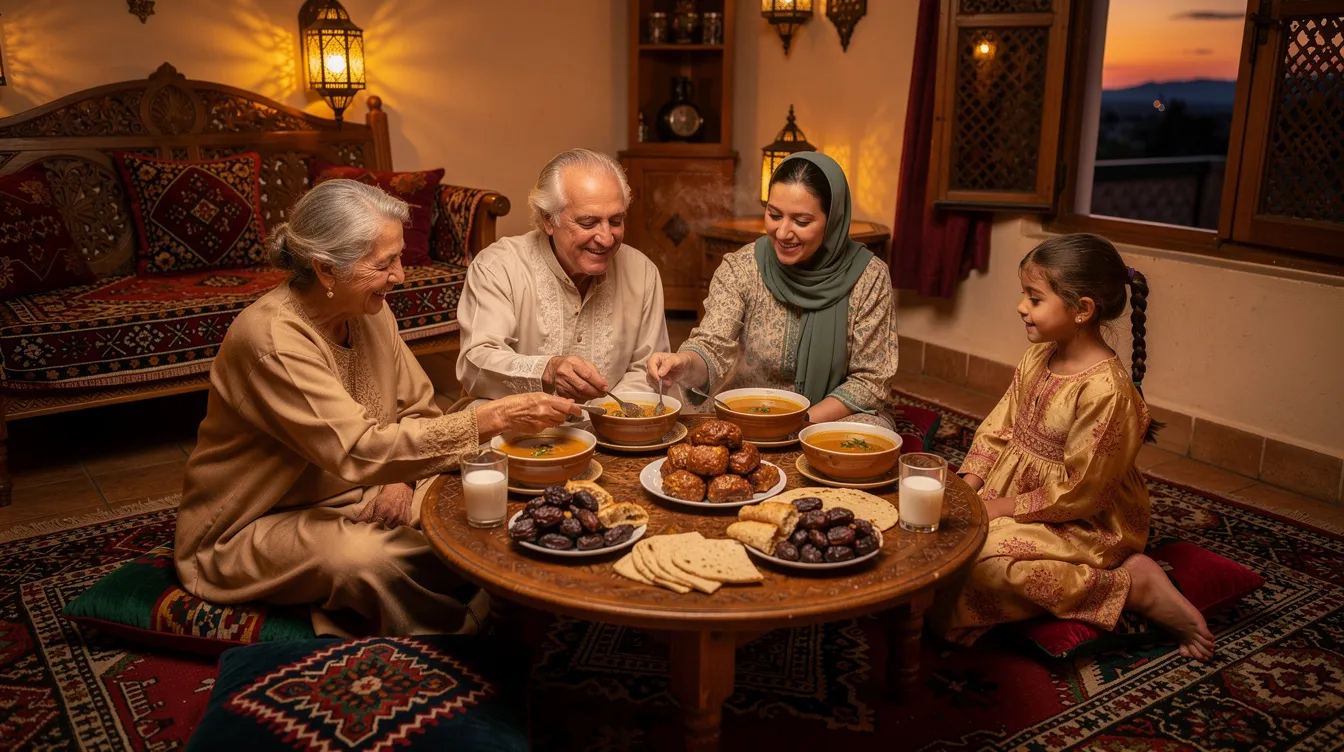
Ramadan transforms Moroccan life in ways that travelers should understand:
Muslims fast from dawn to sunset, abstaining from food, drink, and smoking during daylight hours
Many restaurants reduce service or close during fasting hours, particularly those serving alcohol
Evenings come alive with family iftar meals, traditionally breaking the fast with dates, harira soup (a hearty tomato-lentil soup), and sweet pastries like chebakia
The atmosphere during Ramadan is both more subdued by day and more festive by night.
Tourists are not required to fast, but discretion is appreciated—avoid obvious eating, drinking, or smoking in public during daylight in the holy month.
Modesty norms vary considerably across Morocco. In modern districts of Casablanca and Rabat, you’ll see the full spectrum of dress—from jeans and T-shirts to full hijab and traditional djellabas. Many Moroccan women do not wear hijab, making their own choices about religious expression. In rural areas, small towns, and conservative neighborhoods, locals generally dress more modestly, and visitors who do the same attract less attention.
Morocco Classic Tours can brief guests on local expectations in each region, from the relaxed Atlantic beaches to the traditional medinas of Fes el-Bali and conservative Middle Atlas Mountains villages. This guidance helps travelers dress appropriately without over-or under-preparing.
Despite Islam’s visible presence, daily life in Morocco today also feels thoroughly modern and cosmopolitan. Cafés buzz with conversation, music fills the streets, arts and fashion flourish, and a vibrant youth culture shapes urban areas. Many Moroccans describe their society as religiously observant yet socially moderate—comfortable with faith as a daily practice while rejecting extremism or rigidity.
Yes, Morocco ranks among the most convenient destinations for Muslim travelers seeking halal facilities and culturally familiar surroundings. Whether you’re looking for prayer spaces, halal food, or modest accommodations, Morocco delivers naturally—often without requiring special requests.
Halal food is the default, not an exception. Nearly all meat served in local restaurants is slaughtered according to Islamic guidelines. You don’t need to search for halal certification stickers or ask servers about preparation methods—everyday practice already follows Islamic dietary norms. Pork is generally unavailable except in specific licensed venues catering to non-Muslims, and these are clearly marked.
Practicing Muslims will find religious infrastructure readily accessible:
Mosques in every neighborhood: From major cities to small villages, you’re never far from a place of prayer
Hotels with Islamic amenities: Many accommodations provide qibla direction indicators, prayer mats, and information about nearby mosques
Wudu facilities: Available in all mosques and many traditional riads (guesthouses)
Alcohol-free options: Numerous family-oriented guesthouses, especially in traditional medinas and small towns, do not serve alcohol
Large resort hotels in destinations like Agadir and Marrakesh typically serve alcohol but still cater well to Muslim guests. Staff understands religious requirements, halal food is standard, and prayer needs can generally be accommodated with advance notice.
Morocco Classic Tours designs fully Muslim-friendly itineraries that address every aspect of religious observance:
Scheduling sightseeing around prayer times and Jumu’ah on Fridays
Selecting halal-certified or alcohol-free restaurants and accommodations
Ensuring privacy for families traveling together
Arranging women-friendly activities like private hammam visits and women-only cooking classes
Organizing Sahara desert camps near Merzouga or M’Hamid with dedicated prayer spaces
Muslim travelers from Europe, North America, and Gulf countries often find Morocco’s blend of strong Islamic faith and relaxed atmosphere especially comfortable. You can maintain religious practice without feeling isolated from local culture—because religious practice is local culture. Eid al Adha celebrations, Ramadan traditions, and everyday Islamic greetings create a sense of familiarity that many Muslim countries in the region share, but Morocco combines this with a tourism infrastructure that’s notably welcoming and well-organized.
Non-Muslims travel to Morocco safely and in enormous numbers. Over 14 million visitors arrived in 2023, with nearly 16 million in 2024. The tourism sector is Morocco’s economic lifeline, and visitors of all faiths—Christians, Jews, Hindus, Buddhists, atheists—are warmly received throughout the country.
Safety for Christians specifically: It is generally safe for Christians to visit Morocco. You can attend services at foreign churches in major cities, carry personal religious items like a Bible, and practice your faith privately without interference. Foreign-run churches—Catholic, Protestant, Orthodox—operate openly in Casablanca, Rabat, Tangier, and Agadir, primarily serving expatriate and sub-Saharan African congregations.
The legal boundary concerns proselytizing. Moroccan law prohibits attempting to convert Muslims through “enticement”—material incentives, organized missionary campaigns, or public conversion efforts. Violations can result in fines or imprisonment. However, private belief and personal worship for foreigners are not criminalized. You can read your Bible in your hotel room, discuss your faith if asked, and attend church services without concern.
Practical advice: Keep religious practice personal and avoid anything that could be perceived as trying to convert Muslims. Bringing a Bible for personal use is fine; distributing religious materials is not.
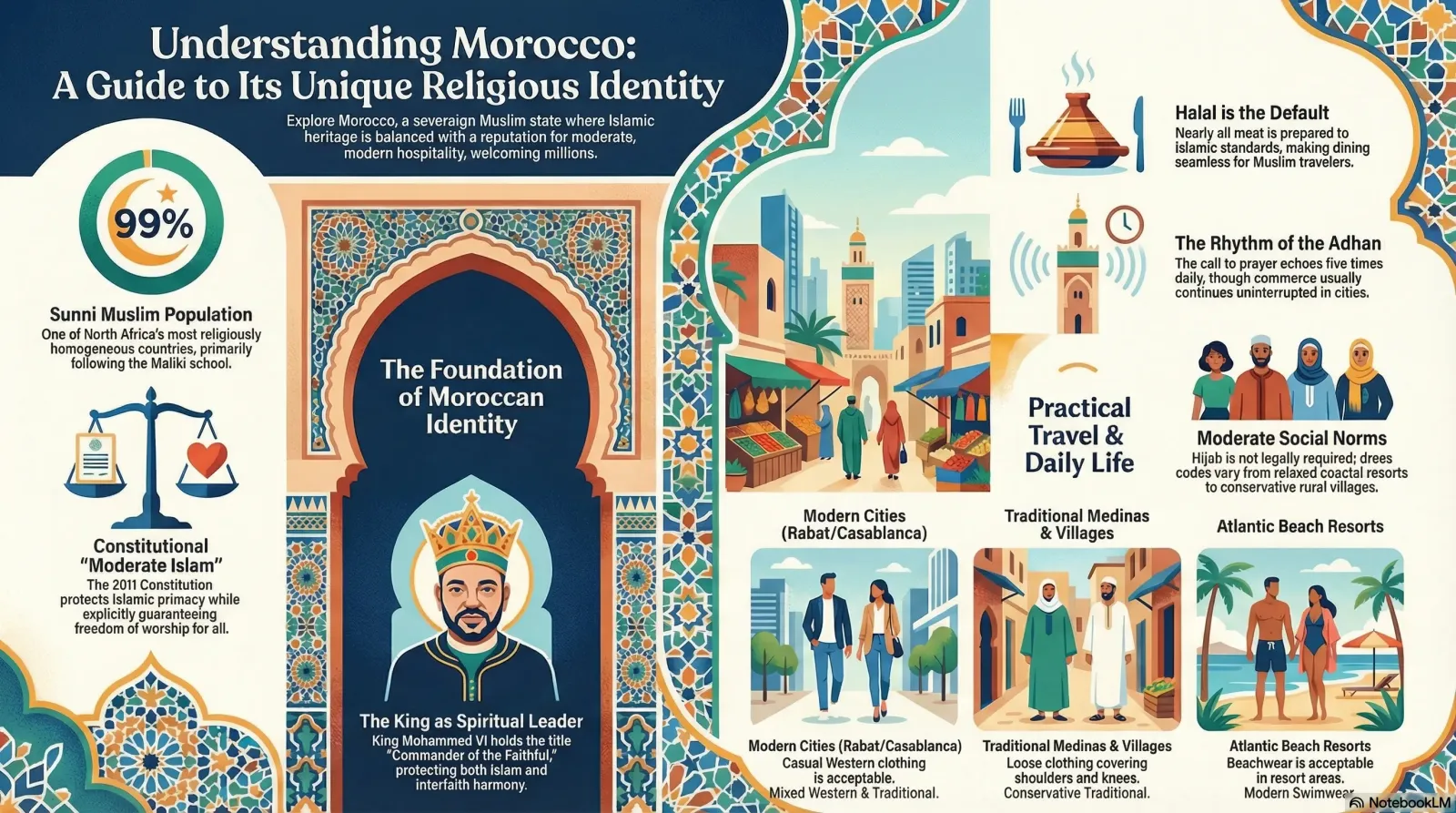
A modest but comfortable dress is appreciated by all visitors, regardless of faith. Shorts and sleeveless tops are common at beach destinations like Agadir, but more coverage is advisable in inland cities, traditional medinas, and villages. This isn’t a legal requirement—it’s about cultural respect and blending in rather than standing out.
Guides from Morocco Classic Tours help non-Muslim travelers interpret local customs with ease. Small things matter: knowing how to politely decline a second cup of mint tea, understanding when it’s appropriate to photograph a mosque from the outside only, and recognizing that religious sites may have restricted access during prayer times. This guidance lets you relax and enjoy your trip without worrying about unintentionally giving offense.
A few sensitivities to keep in mind:
Avoid criticizing Islam in public—laws against insulting Islam exist and are occasionally enforced
Steer clear of sensitive political topics like Western Sahara or criticism of the monarchy
During Ramadan, show respect for fasting hours even though you’re not required to participate
These boundaries are about respect, not restriction. Most Moroccans are genuinely curious about foreign visitors and happy to share their culture with those who approach it respectfully.
Morocco does not legally require women to wear hijab. There is no state-imposed dress code for tourists beyond general public decency laws that apply equally to everyone. This sets Morocco apart from some other muslim countries where dress regulations are more formal.
Real-life norms vary by location:
Location | What You’ll See | Recommended Visitor Dress |
|---|---|---|
Modern Casablanca/Rabat | Jeans, T-shirts, sundresses, hijab, djellabas | Casual Western clothing is fine |
Traditional medinas | More conservative local dress | Cover shoulders and knees |
Beach resorts (Agadir) | Swimwear at pools/beaches | Beachwear is acceptable in resort areas |
Atlas Mountains villages | Conservative traditional dress | Loose, modest clothing is recommended |
Sahara Desert camps | A mix of tourist and local dress | Practical modest clothing; bring a scarf for sand/sun |
For women travelers: | ||
Pack loose clothing that covers shoulders, chest, and at least to the knee for city sightseeing and medina exploration.
Bring a light scarf—useful for entering religious sites, protection from wind and sand in the Sahara desert, and adapting to conservative rural areas
Save beachwear for private resort pools or specific Atlantic beaches
Maxi dresses, loose trousers, and tunics work well across most situations
For men:
T-shirts and long shorts are usually fine in cities and coastal towns
Avoid tank tops or very short shorts in medinas, near religious sites, or in small villages
Long trousers are more appropriate for nicer restaurants and religiously significant areas
Casual but neat is the general standard
Where to purchase modest clothing locally:
Traditional souks: Fes, Marrakesh, and Meknes offer beautiful djellabas, kaftans, and scarves at negotiable prices
Modern malls: Morocco Mall in Casablanca or Mega Mall in Rabat stock ready-to-wear modest fashion with fixed prices
Local tailors: Can create custom pieces quickly and affordably
Morocco Classic Tours guides can escort guests to trusted shops and artisans, helping you avoid tourist traps and ensuring quality purchases at fair prices.
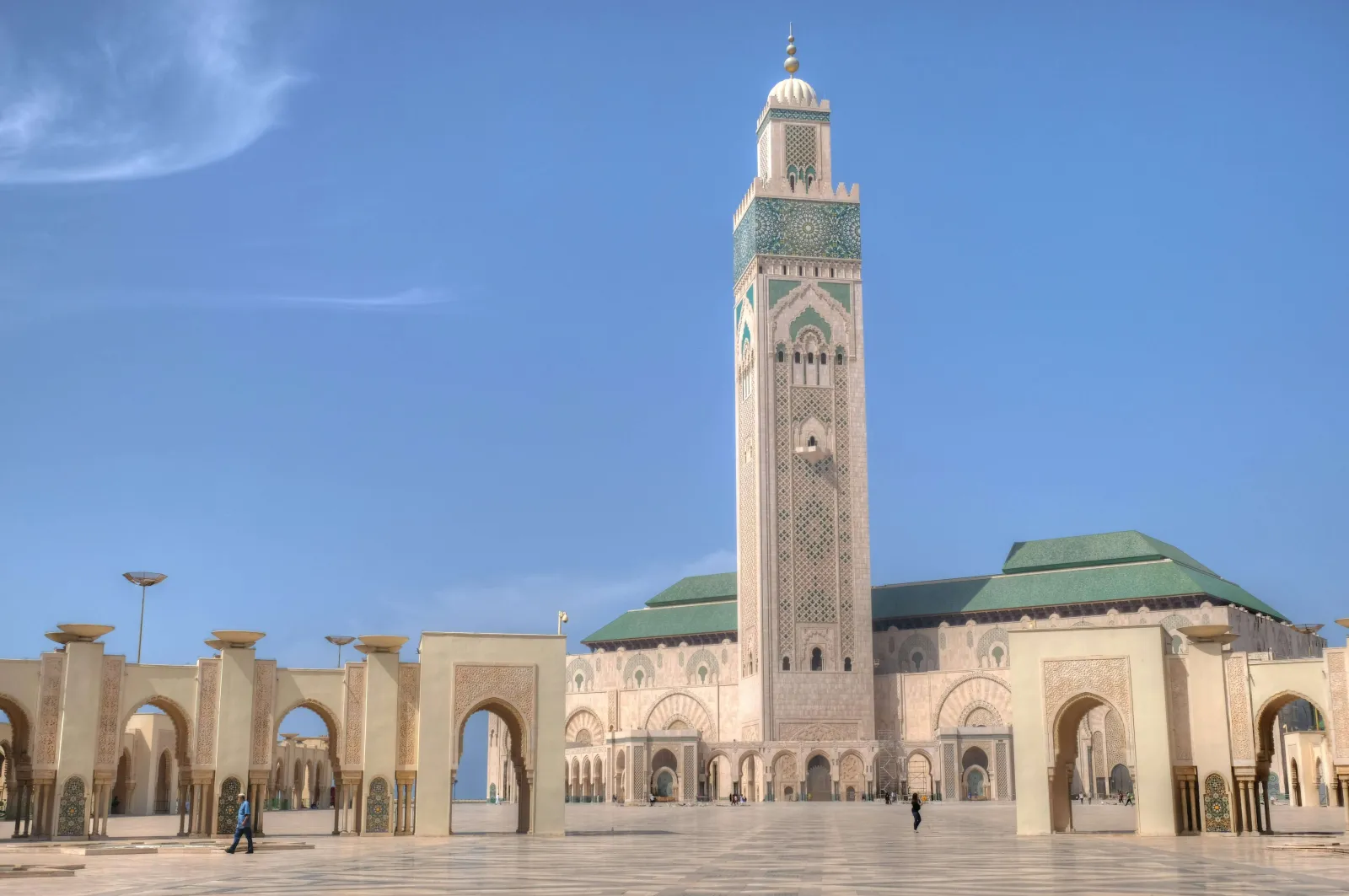
Mosque access: Visitors are generally not allowed inside active mosque prayer halls unless they are Muslim. The major exception is Casablanca’s Hassan II Mosque, which offers guided tours for non-Muslims. For these visits, conservative dress is mandatory—long sleeves, long pants or skirts, and a head covering for women.
How “strict” does Islam feel in Morocco compared to other muslim countries? The short answer: Morocco combines a strong religious identity with relatively flexible social practices, especially in areas accustomed to tourism.
Alcohol rules:
Alcohol is legal but regulated in Morocco
Available in licensed hotels, bars, restaurants, and specific shops
More discreet during Ramadan and in conservative towns
Public drunkenness or drinking openly in the street is frowned upon and can attract police attention
This approach differs significantly from countries like Saudi Arabia or Kuwait, where alcohol is completely prohibited. In Moroccan tourist areas, having wine with dinner or a beer at a hotel bar is entirely normal. The key is context—drinking happens in appropriate venues, not on the street.
Morocco’s legal system is a civil code influenced by Islamic principles, not a full sharia criminal code. Classical hudud punishments (amputation, stoning, lashing for moral crimes) are not part of Moroccan public law. Criminal matters are handled by civil courts using codified law. Sharia’s role is limited primarily to personal status matters for Muslims—marriage, divorce, inheritance—adjudicated through family courts under the Moudawana.
This means tourists interact with standard police and civil courts if any legal issues arise, not religious courts applying religious law. The practical implications for visitors are minimal.
Public behavior expectations:
Avoid public displays of affection, especially in small towns and traditional areas
Dress modestly in religious or traditional spaces
During Ramadan, avoid eating, drinking, or smoking in public during fasting hours
General decorum is expected—loud, disruptive behavior draws negative attention anywhere
Many Moroccans describe their society as religiously observant yet socially moderate. A long tradition of Sufi Islam emphasizes mysticism, saint veneration, and inner spirituality alongside mainstream Sunni practice. This Sufi influence contributes to Morocco’s reputation for tolerance and moderation within the Islamic world.
Morocco Classic Tours trains guides to brief guests clearly on dos and don’ts, so travelers can relax and enjoy their trip without constant worry about accidentally offending. The guidelines are simple: dress appropriately for the setting, show respect for religious practice, avoid public intoxication, and keep political and religious criticism private.
Morocco offers an extraordinary depth of Islamic history, architecture, and scholarship. For travelers interested in Muslim heritage—whether for religious, academic, or aesthetic reasons—this African country delivers experiences available nowhere else.
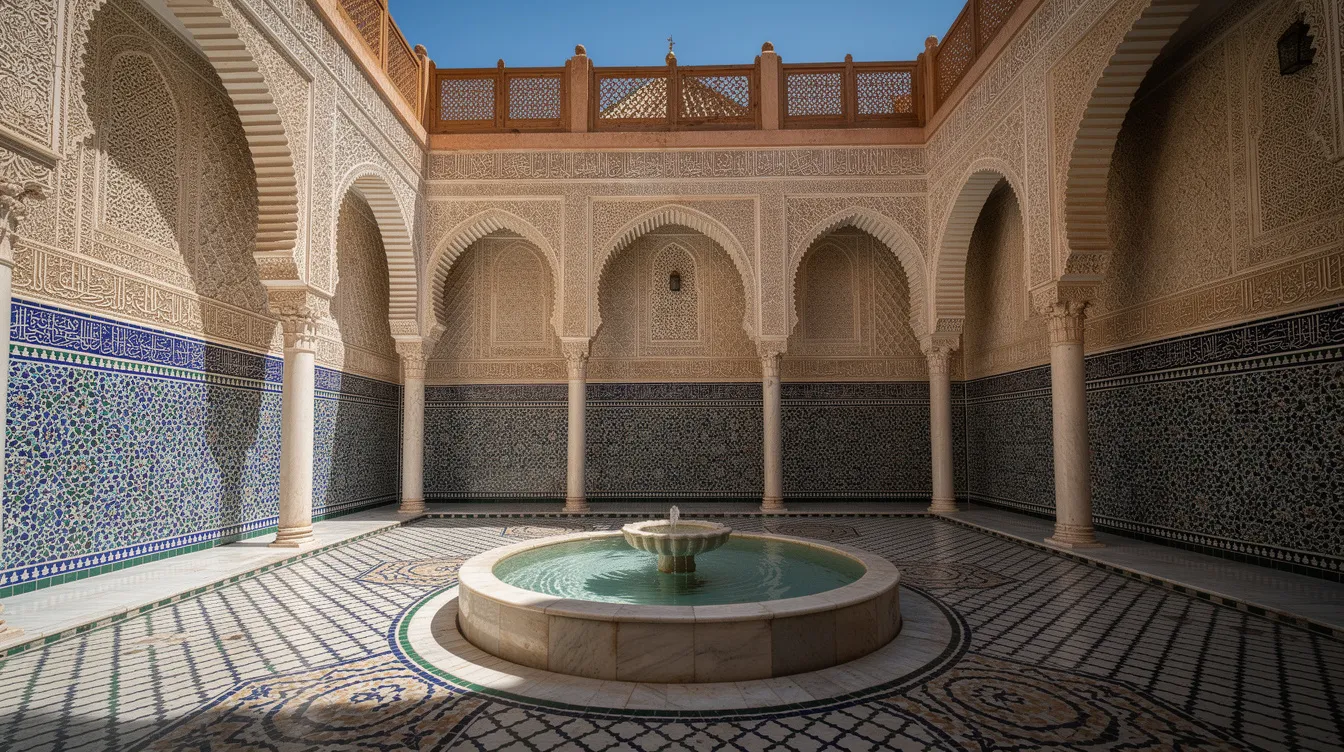
Fes holds Morocco’s most significant Islamic religious sites:
Al-Qarawiyyin Mosque and University: Founded in 859 CE, this is considered the world’s oldest continuously operating educational institution. Non-Muslims cannot enter the mosque, but the exterior and surrounding medina convey its significance.
Andalusian Mosque: Another architectural and historical treasure from the medieval period
Bou Inania Madrasa: Exceptional 14th-century Islamic architecture open to visitors, featuring intricate zellige tilework, carved stucco, and cedarwood craftsmanship
Al-Attarine Madrasa: A masterpiece of Marinid-era religious architecture
The spiritual ambiance of Fes el-Bali—the old medina—remains palpable. Narrow streets wind past mosques, shrines, and centuries-old religious schools, creating an immersive experience of Islamic civilization.
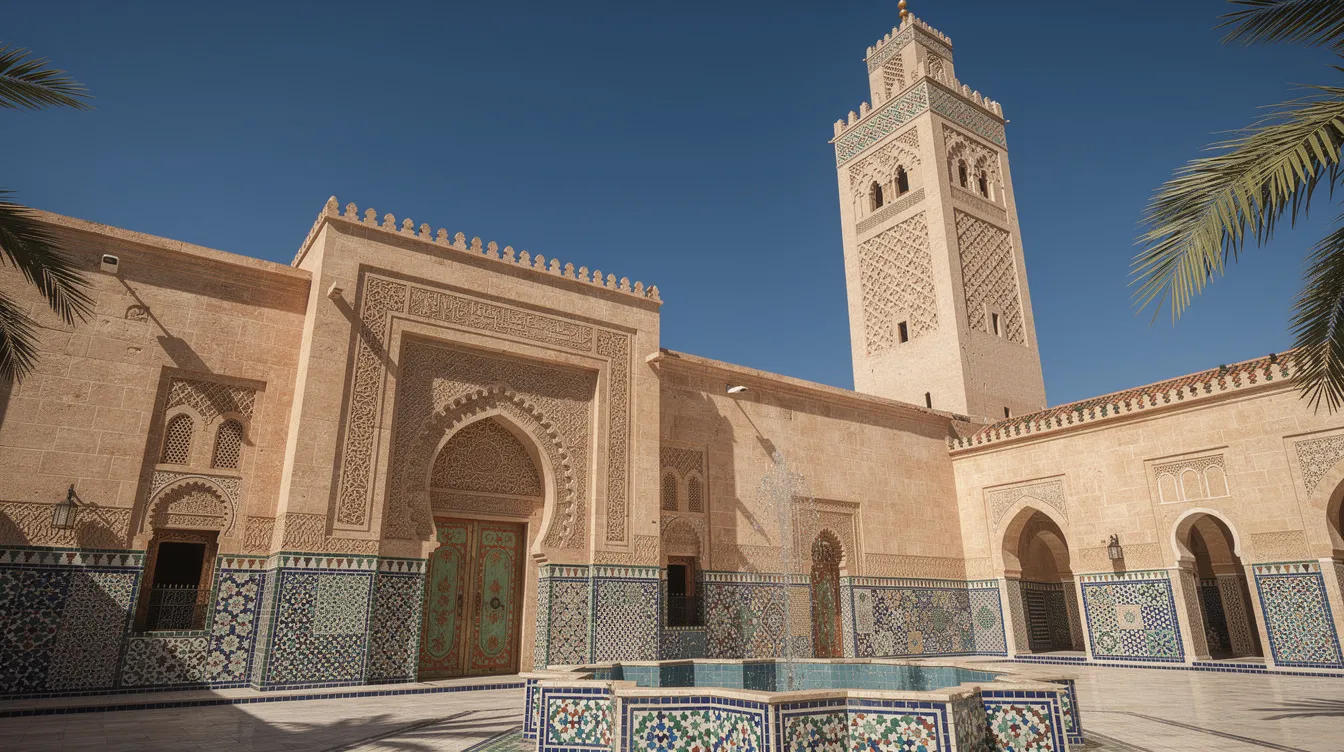
Koutoubia Mosque: The 12th-century landmark visible across the city, with a minaret that has influenced Islamic architecture throughout the region
Ben Youssef Madrasa: One of North Africa’s largest and most beautiful Islamic colleges, open for visitor tours
Saadian Tombs: 16th-century royal mausoleum featuring stunning Islamic decorative arts
Historic zawiyas: Sufi lodges scattered through the medina, representing centuries of mystical practice
Hassan Tower: The unfinished minaret of a 12th-century mosque, intended to be the largest in the world
Mausoleum of Mohammed V: A modern masterpiece of Islamic architecture housing the tombs of King Mohammed V and King Hassan II
Hassan II Mosque: Completed in 1993, this is one of the largest mosques in the world and the largest in Africa. Uniquely, it offers guided tours for non-Muslims, allowing visitors to experience the interior’s breathtaking craftsmanship.
Beyond formal mosques and madrassas, Morocco’s countryside is dotted with:
Zawiyas: Sufi lodges serving as centers for spiritual practice and community
Marabout shrines: Tombs of local saints venerated in popular Moroccan religious practice
Festivals: Events like the Fes Festival of World Sacred Music showcase spiritual traditions from Morocco and beyond
Morocco’s Jewish heritage complements its Islamic history, reflecting centuries of coexistence:
Mellahs: Historic Jewish quarters in Fes and Marrakesh
Synagogues: Historic and active synagogues in Casablanca, Fes, and Essaouira
Jewish cemeteries: Well-preserved burial grounds marking Moroccan Jews’ long history in the country
Morocco Classic Tours organizes themed itineraries focusing on Islamic history, Sufi routes, combined Muslim-Jewish heritage journeys, and visits timed to religious festivals. Knowledgeable local guides provide context that transforms site visits into meaningful educational experiences.
Morocco Classic Tours is a Fez-based travel agency specializing in private and customizable tours across Morocco. As a local operator, we understand both the religious fabric of Moroccan society and the expectations of international travelers—whether Muslim travelers seeking halal-friendly experiences or non-Muslims wanting to engage respectfully with Islamic culture.
Experiences tailored to religious and cultural preferences:
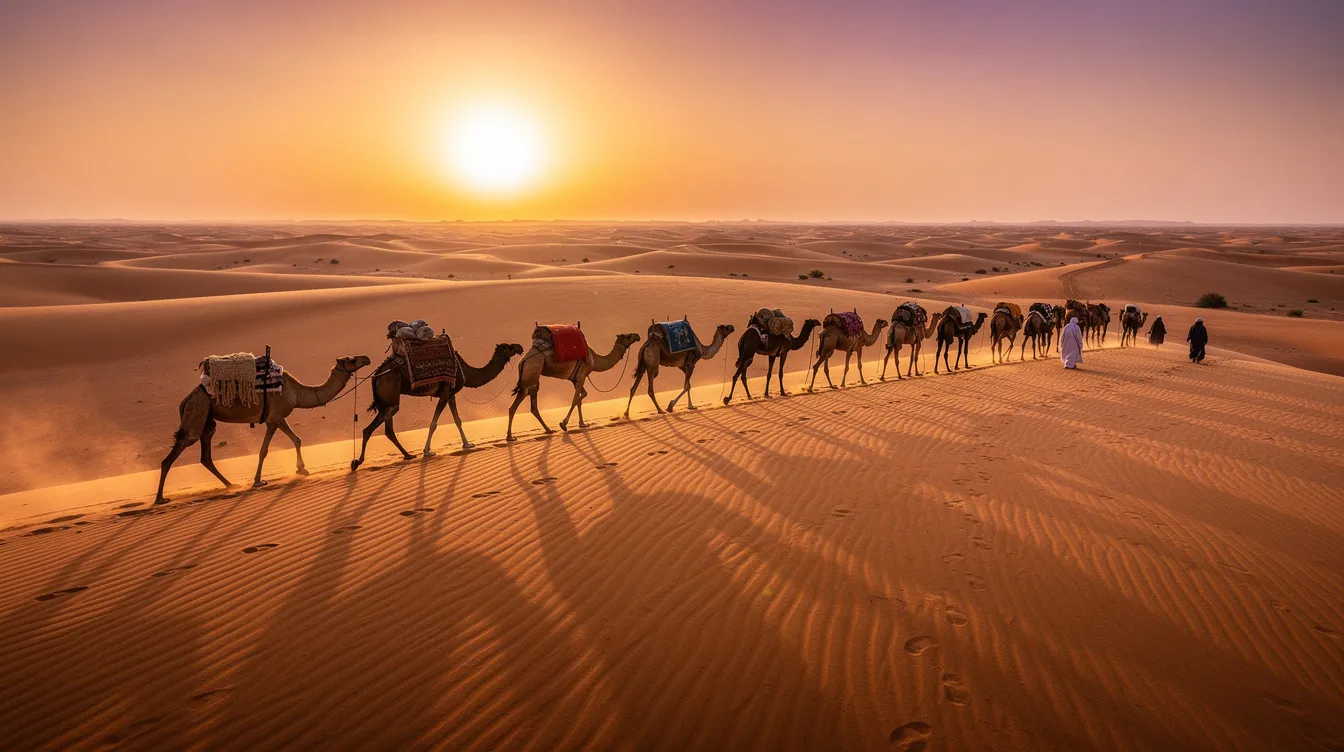
Sahara desert camps near Merzouga or M’Hamid with dedicated space and time for prayer
Camel rides and ATV (quad biking) adventures are scheduled around Jumu’ah or Maghrib
Food tours highlighting halal street food, traditional iftar spreads during Ramadan, and alcohol-free dining options throughout the country
Cultural immersion in historic medinas, Atlas Mountain villages, and Atlantic coastal towns
How we adapt itineraries:
Traveler Need | Our Solution |
|---|---|
Prayer time scheduling | Activities planned around five daily prayers and Friday Jumu’ah |
Halal dining | Pre-selected restaurants with halal meat and alcohol-free options |
Family privacy | Riads and hotels that respect modesty with appropriate room configurations |
Mosque visits | Interior access arranged for Muslim guests; exterior heritage tours for non-Muslims |
Modest activities | Women-only hammam sessions, cooking classes, and shopping excursions |
We work with accommodations across Morocco—from traditional riads in Fes, where Islamic practice is naturally embedded in daily operations, to modern resorts in Agadir and Marrakesh that can accommodate specific religious requirements with advance notice. | |
Morocco Classic Tours guides speak multiple languages—Arabic, French, English, and often Spanish—and understand the cultural sensitivities that matter to travelers from the Arab world, Europe, North America, and beyond. Whether you want to visit both Muslim and Jewish heritage sites, need guidance on dress codes for different regions, or simply want assurance that your religious practice will be respected throughout your journey, we handle the details.
Ready to plan your Morocco experience? Book online or contact Morocco Classic Tours directly to discuss your religious needs, preferred prayer time scheduling, halal certifications, or interest in heritage sites spanning Morocco’s rich multi-faith history.
Travelling privately makes most of this easier to navigate, because you can ask your driver anything without holding up a coach of thirty people. That is the whole idea behind a private trip planned around what matters to you.
No. Morocco’s legal system is a blend of civil law and Islamic influences, not a full sharia penal code. Criminal law is codified and does not apply classical hudud punishments like amputation or stoning. These elements of sharia that characterize legal systems in some Gulf states simply don’t exist in Moroccan criminal law.
Islamic law primarily governs personal status for Muslims—marriage, divorce, inheritance—through the Moudawana (Family Code), adjudicated by specialized family courts. This is significant for Moroccan citizens but has virtually no impact on tourists.
Visitors interact with standard civil police and courts. The legal experience for travelers in Morocco resembles that of any other modern country with a civil legal system.
Yes, visitors may bring a personal Bible, Torah, or other holy book for private use. You can read it in your hotel room, carry it in your luggage, and practice your faith privately without issues.
Problems only arise if someone appears to be distributing religious materials for the purpose of converting Muslims. Organized missionary activity and public proselytizing are restricted by law. The distinction is between personal practice (allowed) and active conversion attempts (prohibited).
Keep religious practice personal, avoid anything that looks like organized outreach to Muslims, and you’ll have no difficulties.
Absolutely. Many riads and smaller hotels—especially in Fes, Meknes, and smaller towns—do not serve alcohol and naturally follow halal practices in their kitchens. These properties are inherently Muslim-friendly without requiring special accommodations.
Large resort hotels in places like Agadir and Marrakech typically serve alcohol but still provide halal food and can accommodate prayer needs with advance notice. Many offer family sections, can indicate qibla direction, and have staff experienced with Muslim guests’ requirements.
Morocco Classic Tours pre-selects accommodations matching specific requirements—alcohol-free properties, family-only sections, locations near major mosques, or specific privacy configurations.
Traditional souks in Fes, Marrakesh, Tetouan, and other cities offer beautiful djellabas, kaftans, and scarves. Prices are negotiable, and bargaining is expected and enjoyable. Quality varies, so examining items carefully before purchasing is wise.
Modern malls—Morocco Mall in Casablanca, Mega Mall in Rabat—stock ready-to-wear modest fashion with fixed prices and international brands. These offer air-conditioned comfort and no negotiation required.
Morocco Classic Tours guides can escort guests to trusted shops and tailors, helping you find quality pieces at fair prices while avoiding tourist-trap vendors in heavily trafficked areas.
In practice, yes—but not in the way you might expect. Formal “halal certification” signage is less common in Morocco than in countries like Malaysia or the UAE. This is simply because halal practice is the default, not the exception.
Nearly all local restaurants serve halal meat automatically. The only exceptions are a minority of venues specifically targeting foreign tourists that may serve pork or feature prominent alcohol service. These establishments are easily identifiable and avoidable.
Morocco Classic Tours can recommend or pre-book restaurants that are fully halal and family-friendly throughout your itinerary, eliminating any guesswork about dining options.
Most mosques in Morocco do not permit non-Muslims to enter, and photography inside active religious spaces is generally prohibited. You can photograph mosque exteriors—minarets, doorways, architectural details—respectfully and from public spaces. Avoid pointing cameras directly at people praying or performing wudu without permission.
For sites that do permit non-Muslim visitors, like Hassan II Mosque in Casablanca, follow the guide's instructions about where photography is allowed. Some areas may be restricted even within accessible sites.
It depends on what you’re seeking. Ramadan offers unique cultural experiences—the spiritual atmosphere, beautiful evening iftars, late-night activity in medinas—that are unavailable at other times. However, daytime hours are quieter, some restaurants close during fasting hours, and alcohol service is significantly reduced.
If you’re interested in cultural immersion and don’t mind adjusting your eating schedule, Ramadan can be extraordinarily rewarding. If you prefer uninterrupted access to restaurants and nightlife, visiting outside Ramadan might suit you better. Morocco Classic Tours can design Ramadan-specific itineraries that maximize the meaningful experiences while managing practical considerations.
Moroccans are widely spoken of as hospitable and genuinely welcoming to visitors. Tourism is a major economic sector, and the industry employs a large majority of families in many regions directly or indirectly. Most Moroccans you’ll encounter—whether guides, shopkeepers, hotel staff, or simply people on the street—have positive attitudes toward respectful foreign tourists.
Cultural curiosity flows both ways. Moroccans often enjoy learning about visitors’ home countries and sharing aspects of Moroccan culture in return. Basic politeness, modest dress in appropriate contexts, and genuine interest in local customs generate warm responses throughout the country.
Morocco offers a rare combination: deep Islamic heritage, moderate religious practice, and genuine hospitality for travelers of every background. Whether you’re a Muslim traveler seeking seamless halal infrastructure or a non-Muslim curious about experiencing life in a Muslim country, Morocco delivers authenticity without rigidity.
Ready to experience Morocco’s unique blend of faith, culture, and adventure? Contact Morocco Classic Tours to design your perfect itinerary—one that respects your beliefs, accommodates your needs, and opens doors to experiences you’ll remember for a lifetime.
Compare Morocco group tour agencies by trip style, reviews, pace, transport and inclusions. Learn wh...
Read this article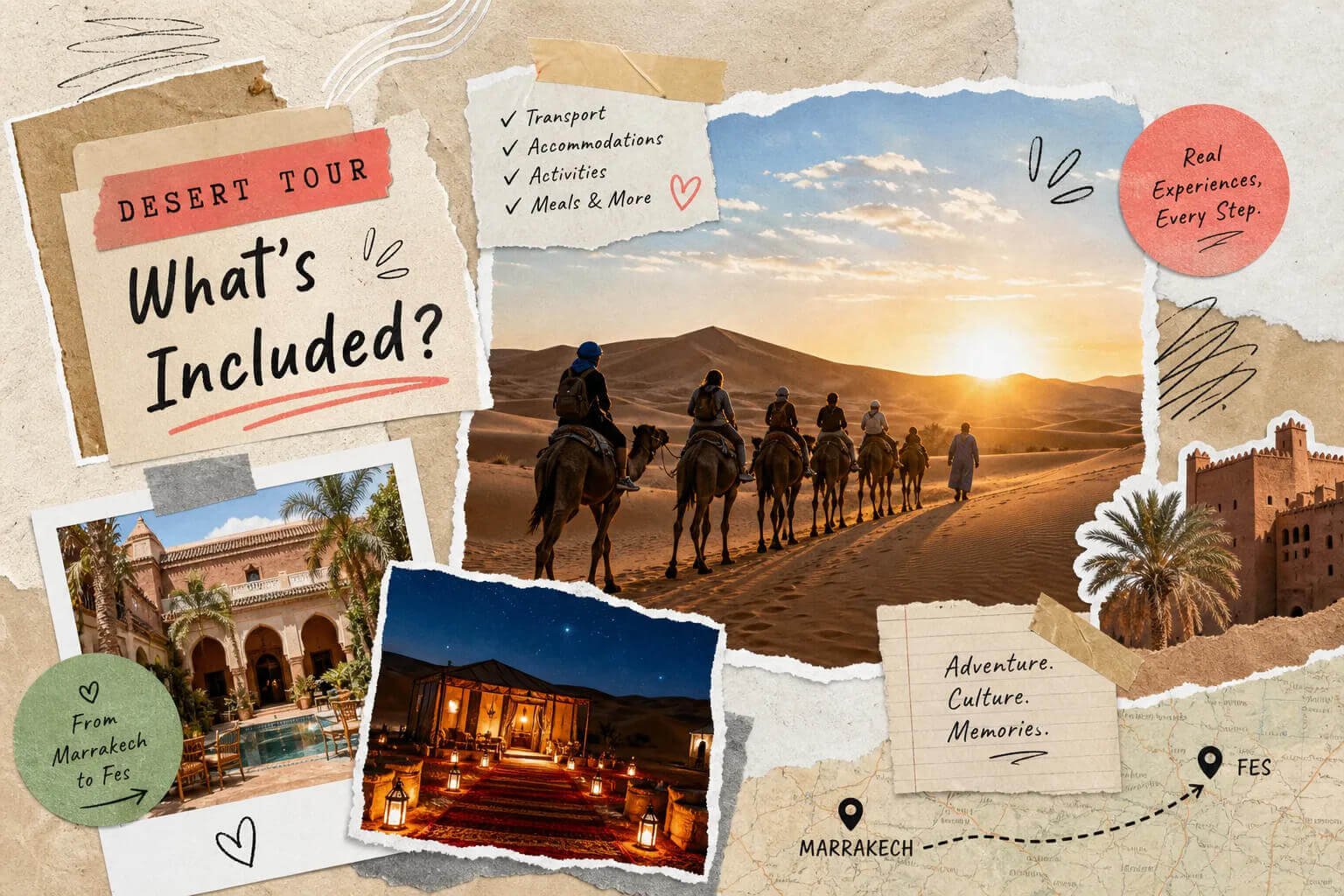
Uncover what a Marrakech to Fes desert tour offers, including camel rides, desert camps, and rich cu...
Read this article
Join our Merzouga Overnight Tour for an authentic desert experience. Enjoy camel rides, comfortable ...
Read this articleWant cool tour deals and tips about Morocco? Enter your email and we’ll send them to you each month!
