Discover the Best Tour Operator Morocco for Unforgettable Adventures
Explore top Moroccan tour operators for unforgettable adventures. Discover unique experiences that s...
Read this article
Suspendisse interdum consectetur libero id. Fermentum leo vel orci porta non. Euismod viverra nibh cras pulvinar suspen.
February in Morocco marks late winter transitioning to spring, with mild temperatures along the atlantic coast (15–20°C / 59–68°F by day), pleasantly warm weather in cities like Marrakech, cold temperatures in the high atlas mountains, and cool but sunny conditions in the sahara desert with cold nights.
A common misconception is that Morocco is hot year-round, but in February, many regions can be cool or even cold, especially at night and in the mountains.
This month sits in the low season, meaning fewer tourists, better availability at riads and guesthouses, and often 25-40% lower prices on flights and accommodations compared to peak periods.
February offers ideal conditions for desert camps and camel treks (comfortable daytime temperatures around 18-22°C), exploring ancient cities like Fes and Marrakech without summer heat, and coastal breaks in Agadir or Essaouira.
Rain is possible in the northern regions and along the coast, while snow is common in the high atlas, making layered clothing, a light jacket, and warm nightwear essential for any February itinerary.
Morocco Classic Tours can build custom February itineraries that balance cities, desert, and mountainous areas around current weather conditions and your personal preferences.
Morocco is a captivating North African country where ancient cities, dramatic landscapes, and a vibrant cultural tapestry come together to create an unforgettable travel experience year round. Its geography is as diverse as its heritage: the snow-capped high atlas mountains rise majestically in the center, offering breathtaking views and opportunities for adventure, while the vast sahara desert stretches across the south, inviting travelers to experience golden dunes and star-filled skies. Along the atlantic coast, you’ll find mild weather and lively port cities, perfect for those who love gentle breezes and fresh seafood. Inland cities like Marrakech and Fes pulse with history, their ancient medinas brimming with life and color.
This guide is designed for travelers planning a trip to Morocco in February, whether you're seeking cultural experiences, desert adventures, or coastal relaxation. Understanding February weather is crucial for trip planning, as conditions can vary dramatically between regions—affecting what to pack, where to go, and which activities are most enjoyable.
Morocco’s climate varies dramatically from region to region, making it possible to enjoy pleasantly warm days in one area and see snow in another—all within a single trip. Whether you’re drawn to exploring ancient cities, hiking in the atlas mountains, or relaxing by the ocean, Morocco’s unique blend of Arabic, Berber, and French influences ensures every visit is rich in discovery. With its welcoming atmosphere, diverse weather, and endless opportunities for adventure, Morocco is a country that rewards curiosity and invites exploration year-round.
Morocco in February exists in that magical transition from winter to spring. In the south, almond blossoms begin painting valleys pink and white, while the Atlas peaks remain dusted with snow. It’s a country of contrasts—and February amplifies this beautifully.
The weather varies dramatically depending on where you travel. Coastal cities enjoy mild weather moderated by Atlantic breezes. Inland cities like Marrakech bask in warm days with clear skies. The desert regions offer pleasant weather during daylight hours but temperatures dropping sharply once the sun sets. And the mountain regions? They experience true winter, complete with snow and freezing nights. February also brings moderate rainfall to northern and coastal regions, while the mountains may see additional snowfall, which can affect travel plans in those areas.
Average daylight stretches around 10-11 hours, with sunset typically between 6:00-6:30 pm. This gives you ample time for sightseeing, market wandering, and transfers between destinations before darkness falls.
While February marks the gradual shift toward spring, it is important to note that January is generally the coldest month in Morocco. February still experiences winter conditions, especially in the mountains, so travelers should be prepared for chilly temperatures in higher elevations.
This mix of conditions makes February an excellent time to visit morocco with Morocco Classic Tours. You can explore medinas comfortably without overheating, enjoy desert camps under star-filled skies, and witness landscapes that shift from snow-capped peaks to golden dunes within a single day’s drive.
Understanding Morocco’s regional climate helps you pack appropriately and set realistic expectations. The country spans Mediterranean coasts, Atlantic shores, towering mountains, and the vast Sahara—each with distinct February personalities.
February in Morocco falls within the winter months, following the colder period of December and January, and is considered part of the late winter season. February is considered a shoulder season in Morocco, characterized by fewer crowds and lower accommodation costs.
Below, we break down typical conditions across the destinations most travelers combine in their Morocco itineraries.
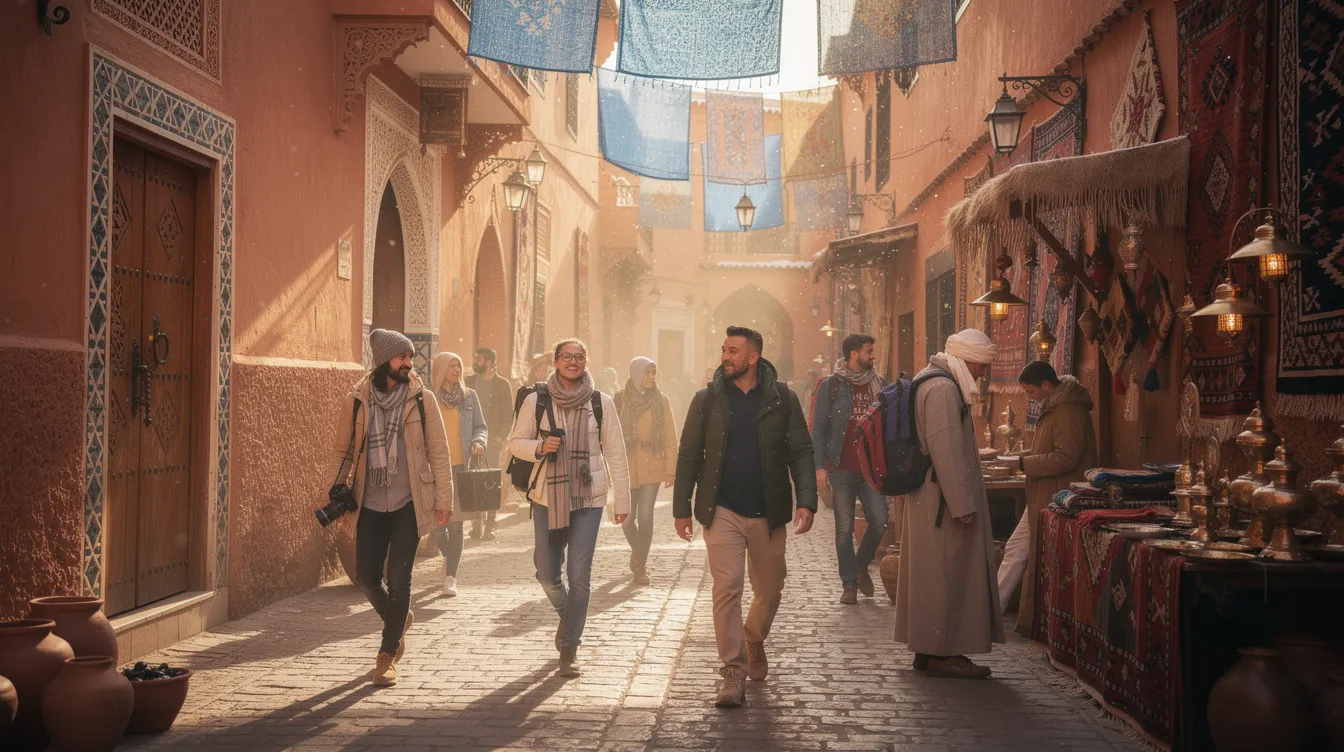
Marrakech stands out as one of the most comfortable places in Morocco in February. Expect sunny days with daytime temperatures climbing from around 19°C (67°F) early in the month to 22°C (71°F) by month’s end. Nights cool down to 7-9°C (45-48°F), creating those signature crisp Moroccan evenings.
Rain is limited—cloud cover hovers around just 34% of the time—and skies remain predominantly clear. The midday sun can feel warmer than the thermometer suggests, making this ideal weather for:
Wandering through the Jemaa el-Fna square
Exploring the Jardin Majorelle and Menara Gardens
Browsing souks without the oppressive summer heat
Enjoying rooftop terrace lunches
Evenings on those same rooftop terraces require warm clothing—a sweater or light jacket becomes essential once the sun drops. But compared to the scorching summer heat that can exceed 40°C, February feels like a gift.
From Marrakech, day trips to the Agafay stone desert or lower Atlas foothills enjoy pleasant weather, though higher passes may still carry snow.
The imperial cities of Fes and Meknes run cooler than Marrakech during February. Daytime highs typically reach 14-18°C (57-64°F), with nighttime lows around 5-7°C (41-45°F). You’ll encounter more cloud cover and occasional rain compared to the south.
Mornings and cooler evenings in the medina’s narrow streets can feel genuinely chilly. The ancient walls that keep out summer heat also trap the cold. Pack layers, a scarf, and possibly a hat for comfortable exploring cities on foot.
Rabat, positioned on the atlantic coast, offers slightly milder and more humid conditions with highs around 16-18°C (61-64°F) and occasional showers.
The upside? February brings fewer crowds to major cultural sites. You can experience:
Fes el-Bali’s labyrinthine medina without tour bus congestion
Meknes’s Heri es-Souani granaries in peaceful solitude
Rabat’s Kasbah of the Udayas with space to breathe
This is prime time for cultural immersion with Morocco Classic Tours, where local guides can share stories without shouting over crowds.
The coastal areas along Morocco’s Atlantic shore each have distinct February personalities.
Casablanca sees mild february weather with highs around 17-19°C (63-66°F) and lows near 10-11°C (50-52°F). Expect 4-6 rainy days scattered through the month, though showers rarely last long. The Hassan II Mosque visits and Corniche strolls remain enjoyable between passing clouds.
Essaouira earns its reputation for gentle breezes—though February winds can strengthen considerably. Temperatures hover around 16-18°C (61-64°F), attracting kitesurfers and windsurfers who appreciate the Atlantic gusts. Sea temperatures sit around 17-18°C (63-64°F), too cold for casual swimming without a wetsuit but perfect for coastal walks.
Agadir shines as Morocco’s warmest coastal spot in February. Expect highs reaching 18-22°C (64-72°F), with approximately 8 sunshine hours daily. Europeans seeking winter sun flock here for good reason—it delivers beach time when much of the continent remains grey.
Morocco Classic Tours can weave a few relaxed coastal days into cultural or desert itineraries, offering couples or families a slower pace before heading home.
The north experiences Morocco’s most changeable February weather.
Tangier sits at the crossroads of Mediterranean and Atlantic influences, creating unpredictable conditions. Daytime highs reach 14-17°C (57-63°F), but frequent clouds, coastal winds, and occasional rain keep you on your toes. The city’s European-influenced architecture and art scene reward visitors who don’t mind bundling up.
Chefchaouen climbs into the Rif Mountains, making it cooler still. Expect highs around 12-16°C (54-61°F) with chilly nights dropping to 4-6°C (39-43°F). However, the famous blue-washed medina often enjoys clear skies when clouds hover over the coast below.
February’s quieter atmosphere makes Chefchaouen ideal for:
Leisurely medina photography without crowds
Short hikes to the Spanish Mosque viewpoint
Café lingering with mountain views
Bring warm clothing, waterproof footwear, and expect the unexpected. Rain-slicked cobblestones require sturdy shoes.
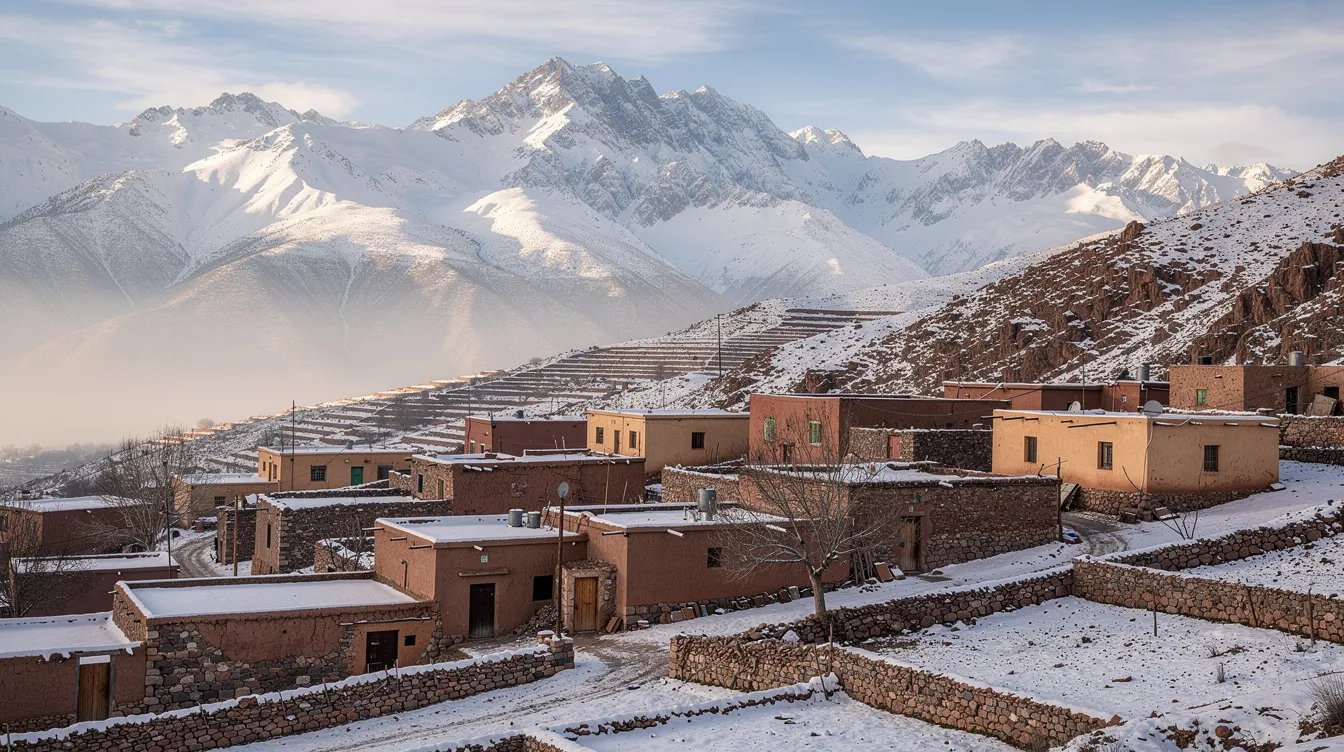
The high atlas mountains in February experience genuine winter. Think snow, ice, and below-freezing temperatures.
High Atlas: Daytime temperatures in mountain villages hover around 5-10°C (41-50°F), with nights often plunging below freezing. Heavy snowfall blankets passes like Tizi n’Test and Tizi n’Tichka, with freezing levels typically below 2,000m. This creates stunning scenery but requires proper cold-weather preparation.
Middle Atlas: Around Ifrane and Azrou, expect daytime temperatures of 0-10°C (32-50°F) and nights from -5°C to 0°C (23-32°F). The cedar forests draped in frost create picturesque winter landscapes—but avalanche risks exist on steeper slopes.
Winter Activities Available:
Skiing at Oukaïmeden (near Marrakech)
Snowshoeing through cedar forests
Snow play at Michlifen (near Ifrane)
For a coastal experience, discover the Agadir Fishing Port and explore Morocco's maritime heritage.
Travelers should pack genuine cold-weather gear if including mountain stays in their Morocco Classic Tours itinerary. This isn’t light jacket territory—think thermal layers, insulated jackets, and warm boots.
Some mountain passes may experience weather-related slowdowns or temporary closures. Build flexibility into travel days crossing the Atlas.
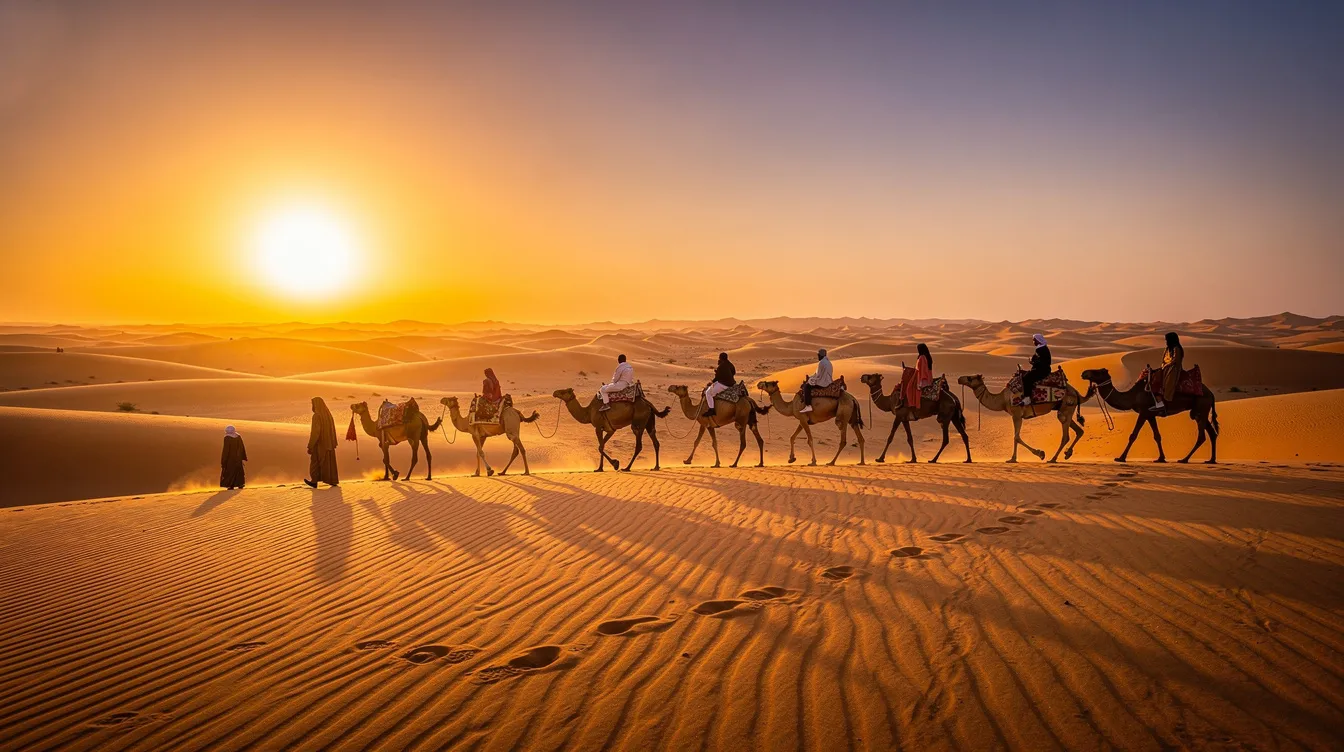
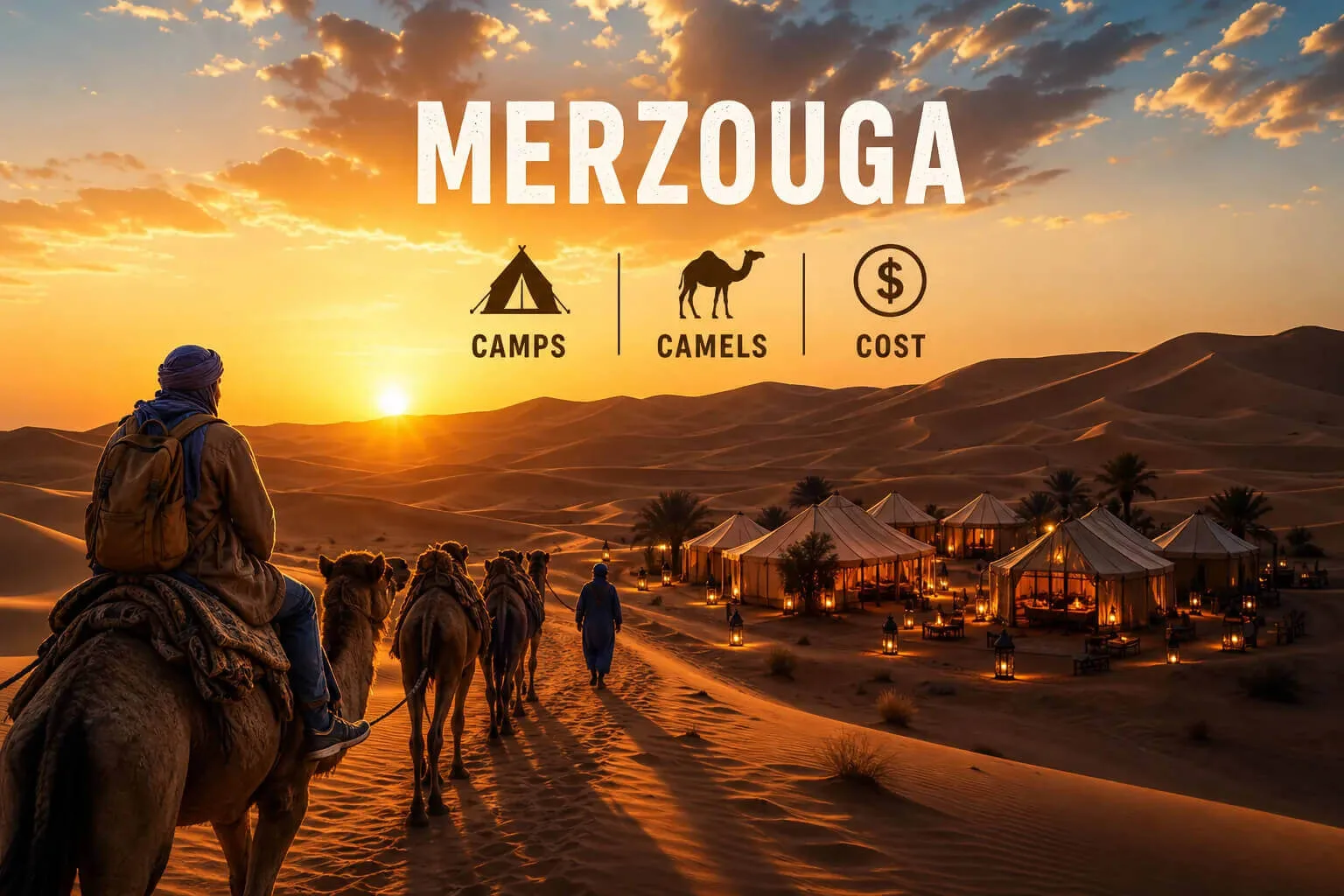
February represents one of the best times for experiencing the sahara desert. Days feel pleasantly mild to warm, around 18-22°C (64-72°F) with strong sunshine and low humidity. The desert air carries a crisp clarity perfect for photography.
But don’t let those daytime temperatures fool you. Once the sun drops, desert nights turn genuinely cold. Temperatures can plummet to 3-7°C (37-45°F), with clear nights occasionally dipping even lower due to the Sahara’s extreme radiative cooling—no clouds means heat escapes rapidly.
Typical conditions in Merzouga and Erg Chebbi:
Condition | February Average |
|---|---|
Daytime High | 18-22°C (64-72°F) |
Nighttime Low | 3-7°C (37-45°F) |
Rain Days | Nearly zero |
Sky Clarity | 77% sunshine |
Humidity | Very low |
This makes February ideal for: |
Comfortable daytime camel treks (no summer heat)
Spectacular stargazing on clear nights
Sunrise and sunset photography
4x4 adventures through dunes
Morocco Classic Tours desert camps provide heavy blankets, but guests should bring thermal layers, a beanie, and warm socks for cold nights under canvas. Sleeping bag liners rated for cold temperatures are wise additions.
Yes. February ranks among the best months for travelers who prefer mild weather, lower prices, and smaller crowds over beach swimming and guaranteed heat. This time of year offers a good balance of comfortable temperatures and fewer tourists, making it especially attractive for many visitors.
Comfortable temperatures in most regions for walking, exploring, and outdoor activities
Ideal desert conditions with warm days and manageable (if cold) nights
Quieter medinas with 20-30% fewer tourists than peak spring
Lower prices on flights and accommodations (often 25-40% off summer rates)
Almond blossoms beginning in southern valleys like Tafraoute
Dramatic landscapes with snow on Atlas peaks contrasting against desert dunes
Ocean swimming isn’t comfortable without a wetsuit (17-18°C water)
Northern rain can disrupt 7-8 days of the month in Tangier/Rabat area
Mountain trekking above 2,000m requires winter gear and faces potential closures
Evenings everywhere turn cool, limiting extended outdoor nightlife
Morocco Classic Tours uses February conditions to build balanced itineraries. A typical route might start in mild Marrakech, cross snowy Atlas passes for dramatic scenery, drop into the warm desert for camel treks and stargazing, then return via palm-filled oases. This approach captures Morocco’s diversity while avoiding weather extremes.
Packing for February means preparing for multiple seasons in a single trip. You might experience spring-like afternoons in Marrakech and winter nights in the desert or mountains.
Layers are everything:
Light base layers (cotton or merino)
Warm sweater or fleece
Medium-weight jacket (insulated if visiting mountains)
Long trousers (jeans work, but quick-dry travel pants offer more versatility)
Waterproof shell or rain jacket for coastal and northern regions
For Desert Nights:
Thermal top and bottoms
Warm hat/beanie
Thick socks
Down or fleece layer
Scarf (doubles as sun protection and warmth)
Sunglasses (essential for desert and snow glare)
Sunscreen (UV index reaches 3-5, enough to burn)
Gloves for atlas mountains and cold nights
Recommended footwear for different activities:
Medina walking: Comfortable closed-toe walking shoes
Northern/rainy cities: Water-resistant shoes with grip
Mountain excursions: Sturdy hiking boots
Coastal days: Sandals or casual shoes
Desert camps: Closed shoes (sand gets everywhere)
When checking into Morocco Classic Tours desert camps, bring a small daypack containing:
Warm sleepwear (camps are colder than you expect)
Headlamp or small flashlight
Personal toiletries
Phone/camera charging cables
Light layers for daytime dune walks
February’s weather opens up nearly every Moroccan destination—you simply need to match your clothing to the region.
Marrakech, Fes, Rabat, Meknes
February’s mild daytime temperatures transform the ancient cities into comfortable playgrounds for cultural exploration.
Why February Works:
Long walking tours through Jemaa el-Fna and Fes el-Bali feel pleasant, not punishing
Museums and palaces (Bahia Palace, Dar Batha) have shorter queues
Gardens show early spring life without crowds
Rooftop café culture thrives in the sunshine
A classic 7-10 day Morocco Classic Tours itinerary can connect Casablanca, Rabat, Meknes, Fes, and Marrakech with a short desert extension. Expect to wear a light jacket in mornings and evenings, especially in the cooler inland cities of Fes and Meknes.
Merzouga and the Erg Chebbi dunes deserve “must-see” status in February. The comfortable daytime temperatures make this arguably the ideal time for desert exploration.
February Desert Highlights:
Camel treks without summer’s searing heat
Crisp, star-filled skies for stargazing
Dramatic contrast: snow-capped Atlas visible from desert dunes
Private 4x4 drives through palm-filled valleys (Dades, Todra)
Traditional live music by campfire at desert camps
The scenic road over the Atlas via Aït Benhaddou and Ouarzazate offers spectacular February views, with snow on high peaks adding dramatic contrast to the ochre kasbahs below.
Note that some river crossings in remote valleys can carry more water than in late spring. Traveling with experienced Morocco Classic Tours driver-guides ensures safe route choices.
Essaouira appeals to travelers who appreciate artsy coastal towns, fresh seafood, and windswept beauty. February water remains too cool for casual swimming, but the town itself delivers:
Photogenic blue fishing boats and seagulls
Thuya wood workshops and galleries
Rampart walks with ocean views
World-class wind sports (with wetsuit)
Agadir suits sun-seekers with its wide sandy beach, modern seafront, and some of Morocco’s warmest February temperatures. Beach lounging is possible on calm days, though evenings require a windproof layer.
Morocco Classic Tours can plan coastal stays at the end of busier cultural or desert routes—perfect for unwinding before your flight home.
February offers genuine winter landscapes for those who want to see Morocco’s snowy side without technical mountaineering.
Accessible Winter Experiences:
Imlil and nearby villages as bases for day walks
Views of snow-topped Mount Toubkal
Cozy guesthouse stays with traditional meals
Cultural visits to Berber homes
Serious multi-day treks above 3,000m require crampons and winter gear, so most Morocco Classic Tours guests opt for easier scenic hikes combined with cultural experiences. A 3-4 day mountain side trip pairs perfectly with a longer February itinerary based in Marrakech.
February’s weather supports a full menu of activities across different regions and travel styles.
Camel Treks and Camps
The cooler daytime temperatures eliminate the biggest challenge of summer desert travel—extreme heat. February camel rides feel comfortable rather than endurance tests.
A Typical Morocco Classic Tours Desert Experience:
Late-afternoon camel trek across Erg Chebbi dunes
Sunset views from a high dune
Traditional Berber dinner at the camp
Live music and drumming by the campfire
Stargazing under remarkably clear skies
Sunrise walk before breakfast
Optional Daytime Activities:
4x4 drives to Berber villages and fossil beds
Sandboarding on the dunes
Nomad tent visits
Photography expeditions
Expect very cold nights and early mornings—heavy blankets provided, but personal warm layers remain essential.
February’s pleasant weather is perfect for full-day guided tours without overheating or fighting through summer crowds.
Recommended Experiences:
Private medina tours with local guides
Visits to Koranic schools and madrasas
Artisan workshop demonstrations (leather, pottery, metalwork)
Historical site explorations
Food-Focused Activities:
Morocco Classic Tours can arrange cooking classes, market visits, and tasting experiences featuring:
Tagine (slow-cooked stews)
Harira (traditional soup)
Pastilla (savory-sweet pie)
Fresh mint tea ceremonies
Evenings remain perfect for rooftop dinners overlooking lit-up medinas. Bring a light jacket—you’ll want it once the sun sets.
Mountains and Coast
February suits outdoor activities at lower and moderate elevations.
Mountain Options:
Moderate hiking in lower Atlas valleys
Skiing or snow play at Oukaïmeden and Michlifen
Scenic drives with snow-capped panoramas
Coastal Activities:
Long beach walks in Essaouira and Agadir
Surfing and kitesurfing (wetsuit required)
Seaside café culture
Fresh seafood dining
Weather-dependent activities may shift by a day or two due to rain or wind. Morocco Classic Tours builds flexibility into itineraries to accommodate this—a rainy Essaouira day might become a museum and gallery exploration instead.
Almond Blossom Festival (Tafraoute)
This celebration typically falls in February (exact dates vary year to year), marking the almond harvest in the Anti-Atlas valleys. Expect:
Traditional Berber music and dance
Local food stalls selling almond products
Artisan markets
Festive atmosphere in a stunning landscape
The surrounding scenery includes the Blue Painted Rocks and pink granite formations—mild temperatures make hiking in the area genuinely enjoyable.
Morocco Classic Tours can adjust itineraries to include the festival when dates align with your travel window.
Beyond the main festival, February’s low season means regional markets and local gatherings feel more authentic—fewer tourists means more genuine interactions.
February is an ideal time to savor Morocco’s renowned cuisine, thanks to the country’s mild temperatures and inviting atmosphere. As you wander through bustling cities or along the atlantic coast, you’ll find that the cooler winter air makes hearty Moroccan dishes even more comforting and delicious. Warm up with a steaming bowl of harira, a traditional soup brimming with lentils and spices, or indulge in a slow-cooked tagine, where tender meats and vegetables are infused with aromatic herbs.
The food scene in Morocco’s cities comes alive in February, with cozy cafés and vibrant markets offering everything from fresh-baked bread to sweet pastries. Don’t miss the chance to sip on Morocco’s famous mint tea, served hot and sweet—a perfect companion for a cool evening or a sunny afternoon. This is also the season to enjoy the country’s winter produce: juicy citrus fruits, plump olives, and freshly harvested almonds add a burst of flavor to every meal.
Whether you’re sampling fresh seafood along the atlantic coast, enjoying a rooftop dinner in Marrakech, or sharing a meal with locals in a mountain village, Morocco’s food and drink culture is sure to be a highlight of your visit. The combination of warm hospitality, rich flavors, and pleasant weather makes February a truly special time to explore the country’s culinary delights.
February sits comfortably between the busy winter holiday period and the spring peak season, making it a sweet spot for value-conscious travelers.
Factor | February Reality |
|---|---|
Crowds | 20-30% fewer tourists than peak months |
Riad Prices | Often negotiable, many discounted |
Flight Costs | 25-40% lower than summer |
Site Queues | Shorter or non-existent |
Desert Camps | More intimate, fewer large groups |
Many hotels and riads offer lower rates without requiring advance booking months ahead. That said, booking through Morocco Classic Tours ensures:
Guaranteed availability at quality properties
Better rates through established partnerships
Backup options if weather forces changes
Some mountain roads may experience slower travel due to snow or rain. The Tizi n’Tichka pass between Marrakech and Ouarzazate occasionally sees temporary delays after heavy snowfall.
This is where experienced Morocco Classic Tours driver-guides prove invaluable:
Real-time knowledge of road conditions
Alternative route options
Safe, confident driving in variable conditions
Flexibility to adjust timing as needed
Build buffer time into travel days crossing the Atlas—what Google Maps shows as a 4-hour drive might take 5-6 hours in winter weather.
Traveling to Morocco in February is a fantastic way to experience the country’s vibrant culture, breathtaking landscapes, and legendary hospitality—often with fewer crowds and pleasantly mild weather. However, as you plan your journey through Morocco’s ancient cities, desert regions, and mountainous areas, it’s important to keep a few safety and precaution tips in mind to ensure your trip is as smooth and enjoyable as possible.
**Weather Awareness:**Morocco in February brings a unique blend of climates. While you’ll find mild temperatures in many cities, the high atlas mountains can be cold and snowy, and the desert regions experience warm days but cold nights. Always check the local weather forecast before heading out, especially if your itinerary includes mountain passes or remote desert excursions. Sudden changes in weather—like rain in the north or snow in higher elevations—can affect transport and outdoor plans.
**Dress and Health Precautions:**Layering is key when you visit Morocco in February. Even if the days are warm, temperatures can drop quickly after sunset, especially in the desert and mountainous areas. Bring a light jacket for city strolls and warmer clothing for evenings or higher altitudes. Protect yourself from the sun with sunglasses and sunscreen, even on cooler days, as UV exposure can be strong year round. Staying hydrated is also important, particularly when exploring dry desert regions.
**Transport and Road Safety:**Travel between cities and across the country is generally safe, but February’s weather can sometimes cause delays, especially in the high atlas or central morocco. Mountain roads may be slippery or temporarily closed due to snow or rain. If you’re planning to visit remote areas or cross mountain passes, it’s wise to travel with an experienced local driver who understands the conditions and can adapt routes as needed. Morocco Classic Tours ensures all vehicles are well-maintained and drivers are prepared for winter weather.
**Personal Safety in Cities and Rural Areas:**Morocco’s ancient cities are generally safe for travelers, but as with any destination, it’s smart to stay aware of your surroundings. Keep valuables secure, especially in busy medinas, and avoid walking alone late at night in unfamiliar neighborhoods. In rural or desert regions, always let someone know your plans and expected return time, particularly if you’re venturing off the beaten path.
**Emergency Preparedness:**Carry a charged mobile phone, a copy of your passport, and a list of emergency contacts, including your tour operator and local authorities. In more remote desert or mountainous areas, having a basic first aid kit and any necessary medications is a good precaution. If you’re seeking a relaxing break in Marrakech after a day of adventure, consider checking out the best swimming pools in Marrakech for a chill day.
By taking these simple steps, you can confidently explore Morocco in February—whether you’re wandering through ancient cities, marveling at the high atlas mountains, or soaking in the tranquility of the desert. With Morocco Classic Tours, you’ll have expert support every step of the way, so you can focus on the adventure and beauty that make this country so unforgettable.
These sample routes demonstrate how to combine February-friendly regions effectively. All Morocco Classic Tours itineraries are fully customizable based on your interests, fitness level, and available time.
Route: Casablanca → Rabat → Fes → Middle Atlas → Merzouga desert camp → Dades Valley → Marrakech
February Weather Experience:
Cool cultural cities in the north (pack layers for Fes)
Winter landscapes in cedar forests (possible snow)
Comfortable desert days with crisp nights under stars
Warm finish in Marrakech
Highlights:
Private guided medina tours in Fes and Marrakech
Overnight in traditional Sahara desert camp
Sunset camel trek across Erg Chebbi dunes
Scenic drive through Dades Valley
Route: Marrakech → High Atlas → Aït Benhaddou → Merzouga → Dades/Todra → Essaouira → Marrakech
February Weather Experience:
Sunny city days in Marrakech
Snow-capped Atlas panoramas on mountain crossings
Perfect desert conditions for camping
Breezy but mild Atlantic coast
Highlights:
Two-night stays in key destinations for slower pace
Ksour and kasbah explorations
Desert stargazing
Coastal relaxation before departure
Morocco Classic Tours can adjust the balance—more coast, more desert, or more mountains—based on weather forecasts and your preferences.
Route: Marrakech → High Atlas → Ouarzazate → Dades/Skoura → Merzouga → Return
February Weather Experience:
Comfortable scenic drives (cooler than summer)
Pleasant daytime dune exploration
One memorable night in Sahara camp
This compact itinerary works perfectly as:
An add-on to a business trip
A focused short break
A first taste of the Moroccan desert
Some mountain stretches may be slower in winter weather, making a private Morocco Classic Tours driver essential for flexible timing and peace of mind.
Morocco in February feels like mild winter or early spring, depending on where you travel. Cities like Marrakech offer comfortable temperatures by day (around 20°C/68°F) but cool nights requiring a jacket. Mountains experience genuine winter with snow and below-freezing temperatures. The desert brings warm days but cold nights that can drop below 5°C/41°F.
Travelers rarely face extreme freezing conditions unless venturing into higher elevations. However, traditional riads often have more modest heating than European or North American hotels, so packing warm sleepwear is wise regardless of your itinerary.
Ocean temperatures along the atlantic coast hover around 17-18°C (63-64°F) in February—too cold for most casual swimmers without a wetsuit. Surfers and water sports enthusiasts regularly brave these temperatures with proper gear.
Some hotels in Agadir or Marrakech offer heated pools, though many outdoor pools remain unheated and feel chilly. February is better suited for beach walks, sunbathing on calm days, and water sports rather than traditional swimming.
Main routes between cities and toward the desert remain open year round in February. However, high mountain passes can experience occasional rain, snow, or fog that slows traffic or causes temporary delays.
Traveling with an experienced local driver—like those Morocco Classic Tours employs—reduces risk significantly. These guides know current conditions, alternative routes, and safe driving techniques for variable weather. Serious disruptions aren’t daily occurrences, but building buffer time into long travel days remains wise.
Evening and Night:
Thermal base layers
Fleece or wool sweater
Insulated jacket
Long trousers
Thick socks
Beanie or warm hat
For accommodation recommendations during your trip, check out the best hotels in Essaouira Morocco.
Daytime in the Dunes:
Long-sleeved cotton or linen shirt
Light trousers
Scarf for sun and wind protection
Sunglasses
Comfortable closed shoes
Morocco Classic Tours camps supply heavy blankets, but personal warm layers make the difference between a cold uncomfortable night and a magical desert experience.
February is an excellent month for first-time visitors who don’t require hot beach weather and prefer moderate temperatures with fewer crowds. You can easily combine major highlights—Marrakech, Fes, a Sahara camp, and possibly the coast—without dealing with summer heat or peak-season pricing.
The pleasant weather in most regions allows comfortable exploration of exactly the experiences Morocco is famous for: medina wandering, desert adventures, and mountain scenery. Contact Morocco Classic Tours to design a first-time itinerary perfectly matched to February’s conditions and your personal interests.
February offers a compelling window to experience Morocco’s remarkable diversity. From snow-dusted Atlas peaks to sun-warmed desert dunes, from ancient medinas to Atlantic beaches, the country reveals itself beautifully in this transitional month.
Ready to start planning your February adventure? Contact Morocco Classic Tours to create a personalized itinerary that makes the most of the season’s weather, lower prices, and uncrowded attractions. Our local guides and drivers know exactly how to navigate February conditions—so you can focus on the experience, not the logistics.
Explore top Moroccan tour operators for unforgettable adventures. Discover unique experiences that s...
Read this article
Explore Morocco's top travel destinations for an unforgettable experience. Discover vibrant cultures...
Read this article
Discover the perfect itinerary for your Moroccan adventure. Learn how many days you need to explore ...
Read this articleWant cool tour deals and tips about Morocco? Enter your email and we’ll send them to you each month!