Group Tour Agencies in Morocco: How to Pick the Right One
Compare Morocco group tour agencies by trip style, reviews, pace, transport and inclusions. Learn wh...
Read this article

Private, custom Morocco trips planned in Fez by AZ-ZDDINE, working in Moroccan tourism since 2012. Sahara, Atlas, medinas and coast, arranged around you.
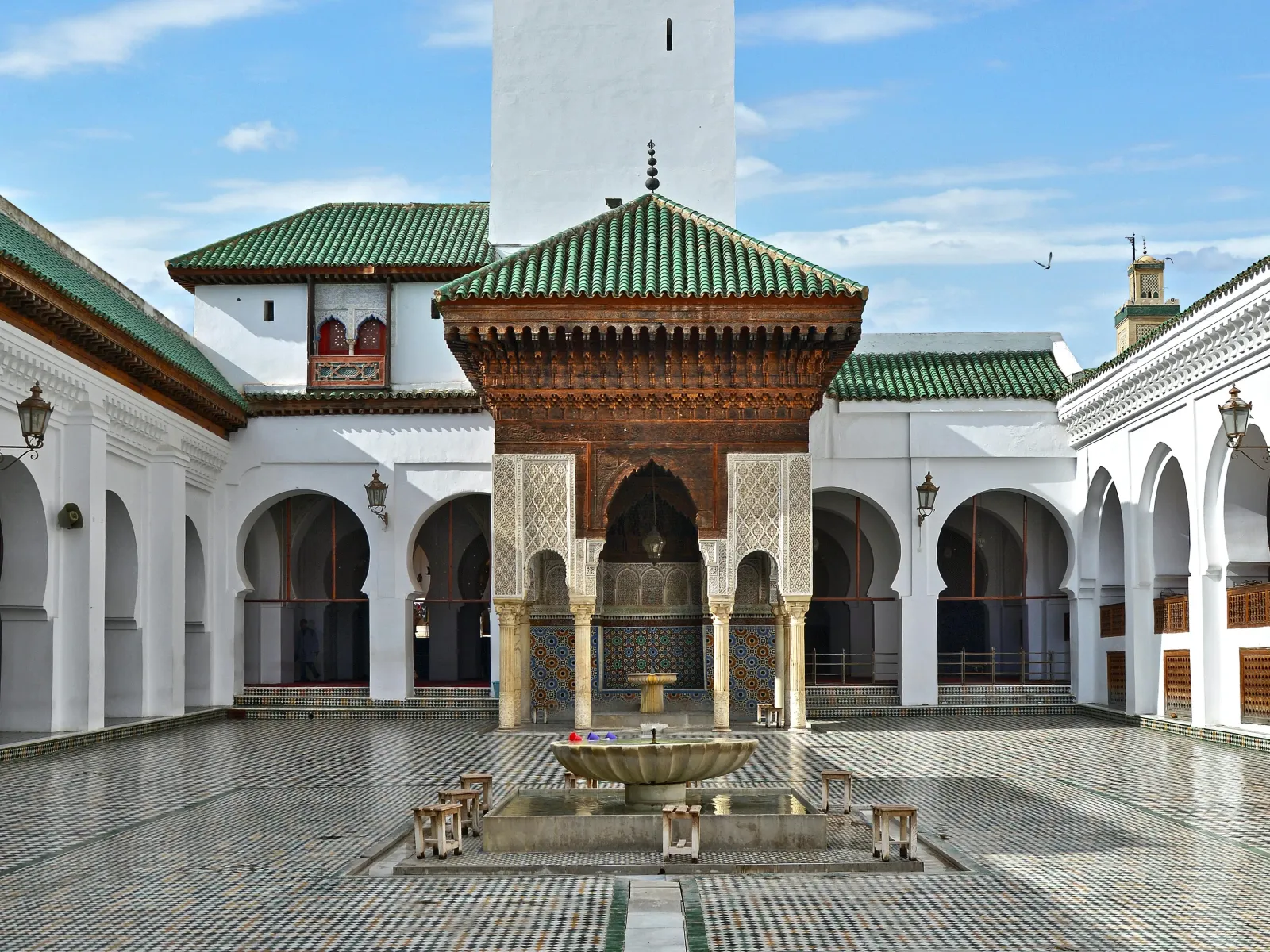
The University of Al Quaraouiyine (also written al-Qarawiyyin or Al-Karaouine) in Fez, Morocco, originated as a mosque founded around 859 CE by Fatima al-Fihri and is recognized by UNESCO and Guinness World Records as the world’s oldest continually operating educational institution.
Today, the historic core functions as both an active mosque and a specialized state university focused on Islamic studies and classical Arabic, with strict admission requirements including Quran memorization and advanced Arabic proficiency.
Key historical milestones include the 9th-century foundation, the Marinid “golden age” of the 13th–14th centuries, later intellectual decline, French protectorate reforms, and formal transformation into a Moroccan state university between 1963 and 1965.
The Al Quaraouiyine Library, founded around 1349 and restored between 2012 and 2016, houses thousands of rare manuscripts and ranks among the oldest continually operating libraries worldwide.
While non-Muslim visitors cannot enter the prayer hall, travelers can explore the surrounding Fez medina, view the mosque courtyard from its gates, and join guided cultural tours that cover the institution’s history and nearby Marinid madrasas.
Deep within the labyrinthine alleys of Fes el-Bali lies a complex of whitewashed walls and green-tiled roofs that predates Oxford, Bologna, and the Sorbonne by centuries. The University of Al Quaraouiyine—also spelled al-Qarawiyyin, al-Karaouine, or Al Quaraouiyine—stands as the world’s oldest continually operating higher-learning institution, a living monument to over 1,160 years of intellectual and academic history.
What began as a neighborhood mosque for immigrants from Kairouan evolved into the preeminent educational institution of the Islamic West, shaping generations of scholars across the muslim world. For travelers exploring Fez with Morocco Classic Tours, this mosque-university-library complex represents more than architecture—it embodies the intersection of faith, scholarship, and Morocco’s enduring cultural identity.
The story of al Qarawiyyin begins in 857–859 CE, when a wealthy woman named Fatima al-Fihri was determined to build a mosque for her community. Fatima al Fihri migrated with her merchant family from Qayrawan (present-day Tunisia) to Fez around 825 CE. When her father, Mohammed al-Fihri, died, she inherited substantial wealth—and Fatima vowed to spend it on something lasting.
According to tradition, she supervised the construction herself, fasting throughout the building period. She named the mosque al-Qarawiyyin in honor of her hometown, establishing it as a gathering place for the Qayrawani immigrant community in Fez’s bustling quarter.
Like many early Islamic mosques, Al Quaraouiyine served multiple functions from the start:
Place of worship for daily and Friday prayers
Community assembly hall for civic gatherings
Mosque school where informal religious instruction occurred
Center for Legal Consultation where scholars advised on Islamic jurisprudence
Some epigraphic evidence suggests Dawud ibn Idris expanded the mosque in 877 CE, though mainstream scholarship retains 859 as the founding date. By the 10th century, al-Qarawiyyin had become one of Fez’s main Friday mosques, attracting scholars and students from across the Maghreb and al-Andalus. The transition from mosque school to an organized center of learning occurred gradually, with formal teaching circles documented by the early 12th century.
Under the Marinid dynasty (13th–14th centuries), Al Quaraouiyine reached its intellectual zenith, becoming the pre-eminent center of learning in the western Islamic world. The Marinids invested heavily in Islamic scholarship, viewing patronage of religious education as essential to their legitimacy.
The curriculum during this period reflected remarkable breadth:
Subject Area | Specific Disciplines |
|---|---|
Religious Sciences | Quranic studies, tafsir, hadith, Maliki fiqh |
Language & Rhetoric | Arabic grammar, morphology, balagha |
Rational Sciences | Logic, philosophy, mathematics |
Applied Sciences | Medicine, astronomy, geography |
The Marinids founded several nearby madrasas to house students whose formal instruction occurred in the mosque itself: | |
Madrasa as-Saffarin (late 13th century) near the coppersmiths’ quarter
Madrasa al-Attarine (1325–1328), renowned for its intricate stucco and zellij tilework
Madrasa Mesbahiya (early 14th century)
The Al Quaraouiyine Library was founded around 1349, often attributed to Marinid sultan Abu Inan Faris. It quickly amassed manuscripts from the Maghreb, al-Andalus, and eastern Islamic lands.
Notable scholars associated with Al Quaraouiyine include Ibn Khaldun, the 14th-century historian whose “Muqaddimah” pioneered social theory; Mohammed al-Idrisi, the celebrated cartographer; and Ibn al-Arabi. Christian scholars also engaged with Fez’s intellectual life—the Flemish humanist Nicolas Cleynaerts studied Arabic here in the 16th century. Teaching followed the halqa method: students sat in circles around a sheikh, reciting canonical texts and engaging in oral commentary.
From the late medieval period onward, Al Quaraouiyine’s curriculum narrowed progressively. Where the Marinid era embraced traditional Islamic sciences alongside philosophy and natural sciences, subsequent centuries saw the institution prioritize legal and linguistic studies while gradually dropping other non-Islamic subjects.
By the 18th century, under Sultan Muhammad ibn Abdallah (ruled 1757–1790), reforms sought to regulate teaching but also restricted certain subjects:
Speculative philosophy was discouraged or banned
Some Sufi texts deemed heterodox were removed
Advanced sciences like astronomy and medicine lost prominence
The result was increased intellectual conservatism—emphasis shifted to memorization of canonical Maliki legal texts and shorter medieval Islamic texts in grammar, with limited space for innovation.
By the 19th century, signs of decline were unmistakable: fewer prestigious professors, reduced student enrollment, and serious neglect of the university library. Part of the manuscript collection was lost through theft, sale, or poor preservation. Yet despite this decline, Al Quaraouiyine remained Morocco’s premier symbol of religious authority, continuing to train the ulama who staffed mosques and served as qadis in the sultan’s administration.
The French protectorate period (1912–1956) diminished Al Quaraouiyine’s political influence while preserving its role as a training ground for religious scholars. Between 1914 and 1947, French authorities introduced administrative reforms—registries, student lists, regular timetables—while leaving the core curriculum largely unchanged.
A significant social shift occurred in the 1940s, when women began to be admitted in small numbers, primarily for Quranic and Arabic studies.
Key post-independence milestones transformed the institution:
Year | Development |
|---|---|
1947 | Integration into the national education system |
1963 | Royal decree formally recognizing university status |
1965 | Official renaming to “University of Al Quaraouiyine.” |
1975 | General disciplines transferred to the new Sidi Mohamed Ben Abdellah University |
1988 | King Hassan II re-emphasized traditional Islamic sciences |
2015 | Royal decree granted distinct public status with administrative autonomy |
The reorganization created faculties of Sharia (Islamic law), Usul al-Din (theology), and Arabic language studies. Today, Al Quaraouiyine functions as a degree-granting university integrated into Morocco’s national higher education framework. | |
The contemporary University of al-Qarawiyyin operates as a specialized institution of African higher education with campuses in Fez and branches in cities like Tétouan. Al Qarawiyyin University concentrates on Islamic and theological courses rather than general academic disciplines.
Core subjects taught today include:
Quranic studies and tafsir
Hadith and hadith methodology
Maliki jurisprudence and usul al-fiqh
Theology (aqida)
Classical Arabic grammar and rhetoric
Moroccan Islamic culture and history
Traditional teaching methods survive: students attend lecture circles sitting in halqa format around a sheikh in the mosque or lecture halls, reading classical texts aloud before engaging in explanation and debate. This approach to traditional Islamic education echoes methods used during the early Islamic period.
Admission requirements are rigorous:
Memorization of the entire Quran (or substantial portions)
Strong command of classical Arabic
Completion of preparatory religious schools in Morocco or equivalent
Competitive entrance examinations overseen by university authorities
Can anyone study there? In practice, enrollment is open primarily to Muslims with advanced Arabic and solid religious preparation. The student body comes chiefly from Morocco, West Africa, and muslim Central Asia. Programs are not designed for short-term foreign language learners or casual visitors seeking traditional Islamic sciences exposure.
For those seeking American-accredited options, Morocco hosts institutions like Al Akhawayn University in Ifrane (founded 1995), which follows an American liberal arts model in English. Former French army barracks in various cities now house other modern institutions—but these remain entirely separate from Al Quaraouiyine’s mission.
The al-Qarawiyyin Mosque ranks among the largest and oldest mosques in Africa, with a capacity for approximately 20,000–22,000 worshippers across roughly half a hectare within Fez’s medina.
Exterior features visible from surrounding streets:
Square minaret dating to the 10th century
Whitewashed walls and green-tiled roofs
Large carved wooden doors opening onto the courtyard
Decorative tilework and stucco around entryways
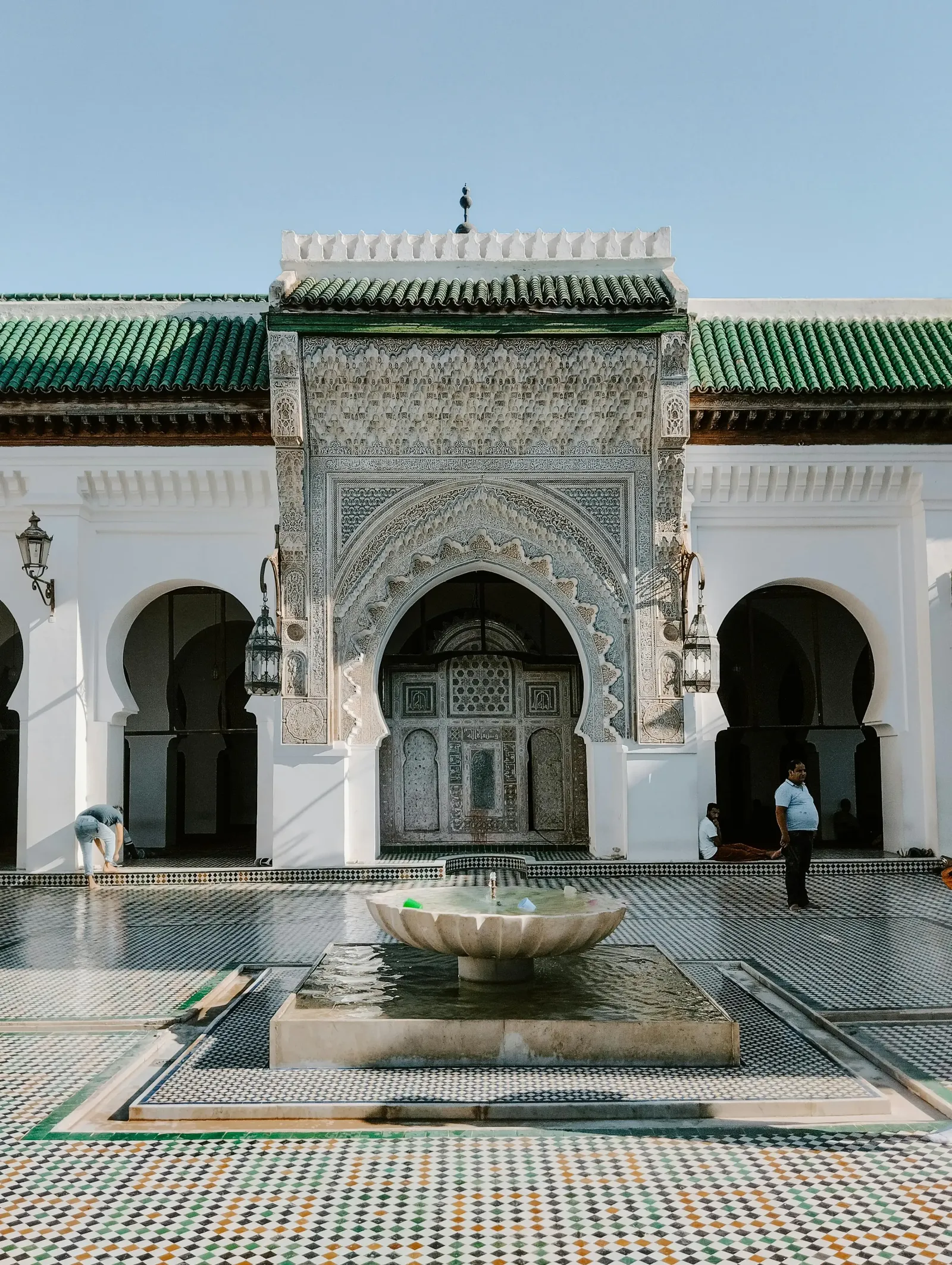
The internal layout follows classic hypostyle mosque architecture: a large prayer hall with multiple naves formed by horseshoe and pointed arches resting on columns. A central courtyard (sahn) features marble fountains used for ablutions. Annexes include the Dar al-Muwaqqit (timekeeper’s room), where mosque astronomers historically calculated prayer times, plus access points to the library.
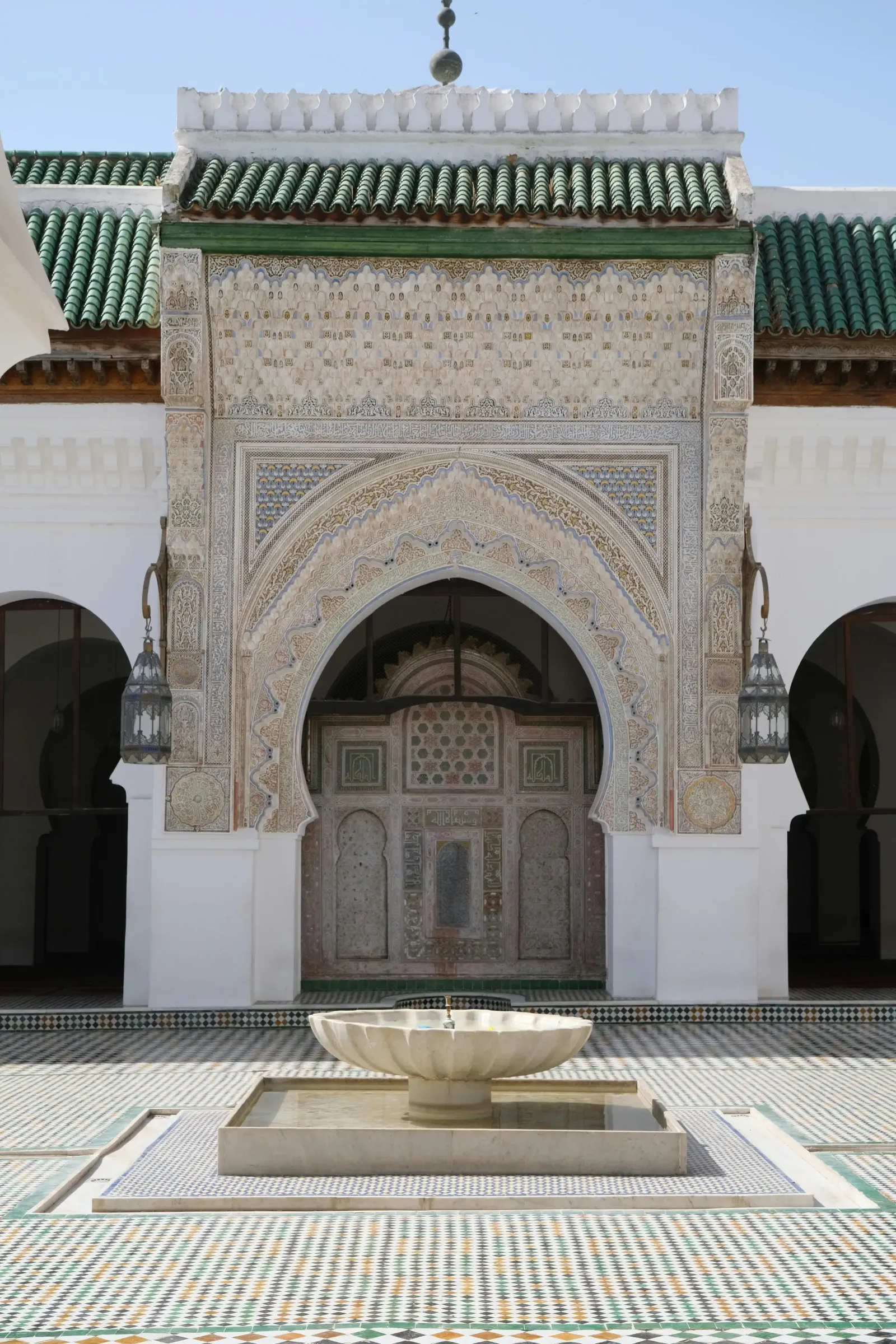
The mosque suitable for worship today represents centuries of expansion: Idrisid foundations, Almoravid and Almohad enlargements, and Marinid and Saadian decorative programs featuring intricate stucco, zellij, and carved cedar ceilings. Each dynasty left its mark, making the complex a living museum of Moroccan Islamic artistry.
The Al Quaraouiyine Library stands as one of the oldest continually operating libraries in the world, founded around 1349 and expanded significantly in 1591. It functions today as both a research repository and a heritage site.
Notable manuscripts include:
Early Quran copies, including a richly decorated mushaf donated by Saadian sultan Ahmad al-Mansur in 1602, written on gazelle skin in Kufic script—a treasure representing Islam’s holy book in its finest calligraphic tradition
A valuable copy of Imam Malik’s “Al-Muwatta,” foundational to the Maliki school of legal sciences
Works by Ibn Khaldun, including copies of his groundbreaking “Muqaddimah.”
Scientific treatises on astronomy, mathematics, and medicine reflecting the integrated nature of classical Islamic scholarship
By the late 20th century, the library suffered from humidity, seepage, and structural decay. Beginning around 2012, Moroccan-Canadian architect Aziza Chaouni led a comprehensive restoration including structural stabilization, climate control installation, and creation of a manuscript conservation laboratory.
The renovated library reopened in stages around 2016, gaining international attention from outlets like TIME. Access to rare manuscripts remains controlled; scholars must apply in advance with research credentials. The space now functions as part research library, part heritage site open to supervised visitors.
UNESCO and Guinness World Records recognize the University of Al Quaraouiyine as the world’s oldest continually operating educational institution—often labeled simply the “oldest university.” Founded in 859 CE, it predates the University of Bologna (1088) and Oxford (late 11th–12th centuries) by centuries.
The academic debate centers on terminology. Some historians reserve “university” for the specific European universitas model—a corporate legal entity with self-governance rights. By that stricter definition from Christian Europe, Al Quaraouiyine functioned more like a mosque college until its 20th-century reorganization.
A madrasa is a traditional Islamic educational institution, often attached to a mosque, focusing on religious and legal sciences, with students typically required to memorize the Quran and master Classical Arabic before admission. At Al Quaraouiyine, the madrasa model evolved to include a broader curriculum and degree-granting functions, aligning it with the concept of a university as recognized by international bodies.
However, if a university means an institution providing:
Organized, advanced instruction beyond basic literacy
Recognized teachers and enrolled students
Credentials (ijazat) authorizing graduates to teach
Continuous operation over centuries
Then Al Quaraouiyine unquestionably qualifies. Within Morocco’s current framework, it functions as a public state university devoted to Islamic sciences, integrated into national degree structures offering bachelor’s, master’s, and doctoral programs—making any debate about whether it remains a university today rather academic itself.
The contemporary University of Al Quaraouiyine continues to emphasize its traditional roots while adapting to modern educational standards.
A halaqa is a traditional study circle where students sit around a sheikh (teacher) to read, discuss, and memorize texts. This method remains central at Al Quaraouiyine, complemented by modern lecture-style classes in some programs.
Students at Al Quaraouiyine typically gather in the mosque or lecture halls, seated in a semi-circle around their teacher, reciting classical texts aloud, engaging in explanation, and participating in debate. This approach to traditional Islamic education echoes methods used during the early Islamic period, fostering close mentorship and mastery of core religious and linguistic subjects. In addition to halaqa-based learning, some courses—especially in language or non-Islamic subjects—may use contemporary classroom formats, blending the best of both worlds.
Core subjects taught today include:
Quranic studies and tafsir
Hadith and hadith methodology
Maliki jurisprudence and usul al-fiqh
Theology (aqida)
Classical Arabic grammar and rhetoric
Moroccan Islamic culture and history
Select non-Islamic subjects such as French and English
Admission requirements are rigorous:
Memorization of the entire Quran (or substantial portions)
Strong command of classical Arabic
Completion of preparatory religious schools in Morocco or equivalent
Competitive entrance examinations overseen by university authorities
Most students range from 13 to 30 years old and pursue high school diplomas or university-level bachelor’s degrees, with advanced programs available for further specialization.
Can anyone study there? In practice, enrollment is open primarily to Muslims with advanced Arabic and solid religious preparation. The student body comes chiefly from Morocco, West Africa, and Muslim Central Asia. Programs are not designed for short-term foreign language learners or casual visitors seeking traditional Islamic sciences exposure.
For those seeking American-accredited options, Morocco hosts institutions like Al Akhawayn University in Ifrane (founded 1995), which follows an American liberal arts model in English. Former French army barracks in various cities now house other modern institutions—but these remain entirely separate from Al Quaraouiyine’s mission.
For non-Muslim visitors, access rules are straightforward: the al-Qarawiyyin Mosque and main prayer hall are open to Muslims for worship, while non-Muslim visitors cannot enter the mosque interior. However, visitors can view parts of the courtyard and architecture from open doorways and surrounding alleys.
Practical visiting patterns:
The mosque operates daily with doors open during prayer times
Gates may close during prayers or outside key hours
Fridays and religious holidays see particularly heavy use
No commercial ticket system exists—entry for Muslims is free
How travelers can experience the site:
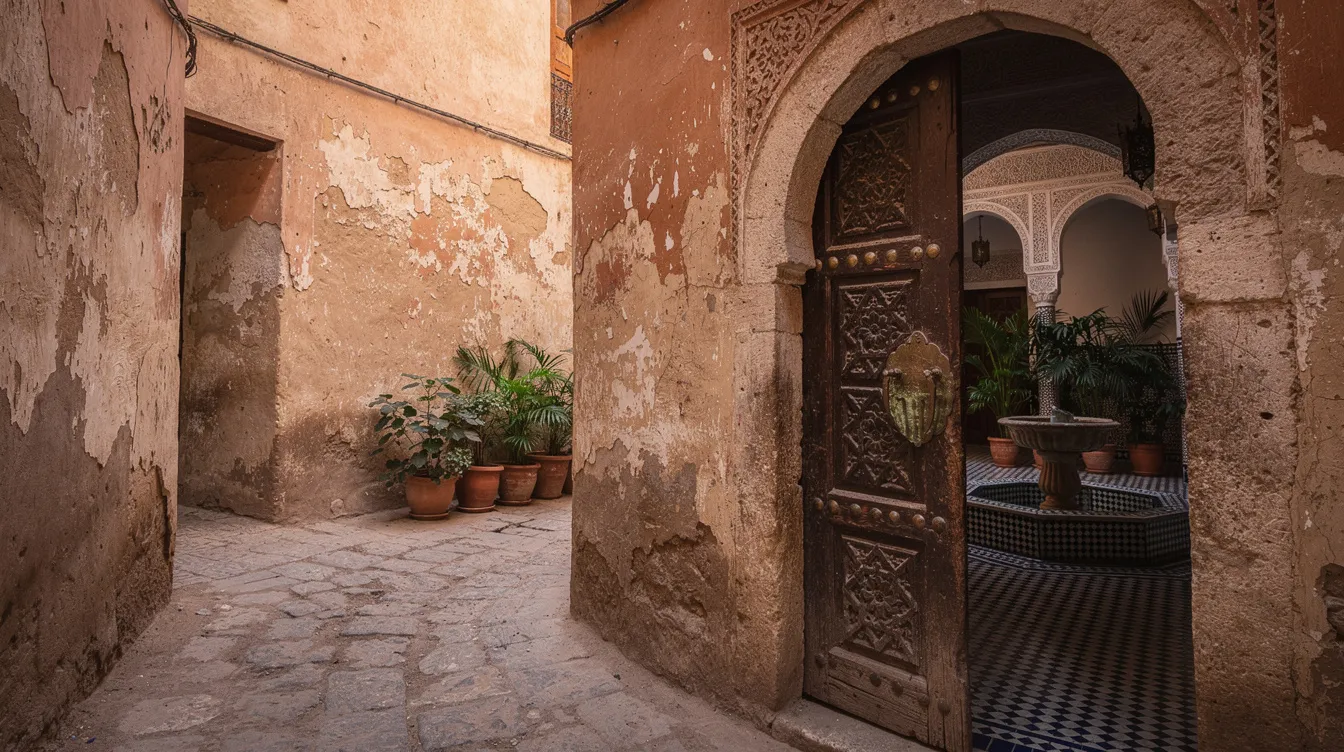
Wander through Fes el-Bali’s spice and leather markets to reach mosque gates
Admire the historic façade and peek through open doors into the courtyard
Visit nearby Marinid madrasas like al-Attarine and Bou Inania, often open to non-Muslims
Explore the library area if access permits during your visit
Morocco Classic Tours structures Fez city tours to maximize these opportunities: guided walks through medina quarters, historical explanation at Al Quaraouiyine’s main portal, stops at accessible madrasas, and visits to artisan workshops and panoramic viewpoints.
Reaching Fez: Flights arrive at Fes-Saïss International Airport from European hubs. Trains connect from Casablanca and Rabat. Given Medina’s maze-like layout, private transfers and licensed local guides are strongly recommended.
Morocco Classic Tours designs private, customizable itineraries that typically include Fez alongside Sahara Desert camps, Atlas Mountains scenery, and imperial cities like Marrakech and Rabat. For visitors focused on Fez and Al Quaraouiyine, several arrangements work particularly well:
Recommended travel logistics:
Private airport transfers from Fes-Saïss to your riad
Train connections from Casablanca (approximately 3.5 hours) or Tangier
Accommodation in a traditional riad inside or near the old medina
A Fez city day tour typically includes guided exploration of key medina quarters, historical interpretation at Al Quaraouiyine’s gates, visits to madrasas like al-Attarine, stops at the famous tanneries, and time in artisan workshops. While you cannot book “tickets” for the mosque, Morocco Classic Tours organizes licensed guides who know optimal vantage points, current access rules, and the best times to visit.
Consider combining Fez with multi-day experiences: camel treks in Merzouga, overnight desert camps under Saharan stars, or cultural immersion across Morocco’s imperial cities. Contact Morocco Classic Tours to customize your itinerary, receive up-to-date visiting advice, and ensure future generations of memories from this extraordinary destination.
Yes. Al Quaraouiyine functions as a public Moroccan university specializing in Islamic sciences and Arabic studies. Following World War II and post-independence reforms, the institution was formally reorganized with faculties in Fez and branches in other cities. It offers bachelor’s, master’s, and doctoral programs within Morocco’s national higher education framework, supervised by relevant ministries including the Ministry of Higher Education and the Ministry of Endowments and Islamic Affairs.
Programs are designed for Muslim students with strong classical Arabic skills and an extensive Quranic background. While nationality is not a formal barrier, applicants must meet rigorous requirements, including substantial Quran memorization and completion of preparatory religious instruction. Al Quaraouiyine is not a typical destination for non-Muslim students, beginners in Arabic, or those seeking general higher education rather than specialized Islamic religious training.
The main language of instruction is classical Arabic (fusha) and Modern Standard Arabic. Some supporting courses may use French or English. Those interested in reaching similar proficiency levels should pursue advanced Arabic learning apps focused on Quranic vocabulary and classical grammar, study canonical texts like the Ajurrumiyya, and consider formal instruction at Arabic language institutes before exploring study in Morocco.
US citizens can typically enter Morocco visa-free for tourism stays up to 90 days with a valid passport (six months' validity recommended). Entry stamps are provided on arrival. Travelers should verify current requirements—including any health documentation or registration obligations—on official Moroccan government or US State Department websites before departure, as rules can change.
Prestige depends on the field. For Islamic scholarship and Arabic religious studies, Al Quaraouiyine remains pre-eminent. For general academic disciplines, Mohammed V University in Rabat, Hassan II University in Casablanca, and Sidi Mohamed Ben Abdellah University in Fez hold strong reputations. Al Akhawayn University in Ifrane offers American-style English-medium education with international recognition. Each institution serves different academic goals and student populations. Greenwood Publishing Group and other academic publishers have documented these distinctions in their surveys of Middle East and African higher education systems.

Compare Morocco group tour agencies by trip style, reviews, pace, transport and inclusions. Learn wh...
Read this article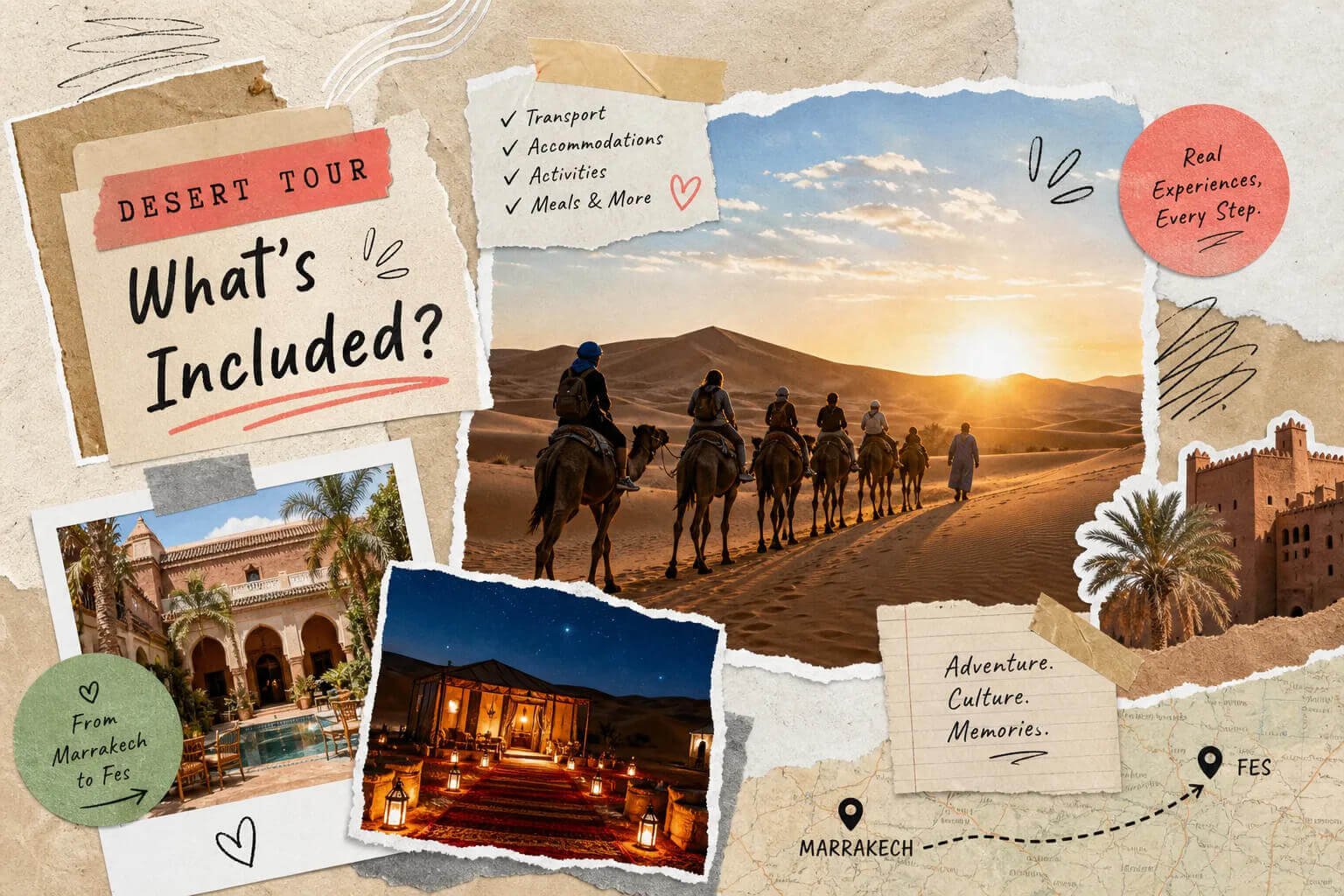
Uncover what a Marrakech to Fes desert tour offers, including camel rides, desert camps, and rich cu...
Read this article
Join our Merzouga Overnight Tour for an authentic desert experience. Enjoy camel rides, comfortable ...
Read this articleWant cool tour deals and tips about Morocco? Enter your email and we’ll send them to you each month!
