Group Tour Agencies in Morocco: How to Pick the Right One
Compare Morocco group tour agencies by trip style, reviews, pace, transport and inclusions. Learn wh...
Read this article

Private, custom Morocco trips planned in Fez by AZ-ZDDINE, working in Moroccan tourism since 2012. Sahara, Atlas, medinas and coast, arranged around you.
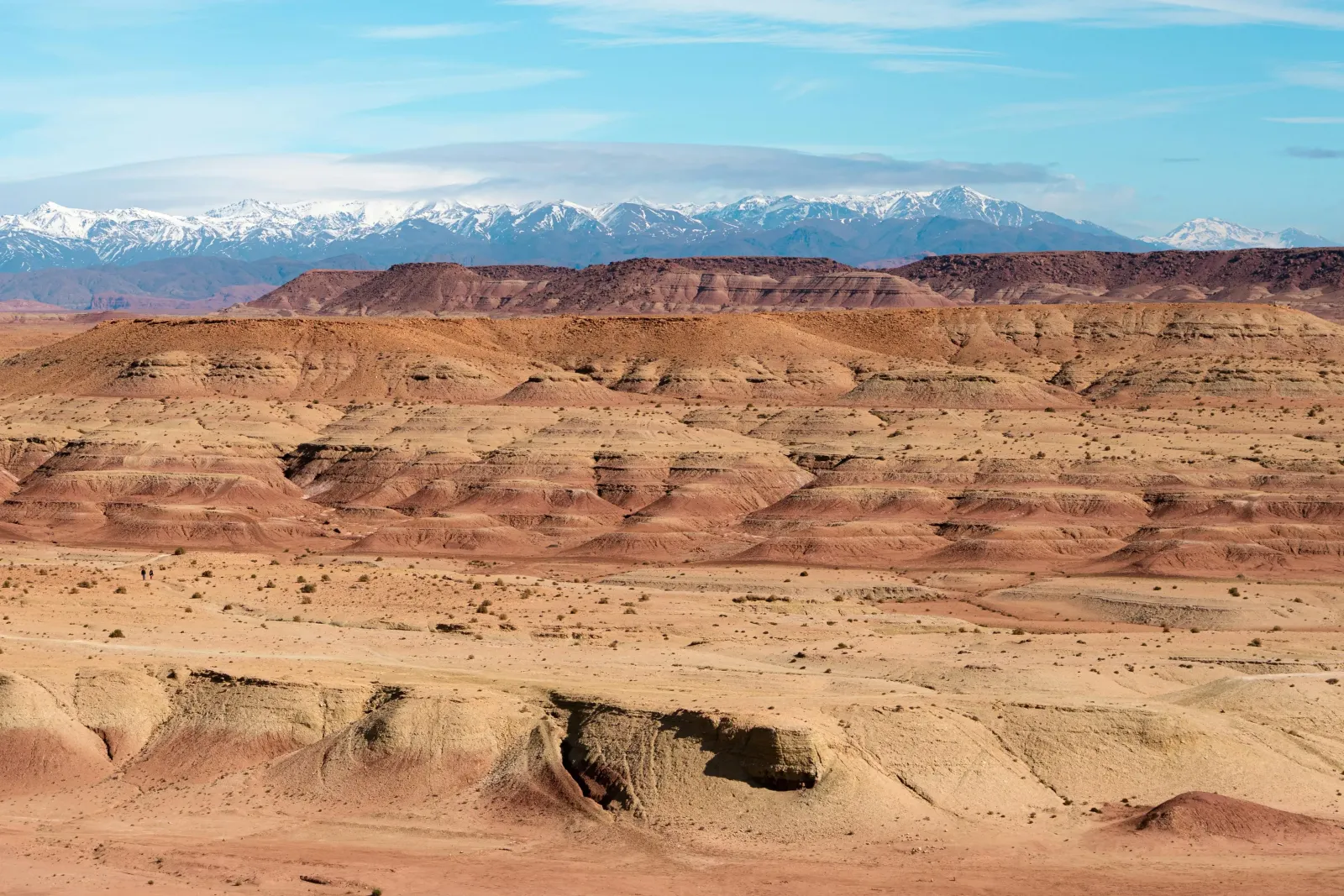
Live conditions at the Agafay Desert right now, plus long-term monthly climate data to help you choose the perfect time to visit this rocky moonscape just 30 km from Marrakech.
Live data from Open-Meteo · Updated when this page loads
Monthly climate averages based on long-term means for the Agafay Desert region near Marrakech. Live data: Open-Meteo. © Morocco Classic Tours.
Welcome to your comprehensive guide to Agafay Desert weather by month, designed specifically for travelers planning a visit to this unique Moroccan landscape. This guide covers everything you need to know about Agafay’s climate, including monthly temperature ranges, rainfall, humidity, and what to expect day and night. Understanding the weather patterns is crucial for planning your trip, choosing the best time to visit, packing appropriately, and ensuring a comfortable and memorable experience—whether you’re joining a day trip, an overnight camp, or an adventure tour. Morocco Classic Tours provides expert insights and practical tips to help you make the most of your Agafay journey, no matter the season.
The best time to visit Agafay Desert is March–May and September–November, with comfortable temperatures around 20–30°C (68–86°F)
Summer months (June–August) bring peak heat exceeding 35–38°C, ideal for late afternoon and evening activities only.
Winter nights (December–February) can drop close to 5°C, requiring warm layers for desert camps.
Agafay has a semi-arid climate with minimal rainfall concentrated from November to April and low humidity year-round.
Morocco Classic Tours customizes Agafay day trips and overnight stays based on seasonal conditions and your comfort preferences.
Located approximately 45 minutes southwest of Marrakech, the Agafay Desert is a stony, rocky landscape quite different from the sandy dunes of the Sahara Desert. This region features a semi-arid climate transitioning toward hot desert conditions, characterized by hot, dry summers and mild winters with significant day-to-night temperature swings of 10–15°C.
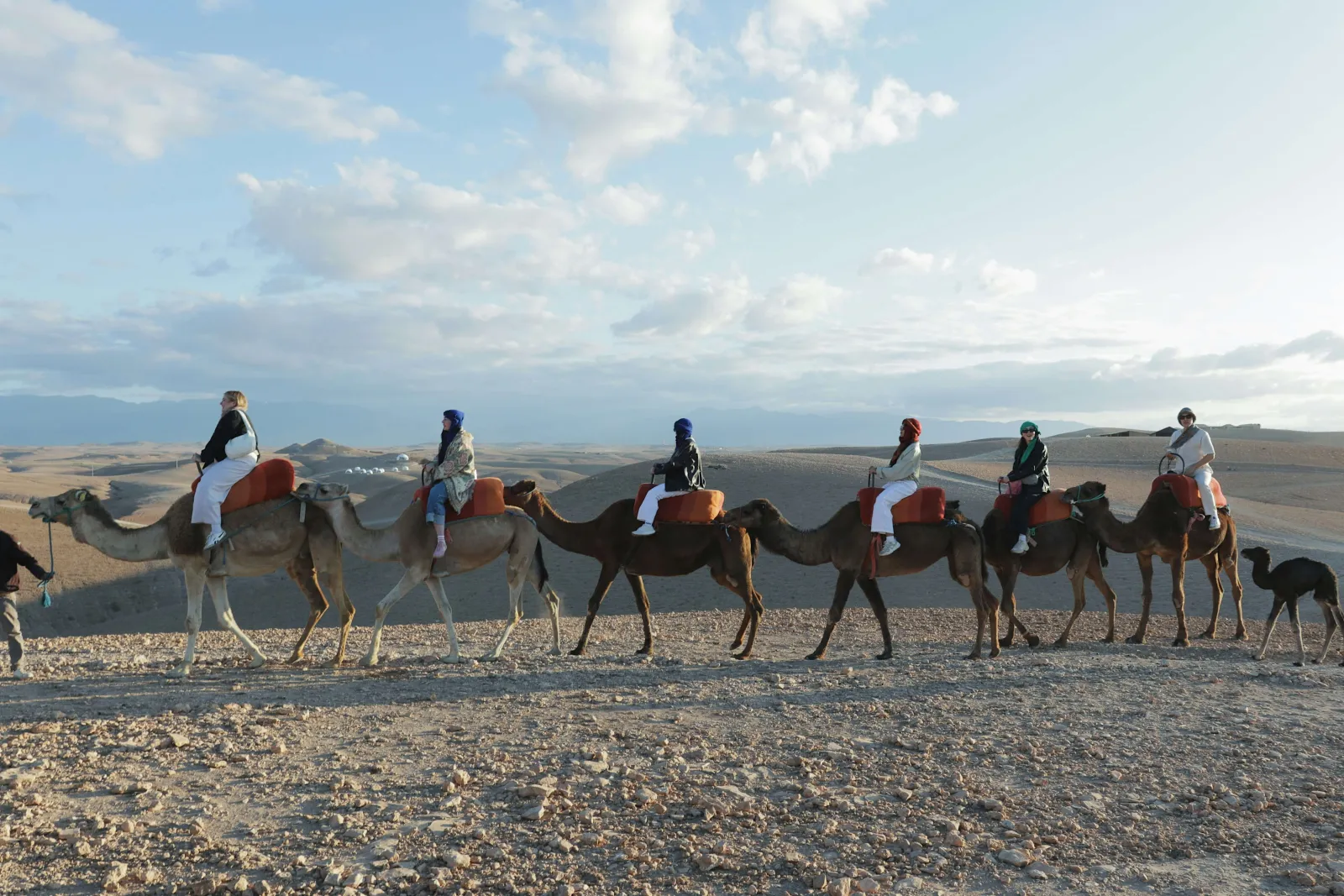
Annual average temperatures hover around 29°C, with recorded extremes including 47°C in August and daytime lows of 10°C in winter. The proximity to the Atlas Mountains moderates conditions compared to deeper Sahara regions. Expect low humidity throughout the year, strong desert sun, and occasional wind—factors that affect outdoor activities like camel rides and quad biking, regardless of season.
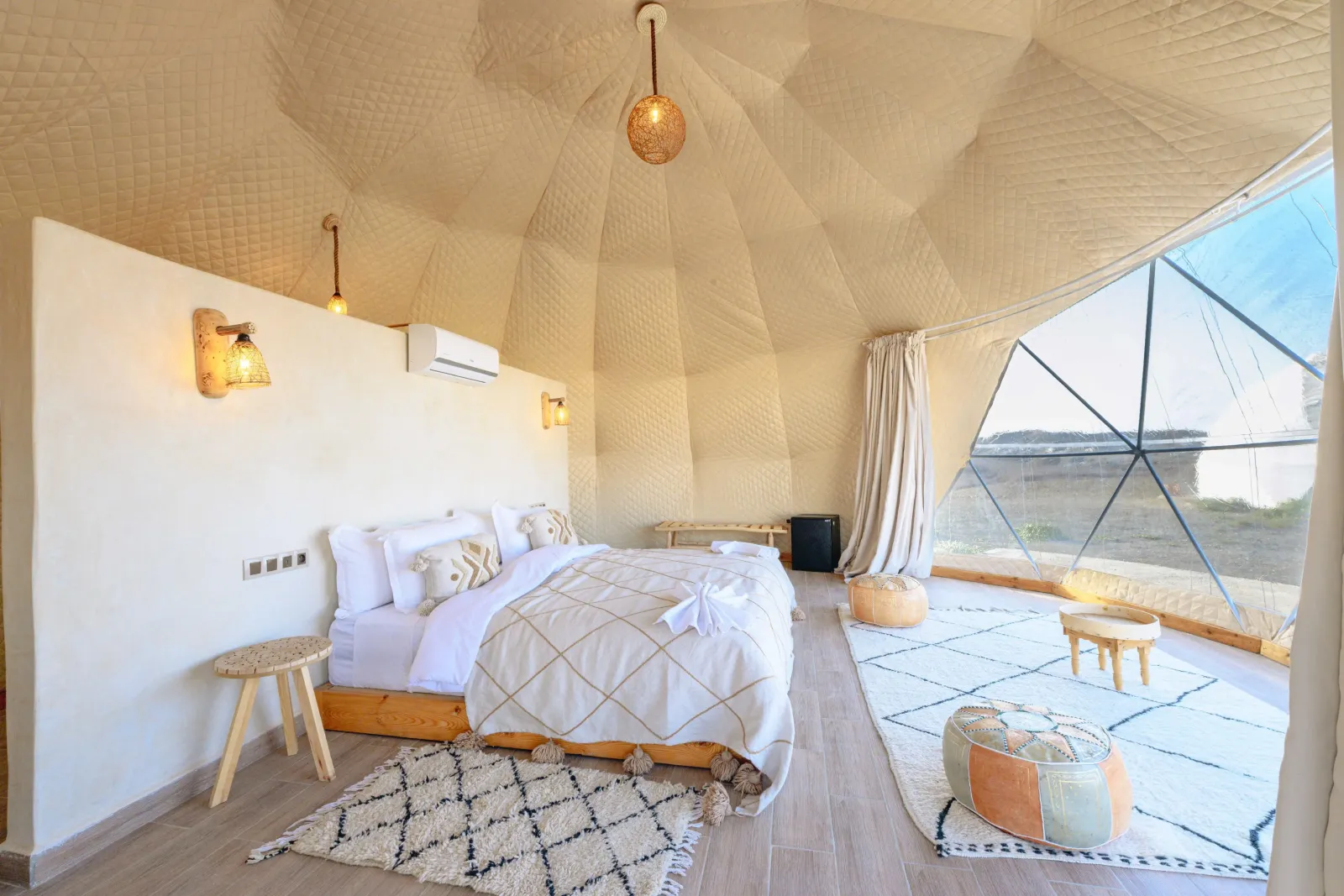
The best time to visit depends on your priorities. For comfortable temperatures, most travelers choose March–May and September–November when daytime highs range 20–30°C (68–86°F) with pleasant evenings perfect for luxury camps and sunset dinners.
Summer (June–August) remains visitable if you focus on late afternoon, sunset, and evening programs. Winter (December–February) suits travelers who prefer cool, crisp conditions with stunning views of snow-capped Atlas peaks. Book popular Agafay dinners and desert camps in advance during peak season months like April, October, and holiday periods.
Agafay receives minimal rainfall—about 191mm annually—far drier than coastal Morocco. Most precipitation falls between November and April as brief showers. March is the wettest month with approximately 38mm total, while summer sees virtually no rain at all.
Rain rarely cancels activities. Morocco Classic Tours simply adjusts timing or reorders quad biking and camel rides if rocky surfaces become slippery. Pack a lightweight rain jacket if traveling from November to March as backup.
Below is a month-by-month breakdown of Agafay weather with typical daytime temperatures, nighttime conditions, and activity recommendations. Numbers reflect approximate averages based on local climate data, with Agafay often slightly cooler at night due to its open terrain.
Cool Days, Cold Nights
Daytime highs reach 14–18°C (57–64°F), while nights drop to 5–7°C (41–45°F). Low humidity and clear skies reveal snow-covered Atlas Mountains. Afternoons suit camel rides and hiking, but pack warm jackets, beanies, and gloves for sunrise and overnight stays at desert camps.
Start of Softer Warmth
Expect daytime temperatures of 16–20°C (61–68°F) and nights around 6–8°C (43–46°F). February brings scattered showers (about 21mm) but remains pleasant. Ideal conditions for active travelers preferring cooler weather for quad biking. Layer clothing: long sleeves, fleece mid-layer, and packable rain shell.
Transition to Ideal Weather
Daytime highs reach 19–23°C (66–73°F), nights settle at 8–10°C (46–50°F). March is the wettest month, but it still sees mostly sunshine. Excellent for photography with green foothills and clear Atlas views. Morocco Classic Tours schedules full-day experiences without heat concerns.
One of the Best Months to Visit
Temperatures climb to 22–26°C (72–79°F) by day, 10–13°C (50–55°F) at night. April marks peak season for Agafay dinners and luxury camps with ideal conditions. Rainfall decreases significantly. Book sunset experiences in advance. Breathable daywear plus a light sweater for evenings works perfectly.
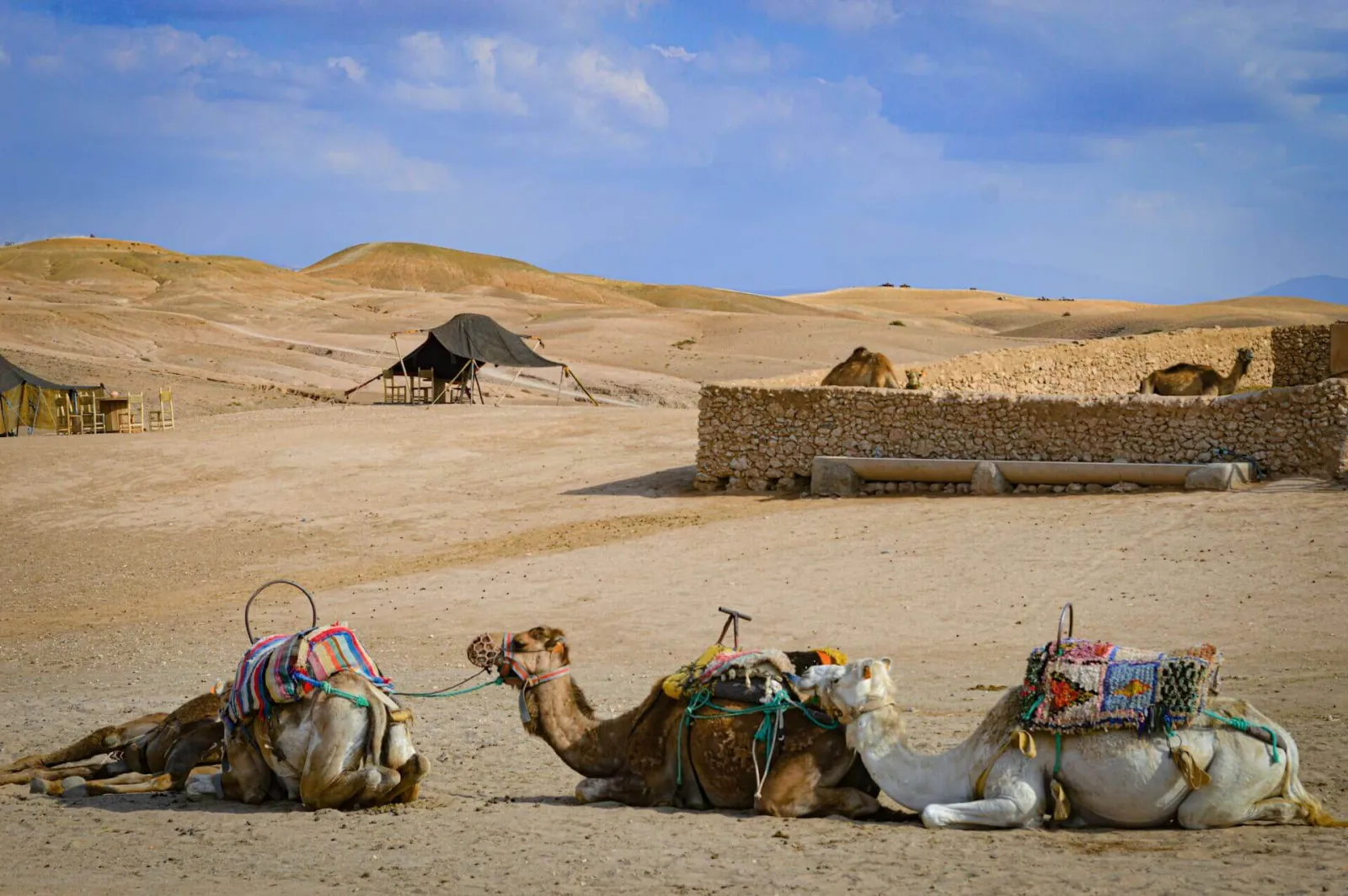
Warm, Sunny, and Lively
Daytime hits 26–30°C (79–86°F), nights stay comfortable at 14–16°C (57–61°F). Low humidity, rare rain, and strong sun define May. Schedule strenuous activities for early morning or late afternoon. Sun hat, sunglasses, and high-SPF sunscreen are essential.
Beginning of Peak Heat
Expect 32–36°C (90–97°F) during the day, 18–20°C (64–68°F) at night. The heat becomes intense with almost no rain and clear skies—perfect for stargazing. Morocco Classic Tours schedules visits for late afternoon and evening. Light-colored, loose clothing and plenty of water are essential.
Hottest Month of the Year
Peak summer brings 36–40°C (97–104°F) daytime temperatures, occasionally higher. Nights remain warm at 20–22°C (68–72°F). Restrict activities to early morning and after 17:00. Night-focused itineraries work best: sunset camel rides, dinner with live music, and stargazing. Stay hydrated and protect yourself from the desert sun.
Still Very Hot but Slightly Softer Evenings
Similar to July with 35–38°C (95–100°F) days and 20°C nights, easing slightly late in the month. UV index remains extremely high. Spectacular sunsets due to atmospheric dust. Emphasize pool access and shaded lounges during midday, saving outdoor activities for evening hours.
Return to Comfortable Heat
Early September sees 30–33°C (86–91°F), dropping to 27–30°C later. Nights cool to 17–19°C (63–66°F). One of the great time periods for Agafay—warm enough for pools but manageable for outdoor activities. Ideal for sunset quad biking and dinner under the stars.
Peak Season Comfort
Pleasant daytime comfort at 24–28°C (75–82°F), nights around 14–16°C (57–61°F). October ranks among the busiest months with ideal conditions for full-day combined experiences. Light showers may return late in the month, but most days stay sunny. Smart-casual clothes with light layers for evenings.
Mild Days, Cooler Nights
Temperatures reach 19–23°C (66–73°F) by day, 10–12°C (50–54°F) at night. November begins the wetter trend with about 30mm precipitation. Fewer crowds than October, yet still mild enough for evening dinners and shows. Pack warm mid-layers and closed shoes for potentially damp ground.
Crisp, Quiet, and Atmospheric
Cool winter weather returns: 14–18°C (57–64°F) days, 5–7°C (41–45°F) nights. Clear days offer golden light perfect for photography. The contrast between crisp air and warm campfires creates atmospheric evenings. Morocco Classic Tours arranges Christmas and New Year celebrations with heated tents and warm blankets. Pack insulated jackets, thermal layers, and warm accessories.
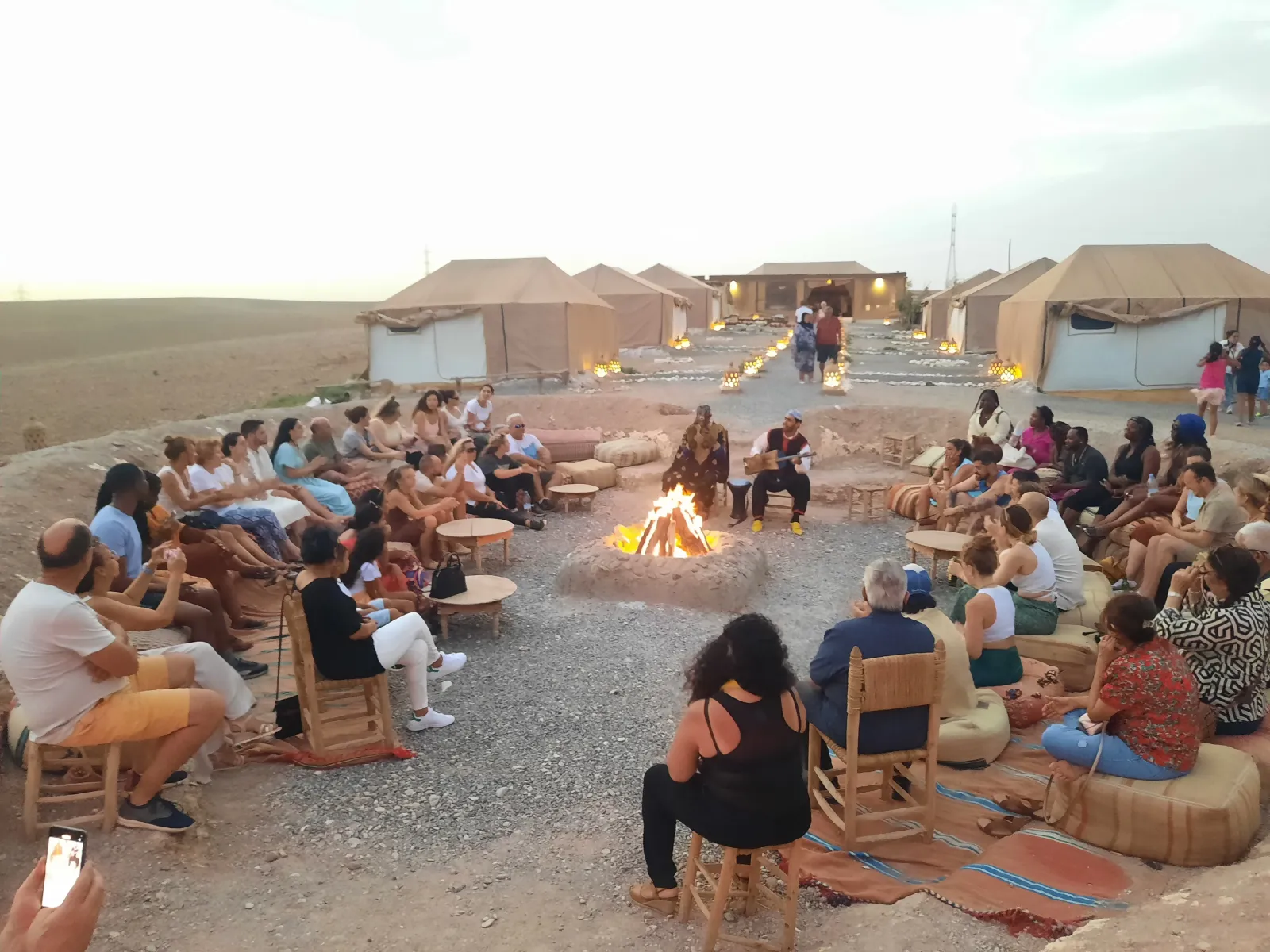
Dryness defines Agafay. Humidity peaks slightly from November to March but remains comfortable. Temperatures fall rapidly after sunset—expect 5–10°C cooler than daytime. Wind chill amplifies the cold on exposed terraces. Always bring extra warm layers for evenings, regardless of the month.
Table: Recommended Clothing by Season
Season | Daywear | Evening/Night |
|---|---|---|
Spring (Mar–May) | Light breathable layers, sun hat | Sweater or light jacket |
Summer (Jun–Aug) | Loose long sleeves, wide-brim hat | Light cotton layers |
Autumn (Sep–Nov) | Breathable clothes, sun protection | Mid-layers, shawl |
Winter (Dec–Feb) | Warm layers, closed shoes | Insulated jacket, scarf, beanie |
Choose light-colored fabrics like cotton, linen, or technical wicking materials for daytime comfort. | ||
Quality gear helps manage temperature swings and sun exposure. Consider Columbia or Patagonia for UPF sun shirts, The North Face or Decathlon (Quechua/Forclaz lines) for versatile layers. Merrell or Salomon provides grippy footwear for rocky terrain. Add polarized sunglasses (Julbo, Oakley) and Buff scarves for wind and dust protection. Mid-range hiking apparel works perfectly—no technical mountaineering gear needed.
Winter nights feel significantly colder in the open desert than on city streets:
Thermal base layers (merino or synthetic)
Fleece or wool mid-layer
Insulated or down jacket rated to 0°C
Warm hat, gloves, scarf
Closed-toe hiking boots with a good grip
Headlamp, lip balm, moisturizer for dry air
Reusable water bottle
Desert camps provide blankets, but personal warm clothing ensures comfort.
Yes—Agafay qualifies as a genuine desert under scientific definitions (precipitation under 250mm annually, aridity index below 0.5). It’s a stony hamada desert with sparse vegetation and vast rocky horizons, distinct from sandy Sahara ergs but sharing extreme temperatures and isolation. Its elevation near the Atlas Mountains yields cooler nights than deeper Sahara locations. Agafay offers an accessible 1–2 day desert immersion for visitors without time to journey to Merzouga. Morocco Classic Tours offers both Agafay and Sahara expeditions to match your available time and seasonal preferences.
As a Fez-based travel operator, Morocco Classic Tours times all activities according to weather conditions. In hot months, expect sunrise or sunset slots for camel rides and quad biking. Winter visits include heated arrangements and warm blankets at camps. The team monitors forecasts and adjusts departure times or activity order based on heat, wind, or rare showers—ensuring your journey remains comfortable whatever the season.
Contact Morocco Classic Tours to discover your ideal Agafay experience based on climate preferences and activity level.
Agafay is a stony desert an hour from Marrakech, and its weather behaves differently from the Sahara proper. If it is the tall golden dunes you are picturing, you want Erg Chebbi at Merzouga, and that is a longer trip.
In July and early August, afternoon highs range 36–40°C (97–104°F), occasionally reaching 47°C during heatwaves. Despite low humidity, the direct sun feels intense. Morocco Classic Tours schedules outdoor activities before 10:00 and after 17:00 during summer visits.
Nights are always cooler than days. Winter nights drop close to 5°C (41°F), while summer nights remain pleasantly warm around 20°C (68°F). The open plateau and occasional breeze make it feel cooler than Marrakech medina—always pack an extra layer.
Rainfall concentrates roughly from November to April, with February and March seeing the highest shower chances. Even then, rain is brief and light compared to coastal regions. Morocco Classic Tours monitors forecasts using nearby Tameslohte data and adapts itineraries accordingly.
Most weather apps don’t list “Agafay Desert” specifically. Search for “Tameslohte” or “Marrakech” for close estimates. Note that Agafay runs cooler at night and is more exposed to wind. Contact Morocco Classic Tours for updated on-the-ground conditions before your arrival.
These activities operate year-round, with timing adjusted for comfort and safety. In extreme heat, Morocco Classic Tours moves rides to sunrise or sunset hours. Cancellations are rare—the team offers alternatives or rescheduling if conditions become unsuitable.
Compare Morocco group tour agencies by trip style, reviews, pace, transport and inclusions. Learn wh...
Read this article
Uncover what a Marrakech to Fes desert tour offers, including camel rides, desert camps, and rich cu...
Read this article
Join our Merzouga Overnight Tour for an authentic desert experience. Enjoy camel rides, comfortable ...
Read this articleWant cool tour deals and tips about Morocco? Enter your email and we’ll send them to you each month!
