Group Tour Agencies in Morocco: How to Pick the Right One
Compare Morocco group tour agencies by trip style, reviews, pace, transport and inclusions. Learn wh...
Read this article

Private, custom Morocco trips planned in Fez by AZ-ZDDINE, working in Moroccan tourism since 2012. Sahara, Atlas, medinas and coast, arranged around you.
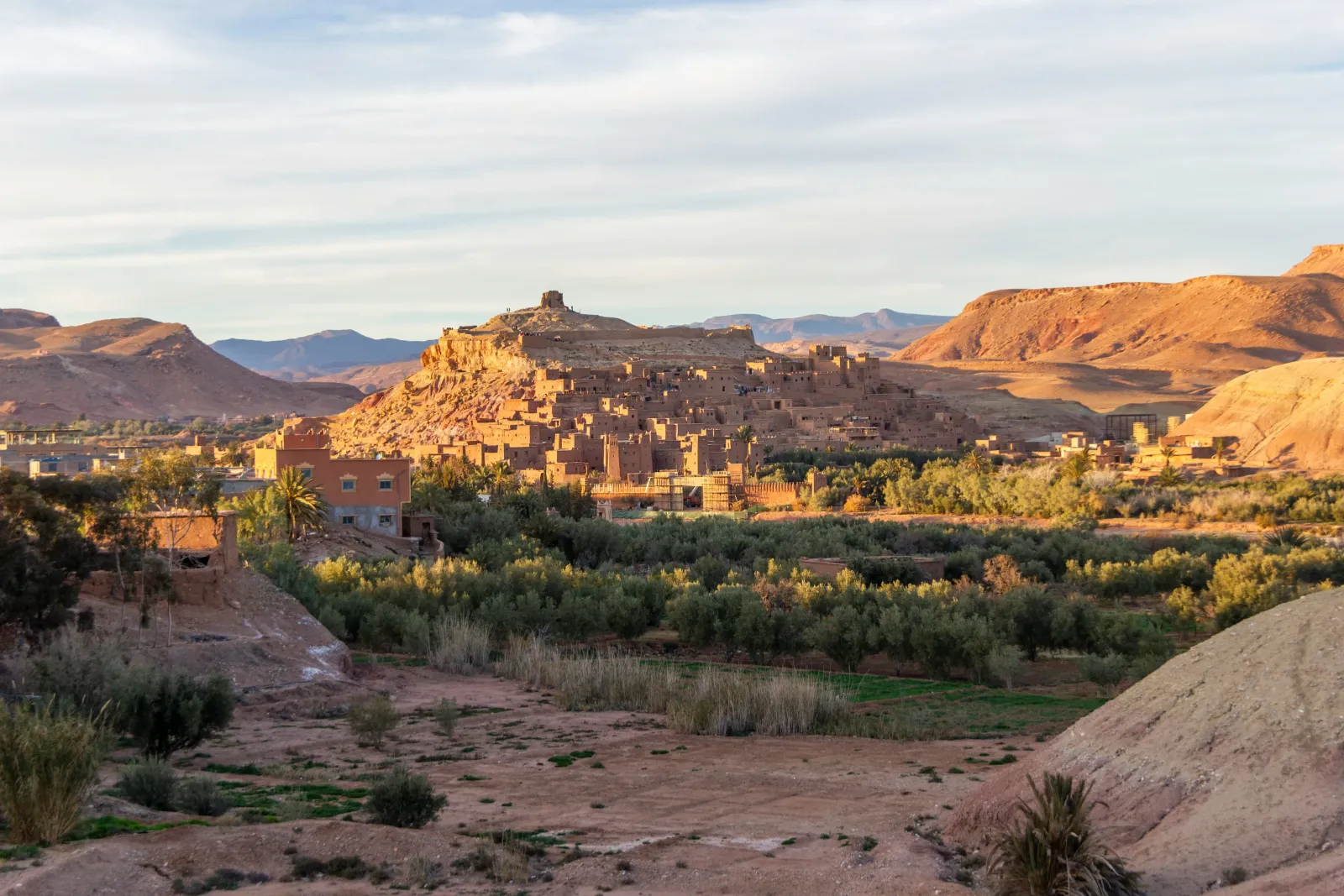
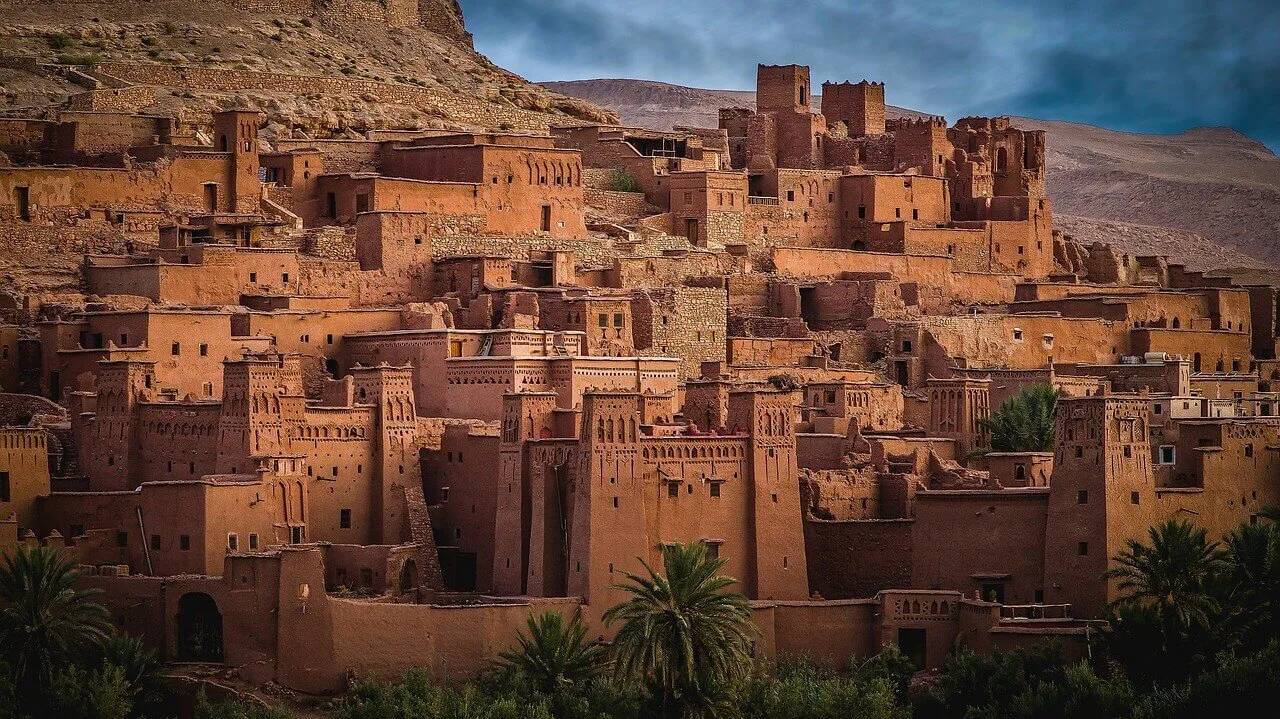
Aït Benhaddou is a UNESCO World Heritage Site since 1987, a fortified village (ksar) with origins in the 11th century and visible architecture dating from the 17th century onward, located in southern Morocco about 30 km from Ouarzazate and 180-190 km from Marrakech.
The best time to visit Aït Benhaddou for comfortable weather is late March through early June and mid-September through late October; early mornings and late afternoons offer fewer crowds and better light for photography.
Visitors can explore the ksar on a day trip from Marrakech or Ouarzazate, or stay overnight in guesthouses across the river or inside restored kasbahs for a more immersive experience.
Activities include climbing to the hilltop granary, visiting small museums and art galleries, shopping for Amazigh crafts, and walking through alleys used in famous movies like Gladiator and Game of Thrones.
Morocco Classic Tours can arrange private guided tours, combine Aït Benhaddou with Sahara desert camps and Atlas Mountains excursions, and handle all logistics from Marrakech or Fez.
Rising from the banks of the Ounila River like a vision from another century, Aït Benhaddou stands as one of Morocco’s most striking landmarks. This ancient village of red-brown earthen towers has served as a caravan stop, a film set, and a window into traditional Berber life for visitors from around the world. Whether you have heard of it through Game of Thrones or simply want to witness Morocco’s rich history firsthand, this guide covers everything you need to plan your visit.
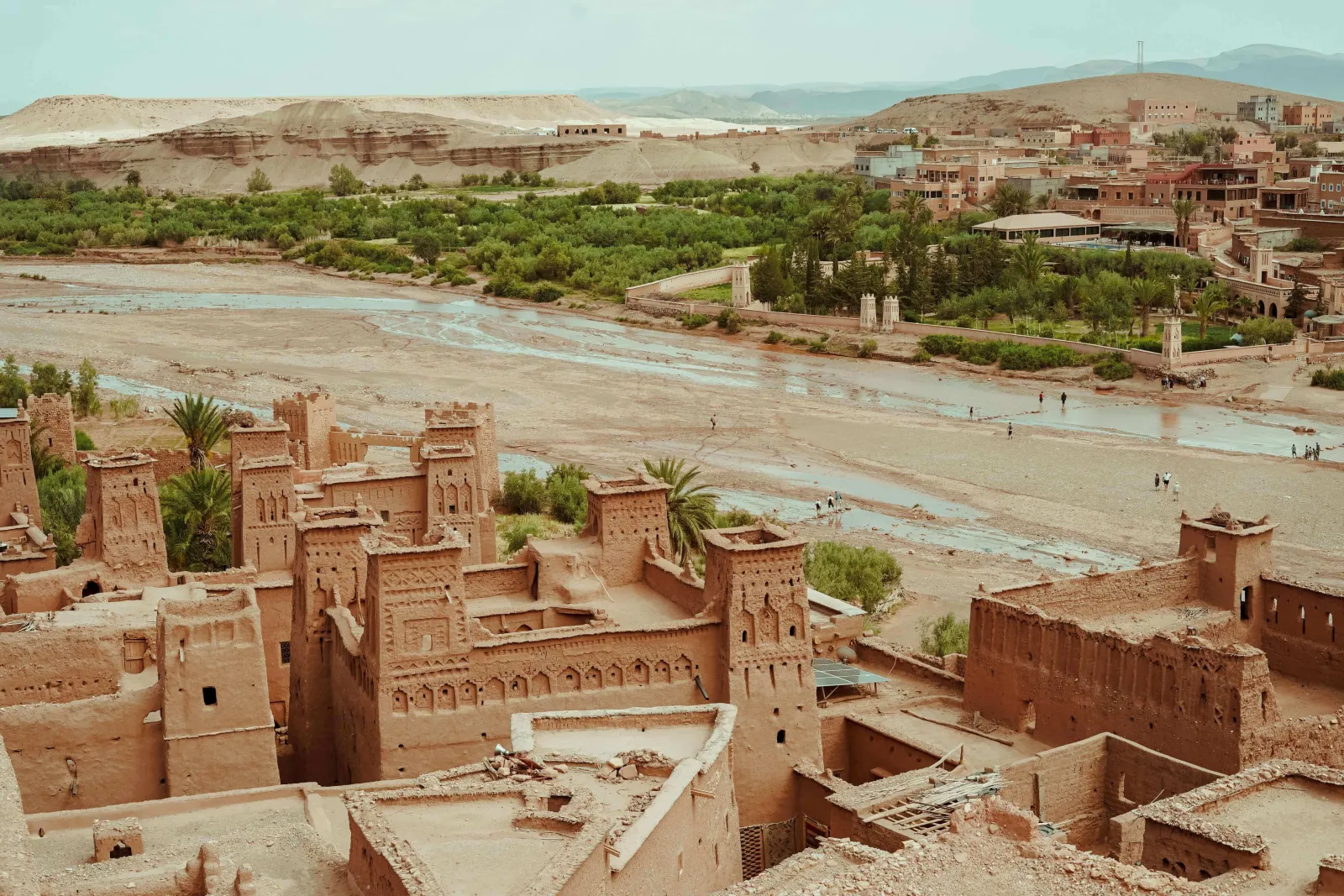
Standing above the seasonal Ounila River in southeastern Morocco, Aït Benhaddou is a historic fortified ksar—a cluster of earthen buildings surrounded by defensive walls—along the old caravan route connecting the Sahara Desert to Marrakech. The village represents one of the finest surviving examples of traditional pre-Saharan habitat in North Africa.
A ksar importantly differs from a kasbah. While a kasbah typically refers to a single fortified house or citadel belonging to one powerful family, a ksar encompasses an entire community settlement with many homes, communal facilities, and sometimes smaller kasbahs within its perimeter. Aït Benhaddou contains both modest family dwellings and towering kasbahs built by wealthier merchant families, all protected behind shared walls punctuated by corner towers.
The site has existed as a fortified point since at least the 11th century during the Almoravid period, though the oldest constructions visible today date from the 17th century onward. These structures were built and rebuilt over centuries using techniques that had been propagated in the valleys of southern Morocco from a very early period.
UNESCO inscribed the ksar of Ait Benhaddou on its World Heritage List in 1987, recognizing it as an outstanding example of 17th-century earthen architecture typical of the Drâa, Todgha, Dadès, and Souss valleys. The inscription also acknowledged Aït Benhaddou as testimony to a traditional way of life that has become increasingly vulnerable to modern development.
Today, the old ksar is largely uninhabited. While more than 80-90 families once lived within the walls, only a handful of remaining families—perhaps five—still reside inside year-round. Most local inhabitants relocated during the 20th century to a modern village across the river, where concrete houses, shops, cafés, and guesthouses now support the tourism economy.
This section answers two of the most common questions travelers ask: where is Aït Benhaddou located, and how old is it?
Aït Benhaddou sits in Ouarzazate Province within the Drâa-Tafilalet region of southern Morocco. The ksar occupies a low hill in the Ounila Valley, positioned on the southern slopes of the High Atlas Mountains. The surrounding landscape is semi-arid, with palm groves and irrigated strips along the river giving way to stony foothills and distant snow-capped peaks in winter.
In terms of distances and travel times:
From Ouarzazate: Approximately 30 km northwest, about 30-40 minutes by car
From Marrakech: Roughly 180-190 km via the N9 over the Tizi n’Tichka Pass, typically 3.5-4.5 hours driving depending on stops and traffic
The ksar stands at an elevation of around 1,300 meters above sea level, overlooking the Ounila River. Depending on the season, this river may appear as a flowing waterway in winter and early spring or as shallow channels and dry beds during late summer.
Regarding age, the site’s origins as a key stop on the trans Saharan trade route likely date to the Almoravid period in the 11th-12th centuries. This means the fortified settlement has existed in some form for approximately 900-1,000 years. However, the houses, towers, and walls you see today were largely built or rebuilt from the 17th century onward, using construction techniques that remained unchanged for centuries.
Many visitors wonder how to pronounce Aït Benhaddou correctly. Here is a practical breakdown:
An approximate English phonetic rendering is: “Eye-t Ben-had-doo.”
Aït – Pronounced like the English word “eye” followed by a soft “t.” In Tamazight (the Amazigh/Berber language), “Aït” means “people of” or “family of,” functioning as a tribal or clan designation.
Ben – Pronounced as in the English name “Ben,” with a short “e” sound. This is Arabic for “son of.”
Haddou – Pronounced, “had-doo,” with a soft “h” (not heavily aspirated) and emphasis typically on the middle syllable.
In quick local speech, you may hear the final “t” in “Aït” softened or nearly dropped, resulting in something closer to “Ay Benhaddou.” Either pronunciation will be understood.
Aït Benhaddou served as a fortified trade hub on the commercial route linking ancient Sudan (the historical term for sub-Saharan West Africa) with Marrakech. For roughly 800 years—from the 11th through 19th centuries—caravans passed through the Drâa Valley and crossed the High Atlas via the Tizi n’Telouet and Tizi n’Tichka passes, with Aït Benhaddou providing a key stop for storage, lodging, and security.
The commodities flowing through this network shaped the fortunes of entire regions:
Gold from West African mines destined for Mediterranean markets
Salt from Saharan deposits like Taghaza
Slaves, a major component of trans-Saharan commerce
Textiles, leather goods, and metalware from the Maghreb
Spices and other high-value goods
Within the ksar, communal structures supported both daily life and trade. These include a mosque for religious practice, a public square for gatherings and markets, grain threshing areas outside the ramparts, and a caravanserai where traders could lodge with their animals and goods. A large fortified granary (called an agadir or igherm) crowns the hilltop, serving as a communal stronghold for grain and valuables.
The village also contains two cemeteries—one Muslim and one Jewish—reflecting the religious diversity that once characterized the region. A marabout (saint’s tomb) dedicated to the Sanctuary of Saint Sidi Ali or Amer remains a site of local veneration.
UNESCO recognized Aït Benhaddou for its architectural authenticity and as an outstanding example of southern Moroccan architecture in the pre-Saharan regions. The inscription emphasized both its historical significance and the vulnerability of traditional earthen habitats to socio-economic changes.
Throughout the 20th and 21st centuries, the population shifted across the river to new housing with modern amenities. The old ksar became increasingly fragile without continuous maintenance. Today, a local committee works with Moroccan heritage authorities to oversee restoration using traditional materials—earth, straw, and timber—rather than cement, which can trap moisture and damage earthen walls.
From across the river, Aït Benhaddou presents an unforgettable silhouette: “sandcastle-like” towers of deep red-brown earth rising above green palm groves, with the pale ribbon of the Ounila River below and Atlas foothills stretching toward distant peaks.
The construction materials and techniques represent a complete panorama of pre-Saharan earthen construction:
Rammed earth (pisé): Damp earth mixed with small stones and straw, compacted in wooden formwork to create thick load-bearing walls
Adobe bricks: Sun-dried bricks of mud, clay, straw, and water, stacked and plastered
Stone foundations: Local stone is used in lower courses for stability and moisture resistance
Timber beams: Palm trunks or other local woods supporting roof layers of earth and brush
These materials are cheap, locally available, and well-adapted to the harsh desert climate. Thick walls provide natural insulation, keeping interiors cool during scorching days and warmer at night. However, mud brick architecture requires continuous maintenance—patching plaster, reapplying coatings, repairing wooden elements—or it deteriorates quickly under rain and neglect.
The ksar’s layout prioritizes defense. A high earthen wall with angle towers surrounds the settlement. Visitors enter through a controlled main gateway—a baffle gate with an indirect passage designed to prevent attackers from charging straight through. Inside, narrow winding alleys climb the hillside, often covered by house overhangs or tunnels that create shaded, cool passages.
Building types within the walls vary considerably:
Modest single- or two-story family homes
Multi-story “small urban castles” belonging to wealthier families
Elaborate kasbahs with decorated upper façades and angular corner towers
Decorative elements include crenellations, geometric Amazigh motifs (lozenges, stepped patterns, stylized symbols), and carved wooden details on doors and windows. These patterns reflect tribal identities and protective traditions passed down through generations.
For visitors exploring: expect steep stone steps, uneven surfaces, occasional shaded tunnels between houses, and minimal railings at edges and on rooftops.
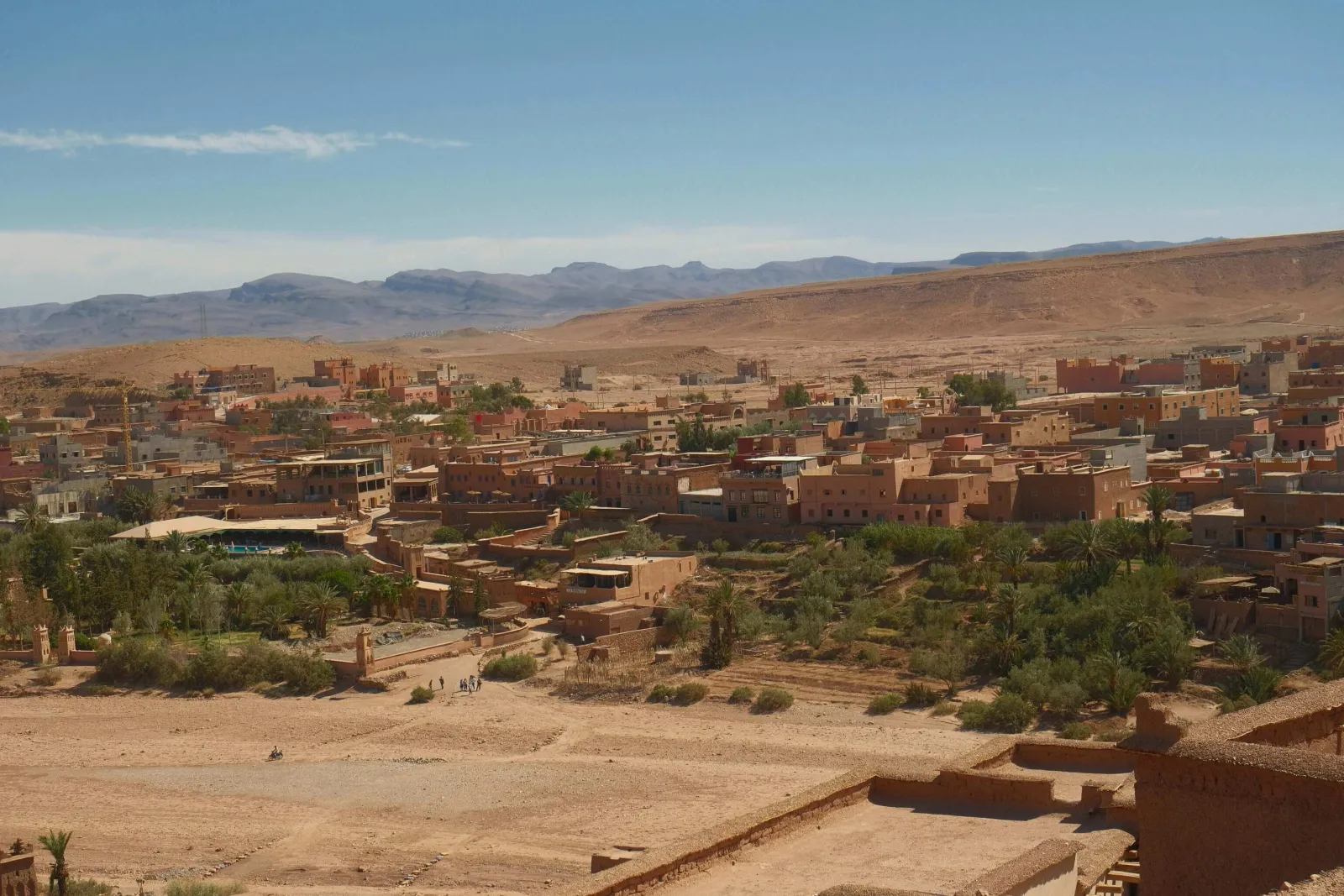
Aït Benhaddou is visitable year-round, but the semi-arid climate at 1,300 meters elevation produces very hot summers and chilly winter nights. Understanding seasonal patterns helps you plan for the best time to visit Aït Benhaddou for comfortable weather.
Spring (March–May): Generally, the most comfortable period. Daytime temperatures are warm but rarely extreme, nights are cool, and the Ounila Valley shows some greenery after winter rains. Snow often remains visible on High Atlas peaks, creating striking contrasts with the red earth.
Autumn (September–November): Similarly pleasant, often the ideal compromise between weather and crowd levels. Early September can still feel hot, but late September through October offers warm days, cool evenings, and reduced summer dust-haze.
Summer (June–August): Daytime highs commonly reach 35-40°C or more. Midday sun is harsh, and the earthen walls radiate heat. If visiting during summer, plan for early mornings or late afternoon/evening to avoid peak temperatures. Hydration and sun protection are essential.
Winter (December–February): Days can be crisp and sunny, but nights may drop near freezing. Crowds are thinner, and the contrast of snow-capped peaks with red earth makes for dramatic photography. Bring layers for temperature swings between midday warmth and evening chill.
The sweet spots for comfortable weather fall in late March through early June and mid-September through late October.
Regarding time of day, sunrise and sunset offer softer golden light, longer shadows that emphasize wall textures, and fewer crowds. Most tour buses arrive between 10 AM and 3 PM, so early mornings and late afternoons provide quieter exploration.
Morocco Classic Tours can tailor itineraries to avoid peak heat and tour-bus congestion—particularly valuable for families with children and older travelers who benefit from flexible pacing.
Visiting Aït Benhaddou ranges from a quick day trip to a slow, immersive experience with overnight stays and exploration of surrounding valleys. Your approach depends on available time and how deeply you want to engage with the site.
The route from Marrakech follows the N9 over the Tizi n’Tichka Pass, one of Morocco’s most scenic mountain roads. The pass reaches approximately 2,260 meters at its summit before descending toward Ouarzazate.
Distance: 180-190 km
Driving time: Roughly 3.5-4.5 hours one way, depending on stops and traffic
Road conditions: Twisty mountain road with many curves and switchbacks, frequent trucks, and occasional snow or ice in winter
Transport options include:
Private tour (Morocco Classic Tours): Most comfortable and flexible, with door-to-door pickup, customized stops at viewpoints, argan cooperatives, or Telouet kasbah
Small-group guided excursion: More affordable, fixed schedule, shared minibus
Rental car: Maximum independence for confident drivers; requires navigation skills and awareness of mountain driving conditions.
Public transport: Bus to Ouarzazate, then taxi to the ksar; cheapest but most time-consuming
From Ouarzazate, Aït Benhaddou lies just 30 km northwest—a straightforward 30-40 minute drive. Taxis and private transfers are readily available through hotels or agencies. This proximity makes a day trip from Ouarzazate highly relaxed, with time to also visit Atlas Film Studios.
Fans searching “Aït Benhaddou Yunkai how to get there” should know that the ksar itself served as the outdoor stand-in for the slave city Yunkai in Season 3. There is no separate “Yunkai” location—traveling to Aït Benhaddou via any standard route brings you directly to the filming location.
Visit Style | Time on Site | Best For |
|---|---|---|
Day trip from Marrakech | 2-3 hours | Time-limited travelers, those continuing to desert |
Day trip from Ouarzazate | 3-5 hours | Relaxed exploration, film studio combo |
Overnight stay | Sunset to sunrise | Photography, quiet alleys, immersive experience |
Morocco Classic Tours can build Aït Benhaddou into multi-day itineraries linking Marrakech, the Atlas Mountains, Ouarzazate, Skoura oasis, Dadès and Todra gorges, and Sahara desert camps at Merzouga or Zagora. This transforms the ksar from a rushed photo-stop into part of a deeper journey through southeastern Morocco.
From our perspective at Morocco Classic Tours, Aït Benhaddou is absolutely worth visiting—when approached thoughtfully rather than as a rushed checkbox on a tour itinerary.
We understand the concern. Many travelers encounter the ksar briefly during standard Sahara tours, arriving at midday alongside several buses, spending 60-90 minutes, and leaving with only surface impressions. Under those conditions, the lower alleys lined with souvenir stalls can feel commercialized.
However, Aït Benhaddou is far more than a tourist trap for several compelling reasons:
Authentic architecture: This is genuine earthen architecture from the 17th century onward, not a reconstruction or theme park. UNESCO’s recognition confirms its exceptional architectural heritage and authenticity in materials, layout, and construction methods.
Powerful sense of history: Unlike purpose-built attractions, Aït Benhaddou functioned as a real caravan stop where traders, pilgrims, and families lived and worked for centuries. The structures you touch and walk through are physical records of that living history.
Ongoing community: A few families still live inside the old ksar, and the new village across the river maintains cultural continuity through cooperatives, artisan work, and hospitality.
To avoid the “tourist trap” feeling:
Visit early mornings or late afternoon when buses have departed
Hire a local guide who can share history, architecture details, and film anecdotes beyond surface-level sightseeing
Support genuine cooperatives, museums, and family artisans rather than only quick souvenir stands
Allow time to explore at your own pace rather than rushing through
Private tours with Morocco Classic Tours enable slower exploration, extra hikes in the Ounila Valley, and meaningful encounters with local culture—the antidote to feeling like just another face in a tour-bus crowd.
Despite its modest size, Aït Benhaddou offers several rewarding activities beyond the classic postcard photo from across the river. Taking time to explore reveals layers of history, artistry, and daily life.
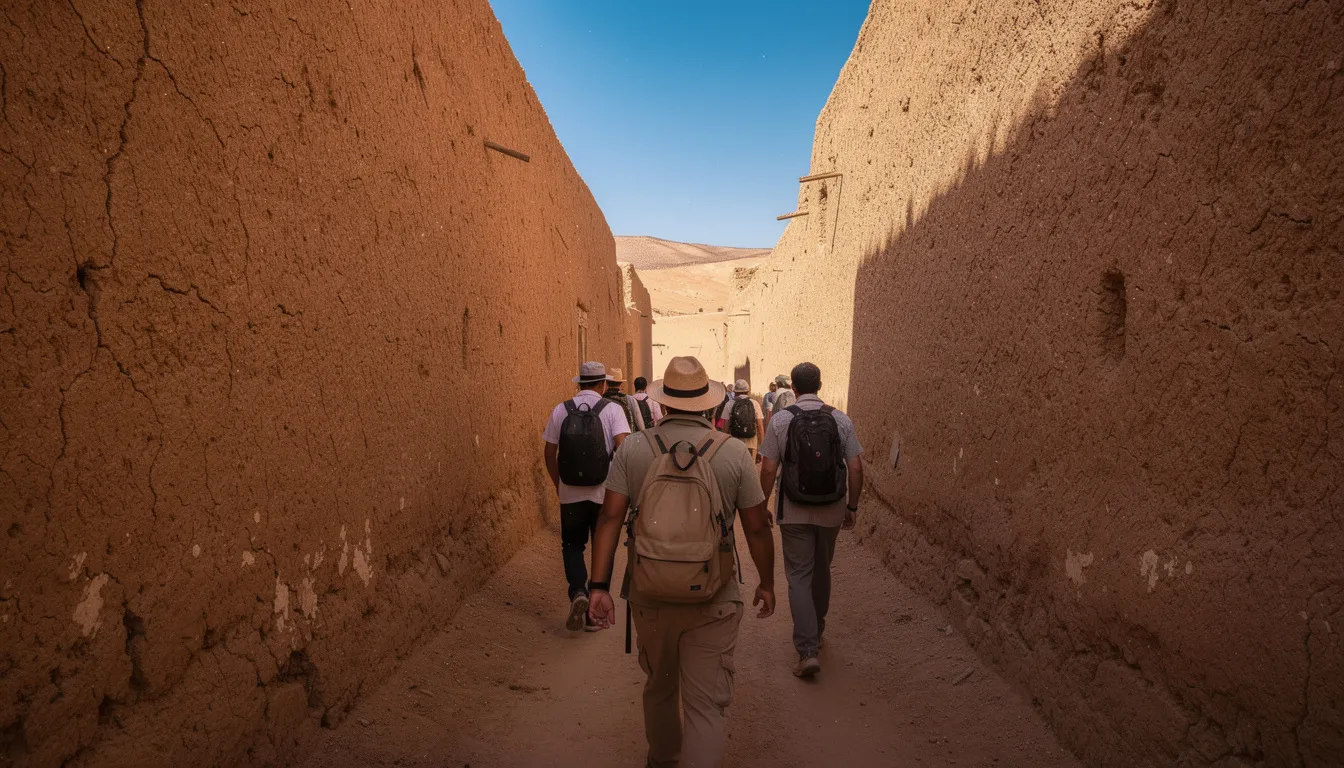
The quintessential Aït Benhaddou experience involves climbing through the ksar to the old fortified granary crowning the hill. The ascent typically takes 15-30 minutes with photo stops.
The route winds from the main gate (or smaller side entrances) through stepped stone alleys, shaded tunnels beneath house overhangs, and clusters of ancient kasbahs. Emerging at the top, you find panoramic views stretching across the Ounila Valley, the modern village, surrounding hills, and—in winter—snow-capped Atlas Mountains in the distance.
Early morning and late afternoon provide the best light. At sunset, the walls glow deep orange-red as shadows lengthen across the valley. Photographers should note the west-facing orientation of the ksar’s main façade.
Practical considerations:
Wear sturdy shoes with a good grip
Bring water (none available at the top)
Expect uneven steps and minimal railings
Supervise children carefully near edges
Within the ksar and along its fringes, several cultural spaces offer deeper engagement with Amazigh heritage:
Art galleries such as Galerie Tiwirga showcase paintings, ceramics, calligraphy, and sculptures by local artists, often featuring geometric patterns and themes drawn from traditional Berber life.
Heritage houses and small museums present original room layouts, storage areas, and displays of old tools, textiles, jewelry, and household implements. Some focus on oral traditions, documenting women’s weaving patterns, storytelling practices, and seasonal rituals.
Entry typically involves modest local fees supporting community projects. Morocco Classic Tours can arrange visits to these spaces, sometimes including meetings with artists or women’s cooperatives for a more interactive experience.
Simple restaurants and guesthouses in the modern village and lower ksar fringes offer meals with views. Many feature rooftop terraces directly facing the ancient walls.
Typical dishes include:
Tagines with lamb and prunes, chicken with preserved lemon, or vegetables
Couscous with seasonal vegetables and meat
Grilled brochettes of lamb or beef
Fresh bread baked in clay ovens
Moroccan salads and harira soup
Mint tea
Sharing tea or a meal supports local families and provides authentic Moroccan hospitality. The sensory experience combines the taste of slow-cooked tagine, the smell of earth and spices, and the changing colors of mudbrick walls as light shifts through the day.
Shopping at Aït Benhaddou is less about bargain-hunting in crowded souks and more about meeting artisans and supporting village economies.
Main craft categories include:
Handwoven Amazigh rugs and kilims: Flat-weave and pile carpets featuring geometric motifs, zigzags, and symbolic patterns. Higher-quality pieces may use natural dyes and hand-spun wool.
Pottery and ceramics: Simple earthenware vessels, plates, and tagine bases from local or regional workshops
Jewelry and metalwork: Tuareg- and Amazigh-style silver pieces, including fibulae (traditional cloak pins), bracelets, necklaces, and engraved pendants
Henna art and sand art: Decorative henna paintings and bottled layered sand depicting desert scenes or the ksar silhouette
Miniature kasbah models: Carved or molded replicas of kasbahs and ksour
Some items are made within the village; others come from surrounding valleys (Dra Valley, Dadès, Todgha). Purchasing still supports regional artisan networks.
For ethical shopping:
Ask vendors about how pieces are made and by whom
Prefer cooperatives or family workshops over mass-produced souvenirs
Negotiate respectfully, understanding that sales provide essential income in a fragile rural economy
Consider quality over quantity
Morocco Classic Tours can include stops at women’s weaving cooperatives in the wider region, complementing your visit to Aït Benhaddou with firsthand demonstrations of traditional Berber life.
Aït Benhaddou’s “timeless” appearance—earthen towers, dusty alleys, and stunning landscapes devoid of modern intrusions—has made it a favored film location since the 1960s. The most famous ksar in Morocco has appeared in dozens of productions.
Notable films and series shot at or near Aït Benhaddou:
Title | Year | Notes |
|---|---|---|
Lawrence of Arabia | 1962 | Early major production that launched the site’s cinematic career |
Sodom and Gomorrah | 1963 | Biblical epic filmed extensively here |
The Man Who Would Be King | 1975 | John Huston's adventure using Moroccan landscapes |
The Jewel of the Nile | 1985 | Adventure sequel with Moroccan stand-in locations |
The Mummy | 1999 | Used the Ksar for ancient Egyptian sequences |
Gladiator | 2000 | Recognizable in several Roman-era sequences |
Kingdom of Heaven | 2005 | Ridley Scott’s Crusades epic |
Game of Thrones | 2013 | Portrayed Yunkai, the slave city, in Season 3 |
Prince of Persia | 2010 | Disney adaptation with extensive Moroccan filming |
Local inhabitants have participated as extras, and guides often share behind-the-scenes stories. Walking through Aït Benhaddou lets fans literally stand in locations recognizable from Game of Thrones’ Yunkai sequences—no CGI required.
Nearby Atlas Film Studios and other production facilities around Ouarzazate complement the ksar’s role as a regional film hub. Morocco Classic Tours can easily combine a ksar visit with studio tours for travelers interested in famous movies shot across this travel destination.
The journey from Marrakech to Aït Benhaddou ranks among Morocco’s most scenic drives, crossing the High Atlas Mountains via the Tizi n’Tichka Pass.
Private tour (Morocco Classic Tours): The most comfortable and flexible choice. Door-to-door pickup from your Marrakech accommodation, stops at viewpoints and villages, and the possibility to add detours to Telouet kasbah or film studios. Your driver handles mountain navigation while you enjoy the scenery.
Small-group guided day trip: More affordable with shared minibuses, fixed schedules, and typically 2-3 hours on-site at Aït Benhaddou plus a stop in Ouarzazate or at Atlas Film Studios.
Rental car: Maximum independence for confident drivers. Be prepared for:
Twisty mountain roads with many switchbacks
Frequent slow trucks require patience
Occasional snow or ice in winter
An estimated 3.5-4.5 hours driving each way
Public transport: Take a CTM or Supratours bus to Ouarzazate, then arrange a local taxi or grand taxi to the ksar. Cheapest but most time-consuming and least flexible.
Leave Marrakech early morning to maximize your day. Along the way, consider stops at:
Panoramic viewpoints overlooking the High Atlas and valleys below
Argan oil cooperatives where women demonstrate traditional extraction methods
Telouet kasbah (requires a short detour)—a historic Glaoui fortress with crumbling grandeur
Small Berber villages clinging to mountainsides
Morocco Classic Tours handles all logistics, providing safe drivers, air-conditioned vehicles, and timing adjusted for weather and traffic conditions.
Visitors can stay overnight in Aït Benhaddou either in modern guesthouses across the river or in restored traditional houses within the ksar itself.
Small hotels and auberges on the modern village side offer:
Pools or gardens
Easier vehicle access and parking
Modern amenities (air conditioning, heating, Wi-Fi)
Generally a better choice for families or those prioritizing comfort
Rooftop terraces or restaurants with direct views of the ksar
A smaller number of restored kasbahs and traditional houses within the walls operate as simple guesthouses:
Stronger atmosphere: thick earthen walls, candlelit interiors, rooftop terraces directly over ancient alleys
No vehicle access—guests must walk in, often crossing a pedestrian bridge or shallow ford
Must carry luggage up steps through narrow passages
Facilities tend to be more basic (simpler bathrooms, potentially patchy Wi-Fi)
May not suit travelers with mobility issues
Can you stay in Aït Benhaddou? Yes, absolutely. Whether you prefer a comfortable auberge with a pool or an immersive night within the fortified houses, accommodations exist for both preferences.
Morocco Classic Tours can reserve both styles of accommodation and combine them with nearby desert camps, Atlas mountain lodges, or city riads in Marrakech or Fez.
Hiring a guide or booking an organized tour enriches your Aït Benhaddou experience considerably. Guides unlock hidden corners, explain architectural details, share film anecdotes, and handle logistics that would otherwise consume your energy.
On-site local guide: Based in or near the ksar, offering 1-2 hour walking tours covering history, architecture, and film locations. Usually arranged on arrival or through your hotel/agency.
Driver-guide: Accompanies you from Marrakech, Fez, or other starting points on day trips or multi-day circuits, providing a broader context about the Atlas, Drâa Valley, and Berber people.
While prices vary by season and inclusions, here are general ballpark figures:
On-site local guide: Usually a modest fee per group (often in the range of 100-200 MAD) for a short tour
Private full-day trip Marrakech–Aït Benhaddou–Marrakech: Typically priced per vehicle; reasonable when split among 2-6 travelers
Multi-day circuits including Aït Benhaddou and Sahara: Higher overall cost but bundling transport, accommodation, some meals, camel treks, and local guides
Licensed, Morocco-based operator with local expertise
Clear itineraries specifying inclusions (transport, guiding, meals, entrance fees)
Small-group or private options for more authentic experiences
Emphasis on supporting local communities and using local guides
Morocco Classic Tours offers customizable private tours combining Aït Benhaddou with Marrakech, Fez, the Sahara desert, and Atlas Mountains hikes. Our flexible pace accommodates couples, families, and small groups who want to explore at their own rhythm. Contact us or visit our booking page to start building your tailored itinerary.
Aït Benhaddou is generally safe and welcoming for international visitors, including solo travelers and families. A few practical considerations enhance your experience.
Watch your step on steep, uneven paths with minimal railings
Keep valuables secure in a day bag or front pocket
Stay hydrated and use sun protection, especially in warmer months
Supervise children carefully near edges and drops
Petty crime is rare, but basic awareness is always sensible
Dress modestly out of respect for local norms—shoulders and knees covered, especially for women.
Layers are essential, given temperature swings between midday heat and cool evenings.
Sturdy walking shoes with good grip for climbing through the ksar
Ask permission before photographing people or private homes
If you spend time in a shop doorway taking photos, consider buying something small
Greet locals with “salaam alaikum” and a smile
Small phrases in Moroccan Arabic or Tamazight are appreciated
Avoid climbing on fragile walls or entering restricted areas
Public toilets within the ksar are basic; cafés and restaurants typically have restrooms for customers.
Carry small change (Moroccan dirhams) for tips and minor purchases
ATMs may not be available in the immediate village; bring cash from Ouarzazate or Marrakech
This section answers additional common questions briefly and directly for travelers planning to visit Ait Ben Haddou.
Two to three hours provides enough time to cross from the modern village, climb through the ksar, reach the hilltop granary, and wander the main winding alleys. Four to five hours or an overnight stay allows for slower exploration, terrace meals, and the chance to experience sunrise or sunset when fewer crowds fill the streets.
While over 80-90 families once lived within the fortified walls, today only a small number—perhaps around five families—remain year-round in the old ksar. Most local inhabitants relocated to the modern village across the Ounila River during the 20th century, seeking modern amenities like electricity and running water.
Children often enjoy the “castle-like” environment of ancient kasbahs and corner towers, but parents should supervise closely due to steep drops, uneven surfaces, and minimal barriers. Older travelers and those with mobility issues may find the full climb to the hilltop challenging. They can still enjoy impressive views from across the river, the lower portions of the village, or rooftop terrace cafés without climbing to the summit.
There is typically no single official entrance ticket to the village itself—access to the alleys and exterior spaces is open. However, some restored houses, small museums, heritage exhibits, or terrace viewpoints may request a small local fee. Guided tours are extra but highly recommended for understanding the site’s history beyond what casual wandering reveals.
Yes, and many travelers do exactly this. Aït Benhaddou lies naturally on or near the route between Marrakech and major Sahara gateways like Merzouga (via Ouarzazate, Dadès, and Todra gorges) or Zagora (via the Dra Valley). Multi-day Sahara itineraries from Morocco Classic Tours typically include a stop or overnight near the famous ksar on the journey to or from the dunes, making it an integral part of experiencing southeastern Morocco’s stunning landscapes and rich history.
Compare Morocco group tour agencies by trip style, reviews, pace, transport and inclusions. Learn wh...
Read this article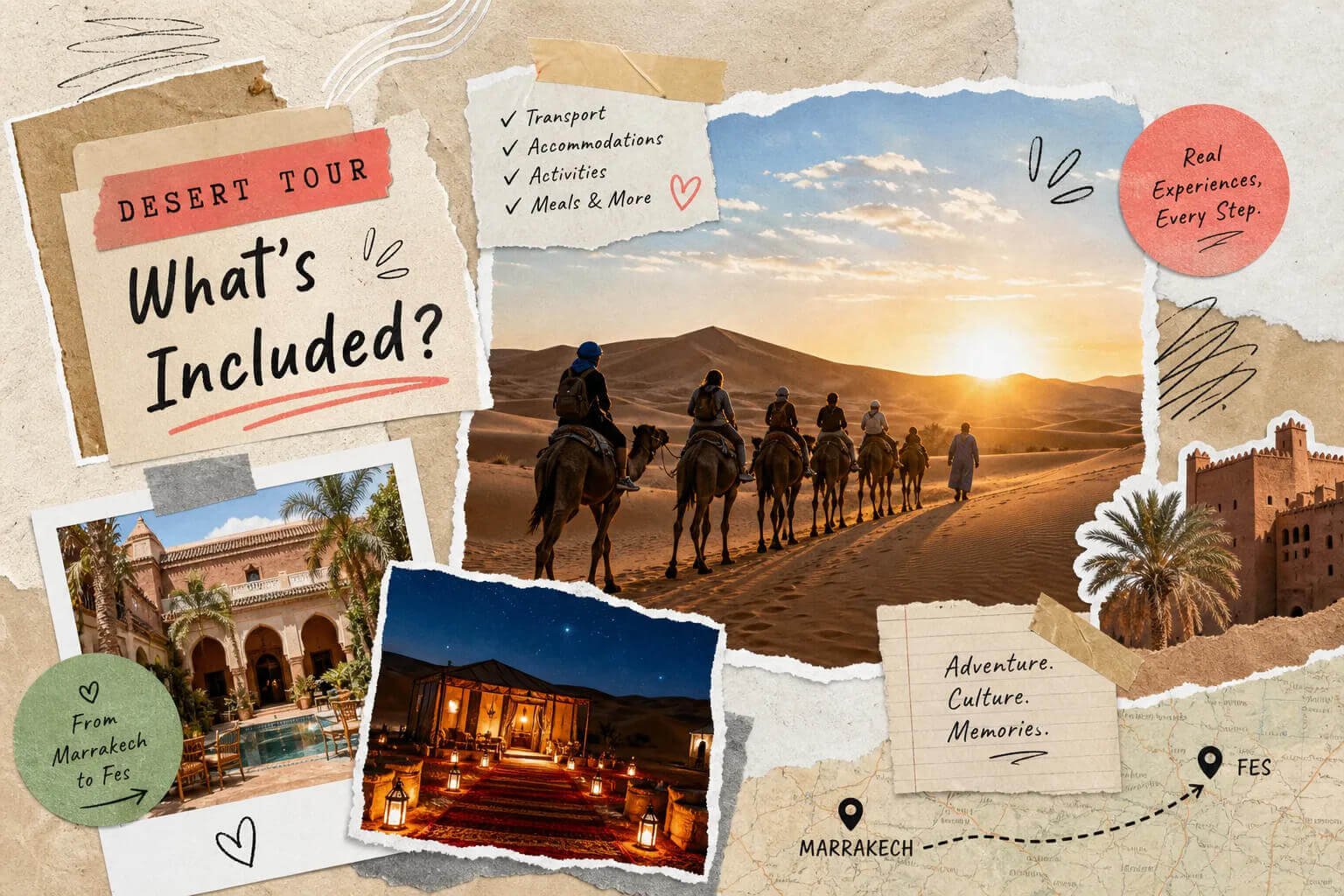
Uncover what a Marrakech to Fes desert tour offers, including camel rides, desert camps, and rich cu...
Read this article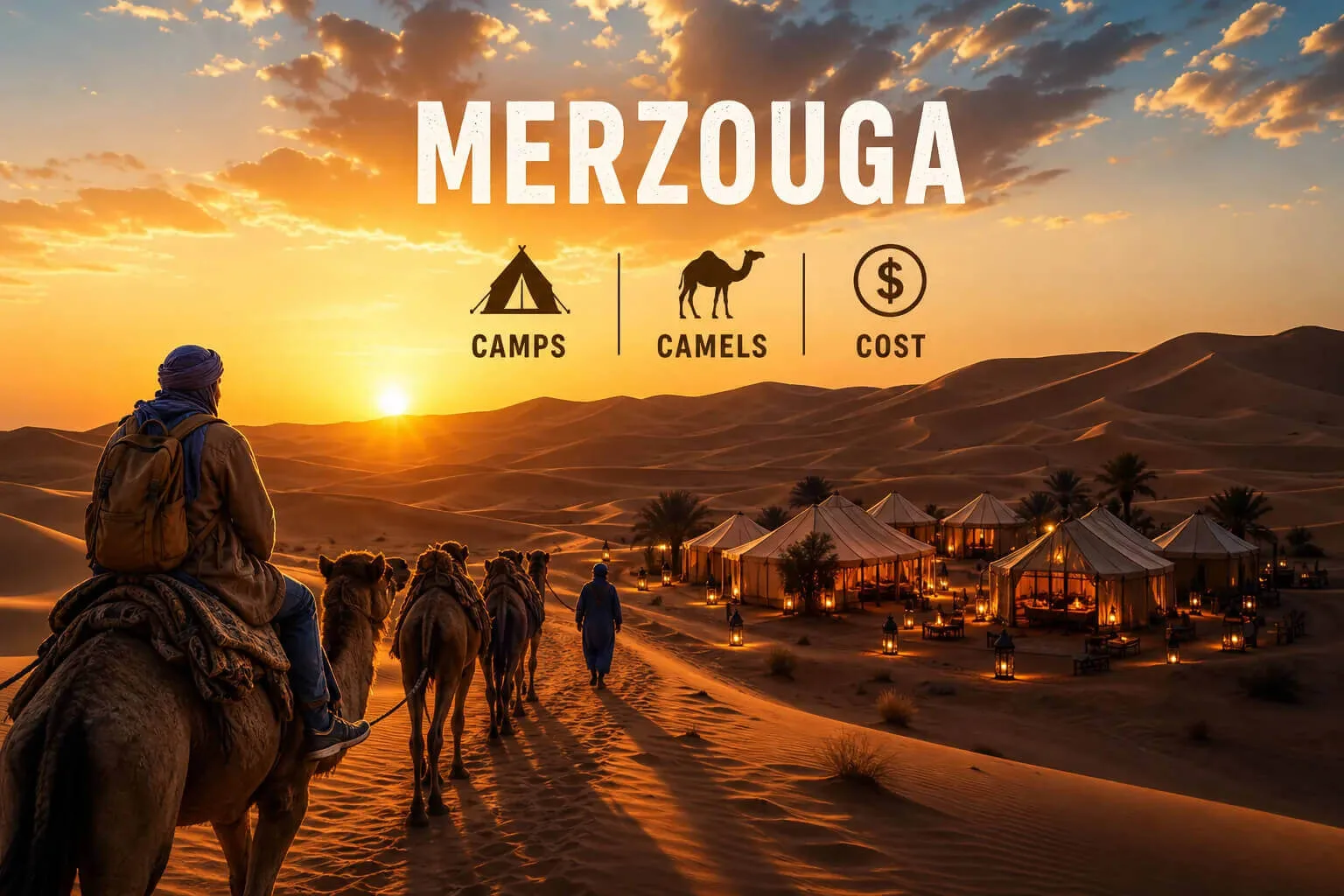
Join our Merzouga Overnight Tour for an authentic desert experience. Enjoy camel rides, comfortable ...
Read this articleWant cool tour deals and tips about Morocco? Enter your email and we’ll send them to you each month!
