Do South Africans Require a Visa to Enter Morocco? Essential Info Here
Wondering if you need a visa to visit Morocco from South Africa? Get essential information and find ...
Read this article

Suspendisse interdum consectetur libero id. Fermentum leo vel orci porta non. Euismod viverra nibh cras pulvinar suspen.
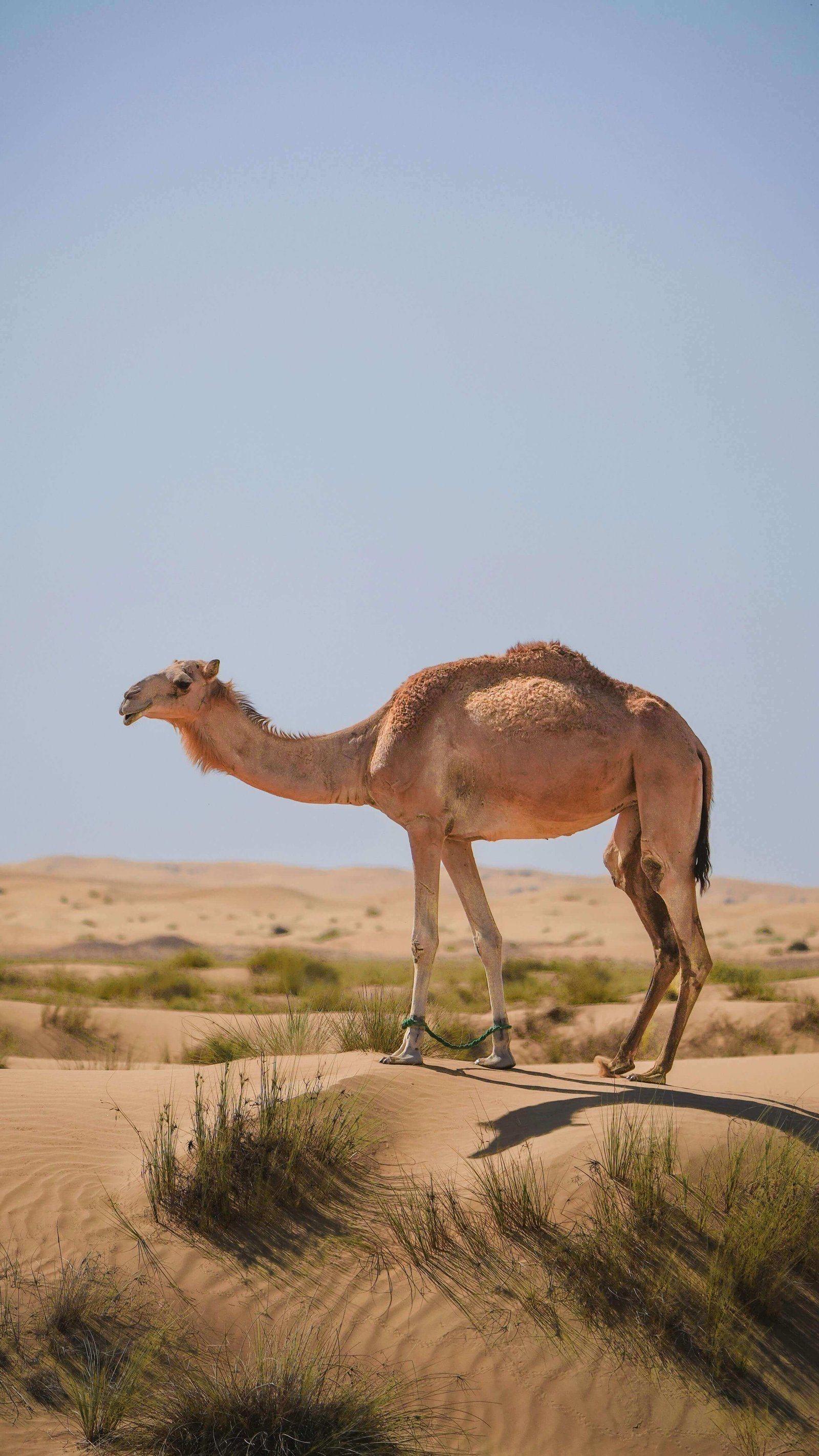
An average 10-day guided tour in 2026–2027 with Morocco Classic Tours typically ranges from about $1,300–$2,400 USD per person, depending on season, comfort level, and whether it includes Sahara camping and domestic flights.
The best time to tour Morocco and avoid extreme heat is mid-March to May and late September to late October, especially for desert and city walks.
Classic Morocco itineraries combine Imperial Cities (Marrakech, Fez, Rabat, Meknes), the Sahara Desert near Merzouga, the Atlas Mountains, and at least one coastal stop like Essaouira or Agadir over 8–15 days.
Morocco Classic Tours specialises in private and small-group tours, camel treks, authentic Sahara desert camps, and cultural immersion, such as cooking classes and medina walks.
Most visitors find 8–12 days enough for a first trip, and travellers should be aware of local etiquette, including dress codes, photography permissions, and avoiding unlicensed guides.
Morocco occupies a unique position where North Africa meets the Mediterranean and Atlantic, creating a country of remarkable contrasts. Ancient medinas with maze-like alleyways give way to towering dunes in the Sahara, while snow-capped mountains rise above fertile valleys dotted with ancient Berber villages. As a Fez-based specialist with deep roots in Moroccan tourism, Morocco Classic Tours has spent years crafting journeys that connect travellers with this extraordinary diversity.
The country remains one of the most accessible destinations in Africa for European and North American visitors. Ferries cross from Spain in under an hour, while direct flights reach Marrakech, Casablanca, and Fes from major European cities in just 2-4 hours. This accessibility makes Morocco ideal for 8–15-day custom itineraries that feel immersive rather than rushed.
Consider the experiences that define a tour of Morocco: watching sunrise paint the Erg Chebbi dunes near Merzouga in shades of gold and amber, navigating the sensory overload of Jemaa el-Fna square at sunset in Marrakech, or wandering the famous blue alleyways of Chefchaouen. These moments, combined with mint tea shared with friendly people in mountain villages and the aroma of tagine simmering in a family riad, create unforgettable memories that stay with travellers long after returning home.
Morocco Classic Tours focuses on private and small-group journeys built around culture, food, and desert experiences rather than mass bus tourism. This approach allows for flexibility, deeper connections with local communities, and itineraries tailored to individual interests.
By the end of this guide, you will:
Understand the average cost of Morocco tours for 2026–2027 and what’s included
Know the best times of year to visit Morocco and avoid extreme heat
Discover classic itineraries covering Imperial Cities, the Sahara, the Atlas Mountains, and the coast
Learn about Morocco Classic Tours’ approach to private and small-group travel
Get practical tips on etiquette, packing, and booking your trip
Trip styles commonly requested:
Cultural heritage tours through the imperial cities and UNESCO sites
Desert adventures with camel treks and Sahara camping
Mountain escapes, including Atlas hiking and Berber village visits
Coastal breaks in Essaouira, Agadir, or Taghazout
Understanding what a Morocco tour costs helps travellers plan realistically and choose options that match their budget. Prices vary significantly by season, hotel category (standard, comfort, or luxury), group size, and whether the tour is private or shared with other travellers.
Typical 10-day guided private tour pricing for 2026–2027:
Category | USD per person | EUR equivalent | MAD equivalent |
|---|---|---|---|
Mid-range (2 travellers) | $1,300–$2,400 | €1,200–€2,200 | 13,000–24,000 |
Budget-friendly options | $880–$1,300 | €800–€1,200 | 9,000–13,000 |
Luxury private tours | $2,500–$4,100+ | €2,300–€3,800+ | 25,000–41,000+ |
These ranges assume two travellers sharing accommodation in mid-range riads and traditional hotels, plus one night in a desert camp at Erg Chebbi. | |||
What is usually included in Morocco tours at this price point: | |||
Private vehicle with English-speaking driver throughout the journey
Guided city tours in Fez and Marrakech with licensed local guides
Daily breakfasts at hotels and riads
2–4 dinners, including the evening meal at your desert camp
Camel trek at Erg Chebbi (typically 1–1.5 hours to reach camp)
Museum and monument entries in the imperial cities
Airport transfers at the start and end of the trip
Typically excluded from tour packages:
International flights (expect $500–1,000 from Europe)
Lunches (budget $10–20 per person daily)
Gratuities for driver, guides, and hotel staff
Optional activities like quad biking ($50–100) or 4x4 dune rides
High-end hammam and spa treatments
Personal shopping in souks
Plan for daily spending money of approximately 25–40 USD per person to cover meals not included, drinks, small tips, and souvenirs.
Travelling in low season (November to early March, excluding Christmas and New Year) typically reduces prices by 10–20%. Peak spring and autumn dates, along with Christmas week, can increase costs by 15–25% due to higher accommodation demand.
Morocco’s climate varies dramatically across its regions. The Mediterranean coast enjoys mild weather year-round, while the interior experiences continental temperature swings. The south and the Sahara desert bring arid extremes that require careful trip timing.
Optimal touring periods: Mid-March to May and September to late October offer the best conditions for touring in Morocco. During these months, temperatures support comfortable city walks, enjoyable desert nights, and pleasant mountain excursions without the punishing midday heat of summer months.
Location | Spring/Autumn | Summer (July-August) |
|---|---|---|
Marrakech | 22–28°C (72–82°F) | 38–44°C (100–111°F) |
Fes | 20–26°C (68–79°F) | 35–40°C (95–104°F) |
Merzouga/Erg Chebbi | 25–32°C (77–90°F) day, 10–15°C (50–59°F) night | Above 45°C (113°F) daytime |
Essaouira (coast) | 18–24°C (64–75°F) | 22–28°C (72–82°F) |
Winter (December–February) works excellently for city touring and photography, with comfortable daytime temperatures in Marrakech (15–20°C) and Fes. However, travellers should expect snow on High Atlas passes like Tizi n’Tichka, which can occasionally close roads. Desert nights drop to near freezing, requiring proper layers and heated tents or riads. | ||
Morocco Classic Tours can adjust timings when guests can only travel in the hotter months. Early morning medina tours, long midday breaks in air-conditioned accommodations, and sunset desert walks help reduce exposure to extreme heat while still delivering an enjoyable experience. | ||
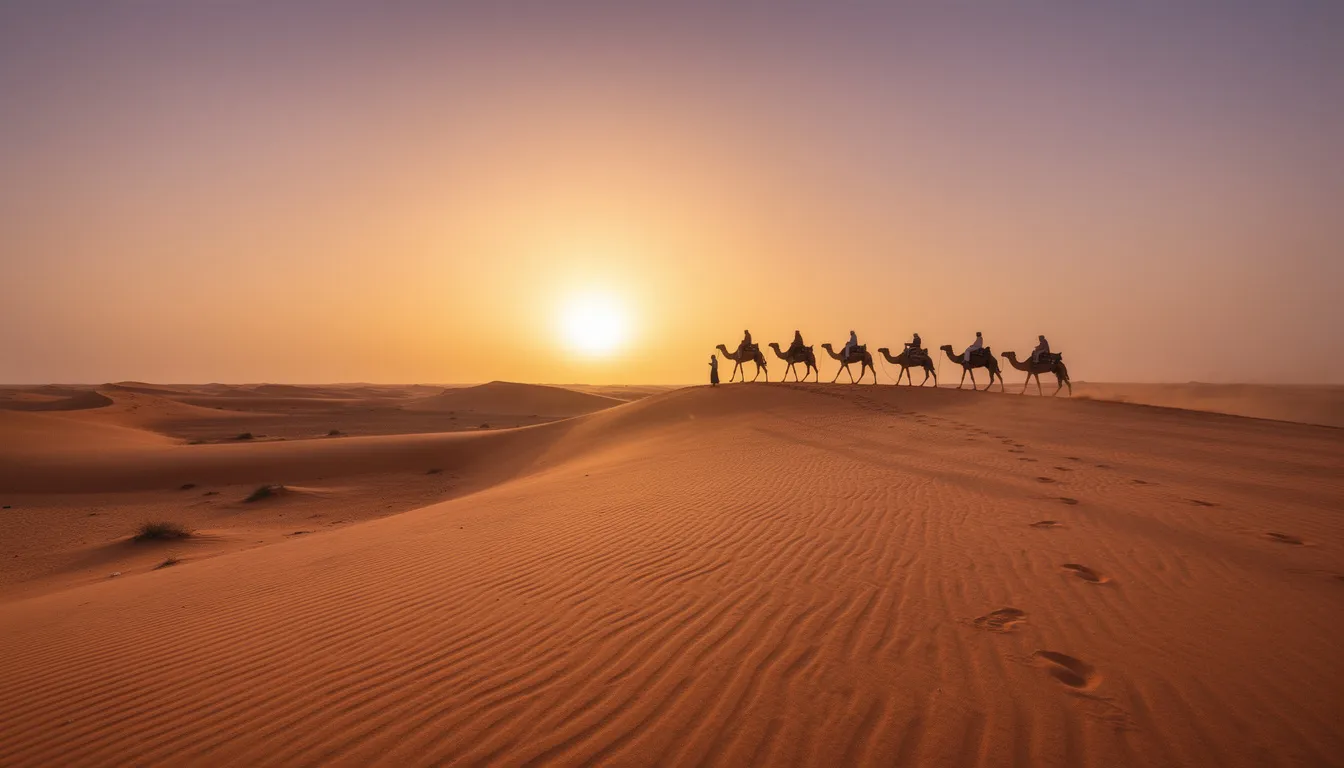
The following sample itineraries represent frequently requested routes that Morocco Classic Tours customises for private groups. Each balance must-see destinations with adequate time for genuine cultural immersion.
This compact journey works for travellers with limited time who still want both history and adventure. Starting in Casablanca or Marrakech and finishing in Fez, the route covers:
Rabat (Hassan Tower, Kasbah of the Udayas)
Meknes (granaries, gates, medina)
Fez medina exploration (UNESCO World Heritage site)
Midelt and the Middle Atlas cedar forests
Merzouga with an overnight at a desert camp among the Erg Chebbi dunes
Todra Gorges and dramatic canyon landscapes
Ait Ben Haddou kasbah (UNESCO site, famous film location)
This itinerary suits first-time visitors to Morocco who want a taste of everything without excessive driving days.
The signature tour of Morocco loop provides the balance most travellers seek. Beginning and ending in Marrakech, it traces a circuit through the country’s highlights:
Days 1-2: Marrakech exploration, souks, Bahia Palace, Jemaa el-Fna Days 3-4: Cross the Atlas Mountains via Tizi n’Tichka pass, Ait Benhaddou, Dades Gorge Days 5-6: Continue to Merzouga for camel trekking at sunset, overnight in Sahara camp, sunrise dune experience Days 7-8: Drive to Fez via Midelt, full day exploring the ancient medina with licensed guide Days 9: Chefchaouen blue city, photography and relaxation Day 10: Rabat, then Casablanca for departure
Key experiences include the camel trek to camp as the sun sets over the dunes, a medina food walk sampling street food in Fez, and morning light illuminating Chefchaouen’s blue walls.
For travellers who want both historic sites and Atlantic relaxation, this extended journey adds southern Morocco beaches and additional ancient cities:
Casablanca (Hassan II Mosque)
Rabat (full day with UNESCO sites)
Chefchaouen (2 nights for thorough exploration)
Fez (2 nights, including a day trip to Volubilis Roman ruins)
Sahara Desert via the desert route (2 nights)
Marrakech (2 nights)
Essaouira (2 nights, coastal relaxation, fresh seafood)
This route particularly suits couples seeking a holiday combining history with beach time, or families with older children ready for a comprehensive adventure.
Morocco Classic Tours customises all itineraries for specific needs: slower pacing for families with young children or seniors, extra hiking days in the Atlas Mountains for active travellers, or additional beach time in Taghazout for surfers seeking Atlantic waves.
Cultural heritage touring in Morocco means immersing yourself in the country’s layered history through imperial cities, UNESCO sites, ancient kasbahs, and living traditions in Berber villages. Local guides explain not just historical facts but also how daily life continues in spaces that have functioned for centuries.
Key heritage stops Morocco Classic Tours frequently includes:
Fez el-Bali medina: The world’s largest car-free urban area, home to the Al Quaraouiyine area and traditional tanneries
Marrakech: the Bahia Palace, the Koutoubia Mosque surroundings, and the Saadian Tombs
Meknes: Monumental gates, royal granaries, and the prison of Christian slaves
Rabat: Hassan Tower, the Kasbah of the Udayas, and the Royal Mausoleum
Volubilis: Morocco’s best-preserved Roman ruins, a day trip from Fez or Meknes
Ait Ben Haddou: The iconic kasbah used in numerous Hollywood films
Itineraries can expand to include smaller, less-visited destinations for travellers wanting deeper exploration. Tetouan’s Andalusian-influenced medina, traditional weekly souks in Middle Atlas villages, and Amazigh communities in the High Atlas offering tea ceremonies in family homes all provide authentic encounters beyond typical tourist routes.
Morocco Classic Tours uses licensed, English-speaking local guides in major cities and heritage sites. These professionals provide engaging storytelling that connects ancient history to contemporary Moroccan life, ensuring visitors discover meaningful context rather than simply ticking boxes.
For travellers interested in Jewish heritage, customised visits to restored synagogues and historic cemeteries in Fez, Marrakech, and Casablanca can be arranged. This requires planning rather than generic group stops, allowing time for proper access and knowledgeable local accompaniment.
The Moroccan Sahara represents the country’s most iconic landscape, where enormous dunes shift colours from gold to pink to deep orange as the sun moves across the sky. Two main dune regions attract visitors: Erg Chebbi near Merzouga (more accessible, higher dunes reaching 150 meters) and Erg Chigaga (more remote, requires a longer 4x4 journey). Most popular Morocco tours focus on Erg Chebbi for its combination of spectacular scenery and practical accessibility.
The standard morocco desert tours route from Marrakech or Fez follows a 2–3 night loop through dramatic landscapes. The journey crosses the High Atlas via the Tizi n’Tichka pass (2,260 meters), pauses at the film-set kasbah of Ait Ben Haddou, winds through the Dades or Todra Gorges with their towering canyon walls, before arriving at Merzouga, where camels wait to carry travellers into the dunes.
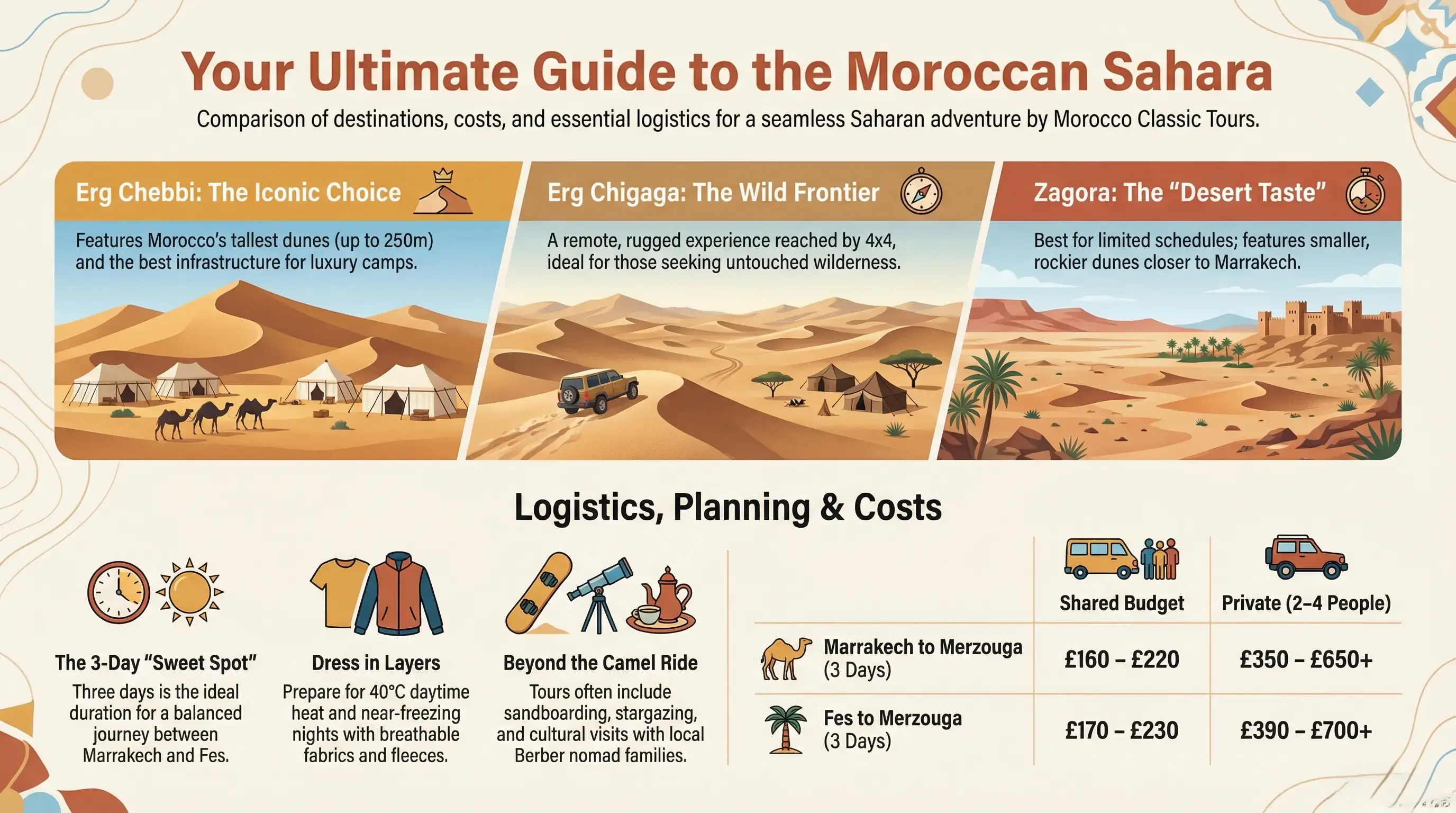
Desert camp categories offered by Morocco Classic Tours:
Camp Type | Features | Approximate Cost |
|---|---|---|
Standard | Shared ablution facilities, basic tents, traditional dinner and breakfast | $50–80/night |
Comfort | Private tents with beds, shared or private showers, and better amenities | $100–150/night |
Luxury | En-suite Berber tents, gourmet meals, superior bedding, attentive service | $200–400/night |
All camp experiences include evening tagine dinners, traditional Berber drum music around the campfire, star-gazing opportunities (the desert sky is remarkable without light pollution), and sunrise camel rides back toward Merzouga. | ||
Booking camel trekking near Merzouga: Morocco Classic Tours arranges 1–1.5-hour sunset and sunrise camel rides linked to camp stays. Camels are well-cared-for working animals with weight limits (typically 100–120kg per rider). Guides assist with mounting and dismounting, provide head scarves for sun protection, and ensure water is available. Comfortable clothing, closed shoes, and sun protection are essential. | ||
Travellers wanting more adventure can add optional activities: 4x4 dune drives for those who prefer not to ride camels, sandboarding down the larger dunes, or quad biking excursions. These are organised with trusted local partners and pre-booked through Morocco Classic Tours to ensure proper safety measures and insurance coverage.
Understanding the difference between small-group and private touring helps travellers choose what suits their style and budget.
Small-group tours (typically 8–12 guests) follow set dates and established routes. Travellers share costs, making them more economical—often 20–30% less than private alternatives. The group dynamic adds camaraderie, particularly enjoyable during shared experiences like camel treks or camp dinners. However, flexibility is limited, and you’ll travel alongside other travellers with varying interests and pace preferences.
Private tours offer complete customisation. Morocco Classic Tours primarily focuses on this format, designing journeys for couples, families, and groups of friends who want control over their itinerary, daily timing, and accommodation choices.
Advantages of private touring with Morocco Classic Tours:
Flexible start dates from Marrakech, Casablanca, Fes, Tangier, or other gateways
Adjustable daily timing (later starts for families with children, longer lunches for those who prefer relaxed pacing)
Choice of hotel categories from traditional riads to boutique luxury properties
Activities tailored to specific interests (more cooking classes, extra hiking, additional photography time)
Vehicle appropriate to group size (2-person sedan, family SUV, or group minivan)
What guests can expect:
Modern, air-conditioned vehicles with professional licensed drivers
English-speaking guides (often also French and Spanish) in major cities
24/7 on-trip support from the Morocco Classic Tours office in Fez
Local knowledge about safe stops for food, photography, and fuel
Flexibility to adjust plans when opportunities arise, or preferences change
For budget-conscious travellers, Morocco Classic Tours can arrange small fixed-date groups on popular circuits. These avoid the impersonal feel of 40+ passenger coach tours while still sharing costs effectively.
Moroccan cuisine ranks among the world’s most aromatic and distinctive. Slow-cooked tagines, Friday couscous, flaky pastilla, Atlantic seafood, and the endless varieties of street food in Fez and Marrakech create a food journey that complements any cultural itinerary.
Food experiences available through Morocco Classic Tours:
Guided street food walks: Navigate medina food stalls with a knowledgeable local guide, sampling harira soup, msemen flatbreads, grilled meats, fresh-squeezed orange juice, and pastries
Family-style dinners: Eat in traditional riads where multi-course meals unfold over several hours, often including dishes rarely found in restaurants
Tea ceremonies: Share mint tea with families in Middle Atlas or High Atlas villages, learning about Berber hospitality traditions
Market tours: Explore local produce markets with a chef before cooking class, understanding ingredients and seasonal specialities
Popular cooking class formats:
Half-day classes (3–5 hours) in Marrakech and Fez typically begin with a market visit to select ingredients. Participants then learn to prepare classic dishes—chicken with preserved lemon and olives, vegetable tagine, zaalouk (smoky eggplant dip), or pastilla—under guidance from English-speaking chefs. Classes conclude with enjoying the meal together.
Cooking classes operate year-round and can be arranged as private experiences or in small groups. Expect prices around $40–80 per person, depending on group size and complexity of the menu.
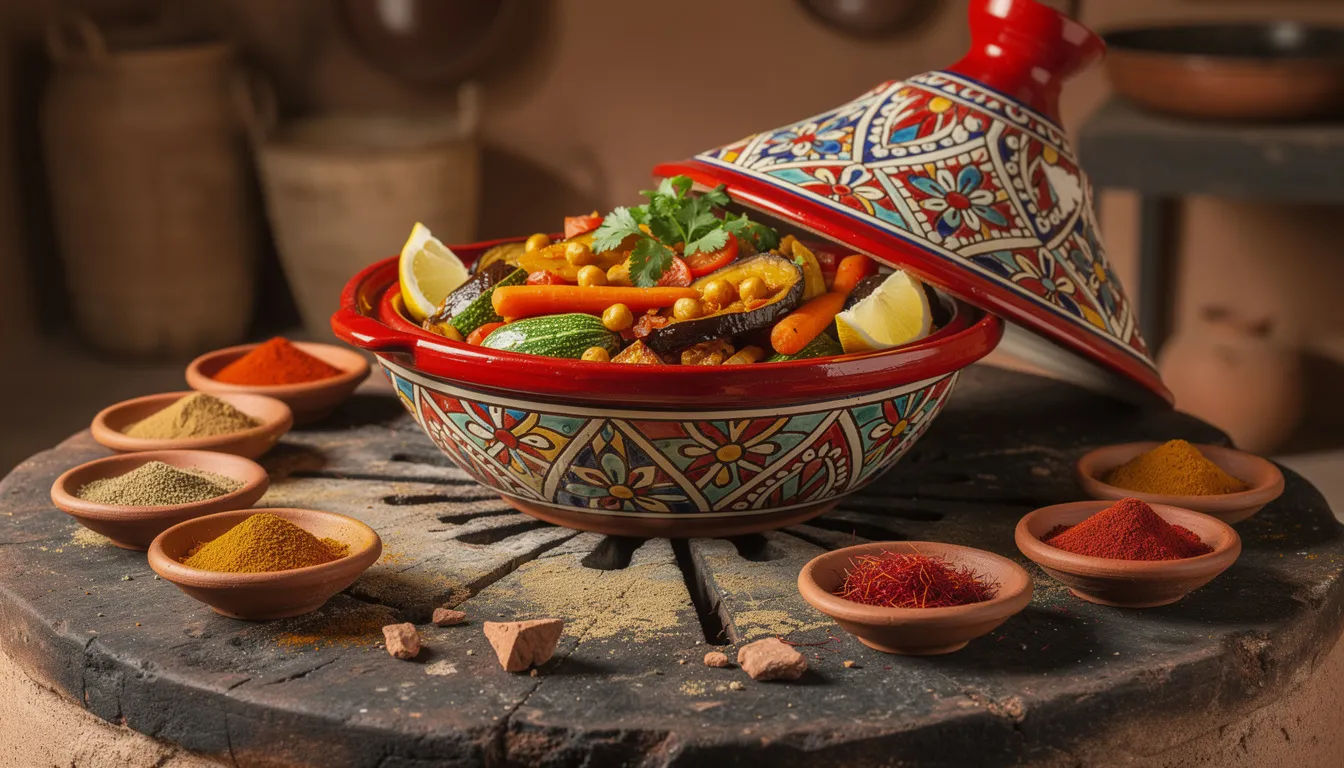
Dietary requirements (vegetarian, vegan, gluten-free) can be discussed during planning. Moroccan cuisine naturally offers many vegetable-based dishes, and experienced chefs adapt recipes without losing authenticity.
Most Morocco Classic Tours travellers choose chauffeured private vehicles rather than self-driving. Morocco’s roads—particularly through mountain passes and desert tracks—benefit from local driver expertise, and passengers can enjoy scenery rather than navigating unfamiliar routes.
Vehicles used for guided tours:
Recent-model air-conditioned minivans for small groups
SUVs and sedans for couples
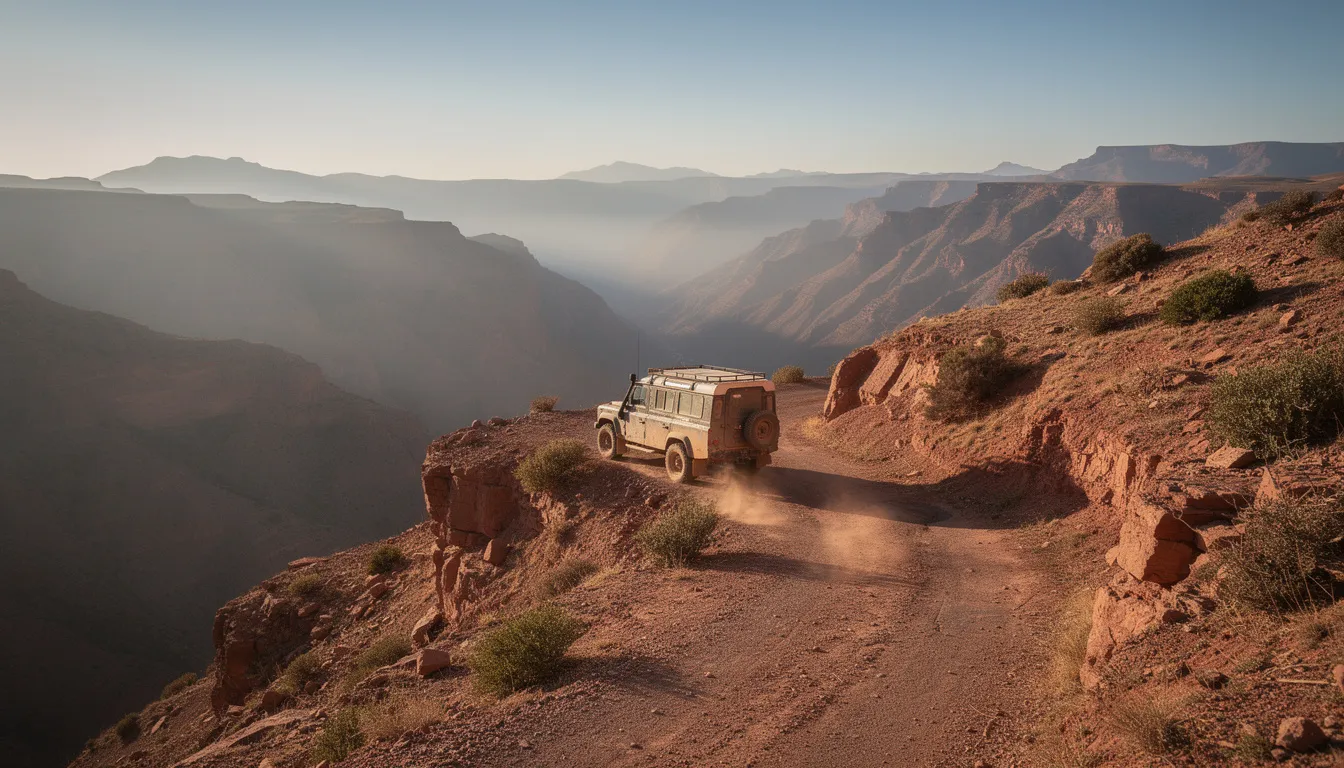
4x4 vehicles for desert routes and rougher mountain roads
All vehicles are regularly maintained with safety checks
For travellers who prefer self-drive segments, 4x4 rentals are available at airports in Marrakech, Casablanca, Fes, Tangier, and Agadir. Reputable agencies like Hertz and Avis offer vehicles ranging from $50–120 per day, with full insurance adding $20–30 daily. Verify mileage limits, deposit requirements (often €1,000–2,000), and ensure the vehicle is genuinely 4x4-capable (Toyota Prado or similar) if planning off-road sections.
Self-driving considerations:
Right-hand traffic, left-side steering (familiar to European drivers)
Urban driving can be chaotic, particularly in large cities
Night driving in rural areas should be avoided (poorly lit roads, animals, pedestrians)
Fuel stations are plentiful on main routes but sparse in remote desert areas
Most reliable cross-country transport services:
Morocco Classic Tours provides private transfers for all major legs, including Marrakech–Fez via the desert route. When train travel makes sense, ONCF trains connect Casablanca, Rabat, Fez, and Tangier efficiently (2–4 hours, $15–40). Royal Air Maroc operates domestic flights useful for time-constrained itineraries (Marrakech–Ouarzazate, Casablanca–Errachidia).
Realistic driving times between major stops: | Route | Approximate Time | |——-|——————| | Marrakech to Merzouga (via Ouarzazate) | 9–10 hours with stops | | Fes to Merzouga | 7–8 hours | | Marrakech to Fes (direct) | 5–6 hours | | Fes to Chefchaouen | 3–4 hours | | Marrakech to Essaouira | 2.5–3 hours |
Morocco Classic Tours drivers know safe places for food stops, photography opportunities, and fuel, making long-distance travel both comfortable and enjoyable.
The ideal trip length depends on what you want to experience and how comfortable you are with driving between destinations.
Trip Length | Best For | Sample Route |
|---|---|---|
5–7 days | Fast first taste, single region focus | Marrakech + Atlas/Agafay, or Fes + Middle Atlas |
8–12 days | Balanced classic Morocco itinerary | Marrakech–Dades–Merzouga–Fes–Chefchaouen |
14+ days | Comprehensive circuit with coastal time | All four imperial cities + Sahara + Atlas + Essaouira |
Concrete examples: | ||
A 6-day itinerary focusing on Marrakech, the Atlas Mountains, and the Agafay desert offers a satisfying introduction without exhausting drives. Expect to spend $550–1,100 per person. | ||
A 9–10 day route from Marrakech through Dades Gorge, Merzouga dunes, Fes, and Chefchaouen provides the classic Morocco experience most first-time visitors seek.
A 14-day loop from Casablanca covering all four imperial cities, the Sahara desert, Atlas hiking, and Essaouira creates a comprehensive journey for those with more time.
First-time visitor recommendation: 8–10 days typically represents the sweet spot—enough time to experience Morocco’s diversity without rushing, including at least one long cross-country drive and an overnight desert camp.
Morocco Classic Tours can compress or stretch itineraries based on flight schedules and whether you prefer more free time in each city versus covering more destinations. If you can only spare 4–5 days, focusing on one region (Marrakech plus immediate surroundings, or Fes and the Middle Atlas) will feel more relaxed than attempting to see the whole country.
Travelling respectfully enhances your experience and helps maintain positive relationships between tourists and local communities. These direct guidelines help visitors avoid common mistakes.
Dress appropriately: Morocco is a muslim country with conservative norms, especially away from tourist areas. Cover shoulders and knees in medinas, mosques, and rural areas. Beach resorts have more relaxed standards, but revealing clothing in cities attracts unwanted attention.
Don’t photograph people without permission: Always ask before photographing locals, particularly women, children, and shopkeepers. A simple “photo?” with a gesture usually works. Some subjects expect a small tip (10–20 MAD), which is reasonable for a portrait. Refusing and walking away when asked for payment is considered rude.
Avoid unlicensed guides: Individuals who approach aggressively in medinas offering unsolicited guiding services are rarely licensed. Rely on Morocco Classic Tours’ arranged tour guide services or clearly agreed taxi fares. If approached, a firm but polite “no, thank you” usually works.
Don’t drink tap water: Stick to bottled water in smaller towns and the desert. Norovirus and stomach issues from tap water can ruin a trip. Most hotels and riads provide bottled water in rooms.
Protect your valuables: Don’t leave items visible in cars or unattended in busy souks. Use hotel safes for passports and excess cash. Petty theft occurs in crowded areas, though violent crime against tourists is rare—Morocco is generally safe for travellers.
Additional considerations:
Avoid discussing sensitive political topics loudly in public displays of strong opinion
Don’t touch or feed tourism animals (donkeys, camels, monkeys) without permission from handlers
Be cautious about purchasing items claimed to be antiques—export restrictions apply, and many are reproductions
Public displays of affection should be minimal, respecting local customs
Beginning your Morocco journey starts with sharing your travel vision. Contact Morocco Classic Tours through the website enquiry form, email, or phone with your desired dates, trip length, main interests (desert, food, trekking, photography), and preferred comfort level.
The typical planning process:
Initial consultation: Share your preferences and any specific requests
Draft itinerary: Receive a proposed route within a few working days
Refinement: Adjust routes, upgrade or change riads, modify desert camp category, add special experiences
Confirmation: Secure services with a deposit
Final details: Receive comprehensive travel documents, including packing lists, tipping guidance, and emergency contacts
Tours can start any day of the week from key gateways: Marrakech, Casablanca, Fes, Tangier, or even directly from desert-area airports like Errachidia or Ouarzazate for travellers connecting from domestic flights.
Enhance your trip at the planning stage:
Cooking classes in Fez or Marrakech
Traditional hammam experiences
Extra nights in Essaouira or Chefchaouen
Upgraded luxury desert camps
Horseback riding in the palm groves
Day trips to nearby attractions not on the main route
Arranging these extras during planning ensures your itinerary flows smoothly without last-minute complications. Morocco Classic Tours handles all booking coordination, so you simply arrive and enjoy.
Comprehensive travel insurance covering medical care, trip cancellation, and adventure activities (camel trekking, light hiking, optional quad biking) is strongly recommended and often required by responsible operators. Morocco Classic Tours asks clients to arrange their own policy in their home country and share key details (insurer name, policy number, emergency contact) before arrival. Medical care in Marrakech, Casablanca, and Fes is generally good but can be expensive for private treatment, and insurance simplifies accessing quality care and any necessary evacuation. Purchase coverage as soon as you pay your deposit, so pre-departure issues like flight cancellations are also covered.
Tipping is customary and represents an important part of income for guides, drivers, and hotel staff. For a private driver on a 7–10 day tour, budget approximately 8–15 USD (or equivalent in MAD) per person per day. Full-day local city guides typically receive 10–20 USD per person, depending on group size. Smaller tips apply for luggage porters (10–20 MAD per bag), café or restaurant staff (5–10% if service charge isn’t included), and camel handlers (40–80 MAD per person for a memorable trek). Morocco Classic Tours includes updated tipping guidance in final travel documents.
Morocco welcomes families warmly, and Morocco Classic Tours regularly designs child-friendly itineraries. These feature shorter driving days, riads with pools, and engaging activities like camel rides, gentle hikes, and sandboarding. Shoulder seasons (spring and autumn) work best for families to avoid extreme heat, particularly if including the Sahara. Many riads offer family rooms or interconnecting accommodations, and car seats can be arranged for private vehicles. Pack familiar snacks, sun hats, high SPF sunscreen, and light layers for chilly desert nights. Doctors and pharmacies are accessible in all major cities along typical touring routes.
Mobile coverage works well in cities and along main roads, with 4G or 5G available in most urban areas. Signal becomes weak or absent deep in desert regions or remote mountain valleys. Consider buying a local Moroccan SIM card or eSIM on arrival (Maroc Telecom, Orange, or Inwi offer affordable data packages) or check with your home provider about roaming. Nearly all riads and hotels used by Morocco Classic Tours provide free Wi-Fi in public areas and most rooms, though speeds vary in older medinas and desert camps where internet access may be limited. Being occasionally offline in the Sahara is part of the unforgettable experience.
Pack light, breathable clothing for daytime, a warm layer or jacket for evenings (essential for the desert and the Atlas Mountains), comfortable walking shoes for cobbled medina streets, and a scarf or shawl for sun protection and modesty when visiting religious sites. Practical items include a wide-brimmed hat, sunglasses, high SPF sunscreen, reusable water bottle, basic medications, and a small daypack for daily excursions. Bring a universal plug adapter (Type C or E) and a power bank, as charging opportunities in desert camps can be limited. Morocco Classic Tours provides a seasonal packing checklist tailored to your exact itinerary once the tour is confirmed.
Wondering if you need a visa to visit Morocco from South Africa? Get essential information and find ...
Read this article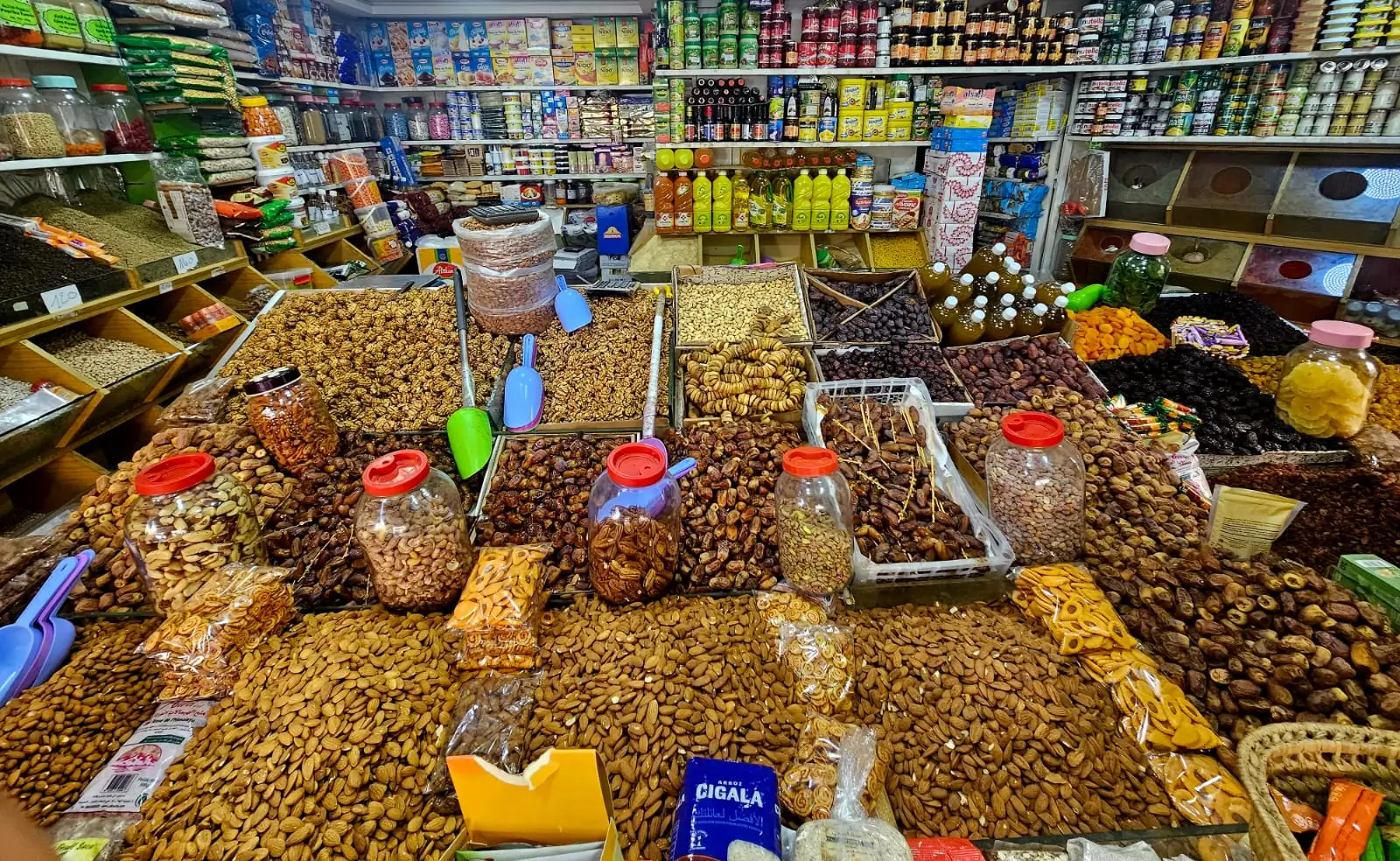
Curious about Moroccan food? Explore its unique flavor profile, spice levels, and what to expect in ...
Read this article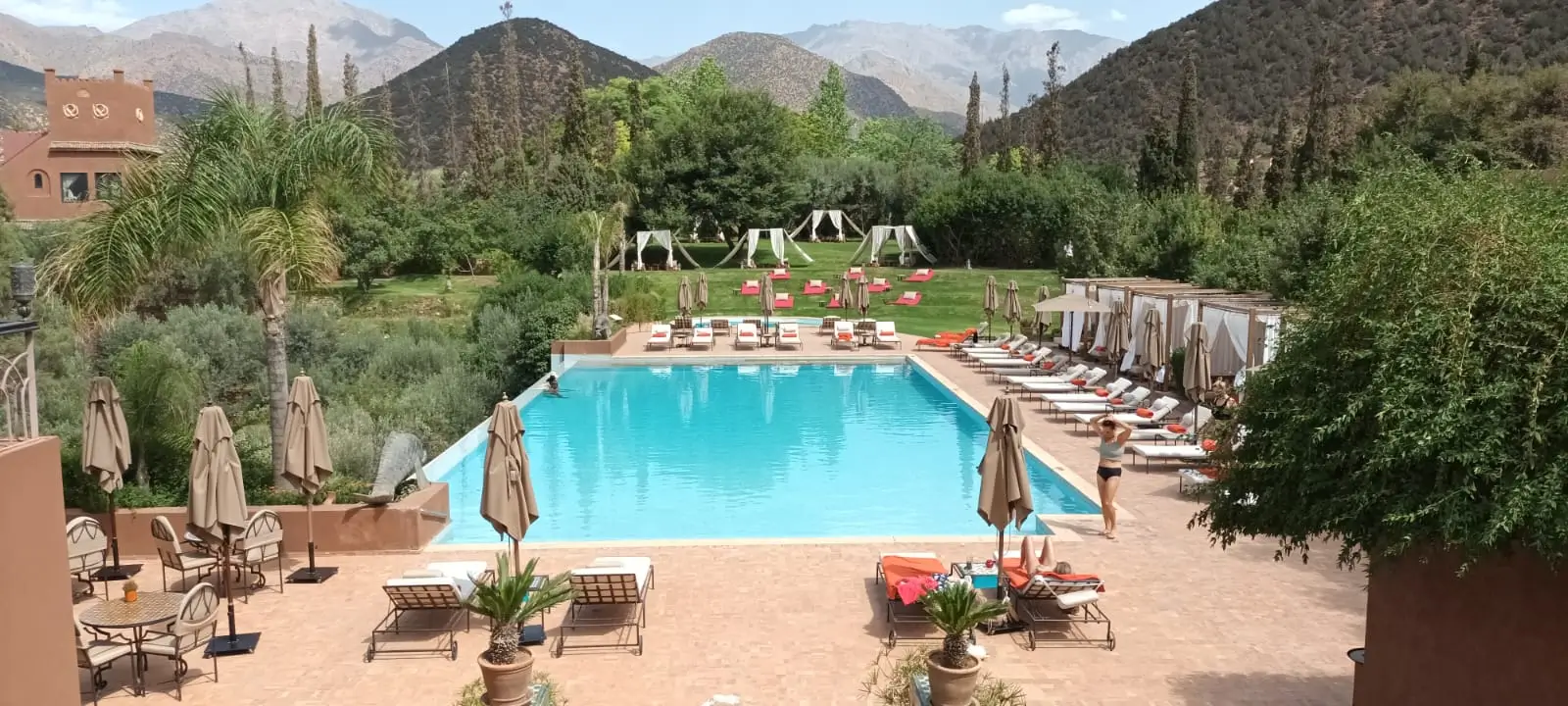
What Is the Best Month to Visit Marrakech? (Honest Guide from Morocco Classic Tours) Marrakech dr...
Read this articleWant cool tour deals and tips about Morocco? Enter your email and we’ll send them to you each month!