Group Tour Agencies in Morocco: How to Pick the Right One
Compare Morocco group tour agencies by trip style, reviews, pace, transport and inclusions. Learn wh...
Read this article

Private, custom Morocco trips planned in Fez by AZ-ZDDINE, working in Moroccan tourism since 2012. Sahara, Atlas, medinas and coast, arranged around you.
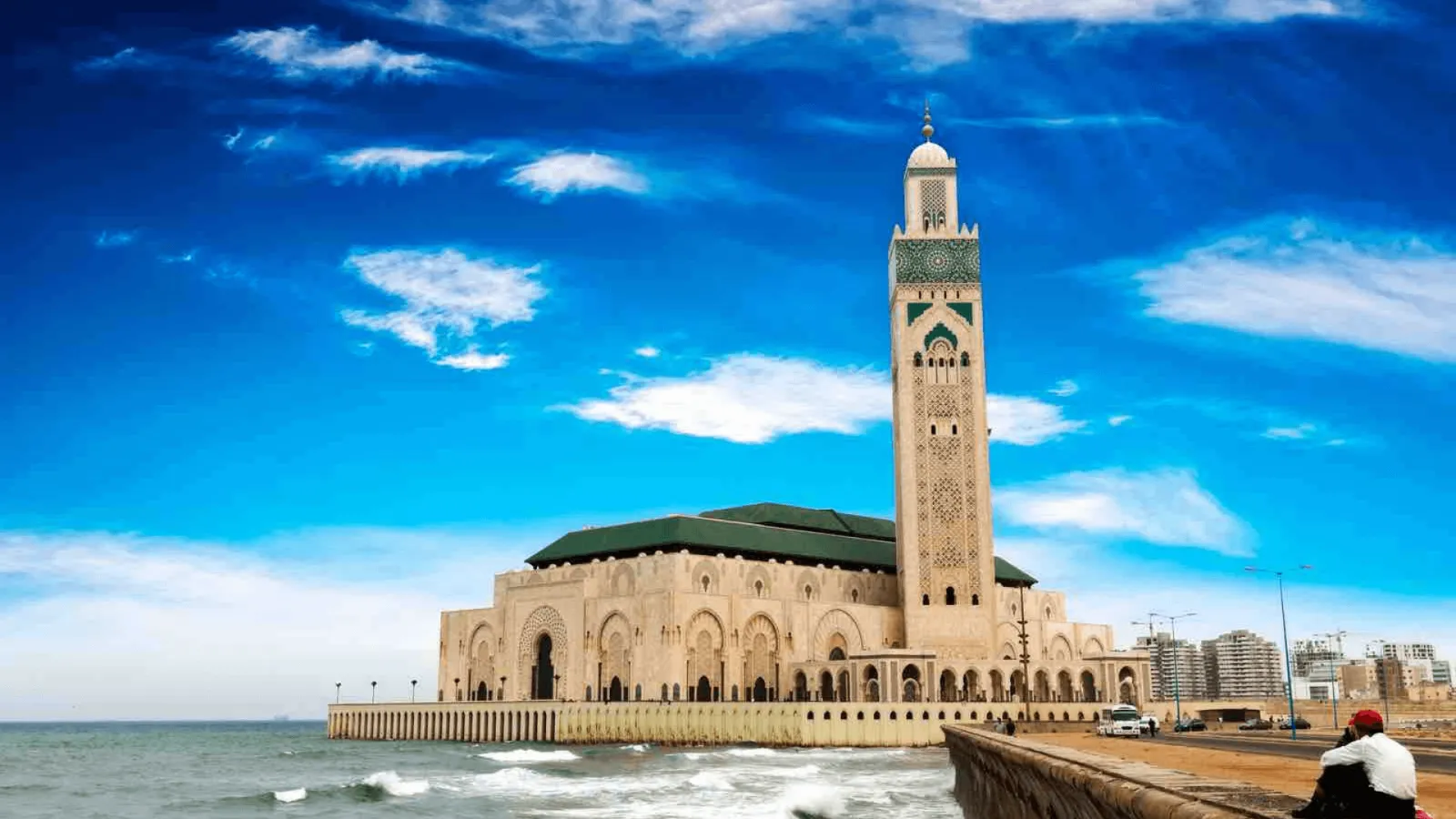
Casablanca is not the Morocco of winding desert dunes or ancient medina mazes—it’s something entirely different. This sprawling Atlantic city of over 3.7 million people pulses with modernist architecture, working port energy, and one of the most breathtaking religious monuments on Earth. Whether you’re stepping off a cruise ship at Casablanca port, killing time during a layover, or simply curious about what Morocco’s largest city has to offer, one well-planned day here delivers a satisfying mix of history, coastline, and authentic local life.
One full day (8-10 hours) is enough to experience Casablanca’s main highlights—Hassan II mosque, the Corniche, old medina, habous quarter, and a memorable dinner—especially when you follow a logical route or book a private tour.
The city is generally safe and partly walkable in compact zones like downtown casablanca and the Corniche, but taxis or private car services are essential for connecting scattered landmarks separated by 5-15 kilometers.
Planning matters most for Hassan II mosque, where guided tours run at specific times and tickets should be purchased 30-45 minutes early during high season.
Morocco Classic Tours can arrange private day tours with hotel, port, or airport pickup, licensed guides, and pre-arranged mosque entry—eliminating the guesswork for time-pressed visitors.
One day is usually sufficient for first-timers, but Casablanca also serves as an excellent gateway for longer Morocco itineraries to Fez, Marrakech, or the Sahara Desert.
This guide comes from Morocco Classic Tours, a Fez-based travel agency that has spent years helping visitors navigate Morocco’s cities, deserts, and mountains. We’ve written it specifically for people with limited time—cruise passengers with a shore day, travelers on airport layovers, and first-timers who want to see the highlights without wasted hours.
The itinerary follows a natural hour-by-hour flow from morning through evening. You can adapt it depending on your arrival point:
Cruise port or Casablanca port railway station: Start with the Hassan II mosque, which is closest
Downtown hotel near city center: Begin with the old medina, then head to the mosque
Casablanca Mohammed V Airport: Consider a private transfer directly to the mosque to maximize time
All suggested stops are realistic within a single day. The walking sections—Corniche, old medina, habous quarter—are compact and manageable. The longer hops between major sights require taxis or private cars.
Morocco Classic Tours can organize private day tours, airport and port pickups, and customized versions of this itinerary. Whether you want to add an art deco walking tour or a food-focused exploration, we handle the logistics so you can focus on the experience.
Early morning light slanting across the Atlantic Ocean, cooler temperatures hovering around 20-25°C, and thinner crowds make this the ideal time to visit Casablanca’s most iconic landmark. The air carries salt spray and the promise of an architectural marvel unlike anything else in the country.
Hassan II mosque stands dramatically on the Atlantic shore, its 210-meter minaret—the second tallest in the world—piercing the skyline like a beacon. From Casa Port railway station, it’s about 10-15 minutes by taxi. From the cruise terminal, expect 15-20 minutes depending on traffic.
This is not just any mosque. Completed in 1993 under King Hassan II at a cost exceeding $800 million, the complex holds 25,000 worshippers inside and another 80,000 in its vast courtyard. It’s one of only two mosques in morocco (the other being in Meknes) that permits non-Muslims to enter via guided tours—making it the most important thing on any one-day Casablanca itinerary.
Guided tours typically run at 9:00, 10:00, 11:00, 14:00, 15:00, and sometimes 17:00, though schedules vary seasonally. Friday tours are limited due to prayer times, with no entry between roughly 11:30 and 14:00.
How to buy tickets:
Purchase at the dedicated ticket office within the mosque complex
Current prices are approximately 140 MAD for adults, 100 MAD for students
Arrive 30-45 minutes before your chosen slot, especially during high season when queues can be substantial
Photography is permitted inside; video recording is not
Dress code requires covered shoulders and knees; shoes are removed before entering
The interior justifies every superlative. Carved cedar ceilings depict verses from the Quran with a craftsmanship that required 50 million man-hours to complete. Zellige tilework in 48 shades of green—symbolizing paradise—covers massive surfaces. Marble sourced from quarries in places like Carrara, Italy, stretches across the floors.
The engineering is equally remarkable: a retractable roof opens to the sky, heated floors warm worshippers during cooler months, and the foundation extends partially over the ocean. Through massive arched windows, you can see waves crashing beneath you—a visceral reminder that this mosque sits at the edge of the world.
Pro tip: Morocco Classic Tours offers half-day city tours that include hotel or port pickup, mosque tickets, and a licensed English-speaking guide. This eliminates queuing and timing uncertainty, especially valuable when you have limited hours in Casablanca.
After your tour, spend 20-30 minutes walking along the seafront promenade outside the mosque complex. Locals gather on the volcanic rocks, children run along the concrete paths, and photographers find endless angles back toward the minaret.
The area around the mosque is safe during daytime, with visible police presence and steady foot traffic. Avoid walking too far along isolated rocky sections after dark, and keep valuables close as you would in any big city.
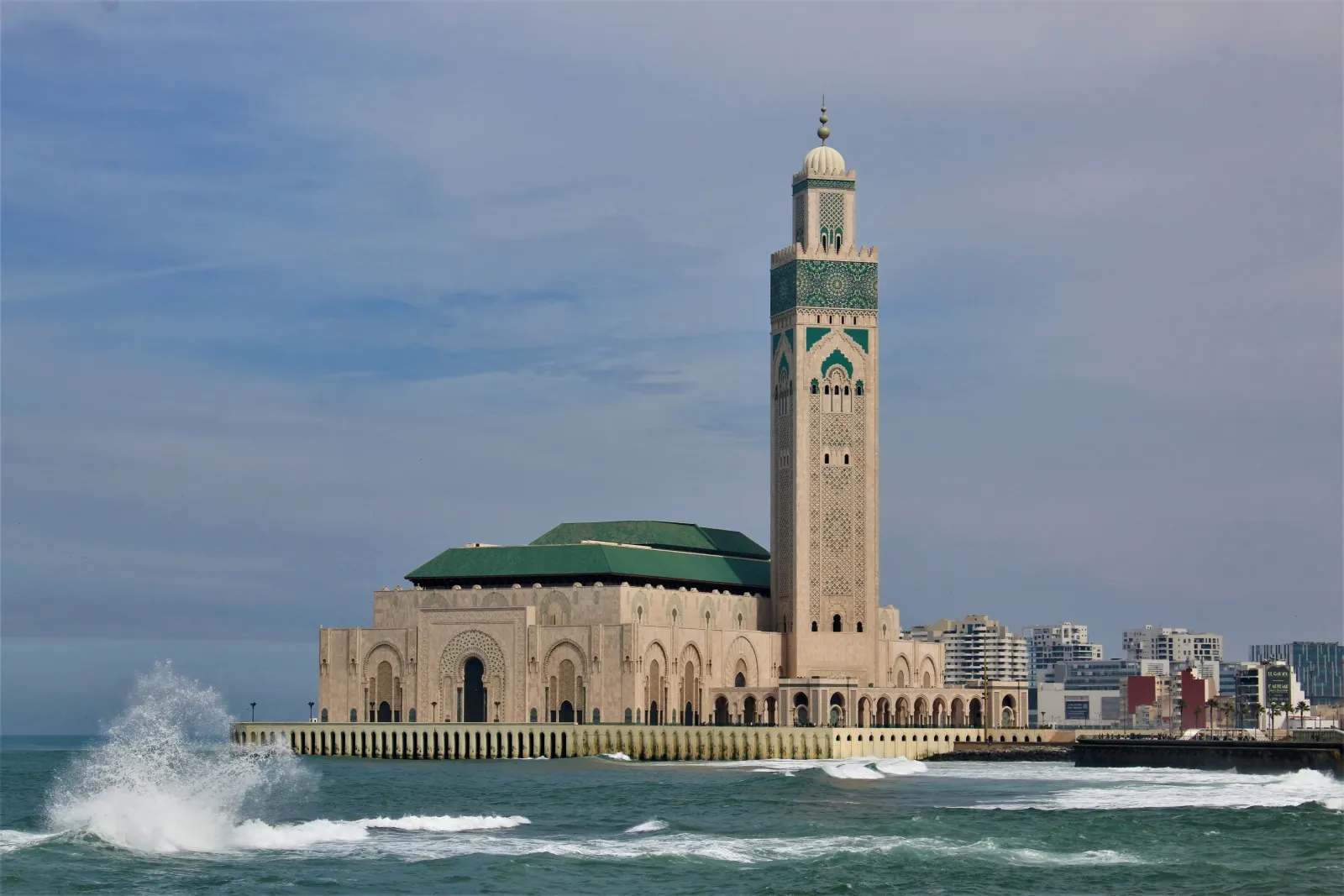
The old medina lies between the fishing port and the place des nations unies, roughly 10 minutes by taxi from the Hassan II mosque. If you’ve booked a private guided tour, your driver will handle the transition seamlessly.
This isn’t the overwhelming labyrinth of Marrakech. Casablanca’s medina is compact, lived-in, and refreshingly authentic—a neighborhood dating mainly from the 18th and 19th centuries where the local population goes about daily life regardless of tourists.
Whitewashed alleys lead past spice vendors selling saffron at 10-20 MAD per gram, leather goods shops displaying babouche slippers for 100-200 MAD after bargaining, and casual eateries serving harira soup or msemen pancakes. The smell of cumin and leather mingles with mint tea wafting from hole-in-the-wall cafés.
How to spend 1-2 hours:
Stroll the main lanes without a rigid plan
Stop for mint tea at a small café (10-15 MAD per glass)
Browse spices, leather goods, and simple souvenirs
Observe daily life—people watching here reveals the real Casablanca
Snap photos of traditional Moroccan architecture contrasting with modern elements
The medina is easier and less intense than the souks in other Moroccan cities. Stick to busier streets, keep an eye on bags, and avoid unmarked quiet alleys if you’re exploring solo—but overall, this area feels more “neighborhood” than “tourist trap.”
Adjacent to the medina, United Nations Square (place des nations unies) and Mohammed V Square serve as orientation points for understanding modern Casablanca.
Place Mohammed V—sometimes called Pigeon Square—features a central fountain surrounded by hundreds of pigeons fed by locals, tram lines, and striking public buildings in art deco styles and Moorish Revival design. Look for the Wilaya headquarters and the central post office nearby.
The clock tower at United Nations Square represents another landmark for navigation. Art deco facades line the surrounding streets, remnants of the French protectorate era that shaped this city’s distinct character.
Key details:
No paid tickets needed for the old medina or main squares—they’re open public spaces
Tram lines run every 5-10 minutes at 7 MAD per ride
This area is ideal for visitors who only have a few hours in Casablanca
Morocco Classic Tours can arrange 2-4 hour guided walking tours focused on these central zones, starting from Casa Port, the cruise terminal, or city center hotels. A local guide adds context that transforms random alleys into meaningful history.
Midday heat calls for a slower pace. This is the perfect time to sit down for a proper meal while Casablanca’s coastal position delivers excellent fresh fish, tagines, and ocean views.
Every fan of classic Hollywood knows the 1942 film Casablanca starring Humphrey Bogart and Ingrid Bergman. While the movie was filmed entirely in California, Rick’s cafe exists in the city as a faithful 2004 recreation of that romantic atmosphere.
Housed in a traditional 1930s riad near the old medina and port, the restaurant features art deco interiors, a central mahogany bar, and live piano renditions of “As Time Goes By.” The whole experience leans into cinematic nostalgia—ideal if classic films mean something to you.
Practical details:
Expect 200-400 MAD per person for lunch
Reservations are strongly recommended, especially on cruise days when the 100 seats fill quickly
Book via their website a few days ahead
A set-menu lunch works well if time is limited
Not everyone needs the film connection. Casablanca offers equally rewarding alternatives:
Option | Location | What to Expect | Price Range |
|---|---|---|---|
Marché Central fish stalls | Near downtown | Fresh grilled sardines, oysters, street food atmosphere | 50-100 MAD |
Corniche terrace restaurants | Boulevard de la Corniche | Grilled fish platters, Atlantic ocean views, casual cafés | 100-250 MAD |
Port-side seafood spots | Near the fishing harbor | Fresh fish of the day, working-port atmosphere, good food | 80-200 MAD |
La corniche offers open terraces, people watching opportunities, and that Atlantic breeze that makes coastal dining memorable. A short taxi ride (20-30 MAD) from downtown gets you there.
Morocco Classic Tours can include lunch stops in private day-tour itineraries, with drivers waiting nearby so you don’t waste time negotiating taxis or watching the clock.
Note on drinks: Alcohol is available at upscale venues, hotel bars, and international restaurants like Rick’s cafe. Many local eateries don’t serve it. Mint tea, fresh orange juice, and avocado smoothies remain the quintessential non-alcoholic choices.
The afternoon splits between the seaside Corniche and the more traditional Habous quarter inland. A private car or taxi is the most efficient way to connect these areas—they’re too far apart for comfortable walking.
The Boulevard de la Corniche stretches 7 kilometers west of the city center, a vibrant promenade developed in the 2000s that blends public beaches, private clubs, surf spots, and family-friendly sands.
The sound of Atlantic surf dominates here. Families stroll along wide sidewalks with ocean views stretching to the horizon. Beach clubs like Pepe’s Fish and La Plage Scarlett cater to those wanting loungers and service; public stretches of Ain Diab beach offer sand and waves without the formality. Water temperatures hover at 18-22°C year-round.
Walkability clarification: The Corniche itself is very walkable, with wide sidewalks and clear sightlines. However, it’s too far to walk from the cruise port or mosque—take a taxi to one point along the promenade and then walk from there.
Visitors with only a few hours in Casablanca can limit their afternoon to the Corniche plus the Hassan II mosque. Those with a full day should continue to habous quarter afterward.
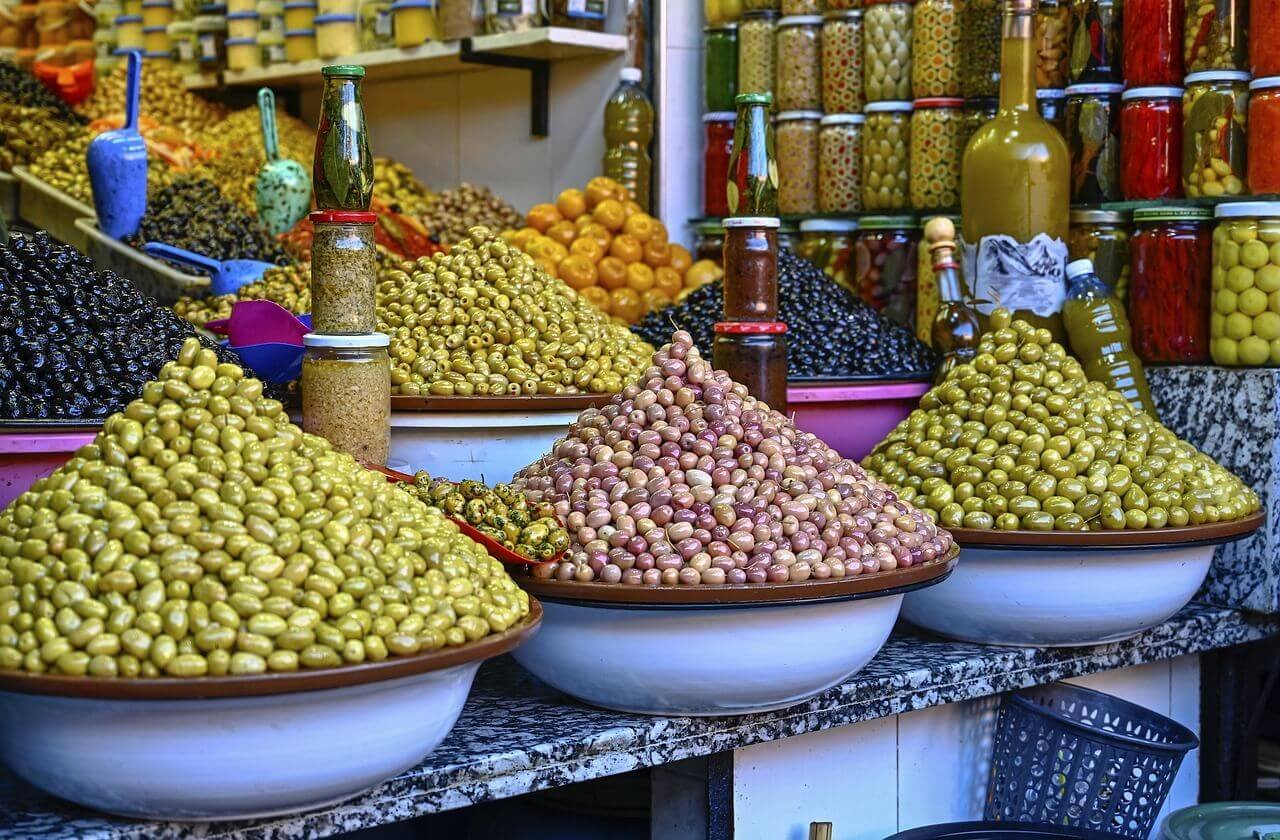
A short drive inland from downtown, habous quarter represents something unique: a planned medina built during the 1920s-1930s French protectorate era. The district mixes traditional Moroccan architecture with French colonial design sensibilities—orderly grid streets, white stucco arches, and a calm atmosphere that feels worlds apart from chaotic tourist souks elsewhere.
Things to do in Habous:
Shop for spices, argan oil (100-150 MAD per 250ml bottle), and quality leather goods
Visit traditional bakeries for kaab el-ghzal (almond pastries)
Admire the exterior of the royal palace (interior closed; photography restricted)
Arrange a guided visit to Mahkama du Pacha, whose ornate interiors showcase zellij tiles and cedarwork rivaling Fez craftsmanship.
Browse bookshops and artisan boutiques without aggressive haggling
This is one of the best areas for souvenir shopping in Casablanca. Prices tend to be fairer and bargaining more relaxed than in big tourist cities, making it ideal for a quick, focused shopping stop.
Morocco Classic Tours can arrange a driver-guide who waits while guests explore both the Corniche and Habous, eliminating time lost flagging taxis and ensuring you return to the port, airport, or hotel on schedule.
End your day in Casablanca with golden light over the Atlantic Ocean and a relaxed dinner. Whether you’re at the Corniche or back in the city center, the evening hours offer a gentle conclusion to a full day.
The best sunset spots depend on where you find yourself in late afternoon:
La Corniche or Ain Diab beach: Wide horizons, sand under your feet, casual café drinks
Rocks near Hassan II mosque: Dramatic silhouette of the mosque against golden sky
Rooftop terraces at downtown restaurants: Urban panoramas mixing minarets and modern buildings
The light during this hour transforms the mosque’s marble and the ocean surface into a highlight photo moment worth planning around.
Style | Venue Type | Experience |
|---|---|---|
Film nostalgia | rick’s cafe | Art deco ambiance, piano music, refined Moroccan-international menu |
Seafood | Port or Corniche restaurants | Grilled fresh fish, tagines, ocean breezes |
Traditional Moroccan | City center riads or bastions | Couscous royale, mechoui lamb, intimate courtyard settings |
Good food abounds if you know where to look. Le Cabestan offers ocean-view terraces; restored riads in the city center serve multi-course Moroccan dinners in atmospheric settings.
Casablanca has a livelier nightlife than many Moroccan cities. Cocktail bars, lounges, and music venues cluster in districts like Gauthier and along the Corniche. These cater primarily to expats, tourists, and cosmopolitan locals—optional extras depending on your energy levels and schedule.
Evening safety: Main restaurant and hotel districts are generally safe to walk in pairs or groups after dark. Use taxis or a private car for longer distances, especially from the Corniche back into town. Cruise passengers and layover travelers should check boarding and flight times—Morocco Classic Tours can time private day tours so guests are dropped at the port, Casa Voyageurs Station, or airport well in advance.
Let’s answer directly: yes, one day is enough for Casablanca’s top highlights, and the city is absolutely worth a visit to understand modern Morocco beyond romanticized medina imagery.
Central Casablanca—the old medina area, main squares, some art deco streets—is walkable. The Corniche is ideal for strolling once you’re there. However, distances between the cruise port, mosque, Corniche, airport, and habous quarter are too long for most people to cover on foot, especially with limited time.
Practical breakdown:
Casa port to old medina: 20-30 minute walk (industrial route, not scenic)
Casa port to Hassan II mosque: 4 kilometers (40-50 minute walk, better by taxi)
Downtown to Corniche: 5-7 kilometers (taxi recommended)
Airport to city: 30 kilometers (train or taxi only)
Violent crime against tourists is rare. The main risks are petty theft (pickpocketing in medinas, bag snatches on trams) and traffic. Standard precautions apply:
Keep valuables in money belts or secure bags
Stick to lit, populated areas after dark
Cross streets carefully (traffic can be aggressive)
Use licensed beige petit taxis or pre-booked private cars
The U.S. State Department maintains Level 2 advisories for Morocco—essentially “exercise increased caution,” similar to major European cities.
Time Available | What You Can Cover |
|---|---|
3-5 hours | Hassan II mosque tour + Corniche walk OR old medina tea stop |
8-10 hours | Full itinerary including mosque, medina, Corniche, habous quarter, and dinner |
2+ days | Deeper exploration of art deco architecture, museums, arab league park, and day trips |
Morocco Classic Tours specializes in custom itineraries. If you find you enjoy Casablanca, extending into a multi-day journey to Fez, Marrakech, the Atlas Mountains, or the Sahara Desert is straightforward.
This section answers common practical questions about getting around Casablanca with limited time.
Casablanca’s cruise port sits close to the city center and Casablanca Port railway station. Walking into town takes about 20-30 minutes for fit travelers, but the route passes through industrial port areas—not particularly scenic or interesting.
Is Casablanca walkable from the cruise port? Technically, yes, you can walk to the central squares and the old medina. For Hassan II mosque, Corniche, and habous quarter, it’s more practical to use a taxi or private car, especially with limited shore time.
The airport lies 30 kilometers south of the city. Options for reaching city sights:
Method | Time | Cost | Notes |
|---|---|---|---|
Airport train to Casa Voyageurs | 35-45 minutes | 45 MAD | Runs every 20-60 minutes; requires tram/taxi connection downtown |
Taxi | 45-60 minutes | 300-400 MAD | Fixed or metered; traffic dependent |
Private transfer (Morocco Classic Tours) | 40-50 minutes | Varies | Door-to-door; recommended for tight schedules |
Those with just one day should consider a pre-booked private car to save precious time navigating connections.
Look for official beige petit taxis in the center. Ask drivers to use the meter (8 MAD per kilometer base rate). For longer journeys, agree on an approximate cost before departing. Avoid unlicensed vehicles.
Private car services through agencies like Morocco Classic Tours remove this uncertainty entirely—your driver waits while you explore each site.
Hassan II Mosque:
Requires ticketed, timed guided tours
Tours run several times daily except during prayer times
Friday midday has restricted access
Purchase tickets at the on-site office; exact hours change by season
Other sites:
Parks, Medina, Corniche, squares: Free to enter
Sacred Heart Cathedral (former catholic church, now a cultural center): Often free for exterior viewing; interior access varies
Museums and galleries: Individual admission (typically 20-50 MAD each)
No unified day pass exists for Casablanca attractions. Most sites are either free public spaces or paid individually.
Bike rentals exist along parts of the Corniche through local outlets like Casablanca Bike Tours, offering 4-hour e-bike packages at 200-300 MAD. However, infrastructure remains limited (under 100km of paths citywide), and hills plus traffic make full-day cycling impractical.
Day cruises from the port are limited—Casablanca’s harbor is primarily industrial, not geared toward tourist boat tours. Short fishing harbor excursions or sunset catamarans exist through operators at 300-500 MAD per hour, but most visitors focus on land-based sightseeing.
Morocco Classic Tours can bundle airport or port transfers, mosque tickets, and city transport into one private day experience, saving you from navigating logistics independently during a tight timeframe.
While independent exploration is possible, many travelers with only one day prefer the efficiency and local insight that guided tours provide.
A typical private full-day tour with Morocco Classic Tours follows this pattern:
Morning pickup from hotel, port, or airport
Hassan II Mosque visit with a guided tour
Old Medina walk with a mint tea stop
Lunch at a restaurant of your choice (driver waits)
Corniche drive with beach stroll
Habous Quarter shopping and exploration
Evening drop-off at your hotel, the port, or airport
Shorter 4-5 hour tours work well for tight layovers or cruise calls with limited shore time. These typically focus on:
Hassan II Mosque + Corniche
Hassan II Mosque + old medina + central squares
Habous Quarter + downtown art deco highlights
Yes, travelers can book a private car service for a day tour of Casablanca, with an English-speaking driver and optional local guide. This is often the best option for families, couples, or small groups who want flexibility without haggling over taxis.
Tour groups arriving via cruise ship particularly benefit from pre-arranged transport—drivers know exactly how long each site takes and can adjust the itinerary to ensure timely return to the port.
Guided walking tours lasting 2-4 hours cover specific themes:
Art deco architecture focus (downtown buildings, colonial heritage)
Medina focus (food tastings, artisan workshops)
“City highlights” walks (squares, markets, street performers, local life)
Morocco Classic Tours can integrate these walks into larger private itineraries, providing seamless transportation between walking zones.
For travelers interested in Morocco’s deserts, mountains, or imperial cities, Morocco Classic Tours arranges multi-day private tours that start or end in Casablanca. The city’s international air connections make it a good jumping-off point for adventures across the country.
Casablanca rewards a day of exploration in its own right—but it also serves as an excellent starting point for deeper journeys into morocco.
Route | Highlights | Duration |
|---|---|---|
Casablanca → Fez via Rabat and Meknes | Imperial cities, ancient medinas, lush gardens | 3-5 days |
Casablanca → Marrakech and High Atlas | Mountain villages, Berber culture, souks | 2-4 days |
Casablanca → Sahara Desert | Camel treks, luxury desert camps, stargazing | 4-7 days |
We’ve built our reputation on experiences that go beyond standard itineraries:
Private desert tours with overnight camps under Saharan skies
Atlas Mountains hiking with local Berber guides
Fez and Marrakech cultural immersions with artisan visits and cooking classes
Coastal escapes to towns like Essaouira for beach and seafood lovers
Many travelers use Casablanca as a gateway, exploring the city for a day before continuing to other Moroccan cities. Others fly into Casablanca, spend time in the interior, and return here for their departure—making good use of the Ibis Casablanca City Center or similar hotels near the airport and train stations.
If you’ve enjoyed this guide (or you’re planning your one day in Casablanca), contact Morocco Classic Tours through our website to customize a full Morocco itinerary. Whether you want a focused city day or an epic journey from the Atlantic to the Sahara, we handle the logistics—guides, drivers, accommodations, and experiences—so you can focus on the adventure.
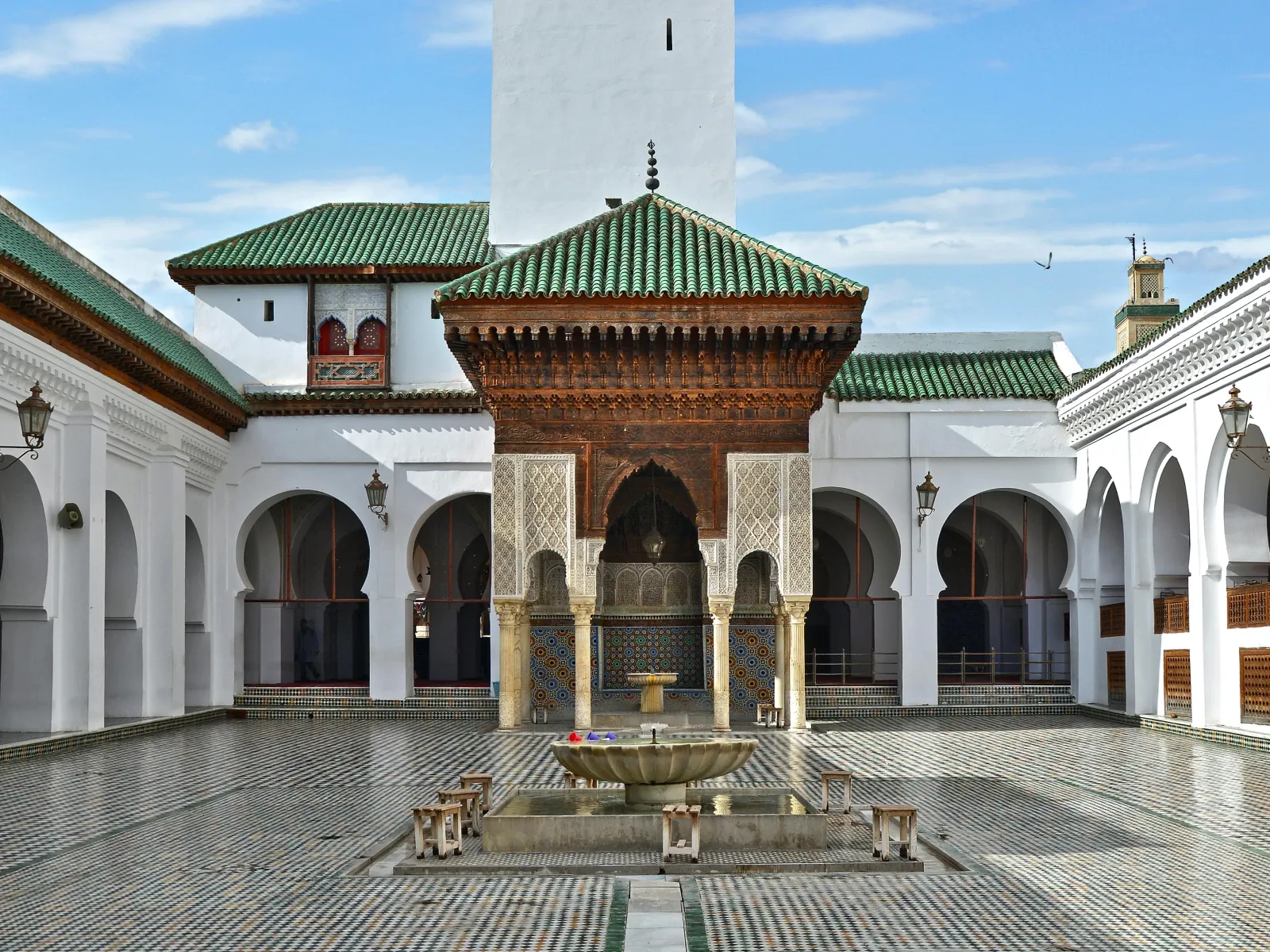
One full day is enough to experience the main highlights—Hassan II mosque, the Corniche, old medina, habous quarter, and a memorable dinner—provided you follow a logical route or book a private tour. The city isn’t overwhelming in the way Marrakech or Fez can be, so a well-planned day feels satisfying rather than rushed. Extra days allow for deeper exploration of over 300 catalogued art deco buildings, Jewish quarter heritage, and museum collections, but first-timers will come away with a genuine sense of the city in 8-10 hours.
With 3-5 hours, prioritize Hassan II mosque plus either a short Corniche walk or a quick old medina wander with a tea stop. Use taxis or a private car to save time between sites. Morocco Classic Tours offers compact “taste of Casablanca” tours tailored for tight layovers and cruise calls—ideal when every minute counts and you don’t want to waste time figuring out logistics.
Casablanca does not currently offer a unified city pass covering multiple attractions. Most sites are either free (parks, medinas, squares, Corniche) or paid individually (Hassan II mosque, certain museums and galleries). Visitors simply pay at each location or book a guided tour package that includes relevant entries. This à la carte approach actually works well for one-day visitors who only need access to a handful of sites.
Main restaurant areas, hotel districts around the city center, and the Corniche are generally safe in the evening, especially for pairs or groups. Avoid very quiet side streets, keep valuables out of sight, and use taxis or a private driver for longer nighttime transfers—including returning to the cruise port or airport. The vibe is urban Mediterranean rather than threatening, but standard city-at-night awareness applies.
Many travelers do exactly this. They land at Casablanca Mohammed V Airport, spend a day visiting the mosque, medina, and Corniche, then continue by train or private car to Fez, Marrakech, Rabat, or the Sahara. Morocco Classic Tours specializes in building this “gateway day” into broader custom itineraries across Morocco. The city’s position as the country’s main international hub makes it a natural starting or ending point for deeper exploration—even if you never check into a hotel here.

Compare Morocco group tour agencies by trip style, reviews, pace, transport and inclusions. Learn wh...
Read this article
Uncover what a Marrakech to Fes desert tour offers, including camel rides, desert camps, and rich cu...
Read this article
Join our Merzouga Overnight Tour for an authentic desert experience. Enjoy camel rides, comfortable ...
Read this articleWant cool tour deals and tips about Morocco? Enter your email and we’ll send them to you each month!
