Group Tour Agencies in Morocco: How to Pick the Right One
Discover how to choose the perfect group tour agency in Morocco. Get tips on what to look for and ma...
Read this article

Suspendisse interdum consectetur libero id. Fermentum leo vel orci porta non. Euismod viverra nibh cras pulvinar suspen.
The Merzouga overnight tour ranks among the most memorable experiences many American travelers have in Morocco, and it's also one of the easiest to book wrong. The difference between a night you'll talk about for years and one that leaves you disappointed comes down to three choices: the camp type, what's actually included in the package, and the operator you trust to handle the logistics. Morocco Classic Tours has been running desert expeditions out of Fez for over a decade. This guide covers what actually matters: a clear breakdown of the timeline, the real gap between camp types, honest pricing, and how to pack for one night in Erg Chebbi.
Most people book a 1-night Merzouga tour without a clear picture of the timeline, and that creates mismatched expectations before they even unpack. Here's what a standard overnight looks like on the ground.
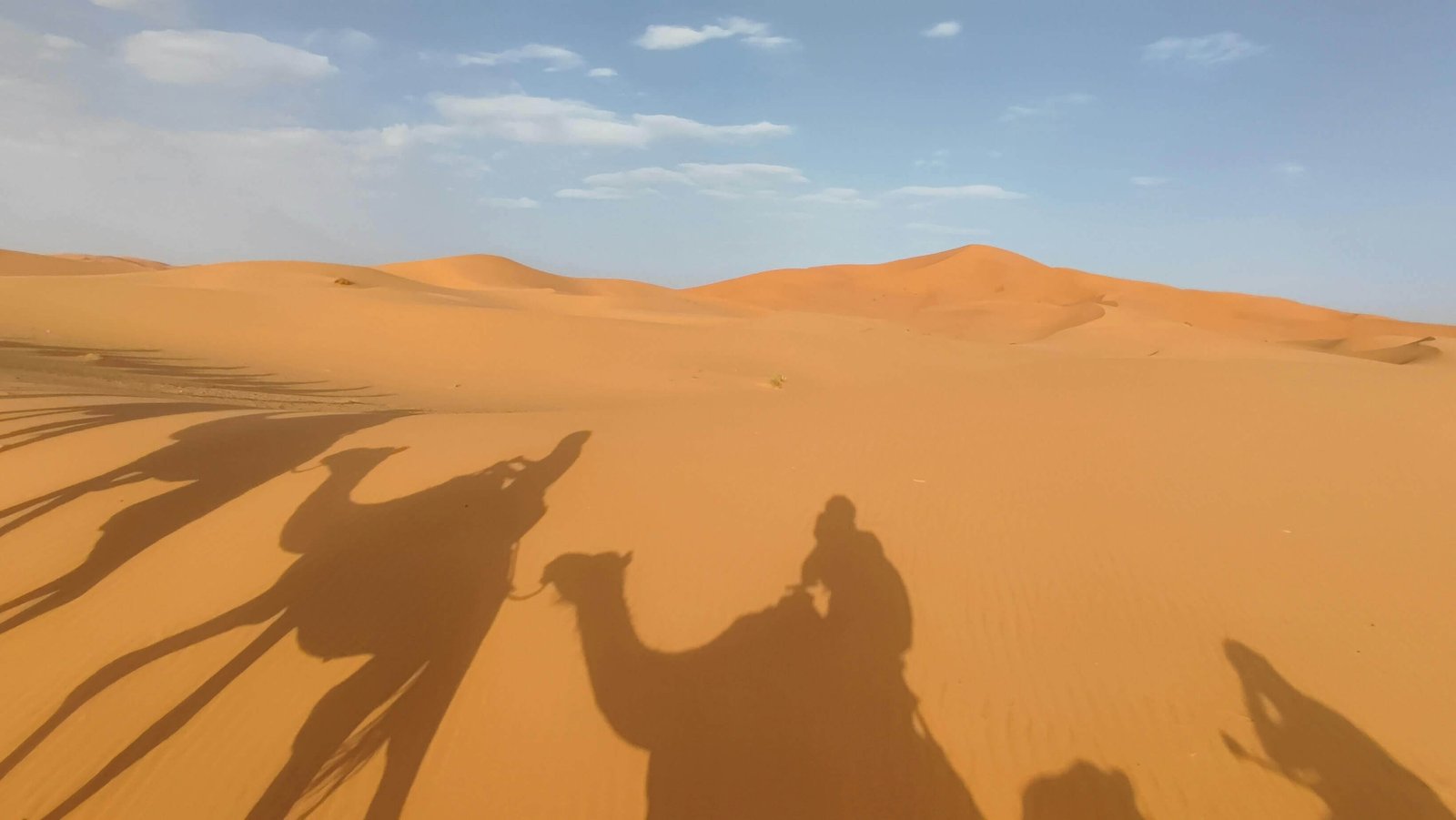
You arrive in Merzouga between 3:30 and 4:30 pm. Drop your main suitcase at your riad or hotel and pack only a small overnight bag; the dunes don't accommodate rolling luggage. From there, you transfer to Erg Chebbi by camel or 4x4, which takes between one and one and a half hours depending on your camp's location. If you choose the Merzouga camel trek route, cresting that first dune with the late afternoon light hitting the orange sand is the moment most people realize why they came to Morocco in the first place. It earns its reputation.
Dinner is served around 8 pm, usually tagine or a similar Moroccan meal, followed by Berber music around a fire and open stargazing. On clear nights, Erg Chebbi's minimal light pollution means excellent stargazing; the Milky Way is often visible. Camp wake-up comes between 5:30 and 6:15 am depending on the season, so you're in position for sunrise over the dunes. Moroccan Tasty Breakfast follows at camp, and by 8:30 am you're back in Merzouga. The entire Merzouga desert camping experience fits inside about 18 hours, with the most striking moments concentrated at sunset and sunrise.
One thing worth flagging: the exact schedule shifts significantly by season. Sunset in Merzouga falls around 8:20 pm in June and around 6:20 pm in December. Always confirm your operator's specific departure time when booking, not just the general itinerary. A 30-minute timing difference on the camel ride can mean arriving before or after the best light.
This is the most misunderstood choice in desert travel planning, and it's worth being direct about it. The gap between a standard Berber tent and a Merzouga luxury camp is not a matter of taste. It's a matter of what you physically have access to when you need it.
A standard Berber tent setup is bivouac-style: mattresses on the ground, communal blankets, shared bathroom blocks that range from basic flush toilets to pit toilets depending on the camp. Lighting comes from solar lanterns. Seating is communal around a central fire. It's atmospheric and genuine, and travelers who sleep comfortably anywhere and prioritize experience over comfort consistently rate it as a highlight. The trade-off is real, though: if you wake up at 3 am and need a bathroom, you're walking in the dark to a shared block.
A Merzouga luxury camp is a different category entirely. Private en-suite bathrooms with hot showers and flushing toilets, real beds with quality linens, electricity for charging devices, and sometimes a private terrace or separate dining area. Top-tier camps add plunge pools, hammam service, and curated meals served apart from the group. This is closer to a boutique hotel planted in the dunes than any version of traditional camping. If you're booking as a couple, celebrating a honeymoon, or simply need a functioning bathroom to sleep well, the luxury tier isn't optional; it's the right choice.
Don't let vague language like "comfortable tents" or "desert glamping" in operator descriptions do the work for you. Ask directly: is there a private en-suite bathroom or shared facilities? That one question tells you more than any camp description will.
Most booking frustrations trace back to one root cause: assuming something was included when it wasn't. A standard overnight desert camp Merzouga package typically covers round-trip 4x4 transfer from Merzouga town, one camel ride (usually at sunset or sunrise, not both), dinner, breakfast, and one-night tent accommodation. That's the baseline. Everything else depends on the operator and price tier.
A few things that regularly catch travelers off guard: the camel ride is usually an activity layered onto the experience, not the main mode of transport to camp. The 4x4 handles the actual transfer in most packages. Private versus shared tents is often where the price difference sits, and operators don't always surface that clearly in a summary description. "All-inclusive" language is common but rarely specific. Always read the inclusions list item by item before you pay.
Before confirming any booking, get clear answers to these questions:
An operator who answers those questions clearly and specifically, without hedging, has run this trip enough times to know exactly what travelers need to understand before they book.
Pricing in Merzouga runs across a wide range, and understanding what drives the difference helps you match your budget to your actual expectations rather than guessing and getting sticker shock.
The clearest breakdown by tier for American travelers in 2026:
The single biggest cost driver is shared versus private. Two people booking a private experience pay more per person than those on a shared group tour, but the gap in comfort and flexibility is substantial. Peak season, specifically March through April and October through November, commands higher rates across all tiers. Summer is cheaper, but daytime temperatures in the Sahara regularly exceed 100°F, which changes the nature of the experience significantly. If you're including this as part of a larger multi-day Morocco itinerary, that format often delivers better per-night value than booking the Merzouga overnight tour in isolation.
The rule is simple: leave the main suitcase at your Merzouga riad or hotel and bring only what fits in a small daypack. You won't have storage space in the tent, and you don't need it. One night in the desert requires a specific, short list; bringing too much makes the experience worse, not better.
On the clothing side, a warm layer is not optional between October and March. Desert temperatures drop sharply after sunset, a well-documented pattern in Saharan climates, so a fleece or light insulated jacket is essential. A light scarf or headwrap protects your face during the Merzouga camel ride when the wind picks up. Wear closed shoes or hiking sandals rather than flip-flops; soft sand is harder to walk on than it looks, and the terrain between camp areas is uneven. Sunscreen, sunglasses, and a small water bottle cover you for the transfer in.
For the camp itself, most mid-range and luxury operations provide blankets, pillows, and basic toiletries; confirm this with your operator before assuming. Bring a headlamp or a phone with a reliable torch function; Merzouga luxury camps have better lighting, but you'll still want your own for the walk to the bathroom at 2 am. A power bank is worth having at any tier. If you're traveling in cooler months, add thermal base layers and a warm hat to the list. The Sahara at night in January is cold in a way that surprises most people who've only seen it in photos.
The market for Merzouga desert experiences includes reliable on-the-ground operators, generic booking aggregators, and everything in between. The challenge for American travelers is that most of this research happens from a laptop thousands of miles away, with no easy way to verify what you're actually buying.
The clearest filter available is review volume and consistency on Tripadvisor. Look for operators with 4.8 or higher ratings across a large number of reviews specifically tied to overnight desert experiences, not just day tours. High review counts across years of operation signal that the experience is repeatable and not just the result of a few good months. Vague "all-inclusive" language in the listing without a clear inclusions breakdown is a warning sign. Operators who have run this trip hundreds of times can tell you exactly what's in the package, because they've answered the question hundreds of times.
For American travelers who want a fully managed Merzouga overnight tour without cross-referencing multiple booking platforms, Morocco Classic Tours handles the logistics end to end: private transfers, premium camp selection tailored to your comfort level, dietary preferences, return scheduling, and a dedicated consultant who can answer questions before you book anything. The Morocco Classic Tours team is based in Fez, providing on-the-ground knowledge that shows in how the itineraries are actually structured, not just how they read in a brochure. First-time bookers receive a 10% discount, and private overnight options are available for couples and small groups who prefer a dedicated Merzouga camel ride and sleep experience over a shared-camp setup.
If you want one trusted point of contact from the moment you land to the morning you leave the dunes, reach out to the Morocco Classic Tours team directly to talk through your options before committing.
Choose your camp tier first, before you compare prices. Confirm what's included in writing, specifically the bathroom situation, meals, and transfer type. Pack for one night in a small bag and leave everything else behind. Book with an operator who has run this trip enough times to anticipate your questions before you ask them.
A Merzouga overnight tour is not complicated when you know what you're choosing. Many travelers who struggle with it either rushed the research or booked the cheapest option without reading the inclusions. Many who get it right describe it as the best night of their entire Morocco trip, a pattern repeated across very different types of travelers, from budget backpackers in Berber tents to couples in private en-suite glamping suites watching the sunrise over Erg Chebbi.
If you want a guided, fully managed Merzouga overnight experience with a team that has done this for over a decade, get in touch with Morocco Classic Tours. Mention it's your first booking and the 10% discount applies automatically. A consultant can walk you through camp options, timing, and how to combine the Sahara night with your broader Morocco itinerary. The goal is a trip that holds together, not just a great desert night surrounded by loose logistics.
Discover how to choose the perfect group tour agency in Morocco. Get tips on what to look for and ma...
Read this article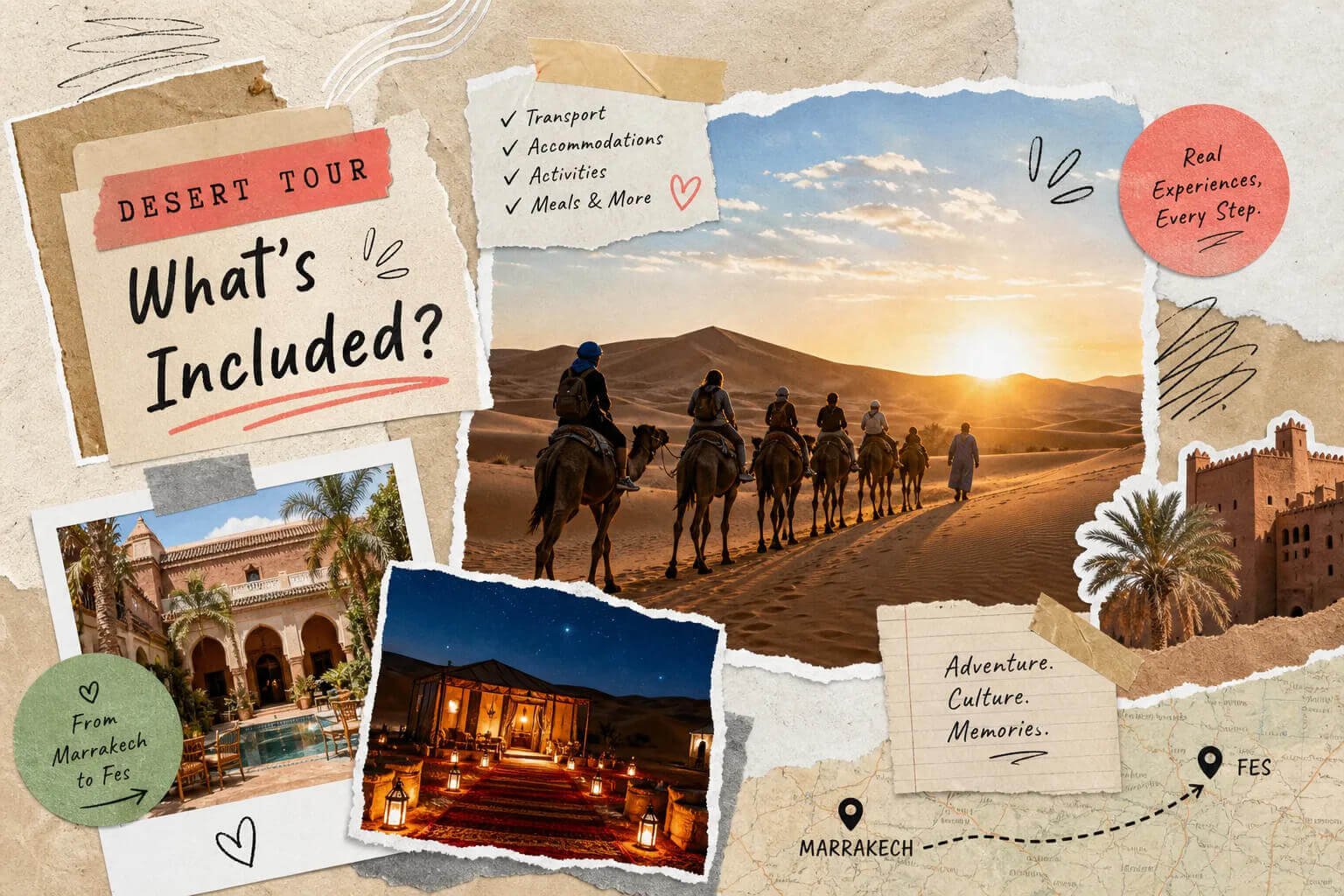
Uncover what a Marrakech to Fes desert tour offers, including camel rides, desert camps, and rich cu...
Read this article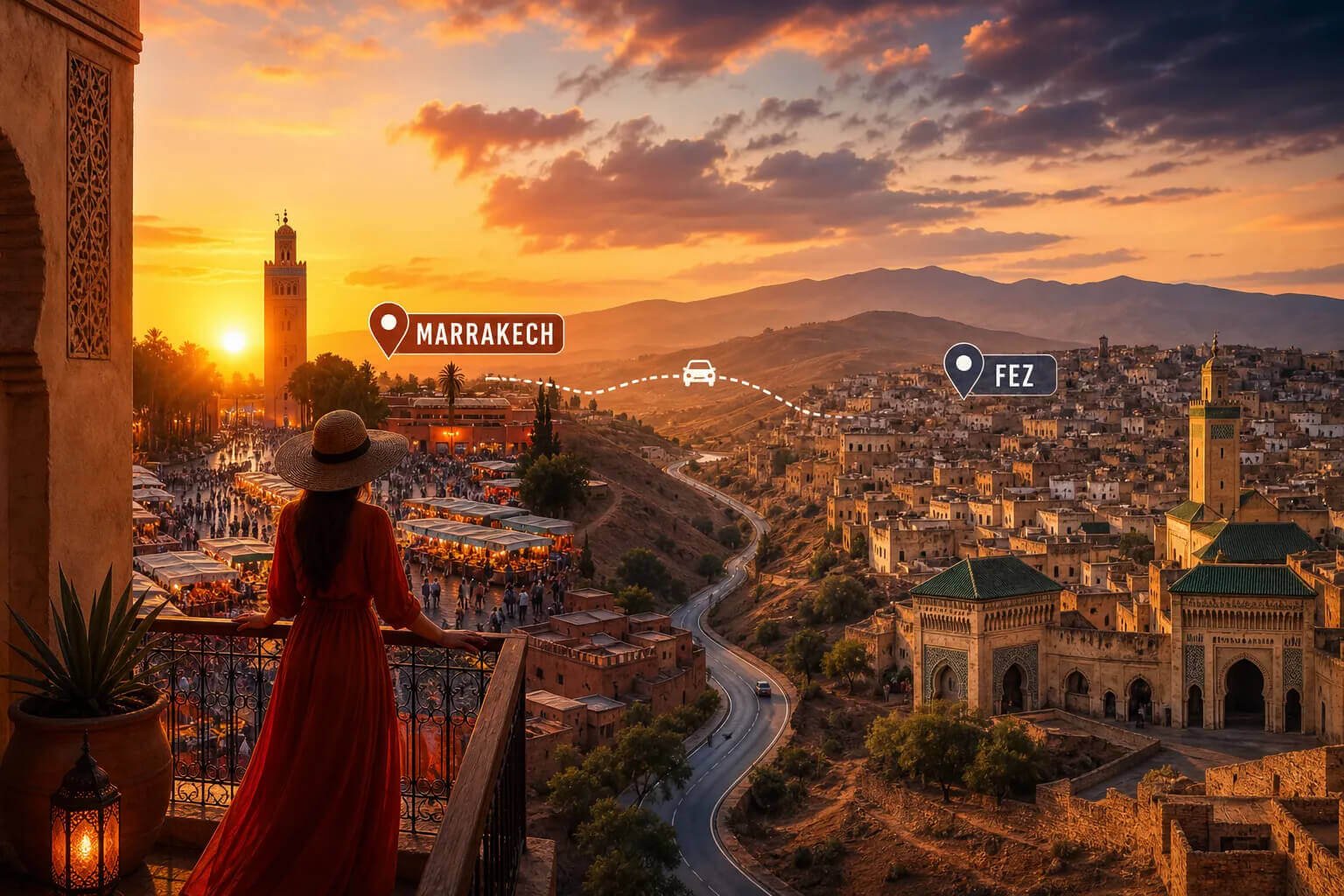
Discover the ultimate 10-day Morocco itinerary, exploring vibrant Marrakech to historic Fez. Experie...
Read this articleWant cool tour deals and tips about Morocco? Enter your email and we’ll send them to you each month!