Group Tour Agencies in Morocco: How to Pick the Right One
Compare Morocco group tour agencies by trip style, reviews, pace, transport and inclusions. Learn wh...
Read this article

Private, custom Morocco trips planned in Fez by AZ-ZDDINE, working in Moroccan tourism since 2012. Sahara, Atlas, medinas and coast, arranged around you.
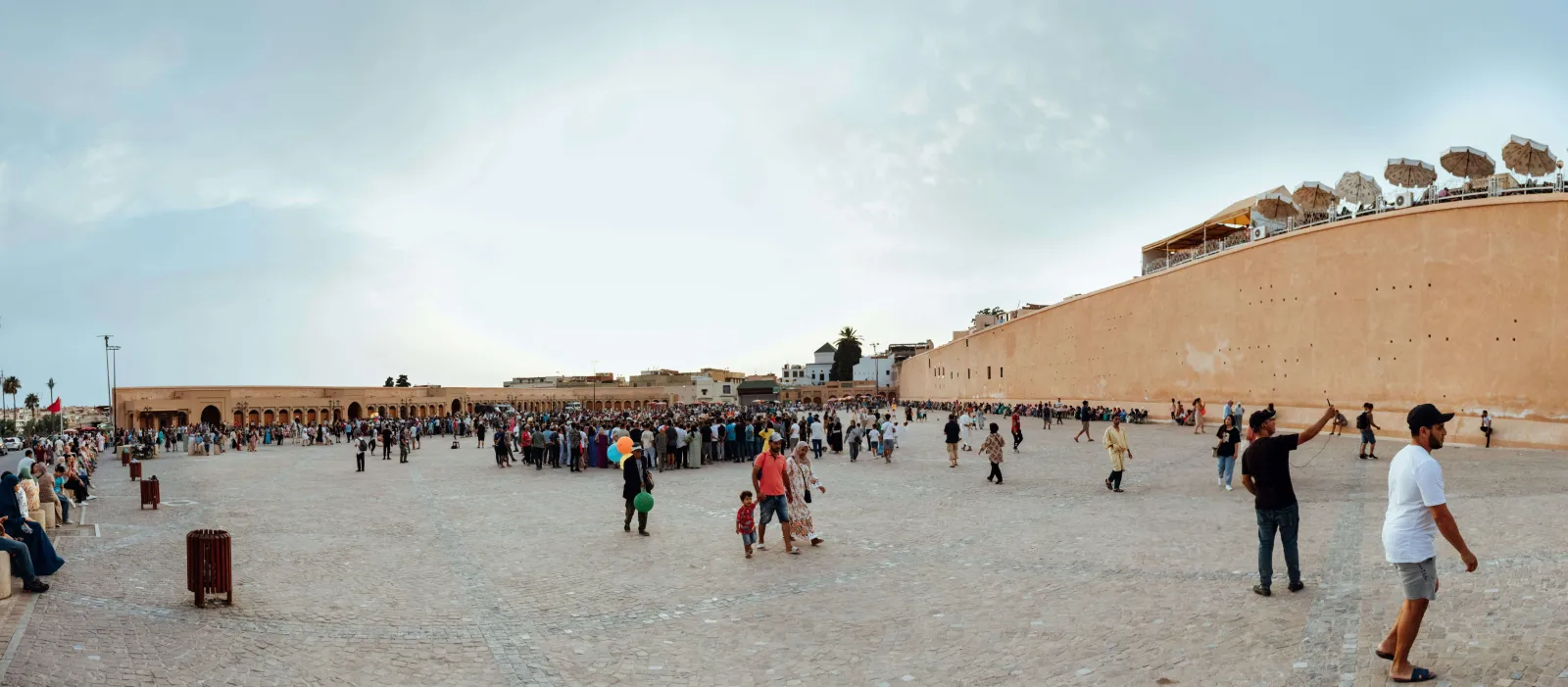
Meknes is one of Morocco’s four Imperial Cities and has been a UNESCO World Heritage Site since 1996, offering a less-crowded alternative to Marrakech or Fez while delivering an equally rich history and architecture.
The golden age of Meknes came under Sultan Moulay Ismail in the late 17th to early 18th century, when he transformed the city with monumental gates, palaces, royal stables, and granaries rivaling Versailles in ambition.
The name Meknes derives from the Amazigh (Berber) Miknasa tribe, and the medina and kasbah still preserve this layered cultural identity alongside Arabic and Islamic influences.
The best time to visit Meknes is spring (March–May) and autumn (September–November) when temperatures are pleasant, and crowds are thinner.
Morocco Classic Tours offers private day trips and multi-day itineraries, including Meknes, Volubilis, and Moulay Idriss, which can be customized from Fez or other cities to fit your travel style, similar to their wider range of best tour packages in Morocco covering imperial cities and desert regions.
Tucked into northern central Morocco between the Rif Mountains and the Middle Atlas, the city of Meknes sits approximately 60–65 kilometers west of Fez. Travelers can reach this historic city by train in around 45–60 minutes, making it an accessible addition to any Imperial Cities itinerary.
Meknes is one of the four Imperial cities of Morocco, alongside Marrakech, Fez, and Rabat. It holds the distinction of being both an imperial city and a UNESCO World Heritage Site. Its compact medina unfolds beneath towering ramparts, while the famous Bab Mansour gate stands as one of North Africa’s most photographed monuments. Unlike the bustling souks of Marrakech, Meknes maintains a quieter, more local atmosphere that rewards visitors seeking authenticity over spectacle.
With a population of approximately 600,000–700,000 in the wider urban area, Meknes functions as a working Moroccan city rather than a tourist-only destination. At Morocco Classic Tours, we frequently incorporate Meknes into cultural and desert itineraries departing from our base in Fez, pairing it with the Roman ruins at Volubilis and the sacred town of Moulay Idriss Zerhoun for a full day of exploration, similar in style to our curated Morocco day trips from other major cities.
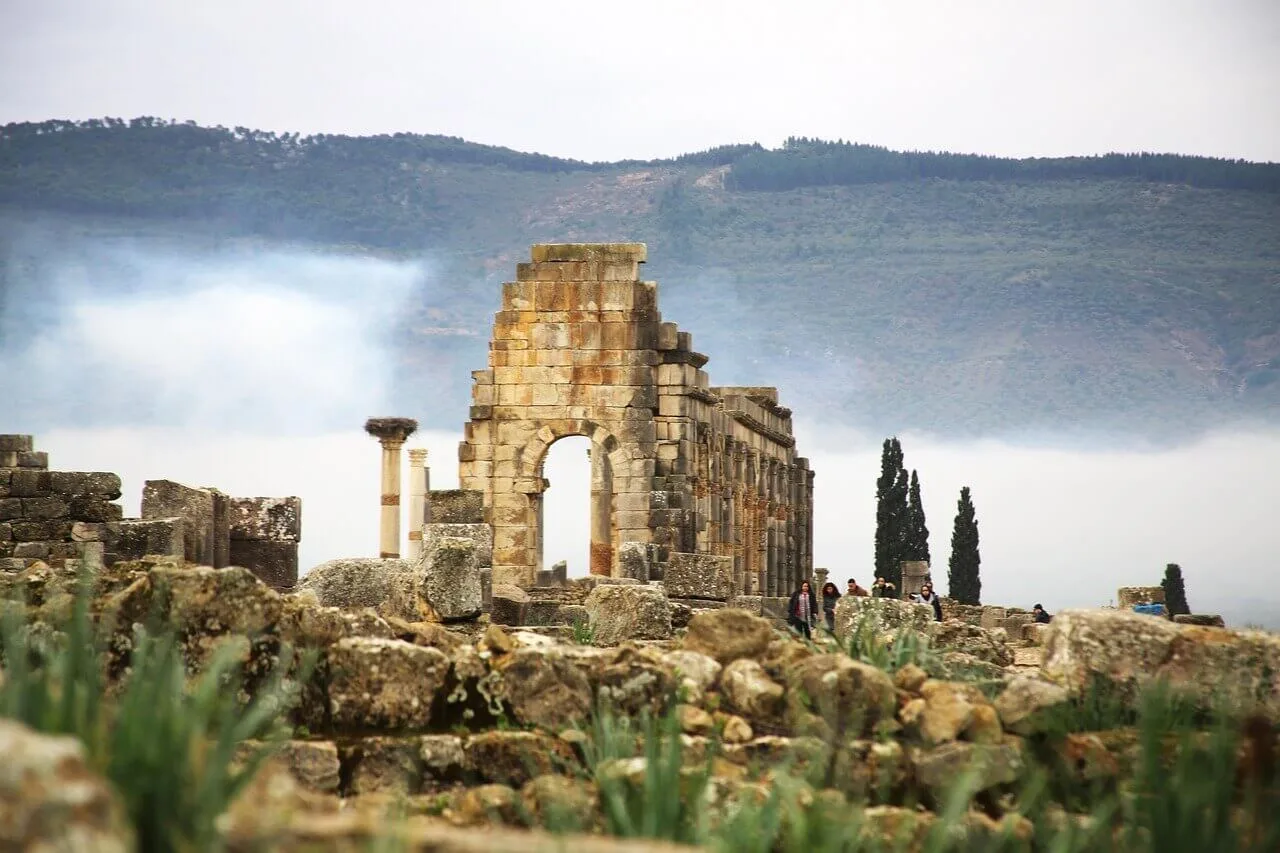
The name “Meknes” (Meknès in French, Meknās in Arabic) traces directly back to the Amazigh Miknasa tribe. These Zenata Amazigh (Berber) people settled the region around the 10th century, establishing fortified villages they called “miknāsat al-zaytūn” near the decaying Roman city of Volubilis.
The Miknasa were active participants in early Islamic-era politics across North Africa, and their settlements formed the nucleus of what would eventually become the old medina. This tribal foundation explains the city’s deep Amazigh roots that persist beneath centuries of Arabization.
So is Meknes Amazigh? The answer is nuanced. While the earliest foundations and the very name of the city are Amazigh in origin, today Meknes functions as a mixed urban center where Arabic and Amazigh cultural influences blend seamlessly. Modern residents speak Moroccan Arabic (Darija), with Tamazight and French also common in daily life. Visitors attentive to local crafts may notice Berber motifs woven into carpets and expressed through traditional jewelry designs sold in the souks.
The story of Meknes spans over a millennium, evolving from a cluster of Amazigh villages to a grand capital rivaling the ambitions of European monarchies. Understanding this trajectory helps visitors appreciate the layers of monuments they encounter today.
The Miknasa tribe’s initial settlements gave way to more permanent structures when the Almoravids established Meknes as a military settlement around 1061 CE, originally called Tagrart. The Almohads besieged and largely destroyed the city in the 12th century, but subsequently rebuilt it under Caliph Muhammad al-Nasir, adding fortifications and the Grand Mosque.
The Marinid dynasty conquered Meknes in 1244 and brought two centuries of relative prosperity. Sultan Abu Yusuf Ya’qub established the first kasbah in 1276, and the Bou Inania Madrasa dates from this 14th-century Marinid period. The Wattasids followed in 1472, then the Saadians in 1510, during which time Meknes declined as royal attention shifted to Marrakech.
Everything changed when the Alaouite Sultan Moulay Ismail ascended to power in 1672 and declared Meknes his capital. Over his 55-year reign, he transformed the city into what contemporaries called the “Versailles of Morocco.”
Moulay Ismail’s building program was staggering in scale:
Over 40 kilometers of massive city walls with nine monumental gates
A sprawling palace-city south of the old medina
The Heri es-Souani granaries and stables were designed for 12,000 horses
Gardens, pavilions, and water systems fed by underground aqueducts
Place el-Hedim, created by demolishing existing houses
The sultan’s workforce included the fiercely loyal Black Guard of enslaved soldiers, supplemented by captured European Christians brought through corsair operations. Moulay Ismail received foreign ambassadors in his grand reception halls and maintained a harem of over 500 women, reportedly fathering more than 800 children.
The “Louis XIV of Morocco”: Moulay Ismail’s ambitions paralleled those of his French contemporary, earning him comparisons to the Sun King for his monumental construction projects and centralized power.
After Moulay Ismail died in 1727, chaos erupted among his 450+ sons competing for succession. The capital eventually shifted back to Fez, and the 1755 Lisbon earthquake caused significant damage to many monuments. The new dynasty of subsequent Alaouite rulers added structures like Dar el-Bayda, but never restored Meknes to its former prominence.
The French Protectorate (from 1912) brought modernization through the Ville Nouvelle, which features wide boulevards and colonial architecture. The population grew from approximately 25,000 to over 140,000 by mid-century. Heritage restoration campaigns in the 2000s have focused on stabilizing city walls, rehabilitating Heri es-Souani, and preserving major historic monuments for future generations.
The Historic City of Meknes received inscription as a UNESCO World Heritage Site in 1996, recognized for its remarkable blend of Islamic and European-influenced architecture. This designation protects one of Morocco’s most complete examples of 17th–18th century urban planning.
The inscription highlighted several exceptional features:
Integrity of the medina and kasbah: The historic core remains substantially intact despite centuries of change
Monumental gates: Including Bab Mansour, considered among the finest in the Islamic world
Extensive fortifications: Over 40 kilometers of earthen ramparts encircling the imperial quarter
Urban ensemble: A unique testament to Alaouite power under Moulay Ismail
The city walls and palaces exemplify “pisé” or rammed-earth construction, a traditional Maghreb technique using compressed soil, lime, and straw. This earthen architecture creates massive, thick-walled structures that regulate temperature naturally while projecting imperial might.
Maintaining this UNESCO site presents ongoing challenges:
Erosion from wind and rain is affecting exposed ramparts
Rising damp is penetrating the foundations of historic buildings
Urban pressure as the modern city expands
Traffic vibrations near monument walls
Moroccan heritage authorities and international partners continue restoration efforts, though some sites remain partially closed or under scaffolding. Visitors should view this active conservation as a sign of investment in the city’s future rather than a drawback.
Understanding the basic layout of Meknes helps visitors navigate between its distinct zones, each offering different experiences and atmospheres.
The old medina contains narrow, winding streets lined with traditional houses, small mosques, and everyday souks. Unlike the tourist-oriented bazaars of larger cities, many of these markets serve residents buying household items, spices, and fabrics.
Key features of the medina include:
Main gates leading from Place el-Hedim into the commercial heart
The old Mellah (former Jewish quarter) with its distinctive architecture
Small neighborhood mosques and fountains
Riads and traditional guesthouses tucked behind unassuming doors
South of the medina sprawls the vast kasbah, Moulay Ismail’s imperial quarter. This zone contains:
Palace remains and royal residences
Heri es-Souani granaries and the Agdal Basin
Royal stables (partially ruined)
Large walled spaces originally for military and administrative functions
The scale here differs dramatically from the intimate medina—vast esplanades, monumental walls, and structures designed to impress foreign ambassadors and project Alaouite power.
Northeast of the historic centre lies the French-built new city, developed during the Protectorate era. Here you’ll find:
Wide boulevards lined with cafés and bars
Modern shops and services
The main train station connecting Meknes to Fez, Rabat, and Casablanca
Hotels ranging from budget to mid-range options
The Ville Nouvelle provides practical amenities while contrasting sharply with the medina’s medieval character.
Is Meknes worth visiting? Absolutely—especially for travelers who appreciate history, architecture, and a more relaxed pace than Morocco’s most famous cities. The attractions here reward those willing to look beyond the obvious and explore imperial grandeur without overwhelming crowds.
The following landmarks form the core of any Meknes visit, with suggested times to help with planning.
Place el-Hedim serves as the beating heart of Meknes, a vast main square built by Moulay Ismail in the late 17th century. Located precisely between the medina and the magnificent Bab Mansour, it functions as the city’s primary gathering place.
During the day, you’ll encounter:
Vegetable vendors and spice merchants along the edges
Locals crossing on their way to the souks
Guides offering their services near the main gates
In the evening, the atmosphere shifts:
Storytellers occasionally perform traditional tales
Musicians and families gather as temperatures cool
Food stalls serve grilled meats, fresh orange juice, and Moroccan favorites
Practical tips:
Visit before sunset to photograph Bab Mansour in golden light
Claim a café terrace seat for mint tea and people-watching
Use the square as your starting point for Medina exploration
The smells of grilled lamb and cumin drift across the paved streets while the sound of voices and occasional drums creates an authentically Moroccan soundtrack.
Bab Mansour al-Alaaj stands as Meknes’ most iconic monument and arguably the most beautiful gate in Morocco. Completed around 1732 shortly after Moulay Ismail’s death, it faces directly onto Place el-Hedim and stops visitors in their tracks.
Meknes is surrounded by a series of ramparts and has nine monumental gates, resulting in a fortified urban structure. These impressive fortifications not only protected the city but also contributed to its grandeur and strategic importance.
Architectural highlights:
Green-and-white zellij (mosaic tilework) covering the facade
Marble columns repurposed from the Roman city of Volubilis
Kufic Arabic inscriptions praising the sultan
Monumental horseshoe arch framing perfect photographs
The gate no longer functions as a primary entrance but serves as a dramatic backdrop and symbol of Meknes’ imperial past. The space behind occasionally hosts exhibitions.
Other notable gates worth seeking out:
Bab el-Khemis: named for the Thursday market once held nearby
Bab Berdaine: featuring distinctive crenellated towers
A short walk or horse carriage ride can cover several gates within an hour, revealing the extent of Moulay Ismail’s extensive fortifications.
Dating from the 14th-century Marinid dynasty, the Bou Inania Madrasa in Meknes served as both a religious school and a prayer space. Though smaller than its famous namesake in Fez, it offers intricate craftsmanship in a more intimate setting.
What you’ll see:
Carved cedarwood screens and doors with geometric patterns
Stucco decoration featuring arabesques and calligraphy
Central courtyard with zellij floors
Rooftop access (when available) with Medina views
Practical details:
Non-Muslims can usually enter this religious site
Entrance fee typically 40–60 MAD (prices may change)
On-site signage is limited, so consider hiring a guide for context
Allow 30–45 minutes to appreciate the craftsmanship. Combining this visit with a guide provides a deeper understanding of Islamic architecture and Marinid artistic achievements.
The Mausoleum of Moulay Ismail houses the ornate tomb of Morocco’s most powerful sultan and stands as one of the few zawiyas (religious complexes) historically open to non-Muslims. This exceptional access allows visitors of all backgrounds to appreciate the serene beauty within.
Interior features:
Peaceful courtyards with central fountains
Elaborate zellij tilework in jewel tones
Intricately carved plaster walls
Painted wood ceilings with gilt detailing
The tomb chamber itself, approached with reverence
Etiquette requirements:
Modest dress (shoulders and knees covered)
Quiet, respectful behavior throughout
Shoes are removed in certain areas
Women are sometimes requested to cover their hair
Photography policies may vary, so ask before taking pictures and always photograph discreetly where permitted. The atmosphere encourages contemplation rather than tourism, and visitors often emerge moved by the tranquility.
The Heri es-Souani represents one of Moulay Ismail’s most impressive engineering achievements—monumental vaulted granaries and storehouses built to feed the imperial city and its massive army.
What to expect:
Vast halls with thick pisé walls designed for temperature control
Impressive arched ceilings stretching into darkness
Evidence of sophisticated water systems and ventilation
Restored sections are now open to visitors after conservation work
These granaries reportedly stored enough supplies for extended sieges and provided grain for the legendary royal stables housing 12,000 horses.
The Agdal Basin lies nearby—a large rectangular water reservoir that once served the palaces and extensive gardens. Today it offers:
Scenic walks along the water’s edge
Reflections of city walls and palm trees
A peaceful escape from the medina’s bustle
Evening strolls as locals come to exercise and socialize
Allow 1–1.5 hours to explore both granaries and the basin together. The engineering ingenuity visible here rivals Roman aqueducts and demonstrates the ambition that earned Meknes its “Versailles” comparisons.
The Royal Stables adjacent to Heri es-Souani were reputedly built to house 12,000 horses—a number that sounds legendary but reflects Moulay Ismail’s actual military ambitions and cavalry forces.
Current state:
Much of the complex exists as atmospheric ruins
Limited-access areas restrict full exploration
Some restored sections are visible from the walkways
Habs Qara (the underground prison) consists of large vaulted chambers associated with Moulay Ismail’s harsh rule. Legends claim it held tens of thousands of prisoners, including European captives who helped build the imperial city.
Honest assessment: Some travelers find these sites under-interpreted, with minimal signage and relatively high fees for what’s accessible. A knowledgeable local guide adds significant value by bringing the empty chambers to life with historical context. Consider these sites as optional add-ons depending on your interest level and available time.
The 12th-century Grand Mosque of Meknes ranks among the most important religious buildings in the city, though it remains closed to non-Muslims as is standard practice in Morocco.
What visitors can observe from outside:
The distinctive minaret is visible across the medina skyline
Courtyard glimpses through doorways
Architectural details on exterior walls
Other notable religious buildings visible while walking the medina:
Nejjarine Mosque (potentially the oldest structure in the city, possibly Almoravid-era)
Zawiya of Sidi Kaddour el-Alami (pilgrimage site)
Non-Muslim visitors should focus on exterior architectural details and understand that interior access restrictions reflect religious traditions rather than unwelcoming attitudes. Observing respectfully from the street costs nothing and adds to medina exploration.
Dar Jamai occupies a beautiful 19th-century palace near Place el-Hedim, now converted into a museum showcasing traditional Moroccan arts. The buildings themselves justify a visit even before considering the collections inside.
Architectural highlights:
Painted cedar ceilings with vibrant geometric patterns
Zellij-tiled courtyards with fountain centerpieces
Upper floor rooms with views over the square and surrounding rooftops
Collections include:
Traditional ceramics from Fez and Meknes
Berber textiles and carpets
Carved woodwork and painted furniture
Historical jewelry and everyday items
Note that collections and opening hours may change due to ongoing restoration work. Check the current status before planning your visit. The museum provides excellent context for understanding local craftsmanship before shopping in the souks, helping visitors distinguish quality work from mass-produced souvenirs.
Walking the medina of Meknes reveals a different character than Morocco’s more famous old cities. Less touristy than Marrakech or even Fez, these streets primarily serve residents going about their daily lives.
The markets here cater to Moroccan customers rather than tourists, which affects both the atmosphere and the merchandise:
Leather goods: Bags, belts, and slippers at local prices
Traditional clothing: Djellabas and caftans for everyday wear
Spices: Pyramids of cumin, paprika, and ras el hanout
Copper and brassware: Practical kitchenware alongside decorative pieces
Household items: Everything from plastic buckets to handmade baskets
Bargaining remains standard practice. Start at roughly half the initial asking price and negotiate from there. Sellers expect this interaction, so don’t feel embarrassed to haggle.
Meknes holds particular renown for damascene metalwork (damascene), a technique where silver or gold is inlaid into blackened steel to create intricate patterns. This traditional craft, also known as damasquinerie, involves embedding precious metals such as silver or gold into a darkened metal surface—typically steel—to form elaborate decorative motifs. The result is a striking contrast between the shimmering inlay and the dark background, producing ornate jewelry, plates, and decorative items unique to Meknes.
This craft originated in Damascus (hence the name) but found a thriving home in Meknes centuries ago. Quality pieces require significant skill and time, which explains the price differential between authentic damascene work and modern imitations.
Morocco Classic Tours tip: A knowledgeable guide can direct visitors to quality workshops where craftsmen demonstrate techniques and sell directly, helping avoid mass-produced imitations while supporting traditional artisans.
Navigating the medina safely requires simple awareness:
Stay alert for scooters in narrow lanes—they often give minimal warning
Ask permission before photographing people, especially women
Dress modestly out of respect for local customs
Keep valuables secure but accessible (money belts work well)
The medina of Meknes feels generally safe, but maintaining awareness of your surroundings makes any travel experience better.
The city of Meknes enjoys a Mediterranean-influenced climate with hot, dry summers and mild, wetter winters. Its inland location and elevation of around 500–550 meters create some variation from coastal cities.
Season | Months | Conditions |
|---|---|---|
Spring | March–May | Pleasant temperatures (20–25°C), green surrounding countryside, occasional light rain |
Summer | June–August | Hot days (30–35°C, occasionally higher), low humidity, very dry |
Autumn | September–November | Warm and comfortable, ideal for sightseeing, harvest season |
Winter | December–February | Cooler (16–18°C days), nights below 10°C, rainfall possible |
March through May and late September through November offer the ideal conditions for exploring Meknes, Morocco. During these periods, you’ll find:
Comfortable temperatures for walking the medina and ramparts
Clear skies for photography at monuments
Fewer crowds than summer months
Perfect weather for day trips to Volubilis
Summer visits remain possible but require early morning starts and midday breaks to escape temperatures that can exceed 40°C. Winter brings cooler weather and potential rain that can flood narrow medina alleys, though hotel prices drop accordingly.
The Salon International de l’Agriculture au Maroc (SIAM), Morocco’s major agricultural fair, typically occurs in spring near Meknes. During this period, accommodation fills quickly, and prices rise. Book early if your travel coincides with major events.
Packing suggestions:
Light layers for variable temperatures
Sun protection (hat, sunscreen) in warmer months
Light jacket and umbrella for winter visits
Comfortable walking shoes for uneven Medina streets
How much time should you allocate to Meknes? The answer depends on your travel style and interests.
One full day: Sufficient for a solid overview of major monuments
Two days: Allows deeper exploration plus a day trip to Volubilis and Moulay Idriss
Three+ days: Ideal for using Meknes as a relaxed base, exploring at leisure
Morning:
Start at Place el-Hedim for coffee and orientation
Photograph Bab Mansour in morning light
Visit Bou Inania Madrasa (45–60 minutes)
Wander into the medina souks
Midday:
Lunch at a restaurant near the main square
Traditional Moroccan fare: tagine, couscous, or mechoui lamb
Afternoon:
Visit the Mausoleum of Moulay Ismail (30–45 minutes)
Explore Heri es-Souani and Agdal Basin (1–1.5 hours)
Walk portions of the ramparts if time permits
Evening:
Return to Place el-Hedim as the square comes alive
Rooftop terrace dinner with Medina views
Day One: Focus on Meknes medina and imperial sites as outlined above
Day Two: Full-day excursion to Volubilis and Moulay Idriss
Morning departure to Volubilis (Roman ruins, 2 hours)
Midday in Moulay Idriss for lunch and exploration
Return to Meknes by late afternoon
This combination works perfectly as a private tour arranged through Morocco Classic Tours, with transportation and guide services streamlining logistics, much like the company’s broader range of Morocco tours and travel packages across the country.
Travelers with limited time can still experience Meknes highlights:
Train from Fez (45–60 minutes)
Place el-Hedim, Bab Mansour, brief medina walk
Return to Fez by afternoon
This condensed visit captures the essence of Meknes without requiring overnight accommodation and can be woven into one of several tour packages in Morocco that balance Meknes with other highlights.
Meknes forms part of a historic triangle with Volubilis and Moulay Idriss Zerhoun, all within 40–45 minutes by road. Morocco Classic Tours frequently combines these three destinations into single full-day private tours departing from Meknes or Fez.
While independent visits via public transport and taxis remain possible, a guided excursion offers superior context, time management, and comfort—particularly valuable when exploring archaeological sites that benefit from expert interpretation.
The UNESCO-listed Roman ruins at Volubilis lie approximately 30–40 kilometers north of Meknes. This ancient Roman city traces its origins to the 3rd century BCE, flourishing under Roman Empire rule until the 3rd century CE before continuing as a settlement through Islamic times.
Key sights within the site:
Triumphal Arch of Caracalla (dated 217 CE): The photogenic gateway framing views across the site
Basilica and Forum: The civic heart of Roman urban planning
Residential villas: Including the House of Orpheus and the House of Venus
Well-preserved mosaics: Depicting mythological scenes, wildlife, and daily life
The contrast between Roman urban planning and the Islamic imperial city of Meknes fascinates history-minded visitors. Here, marble columns that Moulay Ismail later incorporated into Bab Mansour once supported Roman temples.
Practical details:
Entrance fee approximately 70 MAD (subject to change)
Information boards at key points explain major structures
Small on-site museum near the entrance
Limited shade—visit morning or late afternoon
Wear sturdy shoes for the uneven, ancient paved streets
Allow 2 hours minimum for proper exploration.
Moulay Idriss Zerhoun perches on a hillside approximately 4–5 kilometers from Volubilis, a whitewashed pilgrimage town founded in the late 8th century. Named for Idriss I—a descendant of the Prophet Muhammad who brought Islam to Morocco—this town holds profound religious significance.
What visitors experience:
Narrow stepped streets climbing the hillside
Whitewashed houses with green-tiled roofs
Panoramic views over olive groves and surrounding hills
The main square with cafés serving mint tea
Local life is relatively untouched by mass tourism
The mausoleum of Moulay Idriss I remains closed to non-Muslims, but the spiritual atmosphere pervades the entire town. Visitors of all backgrounds can enjoy viewpoints, interact with welcoming locals, and appreciate Morocco’s religious heritage respectfully.
Practical notes:
Moderate walking on slopes and stairs
Conservative dress is appropriate, given the religious significance
Photography of the mausoleum exterior is acceptable; interiors are restricted
Morocco Classic Tours arranges combined Volubilis–Moulay Idriss–Meknes routes with driver-guides, ensuring adequate time at each location without rushed transitions.
Unequivocally yes. Meknes deserves its place on thoughtful Morocco itineraries for several compelling reasons:
Imperial architecture rivaling any Moroccan city, but with fewer crowds
UNESCO-protected medina maintaining authentic character
Calmer atmosphere than Marrakech or even tourist-heavy parts of Fez
Proximity to Roman ruins at Volubilis creates a unique historical layering
Lower prices for food, guides, and some accommodation compared to famous cities
Several specific features distinguish Meknes from other cities:
Monumental scale: Moulay Ismail’s constructions—40 km of walls, nine massive gates, stables for 12,000 horses—demonstrate unprecedented ambition
Gate architecture: The number and artistic quality of monumental gates like Bab Mansour and Bab el-Khemis exceeds other Moroccan cities
Damascene metalwork: This specialty craft continues a tradition found nowhere else in Morocco
Authentic daily life: Markets serve residents first, tourists second
Meknes’ fame rests on its extraordinary 17th–18th century transformation under Sultan Moulay Ismail, who created an imperial capital to rival European monarchies. The subsequent UNESCO designation in 1996 cemented its international recognition.
The city also serves as the centre of Morocco’s agricultural heartland, with the Saïss Plain producing olives, grain, and wine grapes. The International Agriculture Show draws visitors from across Africa and beyond, contributing economic vitality beyond tourism.
Honest perspective: Meknes appears less polished than Marrakech in places. Some sites remain under restoration with modest presentations. But this unvarnished quality contributes to an authentic, lived-in feel that many travelers prefer. We recommend visiting Meknes precisely because it hasn’t been overdeveloped for tourism.
Meknes enjoys excellent connectivity along Morocco’s main transportation corridors, with options to suit various budgets and travel styles, especially when paired with custom private tours and luxury travel packages that handle all logistics for you.
By Train:
The main rail line connects Casablanca, Rabat, Meknes, Fez, and eastern Morocco to Oujda
Approximately 45–60 minutes from Fez
Roughly 2.5 hours from Rabat
The train station is located in the Ville Nouvelle
By Bus:
CTM and other companies operate regular services
Useful for budget travelers or routes not served by rail
By Private Transfer:
Morocco Classic Tours and similar agencies provide comfortable door-to-door service
Ideal for travelers combining Meknes with Volubilis on arrival or departure days
Nearest Airport: Fez–Saïss Airport lies approximately 70 km from Meknes city centre.
On Foot: The medina and Place el-Hedim area are best explored on foot. Distances between major attractions remain manageable for most visitors.
Petits Taxis: Small red taxis provide affordable transport between the medina and Ville Nouvelle. Always confirm the meter is running or agree on a price before departing.
Horse Carriages: Traditional calèches offer a leisurely way to tour the city walls and imperial quarter—particularly pleasant for viewing the monumental gates at sunset.
Safety Reminder: Use licensed taxis, agree on fares when meters aren’t used, and avoid unmarked vehicles. Morocco remains safe for tourism, but standard travel awareness applies.
What are the best travel agencies specializing in Meknes tours? Several Morocco-based operators excel at Imperial Cities and Volubilis–Meknes–Moulay Idriss combinations, each offering different approaches to exploring this region.
As a Fez-based tour operator, Morocco Classic Tours incorporates Meknes into journeys through several formats:
Day trips from Fez: Morning departure, full Meknes exploration, evening return
Multi-day Imperial Cities circuits: Combining Meknes with Fez, Rabat, and Marrakech
Desert expedition stopovers: Meknes as part of the Fez-to-Sahara routing
Customized itineraries: Tailored to couples, families, or small groups
Working with an experienced agency provides tangible benefits:
Licensed local guides for Meknes’ historical sites who bring monuments to life
Comfortable private vehicles with air-conditioned rooms (important in summer)
Flexible pacing that adjusts to your interests rather than fixed schedules
Restaurant and riad reservations at quality establishments
Seamless logistics connecting multiple destinations
Popular combinations include a variety of the best tour packages in Morocco that link Meknes with other regions:
Meknes + Fez for a complete Imperial Cities experience
Meknes + Chefchaouen for medina contrast
Meknes + Middle Atlas cedar forests and Ifrane
Meknes as part of longer Merzouga desert camp itineraries
Each route can be tailored based on your available time, interests, and travel party composition, drawing on the expertise and local knowledge described in our About Morocco Classic Tours overview.
Arranging a guided Meknes visit through Morocco Classic Tours follows a simple process designed around your preferences.
Choose your starting city: Fez, Rabat, Casablanca, or another location
Select your format: Day trip or multi-day circuit
Contact Morocco Classic Tours with preferred dates and interests
Receive a customized proposal with pricing and logistics
Confirm booking and provide any special requests
A private Meknes tour generally encompasses:
Hotel or riad pick-up and return
Comfortable private vehicle with driver
Licensed Meknes guide for walking tour (half-day or full-day)
Entrance fees to major monuments
Optional add-ons: Volubilis, Moulay Idriss, lunch arrangements
Every traveler has different priorities. Tours can emphasize:
Extended museum time for art enthusiasts
Photography focus with optimal timing for light
In-depth architectural explanations for history buffs
Culinary stops, including market tastings and traditional lunches
Workshops demonstrating damascene metalwork or other crafts
Reserve early for:
Spring visits (March–May) when the weather peaks
Autumn travel (September–November)
Periods coinciding with SIAM or other major events
Accommodation and qualified guides face higher demand during these windows. Planning ensures preferred arrangements remain available.
Contact Morocco Classic Tours through our website’s “Book Now” form or use the details on our contact us page to reach out directly and discuss your ideal Meknes experience.
Meknes is generally considered safe for visitors of all types, including solo travelers and families with children. Standard urban precautions apply: keep valuables secure, use well-lit main streets after dark, and store important documents in hotel safes. Petty theft can occur in crowded market areas, so money belts and secure bags help. Families will find the main square and parks welcoming spaces, and hiring a guide adds both educational value and an extra layer of comfort for those unfamiliar with navigating Moroccan medinas.
Meknes maintains moderately conservative dress standards. Both men and women should cover their shoulders and knees, especially when walking through the medina and near religious sites. Lightweight, breathable fabrics work best during warm months, while cooler evenings in winter call for light jackets or sweaters. Women may wish to carry a scarf for covering hair when entering religious complexes that permit non-Muslim visitors or simply out of cultural respect in traditional neighborhoods.
Meknes works perfectly as a day trip from Fez (45–60 minutes by train or car) and remains manageable from Rabat (roughly 2–3 hours by train or private transfer). A typical day trip can cover Place el-Hedim, Bab Mansour, a medina walk, and either Heri es-Souani or a short Volubilis visit, depending on timing preferences. Morocco Classic Tours regularly arranges such day trips with door-to-door transfers and local guides, maximizing what visitors experience within available hours.
Overall costs in Meknes—including food, local transport, and some accommodation options—often run slightly lower than those in Marrakech or central Fez. Budget meals at local eateries cost very little, while mid-range restaurants in the medina and Ville Nouvelle offer excellent value. Monument entrance fees follow national pricing standards. Travelers will find riads and guesthouses at various price points, with the best hotels in the medina offering atmospheric stays without premium city surcharges.
Moroccan Arabic (Darija) predominates in daily life, with French widely used in commerce and administration. English appears to varying degrees in tourist-facing businesses, riads, larger hotels, some restaurants, and among licensed guides. Basic French phrases prove helpful when English isn’t available. Booking tours through Morocco Classic Tours guarantees an English-speaking driver-guide throughout your visit, eliminating communication barriers and enriching your understanding of every site you explore.
Compare Morocco group tour agencies by trip style, reviews, pace, transport and inclusions. Learn wh...
Read this article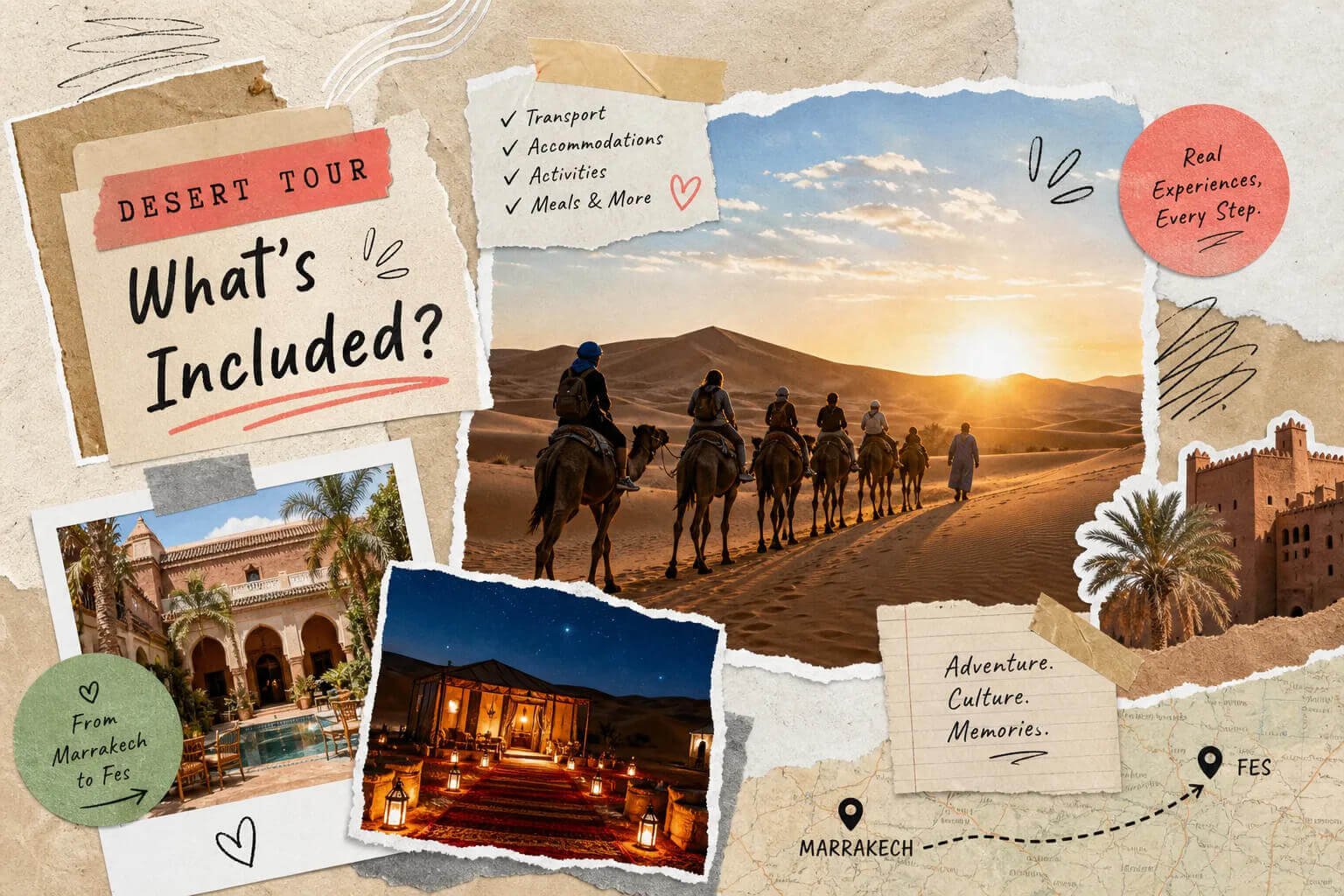
Uncover what a Marrakech to Fes desert tour offers, including camel rides, desert camps, and rich cu...
Read this article
Join our Merzouga Overnight Tour for an authentic desert experience. Enjoy camel rides, comfortable ...
Read this articleWant cool tour deals and tips about Morocco? Enter your email and we’ll send them to you each month!
