Group Tour Agencies in Morocco: How to Pick the Right One
Compare Morocco group tour agencies by trip style, reviews, pace, transport and inclusions. Learn wh...
Read this article

Private, custom Morocco trips planned in Fez by AZ-ZDDINE, working in Moroccan tourism since 2012. Sahara, Atlas, medinas and coast, arranged around you.
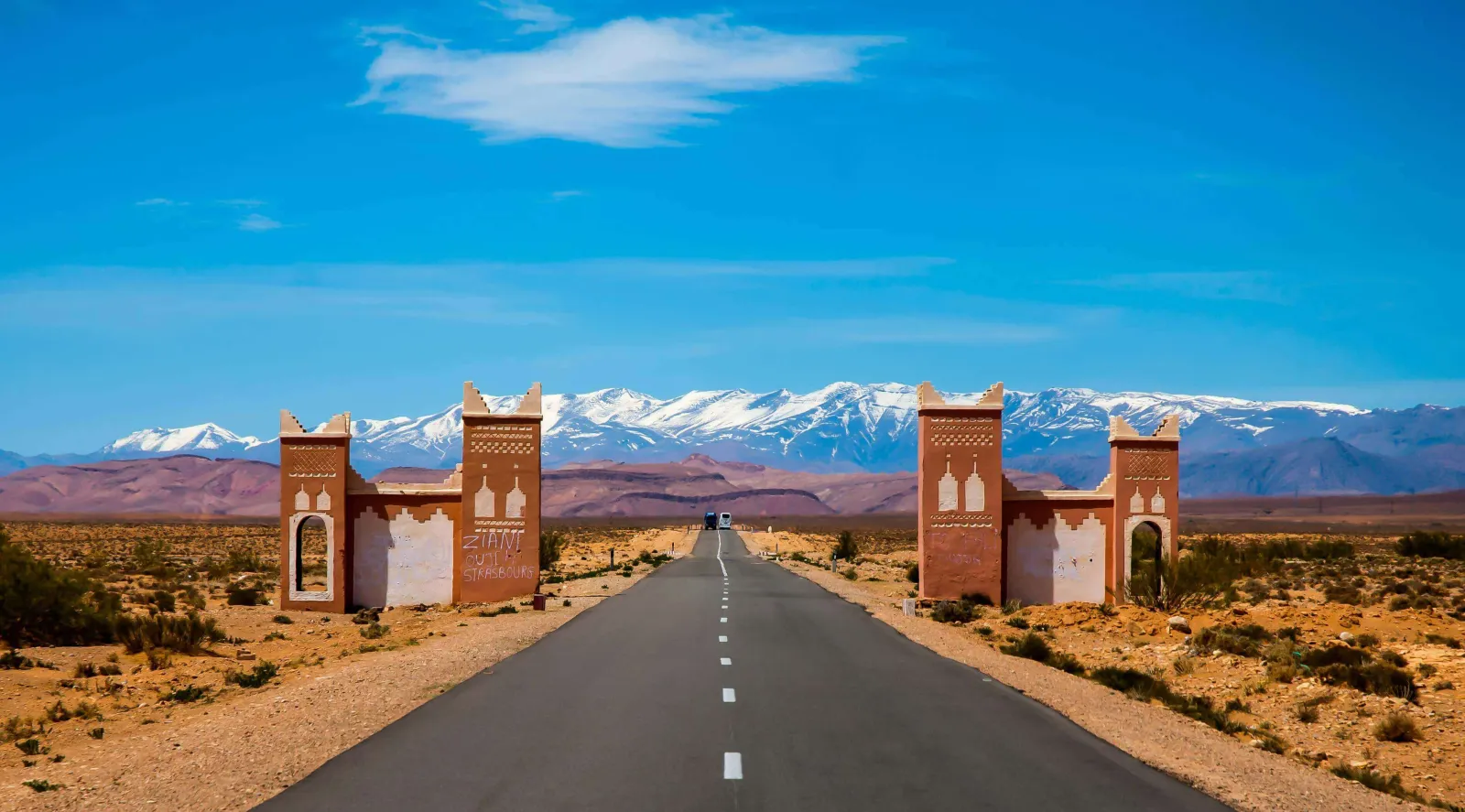
Main Morocco roads are very good on A-roads and N-roads: modern autoroutes, paved national highways, and well-maintained routes linking major cities, the Atlas Mountains, the Sahara Desert, and the coast.
Tourists can usually drive with a valid US, UK, EU, Canadian, or Australian driving licence for short stays, but an international driver’s permit is recommended and sometimes required by a rental company.
Toll roads are fast and safe, but fees can add up quickly during road trips; keep Moroccan dirhams in small notes and coins for toll booths, parking lots, and attendants.
Driving in Morocco is generally safe in daylight if you respect speed limits, wear seat belts, watch speed cameras, slow for police checkpoints, and avoid rural night driving.
A rental car gives freedom, while a Morocco Classic Tours private driver gives comfort, local knowledge, and fewer worries about mountain passes, city centre traffic, or desert access tracks.
Morocco is one of the easiest North African countries to explore by car. The country has fantastic driving infrastructure with well-maintained highways, and the main network connects Casablanca, Rabat, Fes, Marrakech, Tangier, Essaouira, Ouarzazate, Merzouga, and Agadir in a way that makes a morocco road trip genuinely practical.
According to Morocco’s investment infrastructure data, the classified road network is around 57,000+ km, with roughly 48,000 km paved and about 1,800 km of autoroutes currently in service. Morocco is also upgrading highways, rural roads, and stadium access corridors ahead of the 2030 FIFA World Cup, with a national goal to improve road quality further by 2030. You can find a broad infrastructure context through Morocco’s investment infrastructure portal.
Road management matters. Autoroutes du Maroc manages the tolled motorways, while the Ministry of Equipment and Water oversees many national, regional, and provincial roads. This is why autoroutes usually feel smoother, faster, and better serviced than remote rural roads.
For most places on a first trip to morocco - Casablanca, Rabat, Fes, Marrakech, Ait Ben Haddou, Essaouira, Chefchaouen, and Merzouga - roads are paved and in good condition. Only short rough sections near some desert camps, rural viewpoints, or remote villages may involve dirt roads.
At Morocco Classic Tours, our drivers use these same routes daily. We track closures, roadworks, mountain weather, and seasonal desert conditions so guests can enjoy the route instead of worrying about logistics.
Before diving into the details, here’s a quick definition of each road type in Morocco:
A-roads (Autoroutes): Marked with an “A”, these are modern, high-speed toll motorways connecting major cities. They are generally in excellent condition and offer the fastest travel.
N-roads (National Roads): Marked with an “N”, these are major non-toll highways that connect cities and regions. They can be narrower and more congested than autoroutes.
R-roads (Regional Roads): Marked with an “R”, these secondary roads often lead to smaller towns, oases, valleys, and mountain villages. Their conditions vary widely, and they can sometimes be narrow or unpaved.
P-roads (Provincial/Local Roads): Marked with a “P”, these local access roads may be paved, gravel, or mixed. They often serve rural areas,s and their quality can vary, especially after rain or snow.
Motorways are marked with an “A”, while national roads are marked with an “N”, secondary roads with “R”, and local roads with “P”. This simple system is useful when reading a Morocco road map, planning long distances, or checking Google Maps before departure.
Here is the practical version:
A-roads: modern high-speed toll roads connecting major cities. Highways in Morocco, marked with “A”, are modern, high-speed toll roads connecting major cities and are generally in excellent condition. Examples include A1 Casablanca–Rabat–Tangier, A3 Casablanca–Marrakech, and A7 Marrakech–Agadir. They usually have a 120 km/h limit, service areas, and divided carriageways.
N-roads: major non-toll highways connecting cities and regions. National roads, marked with “N”, are major non-toll highways that connect cities but can be narrower and more congested than highways. Examples include N9 over Tizi n’tichka pass, N13 toward Merzouga, and N1 along parts of the Atlantic coast.
R-roads: regional routes. Roads often link small towns, oases, valleys, and mountain villages. Secondary roads, marked with “R”, and local roads, marked with “P”, often lead to smaller towns and their conditions vary widely, sometimes being narrow or unpaved.
P-roads: provincial and local access roads. These may be paved, gravel, or mixed. Rain, snow, and flash flooding can create ruts, mud, or broken edges, especially in rural areas.
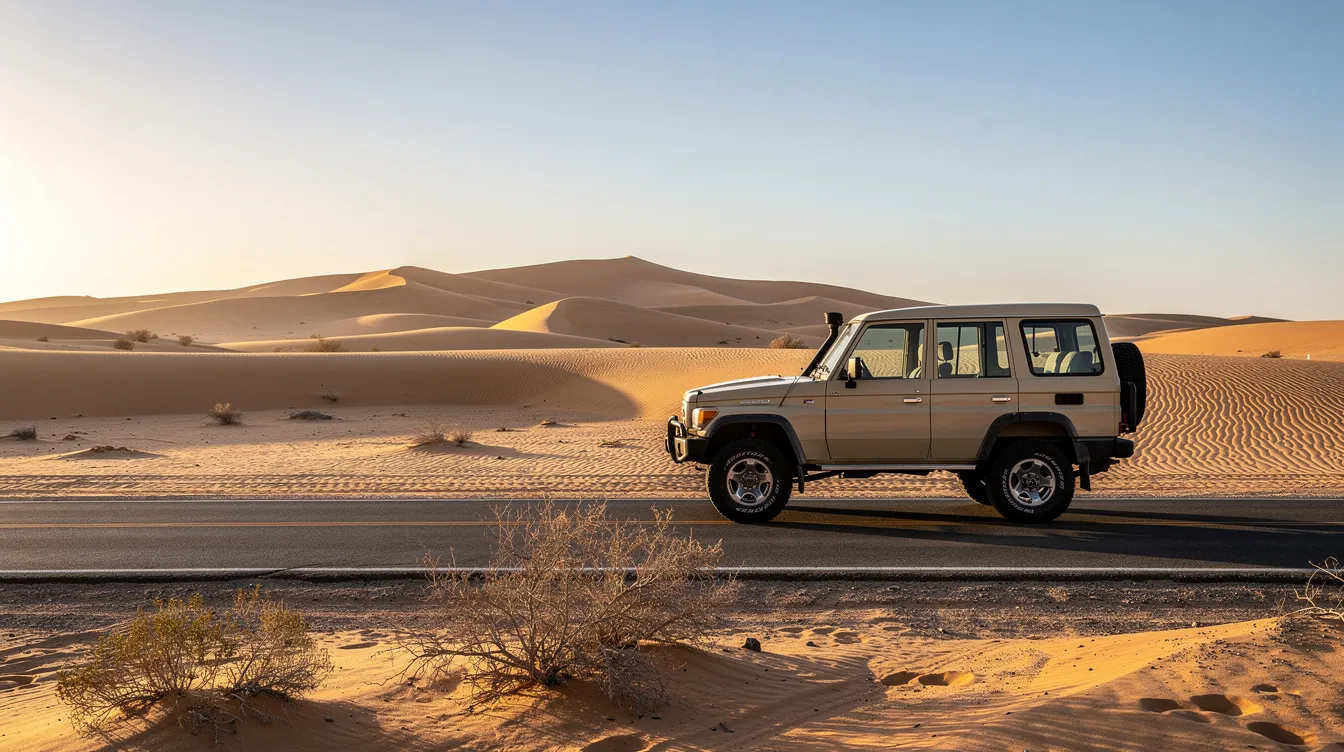
A normal car is enough for most A and N routes. A Four Wheel Drive becomes useful on deep sand near Erg Chebbi or Erg Chigaga, rough Anti-Atlas pistes, or muddy rural tracks after storms.
Toll roads in Morocco are the fastest and safest way to cover long distances between major cities. If you are comparing a toll road in morocco map with a scenic route, choose the autoroute when you need to save time and the national road when the drive itself is part of the experience.
The main toll corridors are:
Casablanca–Rabat–Kénitra–Tangier via A1/A5
Casablanca–Marrakech–Agadir via A3/A7
Rabat–Meknes–Fes–Oujda via A2/A4
Casablanca to Marrakech is usually around 2.5 to 3 hours by motorway. Marrakech to Essaouira takes about three hours and covers scenic landscapes, though it is not a full autoroute drive. Rabat to Tangier is also a straightforward motorway journey.
How do you pay? Usually, in Moroccan dirhams at manned booths. Sometimes you take a ticket at entry and pay when exiting. Some larger plazas accept cards, but cash is more reliable. Keep small notes and coins ready in the car.
Typical tolls vary by vehicle class and axles. As a rough 2025–2026 guide, Casablanca–Marrakech may be around 80–120 MAD, and Tangier–Casablanca can be around 100 MAD. Morocco has toll roads, and the toll fees can add up quickly during road trips, so budget for them.
Look for blue motorway icons and signs saying “péage” or “autoroute à péage.” If your budget is tight, Google Maps can be set to avoid toll roads, but this often adds time.
Driving in Morocco feels similar to parts of southern Europe: mostly straightforward on main roads, more assertive in larger cities. Many reports suggest that it is safe to drive in Morocco, with courteous drivers outside major cities, but defensive driving is necessary in Morocco due to unpredictable driving behaviors from other road users, including pedestrians and animals.
Core rules are simple:
Drive on the right.
Speed limits in built-up areas are often lower than those in rural areas, typically reaching up to 60 km/h in cities.
In Morocco, the speed limit in urban areas is capped at 60 km/h. For secondary roads, the limit is set at 100 km/h, whereas autoroute highways allow a maximum speed of 120 km/h.
Seat belts are mandatory for all passengers in Morocco, and their use is assumed to be legally enforced.
Morocco has a legal blood alcohol limit of 0.2 g/l for drivers.
Do not use a handheld phone while driving.
Traffic lights deserve special attention. Traffic lights in Morocco, particularly yellow lights, change very quickly, prompting caution when approaching intersections. Moroccan traffic lights’ yellow lights change very quickly, sometimes in as little as two to three seconds, prompting caution. Slow down on yellow and wait for the green light, especially at large junctions in Casablanca, Rabat, and Marrakech.
Road culture is assertive but not always hostile. Moroccan drivers are generally courteous and helpful to tourists, often offering assistance with directions. Using car horns in Morocco is common, and their usage often serves different purposes other than agitation. Drivers in Morocco often do not strictly adhere to road lines, especially in urban areas, and many local drivers may not use turn signals and can exhibit unpredictable behavior, such as drifting into the middle of the road.
Driving in large cities like Casablanca, Marrakech, and Rabat can be challenging due to heavy traffic and aggressive driving behaviors. Driving in Marrakech can be intimidating due to heavy traffic and aggressive drivers, and road conditions in urban areas can be challenging, particularly in Marrakech, where driving can feel chaotic and intimidating. Still, with patience, low speed, and clear positioning, many tourists manage with zero issues.
Morocco uses speed cameras on highways to enforce speed limits, which can result in fines being billed to the rental company. Does Morocco have speed cameras? Yes - fixed and mobile cameras are common near town entrances, toll roads, and fast N-roads. Watch speed signs carefully.
Police checkpoints are common in Morocco, often set up to check for speeding or other violations. It is common to encounter police checkpoints around Morocco, particularly in urban areas, town entrances, bridges, and junctions.
Usually, officers stand near cones, wave most cars through, and stop a few vehicles for documents. In Morocco, the police generally do not target tourists but focus on checking local drivers for compliance with traffic laws. Moroccan police are noted for their courteous interactions with drivers, especially if traffic laws are obeyed.
Keep these documents ready:
Passport
driving licence
International driver’s permit, if needed
Rental contract
Vehicle registration, known as carte grise
Insurance papers
If you receive a fine, stay calm and ask for a written receipt. Drivers should slow down when they see someone flashing their headlights, as it often indicates an upcoming police checkpoint. It may also warn of animals, roadworks, or a radar camera.
With Morocco Classic Tours, guests rarely need to speak with the police directly because our drivers handle routine checkpoint stops every day.
Navigation is easier than ever. Google Maps, Waze, Maps.me, and offline maps work well on highways and national roads. It’s beneficial to download offline maps before your trip, as phone signals may be weak in remote areas of Morocco. Downloading offline maps is recommended for navigation in areas with unreliable internet coverage.
Road signs in Morocco are generally in Arabic and French, with speed signs often displayed in kilometers per hour kph. Are road signs in Morocco in English? Usually, no. The good news is that place names are often written in Latin letters through French transliteration, and international symbols make stop signs, speed signs, and warnings easy to understand.
When driving in Moroccan cities, it’s common for the streets to be crowded and for navigation to be complicated, especially in medinas. In Fes or Marrakech, use apps for general orientation rather than turn-by-turn driving inside tiny alleys. Park outside the medina and walk in.
Save pins for hotels, official parking lots, petrol stations, riads, Ait Ben Haddou, Dadès Gorge, Bahia Palace, Hassan Tower, the Hassan II Mosque, and any car park near a city centre medina gate. Morocco Classic Tours provides guests with pre-arranged pick-up points and clear instructions to reduce stress.
Morocco offers a stunning variety of landscapes, including the Sahara Desert, mountains, and coastal towns. Road character changes quickly between Moroccan cities, coastal plains, the High Atlas, and desert plateaus.
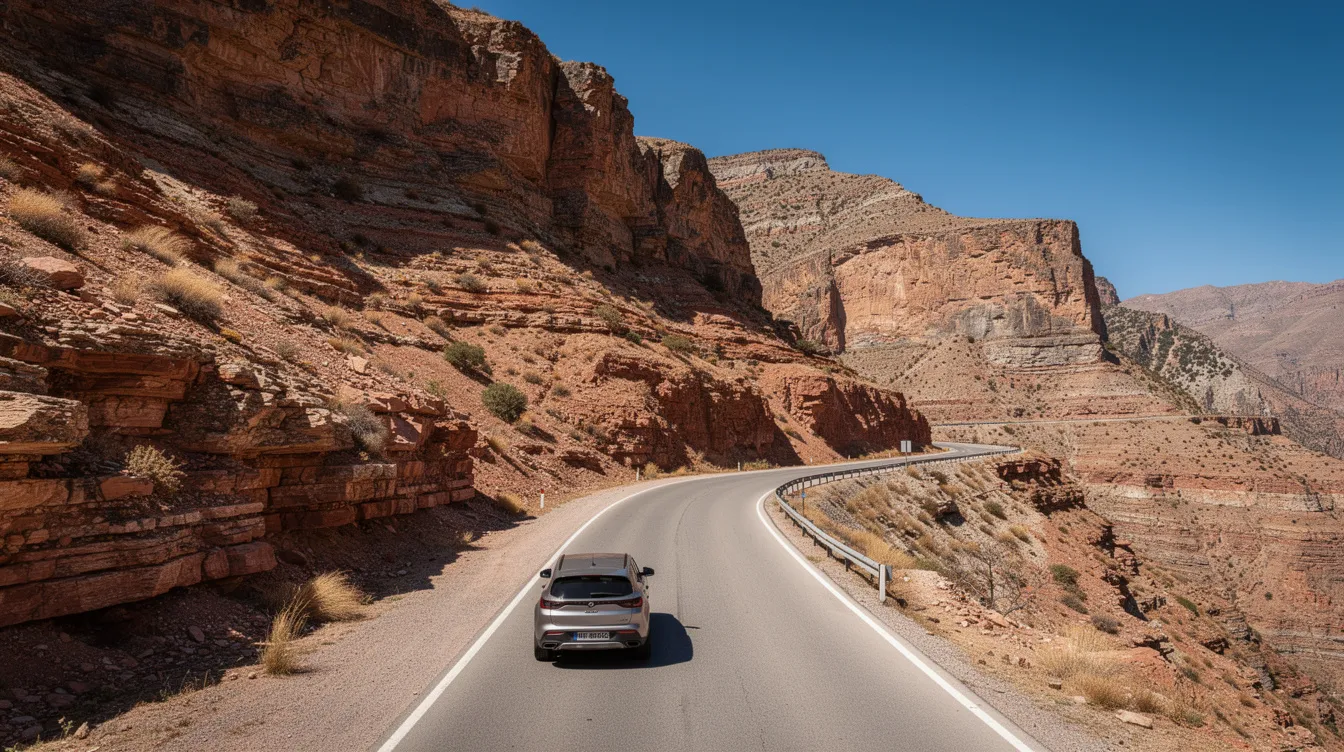
Mountain roads in the Atlas and Rif mountains are steep, narrow, and winding, requiring cautious driving. Many roads in Morocco, especially in the mountains, feature stunning views and well-maintained conditions. The Tizi n’Tichka pass is one of the most dramatic and scenic drives in Morocco, reaching heights of 2260 meters. The drive from Marrakech to Ouarzazate features opportunities to see historical kasbahs and stunning landscapes, and Ouarzazate serves as a common resting stop for travelers headed to the Sahara Desert.
High Atlas passes such as Tizi n’Tichka and Tizi n’Test are paved, but they include hairpins, blind bends, slow trucks, rockfall risk, and winter snow. During the rainy season from November to March, flash flooding can wash away rural roads, necessitating checks on conditions before long journeys.
The Atlantic coast is easier. Morocco’s coast is ideal for road trips due to its diverse landscapes and historic attractions along the way. Coastal roads between Tangier, Rabat, Casablanca, El Jadida, Essaouira, and Agadir offer smoother surfaces, regular services, and fewer elevation changes. Essouira is known for its relaxed vibe and beautiful coastal scenery.
The South and East toward Merzouga, Erfoud, Rissani, Zagora, and Erg Chigaga involve long stretches of good asphalt. The journey from Merzouga to Fes takes over seven hours, highlighting the vast distances in Morocco. Keep the fuel tank at least half full, carry bottled water, and avoid pushing too far late in the day.
Animals on the road can be a concern, highlighting the need for careful driving in rural areas. Driving conditions on secondary and local roads can be unpredictable, with potential for steep inclines and sharp curves. Driving in rural areas is generally safe, with roads well-maintained, although some rural roads may be unpaved or dirt tracks.
The Dadès Gorge features picturesque rock formations and Berber villages along the driving route. The Road of 1000 Kasbahs, Todra Gorge, Draa Valley, and Rif routes reward slow travel, especially if you enjoy trekking in the mountains and visiting traditional Berber villages.
Renting a car is the most flexible way to complete a road trip, especially if you enjoy spontaneous stops. You can rent a car in Morocco easily from major international companies like Hertz, Avis, and Europcar, as well as local agencies.
To rent a car in Morocco, you typically need to be at least 21 years old and possess a valid driver’s license. Many companies prefer drivers aged 21–23 or older and may require the licence to have been held for one or two years. An International Driver’s Permit IDP might be necessary to rent a car in Morocco, depending on your home country.
Typical 2025–2026 car rental prices:
Economy rental car: about USD 30–60 per day
Compact SUV: about USD 70–120 per day
True Four Wheel Drive: about USD 120–200+ per day
Season, pick-up city, automatic transmission, one-way drop-off, and additional insurance affect the final cost. Many credit cards offer additional car rental insurance, which may cover damages done to the rental vehicle. Rental companies often offer additional insurance, but it’s generally not considered necessary if you have credit card coverage. Still, triple-check your own policy before declining coverage.
It’s advisable to take photos of your rental car’s condition before driving to avoid damage disputes. Check tyres, spare wheel, tools, scratches, fuel policy, and whether border crossings are allowed. When renting a car in Morocco, ensure you understand the fuel policy regarding how much gas is provided and required upon return. You should confirm the type of gas required for your rental car when picking it up, as different cars use different fuel types. Make sure to check if your rental agreement allows for taking the car across borders if you plan to visit neighboring countries.
A 2WD car is fine for most places. A small SUV is often the best compromise. A true 4×4 is only worth the extra cost if your route includes remote pistes, deep sand, or difficult mountain tracks.
Parking in Morocco usually requires payment, with fees ranging from 2 to 30 MAD depending on the city and location. There are various forms of parking available in Moroccan cities, including paid street parking and monitored parking lots. You’ll also find guarded surface lots outside medinas and underground garages in modern districts.
It is important to keep small change on hand for parking in Moroccan cities, as many attendants may expect tips. It is advisable to carry small bills for parking, as many parking facilities do not take cards. A small tip for an attendant is normal if they guide you into a space or watch the car overnight.
Moroccan gas stations typically have attendants who will pump gas for you, making it convenient for drivers. Gas stations in Morocco generally have attendants who fill your car for you. Confirm diesel or petrol, state the amount clearly, and check the pump before paying.
Fuel is easy to find along autoroutes and N-roads, but desert areas have long stretches between services. Refill at half a tank on remote routes. Keep water, snacks, a charger, and a paper backup map in the car.
Marrakech is typically the first destination for road trips in Morocco, but the best road trip depends on your time, confidence, and interests. Choosing only about half of your trip plans allows for spontaneous adventures during your road trip.
Imperial cities and desert loop: Casablanca–Rabat–Fes–Midelt–Merzouga–Road of 1000 Kasbahs–Ait Ben Haddou–Marrakech. This classic route usually needs 8–12 days, or two weeks if you want a relaxed pace. Fes is best explored over a few days due to its complex medina and many cultural attractions. It is recommended to stay in riads for a more authentic experience during visits to Moroccan cities.
Atlantic coast route: Tangier–Asilah–Rabat–Casablanca–El Jadida–Essaouira–Agadir. This route is easier, with ocean views, seafood, historic ports, and smooth driving. It connects two cities or more without difficult passes and suits travelers who prefer coastal stops over desert distances.
High Atlas and oases route: Marrakech–Tizi n’tichka pass–Ouarzazate–Ait Ben Haddou–Skoura–Dadès–Todra–Zagora. This is scenic, slower, and perfect for kasbahs, palm valleys, and photography.
Northern loop: Tangier or Fes–Chefchaouen–Rif Mountains–Akchour–Meknes–Fes. Chefchaouen is famous for its blue-washed buildings and is characterized by a laid-back atmosphere. Many travellers call it the blue city, and some find the Instagram crowds pretty hilarious compared with the calm early mornings.
Both self-drive and private-driver travel can work beautifully in a single country as varied as Morocco. The better choice depends on confidence, budget, and how much responsibility you want during the trip.
Self-drive advantages:
Maximum freedom
Lower daily cost for confident couples or small groups
Easy photo stops
Full control over timing
Private driver advantages:
No stress at police checkpoints
No worries about parking lots, city traffic, or mountain passes
Local advice on viewpoints, rest stops, cafés, and safe shortcuts
Easier long transfer days
We often recommend hiring a driver for families, nervous drivers, solo travellers, winter trips, and desert journeys where long distances are involved. A hybrid approach also works: self-drive easy coastal corridors, then use a Morocco Classic Tours driver for the High Atlas or Sahara transfer.
Contact Morocco Classic Tours if you want a tailored comparison of car rental plus hotels versus a full private tour package.
The real joy of a Moroccan road trip is what happens between the famous stops. A roadside orange stall, an Argan oil cooperative near Essaouira, a terrace café above a valley, or a shepherd moving goats across the road can become as memorable as a palace.
Sahara experiences are the classic reward for the long drive: a camel ride at sunset, dunes glowing orange, desert camps, sandboarding, and stargazing far from city lights. To reach Merzouga, expect long asphalt stretches followed by short rough tracks near some camps.
Ait Ben Haddou is an essential stop on the Marrakech–Ouarzazate road. The UNESCO-listed ksar feels perfectly preserved in places, with earthen towers, narrow lanes, and cinematic views across the valley.
Moroccan cities add another layer: street food in Fes, the secret garden and the Bahia Palace in Marrakech, Hassan Tower in Rabat, and the Hassan II Mosque in Casablanca. Morocco Classic Tours designs driving days so guests enjoy these micro-experiences instead of feeling trapped in the car.
For most visitors with normal driving experience, daytime driving on the main Morocco roads is safe when you obey limits and stay alert. Thousands of tourists self-drive every year without major problems.
The real risks are not usually scams or police. The bigger issues are animals, pedestrians, motorbikes, buses overtaking, sudden speed bumps, and other drivers behaving unpredictably. Road accidents are common in Morocco, necessitating cautious driving practices, so stay defensive.
Can you drive at night in Morocco? Legally, yes. But driving after dark in rural areas is discouraged due to poor road conditions and safety concerns. Driving at night is particularly dangerous in Morocco due to poor lighting, potholes, speed bumps, and the potential for unlit animals on the road. Most urban Moroccan roads have decent street lighting, making night driving manageable, but intercity night driving is still best avoided.
Good habits:
Finish long drives before sunset.
Rest every two hours.
Check the weather before high passes.
Slow down for towns and roadworks.
Do not assume another driver will indicate.
Drive safely around animals, pedestrians, and cyclists.
If you prefer to relax and look out the window, a Morocco Classic Tours private driver gives you the same landscapes with less responsibility.
Rules can change, so always confirm with your embassy and rental company before departure. For UK travellers, the UK government provides current advice on driving documents through GOV.UK Morocco travel advice.
Most tourists can drive in Morocco using a valid US, UK, EU, Canadian, or Australian licence for short visits. Some guidance refers to foreign licences being accepted for tourism-length stays, while residents must exchange or obtain a Moroccan licence after a longer period.
An International Driving Permit is not always checked, but it is sensible if your licence is not in French or English, if your national motoring authority recommends it, or if your rental agency requests it. Worth noting: agency policy can be stricter than local practice.
Basic third-party insurance is usually included in a rental. Optional collision damage waiver, theft protection, tyre/glass cover, and credit card coverage vary. Keep originals in the vehicle and secure digital copies online.
A Four Wheel Drive is not essential for most Morocco road trip routes. Autoroutes, national roads, and access roads to main towns, oases, viewpoints, and hotels are usually asphalted.
A 4×4 becomes useful for:
Deep sand near Erg Chebbi or Erg Chigaga
Remote Anti-Atlas pistes
Muddy rural roads after winter rain
Rocky tracks to isolated viewpoints or camps
The trade-off is a higher rental price, greater fuel use, and more responsibility if damage occurs. For many tourists, the smarter option is to park a normal car in the last village and use a local 4×4 transfer arranged by Morocco Classic Tours.
Share your route with us before booking. We can tell you honestly whether 4×4 is necessary, recommended, or overkill.
Yes. Main Morocco roads - especially A-roads and N-roads - are generally in very good condition with smooth asphalt, clear signs, petrol stations, and regular services. Morocco has fantastic driving infrastructure with well-maintained highways.
Some regional and provincial roads can be narrow, patched, steep, or occasionally unsealed, especially in mountain and rural areas. Ongoing investment linked to the 2030 FIFA World Cup is improving surfaces, barriers, lighting, and rural access.
Usually, yes for short tourist visits. Travellers from the US, UK, and most EU countries can normally rent and drive with a valid home licence.
However, an International Driving Permit is recommended and may be required depending on your home country or rental company policy. Confirm before travel, especially if your licence is not in French or English.
You pay at toll booths in Moroccan dirhams, usually in cash. On some motorway sections, you take a ticket at entry and pay when you exit.
Some plazas accept cards, and locals may use electronic toll tags, but tourists should use cash lanes and keep a pouch of low-value notes and coins within reach.
Rent a car if you are confident, patient, and comfortable with navigation, parking, police checkpoints, and city traffic.
Hire a driver with Morocco Classic Tours if you want to focus on scenery, culture, family time, and comfort. This is especially helpful for families, older travellers, winter trips, short itineraries, and long desert transfers.
It is legal, but not recommended for visitors on rural or intercity roads. Limited lighting, animals, pedestrians, potholes, and unmarked obstacles make night driving riskier.
Night driving inside larger cities such as Casablanca, Rabat, and Marrakech is more manageable because of streetlights and traffic, but it still requires extra attention.
Not usually. Road signs are generally in Arabic and French, not English.
That said, most visitors can still navigate because place names often appear in Latin letters, symbols are international, and speed limits use kilometers per hour. Offline maps and saved pins make the process much easier.
Morocco's roads make the country remarkably rewarding to explore by car: imperial cities, Atlantic beaches, high atlas passes, Berber villages, kasbah valleys, and Sahara dunes can all fit into one unforgettable route.
If you love independence, a rental car can be a great choice. If you prefer comfort, local insight, and fewer logistics, Morocco Classic Tours can build a private driver-guided itinerary around your dates, budget, and travel style.
Get in touch with Morocco Classic Tours to plan your 2026 Morocco road trip - self-drive, private driver, or a flexible mix of both.
Compare Morocco group tour agencies by trip style, reviews, pace, transport and inclusions. Learn wh...
Read this article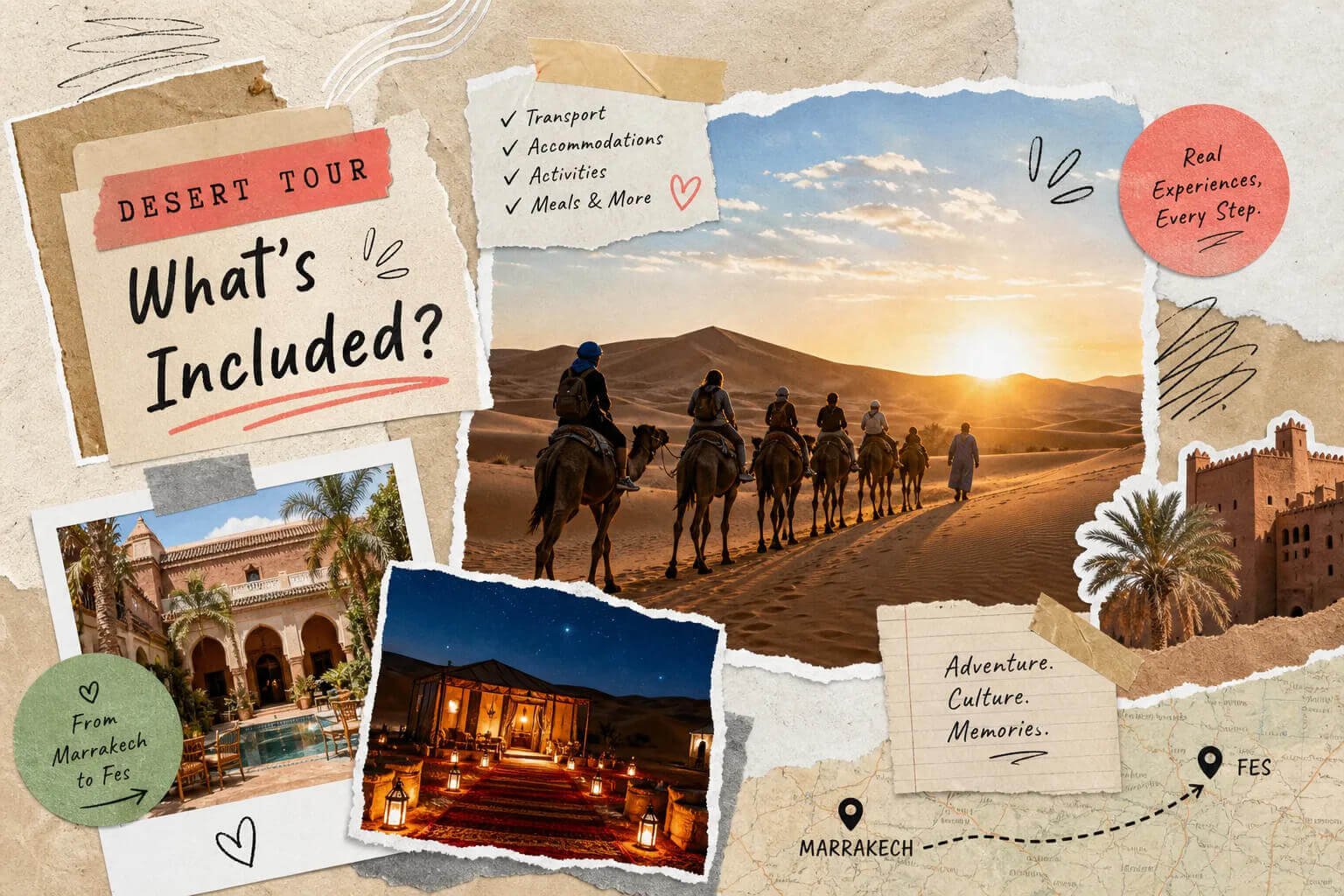
Uncover what a Marrakech to Fes desert tour offers, including camel rides, desert camps, and rich cu...
Read this article
Join our Merzouga Overnight Tour for an authentic desert experience. Enjoy camel rides, comfortable ...
Read this articleWant cool tour deals and tips about Morocco? Enter your email and we’ll send them to you each month!
