Group Tour Agencies in Morocco: How to Pick the Right One
Compare Morocco group tour agencies by trip style, reviews, pace, transport and inclusions. Learn wh...
Read this article

Private, custom Morocco trips planned in Fez by AZ-ZDDINE, working in Moroccan tourism since 2012. Sahara, Atlas, medinas and coast, arranged around you.

This article explores the rich tradition of Amazigh tattoos, delving into their symbols, meanings, historical context, and modern questions. It is intended for readers interested in North African culture, tattoo history, or the heritage of the Amazigh people. Understanding Amazigh tattoos offers insight into identity, spirituality, and the evolving role of tradition in contemporary society.
An Amazigh tattoo is part of an ancient tradition practiced across North Africa, especially among Amazigh women in Morocco, Algeria, Tunisia, Libya, the Atlas Mountains, and Saharan regions.
Amazigh tattoos were once common on women’s faces, hands, feet, and arms, but the tradition has largely declined since the mid-20th century due to social pressure, religion, urbanization, globalization, and modernization.
Most designs are geometric: ⵣ, triangles, lines, dots, diamond shapes, crosses, squares, eyes, palm trees, fish, and scorpions. These artistic symbols carry Amazigh tattoo meanings tied to protection, fertility, beauty, tribal identity, and ethnic identity.
The symbol ⵣ, called yaz, represents “free man” or “free people,” while three lines down the chin often relate to femininity, maturity, fertility, marital status, and tribal affiliations.
If you are considering an Amazigh-inspired tattoo, think carefully about cultural meaning, cultural heritage, consent, and cultural appropriation before treating the design as generic “tribal” art.
Amazigh tattoos matter because they are not just decoration. They are an unsaid autobiography permanently etched into the skin: a record of womanhood, family, land, tribe, belief, and survival.
They also matter because many tattooed elderly Amazigh women alive today are likely the last generation to have actively participated in the Amazigh tattoo tradition. Younger generations are no longer getting tattoos in the same way, and in urban regions of Morocco, it is rare to see women with facial or body tattoos.
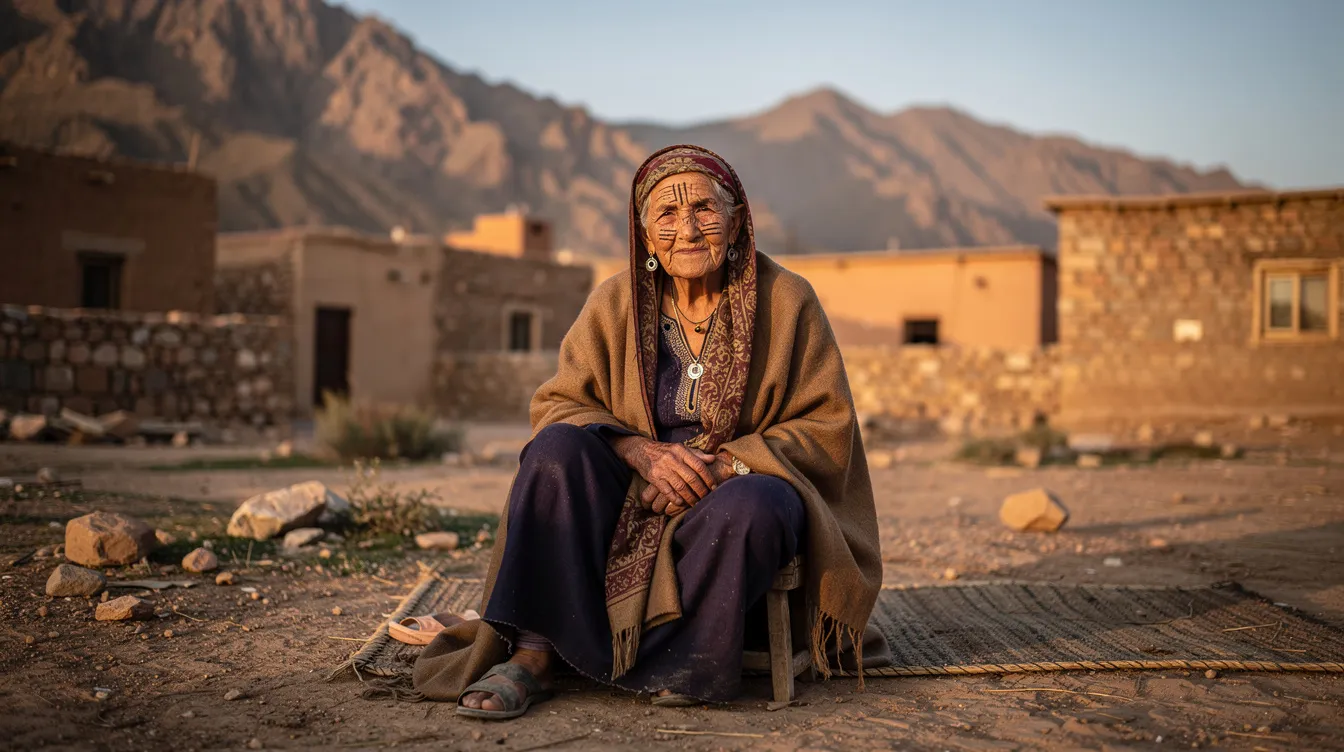
The Amazigh, plural Imazighen, are the Indigenous peoples of North Africa, with communities across Morocco, Algeria, Tunisia, Libya, parts of the Sahara, Mali, and Niger. The word “Amazigh” is often translated as “free person” or “free man,” while “Imazighen” means “free people.” “Berber” is the older external term, so Amazigh Berber is still widely understood, but Amazigh is increasingly preferred.
Amazigh tattoos are a traditional system of facial tattoos and body tattoos used for identity, protection, beauty, health, and life milestones. In many Amazigh communities, tattoos served as a rite of passage: Amazigh women traditionally received tattoos as a rite of passage, marking specific events such as marriage or puberty. The tattoos served as a rite of passage, marking specific events such as marriage and puberty, and they were applied during a ritual process that connected women to their land and conveyed familial ties.
Most traditional tattoos are geometric rather than realistic. Triangles, lines, diamonds, and dots are common geometric designs found in Amazigh tattoos, which have cultural importance as symbols of spirituality, fertility, and protection. Common Amazigh tattoo designs include geometric shapes and symbolic motifs like the scorpion and the eye, connected to identity and cultural values. Nowadays, Amazigh tattoos are most visible on elderly women in rural mountain and desert regions, although modern generations are experiencing a renewal of interest in Amazigh tattoos as a means of celebrating cultural heritage.
Amazigh tattoos have a long history that predates the arrival of Islam in North Africa. The practice belongs to a deeper pre-Islamic cultural world in which signs on the body, pottery, textiles, jewelry, and walls formed a shared symbolic language. Some discussions ofBerberr tattooing techniques dating back to antiquity compare the practice with other ancient tattooed cultures, including tattooed mummies, though exact local timelines vary by region.
Historically, Amazigh tattoos served as a unifying force among different tribes, deeply rooted in each group’s history and purpose. They developed among native Berber populations scattered from the Rif to the High Atlas, Middle Atlas, Anti-Atlas, and Sahara oases. For nomadic Amazigh tribes and semi-nomadic Amazigh tribes, tattoos could work like portable documents, showing kinship, land attachment, geographic affinities, and tribal allegiance.
Amazigh tattoos are significant cultural markers with meanings deeply rooted in tradition, spirituality, and social identity. They were used by women to communicate status, protect against evil spirits, signify beauty and femininity, and mark important life events like marriage or childbirth. In this sense, Amazigh tattoos act as visible memory, keeping the people’s cultural fabric amid conquest, migration, and cultural change.
The practice remained strong into the 20th century, especially from the 1920s through the 1960s in many rural areas. Since then, fewer women have continued the practice. The tradition of Amazigh tattooing has largely declined since the mid-20th century due to social and religious pressures.
Traditional Amazigh tattooing techniques were usually practiced at home or in a familiar community setting. Tattoo artists in Amazigh culture were often middle-aged women from the local community who had their own signature designs. Women in Amazigh culture played a crucial role in the tattooing tradition, both as artists and as recipients of tattoos.
The traditional Amazigh tattooing process involves cutting the skin with a blade or needle and rubbing it with kohl ash. The ink for Amazigh tattoos was commonly made from natural materials such as broad bean leaves, black coal, and aromatic herbs. Some accounts also describe charcoal, soot, indigo, plant juices, wheat shoots, and local ointments used during healing. Societies employ basic instruments when formal tools are unavailable, and Berber tattooing techniques often use thorns, needles, or small blades.
The final color was often blue-green, dark blue, black, or charcoal gray. Traditional Amazigh tattooing techniques created permanent marks by placing pigment under the skin, not by painting the surface. Tattooing dates vary by community, but many women were tattooed at a young age, particularly around puberty or marriage.
Main placement zones included the chin, cheeks, forehead, nose bridge, temples, wrists, hands, fingers, feet, ankles, arms, and other parts of the body. Amazigh women traditionally tattooed their faces, feet, arms, and other body parts for beauty, health, and protection. Men were tattooed far less often; when they were, marks were usually smaller and linked to protection, tribal signs, or healing.
Amazigh tattoos form a visual language. Symbols in Amazigh tattoos represent protection, fertility, and tribal allegiance, applied during a ritual process. Tattoos often change according to gender, tribe, and geographic affinities, creating a dynamic lexicon that captures the diversity of Berber groups.
Symbol | Common meaning |
|---|---|
Triangle | The triangle symbol in Amazigh tattoos represents the womb, fertility, and femininity. |
Diamond | Diamond shapes often suggest protection, the home, feminine power, and continuity. |
Dots | Dots may refer to fire, seeds, life force, or spiritual energy. |
Lines | Lines can suggest paths, duality, ancestry, or movement between life stages. |
Square | A square tattoo symbolizes a new home or status as a mother in Amazigh culture. |
Scorpion | The scorpion symbol in Amazigh tattoos represents danger, courage, endurance, and protection from harm. |
Eye | The eye is commonly linked to protection from envy and the evil eye. |
Hand | The hand symbol in Amazigh tattoos represents hand skills, craftsmanship, and protection from evil. |
Fish | The fish symbol often relates to water, fertility, abundance, good luck, and protection. |
Many tattoo symbols have relationships with vegetation and are believed to have protective properties against evil spirits. The palm tree is a common facial tattoo that correlates with the Carthaginian goddess Tanit, symbolizing fertility and protection. The palm tree tattoo is a common symbol among Amazigh women, correlating with the goddess Tanit, who represents fertility and protection. | |
The Amazigh symbol ⵣ, called yaz in Tifinagh script, represents freedom and Amazigh identity. It is a letter pronounced like “z,” but it has also become a political and cultural emblem. The meaning of the Amazigh symbol for “free man” is tied to dignity, autonomy, resistance, and continuity. The red ⵣ appears on the Amazigh flag over blue, green, and yellow stripes, representing sea, land, and desert. | |
Meanings are not identical everywhere. Amazigh tribes in the High Atlas, Middle Atlas, Rif, Sahara, and oasis regions used related symbols in different ways. This is why Amazigh tattoo meanings should always be understood through a specific Amazigh group, place, and family history.
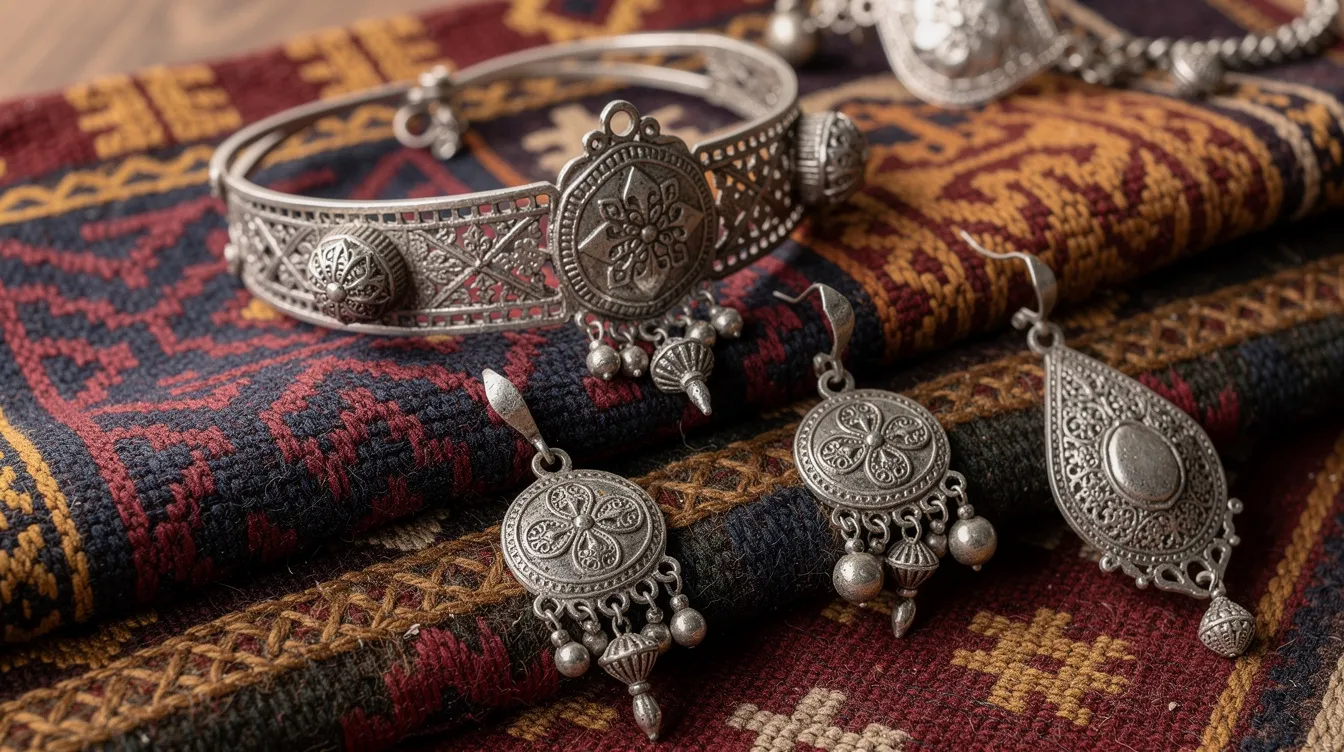
Among Berber women in the Atlas Mountains, many facial tattoos created a striking visual language. A line on the chin, a mark between the eyebrows, small stars or crosses on the cheeks, or lines beside the nose could portray beauty while also serving as protection. Tattoos were widely considered a form of beauty and a permanent form of makeup within Amazigh communities.
What do three lines down the chin mean? In many Amazigh facial traditions, three vertical chin lines are associated with femininity, maturity, fertility, marriageability, and tribal belonging. A vertical line on the chin called the siyala is a tattoo symbolizing the fertility goddess Tanit, applied at the onset of menstruation. In some communities, Amazigh girls beginning puberty received their first facial tattoo as proof that a girl’s social role was changing.
Face tattoos were not only aesthetic. Amazigh tattoos were believed to have protective properties against evil spirits and were often placed near the eyes, mouth, and nose. These are vulnerable openings of the body, so protective signs were placed there to guard breath, speech, sight, and health.
Today, permanent facial tattoos among the Amazigh people have almost disappeared. Henna and temporary henna designs are more common for ceremonies. As morocco world reporting has noted, tattooed women from older rural generations often remember a time when facial tattoos stated beauty, origin, and belonging, while modern society may read the same marks very differently.
Amazigh Berber women’s tattoos were central to female life passages: puberty, engagement, marriage, childbirth, motherhood, and changes in household status. Women traditionally receive tattoos within a social world where older women guided younger women through symbolic knowledge. In some places, a woman’s social status changed when new marks were added after marriage or childbirth.
Amazigh girls might receive the first facial tattoo around puberty, and additional motifs could follow later. Amazigh women with tattoos today were born in a time when tattoos were highly encouraged and celebrated. Some girls were encouraged, and in some cases, women tattooed at a young age later said they had not fully chosen the practice for themselves.
The social role was powerful. Tattoos traditionally expressed origin, marriageability, health, beauty, and connection to family land. They also tied women to a wider world of craft. The same signs appear on carpets, pottery, jewelry, doors, and textiles, creating a rich cultural fabric between skin, home, and landscape.
Older tattoo artist figures were often respected as women who held healing knowledge, symbol memory, and local authority. Many tattooed women remember these artists as part of community life. Yet within their lifetimes, many Amazigh women witnessed their tattoos transform from a source of pride to a source of shame.
The decline of Amazigh tattooing traditions cannot be explained by one factor. Religion, colonization, urbanization, schooling, state identity projects, and modern beauty standards all played a role. The traditional Amazigh tattoo practice is declining due to the influence of Islam, which views tattooing as forbidden or haram.
Most Amazigh people in Morocco, Algeria, and nearby regions are Muslims, especially Sunni Muslims. Mainstream Islamic jurisprudence generally teaches that permanent tattooing is forbidden because it alters Allah’s creation; in everyday language, many say Islam forbids tattooing. This religious view is a key reason why traditional Amazigh facial and body tattoos have largely disappeared in the last century. Many tattooed women in Morocco now feel guilty about their tattoos, viewing them as haram or forbidden, an attitude that also shapes how some people approach Islamic heritage travel in Morocco.
Colonial history added another stigma. The French occupation of Morocco created a stigma around tattoos, associating them with prostitution and leading to a decline in their acceptance. Later, independence-era Arabization projects and modern schooling often treated visible Berber identity as backward, accelerating the loss of traditional tattoos, even as the wider culture of Morocco and its mixed Arab-Amazigh heritage continued to evolve in cities and rural regions alike.
Globalization and modernization have contributed to the decline of the Amazigh tattoo tradition, as traditional tattoos are now seen as non-modern and unbecoming. The disappearance of the tattooing tradition is linked to urbanization and modernization of Moroccan society. Many Amazigh women today feel ashamed of their tattoos, which were once a source of pride and beauty, due to the changing societal views influenced by religion and modernity. The tattoos that were once a source of beauty and pride are now often viewed with regret by the women who bear them, and many women who were encouraged or forced to get tattoos at a young age now suggest they get them removed or covered, just as shifting norms also influence attitudes toward alcohol use and social behavior in Morocco.
A related question is: are Berber men circumcised? Most Muslim Amazigh or Berber men are circumcised in line with Islamic custom, but circumcision is not unique to Berber culture and is not normally connected to tattoo marks.
Today, numerous Amazigh tattoos survive mostly among elderly women in rural areas. The elderly women of today are the last generation to have actively participated in the Amazigh tattoo tradition, as younger generations are no longer getting tattoos. In cities, face tattoos are rare, and many younger people prefer henna, jewelry, clothing, or graphic symbols instead of permanent traditional tattoos.
At the same time, Amazigh cultural revival movements have renewed interest in Tamazight language, Tifinagh letters, the Amazigh flag, and symbols like ⵣ. For some people, an Amazigh tattoo is a way of expressing ethnic identity, reclaiming one’s ethnic identity, or honoring family history. For others, especially religious families, tattooing remains unacceptable.
Modern designers use Amazigh Berber tattoos in fashion, jewelry, and posters. This revival can celebrate cultural heritage, but it can also flatten local meaning if every design is treated as interchangeable. The better approach values cultural exchange while acknowledging that Berber tattoos are part of a colorful tapestry of living communities, not a dead aesthetic.
Respectful documentation matters. Many tattooed elderly Amazigh women carry knowledge that may disappear with them. Interviews, photographs, and family conversations can preserve cultural importance without pressuring younger women to repeat a practice they do not want.
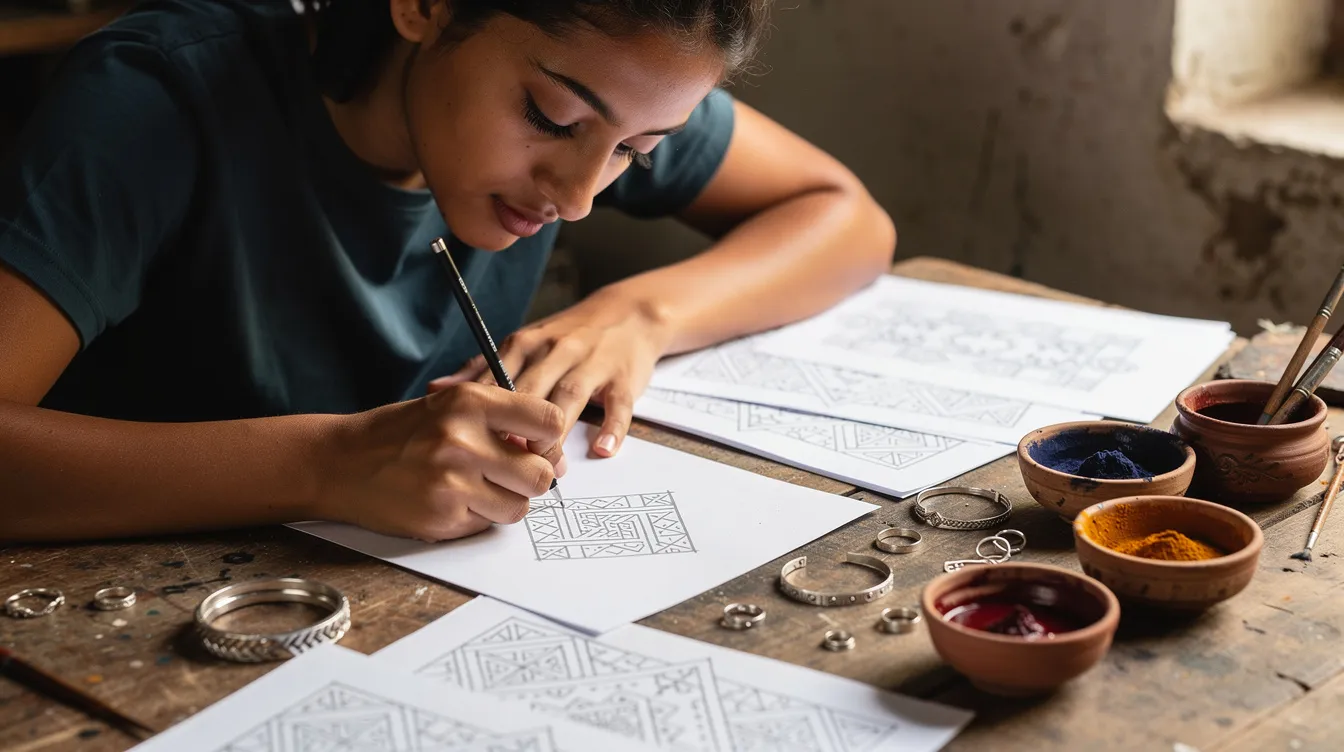
If you are considering Amazigh tattoos today, smaller designs may be easier to place respectfully than copying full face tattoos. A good tattoo artist should help you think through placement, line weight, and meaning rather than simply copying an image from the internet.
Small Amazigh tattoo designs include:
A simple ⵣ symbol on the wrist, upper arm, or collarbone.
A tiny triangle or diamond pattern on the finger, ankle, or inner arm.
Three subtle chin-like lines moved to the forearm instead of the face.
A small palm-tree motif on the ankle.
A fish symbol near the wrist or foot.
A protective eye or scorpion, if you understand the regional context.
Tifinagh letters for a name, family word, or identity phrase.
For the script, some people use Tifinagh letters connected to the Amazigh identity. However, always verify spelling with knowledgeable speakers. Do not assume every online transliteration is accurate.
Modern placement can echo tradition without replicating sacred or gendered facial motifs. Behind the ear, inner arm, fingers, ankle, collarbone, or shoulder can work for minimalist tattoo designs. If you have Amazigh ancestry, ask your family which marks appeared in your region before choosing a design.
Is it cultural appropriation to get an Amazigh tattoo if you are not Amazigh? It depends on context, intent, design, and relationship. A small design chosen after real learning, respectful conversation, and support for Amazigh artists is different from using Amazigh Berber women’s tattoos as exotic “tribal” decoration.
Key questions to ask:
Do you have Amazigh heritage or a personal relationship with Amazigh families?
Are you copying a facial tattoo linked to women, puberty, marriage, fertility, or sacred protection?
Are you treating Berber tattoos as generic tribal art?
Have you spoken with Amazigh people, researchers, or artists?
Are you prepared to explain the cultural meaning honestly?
Some Amazigh individuals welcome respectful sharing, especially because the tradition is disappearing. Others see copying facial motifs as fetishizing, especially when many Amazigh women regret the marks that society now stigmatizes. A balanced approach supports Amazigh artists, credits the culture, avoids sacred or highly gendered face patterns, and treats the tattoo as cultural heritage rather than costume.
The women who still carry these marks live mostly in the south and the Atlas, not in the big cities. The road from Fes down to Merzouga runs through exactly that kind of village, where the tradition survived longest.
ⵣ is the Tifinagh letter yaz. In Amazigh identity, it represents the “free man” or “free people.” As a tattoo, ⵣ usually expresses pride in Amazigh heritage, resilience, freedom, and continuity.
It also appears on the Amazigh flag as a red symbol across blue, green, and yellow stripes. Do not confuse ⵣ with ????????. The emoji ???????? is the national flag of Armenia, not an Amazigh symbol.
“Berber” is the older external term, while “Amazigh” is the self-name used by many communities. Many people still understand “Berber,” especially in historical writing, tourism, and older scholarship.
Still, “Amazigh” is usually more respectful in cultural and political contexts. When speaking with individuals, follow the preference of the person or community.
Most Amazigh populations in Morocco, Algeria, Tunisia, Libya, and nearby regions are Sunni Muslims today. There have also been Jewish, Christian, and Indigenous spiritual influences in Amazigh history.
Mainstream Sunni Islamic law generally forbids permanent tattooing as altering Allah’s creation. This is one reason the tradition of tattooing among Amazigh women is quickly disappearing due to cultural changes and the influence of Islam.
Hand tattoos often include crosses, grids, zigzags, rings, lines, and geometric designs signifying protection. Berber tattoos on the hand can refer to hand skills, craftsmanship, blessing, work, motherhood, protection from evil, and warding off the evil eye.
The fish symbol usually relates to water, fertility, abundance, good luck, and protection from misfortune. In dry regions, water-linked symbols carry especially strong cultural meaning.
In modern studios, the price depends on size, detail, placement, city, and the reputation of the tattoo artist. In large Moroccan cities, small minimalist tattoos may start around 600–800 MAD, roughly the equivalent of a basic minimum-session fee.
A small ⵣ, triangle or diamond may be affordable, while larger custom work can cost several hundred dollars or euros. Budget extra for consultation if you want the design to respect Amazightattoo symbolism rather than simply copy a pattern.
Compare Morocco group tour agencies by trip style, reviews, pace, transport and inclusions. Learn wh...
Read this article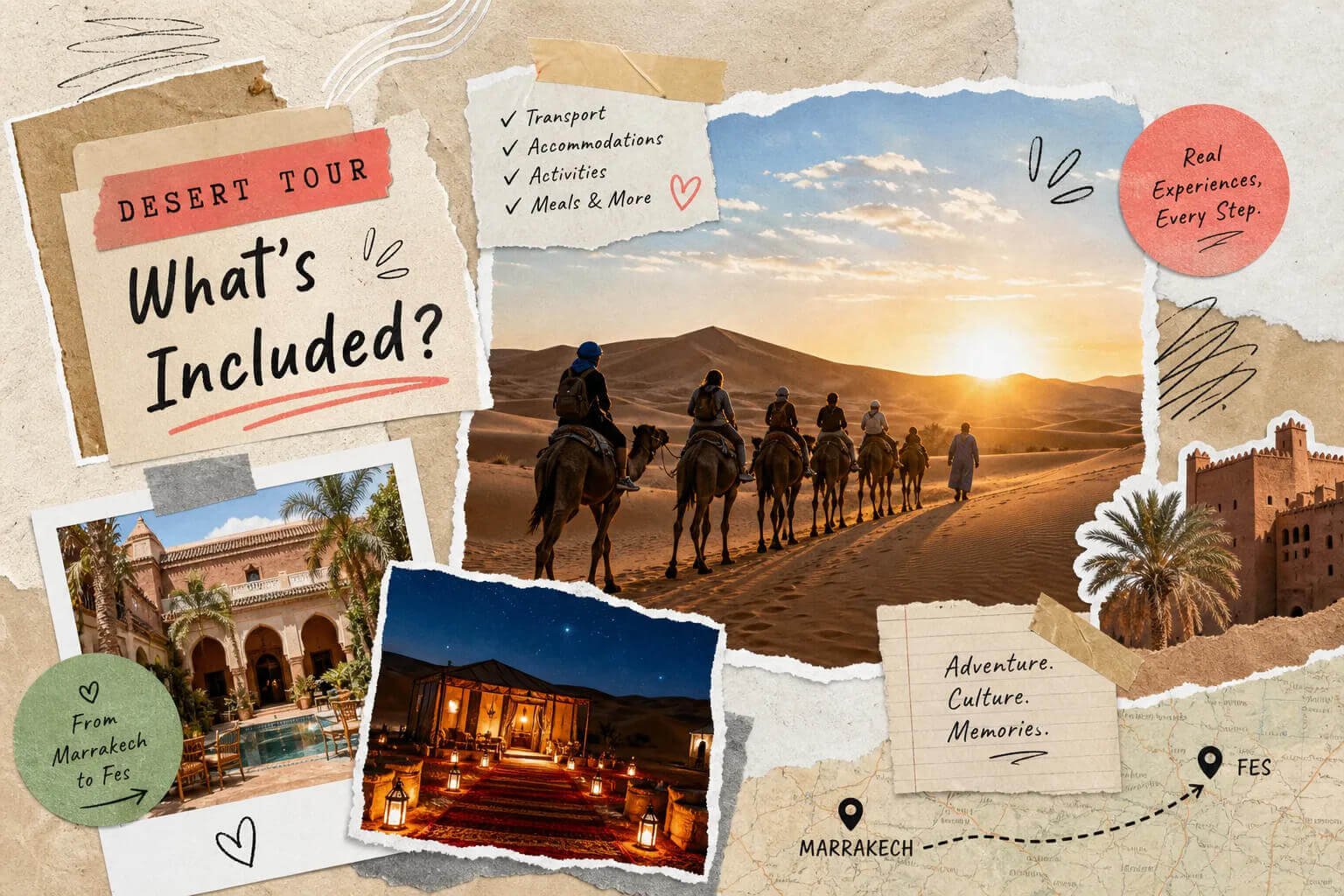
Uncover what a Marrakech to Fes desert tour offers, including camel rides, desert camps, and rich cu...
Read this article
Join our Merzouga Overnight Tour for an authentic desert experience. Enjoy camel rides, comfortable ...
Read this articleWant cool tour deals and tips about Morocco? Enter your email and we’ll send them to you each month!
