How to Spend 3 Days in Marrakech: A Memorable Itinerary for Travelers
Discover how to make the most of 3 days in Marrakech with our detailed itinerary. Experience the cit...
Read this article

Suspendisse interdum consectetur libero id. Fermentum leo vel orci porta non. Euismod viverra nibh cras pulvinar suspen.
Director Christopher Edward Nolan, a leading film director of the 21st century, has revolutionized modern cinema with his unique storytelling and stunning visuals. This article ranks his best movies, explaining why each one is impactful and memorable. Discover what makes Nolan a standout filmmaker.
Christopher Nolan’s early influences and unique upbringing shaped his creative instincts and storytelling passion.
Nolan’s films, such as ‘Batman Begins’ and ‘Interstellar,’ showcase his ability to blend complex narratives with visual innovation, earning critical acclaim and commercial success.
Christopher Nolan is a highly influential British-American film director, producer, and screenwriter known for large-scale, conceptual blockbusters that feature complex, non-linear narratives and philosophical themes.
His upcoming project, ‘The Odyssey,’ is anticipated to push the boundaries of filmmaking, solidifying Nolan’s legacy in Hollywood.
Born on July 30, 1970, in London, Christopher Nolan grew up in a creative and supportive family. His father, Brendan James Nolan, worked as an advertising executive, and his mother, Christina Jensen, was a teacher. Growing up in a Catholic household in Chicago with his two brothers, Nolan was exposed to a blend of British and American cultural influences. This unique upbringing played a significant role in shaping his worldview and creative instincts from a young age.
From as early as seven, Nolan began experimenting with filmmaking using his father’s Super 8 camera. His early creations included a stop-motion film called “Space Wars,” a clear homage to the iconic “Star Wars.” These formative years were crucial in developing his passion for storytelling and visual art. Influenced by legendary filmmakers like Sir Ridley Scott and classic films such as “2001: A Space Odyssey” and “Star Wars,” when Nolan started making films, his cinematic vision started taking shape. Nolan manipulates the perception of time, exploring its effect on characters in films like Memento and Interstellar, which became a defining feature of his storytelling. Memento tells the story of a man with anterograde amnesia who uses notes and tattoos to hunt for his wife’s murderer.
During his academic years at University College London, Nolan studied English literature and became actively involved with the university's film society, where he produced several short films that contributed to his early development as a filmmaker.
These early experiences and influences laid the foundation for what would become a remarkable career. Nolan’s ability to blend complex narratives with stunning visual effects can be traced back to his childhood fascination with film and storytelling. As we move forward, we’ll see how these early influences evolved into the groundbreaking work that defines Nolan’s career today.
Christopher Nolan’s entry into the film industry was marked by his first feature film, “Following,” released in 1998. This Nolan film was a testament to his resourcefulness and determination. Made on a shoestring budget of around £3,000, Nolan wrote, directed, photographed, and edited the film himself, and completed the final edit. “Following” stands as a remarkable example of what can be achieved with limited resources but unlimited creativity, much like a short film.
“Following” tells the story of a young writer who follows strangers for material, only to get entangled in a criminal underworld. The film’s non-linear narrative and gritty, black-and-white aesthetic quickly caught the attention of the British Film Institute, the British film industry, and film critics alike. Despite its modest production, “Following” was a critical success and marked Nolan’s feature film debut. It showcased his ability to craft compelling short story narratives with intricate plots, a hallmark of English literature that would define his later works, including his approach to filming.
This film set the stage for Nolan’s future successes and established him as a filmmaker to watch. His innovative approach and dedication to his craft earned him recognition and opened doors for his next film projects. The success of “Following” was a clear indication that Nolan’s unique vision and storytelling prowess were just beginning to make their mark on modern cinema.
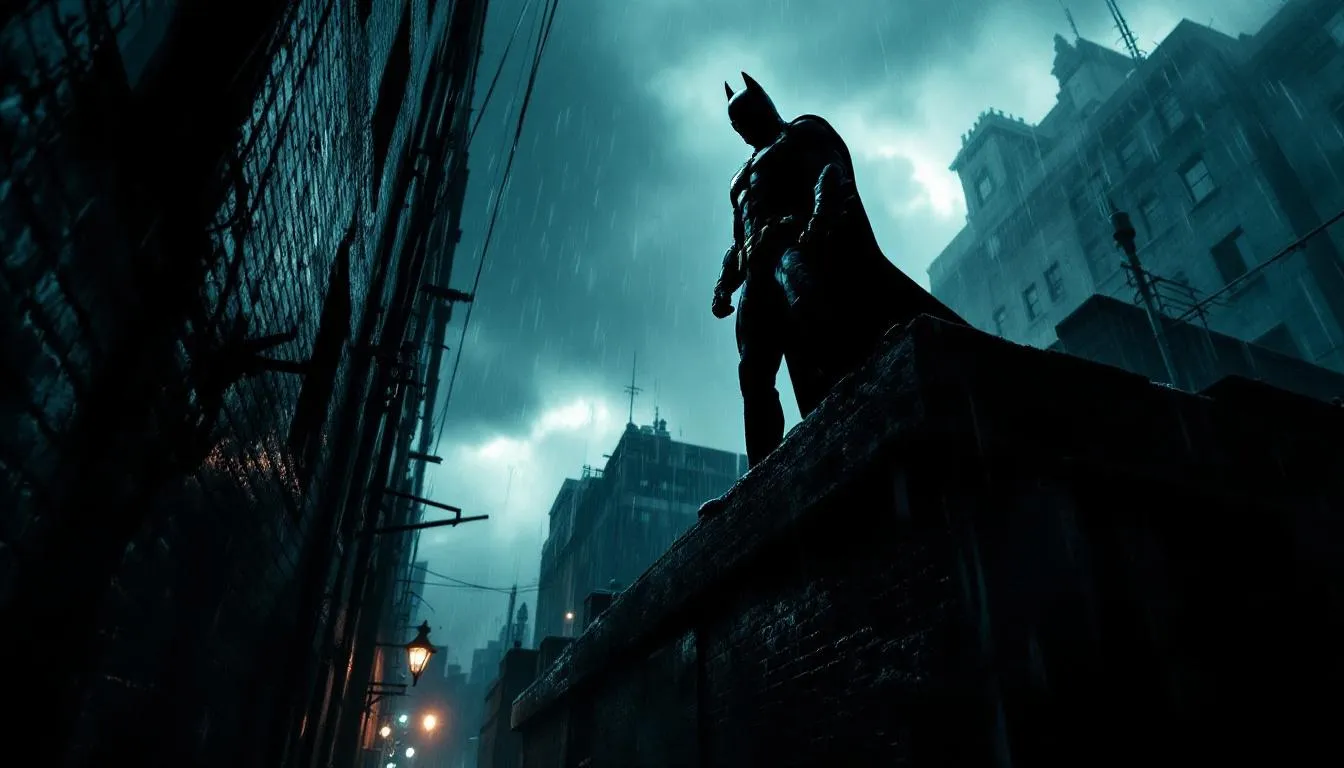
In 2005, Christopher Nolan directed “Batman Begins 2005,” a film that would redefine the superhero genre and solidify his place in Hollywood. Starring Christian Bale as Bruce Wayne/Batman, the film also featured Katie Holmes as Rachel Dawes, the moral compass and love interest of Bruce Wayne, whose presence significantly impacted the film's character dynamics. The film was a commercial success, becoming the ninth-highest-grossing film of the year. “Batman Begins” introduced audiences to a darker, more complex version of the iconic character, exploring themes of fear, identity, and redemption. The Dark Knight Trilogy (2005-2012), comprising Batman Begins, The Dark Knight, and The Dark Knight Rises, is credited with redefining the superhero genre with gritty realism and complex characters.
The success of “Batman Begins” paved the way for the highly acclaimed “The Dark Knight 2008,” released in 2008. This sequel was not initially planned, but the overwhelming response to “Batman Begins” made it inevitable. “The Dark Knight” featured Heath Ledger’s unforgettable performance as the Joker, embodying themes of chaos, duality, and choice. The film also explores themes of morality and justice, questioning whether Batman’s surveillance tactics are justified. The film’s critical and commercial success further established Nolan as one of the best directors of his generation. Notably, The Dark Knight became the first major motion picture to use high-resolution IMAX cameras for key sequences, setting a new standard for visual storytelling in cinema.
The trilogy concluded with “The Dark Knight Rises” in 2012, bringing a fitting end to Nolan’s exploration of the Batman legend. Nolan’s work on the trilogy not only reinvigorated the Batman franchise but also set new standards for superhero films. His ability to blend thought-provoking themes with thrilling action sequences made the trilogy a landmark in modern cinema.
Following the success of “Batman Begins,” Nolan directed “The Prestige” in 2006, further solidifying his reputation as a masterful storyteller. The film, starring Hugh Jackman and Christian Bale, delves into the world of rival magicians in the late 19th century. “The Prestige” was praised for its intricate storytelling, complex themes, and dramatic narrative, keeping audiences engaged with its many twists and turns.
“The Prestige” received positive reviews for its thematic depth and artistic presentation, establishing Nolan as a leading filmmaker in Hollywood. The film’s exploration of obsession, sacrifice, and the pursuit of greatness resonated with both critics and audiences. Its success demonstrated Nolan’s ability to handle complex narratives and character-driven stories, a skill that would become a hallmark of his career. The Prestige presents a psychological exploration of obsession and rivalry among magicians, emphasizing the consequences of the pursuit of greatness.
Critical responses highlighted “The Prestige” as one of Nolan’s best works, cementing his status as the best director who could deliver both commercially successful and critically acclaimed films. Many critics noted that this recognition paved the way for Nolan’s future projects, allowing him to push the boundaries of storytelling and filmmaking even further.
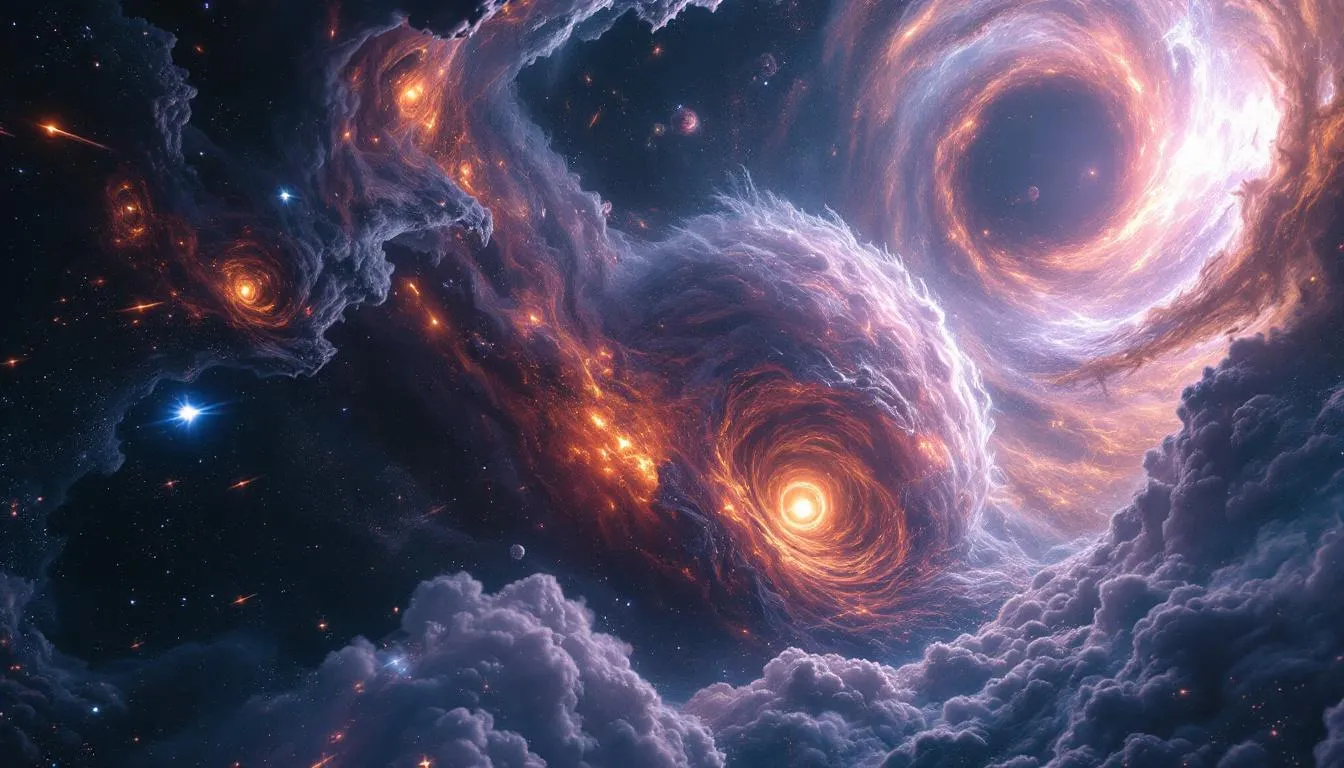
In 2014, Nolan’s exploration of space and time reached new heights with “Interstellar,” a science fiction epic that captivated audiences and critics alike. The film follows a group of astronauts who travel through a wormhole in search of a new home for humanity. “Interstellar” is praised for its scientific accuracy, particularly in its depiction of space-time concepts, thanks to the collaboration with renowned physicist Kip Thorne. The film delves into the conflict between personal sacrifice and the survival of humanity, exploring themes of love and loss along with scientific theories, making it a deeply emotional and thought-provoking experience. Nolan earned his first Academy Award nomination for Best Director for Dunkirk (2017), a World War II film using a triptych structure and immersive storytelling.
“Interstellar” was recognized for its profound narrative and stunning visual execution, solidifying its place in modern cinema. The best film won the Academy Award for Best Visual Effects at the 87th Academy Awards, showcasing Nolan’s commitment to using cutting-edge technology to enhance storytelling. The experimental soundscapes and emotional depth of the film further demonstrated Nolan’s ability to create immersive and thought-provoking cinematic experiences.
“Interstellar” reaffirmed Nolan’s reputation for blending scientific concepts with compelling human stories. The film’s exploration of love, sacrifice, and survival resonated with audiences, making it a standout entry in Nolan’s filmography. “Interstellar” remains a testament to Nolan’s dedication to pushing the boundaries of science fiction and filmmaking.
In 2020, Nolan released “Tenet,” a film that once again showcased his fascination with time and its manipulation. “Tenet” centers around the concept of time inversion, where characters and objects can move backward through time by reversing entropy. The film features a character known as ‘the Protagonist,’ a CIA operative who navigates a complex plot of espionage and temporal warfare.
Nolan spent over a decade developing the screenplay and planning the intricate plot of Tenet, demonstrating his long-term commitment to the project.
The title “Tenet” itself is a palindrome, reflecting the film’s themes of time and reversal. Key aspects of the movie include:
It was shot across multiple countries, including the United States, India, and several European locations, emphasizing its global espionage theme.
It is known for its intricate plot.
It features groundbreaking visual effects.
It showcases Nolan’s signature style of blending high-concept ideas with thrilling action sequences.
Despite its complexity, “Tenet” received praise for its innovative approach to storytelling and its ambitious execution. The film’s exploration of time manipulation added a new dimension to Nolan’s work, further establishing him as a director who continually pushes the envelope in science fiction and filmmaking.
Nolan directed “Oppenheimer” in 2023, a biopic about Robert Oppenheimer, the creator of the atomic bomb. This film marked a departure from Nolan’s usual science fiction themes, focusing instead on a historical narrative. “Oppenheimer” delves into the personal and professional life of its titular character, exploring the ethical and moral dilemmas surrounding the creation of the atomic bomb. The film reflects on the duality of human achievement and regret, focusing on J. Robert Oppenheimer's complex legacy, making it a profound exploration of the consequences of scientific innovation.
“Oppenheimer” is notable for being Nolan’s first R-rated film since “Insomnia,” showcasing his versatility as a filmmaker. The film’s historical accuracy and compelling storytelling received critical acclaim, further demonstrating Nolan’s ability to handle diverse genres. Nolan created a film that resonated with both history enthusiasts and general audiences by blending historical events with dramatic narratives.
The film’s success cemented Nolan’s reputation for masterfully blending historical narratives with compelling storytelling. “Oppenheimer” grossed over $975 million worldwide, making it one of the highest-grossing biographical films and cementing Nolan’s status as a leading auteur in modern cinema.
Christopher Nolan’s impact on the Superman film legacy is most evident in the 2013 blockbuster Man of Steel. Serving as producer and story co-writer, Nolan—alongside his production company Syncopy—brought his signature approach to the project, collaborating closely with director Zack Snyder. Drawing from his transformative work on Batman Begins (2005) and The Dark Knight (2008), Nolan infused the Superman reboot with a sense of realism and emotional complexity rarely seen in previous adaptations.
Nolan’s influence is clear in the film’s grounded tone, which echoes the gritty, character-driven storytelling that defined his Batman films. By focusing on Clark Kent’s internal struggles and the weight of his dual identity, Man of Steel offered audiences a more nuanced and humanized Superman. The film’s use of practical effects and large-scale stunts—hallmarks of Nolan’s filmmaking—added a visceral authenticity to the action sequences, setting a new standard for superhero movies.
Man of Steel achieved strong box office results, grossing over $660 million worldwide. While film critics were divided—some praising its ambitious action and others critiquing its pacing and character development—the film’s success was undeniable. Nolan’s involvement helped launch the DC Extended Universe, paving the way for subsequent films like Batman v Superman: Dawn of Justice and Justice League. The darker, more realistic approach he championed became a defining feature of the franchise, influencing not only Superman’s cinematic journey but also the broader landscape of modern superhero films.
Nolan’s attention to detail and commitment to authenticity extended beyond the screen. He worked closely with Henry Cavill to shape a Superman who felt both mythic and relatable, ensuring the character’s journey resonated with contemporary audiences. As a film critic noted, Nolan’s touch is evident in the film’s balance of high-stakes action and emotional depth—a blend that has become a hallmark of his work.
Beyond his contributions to superhero cinema, Nolan is a passionate advocate for film preservation. His dedication to protecting the legacy of classic movies led to his appointment to the National Film Preservation Board, where he champions the use of traditional film stock and the safeguarding of cinematic history for future generations.
Nolan’s ongoing influence is also reflected in his next film, the biopic based on the life of Robert Oppenheimer, starring Cillian Murphy. Like his previous projects, Oppenheimer combines meticulous attention to historical detail with powerful storytelling, further cementing Nolan’s reputation as a director who continually pushes the boundaries of modern cinema.
In summary, Christopher Nolan’s work on the Superman film franchise—particularly Man of Steel—showcases his ability to reshape iconic characters for a new era. By blending realism, emotional complexity, and innovative filmmaking, Nolan has left an indelible mark on both superhero movies and the evolution of modern cinema.
Christopher Nolan’s personal life and professional collaborations have played a significant role in shaping his career. He first met his future wife, producer Emma Thomas, during their university years, and they have since built a long-standing personal and professional partnership. He is married to Emma Thomas, with whom he has four children. Their partnership extends beyond their personal life, as Thomas has produced many of Nolan’s films, contributing to their seamless production and success.
Nolan frequently collaborates with his brother, Jonathan Nolan, who co-writes many of his screenplays. This sibling collaboration has resulted in some of Nolan’s most iconic films, including “The Dark Knight” and “Interstellar.” Nolan has also established long-standing collaborations with actors such as Michael Caine and Cillian Murphy, whose performances have become integral to the success of his films.
These collaborations create a recognizable trademark in Nolan’s work, enhancing audience trust and expectation. For instance, Cillian Murphy underwent a significant physical transformation for his portrayal of Oppenheimer, demonstrating the dedication and commitment of Nolan’s collaborators. These enduring professional relationships have undoubtedly contributed to the consistent quality and innovation of Nolan’s films.
Christopher Nolan’s filmmaking style is characterized by his use of non-linear narratives and complex timelines, which challenge conventional storytelling and engage audiences on a deeper level. His films often delve into profound philosophical inquiries, including the nature of time, memory, and personal identity. Nolan is renowned for writing original screenplays and frequently directs films based on his own original screenplay, such as Inception and Dunkirk, showcasing his creativity and narrative innovation through unique, non-adapted stories. Nolan has popularized IMAX filmmaking, transforming it into a standard for major blockbusters and improving audience expectations for the cinematic experience. He has also been a vocal advocate for the theatrical experience, emphasizing its importance for the art of filmmaking. Nolan’s style often includes deep shadows, natural settings, and a muted color palette, contributing to his films’ gritty realism. These central ideas are woven into intricate plots that encourage viewers to think critically and immerse themselves in the story.
Nolan’s commitment to practical effects and real locations sets his films apart in an age dominated by CGI. He was the first director to shoot a feature film using IMAX cameras, pushing the boundaries of filmmaking technology and enhancing the visual experience for audiences. Nolan is a proponent of using practical effects, minimizing digital manipulation, and advocating for traditional film stock to create realistic cinematic experiences. This dedication to authenticity and innovation is evident in films like “Inception” and “Dunkirk,” where practical effects play a crucial role in creating immersive and realistic worlds.
Recurring themes in Nolan’s work include obsessive nature, existential angst, and moral ambiguity. His characters often grapple with personal conflicts and broader societal issues, making his films both thought-provoking and relevant. Nolan has established a very clubby kind of unique and influential voice in modern cinema through his blend of complex narratives and profound themes.
Christopher Nolan’s contributions to cinema have been recognized with numerous awards and honors:
Nolan has received multiple Academy Award nominations throughout his career, including eight nominations for films such as “Inception” and “The Dark Knight.”
He received his first Best Director nomination for “Dunkirk,” marking a significant milestone in his career.
Nolan won the Academy Award for Best Director and Best Picture for “Oppenheimer” in 2024.
He has received director nominations from major industry organizations.
Nolan has played a leadership role in the Directors Guild of America, being elected president of the organization.
He has won two Academy Awards.
One of these awards was for his film “Oppenheimer,” which also won Best Picture.
Nolan has been nominated for eight Academy Awards in total.
Nolan was awarded the British Film Institute Fellowship in 2023, recognizing his outstanding contribution to the art of cinema.
“Oppenheimer” grossed over $975 million worldwide, highlighting Nolan’s ability to create commercially successful and critically acclaimed films.
Films like “The Dark Knight” and “Inception” have garnered critical acclaim and significant box office success, highlighting Nolan’s influence on modern cinema. His works have been selected for film preservation in the National Film Registry, recognizing their cultural, historical, and aesthetic significance. Nolan’s ability to balance artistic vision with mainstream appeal has solidified his status as a leading film critic and auteur in the film industry. Additionally, he won a Golden Globe Award during his career, further cementing his reputation as a masterful filmmaker.
These accolades are a testament to Nolan’s dedication to his craft and his impact on the world of cinema. His innovative approach to storytelling and filmmaking continues to inspire both audiences and fellow filmmakers, ensuring his legacy will endure for generations to come. In 2024, Christopher Nolan was made a knight bachelor for his contributions to film, further solidifying his status as one of the most influential figures in modern cinema. Nolan received the Public Service Award from the Federation of American Scientists in 2023.
Christopher Nolan’s influence on modern cinema is undeniable. His films have grossed over $6 billion worldwide, proving that audiences still crave original, thought-provoking cinema despite the prevalence of franchised content. Nolan’s work, such as “Inception” and “Interstellar,” demonstrates his ability to blend complex narratives with mainstream appeal, setting new standards for filmmakers worldwide. Nolan's filmography ranges from low-budget indies to historical epics and superhero franchises, showcasing his versatility and creative range.
Nolan’s preference for natural lighting and real locations, along with his commitment to practical effects, has set him apart from many directors who rely heavily on CGI. His innovative use of sound design techniques enhances the emotional resonance and narrative tension within his films, creating a more immersive experience for the audience. These distinctive elements of his filmmaking style have influenced a new generation of directors, including Martin Scorsese, and set new trends in the industry.
His characters often deal with themes of obsessive nature, existential angst, and moral ambiguity, reflecting broader societal issues such as economic disparity and moral dilemmas. This blend of personal experiences with broader societal issues makes his films both relatable and thought-provoking. Nolan’s impact on modern cinema extends beyond box office success; he has reshaped how stories are told and experienced on the big screen.
Anticipation for Christopher Nolan’s next film, “The Odyssey,” is palpable. Key details about the film include:
Set for release in July 2026
Poised to be Nolan’s most expensive project to date, with a budget of approximately $250 million
Will be shot entirely in IMAX, demonstrating Nolan’s continued commitment to innovative filmmaking techniques.
“The Odyssey” will follow the journey of Odysseus as he navigates various mythical challenges after the Trojan War, filmed in stunning international locations including Greece, Italy, and Morocco. Fans and critics alike eagerly await what could be another cinematic masterpiece from Nolan in the realm of movies.
The film’s grand scale and mythological narrative promise to deliver a visually spectacular and emotionally resonant experience. As Nolan continues to push the boundaries of storytelling and filmmaking, “The Odyssey” is expected to further solidify his legacy as one of the greatest directors of our time.
Christopher Nolan’s career is a testament to the power of visionary storytelling and innovative filmmaking. From his early days with “Following” to his groundbreaking work on “The Dark Knight Trilogy” and beyond, Nolan has consistently pushed the boundaries of modern cinema. His films, characterized by complex narratives, profound themes, and stunning visual execution, have earned him critical acclaim and commercial success. Often referred to as an ‘emotional mathematician,’ Nolan masterfully blends intricate narratives with emotional depth, creating films that resonate deeply with audiences. In Memento, the protagonist’s relentless quest to find his wife’s murderer serves as the driving force behind the film’s unique narrative structure. Robin Williams delivered an acclaimed performance in Insomnia, collaborating with Nolan to bring psychological depth and moral ambiguity to the story. Inception features characters who navigate multiple layers of dreams, exploring the nature of reality and consciousness. In 2019, he was appointed a Commander of the Order of the British Empire for services to film. As we look forward to his future projects, there is no doubt that Nolan’s influence on the film industry will continue to grow, inspiring generations of filmmakers and audiences alike.
Christopher Nolan has directed 12 films, with his most recent being "Oppenheimer," released in 2023.
Christopher Nolan's first feature film was "Following," released in 1998, which marked his entry into the British film industry.
"The Dark Knight" significantly bolstered Nolan's career by solidifying his reputation as a visionary director and achieving both critical acclaim and commercial success. The film's innovative themes and marketing strategies, along with Heath Ledger's iconic portrayal of the Joker, marked it as a pivotal moment in modern cinema.
"Interstellar" is scientifically accurate due to its collaboration with physicist Kip Thorne, which led to a realistic representation of complex concepts like wormholes and black holes. This careful attention to scientific detail enhances the film's credibility in depicting space-time phenomena.
Christopher Nolan frequently collaborates with his brother Jonathan Nolan, producer Emma Thomas, and actors Michael Caine and Cillian Murphy, which has greatly contributed to the quality and success of his films. These partnerships exemplify a strong creative synergy within his projects.

Discover how to make the most of 3 days in Marrakech with our detailed itinerary. Experience the cit...
Read this article
Discover essential tips on what to wear in Morocco to ensure comfort and respect local customs. Read...
Read this article
Discover an unforgettable 3-day tour from Fes to Merzouga. Experience the stunning desert landscapes...
Read this articleWant cool tour deals and tips about Morocco? Enter your email and we’ll send them to you each month!