Group Tour Agencies in Morocco: How to Pick the Right One
Compare Morocco group tour agencies by trip style, reviews, pace, transport and inclusions. Learn wh...
Read this article

Private, custom Morocco trips planned in Fez by AZ-ZDDINE, working in Moroccan tourism since 2012. Sahara, Atlas, medinas and coast, arranged around you.
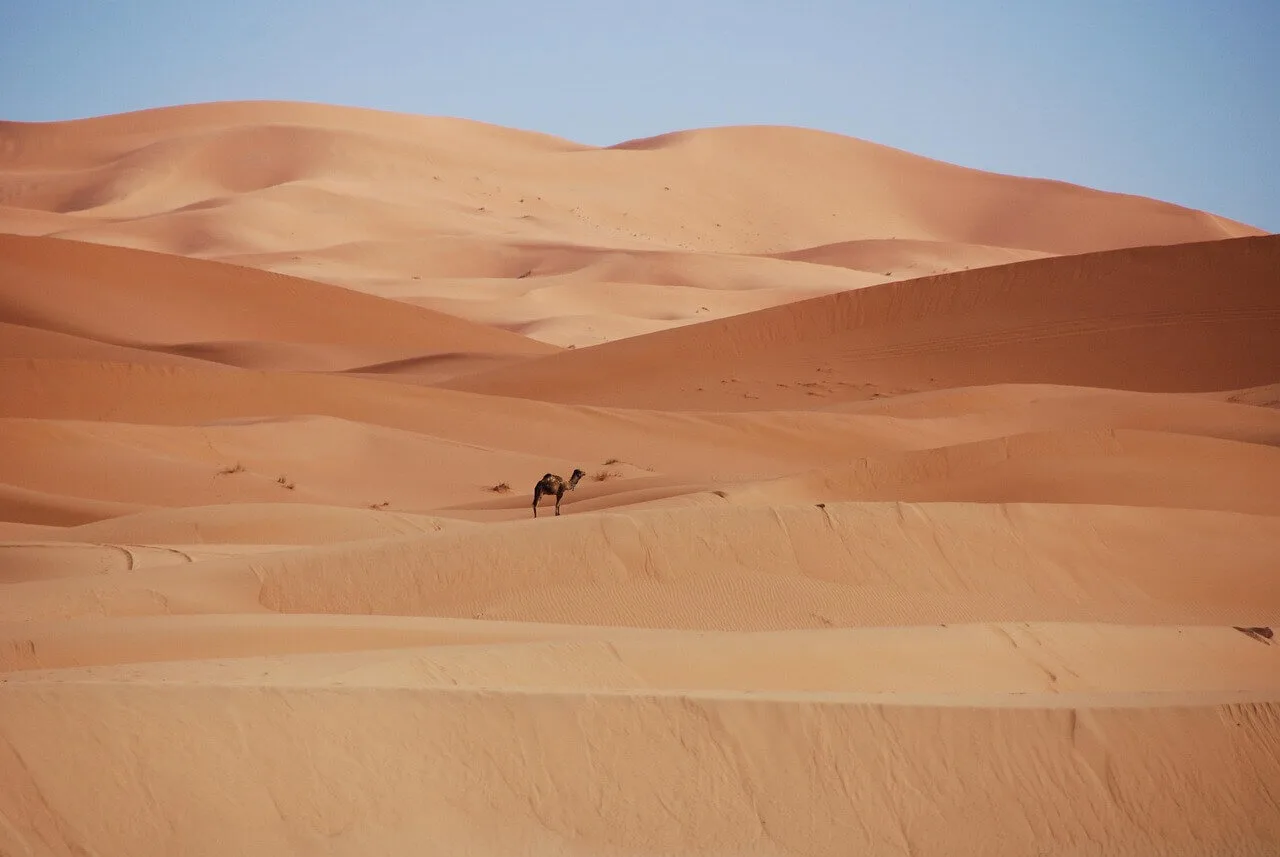
This seven-day Morocco itinerary starts in Marrakech, crosses the High Atlas to Ait Benhaddou and the Dades Valley, includes a night near the Erg Chebbi dunes at Merzouga, and finishes in Fes. The core plan uses six nights: two in Marrakech, one in Dades, one in the Merzouga area and two in Fes. It assumes arrival on Day 1 and departure from Fes on Day 7; flight times may require an extra night.
This is an active road trip with several long travel days, especially the desert-to-Fes transfer. A private driver can simplify the logistics, but cannot shorten the distances. Keep Chefchaouen, the Atlantic coast and a return to Marrakech outside the core seven-day plan unless you add time or remove another stop. Use the day-by-day guide to decide whether this pace suits your party before choosing transport and accommodation.
A week can cover this selected route if you are comfortable changing accommodation and spending several days on the road. It leaves time for Marrakech and Fes as well as a desert overnight, but it is not a slow-paced introduction to every region of Morocco.
The trade-off is clear: including the Sahara means giving several days to the journey across the Atlas and onward to Fes. For a slower week, reduce the number of regions or choose a city-based trip with nearby excursions. Add time if Chefchaouen or the Atlantic coast is a priority.
| Day | Route / focus | Suggested overnight |
|---|---|---|
| 1 | Arrive in Marrakech; settle in according to arrival time | Marrakech |
| 2 | Explore Marrakech | Marrakech |
| 3 | Cross the High Atlas; visit Ait Benhaddou; continue to Dades | Dades Valley |
| 4 | Continue via Todra Gorge to Merzouga; desert overnight | Merzouga area / selected desert camp |
| 5 | Travel from Merzouga through the Middle Atlas to Fes | Fes |
| 6 | Explore Fes | Fes |
| 7 | Depart from Fes; sightseeing only if time allows | No overnight included in this six-night outline |
Treat Marrakech–Dades and Merzouga–Fes as substantial travel days, and allow a generous day for Dades–Merzouga when adding Todra Gorge and the camp transfer. Ask for a day-by-day estimate that separates driving from sightseeing, meals and breaks. The total day depends on your accommodation, route, departure time and conditions; a driving estimate is not an arrival guarantee.
For less driving at the end of the week, keep both nights in Fes and depart there. Casablanca, Rabat, Tangier and Marrakech involve additional transfers; compare the whole journey before choosing a different outbound airport.
Planning a private trip along this route? Ask Morocco Classic Tours about a Marrakech-to-Fes itinerary. Include your travel dates, arrival and departure airports, number of travelers, preferred pace and whether you need accommodation arranged or transport and guiding around stays you have already booked. Mention any walking, seating or other practical requirements so the proposal can address them.
Your plane descends over ochre-colored buildings and palm groves. The moment you step outside the airport, you’re greeted by warm air carrying hints of spice and adventure. This is Morocco—and it wastes no time making an impression.
Day 1 essentials:
Accommodation: Stay in a traditional riad inside or near the medina. Look for properties near Jemaa el Fnaa or the Kasbah district for walkable access to the action. Mid-range riads typically feature interior courtyards with orange trees, plunge pools, and rooftop terraces. Higher-end boutique options add spa services and more elaborate breakfasts.
First evening activities:
Sunset mint tea on a rooftop terrace overlooking Jemaa el Fnaa—watch the square transform as snake charmers, musicians, and food stalls come alive
A gentle first walk through the bustling souks, letting your senses adjust to the colors, sounds, and aromas
Simple dinner of tagine or couscous at a nearby restaurant (no need to venture far on arrival night)
Practical tasks: Change money or withdraw Moroccan dirham from an ATM, pick up a local SIM card (Orange or Inwi offer good coverage), and confirm your pick-up time for tomorrow’s guided city tour.
Rest well tonight. Tomorrow, you dive deeper into this amazing country.
A licensed local guide can help you understand Marrakech's monuments and souks. Discuss the length, walking demands and interests of your party before choosing a visit; independent exploration is also an option.
Bahia Palace: A 19th-century masterpiece of Moroccan craftsmanship with carved cedar ceilings, intricate zellige tilework, and peaceful gardens
Saadian Tombs: Hidden for centuries and rediscovered in 1917, these elaborate mausoleums showcase the wealth of the Saadian dynasty
Jewish Quarter (Mellah): Historic neighborhood with synagogues, spice markets, and a different atmosphere from the main medina
Dive into the souks with your guide’s recommendations for quality artisan workshops—watch craftsmen hammer metal lanterns, dye leather, or blend spices.
Optional visits depending on interest and energy: Ben Youssef Madrasa or le jardin secret, a restored palace garden with pavilions and irrigation channels
For history enthusiasts, consider adding the Maison de la Photographie or a visit to the royal palace gates.
Experience a traditional hammam and spa. Public hammams offer the most authentic experience (bring your own soap and towel, or hire a scrubber), while private hammams in riads provide more comfort for first-timers. Either way, it’s an essential window into Moroccan culture.
Pick up Moroccan pastries from a patisserie.
Dinner of slow-cooked lamb or vegetable tagine on a terrace overlooking the square—arrive early to secure a good table at sunset
Before bed: Pack a small day bag for tomorrow’s road trip (scarf, sunscreen, modest clothing, cash), and rest early. Day 3 marks the beginning of your Sahara adventure.
This is a travel day, but not a boring one. The scenery changes dramatically as you climb from the palm-filled plains into the high Atlas Mountains, cross a legendary mountain pass, and descend into landscapes that have served as backdrops for Hollywood blockbusters.
The route:
Departure: set off after breakfast at the agreed time. The road toward Tizi-n-Tichka includes winding mountain sections; the stated 2–3 hours to the pass is only a planning estimate and depends on the departure point, traffic, conditions and stops.
Ait Benhaddou: this fortified village is a stop for architecture, history and views over the surrounding landscape. A 2–3 hour visit is a planning estimate; choose the walking route and duration around the conditions and your party's needs. Confirm any local guiding and charges separately.
Afternoon drive: continue through Ouarzazate and the Valley of Roses toward the Dades area. Arrival time depends on your departure, chosen stops and road conditions.
Overnight: stay at the accommodation confirmed for your Dades night. If viewpoints or the Monkey Fingers rock formations interest you, discuss their location and timing in daylight rather than assuming they are within walking distance of every guesthouse.
The landscape softens as you leave the mountain gorges behind. Rocky terrain gives way to palm-filled oases, then to open plains, and finally—those dunes you’ve been dreaming about since you first planned this trip to morocco.
Todra Gorge stop: A short detour to walk between sheer canyon walls that rise 300 meters on either side. The riverbed attracts local families, climbers testing routes, and photographers capturing the dramatic light. Some visitors compare it to a miniature Grand Canyon.
Continue through small towns like Erfoud and Rissani (the latter is the gateway to the dunes and has an authentic souk worth a quick stop if time allows)
Watch the terrain change from rock to gravel to sand
Arrive at a Merzouga meeting point where you switch from car to either camels or a 4x4 for the final approach to the dunes
Evening in the Sahara:
Sunset camel ride: The classic experience—swaying atop a camel as the dunes turn from gold to orange to deep red
Sandboarding: For those who want a more active thrill
Photography: The dunes of Erg Chebbi offer some of the most photogenic landscapes in Africa
Campfire entertainment: Berber music, drumming, and storytelling around the fire
Compare the proposed camp's room and bathroom arrangements, hot-water provision and access before confirming it. Amenities vary by property and should be specified in your quote.
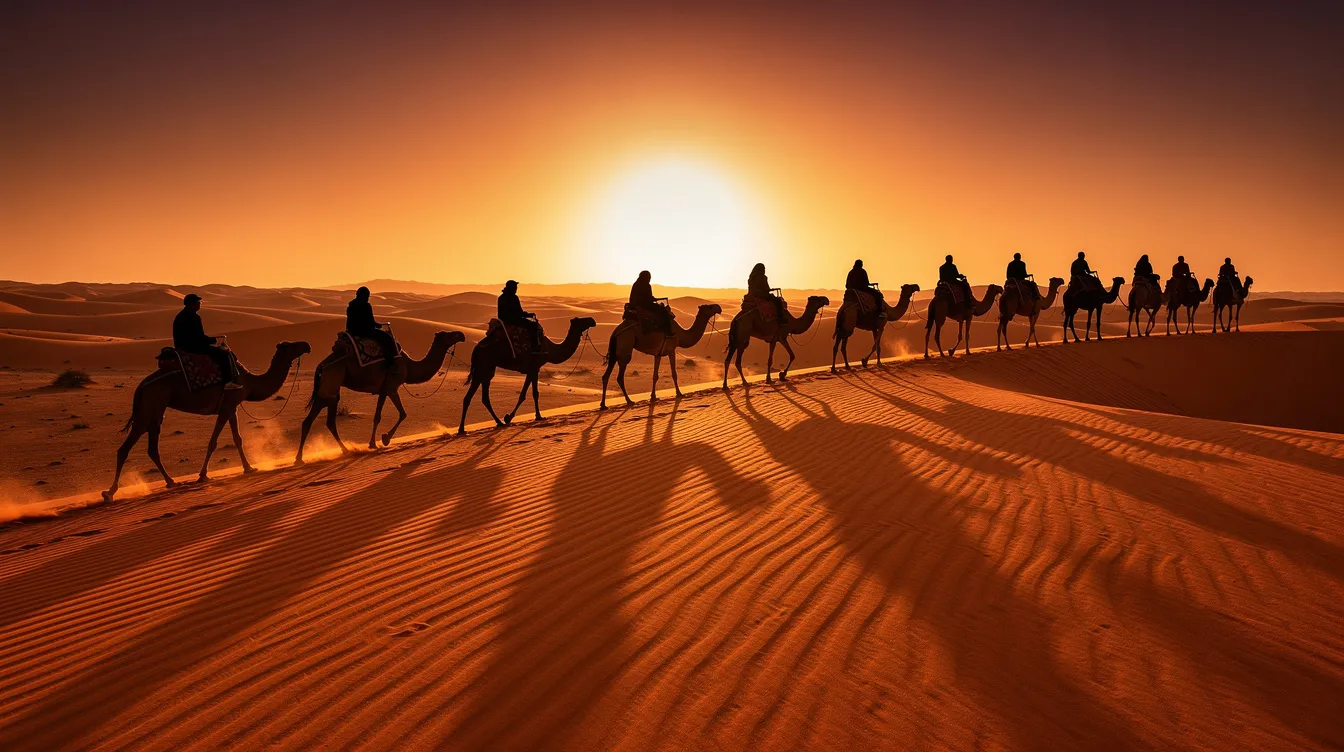
The journey from Merzouga to Fes is a substantial travel day through the Middle Atlas. Plan the departure, meals and breaks around your confirmed overnight stops, and leave the arrival evening flexible.
Sunrise option: Early risers can climb a dune to watch the desert wake up—an absolutely stunning sight as the first light paints the landscape
Breakfast at camp: Return to the camp for fresh bread, eggs, and coffee before the journey begins
Camel or 4x4 return: Head back to the edge of the dunes where your driver and vehicle wait
Ziz Valley: Drive through one of Morocco’s most spectacular palm oases, with stops at scenic viewpoints overlooking the river canyon and small villages clinging to the hillsides below
Midelt lunch stop: This mountain town sits at an altitude of 1,488 meters and offers a cool break from the desert heat. Traditional Moroccan food here tends toward hearty mountain fare—grilled meats and salads.
Azrou cedar forests: The highlight for many travelers. These ancient forests are home to Barbary macaques (Atlas Monkeys) who have grown accustomed to visitors. The cool mountain air is a welcome change after the desert heat.
Confirm your riad's arrival instructions and where a vehicle can stop. If luggage assistance is needed between the drop-off point and the riad, ask how it is arranged and charged.
Accommodation: A traditional riad in Fes el Bali (the old medina) or Fes el Jdid. Expect interior courtyards, zellige fountains, and elaborate traditional architecture. Dinner either in-house or at a nearby restaurant featuring pastilla, harira soup, and other Fessi specialties.
Fes is Morocco’s spiritual and cultural heart—the world’s largest car-free urban zone and home to the oldest continuously operating university on Earth. Its medina rewards those who explore with a guide who knows which turns lead to treasures and which lead to dead ends.
Bou Inania Madrasa: A 14th-century theological college with intricate stucco carvings and zellige tilework
Nejjarine Fountain: One of the city’s most photographed spots, surrounded by woodworking shops
Artisan alleys: Watch craftsmen practice traditional skills—brass hammering, leather embossing, zellige tile cutting—using techniques unchanged for centuries
Medina viewpoints: Your guide knows the rooftop terraces that offer panoramic views over the old town’s minarets and tanneries
A signature Fes experience, viewing the ancient leather shops and dyeing pits from a terrace
You’ll see workers treating hides in vats of various colors using traditional methods.
Fair warning: the smell is strong (you may be offered mint leaves to hold under your nose)
Photograph respectfully from the designated viewing areas rather than street level.
Lunch: Rooftop terrace with medina views, featuring pastilla (sweet-savory pigeon pie) or lamb tagine
Shopping: Fes is known for leather goods, ceramics, and textiles—your guide can recommend trustworthy shops
Optional: Visit the Merenid Tombs overlook for sunset views, or explore the royal palace gates.
Keep the second night in Fes for this seven-day route. After the medina visit, leave room for dinner and rest rather than adding a late transfer to another city. If Chefchaouen is a priority, use the extension below and rework the departure date or remove another stop.
Base the final morning on your confirmed flight time. If there is enough time, choose a short visit near your accommodation; otherwise keep the morning for packing and departure. Confirm the pickup point, airport transfer and check-in allowance before making sightseeing plans.
An outbound flight from Casablanca, Tangier or Marrakech changes this itinerary. Plan that transfer separately and consider an additional night near the departure airport rather than assuming a long transfer and international flight will fit comfortably into the same day.
Send an itinerary enquiry with your dates, arrival and departure airports, party size, interests and preferred pace. State whether accommodation is already booked or should be included in the proposal.
Availability depends on dates and the services requested. Enquire early when your flight dates or accommodation preferences are fixed; a draft itinerary does not reserve rooms or activities unless that is agreed in writing.
A private driver can handle the intercity transport and agreed stops while you focus on the trip. It is still important to understand the length of each travel day. A driver provides transport; ask separately which visits include a licensed local guide and how that guiding is charged.
Self-driving is another option for travelers comfortable planning road sections, parking and overnight access. Public transport may suit a different route, but connections and local transfers need to be planned around the time available. Compare these choices against your party's needs rather than assuming one arrangement fits every traveler.
A useful budget starts with the complete route and a clear list of included services. Compare quotes for the same dates, party size and accommodation arrangements rather than relying on a general per-person figure.
Request a quote for this seven-day route with your dates and preferred accommodation level. Ask for alternatives if the first proposal does not match your budget.
Chefchaouen adds another destination beyond the core Marrakech–Sahara–Fes week. Allow extra time for the journey from Fes, an overnight stay and onward travel. Agree the extension around your departure airport before booking; it is not part of the seven-day schedule above.
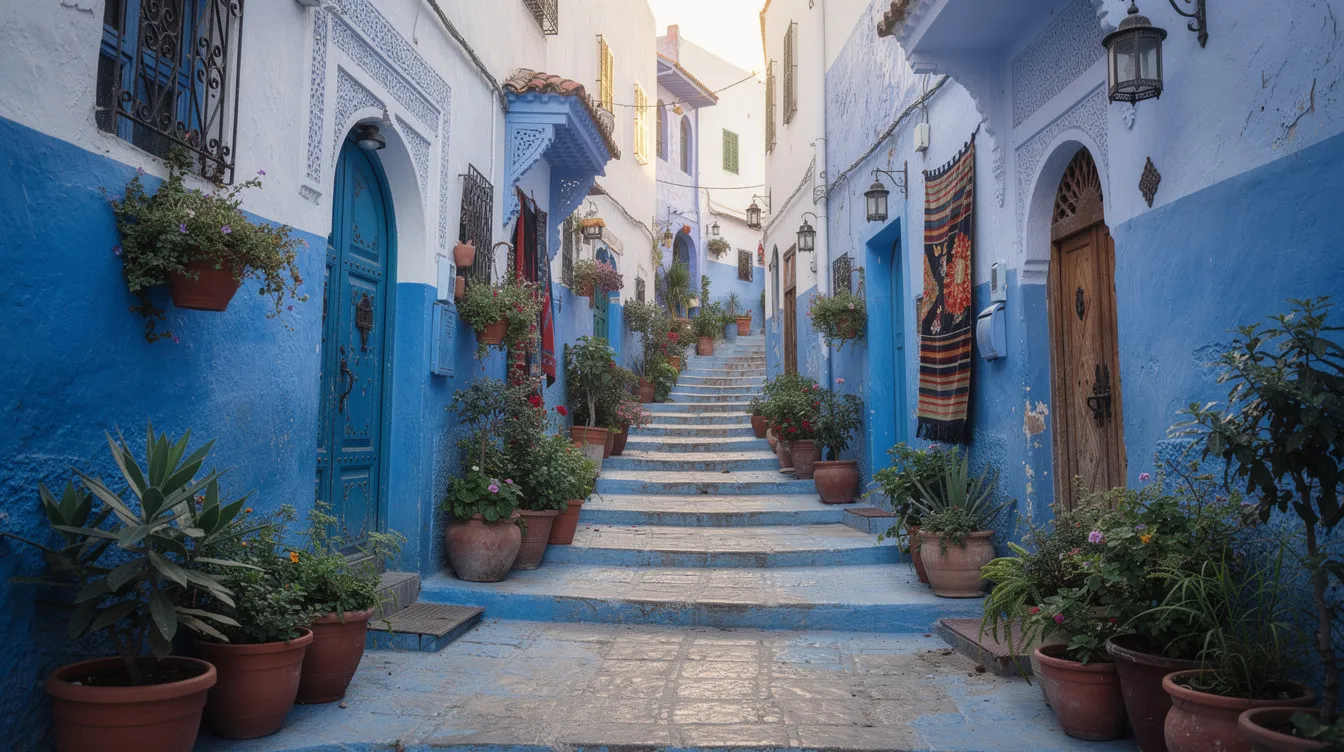
In Chefchaouen, explore the blue medina, pause in Outa el Hammam square and browse woven goods and local crafts. An optional walk toward the Spanish Mosque offers views over the town; consider the hills and steps when deciding what suits your party.
Adding Essaouira increases the travel involved. For a seven-day holiday, consider a separate Marrakech-and-coast itinerary instead of inserting Essaouira before the desert crossing. To keep both the coast and this Sahara route, allow additional days and review the overnight sequence.
A cooking class, artisan workshop or extra guided visit may fit by replacing another activity. An Atlas hike or additional excursion needs its own time allowance. Confirm arrangements, suitability and any charge before adding an experience.
For families or anyone wanting a slower pace, keep the two-night stays already planned in Marrakech and Fes. More overnight stays require additional days or fewer destinations; they cannot simply be added inside the same seven-day allocation.
For a longer south-to-north route, compare the 10-day Marrakech-to-Fes guide. A different arrival or departure city calls for a revised plan, not just a change of airport label.
Morocco rewards visitors year-round, but timing affects both comfort and experience quality.
Ideal periods:
March–May (Spring): Pleasant temperatures in Marrakech and Fes, cooler desert nights perfect for sleeping, wildflowers in the Atlas, and generally clear skies
September–Early November (Fall): Similar conditions to spring, often with fewer crowds in early September
Summer considerations (June–August):
Inland temperatures can exceed 40°C (104°F)
Midday sightseeing becomes challenging
7-day tours are still possible with modifications: shift activities to mornings and evenings, and consider adding coastal stops like Essaouira for relief
Winter travel (December–February):
Cooler days, cold nights in the desert and mountains
Possible snow in the Atlas passes (check conditions and allow for possible route changes)
Fewer tourists, lower prices, unique atmosphere
Long dresses and layered clothing are recommended
Special considerations:
Ramadan: Some restaurants close during daytime hours, but the cultural atmosphere is unique, and many tourist-focused establishments remain open. Discuss any changes to opening times and meal arrangements when planning your dates.
Peak booking periods: Easter, late October, and Christmas/New Year fill quickly. Book well ahead for these windows.
Packing for Morocco requires versatility—you’ll experience medina heat, mountain coolness, and desert extremes within the same week.
Clothing essentials:
Lightweight long pants (preferable to shorts for respect and sun protection)
Breathable tops that cover the shoulders
Light sweater or fleece for desert and mountain evenings (essential—Sahara nights are cold)
One warmer jacket for winter travel
Scarf or shawl (especially for women—useful for cultural respect, sun protection, and sand/wind shielding)
Footwear:
Comfortable closed-toe walking shoes or light hiking shoes for Medina cobblestones
Sandals for riads, camps, and relaxed evenings
Desert-specific gear:
Sunglasses (essential for dune glare)
Sunhat (wide-brimmed preferred)
High-SPF sunscreen and lip balm
Small headlamp or flashlight for camp navigation
A thin buff or scarf to protect from sand and wind during your camel ride
Practical extras:
Universal adapter (Morocco uses European-style plugs)
Power bank for long driving days
Photocopies of passport (stored separately from original)
Basic medications and personal prescriptions
Reusable water bottle
Small daypack for daily activities
Swimwear note: Bring modest swimwear for the riad pools or coastal stops. Remember that Morocco’s dress norms are more conservative away from tourist hot spots—beach-style swimwear may attract unwanted attention outside designated tourist areas.
Seven days can cover the selected Marrakech–Sahara–Fes route, but not the whole country. The main choice is whether the desert journey and several changes of accommodation fit your preferred pace.
One-way routing reduces backtracking, but a driver does not remove the long distances. Choose fewer regions or add days if the road sections do not suit you. A city-based week with nearby excursions is a different, useful alternative.
If you want Chefchaouen, coastal time or more nights in each location, compare a longer itinerary before booking flights. The right length depends on the route and your interests, not on a promise to cover every highlight.
Beyond basic transfers, Morocco rewards travelers who engage with local guides and immersive experiences:
City-specific tours:
Marrakech medina tour: Half- or full-day exploration with a certified guide covering major monuments and souks. Tours can be tailored to food, history, or photography interests—your guide adjusts based on what makes you say “wow.”
Fes cultural and artisan tour: Deep dive into the medina’s hidden streets, madrasas, tanneries, and traditional workshops (ceramics, brass, woodwork). A knowledgeable guide explains why Fes remains the spiritual heart of Morocco.
Desert experiences:
Guided camel trek at sunset or sunrise
Sunrise walk on the dunes for photography
Optional ATV or 4x4 ride for those wanting more adventure
Evening under the stars with music and storytelling—often described as a bucket list experience
Culinary immersion:
Moroccan cooking class: Spend half a day learning tagine preparation, salad techniques, and bread-baking from a local chef (available in both Marrakech and Fes)
Street food tasting tour: Sample harira soup, msemen pastries, and mint tea at local cafés rather than tourist restaurants
Workshop experiences:
Pottery or zellige tile-making sessions
Leather shops where you can watch traditional craftsmanship
Ask which local visits can be arranged for your dates and interests, who provides them, and what is included. Choose a few experiences that fit the route rather than assuming every activity listed here is part of a package.
| Day | Plan |
|---|---|
| 1 | Arrive in Marrakech; settle in according to arrival time |
| 2 | Explore Marrakech |
| 3 | Cross the High Atlas; visit Ait Benhaddou; continue to Dades |
| 4 | Continue via Todra Gorge to Merzouga; desert overnight |
| 5 | Travel from Merzouga through the Middle Atlas to Fes |
| 6 | Explore Fes |
| 7 | Depart from Fes; sightseeing only if time allows |
This is a planning outline. Confirm the overnight stops, arrival and departure timing, and included services before treating it as a booked itinerary.
This particular route starts in Marrakech and finishes in Fes. Casablanca is a possible arrival gateway for a different version, but the additional transfer changes the time available. Compare flight arrival times, the outbound airport and the complete route rather than choosing on airfare alone. If Casablanca is your priority, review the 10-day itinerary from Casablanca before deciding how many days to allow.
No single transport arrangement is required by this guide. A private driver can cover the road sections in a proposed private itinerary; confirm the vehicle, route and inclusions in writing. Self-driving requires separate planning for parking, road conditions and accommodation access. Local guiding is a separate service to clarify when comparing options.
Consider the long travel days, the children's ages and the activities your family wants. Keep the two-night stays in Marrakech and Fes, plan breaks, and add days or remove a region if more time is needed. Ask about appropriate child seating and accommodation arrangements before confirming. Do not assume every camel ride, walk or camp arrangement suits every child.
Review current official travel advice for your nationality and discuss the route, weather and any specific needs with your operator before departure. Ask how camp access and changes of plan are handled, keep emergency contacts available, and check that your travel insurance covers your planned activities. Choosing a driver or guided service does not remove every travel risk.
Enquire once you have approximate dates and a route preference, especially if you need particular rooms or camp arrangements. Availability varies by season, holidays and property. A last-minute proposal may require flexibility; ask what is actually available and what deposit or reservation conditions apply.
Request a Marrakech-to-Fes itinerary proposal with your dates, airports, party size and preferred pace.
Compare Morocco group tour agencies by trip style, reviews, pace, transport and inclusions. Learn wh...
Read this article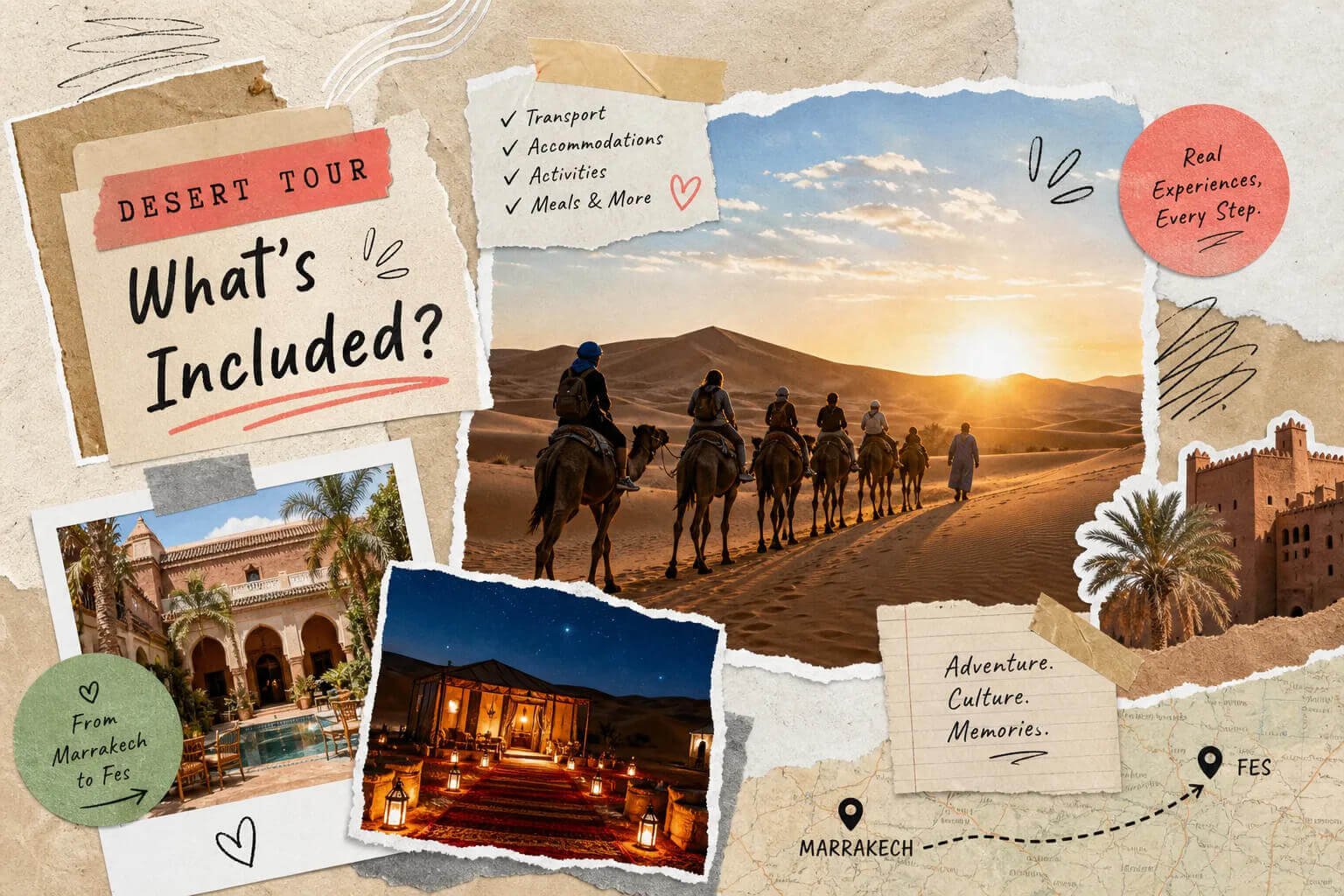
Uncover what a Marrakech to Fes desert tour offers, including camel rides, desert camps, and rich cu...
Read this article
Join our Merzouga Overnight Tour for an authentic desert experience. Enjoy camel rides, comfortable ...
Read this articleWant cool tour deals and tips about Morocco? Enter your email and we’ll send them to you each month!
