Group Tour Agencies in Morocco: How to Pick the Right One
Compare Morocco group tour agencies by trip style, reviews, pace, transport and inclusions. Learn wh...
Read this article

Private, custom Morocco trips planned in Fez by AZ-ZDDINE, working in Moroccan tourism since 2012. Sahara, Atlas, medinas and coast, arranged around you.
.webp)
Planning Sahara Desert excursions in Morocco is easier than most travelers think, but getting them wrong is also surprisingly common. The typical mistake: book the cheapest option, land in Marrakech, and assume a "desert day trip" means golden dunes stretching to the horizon. What you actually get with that approach is a long drive each way, sometimes to Agafay, a rocky lunar plateau about 45 minutes from the city with no sand dunes, or to Zagora, which has smaller dunes and a shorter haul, and maybe 30 minutes standing in scrubland that looks nothing like the pictures. That's not the Sahara. That's a disappointment that could have been avoided with ten minutes of research.
In our experience running Sahara excursions out of Fez at Morocco Classic Tours, the pattern is clear. Travelers who leave saying the desert was the best part of their trip made two or three smart decisions before they booked anything. The ones who felt let down skipped those decisions entirely. This guide covers all of them: how to choose the right itinerary length, which city to depart from, what camps look like at every price point, when to go, and how to pack. By the end, you'll know exactly what to book and why.
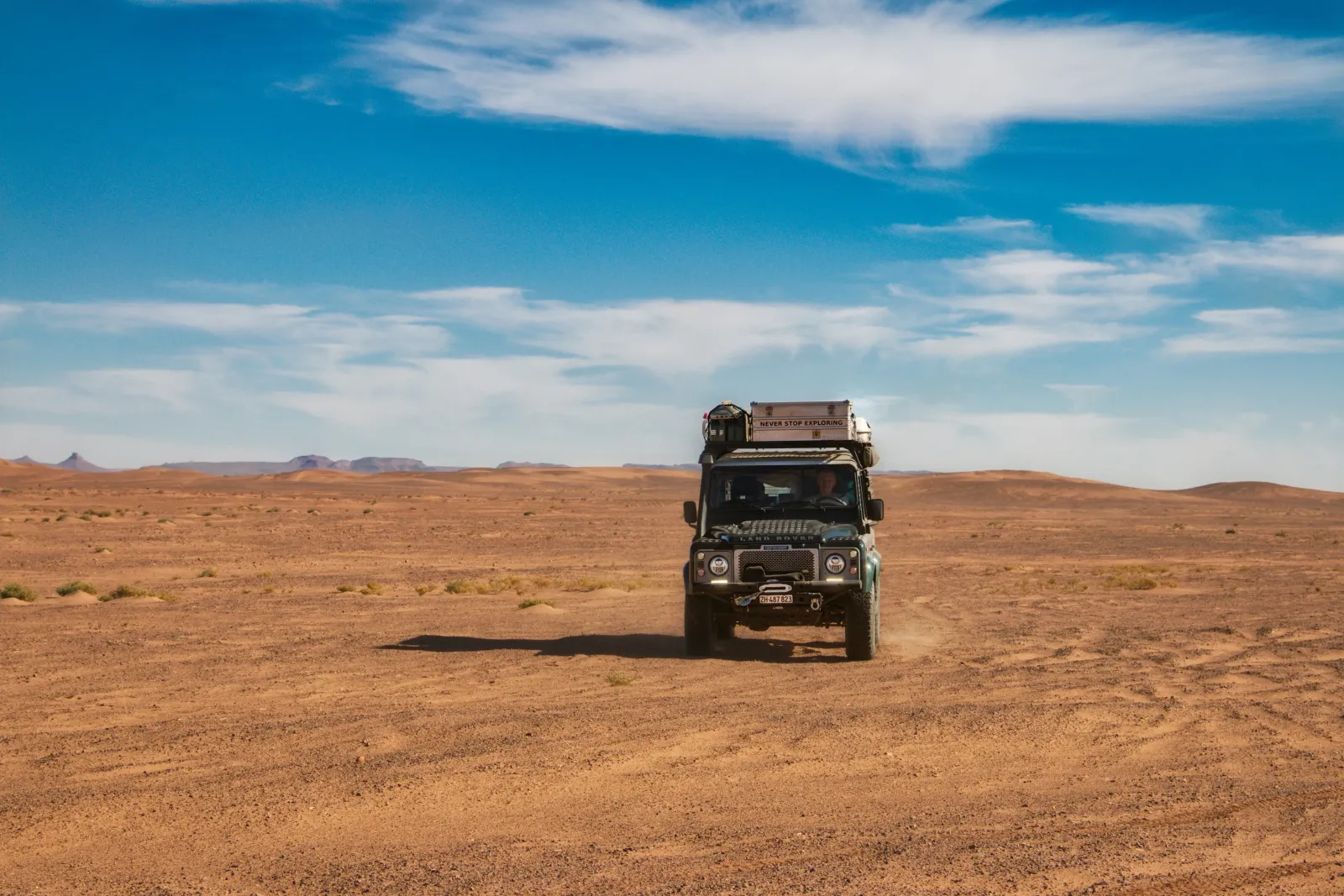
This is the most consequential call you'll make. Get it wrong, and the Sahara feels like a photo opportunity you drove ten hours to take. Get it right, and it becomes the part of the trip you talk about for years.
From Marrakech, a true day trip to Erg Chebbi does not exist. The drive alone is 8 to 10 hours each way. What most operators sell as a "Marrakech desert day trip" is either Agafay desert, a rocky lunar plateau about 45 minutes from the city with no sand dunes, or Zagora, which has smaller dunes and a shorter drive. Both are perfectly fine experiences, but neither is the Sahara most people picture when they book a Morocco vacation. Know which one you are paying for before you commit.
An overnight stay at Merzouga lets you watch the dunes change color at sunset, sleep under a sky with zero light pollution, and wake up for sunrise on the sand before anyone else is moving. These moments cannot be replicated on a rushed drive. One night is the absolute minimum for a real Sahara experience, and it is worth every extra dollar it costs over a day trip.
Two or three nights allow for unhurried camel treks, photography at multiple times of day, and side trips into the surrounding Draa Valley or nearby fossil sites around Erfoud and Errachidia, locations that typically add an hour or two of driving and are easily worked into a multi-night itinerary. This is the right choice for travelers who have the time and want more than a checkbox moment. If the Sahara is the centerpiece of your Morocco trip, don't rush it.
Where you start determines drive time, the scenery along the way, and often the total cost. Each city gives a meaningfully different experience of getting to the dunes.
The drive is 8 to 10 hours, typically spread across a two- or three-day overland tour that passes through the High Atlas via the Tizi n'Tichka pass, then through Ouarzazate, the Dades Gorges, and Todra Canyon before reaching the dunes. This route is the most popular for a reason: it packs in some of Morocco's most dramatic landscapes before you ever see a sand dune. Shared tour prices for a three-day Marrakech-to-Merzouga excursion run roughly $90 to $300 per person, depending on camp tier and group size. Private tours start around $280 and go up from there.
At 5.5 to 6 hours by private transfer or shared tour van, the Fez route is shorter and often better value for travelers already based in northern Morocco. Three-day shared tours from Fez run approximately $90 to $280 per person. This is also the natural departure point for Morocco Classic Tours, and our guides know the eastern desert routes in detail. If you are spending time in Fez, Meknes, or Chefchaouen, departing for the desert from here makes far more logistical sense than backtracking to Marrakech.
Travelers short on time can fly into Errachidia, the closest domestic airport, and drive 2 to 3 hours directly to Merzouga. This cuts out the overland journey entirely. It is worth considering if the Sahara is the only destination on your itinerary, though you will miss the scenery of the Atlas crossing and the gorges along the way.
Once you arrive at Erg Chebbi, you still need to decide how to move through the desert. The three main options are camel trekking, 4x4 desert safari, or multi-day guided trekking on foot. Each comes with real trade-offs.
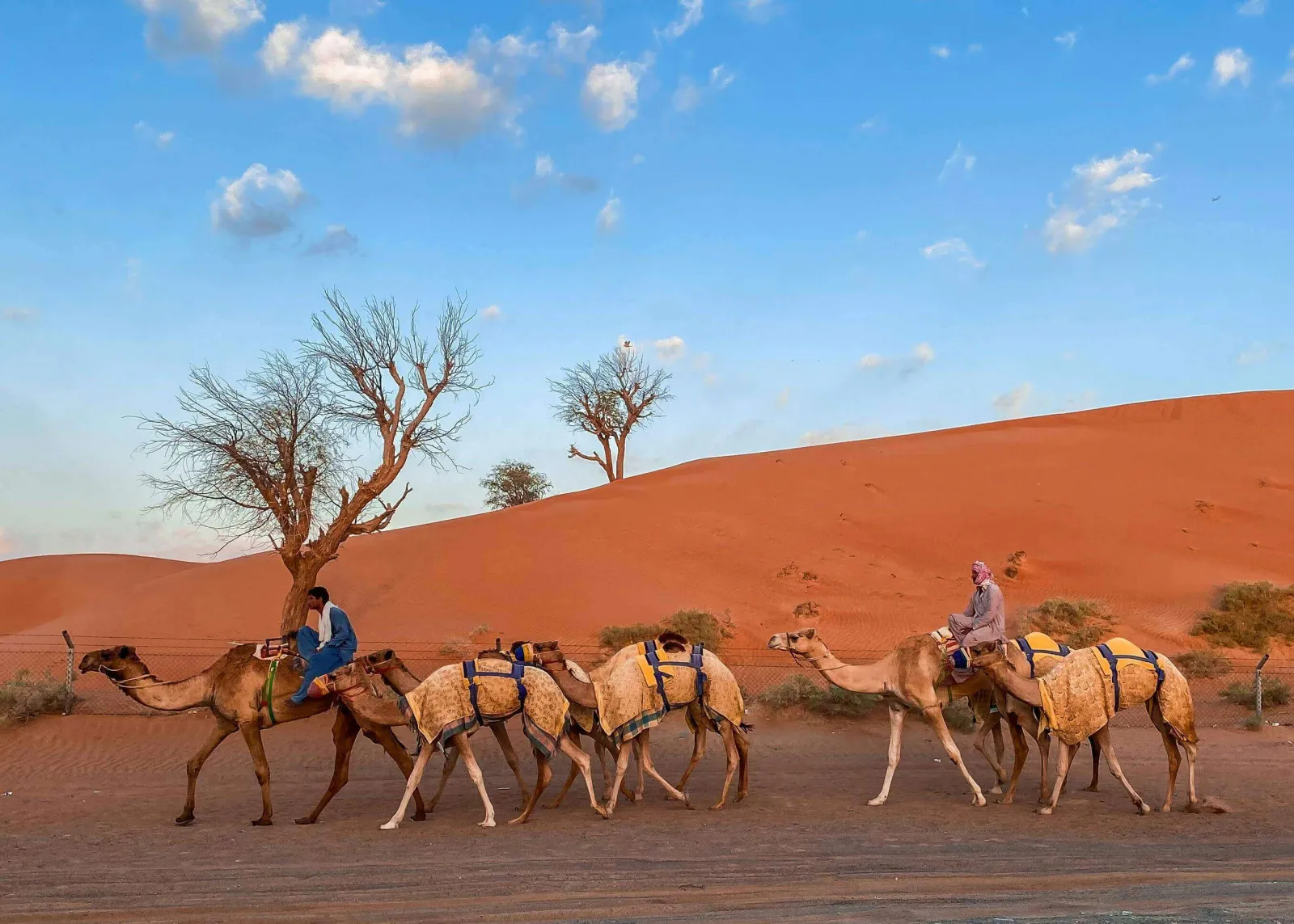
Camel riding is iconic, slow, and physically demanding. The saddle is hard, the gait is uneven, and a long ride will make itself known in your hips and lower back by the time you reach camp. That said, arriving at a desert camp by camel at sunset, with no engine noise and nothing but sand in every direction, is an experience that's hard to match anywhere else. Short sunset or sunrise rides of 45 to 90 minutes are manageable for most people and hit the right balance between the experience and the discomfort. Standard camel trek prices at Merzouga in 2026 run roughly 150 to 300 MAD per person for a sunset ride (approximately $15 to $30 USD at current exchange rates). Multi-day camel treks are for serious adventurers with strong backs.
A 4x4 covers more ground in less time and keeps everyone comfortable, including families, older travelers, and anyone with mobility concerns. The views across the dunes are just as dramatic; the saddle soreness is not. Morocco Classic Tours offers both options and can build a combination itinerary, starting by camel to watch the sunset from the dunes and switching to a 4x4 for longer exploration the next morning. That approach gives you the iconic experience without committing your hips to hours on a camel.
Desert camps are not all equal. The gap between a budget tent and a premium glamping setup is substantial, and understanding what each tier actually includes prevents a very avoidable disappointment.
Basic camps offer Berber or canvas tents with a mattress or cot, shared bathroom blocks, limited electricity, and communal meals covering dinner and breakfast. The atmosphere is refreshingly rustic, which is part of the appeal. Nightly rates run roughly 400 to 1,000 MAD per person, or about $40 to $100 USD (typical 2026 ranges; actual prices vary by camp, season, and inclusions). The trade-off is straightforward: you pay less and get closer to the raw desert atmosphere, but don't expect hot showers or privacy.
Luxury camps include private ensuite tents with real beds, quality linens, hot showers, flushing toilets, and often a multi-course dinner. Some premium options add air cooling, robes, and toiletries. Nightly rates range from 1,200 to 4,000 MAD per person, roughly $120 to $400 USD, with top-tier glamping camps going higher depending on the season (typical 2026 ranges; verify with your camp directly). Morocco Classic Tours works across both tiers, so you can match the experience to your budget without sacrificing location or quality of guiding.
Timing and budget planning belong together. One directly affects the other, and getting both right is how you get the most out of Morocco desert camping tours.
October through April is the sweet spot. The strongest months are October, November, March, and April, when daytime temperatures hover between 20 and 30°C, nights are cool but manageable with proper layers, and the dunes photograph beautifully in lower-angle light. Avoid June through August unless you specifically seek the off-season. Daytime heat regularly exceeds 40 to 45°C; some camps reduce services or close entirely, and the experience is simply harder than it needs to be.
Spring months, particularly April, carry a higher sandstorm risk. If you travel in April, carry a scarf or face covering and protect your camera gear. Storms are usually short-lived but require patience. December through February is cold but workable; pack a down jacket and thermal layers for evenings, and you'll have the dunes largely to yourself at a lower price point. May and September sit in a comfortable middle ground: fewer crowds than peak season, still warm enough to enjoy the desert comfortably.
For shared group tours, a two-day excursion from Fez to Merzouga runs roughly $80 to $220 per person. A three-day tour from Marrakech ranges from $90 to $300 or more depending on camp quality. Private tours start considerably higher, often $280 or above from Marrakech. Peak season pricing in March, April, October, and November typically runs 20 to 40 percent above shoulder month rates. Booking early during these windows, or choosing May or September, offers real savings without a major weather trade-off.
Packing wrong for the desert is a fast way to make an otherwise great trip miserable. The Sahara swings between scorching heat in the afternoon and genuinely cold nights, sometimes dropping below 5°C in winter months. Plan for both extremes.
Lightweight, long-sleeve shirts protect against sun and wind without overheating. A fleece or warm insulating layer is non-negotiable for evenings, even in spring and fall, and a down jacket is the smart call from November through February. A scarf or shemagh serves double duty for dust and sun. Closed-toe shoes handle sand better than sandals for longer walks, and a wide-brim hat, UV-blocking sunglasses, and SPF 50+ sunscreen are non-negotiable regardless of season.
Carry a headlamp with fresh batteries, since camp electricity is limited and unreliable at basic-tier options. A power bank keeps your phone charged when there are no outlets nearby. Pack any prescription medications, lip balm, and moisturizer; dry desert air is relentless. Keep travel documents in a sealed bag or case to protect against sand infiltration. Most camps have no reliable phone signal, so download offline maps and any reservation details before you leave the last town on the route.
The decision tree is simpler than it looks. Choose overnight over a day trip. Pick your departure city based on where you are already staying in Morocco. Decide between a camel trek and a 4x4 based on your comfort preferences and how much ground you want to cover. Book the camp tier that fits your budget without chasing the lowest number available.
October through November and March through April deliver the best overall experience for Sahara desert excursions in Morocco. Demand is high during these windows, so locking in your dates and accommodation early protects both your availability and your rate. Travelers booking May or September can expect solid conditions with more flexibility on timing.
At Morocco Classic Tours, we design customizable Sahara packages for all comfort levels, departing from both Marrakech and Fez with English-speaking guides who know the eastern desert routes in detail. Whether you want two nights under the stars at Erg Chebbi in a basic Berber camp or a fully private luxury desert experience, the right Morocco Sahara excursion rewards the extra planning. Reach out to our team directly to start building the itinerary that fits your timeline and budget; first-time visitors can ask about available discounts when they get in touch.
Compare Morocco group tour agencies by trip style, reviews, pace, transport and inclusions. Learn wh...
Read this article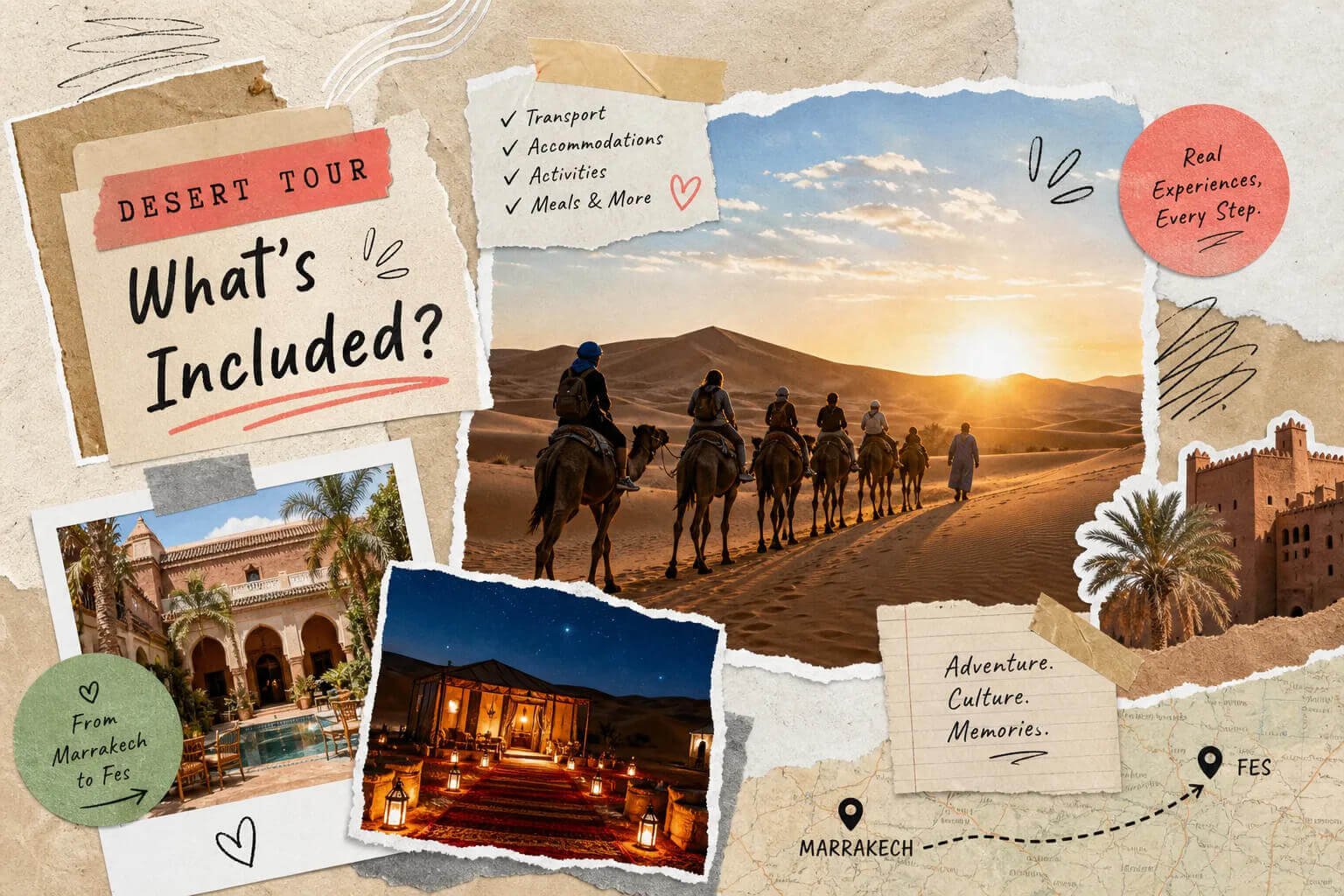
Uncover what a Marrakech to Fes desert tour offers, including camel rides, desert camps, and rich cu...
Read this article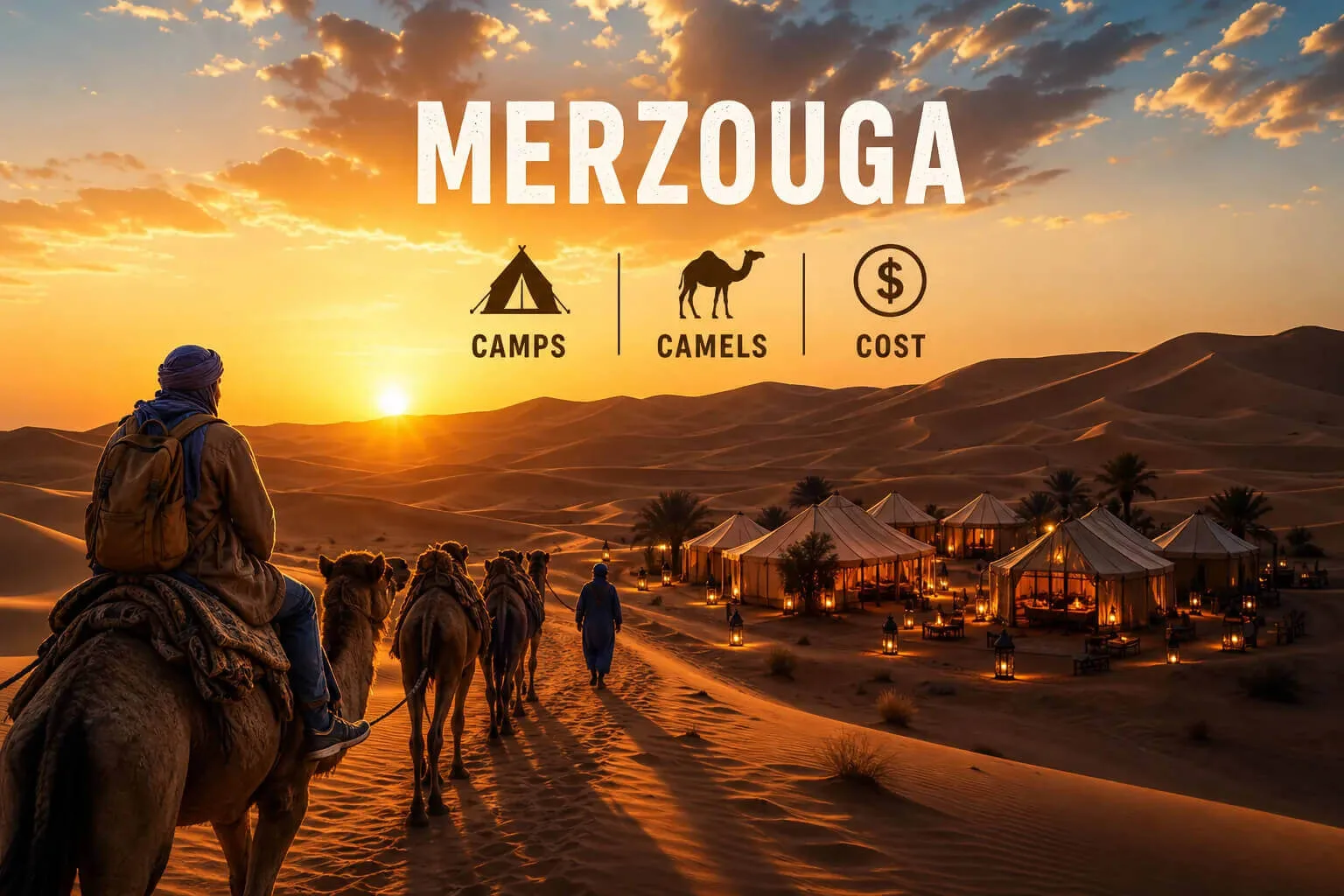
Join our Merzouga Overnight Tour for an authentic desert experience. Enjoy camel rides, comfortable ...
Read this articleWant cool tour deals and tips about Morocco? Enter your email and we’ll send them to you each month!
