Suspendisse interdum consectetur libero id. Fermentum leo vel orci porta non. Euismod viverra nibh cras pulvinar suspen.
Overview of traditional Music in Morocco

Home Blog Overview of traditional Music in Morocco
Overview of traditional Music in Morocco
04 January 2026

Introduction

Music in Morocco represents one of the world’s most layered musical traditions, weaving together Arab-Andalusian refinement, Berber folk rhythms, Sub-Saharan African spirituality, and Mediterranean influences across more than 1000 years of continuous cultural evolution. As a country with a rich cultural identity and historical independence, Morocco’s music and traditions are deeply rooted in its national context. This North African kingdom sits at a crossroads where Middle East traditions meet West African origin sounds, creating a musical landscape unlike anywhere else on Earth.

This guide covers the major traditional genres of Moroccan music—including Gnawa music, Andalusian music, and Berber music—alongside regional variations, traditional instruments, and the contemporary fusion movements reshaping the country’s soundscape. Morocco’s period as a French protectorate also left a mark on its culture and music, influencing both traditional and modern expressions. We focus on accessible cultural understanding rather than detailed music theory or instrument-making techniques. Whether you’re a traveler preparing for a journey through Morocco, a world music enthusiast expanding your listening horizons, or a cultural researcher exploring North African heritage, this guide provides essential context for deeper appreciation.

The core answer: Music of Morocco encompasses diverse traditional styles like Gnawa spiritual music with its trance-inducing ceremonies, classical Andalusian compositions rooted in medieval Al-Andalus, and Amazigh music passed down through generations in Atlas Mountain villages, all alongside modern fusion with rock music, hip hop, and electronic genres. Moroccan music includes a wide range of music styles and musical styles, reflecting the diversity found across different regions and communities. Andalusian and Andalusi classical music, in particular, are recognized for having some of the world’s longest traditions, making them historically significant pillars of Moroccan musical heritage.

By reading this guide, you will:

  • Understand the major Moroccan music genres and their historical origins

  • Recognize traditional instruments and their ceremonial functions

  • Appreciate how geography shapes distinct regional music styles

  • Discover contemporary Moroccan musicians bridging ancient and modern sounds

  • Know where and how to experience authentic Moroccan music

Moroccan music varies greatly between geographic regions and social groups. The music of Morocco reflects its geographic position and has been influenced by Spanish traditions, sub-Saharan African slaves, Middle Eastern musicians, and the native Berbers.

Understanding Traditional Moroccan Music

Traditional Moroccan music forms the foundation of the country’s musical identity, transmitted primarily through oral traditions rather than written notation. This music serves functions far beyond entertainment—it marks religious ceremonies, agricultural cycles, healing rituals, and the sacred milestones of human life from birth celebrations to funeral rites.

The significance of this musical heritage permeates Moroccan daily life. From the adhan call to prayer echoing across cities at dawn to wedding celebrations lasting through the night, music provides the soundtrack to both ordinary moments and extraordinary transitions. Each genre carries specific cultural meanings and social functions that have remained integral to Moroccan culture for centuries.

Andalusian Classical Music (Al-Ala)

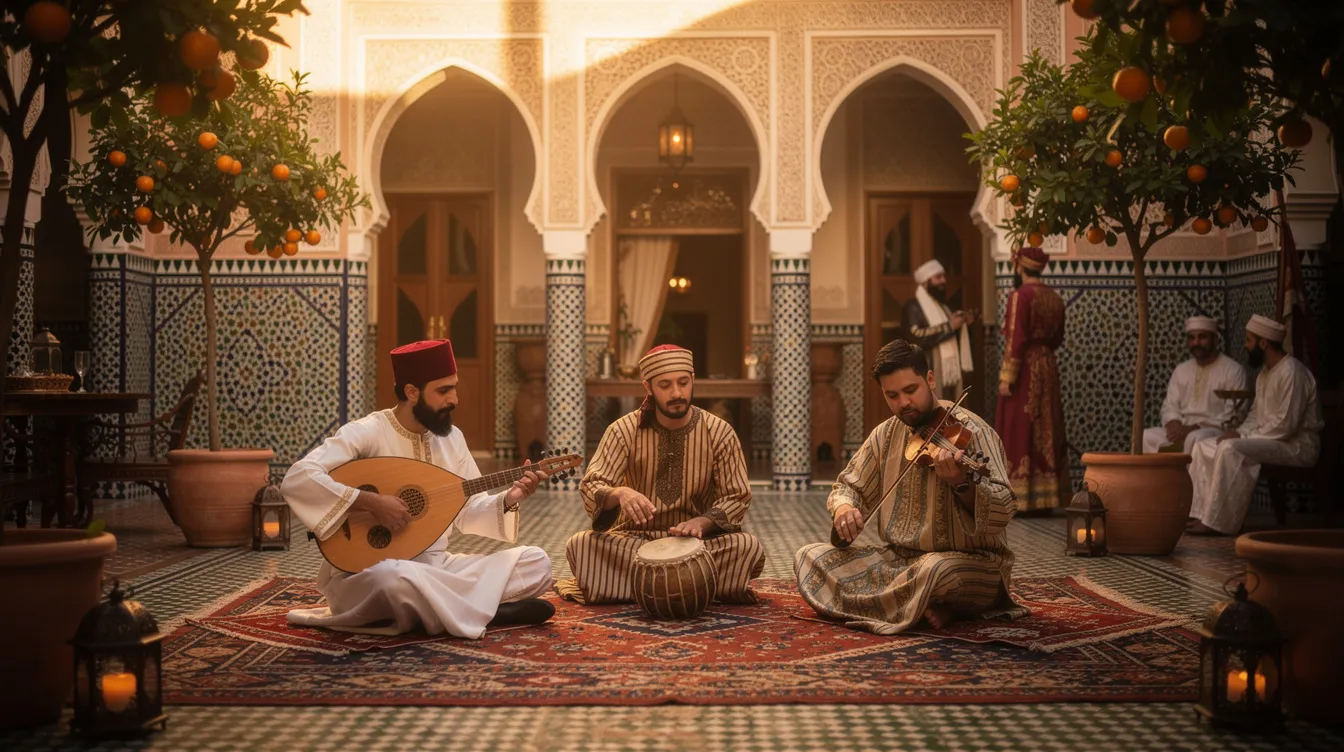
Andalusi classical music, known locally as al-ala, represents the most refined and courtly tradition within the music of Morocco. This classical music form originated approximately 1000 years ago in medieval Al-Andalus (Moorish Spain) and arrived in Morocco following the expulsion of Muslims and Jews from the Iberian Peninsula in 1492. It is considered one of the world's longest traditions, highlighting its historical depth and enduring cultural significance.

The tradition centers on sophisticated musical structures called nuba—elaborate suites combining sung poetry in classical Arabic with intricate instrumental passages. Credited to the legendary musician Ziryab, the nuba system organizes compositions around specific melodic modes and rhythmic patterns. Andalusian music is characterized by elegant classical music with complex melodies, often featuring the oud and qanun. Each of Morocco’s eight major cities developed distinct regional interpretations of this tradition, with Fes, Rabat, and Tetouan maintaining particularly strong classical music schools.

Moroccan Andalusian music connects directly to Arabic poetry traditions, with lyrics drawing from centuries of refined literary expression. Today, Andalusian music regularly appears on national television broadcasts and remains actively performed in conservatories and cultural centers, preserving this sophisticated art form for contemporary audiences.

Gnawa Spiritual Music

Gnawa music stands as Morocco’s most distinctive mystical music tradition, originating from enslaved people brought across the Sahara from Sub-Saharan Africa beginning in the 11th century. These individuals—taken from regions including Senegal, Mali, and Nigeria—served as soldiers and palace builders, yet they preserved and transformed their spiritual practices into what became Gnawa tradition.

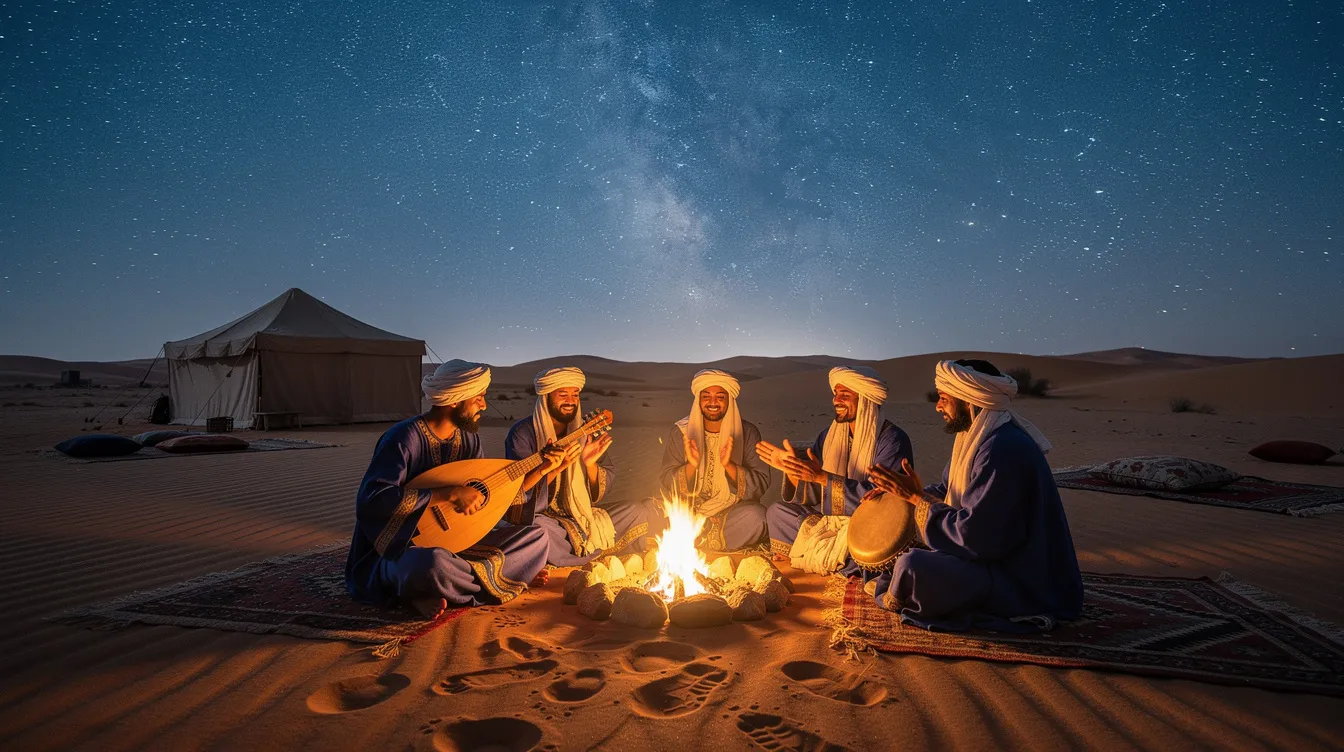
The healing ceremonies called lila (also known as derdeba) form the heart of Gnawa practice. These all-night rituals combine songs invoking specific spiritual entities, hypnotic percussion from metal castanets called qarqaba, and the deep resonant bass of the sintir (a three-stringed lute). Master musicians known as mâalems lead these ceremonies, which incorporate the burning of incense, specific traditional clothing and colors, and dance movements conveying both historical suffering and spiritual transcendence.

The Gnawa claim spiritual descent from Sidi Bilal, the first muezzin (caller to prayer) in early Islam, connecting their musical practice to foundational Islamic history. While sharing ceremonial importance with Andalusian traditions, Gnawa music addresses fundamentally different purposes—physical and spiritual healing rather than courtly entertainment.

Both foundational styles manifest differently across Morocco’s geography, leading to rich regional variations shaped by local cultures and landscapes.

Classical Music Influences

Moroccan music is deeply enriched by classical music influences that span centuries and continents, making it one of the most distinctive musical traditions in the world. At the heart of this legacy is Andalusi classical music, a genre with roots in the Middle East that was brought to Morocco by Muslims and Jews expelled from Spain in the 15th century. This musical style, known locally as al-ala, has become a defining feature of Moroccan culture, especially in the northern cities like Fes, Tetouan, and Rabat. The refined melodies, intricate rhythms, and poetic lyrics of Andalusi classical music continue to shape the soundscape of Morocco, infusing both traditional and contemporary songs with a sense of history and elegance.

A hallmark of Moroccan classical music is its close relationship with Arabic poetry. Lyrics are often drawn from centuries-old verses, sung in a slow, expressive, and sometimes melancholic style that heightens the emotional impact of each performance. This approach is especially prominent in the “ala” tradition, where music and poetry intertwine to create a powerful aesthetic effect. Performances of this genre are integral to religious ceremonies, weddings, and other significant social gatherings, where the music’s ceremonial role is as important as its artistic beauty.

Morocco’s position at the crossroads of Europe, Africa, and the Middle East has made it a melting pot of musical influences. During the French protectorate, Western classical music and instruments such as the violin and piano were introduced, further expanding the country’s musical vocabulary. Today, it’s common to hear these Western instruments played alongside traditional Moroccan instruments like the oud (lute), nay (flute), and various drums and percussion. This blend of old and new has given rise to a unique musical style that is unmistakably Moroccan, yet open to global influences.

The influence of classical music is not limited to Andalusi traditions. Berber music, with its ancient roots and use of traditional instruments like the flute and drum, and Gnawa music, with its mystical rhythms and spiritual depth, have also contributed to the evolution of Moroccan music. These genres often intersect with classical forms, creating rich, layered compositions that reflect the country’s diverse heritage.

In recent decades, Moroccan music has continued to evolve, embracing genres like rock music and hip hop. These modern styles draw on both Western and traditional influences, incorporating electric guitars, contemporary rhythms, and even elements of sung poetry and classical melodies. The result is a vibrant, ever-changing musical landscape where classical music influences remain an integral part of Morocco’s identity, connecting the past with the present and ensuring that Moroccan music continues to inspire and captivate audiences around the world.

Regional Music Styles and Cultural Context

Beyond the major traditions of Andalusian and Gnawa music, Morocco’s diverse geography and ethnic composition have produced distinct regional music styles. From the Rif Mountains of northern Morocco to the Saharan expanses of southern Morocco, each area contributes unique sounds to the national musical tapestry. Each region is known for its own musical style, reflecting local influences, traditions, and cultural significance. The importance of style is evident in how it distinguishes the music of different regions, with unique features and performance practices associated with each style. Amazigh (Berber) music, in particular, features diverse styles shaped by regional geography, preserving ancient oral traditions and rituals.

Berber (Amazigh) Folk Traditions

Amazigh music represents the oldest form of Moroccan musical expression, predating both Arab conquest and Islamic influence. Indigenous Berber communities in the Atlas Mountains have maintained their musical traditions for thousands of years, creating the bedrock upon which other influences were later layered.

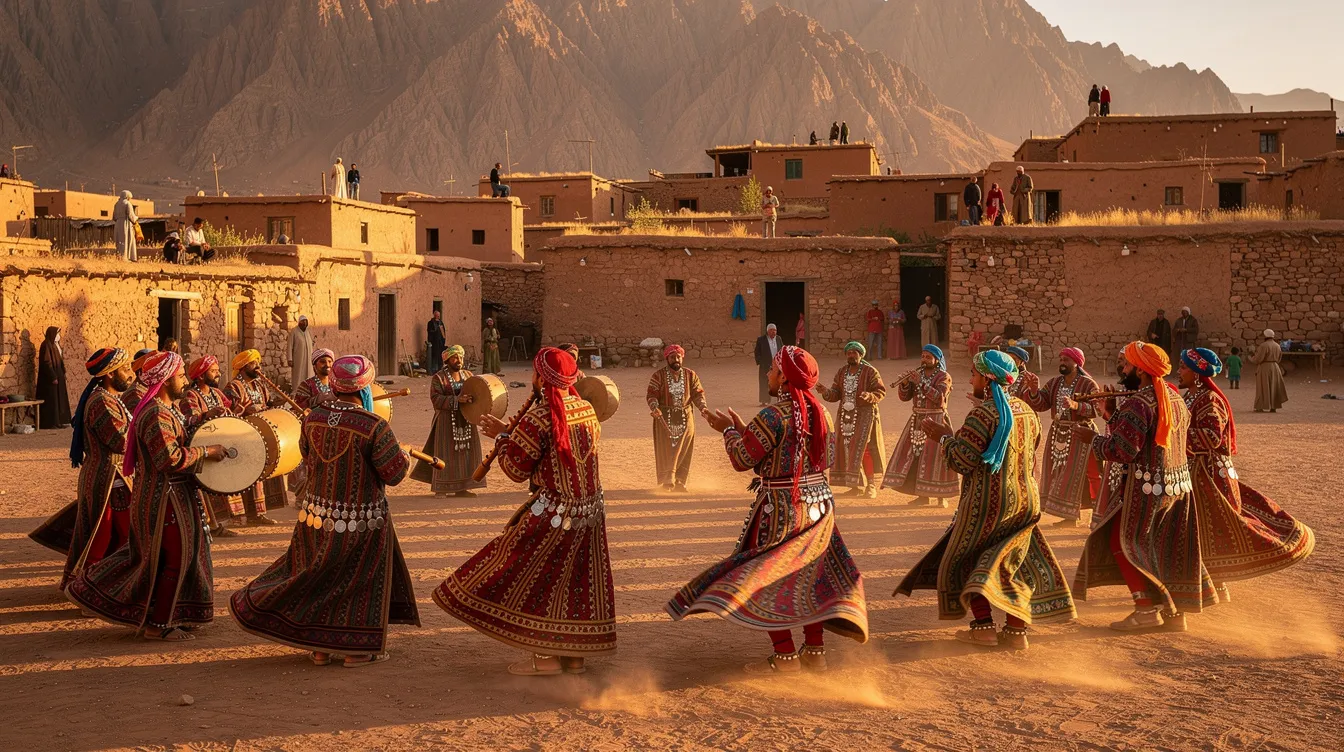
Two primary collective dance forms characterize Berber music: ahidus and ahwash. Singing plays a central role in both ahidus and ahwash, with vocal performances accompanying the collective dance, poetry, and cultural expression. These involve entire communities gathering in open-air settings, forming large rings around ensembles featuring the bendir (frame drum) and nay (reed flute). The one-stringed fiddle called rebab provides melodic accompaniment, while rhythmic handclapping drives the collective movement. Ahwash is a collective musical form associated with Amazigh communities in southern Morocco. Ahidus is a style of collective dance and song of the Amazigh tribes in the Middle and Eastern High Atlas.

Berber music connects intimately to agricultural cycles and community celebrations. Ritual music marks planting and harvest festivals (moussems), marriage ceremonies, and occasions requiring spiritual protection. Professional musician troupes called imdyazn travel through mountain villages during summer months, performing in market squares and updating their repertoires with social and political commentary on current events while maintaining traditional forms.

Chaabi Popular Music

Chaabi represents Moroccan folk music addressing the concerns of everyday life—love, work, social issues, and political commentary. As a music style, Chaabi blends Andalusian, Berber, and African rhythms, and is often sung in Moroccan Arabic (Darija). This genre bridges the gap between courtly traditions and street-level expression, speaking in Moroccan Arabic (Darija) rather than classical Arabic.

The aita tradition from Morocco’s Atlantic coastal plains exemplifies this popular approach, featuring female singers (shikhat) who historically addressed taboo topics forbidden in more formal contexts. Performances of both Aita and Chaabi often begin with an instrumental prelude followed by several verses sung in free time, allowing expressive improvisation before moving into dance rhythms. Aita is a popular folk music genre from the Atlantic plains, often performed by female singers, reflecting rural life and storytelling. Aita is also a popular Bedouin musical style that originates from the countryside of Morocco, especially the Atlantic plains. Urban Malhun poetry, developed during the pre-colonial period, offered another form of sung poetry in vernacular language, carrying sophisticated messages in accessible form.

Chaabi music demonstrates how popular expression absorbs both traditional elements and contemporary influences, creating a dynamic middle ground between ancient heritage and modern concerns. Chaabi is popular urban folk music that blends Andalusian, Berber, and African rhythms, often sung in Darija. Chaabi serves as the primary soundtrack for Moroccan weddings and street parties, reflecting modernization and urbanization. It is a popularized folk genre that often comments on social issues and non-traditional themes.

Regional Specializations

Eastern Morocco near the Algerian border reflects Rai music influences, featuring the sounds of this genre known for frank social and political commentary and modern instrumentation. Raï music originated from Algeria but is just as effective and popular in Morocco. Raï musicians often switch between French and Arabic in their lyrics for rhetorical and aesthetic effect, enhancing the emotional and social impact of their songs. Traditional instruments such as the Ghaita, Tarija, and Oud are played in these regional music styles, adding to their unique character. The Guedra desert music from Saharan regions in southern Morocco features distinctive rhythms tied to Tuareg cultural practices. Guedra is a music and dance style associated with the Tuareg 'blue people' of the Moroccan Sahara.

Sufi brotherhoods across different cities maintain their own musical practices, using sound as a vehicle for spiritual practice and mystical connection. The Master Musicians of Joujouka, a collective of Sufi musicians from Northern Morocco, are renowned for their trance-inducing performances. Each brotherhood preserves specific repertoires and performance styles passed down through generations of practitioners.

Geography fundamentally shapes Moroccan musical expression—mountain isolation preserves ancient Berber forms, urban centers nurture classical refinement, and trade routes introduce continuous outside influences. Understanding these regional distinctions prepares listeners to appreciate the specific instruments and performance contexts through which Moroccan music comes alive.

Musical Instruments and Performance Practices

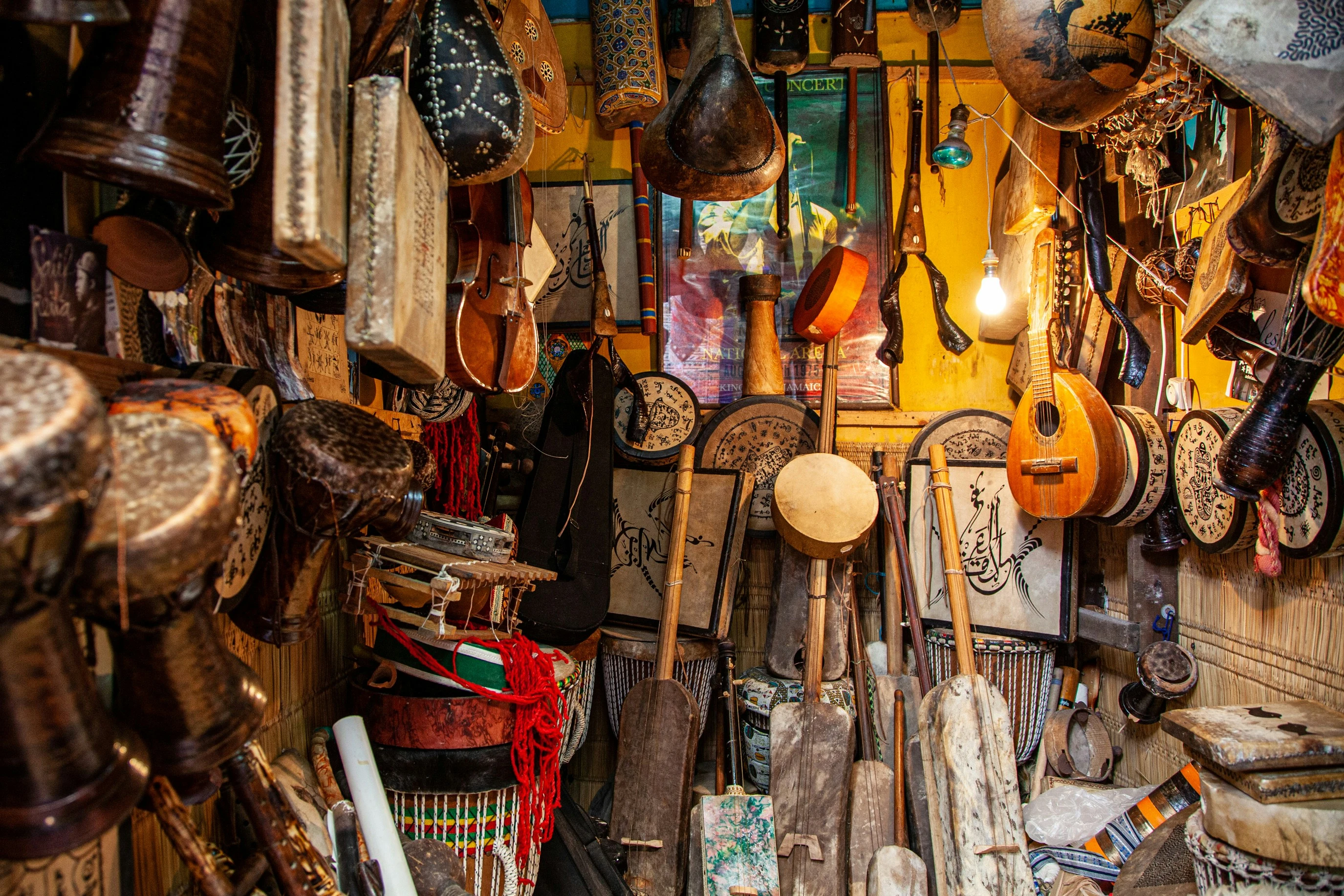
The tools of Moroccan music carry cultural significance beyond their acoustic function. Traditional instruments are played in ceremonial and performance contexts, with musicians skillfully performing on instruments such as the Ghaita, Tarija, Oud, and others to mark special occasions and rituals. These instruments often hold ceremonial importance, with specific sounds associated with particular spiritual purposes or social contexts. For example, the derbouka is a drum made of skin stretched over pottery, commonly used in Moroccan music. The guembri is a three-stringed bass lute played in Gnawa music. The bendir, a circular drum, is played in traditional Moroccan weddings. The tarija is a small hourglass-shaped drum used in Moroccan music. The mijwiz, a double-flute with notched reeds, is also played in Moroccan music. The qarqaba are hand cymbals used to create rhythm patterns in Moroccan music. Modern adaptations have introduced Western instruments while maintaining connections to traditional practice.

Traditional Instrument Categories

Different instruments serve distinct purposes across Morocco’s varied musical contexts. Understanding these categories helps listeners recognize which tradition they’re hearing.

  1. String instruments: The oud (lute) provides melodic foundation in classical contexts, its pear-shaped body often described as the ancestor of the European guitar. The gimbri or sintir—a long-necked lute with three strings—produces the deep bass essential to Gnawa music. The rebab (one-stringed fiddle) appears in both Berber folk contexts and Andalusian classical ensembles.

  2. Percussion instruments: The bendir (frame drum) anchors Berber village music and ritual performances. The darbuka (goblet drum) appears across multiple genres, providing rhythmic drive. The qarqaba (metal castanets) create the distinctive metallic sounds of Gnawa ceremonies. The taarija (small drum) adds texture to festive occasions.

  3. Wind instruments: The nay (reed flute) contributes haunting melodies to both folk and classical contexts. The ghaita (oboe-like instrument) produces the penetrating outdoor sounds heard at weddings and public celebrations. The mijwiz (double flute) appears in regional folk traditions.

  4. Modern additions: Contemporary Moroccan musicians have incorporated violin, electric guitars, keyboards, and electronic production into fusion styles, expanding the sonic palette while often maintaining traditional melodic and rhythmic patterns.

Performance Context Comparison

Table: Traditional vs. Modern Performance Contexts in Moroccan Music.

Setting

Traditional Genres

Modern Adaptations

Religious Ceremonies

Andalusian nuba, Sufi dhikr chanting

Contemporary Sufi fusion

Social Celebrations

Berber ahwash, Chaabi aita

Wedding bands with electric instruments

Healing Rituals

Gnawa lila ceremonies

Gnawa-jazz fusion concerts

This comparison illustrates how traditional contexts continue influencing modern performance styles. A Gnawa musician might perform ancestral healing ceremonies using only traditional instruments, then collaborate with international jazz artists using the same melodic vocabulary in completely different settings.

The challenge of maintaining authentic traditions while embracing contemporary evolution represents one of several issues facing Moroccan music today.

Master Musicians of Morocco

Moroccan music owes much of its enduring vibrancy to the dedication and artistry of its master musicians. These virtuosos are not only guardians of Morocco’s musical heritage but also dynamic innovators who have brought the sounds of Morocco to the world stage. Whether performing the trance-inducing rhythms of Gnawa music, the poetic elegance of Andalusi classical music, or the communal energy of Berber music, these master musicians embody the spirit and diversity of Moroccan culture.

Guardians of Tradition

The Master Musicians of Morocco are celebrated for their ability to preserve traditional forms while embracing creative collaboration. Their performances are a sensory journey, featuring the intricate melodies of the lute, the resonant pulse of the drum, and the haunting tones of the flute. Each instrument is played with a mastery that reflects centuries of accumulated knowledge, passed down through generations. These musicians are often the heart of major festivals and ceremonies, where their music becomes an integral part of both sacred rituals and joyful celebrations.

Global Collaborations and Influence

What truly sets the Master Musicians of Morocco apart is their openness to global influences. Over the decades, they have collaborated with renowned international artists, including the Rolling Stones and jazz legend Ornette Coleman. These partnerships have resulted in groundbreaking fusion projects that blend the hypnotic grooves of Gnawa music and the refined structures of classical music with the raw energy of rock music and the improvisational spirit of jazz and hip hop. The result is a unique soundscape where traditional Moroccan instruments and melodies meet electric guitars and contemporary rhythms, creating new forms that resonate with audiences worldwide.

Through these collaborations and their own performances, the Master Musicians of Morocco have played a pivotal role in introducing Moroccan music to global audiences. Their artistry highlights the depth and adaptability of Moroccan musical traditions, demonstrating how ancient sounds can find new life and meaning in modern contexts. By bridging the gap between past and present, local and global, these musicians ensure that Moroccan music remains a living, evolving force—one that continues to inspire, connect, and captivate listeners across cultures and continents.

World Music Connections

Moroccan music stands as a vibrant thread in the tapestry of world music, shaped by centuries of cultural exchange and creative adaptation. Positioned at the crossroads of North Africa, the Middle East, Europe, and Sub-Saharan Africa, Morocco has long been a meeting point for diverse musical influences. This unique geographic and cultural setting has allowed Moroccan musicians to absorb and reinterpret sounds from across the globe, making Moroccan music both distinct and universally resonant.

Global Influences on Moroccan Music

The influence of world music on Moroccan sounds is unmistakable. Over the years, Moroccan musicians have drawn inspiration from genres as varied as rock music, heavy metal, and hip hop, weaving these styles into the fabric of traditional music. The introduction of electric guitars, for example, has added a new dimension to classic rhythms and melodies, creating a powerful fusion that appeals to younger generations and international audiences alike. This blending of old and new is not just a matter of instrumentation—it’s a reflection of Morocco’s openness to innovation and its ongoing dialogue with global musical trends.

Social Commentary and Storytelling

Moroccan music’s rhetorical and aesthetic effect is also evident in its ability to convey deep emotion and address pressing social and political issues. Through lyrics and performance, Moroccan musicians use their art as a form of social and political commentary, giving voice to the hopes, struggles, and aspirations of their communities. This tradition of sung poetry and storytelling connects Moroccan music to the broader world music movement, where artists use their craft to inspire change and foster understanding.

The global reach of Moroccan music is further amplified by the country’s participation in international festivals and collaborations. Moroccan musicians regularly share stages with artists from around the world, contributing their unique sounds and perspectives to the evolving landscape of world music. Whether through the hypnotic grooves of Gnawa music, the driving rhythms of Berber music, or the sophisticated harmonies of Andalusi classical music, Morocco’s musical heritage continues to influence and be influenced by the wider world.

In this way, Moroccan music remains an integral part of both Moroccan culture and the global music scene. Its ability to adapt, innovate, and communicate across boundaries ensures that the music of Morocco will continue to inspire musicians and audiences everywhere, serving as a bridge between cultures and a testament to the enduring power of sound.

Music-in-Morocco.webp

Music Festivals and Events in Morocco

Moroccan music is not just a soundtrack to daily life—it’s a living, breathing celebration that comes alive most vibrantly during the country’s many music festivals and cultural events. Throughout the year, Morocco’s cities and towns host gatherings that showcase the full spectrum of Moroccan music, from the hypnotic rhythms of Gnawa music and the refined elegance of classical music to the ancient pulse of Berber music and the infectious energy of Moroccan folk music. These festivals are an integral part of Moroccan culture, drawing both local communities and international visitors into a shared experience of sound, dance, poetry, and tradition.

Major Festivals

One of the most iconic celebrations is the Marrakech Popular Arts Festival, a dazzling event that transforms the city into a stage for Morocco’s musical diversity. Here, you can hear everything from traditional Moroccan music and Andalusi classical music to contemporary rock music, all performed by talented Moroccan musicians and guest artists from across the Middle East and North Africa. The festival is a true cultural crossroads, where the sounds of the oud and bendir mingle with electric guitars and modern beats, and where traditional clothing and dance create a vibrant visual spectacle.

Gnawa Music Festival

The mystical music of the Gnawa people takes center stage at the Essaouira Gnawa Music Festival, a world-renowned event that draws music lovers from around the globe. This festival is a unique opportunity to experience the trance-inducing power of Gnawa music in its spiritual heartland, as master musicians lead all-night performances filled with the deep bass of the sintir, the metallic clatter of qarqaba, and the collective dance that defines this West African origin tradition. Alongside Gnawa ensembles, the festival features collaborations with artists from genres like rock music and hip hop, as well as workshops and talks that delve into the history and cultural significance of this mystical music.

For those seeking a more contemplative experience, the Fes Festival of World Sacred Music offers a journey through the spiritual dimensions of Moroccan and global music. Set in the ancient city of Fes, this festival brings together Moroccan Andalusian music, Sufi chants, and sacred sounds from sub-Saharan Africa and beyond. Performances take place in stunning historical venues, creating an atmosphere where poetry, music, and architecture merge for a profound aesthetic effect.

Other Notable Events

Morocco’s musical calendar is rich with other events as well. The Rabat International Festival, Casablanca Jazz Festival, and Tangier Jazz Festival each provide platforms for Moroccan musicians to share the stage with international stars, fostering creative exchange and showcasing the country’s openness to new musical styles. These events highlight the dynamic evolution of Moroccan music, where traditional instruments and sung poetry meet the improvisational spirit of jazz and the energy of contemporary genres.

Attending a Moroccan music festival is more than just listening to songs—it’s an immersion into the heart of Moroccan culture. You’ll witness the interplay of ancient and modern, see traditional clothing and dance, and hear lyrics that reflect the country’s history, social issues, and poetic heritage. Whether you’re drawn to the oldest forms of Berber music, the mystical allure of Gnawa ceremonies, the refined melodies of Moroccan andalusian music, or the pulse of modern rock and hip hop, Morocco’s festivals offer something for every musical taste.

For travelers seeking authentic cultural experiences, these festivals are a must. They provide a window into the soul of Morocco, where music is not just performed but lived—an integral part of the country’s identity, connecting people across generations and borders. If you’re planning a journey to Morocco, consider timing your visit to coincide with one of these vibrant events, and let the music of Morocco guide you into the heart of its culture.

Common Challenges and Solutions

Preserving traditional music while remaining culturally relevant presents ongoing challenges in modern Morocco. These tensions affect practitioners, audiences, and cultural institutions alike.

Commercialization vs. Authenticity

Tourism and international interest have brought economic opportunity alongside risks of superficial representation. Supporting traditional music festivals and cultural preservation programs helps maintain authentic practice, while embracing respectful modern interpretations allows traditions to reach new audiences. The Gnaoua World Music Festival in Essaouira demonstrates one successful balance—hosting international collaborations while centering traditional master musicians as primary performers.

Youth Engagement with Traditional Forms

Younger Moroccan musicians increasingly blend traditional instruments with modern production techniques, creating entry points for generational connection. Artists like Bab L’Bluz combine Gnawa bass lines with rock music energy, while producers incorporate traditional melodies into hip hop beats. These fusion approaches attract youth audiences who might not otherwise engage with purely traditional forms. Notably, Gnawa music has been successfully blended with jazz (attracting musicians like Ornette Coleman), funk, and electronic genres—proving its adaptability for contemporary expression.

Documentation and Learning Resources

Digital archives, YouTube channels featuring master musicians, and cultural centers offering traditional music instruction address the challenge of maintaining oral traditions in a written and recorded age. The conservatories in Fes and Rabat provide formal education in Andalusian traditions, while informal apprenticeship continues transmitting Gnawa and Berber practices to new generations.

These solutions point toward actionable steps for anyone seeking deeper engagement with Moroccan musical heritage.

Conclusion and Next Steps

Morocco’s music represents a living tradition bridging ancient spiritual practices with contemporary global influences. From the refined melodies of Andalusian classical compositions to the trance-inducing rhythms of Gnawa ceremonies, from Berber songs echoing across Atlas valleys to Chaabi lyrics addressing urban life, this musical heritage offers both artistic richness and cultural depth.

Immediate steps for deeper exploration:

  1. Attend the annual Gnaoua World Music Festival in Essaouira (typically held in June) to hear both traditional mâalems and international fusion collaborations.

  2. Explore streaming playlists featuring Moroccan musicians—search for Hamid El Kasri (Gnawa), recordings by the Master Musicians of Joujouka, or the influential group Nass El Ghiwane.

  3. Visit cultural centers in Fes, Marrakech, or Rabat where traditional music instruction and performances occur regularly.

  4. Listen for regional differences when traveling—notice how sounds shift between northern Morocco, the Atlas Mountains, and southern Morocco.

Related topics worth exploring include Moroccan instrument craftsmanship (particularly the making of sintirs and ouds), specific regional festival calendars throughout the year, and connections to broader North African musical traditions across Algeria, Tunisia, and beyond.

Additional Resources

Essential listening: Recordings by the Master Musicians of Joujouka (who famously collaborated with members of the Rolling Stones), Gnawa master Hamid El Kasri, classical Andalusian ensembles from the Fes conservatory, and contemporary fusion artists blending traditional and modern approaches.

Cultural institutions: Dar Adiyel in Fes preserves Andalusian musical heritage; the Maison de la Culture in Rabat hosts regular traditional performances; UNESCO has documented Moroccan Andalusian music as intangible cultural heritage.

Festival calendar: Beyond Essaouira’s Gnaoua festival, Morocco hosts the Fes Festival of World Sacred Music, the Mawazine festival in Rabat, and numerous regional moussems featuring traditional Berber music throughout the Atlas Mountains. Planning travel around these events provides authentic musical experiences far deeper than casual encounters allow.

Our Latest Travel Articles

Essential Guide to the Best Morocco Travel Plug Adapter for Your Trip
18 January 2026

Essential Guide to the Best Morocco Travel Plug Adapter for Your Trip

Discover the best Morocco travel plug adapters to keep your devices powered during your trip. Read o...

Read this article
Best Marrakech to Fes Desert Tour 4 Days: Explore the Sahara Today
17 January 2026

Best Marrakech to Fes Desert Tour 4 Days: Explore the Sahara Today

Discover the ultimate 4-day desert tour from Marrakech to Fes. Experience breathtaking landscapes an...

Read this article
Top Tips for Visiting Aït Benhaddou: A UNESCO World Heritage Site
15 January 2026

Top Tips for Visiting Aït Benhaddou: A UNESCO World Heritage Site

Discover essential tips for exploring Aït Benhaddou, a UNESCO World Heritage site. Plan your visit ...

Read this article