Group Tour Agencies in Morocco: How to Pick the Right One
Discover how to choose the perfect group tour agency in Morocco. Get tips on what to look for and ma...
Read this article

We’ve helped people travel around Morocco for more than 15 years. We offer fun and easy packages to see famous places like the mountains, desert, and more.
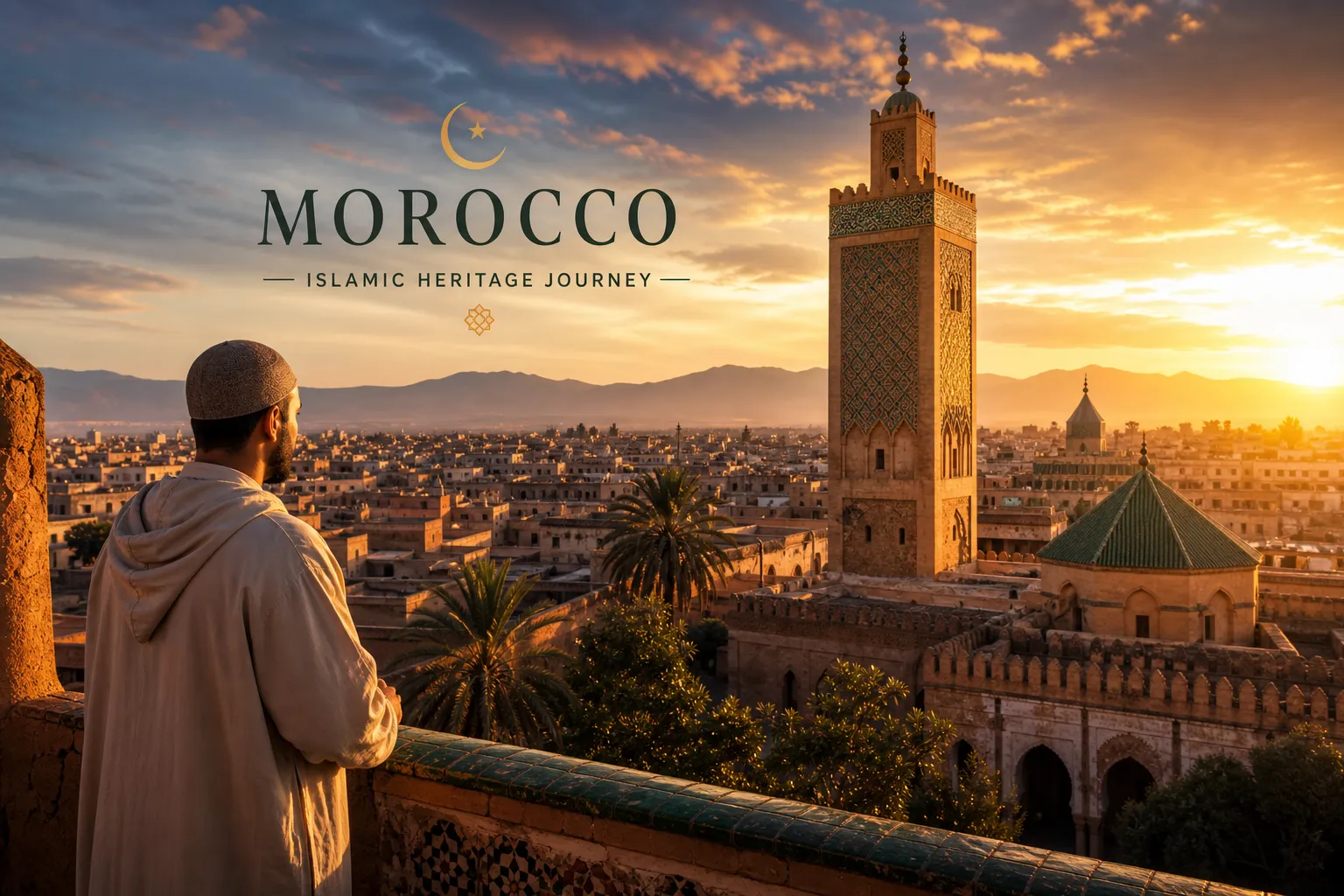
Is Morocco a good destination for an Islamic heritage tour for American Muslims? In short: yes, and few destinations in the world come close to what it offers. Morocco is not simply a country with Islamic sites. It is a country where Islamic civilization remains alive in the architecture, in the call to prayer echoing across ancient medinas, and in scholarly traditions that have continued unbroken for over a thousand years in Fez. For American Muslim travelers, this creates something rare: a heritage tour that doubles as a deeply personal spiritual experience. You are not visiting ruins. You are walking through a civilization that never stopped.
At Morocco Classic Tours, based in Fez at the heart of Morocco's Islamic scholarly tradition, our team has spent years guiding American Muslim travelers through these spaces with the kind of local depth no placard or travel app can match. By the time you finish reading, you will know whether Morocco fits your goals, which cities and sites to prioritize, how halal and prayer logistics actually work on the ground, and whether to book a guided tour or plan independently.
Morocco is unusual among Islamic heritage destinations because its historic sites are not museum pieces frozen in time. Al-Qarawiyyin in Fez is widely regarded as one of the oldest continuously operating centers of Islamic learning in the world, a distinction recognized by UNESCO and numerous historians. Zawiyas are active devotional spaces, not restored facades. The souks surrounding these monuments retain many of their traditional elements, with trades and crafts that have been practiced in the same streets for generations. That living continuity makes Morocco feel spiritually immediate rather than historically distant, and it is what separates a trip here from visiting similarly significant sites in Egypt or Turkey.
Morocco's Islamic heritage draws from three major dynasties: the Almoravids, Almohads, and Marinids. Each left a distinct architectural fingerprint across mosques, madrasas, and mausoleums. The Maliki school of jurisprudence has shaped Moroccan religious practice for well over a millennium, and that tradition is visible not just in architecture but in how these spaces are designed, used, and experienced today. For American Muslim travelers with a serious interest in Islamic history, Morocco offers a layered, cross-dynastic narrative that rewards careful attention.
Fez is the non-negotiable starting point for any Islamic heritage tour in Morocco for American Muslims. Al-Qarawiyyin Mosque and its attached university sit at the center of a medina that UNESCO designated a World Heritage Site, recognized in part for its exceptional density of Islamic monuments. Tucked near the Qarawiyyin complex, the Al-Attarine Madrasa is smaller in scale but equally refined in its Marinid craftsmanship. The Zawiya of Moulay Idriss II, housing the tomb of Fez's founding saint, is a major devotional site that draws pilgrims year-round. Walk further into the medina, and the Bou Inania Madrasa opens before you, displaying some of the finest surviving examples of Marinid decorative woodwork and zellij tilework anywhere in the Islamic world.
Muslim visitors can enter spaces in Fez that are completely off-limits to non-Muslims. Active mosques throughout the medina are open to Muslim worshippers for prayer,r while non-Muslim visitors can only view exteriors. This is one of the most meaningful advantages of Morocco as an Islamic heritage tour destination for American Muslims; it transforms the experience from observation into participation.
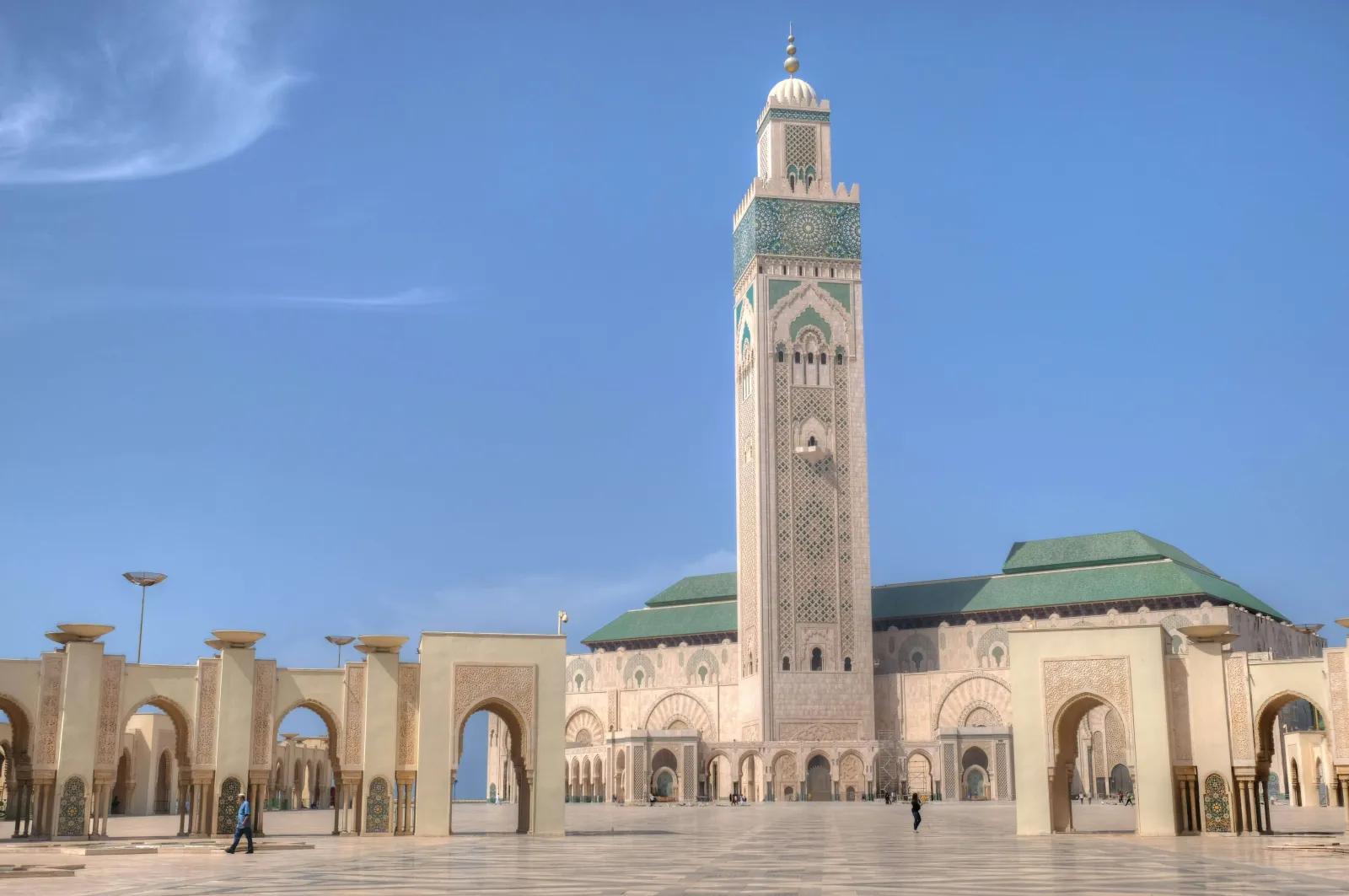
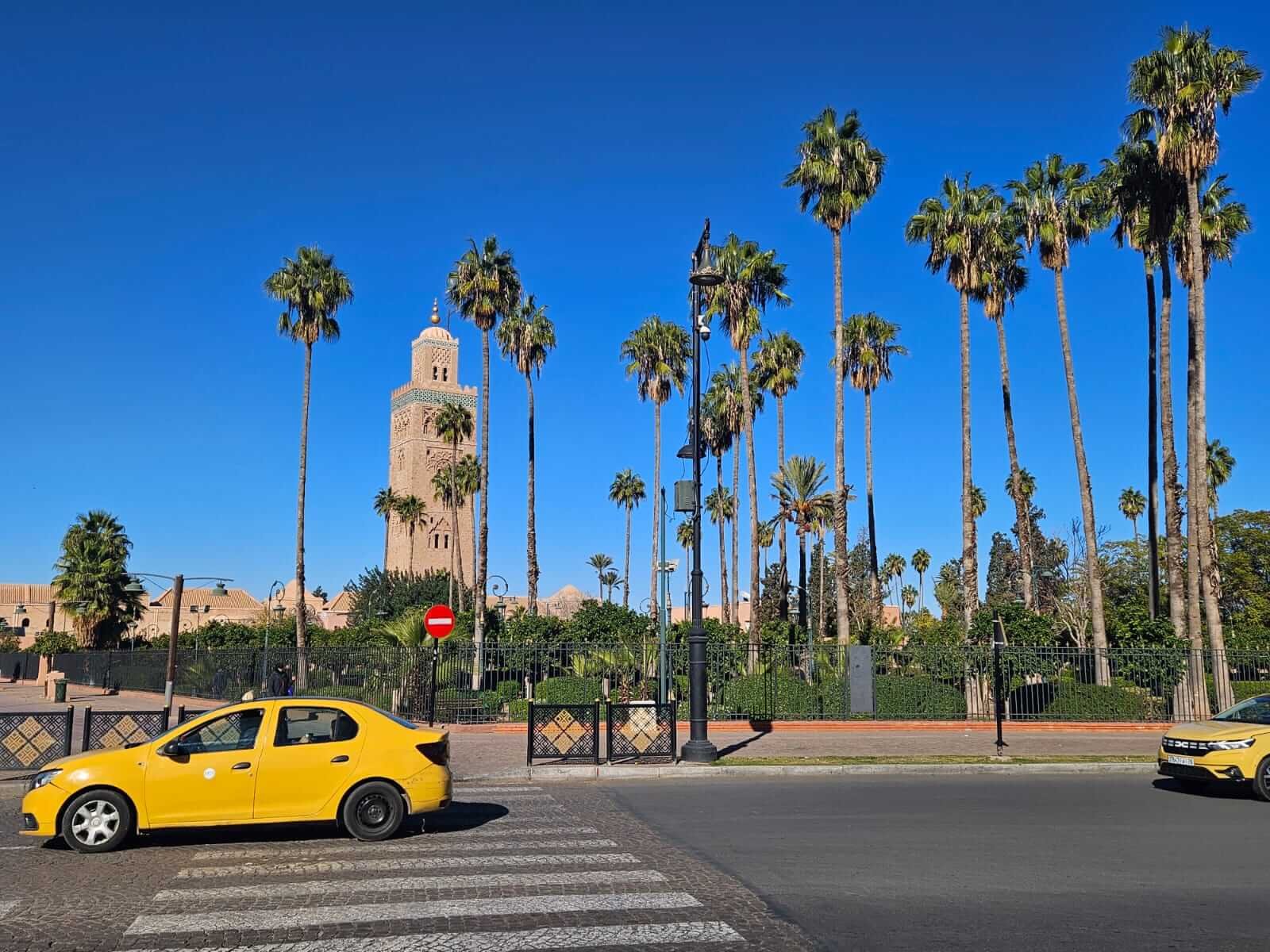
The Hassan II Mosque in Casablanca is one of the world's largest mosques and opens for guided tours to all visitors, with stunning Atlantic Ocean views from the prayer hall. Visiting hours run from 9:00 a.m. through mid-afternoon on most days, with reduced hours on Fridays, so checking the current schedule before you go saves unnecessary frustration. In Marrakech, the Koutoubia Mosque's exterior and surrounding gardens set the standard for Almohad design, though only Muslim visitors may enter the prayer hall itself.
The Zawiya of Sidi Bel Abbes and Zawiya al-Jazuliya are active Sufi shrines connected to the Seven Saints of Marrakech and carry deep devotional significance for Moroccan Muslims. The Ben Youssef Madrasa, now operating as a heritage museum, rewards close attention for its intricately carved plasterwork. The Saadian Tombs add a royal funerary dimension to the Marrakech itinerary and are open to all visitors.
Rabat's Mausoleum of Mohammed V is one of Morocco's most important national monuments, a site of genuine reverence that combines striking Moroccan craftsmanship with royal history in a setting that feels quietly moving. The Hassan Tower, the unfinished minaret of a grand Almohad mosque, stands beside it as a symbol of ambition and interrupted history. The Chellah Necropolis blends Merinid Islamic funerary remains with ancient ruins in one of the country's most atmospheric settings.
Meknes adds a distinct layer to the imperial circuit. The Cheikh Al Kamel Mausoleum draws travelers with a particular interest in Sufi scholarly lineages, while the nearby town of Moulay Idriss Zerhoun, where Morocco's Idrisid founder is buried, ranks among the most spiritually charged sites in the country.
Halal food is not a special request in Morocco; it is the default. The medinas of both Marrakech and Fez are well-stocked with halal restaurants, and most local dining in traditional neighborhoods is alcohol-free. Morocco's national halal certification authority is IMANOR, and restaurants in the major cities can produce IMANOR-linked certificates on request. If a restaurant cannot show current certification or give a clear explanation of its supply chain, treat the halal status as unverified and move on.
The one area where you should ask questions is upscale international restaurants in Casablanca and Rabat. Some higher-end venues import non-halal items or serve alcohol, so checking before ordering is the right move. For standard Moroccan cuisine across all four major cities, you are on solid ground. Prayer access is equally straightforward: mosques are abundant in every city, prayer times are publicly observed, and hotels in medina districts can point you to the nearest mosque within walking distance. In smaller towns along the Sahara route or through the Atlas, halal food remains the norm, and most towns and villages have at least one mosque, often within easy reach of wherever you are staying.
Morocco carries a Level 2 travel advisory from the US State Department, which calls for increased caution due to terrorism risk. That designation is worth understanding accurately: it does not mean Morocco is dangerous in the way that active conflict zones are. The practical concern for most tourists is petty theft and pickpocketing in busy medinas, not violent crime. Casablanca is assessed at a higher crime-threat level than other cities, so standard urban awareness applies there. Carrying a digital copy of your passport, staying alert in crowded markets, and using vetted transport address the most common risks.
On the visa side, US citizens do not need a visa for Morocco for stays up to 90 days. You need a valid passport with at least one blank page. The US State Department and most travel insurance providers recommend at least six months of passport validity beyond your arrival date. Entry is generally smooth, though immigration may ask for proof of onward travel or accommodation, so having that information accessible is helpful.
Spring (March to May) and fall (September to November) are the most comfortable seasons for heritage travel. In 2026, Ramadan runs approximately from mid-February to mid-March, overlapping with late winter. Ramadan is a deeply special time to experience Moroccan Islamic culture: the nightly iftar atmosphere in Fez transforms the medina into something extraordinary, and Islamic sites take on a different energy during the holy month. That said, some restaurants reduce daytime hours, site opening times may shorten, and transport can run slower. American Muslim travelers who are fasting will find Ramadan travel in Morocco uniquely supportive. Those who are not fasting should plan meals around different hours than usual and book accommodation and intercity transport in advance.
Self-guided travel in Morocco is entirely possible for confident independent travelers. The cities are navigable, English is widely spoken in tourist areas, and train connections between major cities are reliable. The honest calculation, though, is that Islamic heritage sites reward depth of knowledge that a brief placard cannot provide. The difference between walking past the Bou Inania Madrasa and understanding the theological debates that shaped its design is almost entirely a function of who is explaining it to you.
Expert-guided tours in Fez and Marrakech add a dimension that self-guided visits rarely reach: access to private workshops, informed route management through complex medinas, and the narrative context that turns a beautiful building into a chapter of a larger story. Morocco Classic Tours designs Islamic heritage tours specifically for American Muslim travelers, with culturally informed local guides who provide deep historical and theological context at every major site. Our team is based in Fez, giving us direct relationships within the city's religious and scholarly community, including knowledge of which spaces Muslim visitors can access that non-Muslim visitors cannot.
Itineraries are fully customizable: a traveler focused on Sufi heritage gets a different emphasis than one focused on Marinid architecture, and both can be built into the same framework. Morocco Classic Tours offers first-time travelers a 10% booking discount, a straightforward way to make a guided Islamic heritage tour more accessible than many assume. Guided halal packages are priced approximately from USD 2,400 to USD 3,700 depending on duration, hotel grade, and inclusions, with most meals on key days included.
A focused 7-day Islamic heritage tour covers the core of Morocco's imperial Islamic circuit without feeling rushed. Here is a practical framework:
A three-day extension before the Fez arrival works well for Rabat and Meknes. Rabat covers the Mausoleum of Mohammed V, Hassan Tower, and Chellah Necropolis in a single full day. Meknes adds the Cheikh Al Kamel Mausoleum and a visit to Moulay Idriss Zerhoun, where Morocco's Idrisid founder is buried, one of the most spiritually resonant stops on the entire circuit. The 10-day version covers every major tier of Morocco's Islamic heritage and still leaves room for a Sahara night if travelers want the full Moroccan experience.
So, is Morocco a good destination for an Islamic heritage tour for American Muslims? The answer is a clear yes, and it is one backed by living cities, unbroken scholarship, and devotional spaces that still function exactly as they were built to. Morocco earns its standing not because of scale alone but because of depth. For American Muslim travelers, that means a heritage tour here connects history with something present and real, not a civilization locked behind glass.
Whether you focus on the Marinid madrasas of Fez, the Almohad mosques of Marrakech, or the Sufi shrines threading through the imperial circuit, Morocco rewards serious engagement. With the right local guides and a well-structured itinerary, an Islamic heritage tour in Morocco for American Muslims is less a sightseeing trip and more a pilgrimage through a civilization that never stopped. Morocco Classic Tours can help you build exactly that. Reach out to our team in Fez, and we will design the itinerary your trip deserves.
Discover how to choose the perfect group tour agency in Morocco. Get tips on what to look for and ma...
Read this article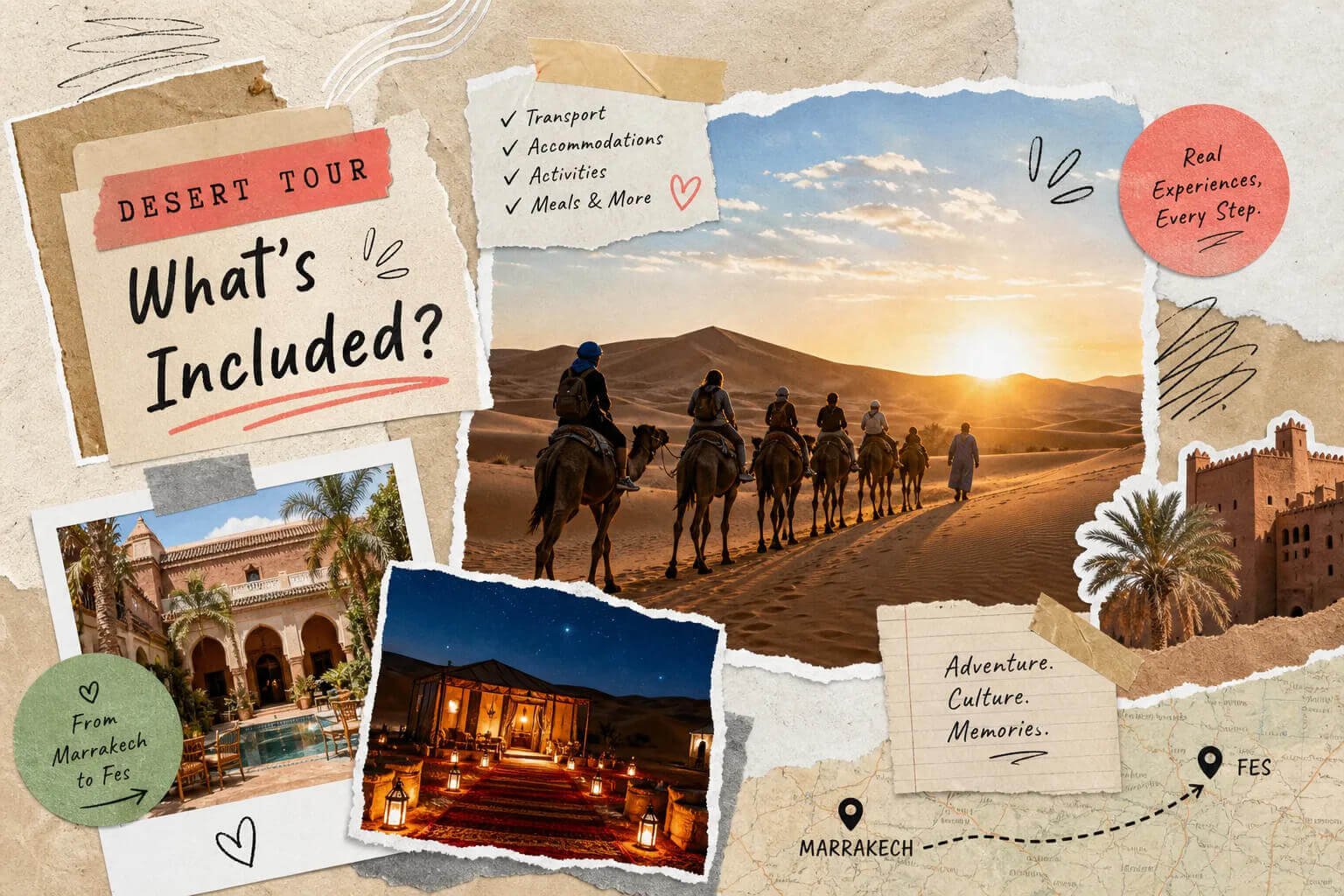
Uncover what a Marrakech to Fes desert tour offers, including camel rides, desert camps, and rich cu...
Read this article
Join our Merzouga Overnight Tour for an authentic desert experience. Enjoy camel rides, comfortable ...
Read this articleWant cool tour deals and tips about Morocco? Enter your email and we’ll send them to you each month!