Group Tour Agencies in Morocco: How to Pick the Right One
Compare Morocco group tour agencies by trip style, reviews, pace, transport and inclusions. Learn wh...
Read this article

Private, custom Morocco trips planned in Fez by AZ-ZDDINE, working in Moroccan tourism since 2012. Sahara, Atlas, medinas and coast, arranged around you.
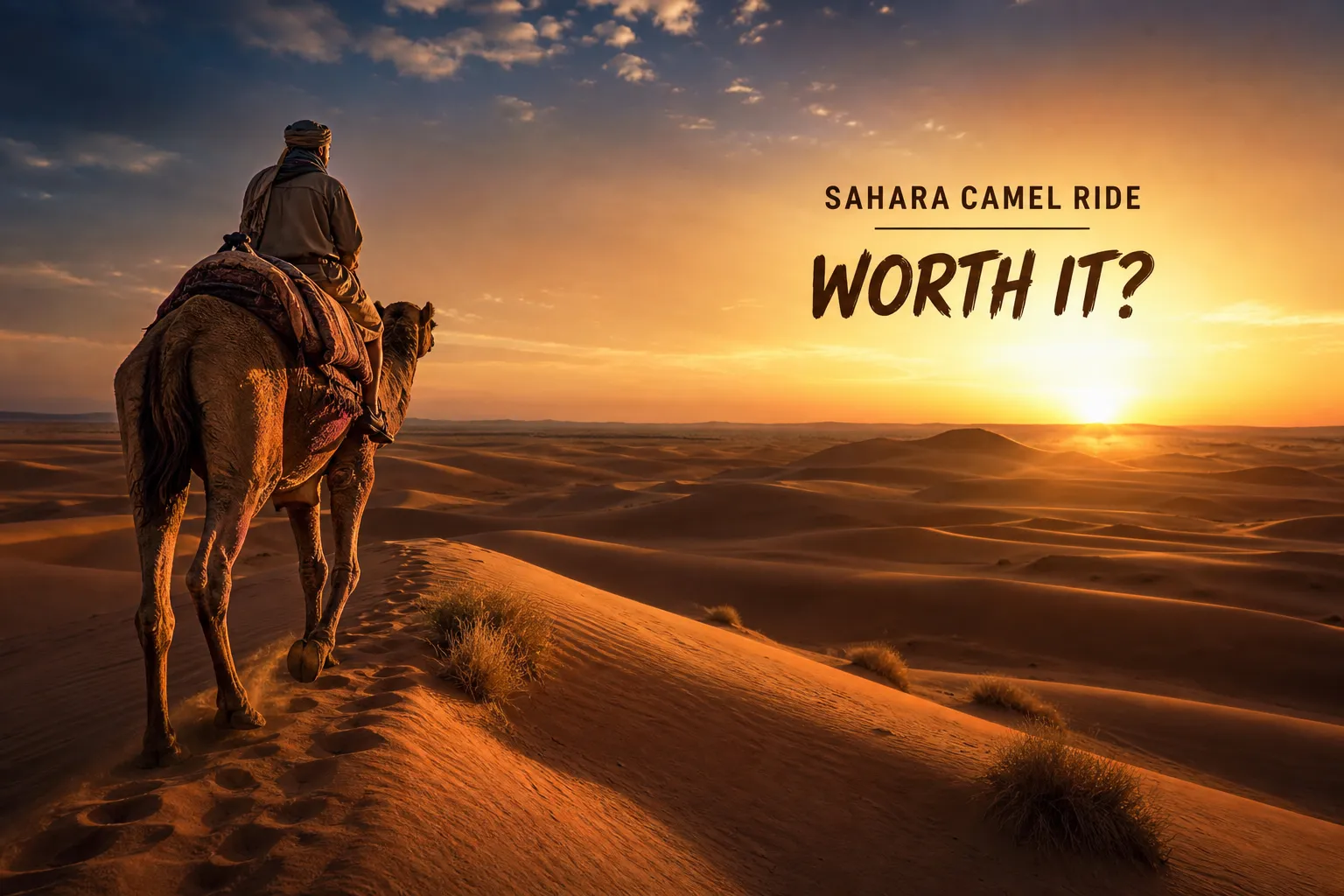
People ask whether a camel ride in the Sahara Desert is worth it as if it's a simple question. It isn't. The honest answer depends entirely on how you set the experience up, and most travelers don't set it up well enough. They book a 45-minute loop, sit on a hard saddle in the midday heat, take a few photos, and ride back wondering what all the fuss was about. That's not a Sahara experience. That's a tourist photo stop with an animal.
It is also worth knowing the ride is optional. On our three-day trip from Fes anyone who would rather not ride takes a Jeep straight to the camp instead.The ride itself is genuinely uncomfortable. The dunes are genuinely breathtaking. Both things are true at the same time. What determines which one wins depends on how long you stay, when you ride, and whether you pair the trek with an overnight camp stay. After watching hundreds of travelers come through Merzouga and Erg Chebbi, the pattern at Morocco Classic Tours is clear: the people who walk away calling it a life highlight are almost always the ones who booked the full overnight format. The ones who felt disappointed almost always did the short loop and called it a day.
Here's the real breakdown: the physical reality, what it actually costs, how long it lasts, when to skip it entirely, and the one thing that genuinely makes it worth the soreness.
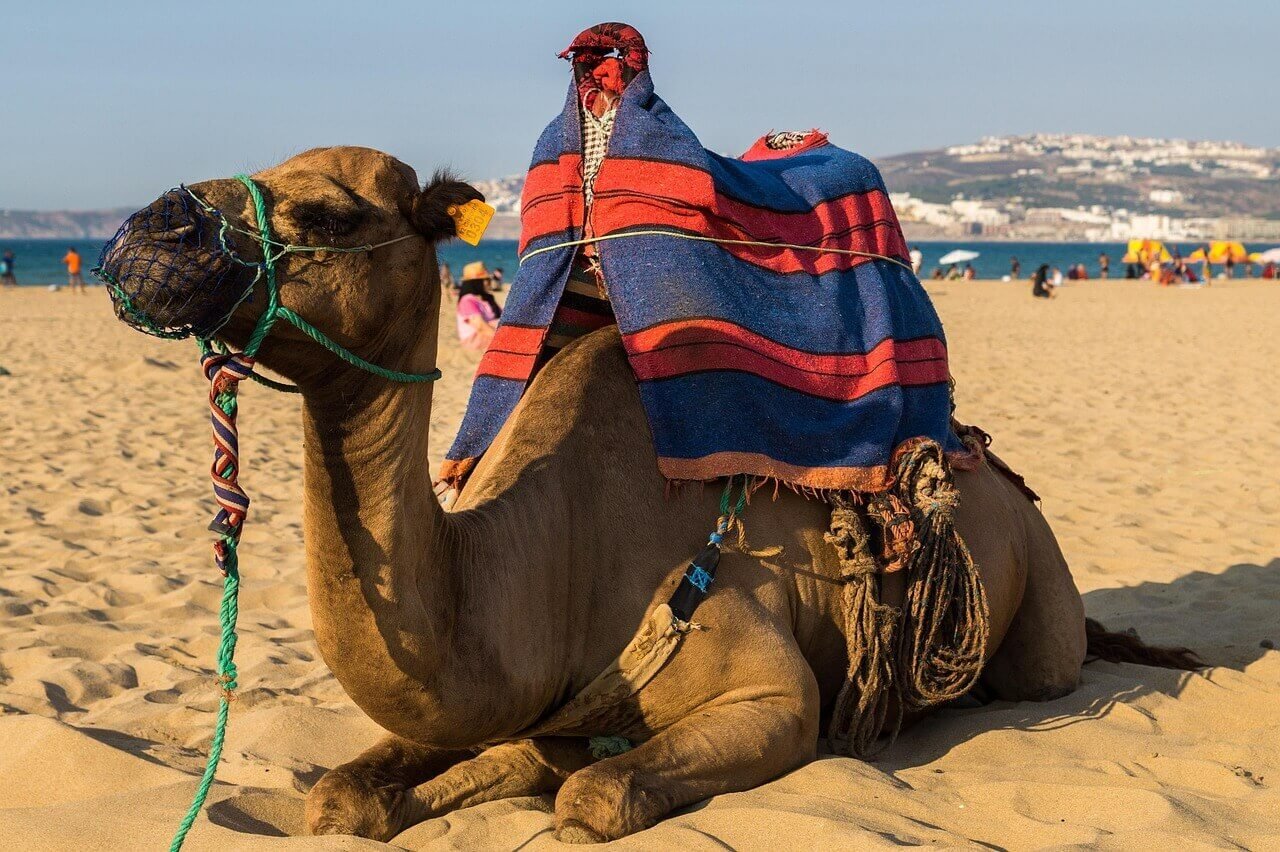
Before getting into specifics, the short answer is yes, but only when you set it up correctly. So much of whether a camel ride in the Sahara Desert is worth it comes down to format, timing, and expectations. Get those right, and it's one of the best things you'll do in Morocco. Get them wrong, and you'll spend 90 minutes sore and sunburned, wondering what everyone else was raving about.
The first thing that catches people off guard is the mounting process. The camel kneels in two stages, front legs first, and then the handler signals it to stand. That moment, when the camel lurches upright from its back legs, sends your weight forward sharply before leveling out. First-timers grip the saddle horn hard. Knowing to lean back deliberately during that motion settles most of the anxiety immediately. It feels unstable for about three seconds, and then it's fine.
The camel's four-beat walk is not smooth. It sways side to side in a slow, lurching rhythm that's manageable for the first 20 minutes and progressively harder on your hips, inner thighs, and lower back after that. A 60 to 90-minute ride leaves most people noticeably sore. The saddle is hard, the fur underneath it creates friction against your legs, and the heat radiating from the sand below adds fatigue that compounds everything else. This is not a comfortable ride, and expecting it to be one is the primary reason people come home disappointed.
Here's what photos genuinely cannot capture: the silence. The Sahara at sunset is one of the quietest places most Americans will ever stand. No traffic, no ambient noise, nothing except the soft thud of camel hooves and the occasional shift of wind across the dune face. The scale of Erg Chebbi's dunes only becomes real when you're moving through them at a camel's pace. That slowness, which feels like a drawback on paper, is actually what gives the experience its weight. Your body is complaining, but your brain is storing something.
A standard sunset or sunrise camel ride runs 45 to 90 minutes each way, depending on how deep into the dunes your camp sits. The overnight format works like this: you ride in during the late afternoon, arrive at camp around sunset, eat dinner, sleep in a desert tent, and ride back at sunrise the next morning. Total time with the camp stay is typically 16 to 18 hours. That's very different from a 90-minute standalone loop.
The ride itself is not the experience; it's the transport to the experience. Sleeping in the Sahara, eating dinner around a campfire, watching the stars appear over the dunes with no light pollution interfering, and then waking at 5 a.m. to catch the sunrise from your tent — that's where the memory actually forms. The overnight format turns a photo opportunity into something you'll still be talking about in 10 years. A short loop gives you the camel ride and a little beyond it.
Erg Chebbi near Merzouga is the standard recommendation for first-time Sahara travelers, and for good reason. The dunes are dramatic, rising to over 150 meters, and the infrastructure for camp stays is well-developed without being overdone. The drive from Marrakech takes about 8 to 9 hours; from Fez, it's closer to 7. Erg Chigaga near M'hamid suits travelers who want fewer people around, but the logistics are more involved. Zagora is an easier drive from Marrakech but offers a shorter, less impressive desert experience. For a first trip, the Erg Chebbi camel ride experience out of Merzouga is where to start.
A standalone 1- to 2-hour camel ride near Merzouga runs roughly $40 to $60 per person. That gets you the camel, the handler, and the dunes. Overnight packages that include the camel trek, desert camp accommodation, dinner, and breakfast start around $50 and go up to $120 or more per person depending on the comfort level of the camp. Luxury tented camps with private accommodations sit at the higher end of that range. The camel ride cost in the Sahara, in other words, is only part of the picture; what you pair it with determines its actual value.
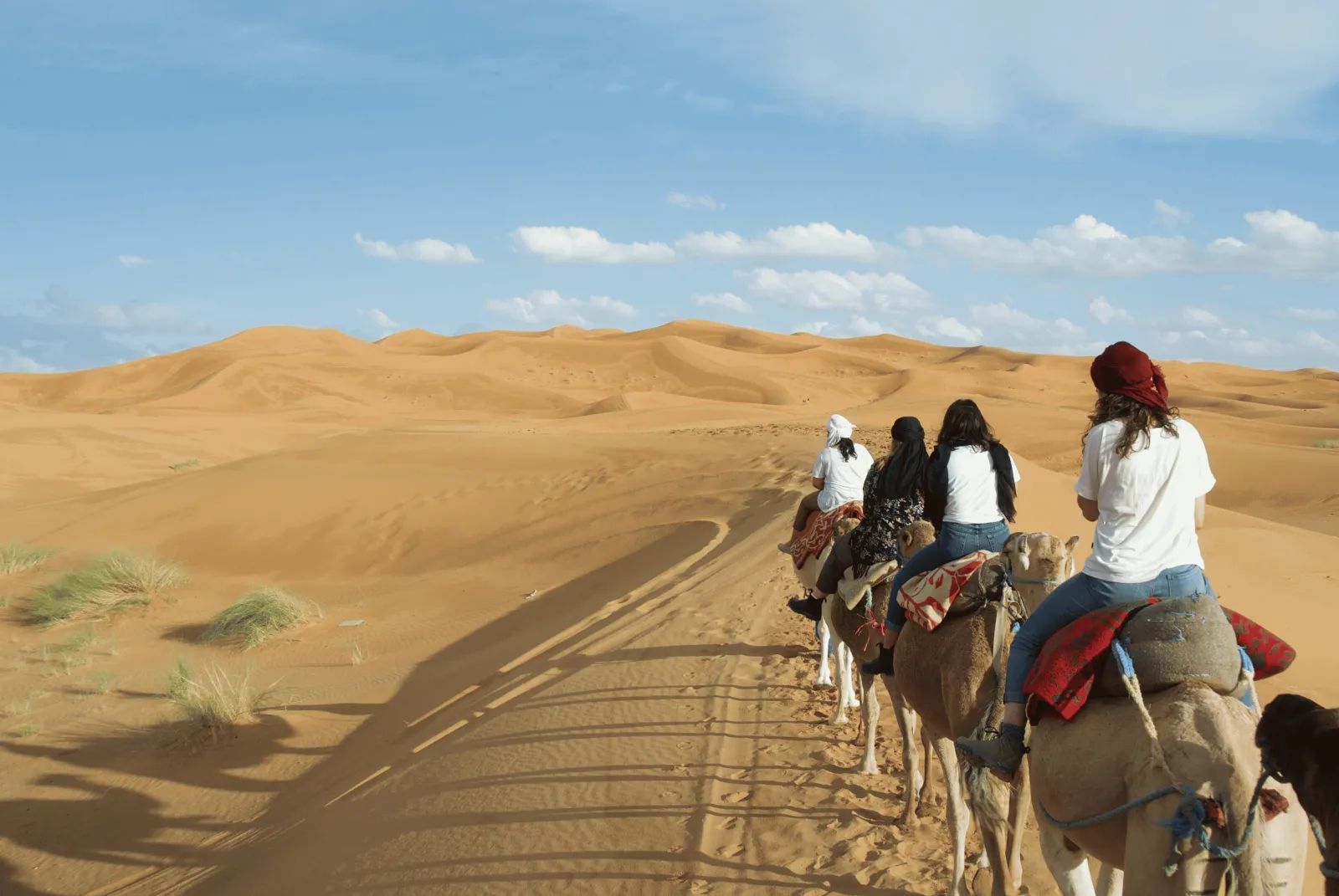
A short ride delivers the camel experience and not a great deal more. An overnight package gets you the ride plus a full evening in the desert: dinner, campfire, stargazing, and a sunrise that travelers we've brought through Merzouga consistently describe as the best thing they saw in Morocco. The price difference between the two formats is real, but so is the difference in what you actually experience. If budget is the constraint, the overnight shared camp option at $50 to $70 per person is still far better value than a standalone ride at $40 to $60.
A few things commonly get left out of the listed price: gratuities for the camel handler (100 to 200 MAD is standard and expected), bottled drinks beyond basic water, and activity upgrades at the camp like sandboarding or quad biking. None of these are high costs, but knowing about them before you arrive prevents the kind of friction that colors the whole memory.
The details below are the things that actually change the experience, not nice-to-haves, but genuine difference-makers between a ride you endure and one you enjoy.
Long, loose pants are non-negotiable. They reduce chafing from both the saddle and the camel fur, which is rougher than it looks. A lightweight scarf or shemagh worn around your face and neck cuts the dust and sun exposure significantly. Skip sandals entirely; they fill with sand within the first five minutes. Closed shoes or light boots keep your feet stable and sand-free for the full ride.
Midday is brutal. Desert heat in Merzouga peaks between noon and 3 p.m., and riding a camel through it is genuinely unpleasant. Temperatures drop enough by 4 to 5 p.m. that the ride becomes comfortable. Sunrise is the cooler and arguably more beautiful option. If you're doing an overnight stay, you naturally get both: the sunset ride in and the sunrise ride out. That's another reason the overnight format simply works better, and another reason so many travelers decide a camel ride in the Sahara Desert is worth it when they book it this way.
Camels that are well-rested and guided by calm, experienced handlers make the ride noticeably smoother. Before booking, ask directly whether camels rest between rides. A specific answer is a good sign; a vague one isn't. Look for operators with verified Tripadvisor reviews, local Berber guides, and, if you can find it, a Tripadvisor animal welfare badge. It's a small detail that says something about how an operator runs the whole experience.
The camel ride in isolation is interesting, bumpy, and mildly memorable. What turns it into something significant is the light. The Sahara at golden hour doesn't look like anywhere else on earth. The dunes shift from amber to deep red as the sun drops. Shadows lengthen in long diagonal lines across the rippled sand. There is nothing moving except your camel caravan. No roads, no noise, no evidence of anything outside that place. Being on a camel during that specific window is what creates the image people carry home.
The sunrise ride back from an overnight camp is often better than the sunset ride in. The desert is cooler, the light hits the dune faces differently, and there are far fewer other camel groups around. Not everyone books the overnight format, which means the sunrise departure is quieter and more personal. That solitude is part of what makes it land so hard.
The 90-minute camel ride is the transport. The experience is the desert at night: the meal under a sky with more stars than you've probably seen before, the quiet after the campfire dies down, and waking up in a place that feels genuinely removed from the ordinary world. Morocco Classic Tours structures their Sahara packages specifically around this logic, pairing the camel trek with a proper overnight camp stay in Merzouga so travelers aren't just ticking a box but actually spending real time inside the landscape.
The camel ride is not the right call for everyone. If you have hip, knee, or lower back problems, 90 minutes on a camel saddle will hurt. If you're traveling with children under five, the mounting process alone is anxiety-inducing for parents. And if you're heading to a remote camp in Erg Chigaga, a 4x4 transfer is simply the practical answer.
A 4x4 gets you to the dunes faster, in air-conditioned comfort, with no soreness afterward. It's genuinely better for families, for travelers with physical limitations, and for anyone who wants to cover more ground in less time. What it doesn't give you is the slowness, the caravan feeling, or the sensory connection to the desert that the camel pace creates. For travelers who want the camp experience but not the ride, it's a completely legitimate choice.
The format that experienced Sahara travelers land on most often: 4x4 transfer to the edge of the dunes, then a short 30 to 45-minute camel ride into camp. You get the iconic camel moment without the full 90-minute physical toll, and the vehicle handles the distance. This is how well-structured tour packages work when the operator understands the experience they're actually selling.
Yes, a camel ride in the Sahara Desert is worth it. But only when you set it up correctly. The ride alone is not the experience. The golden light, the overnight camp, and the silence of the Sahara at 5 a.m. are the experience. The camel is how you get there, and that matters more than people give it credit for.
Go in knowing your body will feel it the next day. Dress for it with long pants and a scarf. Time the ride for sunset or sunrise. Book an overnight stay instead of a standalone loop. Do those things and the question of whether a camel ride in the Sahara is worth it stops being a question at all.
For travelers who want the camel trek and camp experience done as a complete package from Merzouga, Morocco Classic Tours handles the full logistics, from transport out of Fez or Marrakech to the ride, the overnight camp, and the ride back, so the only thing you're thinking about when you're out on those dunes is how good the light looks.
A standard Sahara camel ride runs 45 to 90 minutes each way. In the overnight format, you ride into camp during the late afternoon and ride back out at sunrise, so you get two separate rides bookending a full night in the desert. Total time from the first ride to the final return is typically 16 to 18 hours.
A standalone camel ride near Merzouga costs roughly $40 to $60 per person. Overnight packages, which include the camel trek, camp accommodation, dinner, and breakfast, typically run $50 to $120 per person depending on camp comfort level. Budget an extra 100 to 200 MAD per person for the camel handler's tip, which is standard and expected.
For children over about five or six, yes, with the right preparation. Younger children can find the mounting process unsettling, and the ride itself requires reasonable balance and comfort with unfamiliar motion. For families with very young children, a short 30-minute camel experience combined with a 4x4 transfer is the better-structured option.
October through April offers the most comfortable conditions, with moderate daytime temperatures and cool nights. Summer months (June through August) bring extreme heat that makes midday riding genuinely unpleasant even at higher elevations in the dunes. Whenever you go, ride at sunset or sunrise rather than midday; that applies year-round.
Merzouga and the Erg Chebbi camel ride experience wins for first-timers. The dunes are significantly more dramatic, the camp infrastructure is better developed, and the overall desert immersion is stronger. Zagora is a shorter drive from Marrakech but delivers a less impressive landscape. Most experienced Morocco guides steer first-time visitors toward Merzouga without hesitation.
Compare Morocco group tour agencies by trip style, reviews, pace, transport and inclusions. Learn wh...
Read this article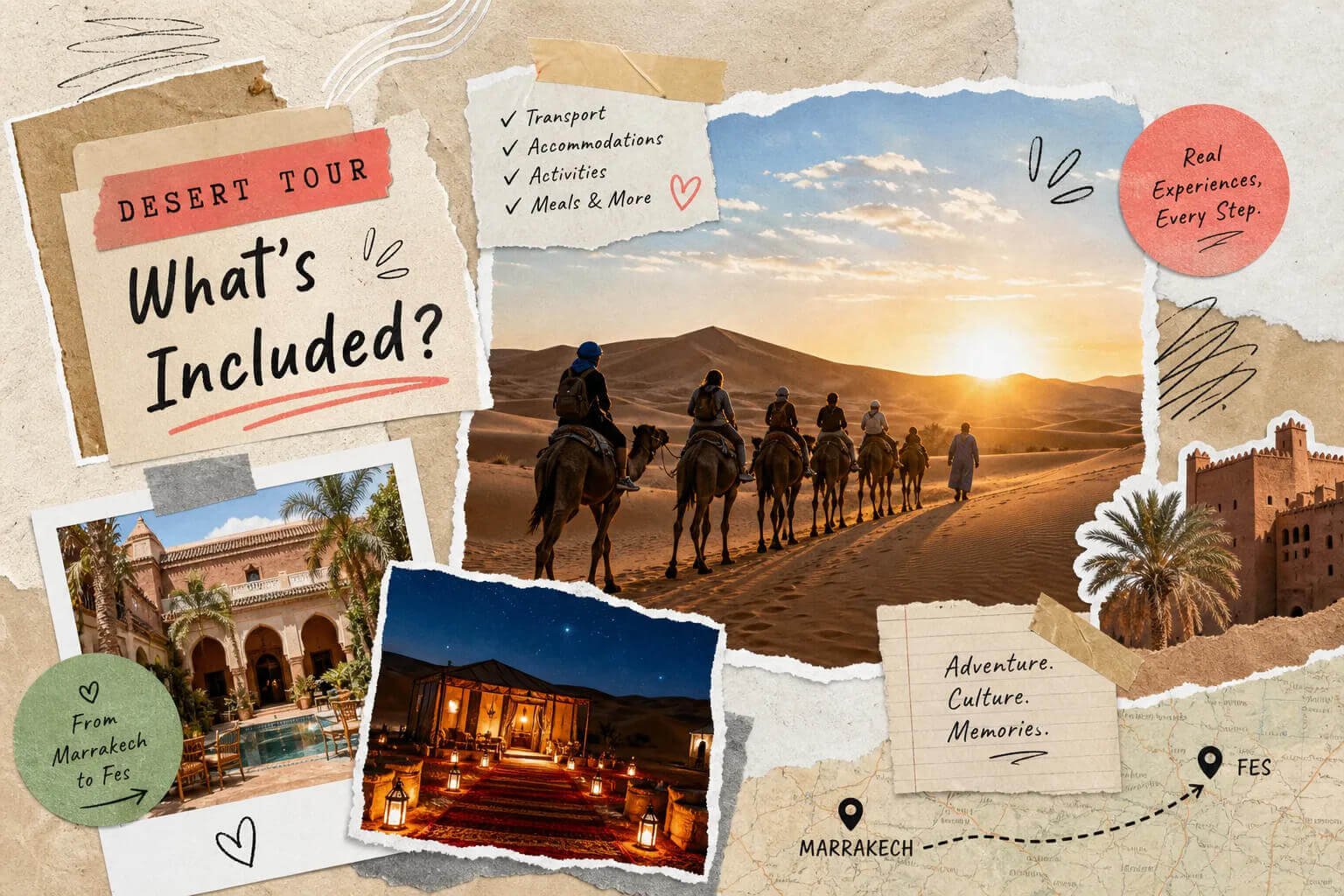
Uncover what a Marrakech to Fes desert tour offers, including camel rides, desert camps, and rich cu...
Read this article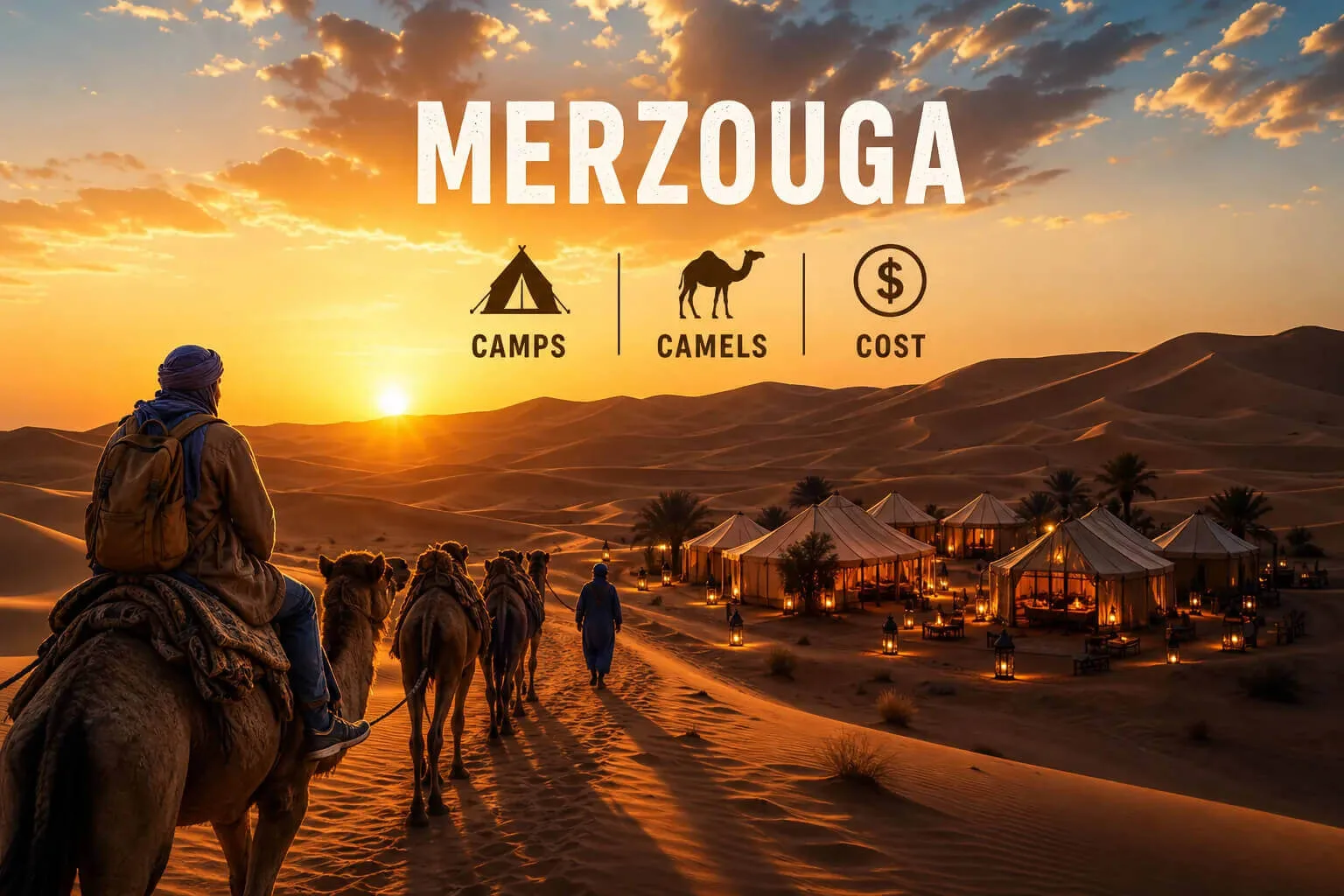
Join our Merzouga Overnight Tour for an authentic desert experience. Enjoy camel rides, comfortable ...
Read this articleWant cool tour deals and tips about Morocco? Enter your email and we’ll send them to you each month!
