Group Tour Agencies in Morocco: How to Pick the Right One
Compare Morocco group tour agencies by trip style, reviews, pace, transport and inclusions. Learn wh...
Read this article

Private, custom Morocco trips planned in Fez by AZ-ZDDINE, working in Moroccan tourism since 2012. Sahara, Atlas, medinas and coast, arranged around you.
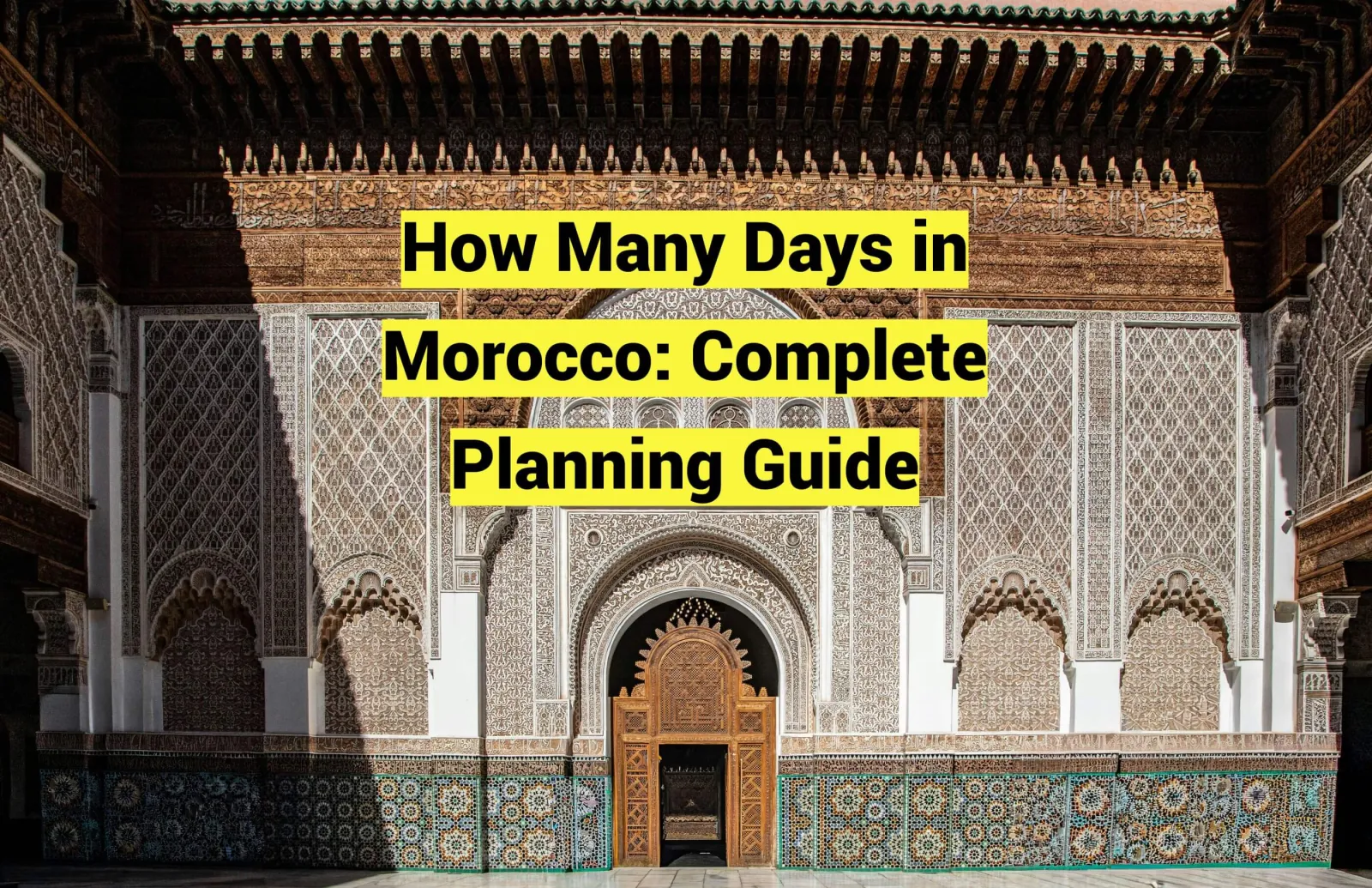
How Many Days in Morocco is a common question for travelers planning their itinerary. Most travelers should plan for 7–14 days in Morocco to experience the highlights without rushing. Seven days is the minimum recommended, 10–12 days is ideal for first-time visitors, and 14 days allows for deeper exploration of the country’s cities, landscapes, and culture. For most travelers, 7–14 days in Morocco provides the perfect balance between seeing the must-visit destinations and enjoying a relaxed pace.
Ten to twelve days in Morocco’s highlights—the imperial cities, Sahara Desert experience, and key cultural sites—while maintaining a pace that lets you appreciate each destination rather than rush through it. Ten days is ideal to explore Marrakech, Fes, Chefchaouen, the Sahara Desert, and Casablanca. If you’re looking for expertly crafted Morocco tour packages, these destinations are often included in the itineraries, allowing you to cover Morocco’s highlights with the right balance between depth of experience and travel duration.
This guide is designed for first-time visitors and returning travelers who want to make the most of their time in Morocco. Choosing the right number of days in Morocco ensures you experience the country’s highlights without feeling rushed or missing key destinations. A well-planned itinerary allows you to cover Morocco’s highlights efficiently, whether you have a short or extended stay. Typical itineraries are designed to cover Morocco's highlights, giving travelers the opportunity to experience the most important destinations and attractions based on their available time and travel preferences.
Most travelers need 7-14 days in Morocco to experience the country’s highlights without feeling rushed, with 10-12 days being the sweet spot for first-time visitors. This duration allows you to explore imperial cities, spend a night under the stars in the Sahara Desert, and discover the blue city of Chefchaouen at a comfortable pace. With 10-12 days, you can cover Morocco’s highlights, including the most iconic destinations and experiences, without feeling rushed.
Why does this matter? Choosing the right trip length is crucial because Morocco’s highlights—such as the imperial cities (Marrakech, Fes, Meknes, Rabat), the Sahara Desert, and Chefchaouen—are spread across the country, and travel between them takes significant time due to Morocco’s size and road conditions. For most travelers, 7-14 days in Morocco provides the ideal balance of experiencing the country’s highlights without feeling rushed. Traveling in Morocco takes time due to long distances and road conditions, so it’s recommended to spend at least 7-10 days for a meaningful experience.
This guide covers trip duration planning for different travel styles—from quick getaways to extended explorations across this amazing country in North Africa, which is also part of the Arab world and shares many cultural elements such as the Medina and traditional markets. Whether you’re a first-time visitor with limited vacation days or a repeat traveler seeking deeper immersion into Moroccan culture, understanding how many days to spend in Morocco directly impacts your experience. The country’s size, diverse regions, and travel logistics between major destinations require strategic time planning to avoid spending more hours in transit than actually experiencing Morocco’s culture. Renting a car in Morocco offers flexibility and is ideal for discovering small towns and countryside gems. Morocco’s culture is shaped by a blend of Berber, Arab, and European influences, and is reflected in its language, traditions, and daily life. Morocco’s culture is renowned for its rich and diverse traditions, deep history, and indigenous influences, making every region unique and adding depth to your travel experience. Arabic and Berber are the official languages of Morocco, but French is widely spoken in tourist areas, making communication easier for many travelers.
When planning your arrival, Morocco is well-connected to the world through international flights, with major airlines serving airports in Casablanca, Marrakech, and Fes. These international flights make it convenient for travelers from Europe, the US, and other regions to access Morocco’s main travel hubs and begin their journey.
Moroccan cuisine is a blend of flavors influenced by Berber, Arab, and Mediterranean cultures, featuring signature dishes like tagine and couscous. This culinary diversity is an essential part of the Moroccan experience and reflects the country’s rich cultural heritage.
By the end of this guide, you will:
Determine your ideal trip length based on travel style and priorities
Avoid common timing mistakes that diminish Morocco experiences
Create realistic itineraries matching your available time
Maximize limited days through strategic destination selection
Tipping is customary in Morocco, with a standard tip of 10-15% in restaurants, so it’s helpful for first-time visitors to be prepared for this aspect of local etiquette.
You’ll have all the details you need for planning, including sights, maps, and tips to make the most of your Morocco trip.
You need at least 7 to 10 days in Morocco to see the country comfortably. In one week, you can visit Marrakech, explore Fes, and experience the Sahara Desert in Merzouga. With 10 days, you can also add Chefchaouen and Casablanca.
If you only have 4–5 days, focus on one region, such as Marrakech and a desert tour. For a relaxed trip with culture, desert, and coast, 10–14 days is ideal.
Trip duration in Morocco depends on three interconnected factors: your personal travel pace, destination priorities, and the logistical reality of getting between Moroccan cities. Getting this balance right means the difference between an unforgettable trip and one spent watching landscapes blur past your window.
For most travelers, 7-14 days in Morocco provides the ideal balance of experiencing the country's highlights without feeling rushed. The "highlights" typically include the imperial cities (Marrakech, Fes, Meknes, Rabat), the Sahara Desert, and Chefchaouen, as well as key cultural and historical sites. This timeframe is recommended because travel between destinations takes significant time due to Morocco's size and road conditions. Spending at least 7-10 days allows you to see the key cities and desert without rushing, while 10-14 days lets you explore Morocco's main sights and enjoy a more meaningful experience.
Morocco has a well-developed transportation network, including trains, buses, and taxis. Public transportation in Morocco is efficient and affordable, making it easy to travel between major cities and regions.
When planning your itinerary, consider safety Morocco as part of your travel logistics. Morocco is generally safe for tourists, but it's important to stay vigilant, especially in crowded areas.
Fast-paced travelers who prioritize checking off bucket-list destinations can cover Morocco’s highlights in 7-8 days with efficient planning and acceptance of long driving days. This approach works for those comfortable moving quickly between the bustling souks of Marrakech and the vast sand dunes of the Sahara without extended downtime.
Relaxed travelers benefit significantly from 10-14 days, allowing time for cooking classes in Fes, leisurely exploration of traditional Berber villages in the High Atlas Mountains, and spontaneous discoveries in smaller towns. This pace accommodates Morocco’s reality: conversations with shop owners take time, getting lost in medieval medinas is part of the experience, and sipping Moroccan mint tea shouldn’t feel rushed.
Your individual pace directly determines whether a Morocco itinerary feels comfortable or exhausting—there’s no objectively correct answer, only what matches your travel personality.
An imperial cities focus—Marrakech, Fes, Meknes (with its impressive royal palace), and Rabat (the capital city of Morocco)—requires 6-8 days to properly appreciate Morocco’s rich history and UNESCO World Heritage sites. Fes’s medina is incredibly complex and rich in history, requiring at least two days for exploration. This approach emphasizes historical sites, architectural marvels like Bahia Palace and Hassan II Mosque, and the rich tapestry of urban Moroccan culture.
Adding a Sahara Desert experience demands minimum 2-3 additional days. Reaching Merzouga’s famous dunes requires 7-8 hours of driving from Marrakech or Fes, and rushing this journey defeats the purpose of experiencing a luxury camp or desert camp under the stars with a camel trek at sunset.
The more destinations you prioritize, the longer your trip needs to be—or the faster you must move between them. Understanding this relationship leads directly to selecting the right duration category for your visit to Morocco.
Morocco’s allure lies in its remarkable regional diversity, making every journey feel like a new adventure. The iconic Sahara Desert in southern Morocco is a must for any Morocco itinerary, where you can witness the mesmerizing beauty of vast sand dunes and experience unforgettable sunsets. A camel trek or a night in a desert camp beneath a sky full of stars is a highlight for many travelers.
In the cities and towns, you’ll discover Morocco’s ancient art through traditional craftsmanship and historical techniques, especially in leather-making and intricate architectural details that reflect the country’s rich cultural heritage.
Along the Atlantic coast and in coastal towns, travelers have the chance to savor fresh seafood, making local seafood dishes an essential part of the Moroccan culinary experience.
For those seeking the quintessential Moroccan adventure, the Sahara Desert offers breathtaking sand dunes, camel treks, and the magic of sleeping under the stars. The journey to Merzouga or Zagora is an experience in itself, passing through dramatic landscapes and traditional villages.
For those seeking cooler climates and dramatic landscapes, the Atlas Mountains are a natural playground. The High Atlas Mountains, in particular, are dotted with traditional Berber villages, offering a window into Morocco’s rich cultural heritage and a chance to experience authentic rural life. Hiking and trekking here reveal breathtaking vistas and the warm hospitality of Berber communities.
Northern Morocco enchants with its Mediterranean coastline and the famed blue city of Chefchaouen. This photogenic town, nestled in the Rif Mountains, is perfect for leisurely exploration and soaking up the laid-back atmosphere. Nearby beaches are popular day trip destinations from Tangier, offering easy access to coastal attractions and natural sites. Each region—whether it’s the windswept Atlantic coast, the rugged mountains, or the golden Sahara—adds a unique chapter to your Morocco travel story. When planning your trip, consider combining these diverse regions to truly experience Morocco’s highlights and hidden gems.
Morocco is a land where every turn reveals something extraordinary, and some of its most memorable moments come from exploring beyond the well-trodden path.
If you want to discover hidden gems—like the blue streets of Chefchaouen, the remote Berber villages in the Atlas Mountains, or the windswept beaches of Essaouira—consider allocating at least 10 days. This gives you the flexibility to cover Morocco's highlights and hidden gems at a comfortable pace, ensuring you experience the country's main sights fully.
While the imperial cities and the Sahara Desert are must-sees, the country is dotted with hidden gems that add depth and authenticity to any Morocco itinerary. The blue city of Chefchaouen, nestled in the Rif Mountains of northern Morocco, enchants visitors with its maze of indigo-painted streets and laid-back charm—a photographer’s dream and a peaceful retreat from the bustling souks of larger cities.
Venture into the High Atlas Mountains to discover traditional Berber villages, where time seems to slow down and you can immerse yourself in Morocco’s rich culture. Here, you’ll find warm hospitality, ancient customs, and breathtaking mountain scenery.
The ancient fortified village of Ait Ben Haddou, a UNESCO World Heritage site, stands as a testament to Morocco’s layered history and is a must for lovers of architecture and film buffs alike.
For those seeking adventure, a Sahara Desert experience is truly unforgettable. Journey across vast sand dunes on a camel trek and spend the night in a tranquil desert camp, where the silence and star-filled sky create memories that last a lifetime.
Northern Morocco also offers its own treasures, from the cosmopolitan flair of Tangier to the artistic seaside town of Asilah, each with its own unique story and hidden corners to explore.
When planning your trip to Morocco, consider allocating at least 10 days to cover Morocco’s highlights and allow time for these hidden gems. Whether you’re wandering ancient medinas, hiking in the Atlas Mountains, or relaxing in a desert camp, Morocco’s lesser-known destinations promise a rich tapestry of experiences that will make your journey truly special.
Each duration option represents a different balance between coverage and depth. The best Morocco itinerary isn’t the longest one—it’s the one that allows you to cover Morocco’s highlights while matching your available time to realistic expectations. Choosing an itinerary that lets you cover Morocco's highlights ensures you experience the key destinations and attractions without feeling rushed.
The classic loop itinerary for Morocco includes Casablanca, Marrakech, the Sahara, Fes, Chefchaouen, and Tangier.
Five to six days in Morocco limits you to 2-3 major destinations, typically Marrakech as a base with a brief Sahara excursion or day trips to Essaouira on the Atlantic Ocean or the Atlas Mountains. This timeframe works for travelers combining Morocco with other foreign countries or those with severe time constraints.
Marrakech makes the most practical choice for ultra-short trips because its international airport (RAK) eliminates wasted travel time. Within this window, you can dedicate 2 days to Marrakech itself—exploring Jemaa el-Fnaa square, the bustling souks, and historical sites—then use remaining time for a desert-like camp experience near Marrakech rather than the longer journey to Merzouga. If your travels take you to Morocco's other major cities, be sure to check out the best things to do in Casablanca.
Limitations are significant: the pace feels rushed, cultural immersion suffers, and substantial hours disappear into transit rather than experiences. This duration provides a taste of Morocco rather than a meal.
Seven to ten days represents the threshold where meaningful exploration becomes possible. This duration covers imperial cities, a Sahara Desert overnight experience with a camel ride through the dunes, and one coastal or mountain region—a balanced introduction for first-time visitors to this amazing country.
A typical 7-day Morocco itinerary includes time in Marrakech, a night in the Sahara with a camel trek, and the blue-painted streets of Chefchaouen. At ten days, the pace shifts from fast to comfortable, allowing proper appreciation of Fes el Bali (the UNESCO-protected medieval medina), the ancient fortified village of Ait Benhaddou, and Morocco’s culture without the constant pressure of departure times.
This duration suits travelers who want the essential Morocco travel experience—major cities, the desert, and signature cultural moments—at a moderate pace that doesn’t require constant movement.
Two weeks in Morocco opens possibilities that shorter trips cannot accommodate. This duration includes all major regions: the imperial cities, Sahara Desert, High Atlas Mountains with traditional Berber villages, and coastal towns along the Mediterranean coast or Atlantic Ocean.
With 11-14 days, you gain time for experiences beyond the standard circuit: cooking classes in Fes learning traditional techniques, artisanal workshops with local craftspeople, exploring Roman ruins at Volubilis, or spending 3+ nights in locations that capture your interest. Northern Morocco becomes accessible without feeling like a detour—you can properly experience Morocco from Tangier to the Sahara.
This duration balances breadth with meaningful engagement in each location. You’re not just passing through Moroccan cities; you’re settling into their rhythm, understanding Berber culture, and discovering hidden gems that rushed travelers miss. The comprehensive journey requires strategic logistics coordination but delivers proportionally richer rewards.
Now that you understand the main trip duration options, let's look at how to allocate your days for each destination. The next section provides practical steps for detailed planning and implementation.
Morocco offers an incredible variety of accommodation options to suit every traveler’s style and budget, making it easy to tailor your Morocco itinerary for the perfect experience. For those seeking luxury, the country’s iconic riads—traditional mansions with lush courtyards—are found throughout Marrakech and Fez, offering a blend of opulence and authentic Moroccan hospitality. If you’re looking for something more adventurous, consider spending a night in a desert camp in the heart of the Sahara Desert, where you can sleep under a blanket of stars and wake to the golden glow of the dunes.
Travelers drawn to the mountains will find charming guesthouses and eco-lodges nestled in the Atlas Mountains, many run by local Berber families. These stays offer a unique window into rural life and are perfect for those who want to immerse themselves in Morocco’s culture. Budget-friendly hostels and boutique hotels are widely available in major cities, while seaside resorts and cozy inns dot the Atlantic and Mediterranean coasts.
Morocco offers accommodations that are as diverse as its landscapes, from family-run riads to luxury desert camps. Booking in advance is recommended, especially during peak travel seasons or if your Morocco itinerary includes unique experiences like a stay in a traditional Berber village or a night in the Sahara. No matter where you choose to rest your head, you’ll find that Moroccan hospitality is second to none, making every stay a memorable part of your journey.
A trip to Morocco is a feast for the senses, and its cuisine is a highlight of any visit. Moroccan food is a vibrant blend of Arab, Berber, and Mediterranean influences, with each region offering its own specialties. As you wander through bustling souks, the aroma of spices, grilled meats, and freshly baked bread fills the air, inviting you to sample local favorites like tagine—slow-cooked stews bursting with flavor—fluffy couscous, and hearty harira soup.
Coastal towns such as Essaouira are renowned for their fresh seafood, where you can savor grilled fish and shellfish straight from the Atlantic. Don’t miss the chance to try sweet Moroccan pastries, often enjoyed with a glass of traditional mint tea—a symbol of Moroccan culture and hospitality. Street food is an adventure in itself, with vendors offering everything from spicy merguez sausages to freshly squeezed orange juice.
For a deeper dive into Morocco’s culinary traditions, consider joining a cooking class. You’ll learn the secrets behind classic dishes and gain hands-on experience with local ingredients and techniques. Whether you’re dining in a family-run riad, sampling treats in the medina, or enjoying a seaside meal, Morocco’s food scene is sure to be a highlight of your journey.
Morocco’s rich Islamic culture and deep-rooted traditions shape daily life, and understanding local customs will help you connect more meaningfully with the people you meet. When visiting mosques or religious sites, dress modestly—covering shoulders and knees—and always remove your shoes before entering. Carrying a scarf or shawl is a practical way to show respect and adapt to different settings.
Learning a few basic Arabic phrases, such as “as-salamu alaykum” (hello) and “shukraan” (thank you), is a thoughtful gesture that locals appreciate. Public displays of affection are uncommon and best avoided, especially in rural areas. When greeting someone, a handshake is typical, but wait for the other person to initiate, particularly between men and women.
Moroccans are known for their warmth and hospitality, and by respecting local customs, you’ll find your interactions are even more rewarding. Embracing the nuances of Islamic culture—such as observing quiet during prayer times and being mindful of Ramadan traditions—will enrich your experience and ensure you’re a welcome guest wherever you go.
Morocco is considered one of the safer destinations in North Africa, with welcoming locals and a generally low crime rate. In major cities like Marrakech, Casablanca, and Fez, it’s wise to stay alert in crowded areas such as markets and public transport hubs, keeping your belongings secure and being mindful of pickpockets. At night, stick to well-lit areas and avoid walking alone in unfamiliar neighborhoods.
Healthcare facilities in Morocco’s major cities are modern and accessible, with pharmacies and hospitals available should you need medical assistance. For peace of mind, consider purchasing travel insurance that covers health emergencies and unexpected changes to your plans.
If your Morocco itinerary includes a Sahara Desert adventure, take extra precautions: protect yourself from the sun with hats, sunglasses, and sunscreen, and drink plenty of water to stay hydrated in the dry heat. Sandstorms can occur, so a scarf or bandana is useful for covering your face. With a little preparation, you can enjoy Morocco’s wonders safely and confidently.
Packing smartly for your trip to Morocco ensures you’re ready for every adventure, from exploring bustling souks to trekking in the Atlas Mountains or riding camels across the Sahara Desert. Lightweight, breathable clothing is ideal for warm days, while a scarf or shawl is essential for visiting mosques and historical sites. Comfortable walking shoes are a must for navigating medinas and ancient ruins.
Evenings in the Atlas Mountains and desert can be surprisingly cool, so pack a warm layer or two, especially if you’re traveling outside the summer holidays. Sun protection—sunscreen, a hat, and sunglasses—is crucial for outdoor activities, whether you’re hiking, sightseeing, or enjoying a camel trek. If your Morocco itinerary includes summer travel, opt for light, loose-fitting clothes to stay cool and comfortable.
Don’t forget practical items like a reusable water bottle, a small first-aid kit, and a power adapter for your electronics. With thoughtful packing, you’ll be well-prepared to experience Morocco’s rich culture, stunning landscapes, and unforgettable moments—making your trip to Morocco as smooth and enjoyable as possible.
Moving from duration selection to practical itinerary creation requires understanding how much time each major destination actually needs. Even with the right overall trip length, poor time allocation creates the same rushed feeling you were trying to avoid.
Below is a table summarizing recommended days and key activities for each major destination:
Destination | Recommended Days | Key Activities |
|---|---|---|
Marrakech | 2-3 | Explore the medina, Bahia Palace, Majorelle Garden, day trips to Atlas Mountains or Atlantic beaches |
Fes | Explore Morocco tour packages to discover unforgettable travel experiences between 2-3 destinations or more. | Visit UNESCO medina, cultural workshops, experience Morocco’s intellectual and spiritual capital |
Sahara Desert | 2-3 | Travel time, camel trek, overnight in a desert or luxury camp under the stars |
Chefchaouen | 1-2 | Wander the blue city’s medina, enjoy mountain scenery in northern Morocco, or embark on a luxury Sahara Desert tour from Marrakech. |
Duration | Best For | Highlights Coverage | Pace Level |
|---|---|---|---|
5-6 days | Time-constrained travelers, combining Morocco with other countries | Cover Morocco's highlights in 2-3 major destinations | Fast-paced |
7-10 days | First-time visitors seeking balanced introduction | Cover Morocco's highlights including Imperial cities and desert | Moderate |
11-14 days | Comprehensive exploration, cultural immersion | Cover Morocco's highlights across all major regions including coast and mountains | Relaxed |
Choose your duration based on travel priorities and desired depth of experience. Someone passionate about Islamic culture and historical sites will use ten days differently than someone focused on adventure experiences in the High Atlas Mountains—both timeframes can work, but destination emphasis should shift accordingly. | |||
The medinas of Marrakech and Fez are UNESCO World Heritage sites known for their historical significance and architectural beauty. | |||
Understanding realistic time allocation—including scheduling relaxing breaks at the best swimming pools in Marrakech—prevents the most common Morocco planning mistakes. | |||
Even with proper duration, poor planning can diminish your Morocco experience. These mistakes appear consistently among travelers regardless of trip length.
2. Overpacking the Itinerary
Trying to see everything in one trip is tempting, but Morocco is vast and travel times can be long. Many travelers attempt to cover too many regions—northern cities, the Sahara Desert, the Atlantic coast, and central Morocco, which is known for its diverse landscapes, historic cities, and scenic kasbahs. This can lead to rushed visits and travel fatigue. Focus on a few key areas to enjoy a richer, more immersive experience.
Morocco’s limited domestic flights force most travelers to rely on ground transportation, and driving times between major destinations are substantially longer than visitors expect. Fes to Marrakech takes 5-6 hours; reaching Merzouga’s sand dunes from either city requires 7-8 hours.
Solution: Factor 4-6 hours driving between major cities, plan rest stops at locations like Ait Benhaddou or the Atlas Film Studios, and build realistic daily itineraries. Google Maps provides accurate estimates, but add buffer time for breaks and unexpected delays. Train tickets offer comfortable alternatives between some inland cities, though the rail network doesn’t reach the desert or Chefchaouen.
The temptation to see everything creates itineraries where travelers spend more time in vehicles than experiencing destinations. Trying to include every Moroccan city, the Mediterranean coast, central Morocco’s kasbahs, and the Sahara in seven days guarantees exhaustion.
Solution: Prioritize 3-4 major destinations over attempting comprehensive coverage. Morocco offers more than any trip can absorb—accept that you’ll miss things and focus on what you include rather than what you’ll skip. Allow buffer time for spontaneous discoveries, getting lost in medinas, and the unplanned moments that become trip highlights.
The Sahara Desert experience requires more time than many travelers allocate. Treating it as a quick overnight from Marrakech undercuts what should be a signature moment of your trip to Morocco.
Solution: Allocate minimum 2 full days for the Sahara excursion. Book reputable desert camp operators in advance—private tour companies or established camps provide significantly better experiences than last-minute arrangements. The journey itself through the High Atlas Mountains and Morocco’s dramatic landscapes deserves appreciation, not endurance.
Morocco’s climate varies dramatically by region and season. Summer holidays bring extreme heat to the desert and inland cities, while winter can bring snow to mountain passes.
Solution: Adjust trip duration based on weather—longer stays in shoulder seasons (March-May, September-November) when conditions favor all regions, potentially shorter in summer when heat limits midday activities in major destinations. Respect local customs regarding dress, especially during Ramadan when Morocco’s rhythm changes significantly.
Certainly! You can experience Morocco in just one week, but it demands thoughtful planning due to the country's geographical and cultural diversity. While a week may not allow for an in-depth exploration of everything, it will provide you with a good overview of the main attractions.
A 5-day Morocco itinerary is enough to visit one or two major cities, such as Marrakech or Fes. However, five days is not sufficient if you want to see the Sahara Desert or experience Morocco’s culture and landscapes in depth. This timeframe works best for short city breaks.
If visiting the Sahara Desert is part of your Morocco itinerary, you should plan to stay at least 9 days. A 10-day Morocco itinerary allows time to explore imperial cities, travel comfortably, and enjoy the desert without feeling rushed.
The minimum recommended time to stay in Morocco is 6 to 7 days. This duration is suitable for travelers who want to see major highlights while keeping travel time manageable.
First-time visitors should plan 8 to 10 days in Morocco. This length allows travelers to experience Morocco’s cities, history, cuisine, landscapes, and local traditions, making it an ideal first Morocco itinerary.
No, two weeks in Morocco is ideal for travelers who want a relaxed pace, cultural immersion, and off-the-beaten-path experiences. A 14-day Morocco itinerary gives you enough time to explore the Sahara Desert, coastal towns, mountains, and traditional villages.
Tangier doesn’t have a fixed number of “days,” but most travelers spend 1–3 days there, depending on their pace and interests.
Casablanca’s highlights can be comfortably explored in two days. Key sights like the Hassan II Mosque, the scenic Corniche, and the charming Habous quarter offer a glimpse into the city’s rich culture. While it’s possible to see the main attractions in a single day, spending two days allows for a more relaxed pace and the chance to fully appreciate Casablanca’s unique mix of modern skyline and colonial architecture.
For a perfect taste of Marrakech, plan 2 to 4 days in the city. This gives you enough time to explore top attractions like the Medina, Jemaa el-Fnaa, and the city’s beautiful gardens. Spending 3 to 4 days allows for a more relaxed pace and opens up options for a day trip to the Atlas Mountains or the Moroccan coast.
Seven to fourteen days covers Morocco’s highlights effectively, with 10-12 days being the optimal range for first-time visitors seeking a comprehensive introduction to this rich tapestry of cultures, landscapes, and experiences. Morocco's culture, influenced by Berber, Arab, African, and European traditions, offers travelers a unique and immersive journey. Shorter trips work with strategic focus on fewer destinations; longer stays allow deeper immersion into Moroccan culture and exploration of ancient ruins, seaside towns, and hidden gems beyond the standard circuit. Moroccan architecture is characterized by intricate tilework, ornate plasterwork, and beautiful courtyards.
Your immediate next steps:
Discover the best things to do in Casablanca city to start planning your visit.
Discover the best hotels and accommodations in Marrakech with our comprehensive guide to riads, resorts, and boutique stays.
Assess your travel style—fast-paced or relaxed—and match it to a duration category
List your priority destinations and confirm your chosen duration accommodates them
Calculate realistic driving times between your selected locations
Book accommodations in advance, especially for desert camps and riads in Fes and Marrakech’s medinas
Morocco is also known for its warm hospitality, with locals often welcoming visitors with traditional mint tea. For those planning to visit Marrakech, experiencing some of the best swimming pools in Marrakech is also a wonderful way to enjoy the city's renowned hospitality.
Related topics worth exploring: specific day-by-day itinerary planning for your chosen duration, seasonal travel considerations affecting when to visit Morocco, budget planning across trip lengths, and transportation logistics including car rentals, private tours, and guided tour options for reaching remote destinations.
Compare Morocco group tour agencies by trip style, reviews, pace, transport and inclusions. Learn wh...
Read this article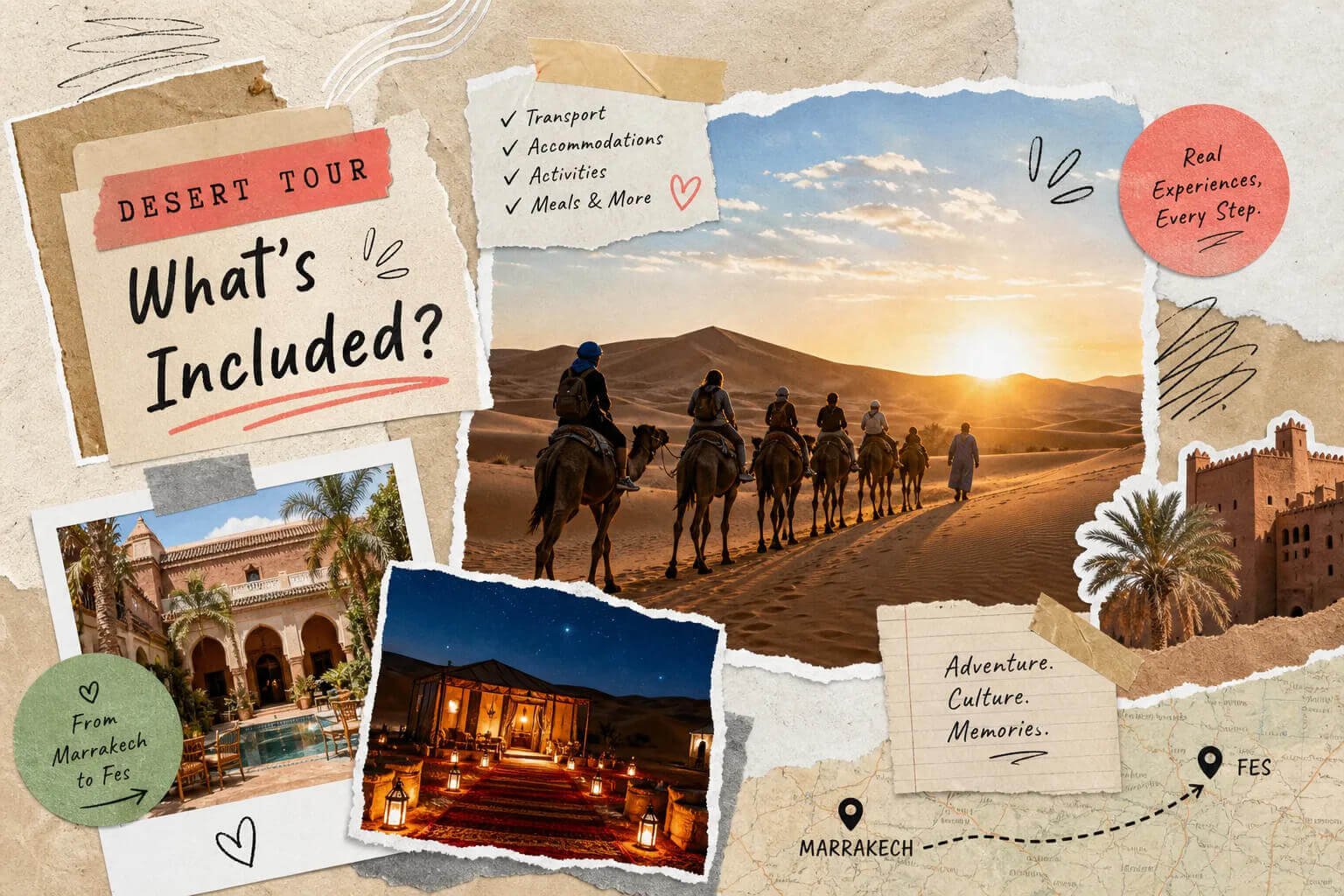
Uncover what a Marrakech to Fes desert tour offers, including camel rides, desert camps, and rich cu...
Read this article
Join our Merzouga Overnight Tour for an authentic desert experience. Enjoy camel rides, comfortable ...
Read this articleWant cool tour deals and tips about Morocco? Enter your email and we’ll send them to you each month!
