Group Tour Agencies in Morocco: How to Pick the Right One
Compare Morocco group tour agencies by trip style, reviews, pace, transport and inclusions. Learn wh...
Read this article

We’ve helped people travel around Morocco for more than 15 years. We offer fun and easy packages to see famous places like the mountains, desert, and more.
How many days does a Marrakech-to-Fes desert tour take? Most travelers get this wrong before they even book. They see the phrase on a tour listing, assume it's a quick loop, and pick the shortest option available. Then they spend two full days watching Morocco through a car window. The route is genuinely beautiful, but the drives are long, the stops deserve real time, and the Sahara deserves more than a single rushed night.
You can technically complete this route in two days. You probably shouldn't. The real question isn't whether you can fit it into your schedule; it's how much of Morocco you actually want to experience while you're here.
At Morocco Classic Tours, based in Fes, we operate this route across every format: 3-day sprints, leisurely 5-day circuits, and everything in between. What follows is an honest breakdown of each duration, real driving times, what's actually included at each tour length, and the one-way versus round-trip question that most booking guides quietly skip.
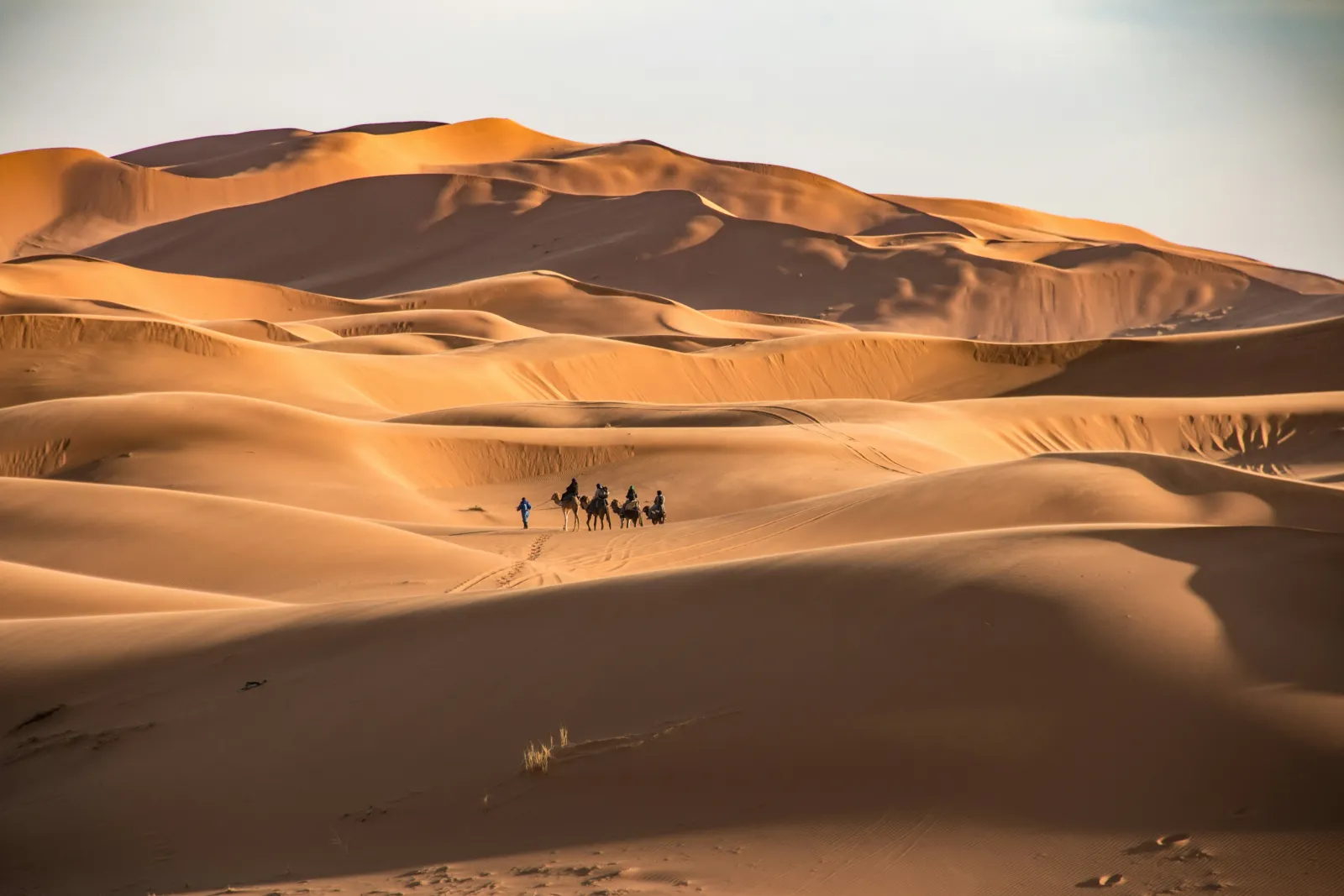
The 3-day format dominates the market because it hits the minimum viable experience. You get one night in a valley region hotel or riad, one night in a Sahara desert camp at Erg Chebbi, and you move efficiently between Marrakech and Fes without burning too much vacation time. For travelers with a tight schedule, it covers the essentials.
The problem is what gets compressed. On a 3-day Marrakech to Fes desert tour, Todra Gorge and Dades Valley become windshield sightseeing. You see them, you admire them from the car, and then you keep moving. Travelers who want to hike, photograph, or simply sit with a coffee and look at canyon walls often finish the trip wishing they had one more day. The 4-day format solves this without dramatically inflating the cost or the time commitment.
The 2-day option exists, and operators do sell it. It involves significant driving on both days, one desert camp night, and very little time for anything else. It's worth knowing about if your schedule truly forces the issue, but for most travelers flying in from the U.S., spending the vast majority of both days in a car isn't what they pictured when they imagined Morocco.
This is the most booked format on the route, so it deserves a clear picture of what each day actually looks like on the ground.
You leave Marrakech in the morning and cross the High Atlas via the Tizi n'Tichka pass, one of the most dramatic mountain drives in North Africa. The contrast hits you quickly: city noise drops away, snowcapped peaks appear, then the landscape shifts to dust-red canyon walls and Berber villages clinging to hillsides. From there, the route continues through Ouarzazate and Aït Ben Haddou, a UNESCO-listed ksar that has served as a filming location for productions including Gladiator, Game of Thrones, and The Mummy. Plan for roughly 4 to 5 hours of driving with stops. You'll overnight in a riad or hotel in the Dades Valley or Todra Gorge area.
This is the day the whole itinerary builds toward. You drive from the valley region east toward Merzouga, arriving in time for a late afternoon camel trek into Erg Chebbi. The Erg Chebbi camel trek length runs roughly one hour each way, timed to land you at the dunes as the light turns gold. Dinner is served at camp, often accompanied by Gnawa music around the fire. You sleep in a traditional tent under an open sky, with very little light pollution in any direction. Morning brings a sunrise over the dunes that justifies every long drive on the itinerary; many travelers describe it as the most memorable night of their Morocco trip.
After sunrise and breakfast at camp, you head north. The Merzouga-to-Fes transfer time runs 7 to 8 hours with stops, making this the longest driving day of the route. The scenery shifts dramatically as you climb from the Sahara back into the Middle Atlas: the Ziz Valley's palm oases, the mountain town of Midelt, the cedar forests around Azrou where wild Barbary macaques roam roadside, and the manicured streets of Ifrane before dropping into Fes in the late afternoon. Plan for an evening arrival and don't schedule anything urgent that night.
More days don't just mean more driving. Each additional day slots into a specific part of the route and changes what's possible there.
The extra day in a 4-day format is almost always used between the High Atlas and the desert, typically in Dades Valley or Todra Gorge. Instead of a drive-through glance, you get a real night and a morning. That means a hike into the gorge before the heat builds, a slow breakfast with canyon walls on three sides, and the kind of photography that requires you to actually stop moving. The drive from the valley to Merzouga on Day 2 feels less punishing when you're not also processing a full day of High Atlas sightseeing from the hours before.
On a 5-day tour, the additional time lands in Merzouga itself. With a full extra day at Erg Chebbi, the itinerary opens up: a 4x4 excursion into the surrounding desert, a visit to a nomad family near Khamlia, fossil site exploration near Rissani, or simply spending the afternoon reading in the shade of your tent without a camel loading up behind you for the next group. This format suits photographers, slow travelers, families with younger kids, and anyone who crossed the Atlantic and doesn't want to feel like they're racing through a highlight reel from a moving vehicle. At Morocco Classic Tours, we build 5-day itineraries around what each traveler actually wants in the desert, rather than filling the extra day with filler stops.
These numbers matter. Many travelers book a desert tour without fully accounting for what long car days feel like in practice.
Marrakech to Ouarzazate covers roughly 200 km and takes about 3.5 to 4 hours nonstop. With a stop at the Tizi n'Tichka pass viewpoint and time at Aït Ben Haddou, the realistic figure is closer to 4 to 5 hours. It's a beautiful opening drive, but it's a substantial one.
The valley towns to Merzouga run 5 to 7 hours depending on your starting point and how many stops you make. This is the leg where the choice between a 3-day and 4-day tour matters most. Travelers who skipped a valley overnight feel the cumulative distance most sharply here, arriving at Merzouga tired before the camel trek even starts.
Merzouga to Fes is the longest single driving day on the route at 7 to 8 hours. Stops at Midelt and the Azrou cedar forest break it up naturally, but it's still a full travel day. Expect a late afternoon or early evening arrival in Fes, and factor that into your next day's plans.
On most private 3-day and 4-day tours on this route, the baseline inclusions are broadly consistent: one night in a desert camp, one camel trek into Erg Chebbi (roughly one hour each way), two breakfasts, two dinners, and private air-conditioned transport with door-to-door pickup from your Marrakech accommodation. Lunches and drinks are typically not included. The camel ride to camp is part of the overnight package, not a separate add-on. Inclusions do vary by operator, so it's worth confirming the specifics before booking.
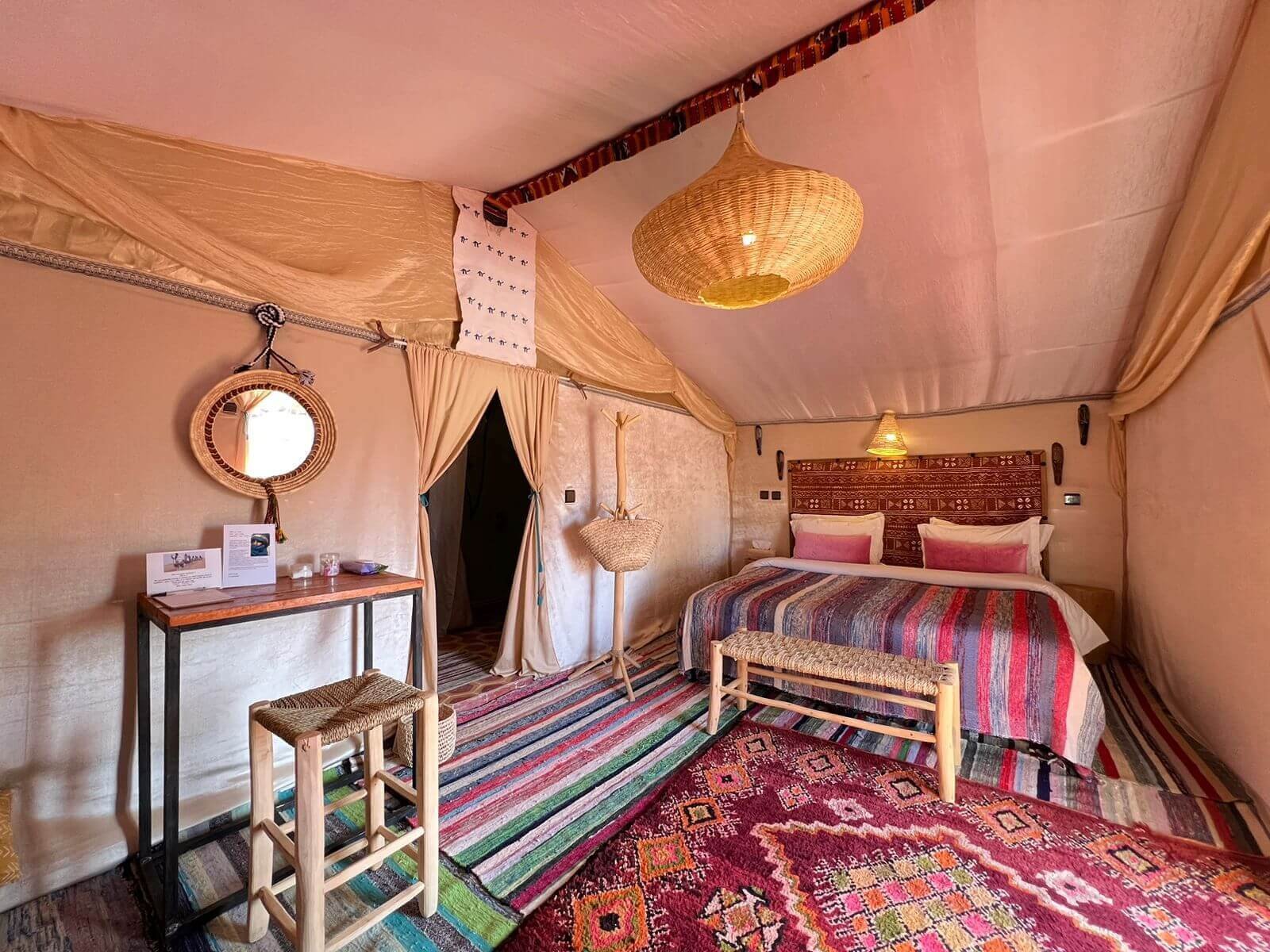
The main variable is camp quality. A standard camp means a shared tent with basic bedding and shared bathroom facilities, comfortable enough for the experience, though privacy is limited. A luxury camp means a private tent with a real bed, an ensuite bathroom with a hot shower, and often solar-powered lighting and phone charging. Standard camps run approximately $45 to $100 per person per night; luxury options typically range from $150 to $400 or more, depending on the camp and season (prices are approximate and based on current market offerings). Many couples and honeymooners choose the luxury option for the added privacy. Solo travelers and budget groups tend to find standard camps perfectly adequate for the experience.
On 4-day and 5-day tours, the extra nights add meals and accommodation at valley hotels or riads, and some operators include a lunch or two on longer formats. The pattern is consistent: more days means more included meals and more accommodation nights, but the desert camp experience itself stays at one night unless you specifically request an additional Merzouga night.
The Marrakech-to-Fes route is a natural one-way corridor. Doing it as a round-trip means repeating the same long drives back to Marrakech without adding new scenery, which eats vacation days for no real gain. The one-way format fits naturally into a broader Morocco itinerary: Marrakech to the desert to Fes, then onward to Chefchaouen, Rabat, or Casablanca. The only scenario where a round-trip Marrakech-Fes tour genuinely makes sense is when a traveler's flight departs from Marrakech,h and there's no other option.
On the private versus group question, group tours cost less and work fine if you're comfortable following a fixed schedule with strangers. Private tours give you control over departure time, stop length, pacing, and the people in your vehicle. On a route where you're spending 6 to 8 hours per day in a car, pacing matters far more than it does on a city tour. Families, couples, and travelers with specific photography or food interests often find group departures limiting on this route, particularly on the long final day north to Fes, since there's little room to linger when the group needs to keep moving.
Morocco Classic Tours operates this route as a private service. We build each itinerary around the actual traveler, not a predefined departure calendar. If you need 3 days, we make 3 days work well. If you have 5 days and want to spend an extra afternoon in Erg Chebbi watching the light change on the dunes, we'll plan for that too.
Most travelers will be well-served by 3 or 4 days. Three days is enough to cover the essential stops on the Marrakech to Fes desert route without dragging out the trip; it works best for travelers who've already decided the Sahara is the main event and are willing to move quickly through the gorges. Four days adds breathing room in Dades or Todra and makes the whole experience feel less like a transit race and more like travel.
Five days is for travelers who want to actually live in the Sahara for a stretch rather than just pass through it. It's the format we recommend for anyone who flew more than 10 hours to get here and wants Morocco to feel like something other than a rapid-fire itinerary.
That's the route this trip rewards most: unhurried, intentional, with room to stop when something's worth stopping for. Whether you have 3 days or 5, the smartest move is working with an operator who knows how many days a Marrakech to Fes desert tour should take for your specific travel style, and builds the itinerary accordingly. Reach out to Morocco Classic Tours for a custom quote, and we'll put together an itinerary that fits your schedule, travel style, and what you actually want to bring home from this trip.
Most tours run 3 to 5 days. Three days is the most common format and covers the essential stops: High Atlas crossing, Aït Ben Haddou, Dades Valley, Erg Chebbi camel trek, and the drive north to Fes. Four days adds a proper night in Todra Gorge or Dades Valley. Five days adds extra time in the Sahara at Merzouga. Two-day options exist but leave very little time for anything other than driving.
Most travelers do it one-way, finishing in Fes. This makes sense logistically since Marrakech and Fes are Morocco's two main gateway cities. Round-trip tours are available but involve repeating the same roads in reverse, which most travelers find less rewarding unless their return flight is from Marrakech specifically.
Driven straight through, Marrakech to Fes is roughly 11 to 12 hours. Desert tours break this into multiple days, routing through Ouarzazate, the Dades and Todra gorges, Merzouga, and the Middle Atlas. The longest single driving day on the route is typically the final leg from Merzouga to Fes, which runs 7 to 8 hours with stops.
The camel trek into Erg Chebbi typically takes about one hour each way. Departures are timed for late afternoon so you arrive at the dunes during the golden hour before sunset. The return ride happens after sunrise the following morning.
Group tours are less expensive and suit travelers comfortable with a set schedule. Private tours give you control over timing, pacing, and stops, which matters significantly on a route with 6 to 8 hours of driving per day. Families, photographers, and travelers with specific interests generally find private tours a better fit on this route.
Compare Morocco group tour agencies by trip style, reviews, pace, transport and inclusions. Learn wh...
Read this article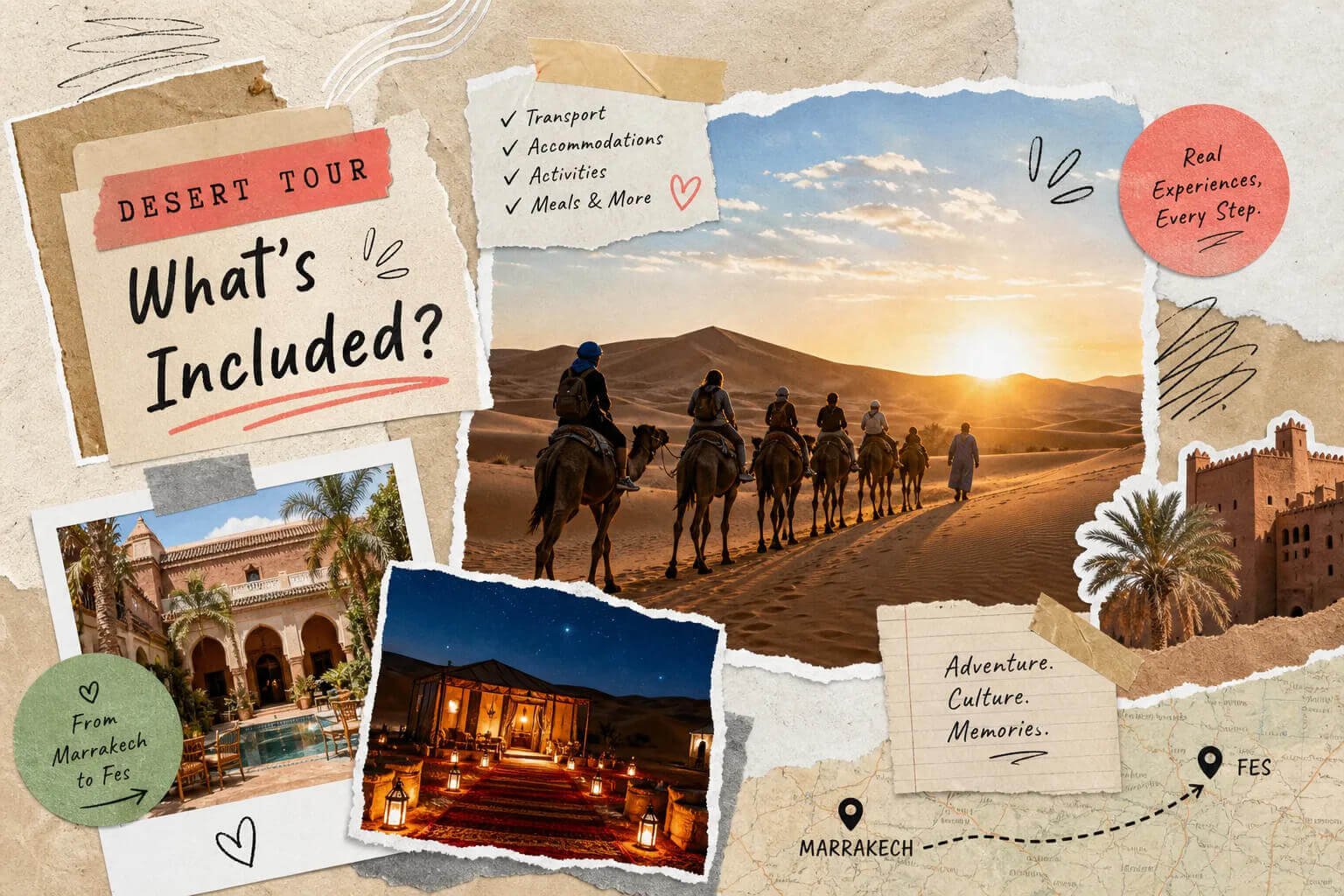
Uncover what a Marrakech to Fes desert tour offers, including camel rides, desert camps, and rich cu...
Read this article
Join our Merzouga Overnight Tour for an authentic desert experience. Enjoy camel rides, comfortable ...
Read this articleWant cool tour deals and tips about Morocco? Enter your email and we’ll send them to you each month!
