Group Tour Agencies in Morocco: How to Pick the Right One
Compare Morocco group tour agencies by trip style, reviews, pace, transport and inclusions. Learn wh...
Read this article

We’ve helped people travel around Morocco for more than 15 years. We offer fun and easy packages to see famous places like the mountains, desert, and more.
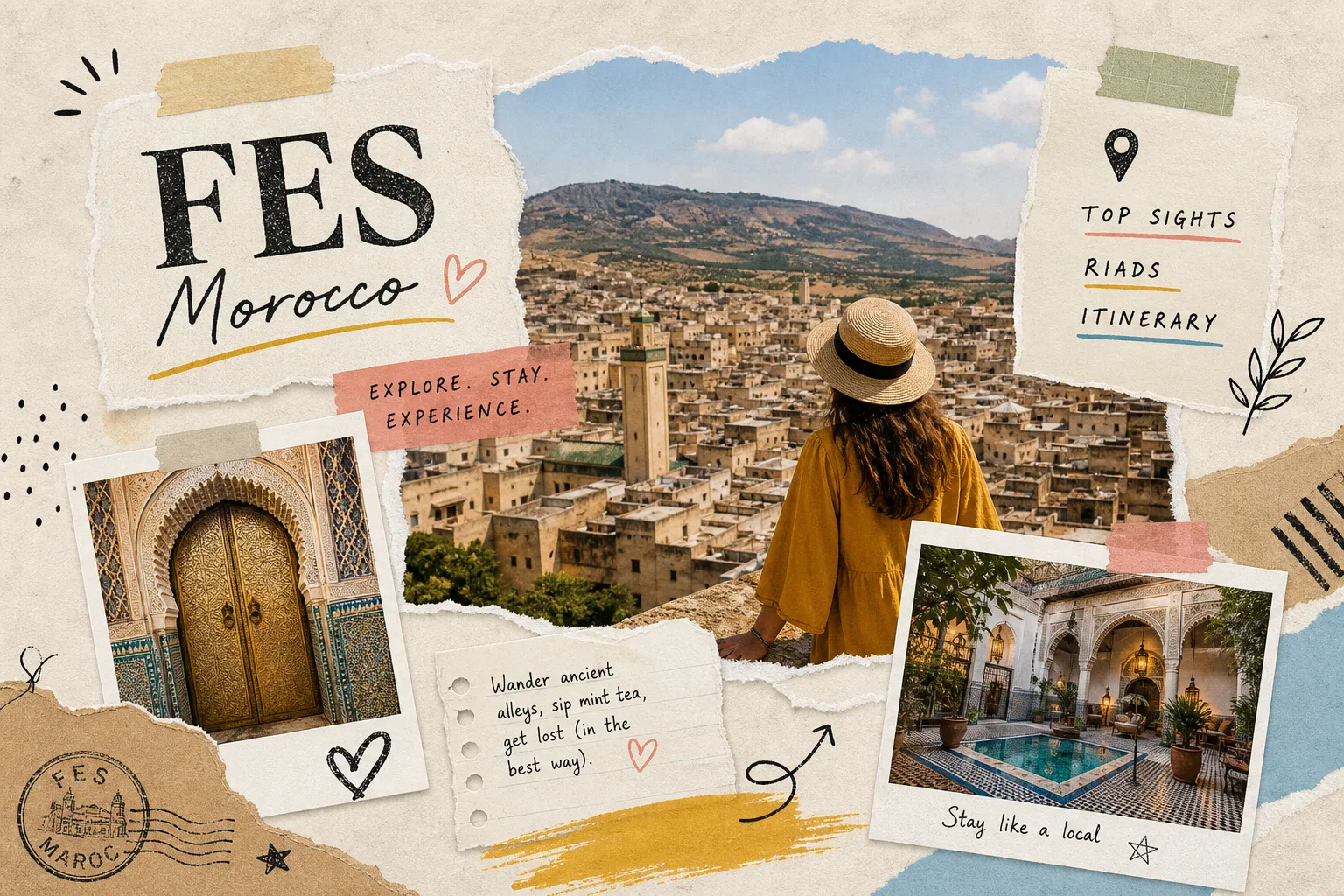
Marrakech gets the Instagram attention. Fes is where Morocco's soul actually lives. The medina of Fes el-Bali is one of the largest historic car-free medinas in the world, a UNESCO World Heritage Site that largely preserves its medieval urban layout; the tanneries still operate by hand, the alleyways still confuse first-timers, and the calls to prayer still echo off the same carved plaster walls they always have.
This Fes Morocco travel guide shows you where to stay, how to structure your time whether you have one day or three, how to move through the medina without getting lost or overcharged, and which cultural missteps to avoid entirely. Morocco Classic Tours operates private medina walks staffed by guides who grew up in these streets, which makes a genuine difference when you're navigating thousands of alleyways.
Fes isn't a stopover. It's a destination that rewards people who actually want to understand Morocco, not just photograph it from a rooftop. Here's everything you need to make that happen.
Fes el-Bali was founded in the 9th century and today remains largely inaccessible to cars and traffic. The alleyways, tanneries, and souks operate on roughly the same rhythm they did during the Marinid dynasty, preserving a medieval urban layout that is genuinely rare in North Africa. That's not marketing copy. It's an architectural and economic reality that makes Fes unlike any other city in the region.
Compared to Marrakech, Fes feels less polished and more intense; that's an editorial observation, not a ranking. Day one can be disorienting in the best way. By day two, the city starts making sense in layers: the logic of the craft quarters, the hierarchy of the old streets, the way every corner seems to open into something unexpected. That shift from confusion to comprehension is exactly what slow travelers come here for.
Fes is also home to the world's oldest continuously operating university, the University of al-Qarawiyyin, founded in 859 AD. Add Morocco's finest concentration of traditional craftsmanship in leather, mosaic tilework, and carved cedar, along with some of the most important Islamic architecture in North Africa, and you have a city built for people who travel to learn something, not just to relax.
The most logical entry point into the medina is Bab Bou Jeloud, the Blue Gate. From there, a single main street, Talaa Kebira, runs downhill through the heart of Fes el-Bali and connects nearly every major sight worth seeing. Start here, and the city's layout begins to make sense.
Bou Inania Madrasa sits just inside the gate and is the finest piece of Marinid architecture in Fes. Admission runs around 20 to 30 MAD, and opening hours are roughly 9 AM to 5 PM (verify locally, as hours can shift seasonally). The detail work in carved plaster, zellige tilework, and cedar screens is worth taking slowly. Further into the medina, the Al-Attarine Madrasa offers similar craftsmanship at a smaller scale and costs around 20 MAD.
Chouara Tannery is best viewed from the terraces of surrounding leather shops between 9 AM and 3 PM, when the work is most active. What you'll actually see: a grid of stone vats filled with colored dyes, workers treading hides barefoot, and the sharp smell of tannin. Viewing is typically free from the shop terraces, though a small tip to the shopkeeper whose terrace you're using is customary and fair.
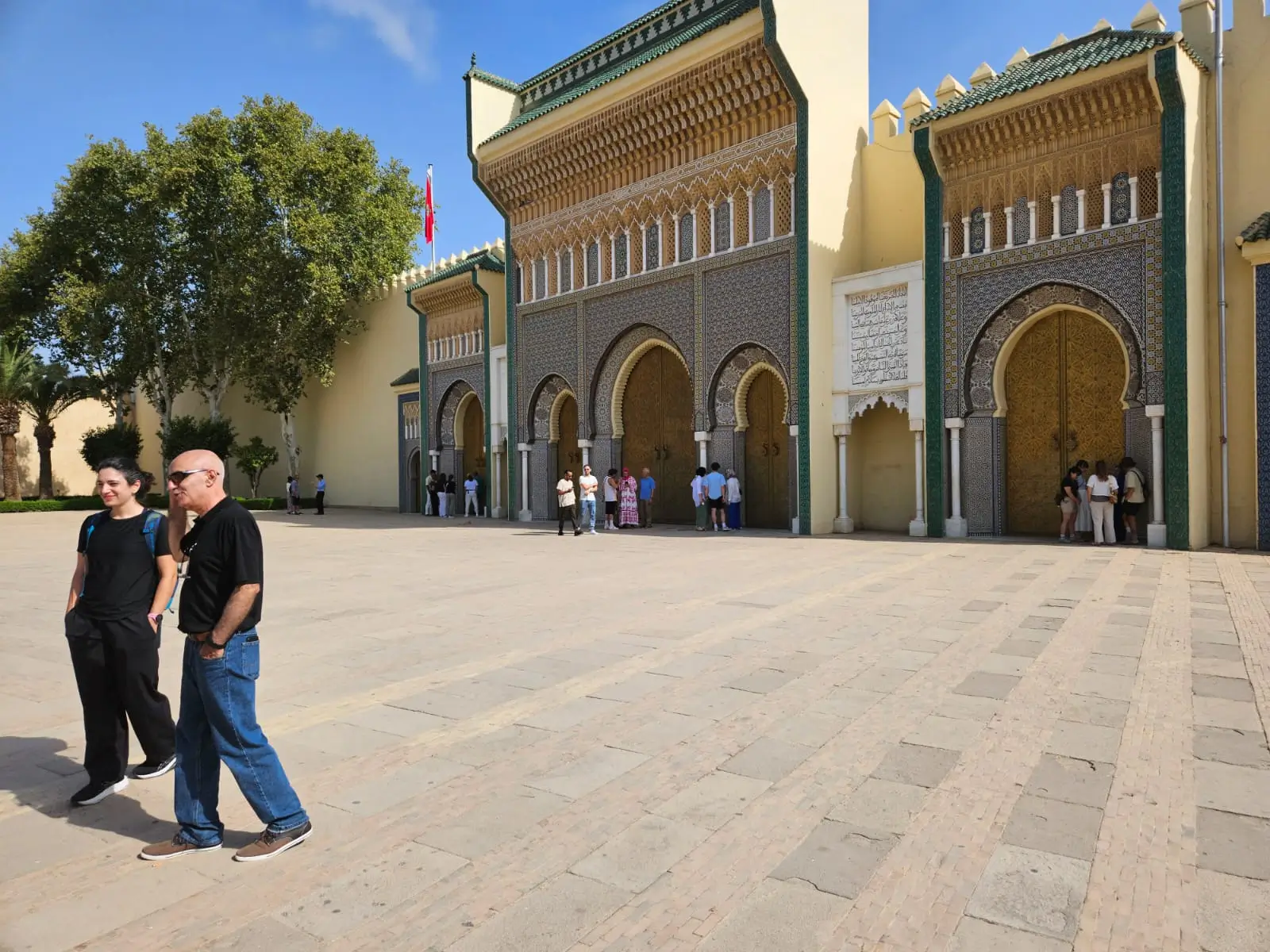
For panoramic views, the Merenid Tombs above the medina (also called the Marinid Tombs or Borj Nord area) offer the best sunset vantage point in the city, and access is free. Arrive around 45 minutes before sundown to get a spot. Other landmarks worth building into your route include the Nejjarine Fondouk and its carved cedar fountain (around 20 MAD), the exterior of the Mausoleum of Moulay Idriss II, and the Royal Palace gates at Dar el-Makhzen, which are exterior-only but make for a striking photo stop.
First-time visitors do best in the area around Bab Bou Jeloud and Batha. It's the most central zone, has the widest selection of riads, and sits closest to transport links and the main sightseeing circuit. It's also noisier than quieter parts of the medina, but the orientation advantage on a first visit is worth it.
The Kairouyine Quarter is a strong alternative: central, walkable to all the major landmarks, and a bit more settled in atmosphere. The Andalusian Quarter, on the other side of the Oued Bou Khareb river, is quieter and more residential, slightly more affordable, but less convenient if you're running a tight sightseeing schedule.
Riad prices in Fes break down cleanly by tier (rates are approximate and subject to change; confirm on booking platforms or directly with the property):
One practical detail that surprises a lot of first-timers: confirm before booking that your riad can arrange luggage pickup from the nearest medina gate. Cars cannot reach most properties inside Fes el-Bali, and arriving with heavy bags and no plan is a stressful way to start a trip.
This is a full day on foot, so wear comfortable shoes and carry water. The route follows a logical downhill sequence through the medina's main artery:
Day one follows the one-day route above. Day two is intentionally slower. Start with Jnan Sbil Gardens in the morning for a calm contrast to the medina's intensity, then move to Dar Batha Museum for Islamic arts and Fes crafts (around 20 MAD, closed Tuesdays). The Mellah, Fes's historic Jewish Quarter, and the Ibn Danan Synagogue (around 20 MAD) offer a genuinely different layer of the city's history. The afternoon works well for an artisan pottery or mosaic workshop, where you can watch craftspeople work and buy directly without the souk markup.
Think of Day 2 as the day for wandering rather than ticking off sights. Fewer tickets, more turning down alleyways that look interesting, more time lingering over a mint tea before the next stop.
Days one and two follow the structure above. Day three is for going slower still: revisit a madrasa at a different time of day (the light shifts dramatically between morning and afternoon), take a guided backstreet walk through parts of the medina that don't appear on tourist maps, spend real time in the souk with enough patience to actually bargain, and close with a final sunset viewpoint. A three-day stay is the ideal minimum for an unhurried experience. Fes is the kind of place that opens up the more time you give it.
The most common scam in Fes has nothing to do with pickpockets. It's the unofficial guide: a stranger offers to show you the way, leads you through a few turns, then brings you to a shop and either demands payment or expects you to buy something. The rule is simple. If you didn't hire them, you don't owe them anything. A firm, polite "la shukran" (no thank you) without further engagement is the most effective response.
Taxis are the second most common friction point. Always negotiate the fare or confirm the meter before you get in. The standard airport-to-medina rate runs around 150 MAD. If a driver quotes you 300 MAD or more and refuses to use the meter, walk away and try the next taxi. From the train station to the medina gate, a petit taxi should cost 10 to 20 MAD.
On cultural etiquette: keep shoulders and knees covered near religious sites. Non-Muslims generally cannot enter active mosques in Morocco, so appreciate them from the exterior. When photographing craftspeople, always ask first. Tannery workers are accustomed to tourists on the terraces, but basic acknowledgment goes a long way. If you're visiting during Ramadan, shops open later, and the midday pace slows considerably.
The honest answer on guides: the Fes medina has thousands of alleyways. Getting disoriented isn't a tourist failure; it's what the city's architecture produces. A knowledgeable local guide greatly reduces the risk of scams, unlocks corners that don't appear on any map, and turns a confusing walk into a coherent story about a city that's been building itself for over a thousand years. Morocco Classic Tours offers private medina walks led by Fes-born guides and can build a fully customized Fes itinerary for travelers who want that experience without the stress of navigating it solo.
From Fes Airport, a taxi to the medina costs around 150 MAD and is the simplest option for most travelers. A pre-booked private transfer runs 200 to 500 MAD depending on vehicle type and service level. The budget alternative is Bus 16, which connects the airport to Fes train station for 4 to 6 MAD in about 30 to 40 minutes, followed by a petit taxi to the medina gate for another 10 to 20 MAD. The bus option works well with light luggage and a daytime arrival. With heavy bags or a late flight, the private transfer is worth the extra cost. Three-day trips from Fes are genuinely worth building into your schedule. Meknes is 45 minutes away by train or grand taxi and offers the massive Bab Mansour gate and the Moulay Ismail Mausoleum. Volubilis, Morocco's best-preserved Roman ruins, pairs naturally with a Meknes visit and runs around 100 MAD admission. Chefchaouen, the famous blue city, is a 3 to 4 hour drive from Fes and works much better as an overnight stay than a rushed day trip. Morocco Classic Tours can arrange private transfers and guided day trips to any of these destinations, a practical alternative to coordinating shared grand taxis with luggage.
Fes is the kind of city that rewards preparation. Knowing your itinerary before you arrive, picking the right neighborhood for your riad, understanding how taxis and medina gates work, and having a clear plan for when someone inevitably offers to "show you the way, these aren't small details. They're what separates an overwhelming first day from a deeply rewarding one.
The city has more to offer than most travelers expect, and it reveals that gradually, on its own terms. The travelers who leave Fes talking about it for years are the ones who showed up with the right framework and then let themselves get absorbed by the place.
Use this Fes Morocco travel guide to plan your trip, or contact Morocco Classic Tours to build a customized itinerary, from single-day medina walks to full multiday experiences with transfers, riads, and everything in between. Tell us how much time you have. We'll take it from there.
Compare Morocco group tour agencies by trip style, reviews, pace, transport and inclusions. Learn wh...
Read this article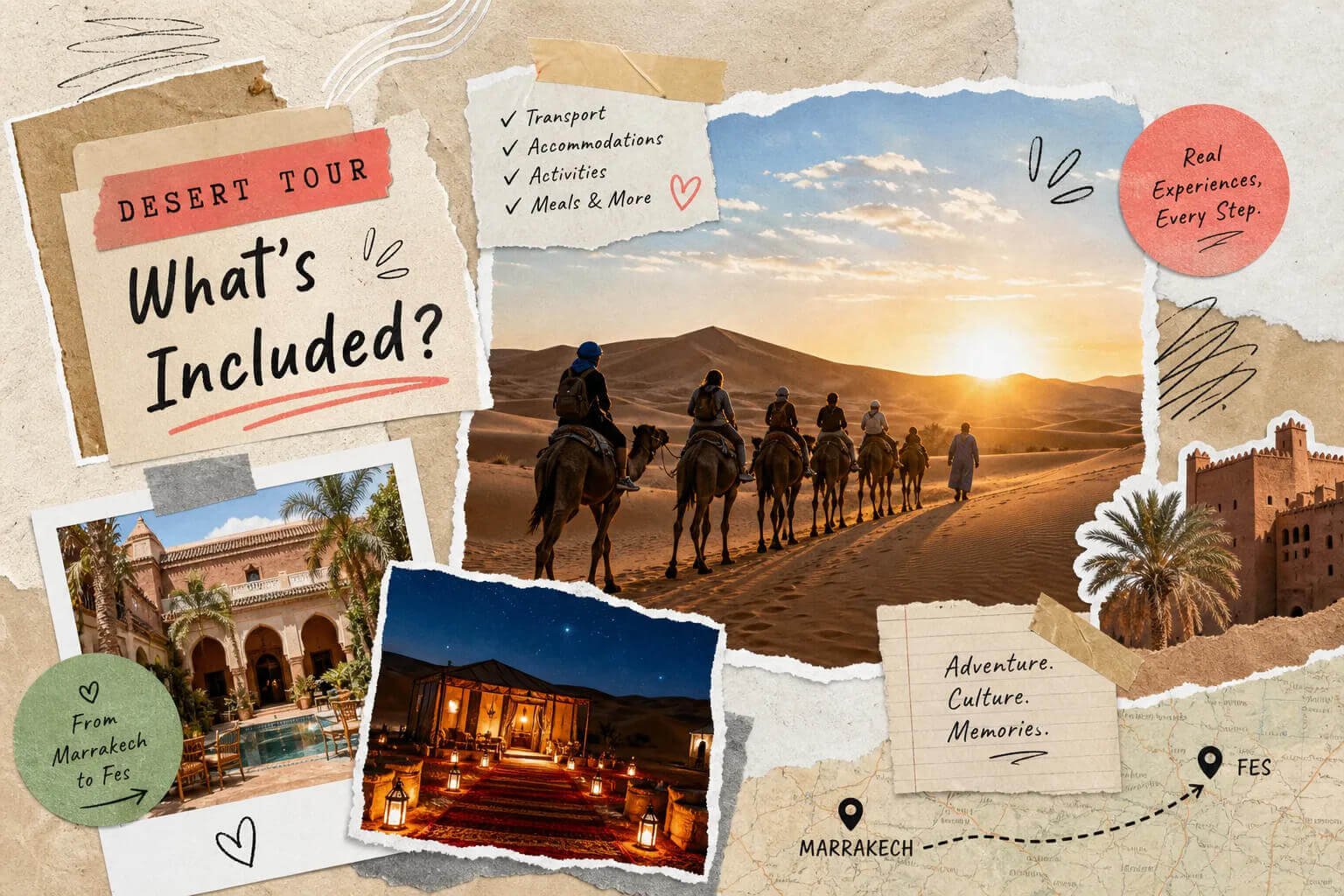
Uncover what a Marrakech to Fes desert tour offers, including camel rides, desert camps, and rich cu...
Read this article
Join our Merzouga Overnight Tour for an authentic desert experience. Enjoy camel rides, comfortable ...
Read this articleWant cool tour deals and tips about Morocco? Enter your email and we’ll send them to you each month!
