Group Tour Agencies in Morocco: How to Pick the Right One
Compare Morocco group tour agencies by trip style, reviews, pace, transport and inclusions. Learn wh...
Read this article

Private, custom Morocco trips planned in Fez by AZ-ZDDINE, working in Moroccan tourism since 2012. Sahara, Atlas, medinas and coast, arranged around you.
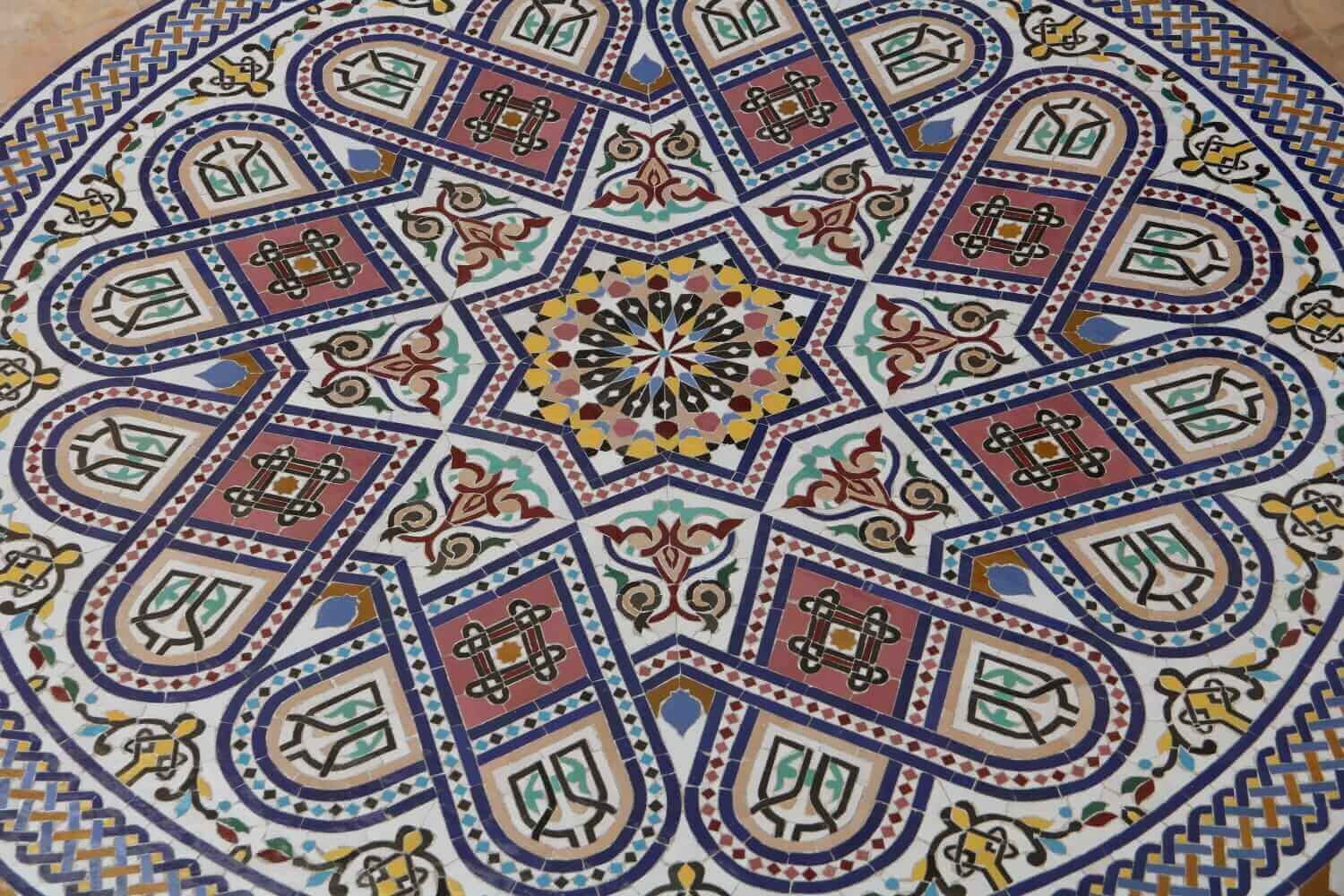
Moroccan tile work, especially zellige and bejmat, is a centuries-old craft centered in cities like Fez and Meknes, now widely used in modern kitchens, bathrooms, riads, and luxury hotels around the world.
Zellige is hand-cut, glazed terracotta mosaic tile typically from Fez, while bejmat is thicker, usually unglazed terracotta used for floors and outdoor spaces—both differ significantly from cheaper, machine-made “Moroccan-style” tiles.
Handmade Moroccan tiles cost more than standard ceramic, with authentic zellige ranging from €80–200 per m² in Morocco and €150–400+ per m² from international suppliers, plus installation costs of €50–150 per m² depending on complexity.
Travelers can see the finest historical examples in Fez, Meknes, Marrakech, and Andalusian monuments like the Alhambra. Morocco Classic Tours can arrange visits to workshops and tile souks during your journey.
While these tiles are unique, timeless, and artisanal, they require sealing, expert installation, and can chip or craze—yet zellige is far from outdated, enjoying a strong resurgence in contemporary interior design.
Moroccan tile work is both decorative and deeply symbolic, rooted in Islamic art and local craft traditions stretching back over a thousand years. When you step into a riad courtyard or gaze at a palace wall covered in zellige, you’re witnessing more than beautiful decoration—you’re seeing a visual language that speaks to spiritual beliefs, cultural identity, and artistic mastery passed through generations.
The intricate geometric patterns found in Moroccan zellige—eight-pointed stars, interlocking polygons, and endless arabesques—reflect Islamic ideas of infinity, unity, and the divine order of the universe. Since Islamic tradition discourages figurative imagery in sacred and formal spaces, Muslim craftsmen developed complex geometry to extraordinary levels of sophistication. Each pattern suggests that creation extends beyond what the eye can see, inviting contemplation of the infinite.
Colors in traditional Moroccan tiles carry their own meanings. Green symbolizes paradise and Islam itself. Blue and turquoise represent protection, spirituality, and the heavens. White stands for purity and peace. Yellow and gold evoke light, prosperity, and wisdom. Deep red speaks to power and prestige. In historic palaces throughout Fez, madrasas in Marrakech, and the Alhambra in southern Spain, these vibrant colors and complex patterns signaled wealth, knowledge, and royal patronage—only the wealthiest patrons could afford walls covered floor to ceiling in hand-cut mosaic tilework.
For modern homeowners and travelers today, Moroccan tiles often symbolize craftsmanship, authenticity, and connection to the warm hospitality of riads, hammams, and traditional Moroccan architecture. Installing zellige in a contemporary bathroom or kitchen isn’t just a design choice—it’s a way of bringing centuries of artisanal heritage into daily life.
Moroccan zellige (also spelled zellij or zillij) emerged in the western Islamic world between the 10th and 13th centuries and reached its golden age under the Marinid and Nasrid dynasties. The craft evolved from earlier Byzantine and Roman mosaic traditions, with Muslim artisans adapting the technique to create something entirely new using glazed earthenware rather than polished stone tesserae.
The earliest fragments of this mosaic tilework appear in Tunisia and Algeria from the 10th and 11th centuries. Sophisticated examples from Qal’at Bani Hammad in Algeria, dating to palaces built between 1068 and 1091, show interlocking lustre-painted cross shapes and eight-pointed star tiles in emerald green and turquoise. These early works likely inspired the craftsmen who would establish Morocco’s tile-making tradition. By the time of the Almoravids and Almohads in the 11th and 12th centuries, zellij had arrived in Morocco. The minaret of Marrakesh’s Kutubiyya Mosque displays simple yet elegant green and white bands from this period, marking one of the earliest reliably dated examples in the country.
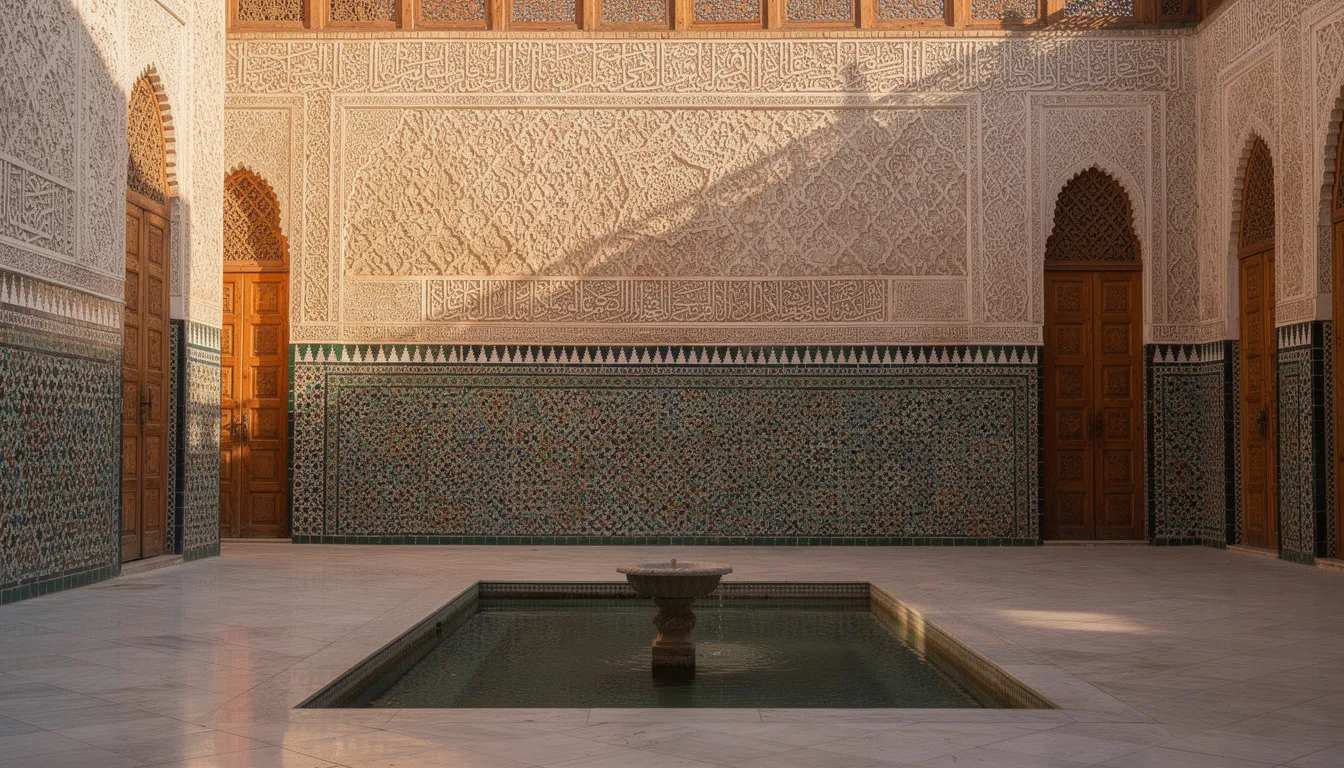
The craft flowered fully under the Marinids in the 13th and 14th centuries, when Fez emerged as the epicenter of zellige production. Monuments like Bou Inania Madrasa and Al-Attarine Madrasa in Fez showcase extraordinarily complex patterns in yellow, green, blue, white, and black—each wall a testament to the skill of master craftsmen known as maallems. Across the Mediterranean in Granada, the Nasrid dynasty created the Alhambra, where zellige panels from this same period survive in remarkable condition, a reminder that Moroccan tile work once adorned palaces across al-Andalus. The Zayyanid dynasty in Tlemcen also contributed to the development of these techniques, creating works that influenced broader Western Islamic architecture.
Cities like Fez and Meknes became major production centers during these centuries, with specialized guilds of maallems passing techniques from father to son. The craft was secretive and demanding—apprentices trained for years before earning the right to cut tiles. This knowledge transfer continues in present-day workshops, where young artisans still learn from masters using the same basic methods developed over 700 years ago.
Ottoman influence in North Africa from the 16th century onward shifted some regions toward imported European square tiles, but Fez maintained its traditions. The 19th and early 20th centuries brought colonial architecture to cities like Casablanca and Tangier, introducing cement tiles alongside traditional zellige. Yet the ancient craft persisted, used continuously for mosques, palaces, riads, and public fountains throughout Morocco.
In the 21st century, zellige has gained popularity globally, appearing in boutique hotels, high-end restaurants, and contemporary residential projects from London to Los Angeles. International designers prize its handmade character and rich history. Meanwhile, in Morocco, the craft remains a living tradition supported by heritage programs, workshop apprenticeships, and steady demand from riad restorations. When you visit Fez with Morocco Classic Tours on one of our best Morocco tours and travel packages, you can witness this unbroken chain of artisanship firsthand—watching maallems chip tiles just as their ancestors did centuries ago.
“Moroccan tile work” covers several traditional materials, each with distinct characteristics and uses: zellige, bejmat, cement tiles, and hand-painted ceramics. Understanding these differences helps whether you’re renovating a bathroom, planning a kitchen backsplash, or simply appreciating the walls and floors of Morocco’s historic buildings.
Zellige tiles are the most celebrated form of Moroccan tiles. Hand-made in Fez and Meknes from local clay, these small-format glazed terracotta tiles are cut into tiny pieces called tesserae to form complex tile mosaic patterns on walls, fountains, and floors. The surface of each piece is hand-glazed with a rich color palette of cobalt blue, emerald green, ochre yellow, pure white, and deep black. When assembled, zellige tiles create mesmerizing overall patterns of stars, crosses, and interlocking shapes that seem to extend infinitely.
The texture and slight irregularity of zellige—the way glaze pools unevenly, the natural variation from tile to tile—gives it a depth and character impossible to replicate by machine. Each piece is individually shaped by a maallems’ chisel, meaning no two tiles are exactly alike. This handmade quality is what distinguishes authentic Moroccan work from industrial imitations.
Bejmat tiles offer a different aesthetic. These thicker, mostly rectangular or square tiles are usually unglazed terracotta with a matte, rustic finish. Their earthy texture and slip-resistant surface make them ideal for high-traffic areas: courtyards, patio floors, hammams, garden paths, and pool surrounds. While modern glazed bejmat exists, the traditional version emphasizes durability and natural beauty over decorative intricacy.
Bejmat lacks the colorful complexity of zellige but brings warmth and groundedness to a space. Many riads use bejmat on floors while reserving zellige for wall tile applications and decorative panels.
Moroccan cement tiles (also called encaustic tiles) became popular in the late 19th century, particularly during the French colonial period. Made by pressing cement and pigment into molds, these tiles feature bold floral motifs and geometric patterns in saturated colors. You’ll find them in riads, cafés, and restored colonial-era buildings throughout Tangier, Casablanca, and Marrakech.
Cement tiles offer a different character than terracotta-based options—they’re suitable for both floors and walls, relatively low maintenance when properly sealed, and can be produced in a wider range of new designs and color combinations.
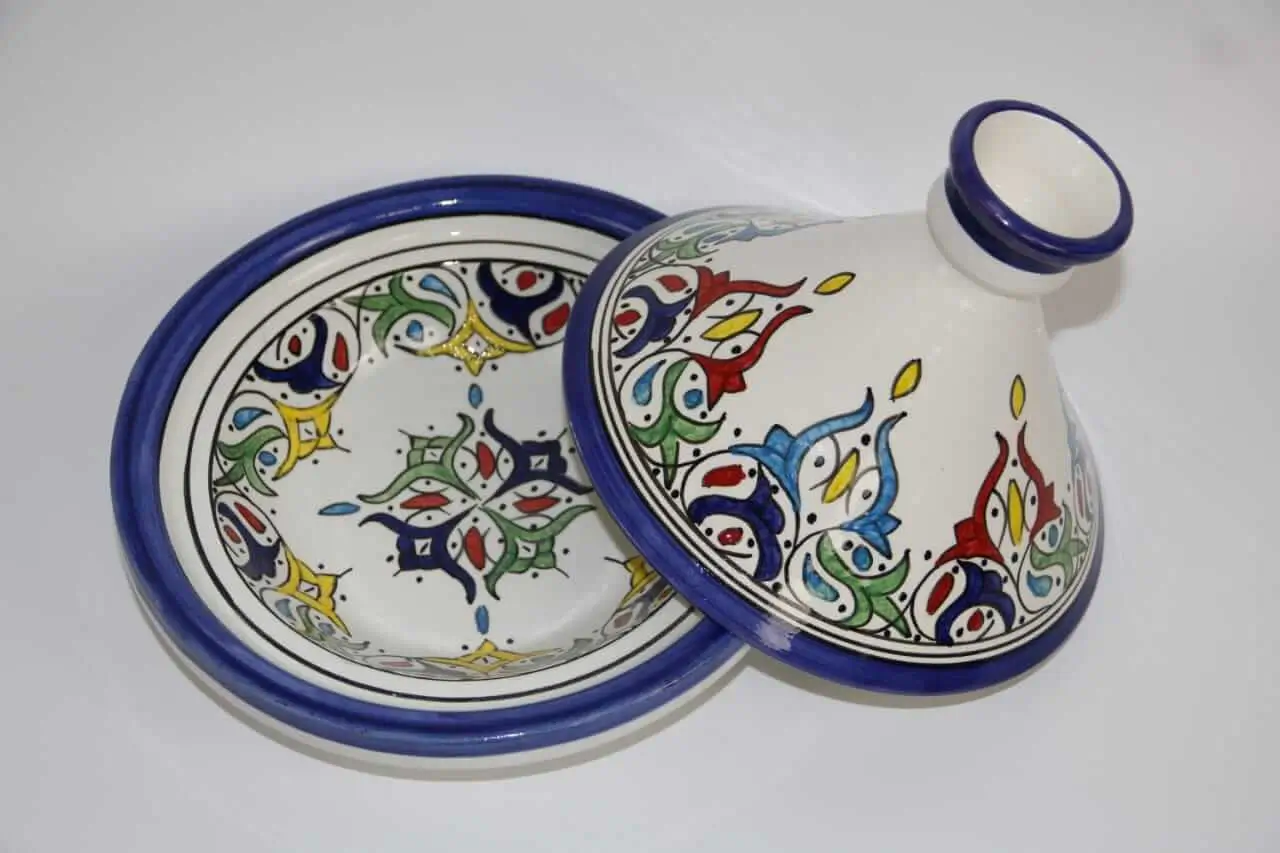
Hand-painted ceramic tiles from Safi, Fez, and Meknes feature floral and calligraphic motifs, often in blue-and-white or rich multicolor palettes. These are typically used for tabletops, stair risers, and accent bands rather than large surface coverage. They represent a different branch of Moroccan ceramic art, emphasizing painting skill rather than mosaic assembly.
Many mass-produced “Moroccan-style” tiles sold internationally are machine-printed porcelain imitations. While these offer uniformity and lower cost, they lack the irregular surfaces, subtle color variations, and tactile depth of authentic handmade Moroccan tiles. For travelers and design enthusiasts who value craftsmanship, the difference is immediately apparent.
Zellige is hand-molded, hand-glazed, hand-chiseled terracotta tile assembled into intricate mosaics. The craft remains concentrated in Fez, where workshops continue methods refined over centuries. Understanding how these tiles are made explains both their beauty and their cost.
The process begins with clay extraction from deposits near Fez. Artisans mix the clay, spread it to a uniform thickness, and cut it into squares or rectangles. After sun-drying, the tiles undergo their first firing in traditional kilns. Tile makers then apply glaze—a tin oxide opacifier that creates the luminous surface and enables the rich, jewel-like colors. A second firing strengthens the tile and sets the glaze.
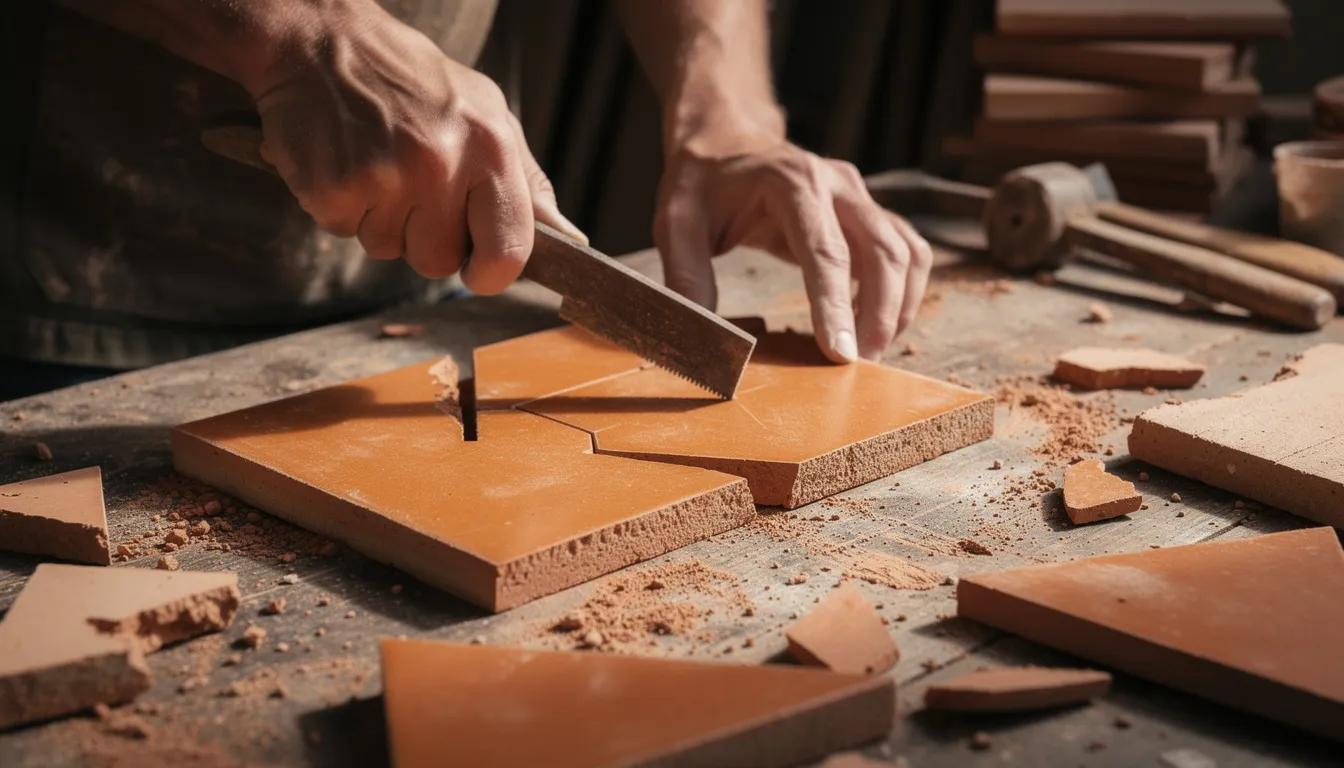
The most labor-intensive step follows: skilled maallems use hand tools called menqach to chip each glazed tile into precise geometric shapes—eight-pointed stars, hexagons, crosses, triangles. This cutting requires years of training and remarkable precision. Finally, the cut pieces are assembled upside-down like a puzzle on cement or plaster sheets, grouted, and installed as whole panels.
Several factors drive the cost of authentic zellige. The intensive manual labor by skilled maallems commands premium rates. Double firing consumes time and fuel. The rejection rate for imperfect pieces is significant. Fragile tiles require careful packaging, increasing transport costs. Unlike standard tile that can be produced by the thousands with minimal human touch, every zellige piece passes through many hands.
In Morocco, handmade zellige typically costs €80–200 per m² (roughly $10–25 per square foot) depending on pattern complexity and workshop. International boutique suppliers charge €150–400+ per m² after factoring in export logistics, shipping, and their margins. Machine-made “Moroccan look” tiles from European or Asian factories often cost €20–60 per m², but sacrifice authenticity entirely.
Yes, relative to standard ceramic, zellige requires a larger investment. But those who purchase it view the expense as worthwhile—these are heritage-quality tiles meant to last generations, carrying the mark of individual artisans and centuries of tradition. For a kitchen backsplash or bathroom accent wall, the additional cost may be modest in the context of an overall renovation budget.
Far from it. Zellige is experiencing a renaissance in contemporary design. International designers, boutique hotels, and high-end residential projects have embraced it for modern applications: monochrome kitchen backsplashes, minimalist bathroom walls, sculptural fireplace surrounds. The irregular surface and natural color variation that define zellige align perfectly with current trends favoring handmade, artisanal elements over mass-produced uniformity.
Design magazines and social media showcase zellige constantly—from riad renovations in Marrakech to apartment projects in Brooklyn. What might have seemed “ethnic” or “vintage” a generation ago now reads as sophisticated and timeless.
The characteristics that make zellige special—color variation, surface crazing, slight size inconsistencies—aren’t defects but inherent features. Some homeowners prefer perfect uniformity, and for them, industrial ceramics are better suited. Zellige demands acceptance of its handmade nature and works best for those who appreciate imperfection as part of the art.
Zellige and bejmat are both traditional Moroccan terracotta tiles, but serve different aesthetic and practical purposes. Understanding their differences helps homeowners and designers choose the right material for each application.
Zellige tiles are typically small and thin, often around 10 x 10 cm squares, before being cut into smaller mosaic pieces. The thinness allows for wall applications and detailed pattern work. Bejmat tiles are thicker and larger, commonly 14 x 4.5 cm rectangles or similar formats, designed for flat-lay installation on horizontal surfaces.
Zellige is almost always glazed, producing glossy, variegated surfaces with rich color depth. Light plays across zellige differently throughout the day, revealing new facets as conditions change. Bejmat is traditionally unglazed, presenting a matte, earthy texture that feels natural underfoot. Modern glazed bejmat exists but remains less common than the classic rustic version.
Historically, zellige covered vertical surfaces and decorative panels: walls, fountains, mihrabs, and dado panels in mosques and palaces. It also appears on floors in formal spaces, though its relatively delicate surface suits lower-traffic areas. Bejmat excels in high-traffic environments: courtyards, pool surrounds, hammam floors, patio spaces, and garden paths where slip-resistance and durability matter most.
Bejmat is often slightly less expensive per m² than fully patterned zellige mosaics because it doesn’t require the intricate cutting and assembly process. However, both require skilled installers familiar with handmade tiles. Zellige’s complex patterns demand more labor and careful planning during installation.
For a statement kitchen backsplash or bathroom shower wall, zellige delivers colorful impact and visual complexity. For an entryway floor, terrace, or rustic kitchen where durability and natural texture matter more than decorative intricacy, bejmat offers warmth and practicality. Many successful projects combine both: bejmat floors beneath zellige wall panels, each material playing to its strengths.
Many “Moroccan tiles” on the market are machine-made ceramics or porcelain printed with Moroccan-style patterns. These differ fundamentally from true handmade tiles produced by artisans in Fez, Meknes, or Safi.
Authentic handmade Moroccan tiles display irregular edges, variations in color from piece to piece, glaze pooling in some areas while thinning in others, hairline crazing across surfaces, and slight size differences. These “imperfections” require wider or variable grout joints and an experienced installer comfortable working with non-uniform materials. Each tile emerges unique from the hands of its maker.
Machine-made tiles offer uniform size, perfectly straight edges, repetitive printed patterns, and consistent color batch to batch. They’re easier and cheaper to install because they behave predictably. Production typically happens in Spain, Italy, Turkey, or Asia rather than Morocco, using CNC cutters and digital printing on pre-dried clay or porcelain.
Handmade tiles provide authenticity, tactile richness, depth of glaze, and direct support for local Moroccan artisans and heritage. They carry a story and cultural connection impossible to replicate industrially. For those who value Moroccan elegance and craftsmanship, there’s no substitute.
Higher cost is unavoidable. Lead times stretch longer—often weeks or months for custom orders. Installation requires specialized knowledge. Sealing may be necessary for terracotta and some glazes. The inherent variations that define handmade character frustrate those seeking perfect uniformity.
Budget-friendly pricing opens Moroccan-inspired aesthetics to more projects. Tiles are readily available from stock. DIY installation or standard contractors can handle them easily. Maintenance requirements are typically lower.
The appearance is flatter, less alive. Character and depth disappear. No direct cultural connection exists—you’re buying an imitation printed in a factory, not supporting generations of skilled artisans.
When purchasing, ask about origin: made in Morocco versus “Moroccan look.” Examine tiles for small imperfections that indicate handwork. Inquire about the workshop or maallems involved. Check whether the tile is terracotta-based (traditional) rather than porcelain (industrial). Reputable sellers provide this information readily.
Total cost for Moroccan tile work depends on tile type, whether handmade or machine-made, pattern complexity, and local labor rates. Understanding these factors helps homeowners budget realistically.
Handmade zellige purchased directly in Morocco typically costs €80–200 per m² (approximately $10–25 per square foot), with complex patterns and special colors at the higher end. International boutique suppliers selling authentic Moroccan tiles charge €150–400+ per m² after accounting for export, shipping, and markup. Machine-made “Moroccan look” porcelain runs €20–60 per m², significantly less but without the authentic character.
A standard kitchen backsplash covers roughly 4–6 m² (40–65 square feet). For handmade zellige at €150 per m² from an international supplier, materials alone cost €600–900 (approximately $650–1,000). Professional installation—including surface preparation, adhesive, grout, and sealing—adds another €200–600 depending on location and installer expertise. Total installed cost: roughly €800–1,500 ($900–1,700) for authentic handmade zellige.
Compare this with mid-range machine-made Moroccan-style ceramic at €40 per m²: materials cost €160–240, installation €150–300. Total: €310–540 ($350–600). The premium for handmade authenticity is significant but represents a lasting investment in quality and cultural connection.
Shipping from Morocco to Europe or North America adds €20–50+ per m², depending on quantity and method. Customs duties vary by country. Handmade tiles require ordering 10–15% extra to account for breakage and cutting waste—a factor rarely needed for uniform machine-made products. Custom patterns or colors may involve design team consultations and additional fees.
Prices change over time and vary by region. Request current quotes from local suppliers and contractors before finalizing budgets. For large projects, consider traveling to Morocco to source tiles directly—potentially saving money while enjoying an unforgettable experience.
Buying tiles in Morocco allows travelers to choose directly from workshops and souks, often at better prices and with more authentic options than purchasing abroad. The experience of selecting tiles where they’re made adds meaning to any renovation project.
Fez el-Bali remains the primary center for zellige and bejmat. The historic pottery quarter, located near the city walls, concentrates workshops where visitors can observe the entire process—from clay mixing to kiln firing to the precise hand-cutting that creates each small mosaic piece. Cooperative workshops welcome visitors and offer tiles at factory prices. Walking through these spaces, you’ll see stacks of drying clay, rows of glazed tiles awaiting cutting, and maallems working with tools handed down through generations.
Meknes offers a smaller-scale alternative with family-run ateliers specializing in traditional terracotta tiles and decorative fountains. The atmosphere is more intimate than Fez’s busy workshops, and artisans often have more time to discuss custom commissions and special orders.
Safi is Morocco’s center for hand-painted ceramics and decorative tiles, producing the distinctive blue-and-white and multicolor painted pieces used for accents and tabletops. Marrakech, while not a primary production center, features design-focused showrooms and riad-restoration suppliers around the medina and industrial outskirts. These cater to international clients and offer curated selections alongside export services.
Purchase from established workshops, cooperatives, or reputable medina boutiques that can explain clay origin, glazing methods, and production details. Avoid rushed purchases from aggressive touts; take time to compare quality and prices across several vendors. Establish a relationship with sellers who understand export requirements.
Professional packing in wooden crates is essential for fragile handmade tiles. Workshops experienced with international clients arrange shipping from Casablanca or Tangier ports. Transit times to Europe typically run 2–4 weeks; to North America, 4–6 weeks. Check customs rules beforehand—import duties and regulations vary by country and tile quantity.
Morocco Classic Tours can tailor itineraries that include guided visits to tile workshops, help with French-English translation during negotiations, and coordinate shipping for larger orders. Our Fez-based team knows the most reliable workshops and can facilitate meaningful connections with artisans, and we can weave tile-focused stops into Morocco day trips from major cities for travelers short on time.
Proper installation is crucial for zellige and bejmat. Their irregularities in size, thickness, and surface require installers familiar with handmade materials. Using generic tilers unfamiliar with Moroccan techniques often leads to disappointing results.
Inside Morocco, maallems and specialized tiling teams in Fez, Marrakech, and Casablanca regularly work on riad renovations, boutique hotels, and public buildings. These craftsmen understand the materials intimately—they know how to dry-lay tiles for color variation, handle uneven edges, and create seamless transitions between complex patterns. For travelers renovating a property in Morocco, hiring local specialists ensures authentic results.
Outside Morocco, seek installers with prior experience working with zellige or handmade terracotta. Ask to see portfolios showing curved or patterned installations. Request references from previous clients who commissioned Moroccan tile work. Confirm the contractor understands appropriate mortars, waterproofing requirements for wet areas, and suitable sealers for porous materials.
How do you handle tiles with uneven edges and variable thickness?
Do you dry-lay and sort tiles for color variation before final installation?
What’s your approach to expansion joints and substrates in bathrooms?
Have you worked with handmade terracotta or cement tiles before?
Can you provide references from similar Moroccan tile projects?
Skilled contractors handle kitchen backsplashes, bathroom walls and shower enclosures, courtyard floors, fireplace surrounds, and pool surrounds featuring Moroccan tiles. Each application presents specific challenges—wet areas require careful waterproofing, outdoor installations need frost-appropriate detailing, and complex geometric patterns demand precise layout planning.
Travelers who purchase tiles in Morocco can arrange installation locally during a riad renovation or ship tiles home to work with specialist installers in their own country. Either approach works, provided the installer respects the handmade nature of the materials.
Authentic Moroccan tile work comes primarily from workshops and ateliers in Morocco itself, not from branded product lines as with industrial ceramics. Understanding this ecosystem helps buyers make informed choices.
In Fez and Meknes, traditional family workshops operate as they have for generations—maallems training apprentices, kilns firing clay using time-tested methods. These workshops are produced for local riads, international hotels, and individual clients seeking authentic materials. Artisan cooperatives pool resources and provide training while ensuring fair compensation for craftsmen.
Design-driven studios in Marrakech and Casablanca collaborate with architects and interior designers, offering contemporary interpretations of traditional patterns alongside classic designs. These operations often handle larger export orders and provide more sophisticated project management.
Some European and North American brands source directly from Moroccan artisans and market tiles under curated collections. When these companies maintain genuine relationships with workshops and pay fair prices, they provide a valuable service—making authentic tiles accessible to international buyers who can’t travel to Morocco. Others, however, replicate the Moroccan look using industrial production, selling imitations at lower prices but without cultural authenticity.
Readers who value genuine craftsmanship should prioritize Moroccan-based makers and suppliers who can document where and how tiles are produced. Ask about the specific workshop, the maallems involved, and whether the supplier has visited production facilities. Companies supporting local artisans with fair wages deserve preference over those simply capitalizing on aesthetic trends.
Morocco Classic Tours does not resell tiles but can recommend reputable workshops and showrooms with strong reputations among architects and riad owners in Fez, Marrakech, and beyond. Our local knowledge helps travelers navigate options and connect with trustworthy sources.
Moroccan tiles adapt beautifully to modern bathrooms and kitchens, and custom work is widely available from Moroccan workshops and some international suppliers. The key lies in understanding both possibilities and practical requirements.
Yes, you can order custom Moroccan tile designs for bathroom remodels or kitchen renovations. Typical options include custom color selections within traditional palettes, unique geometric layouts combining different star and polygon shapes, personalized motifs or calligraphy panels, and tailored sizes or trim pieces for specific installations. Lead times run from several weeks to a few months, depending on complexity and workshop schedules.
Glazed zellige works beautifully for shower walls and niches, its natural water resistance protecting surfaces while adding visual interest. For bathroom floors, choose slip-resistant bejmat or textured tiles appropriate for wet areas. Proper waterproofing beneath tile installations is essential—specify this clearly with contractors. Regular cleaning with mild soap keeps zellige looking fresh; avoid harsh chemicals that can damage glazes.
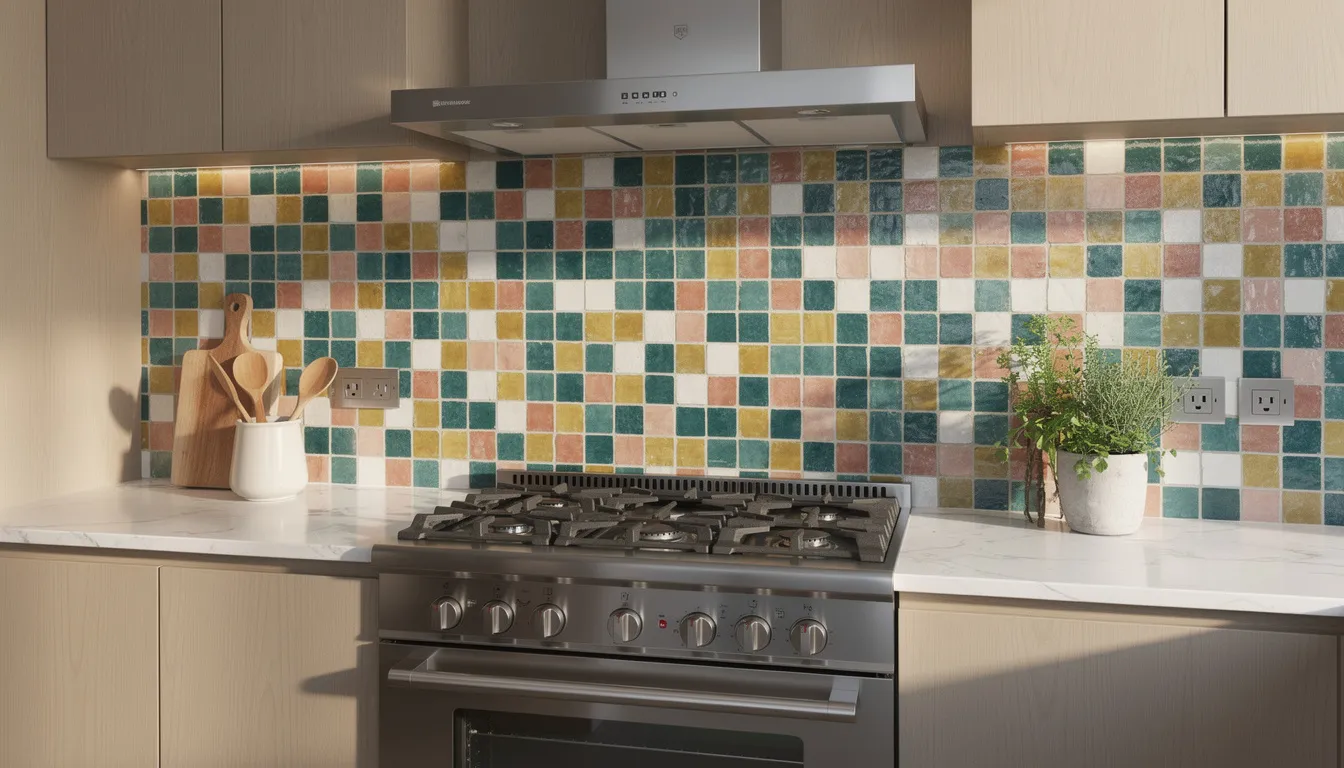
Zellige makes stunning kitchen backsplashes and feature walls. The small-format mosaic style suits the typically smaller areas involved, while rich colors provide focal points without overwhelming the space. Near cooktops, seal tiles appropriately and wipe frequently to prevent grease buildup. Balance busy tile patterns with more neutral countertops or cabinetry to avoid visual chaos.
Custom orders typically require detailed drawings showing exact dimensions and pattern placement. Agree on color palettes using physical samples when possible—photos don’t capture Zellige’s depth accurately. Expect deposits and clear agreements on shipping, breakage allowances, and delivery timelines. For highly complex geometric patterns, consider working with designers experienced in Moroccan geometry to ensure mathematical accuracy in the layout.
While Moroccan tiles are beautiful and durable, they’re not the right choice for every project or homeowner. An honest assessment of limitations helps make informed decisions.
A higher cost than standard tile is unavoidable for authentic handmade pieces. Complex installation requiring specialists adds to expenses. Lead times for custom or imported pieces stretch longer than picking up tiles from a local store. International buyers face shipping costs, customs duties, and the stress of fragile materials traveling thousands of miles.
Zellige’s uneven surface and occasional pinholes can trap dirt if not cleaned properly and regularly. Bejmat and terracotta are porous materials requiring sealing before use and periodic resealing thereafter. Cement tiles can stain or etch when exposed to acids, wine, citrus, or harsh cleaners. These maintenance demands exceed those of glazed porcelain or ceramic tiles.
Some people dislike the inherent irregularity, color variation, and surface crazing that define authentic Moroccan tiles. The “imperfect” qualities artisan enthusiasts celebrate may frustrate those preferring industrial precision and uniformity.
Extreme freeze-thaw environments present challenges for certain installations. Terracotta and cement tiles absorb water, which expands when frozen and can cause cracking. Outdoor use in cold climates requires attention to drainage, substrate preparation, and sealing. Not all Moroccan tiles suit all environments.
Those who prioritize perfect uniformity, minimal maintenance, and the lowest price may be better served by Moroccan-inspired porcelain tiles produced industrially. Those seeking character, authenticity, and connection to a living craft tradition will accept the trade-offs gladly. Neither choice is wrong—just different priorities.
Morocco Classic Tours is a Fez-based travel agency that regularly arranges cultural and design-focused itineraries throughout Morocco. Our local team of Morocco travel specialists has deep experience organizing safe, memorable journeys. For travelers interested in Moroccan tile work—whether as admirers, collectors, or prospective buyers—we offer experiences that connect you directly with this ancient craft.
Our private and custom itineraries can include guided visits to zellige workshops in Fez, where you’ll watch maallems demonstrate tile cutting and mosaic assembly techniques unchanged for centuries. We arrange shopping excursions with knowledgeable local guides in medina souks, ensuring you find quality pieces and fair prices. Historic sites featuring extraordinary tile work—Bou Inania Madrasa, Ben Youssef Madrasa, and others—become more meaningful when experienced with context from guides who understand the history and symbolism.
Tile-focused stops combine naturally with broader Moroccan highlights: the medina of Marrakech, Sahara Desert camps, Atlas Mountains hikes, coastal cities like Essaouira, or even a relaxing afternoon at one of the best swimming pools in Marrakech for a chill day. For inspiration on destinations and experiences, our Morocco travel blog with destination guides shares ideas from across the country. Whether you’re a couple seeking romantic cultural immersion, a family exploring together, or a small group of design enthusiasts, we tailor itineraries to your interests.
Our Fez-based team helps travelers communicate with artisans through French-English translation, understand pricing and quality differences, and explore options for custom commissions. We can connect you with reliable workshops experienced in export shipping for those planning to bring tiles home.
If Moroccan tile work inspires you, contact Morocco Classic Tours or use our “Book Now” option to plan a journey centered on architecture, design, and traditional crafts. Seeing zellige created where it has been made for over 700 years ago transforms appreciation into genuine understanding.
Many Moroccan tiles, especially dense bejmat and certain zellige, can perform outdoors, but success depends on several factors. The tile’s porosity and frost resistance matter most—denser, well-fired pieces tolerate weather better than more porous ones. Proper sealing protects against water absorption, and installation over a well-drained substrate prevents water from pooling beneath tiles and freezing.
In regions with heavy freeze-thaw cycles, choose tiles explicitly rated for exterior use and follow manufacturer or artisan recommendations carefully. Hire an installer experienced with terracotta and cement tiles in similar climates. Common outdoor applications include patios, pool surrounds, garden paths, and courtyard walls. Expect to perform periodic maintenance and resealing—outdoor installations face more environmental stress than protected interior spaces.
Day-to-day cleaning is straightforward: use mild soap with neutral pH and soft cloths or mops. The key is avoiding what damages these materials. Skip acidic cleaners, bleach, abrasive pads, and strong degreasers that can attack glazes, etch cement, or damage terracotta.
Unglazed bejmat and cement tiles require sealing before grouting and again after installation is complete. Depending on wear and exposure, plan to reseal every few years. In kitchens and bathrooms, wipe up spills quickly—oils, wine, citrus juice, and hair dye can stain porous surfaces or dull glazes. Check grout lines periodically in wet areas for cracks that might allow water penetration.
Absolutely. Some of the most successful contemporary interiors combine patterned zellige with plain plaster, smooth tadelakt walls, or natural stone. Bejmat floors work beautifully alongside wood furniture or stone countertops. Cement tiles with bold geometric patterns can anchor a space while surrounding elements remain neutral.
The key is maintaining a cohesive color palette—repeat one or two colors throughout the space to unify disparate materials. Many designers use Moroccan tiles as accents rather than covering every surface: backsplash stripes, fireplace surrounds, stair risers, or shower niches. This approach controls both cost and visual intensity while still delivering the impact of handmade architectural elements.
Production time for custom handmade tiles typically ranges from 4 to 12 weeks, depending on the workshop’s current schedule, the complexity of your pattern, and order size. Busy workshops during high-demand seasons may require longer lead times. Simple color variations on standard patterns proceed faster than entirely new geometric designs.
International shipping from Morocco adds 2–6 weeks, plus time for customs clearance upon arrival. The total timeline from order to delivery often spans 2–4 months. Plan renovations accordingly—order tiles well before you need them. Consider ordering samples or small test batches early to confirm colors, finishes, and thickness suit your project before committing to a full production run.
Many ceramic, terracotta, and cement tiles perform excellently over properly installed underfloor heating systems. These dense materials conduct and retain heat efficiently, making rooms feel warm and comfortable.
However, installation requires attention to specifics. Follow manufacturer or artisan guidance on maximum temperatures—some tiles tolerate higher heat than others. Use adhesives compatible with heated substrates, which experience thermal expansion and contraction. Heat the system gradually during initial use to avoid thermal shock that might crack tiles or damage grout.
Consult both your tile supplier and heating system installer before proceeding. They can confirm compatibility for your specific Moroccan tiles and ensure installation details support long-term performance.

Compare Morocco group tour agencies by trip style, reviews, pace, transport and inclusions. Learn wh...
Read this article
Uncover what a Marrakech to Fes desert tour offers, including camel rides, desert camps, and rich cu...
Read this article
Join our Merzouga Overnight Tour for an authentic desert experience. Enjoy camel rides, comfortable ...
Read this articleWant cool tour deals and tips about Morocco? Enter your email and we’ll send them to you each month!
