Group Tour Agencies in Morocco: How to Pick the Right One
Compare Morocco group tour agencies by trip style, reviews, pace, transport and inclusions. Learn wh...
Read this article

Private, custom Morocco trips planned in Fez by AZ-ZDDINE, working in Moroccan tourism since 2012. Sahara, Atlas, medinas and coast, arranged around you.
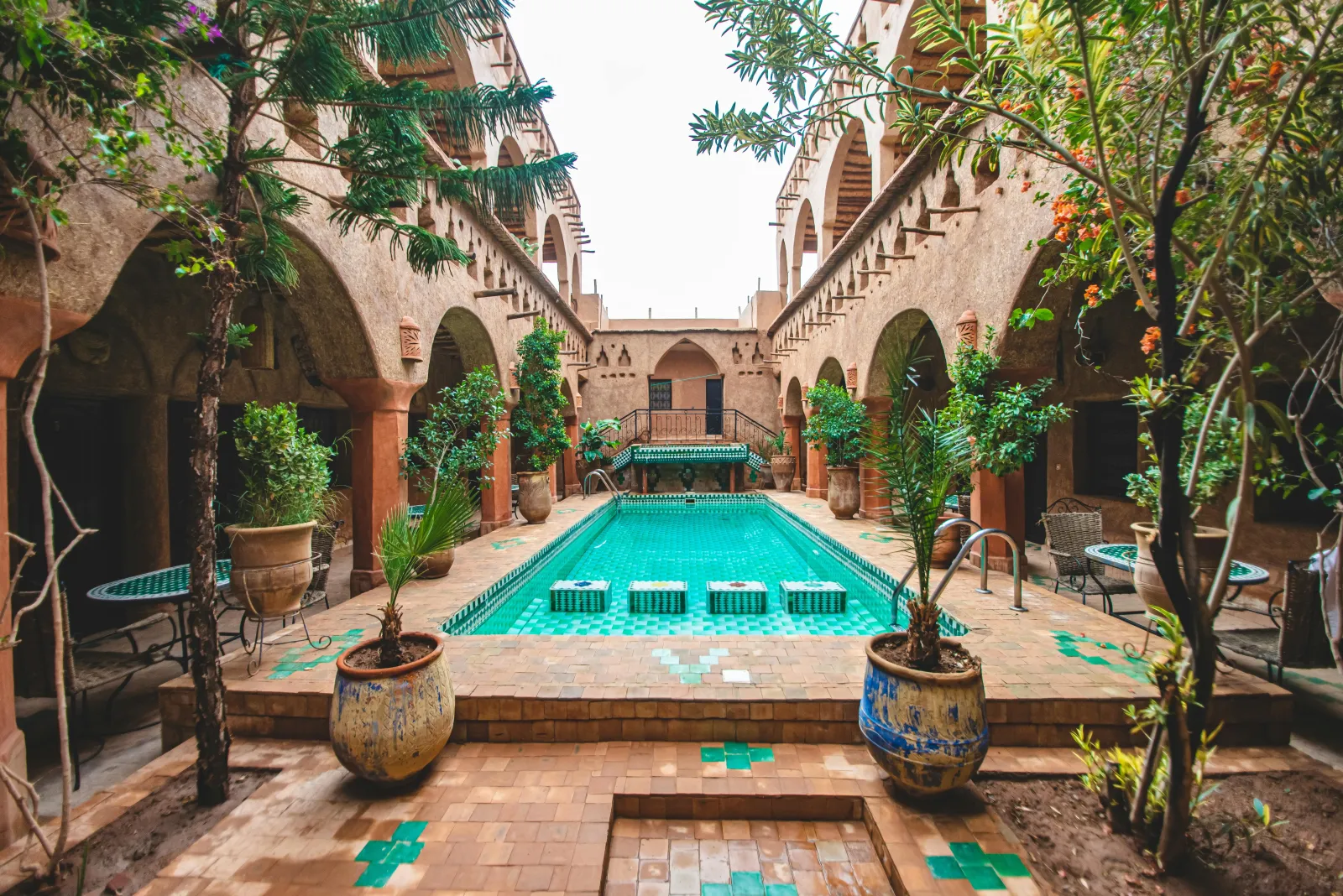
Step through the narrow streets of Marrakech’s ancient medina, and you’ll encounter seemingly plain walls that reveal nothing of the treasures hidden within. Behind these modest facades lies one of the world’s most sophisticated architectural traditions: Moroccan riad architecture. This page covers both the concept and defining elements of Moroccan riad architecture, ensuring readers instantly confirm its relevance. Moroccan riad architecture is renowned for its unique blend of privacy, artistic detail, and cultural symbolism, making it a subject of study and admiration around the world. A Moroccan riad is a traditional house or palace that has an interior garden or courtyard. The word 'riad' comes from the Arabic word 'ryad,' which means 'garden.' The concept of the riad emerged during the Islamic period, influenced by traditional courtyard houses found in the Middle East and North Africa. Various cultural styles, including Roman, Islamic, and Andalusian designs, influence the architecture.
These traditional Moroccan houses represent centuries of refined design principles that transform simple dwellings into oases of tranquility and beauty. Riads serve as serene retreats that embody the essence of Moroccan culture and hospitality. Staying in a riad allows visitors to experience authentic Moroccan hospitality and culture—they are not just places to stay, but immersive cultural experiences that reflect Morocco’s rich tradition and welcoming spirit.
This comprehensive guide explores every aspect of Moroccan riad architecture, from its historical origins to modern preservation efforts, revealing how these extraordinary structures continue to influence contemporary design worldwide. This guide is intended for architecture enthusiasts, travelers, and anyone interested in Moroccan culture.
A riad is a traditional Moroccan house built around a central courtyard, where the very essence of Moroccan culture comes alive through intricate tilework, carved wood details, and the gentle sound of water features. Unlike Western architecture that emphasizes outward display, Moroccan riads embody an inward focus that prioritizes privacy, natural cooling, and harmony with nature. Moroccan riads are characterized by their inward-facing design, with rooms arranged around a central courtyard. In contrast to a regular hotel, a riad is not just a place to stay—it is an immersive cultural retreat that offers a unique and authentic experience. This approach reflects the Moroccan way, where traditional values, artistic craftsmanship, and a harmonious lifestyle are woven into every detail, making riads much more than just accommodation places.
The design of riads emphasizes privacy and tranquility, creating a peaceful atmosphere for residents and guests.
Moroccan riad architecture represents a distinctive form of traditional architecture that has shaped Moroccan life for over a millennium. A Moroccan riad is a traditional house or palace that has an interior garden or courtyard. The word 'riad' comes from the Arabic word 'ryad,' which means 'garden.' The concept of the riad emerged during the Islamic period, influenced by traditional courtyard houses found in the Middle East and North Africa. Various cultural styles, including Roman, Islamic, and Andalusian designs, influence the architecture.
These traditional Moroccan houses demonstrate a unique architectural philosophy that contrasts sharply with Western building traditions. While European and American homes typically feature prominent street facades and outward-facing windows, Moroccan riads present plain exterior walls to the street, concealing their beauty within. This inward focus reflects both practical considerations and deep cultural values rooted in Islamic culture.
Moroccan riads are characterized by their inward-facing design, with rooms arranged around a central courtyard. The central courtyard in a Moroccan riad often includes a garden or fountain, serving as a cooling and aesthetic feature.
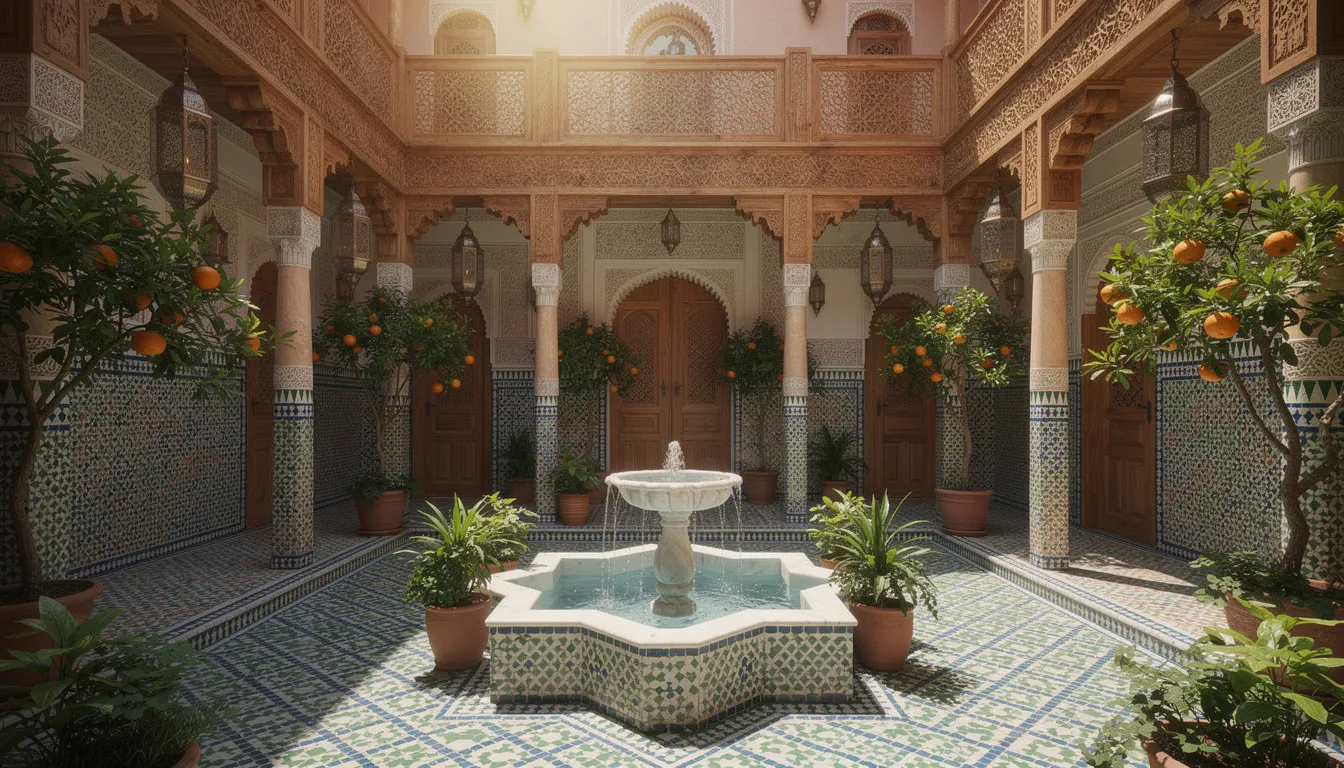
The geographic distribution of traditional riads centers primarily on Morocco’s historic medinas, with the most significant concentrations found in Marrakech, Fes, Meknes, and Rabat. Each city developed its own regional variations while maintaining the core architectural principles that define riad design. Many riads have been meticulously restored from old houses or palaces, preserving the charm and character of Moroccan architecture.
Key architectural principles underlying Moroccan riad architecture include:
Privacy and security: Thick walls and minimal street-level openings protect inhabitants while maintaining family privacy.
Natural cooling: The central courtyard creates a stack effect that draws cool air through the structure.
Harmony with nature: Integration of water features, fruit trees, and aromatic plants creates micro-environments.
Geometric organization: Symmetrical layouts reflect Islamic design principles and ensure balanced proportions.
Material authenticity: Use of local materials connects the structure to its geographic and cultural context.
These principles work together to create living spaces that respond to both Morocco’s challenging climate and the cultural needs of traditional Moroccan families.
With a clear understanding of what defines Moroccan riad architecture, it is important to explore the broader cultural context that has shaped these remarkable structures.
Moroccan culture is a vibrant mosaic shaped by centuries of Islamic, Arab, and Berber influences, each leaving its mark on the country’s traditions, art, and daily life. At the heart of this cultural richness stands the traditional Moroccan riad—a true symbol of hospitality, family, and community. These remarkable houses, with their serene interior courtyards and intricate tile work, are more than just architectural wonders; they are living expressions of Moroccan values and the rhythms of Moroccan life.
The traditional Moroccan riad is designed to foster connection, privacy, and tranquility, reflecting the deep-rooted customs of Moroccan society. Every detail, from the geometric patterns adorning the walls to the harmonious layout of rooms around a central garden, speaks to the importance of beauty, craftsmanship, and togetherness in Moroccan culture. The architecture of these houses is not only functional but also deeply symbolic, embodying the ideals of harmony, respect, and generosity that define traditional Moroccan life.
As you explore Morocco, you’ll find that the riad is more than just a building—it is a microcosm of the country’s history and traditions. The intricate tile work, lush gardens, and welcoming atmosphere of a riad invite you to experience the very essence of Moroccan culture, making every stay a journey into the heart of this extraordinary land.
Understanding the cultural significance of riads provides a foundation for appreciating their historical development and architectural evolution.
The origins of Moroccan riad architecture trace back to the 9th through 12th centuries, when the Almoravid and Almohad dynasties established the architectural foundations that would define traditional Moroccan houses for centuries to come. The concept of the riad emerged during the Islamic period, influenced by traditional courtyard houses found in the Middle East and North Africa. Various cultural styles, including Roman, Islamic, and Andalusian designs, influence the architecture.
Cultural exchanges between Spain, the Middle East, and North Africa during this period facilitated the transfer of architectural knowledge and craftsmanship techniques. When Muslim populations migrated from Spain following the Reconquista, they brought advanced building skills and decorative arts that enriched the existing Moroccan architectural tradition. This cross-cultural pollination resulted in the sophisticated integration of Islamic art with local building practices.
Wealthy merchants and aristocratic families played a crucial role in developing and refining riad architecture. These wealthy families commissioned elaborate residences that showcased the finest Moroccan craftsmanship, creating models that influenced architectural standards throughout Morocco’s historic cities. The concentration of these grand riads in commercial districts reflects the close connection between trade prosperity and architectural achievement.
Over centuries, riad architecture has adapted continuously to Morocco’s climate and evolving social customs while maintaining its core design principles. The tradition of skilled craftsmen (maâlems) passing techniques through generations ensured the preservation of construction methods and decorative arts, even as architectural styles evolved to meet new challenges and incorporate fresh influences from ongoing cultural exchanges.
With this historical background, we can now examine the core architectural elements that make Moroccan riads so distinctive.
The structural foundation of Moroccan riad architecture rests on several key features that distinguish these traditional houses from other building types. Understanding these core elements reveals how riad design achieves its distinctive balance of functionality, beauty, and cultural significance.
The central courtyard, known as a sahn (an Arabic term for an open courtyard), serves as the organizing principle around which all other architectural elements are arranged. Moroccan riads are characterized by their inward-facing design, with rooms arranged around a central courtyard. The central courtyard in a Moroccan riad often includes a garden or fountain, serving as a cooling and aesthetic feature. This interior courtyard typically occupies the geometric center of the structure, with rooms distributed around its perimeter on multiple levels. The courtyard’s proportions follow carefully calculated ratios that ensure proper natural light distribution and air circulation throughout the structure.
High exterior walls represent another fundamental characteristic of riad architecture. These thick walls, often reaching 15-20 feet in height, provide security and privacy while creating thermal mass that moderates interior temperatures. The walls present minimal openings to the street level, with small windows placed strategically to maintain family privacy while allowing necessary ventilation.
Symmetrical layout principles govern the arrangement of rooms around the courtyard perimeter. Traditional riads typically feature four main sections, each containing specific room types arranged according to functional and social hierarchies. This organization reflects both practical considerations and symbolic meanings related to Islamic culture.
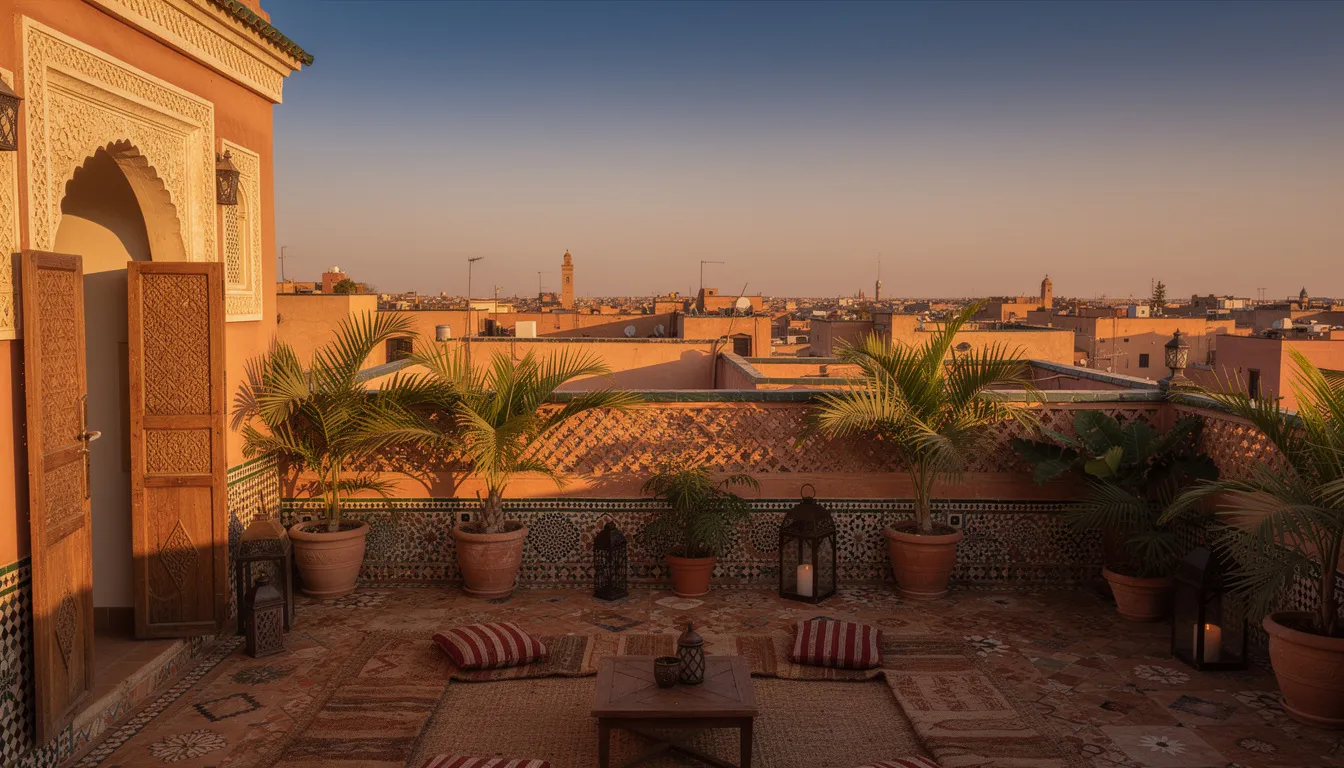
Flat rooftops with parapets and terraces provide additional living space that extends the home’s functionality beyond the ground floor and upper story rooms. Rooftop terraces are commonly included in riads, historically used for sleeping during hot nights and to provide communal spaces with city views. These rooftop areas serve multiple purposes, from laundry drying and food storage to social gathering spaces that offer panoramic views of the surrounding city. Historically, rooftop terraces were also used for sleeping during hot nights and as communal spaces where families could enjoy city views together.
Privacy and security: Thick walls and minimal street-level openings protect inhabitants while maintaining family privacy.
Natural cooling: The central courtyard creates a stack effect that draws cool air through the structure.
Harmony with nature: Integration of water features, fruit trees, and aromatic plants creates micro-environments.
Geometric organization: Symmetrical layouts reflect Islamic design principles and ensure balanced proportions.
Material authenticity: Use of local materials connects the structure to its geographic and cultural context.
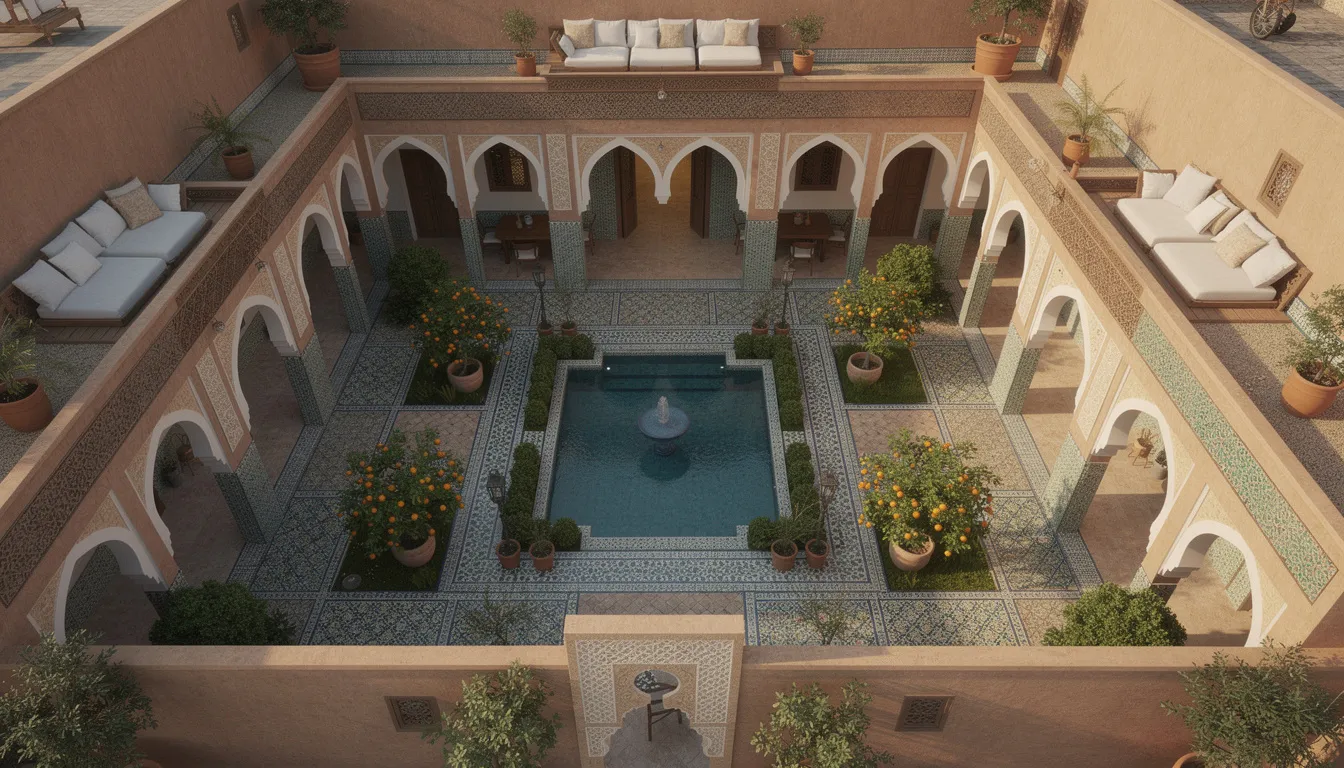
The strategic placement of entrances maintains privacy while allowing necessary access. The main entrance typically features a bent or angled entry passage that prevents direct sightlines into the interior courtyard, ensuring that family activities remain private from street view. Horseshoe arches are a traditional design element in Moroccan riads, adding elegance to windows and doors.
With an understanding of these foundational design principles, we can better appreciate how the central courtyard shapes daily life in Moroccan riads.
The central courtyard represents the very essence of Moroccan riad architecture, functioning as both the physical and spiritual center of these traditional homes. The courtyards in Moroccan riads serve as the heart of the home, providing natural light and ventilation. This interior garden creates a microclimate that transforms the entire structure into a comfortable living environment, even during Morocco’s intense summer heat.
The courtyard’s function as a natural cooling system relies on the stack effect, where hot air rises through the open courtyard while drawing cooler air through surrounding rooms. This passive ventilation system, combined with evaporative cooling from water features and vegetation, can reduce interior temperatures by 10-15 degrees compared to exterior conditions.
Water features constitute an essential element of courtyard design, with options ranging from simple central fountains to elaborate channels (seguia = Fountain) that circulate water throughout the space. These water features serve practical cooling functions while providing the soothing sounds that mask street noise and create a peaceful atmosphere. The central fountain, often featuring geometric tile patterns, becomes a focal point that anchors the entire spatial composition.
Garden elements within the courtyard include carefully selected plants that thrive in Morocco’s climate while providing practical benefits. Citrus trees, particularly orange and lemon varieties, offer shade, fragrance, and fresh fruit for the household. Palm trees provide vertical elements that frame the courtyard space, while aromatic plants like jasmine and mint contribute to the sensory experience of the interior garden. Riad gardens often include lush vegetation, flowing water features, and vibrant colors, creating a soothing atmosphere.
The integration of lush greenery with architectural elements creates a seamless transition between built and natural environments. Traditional riads often feature raised planting beds that protect root systems while creating varied levels within the courtyard space. Riads often feature lush greenery, colorful tiles, and water features in their courtyards, enhancing the serene environment.
Geometric tile patterns cover courtyard floors using traditional zellige mosaics that demonstrate the pinnacle of Moroccan craftsmanship. Zellige tiles are a defining feature of Moroccan riad design, known for their intricate geometric patterns and vibrant colors. These intricate tilework designs, often made with colorful tiles, feature complex mathematical patterns that reflect Islamic art principles while providing durable, easy-to-clean surfaces suited to the courtyard’s function as both garden and circulation space. The colorful tiles enhance the aesthetic appeal and serene environment of the courtyard.
The open-to-sky design allows natural light to penetrate throughout the structure while creating dramatic lighting effects that change throughout the day. Morning light filters gently into surrounding rooms, while afternoon sun creates strong contrasts between light and shadow that emphasize the architectural details and colorful mosaics.
The central courtyard’s role as the heart of the riad leads naturally to a discussion of the traditional materials that bring these spaces to life.
The selection and use of traditional materials in Moroccan riad architecture reflects both practical considerations and deep connections to local culture and artistic heritage. These materials, sourced from Morocco’s diverse landscapes, create structures that harmonize with their environment while showcasing the highest levels of Moroccan craftsmanship.
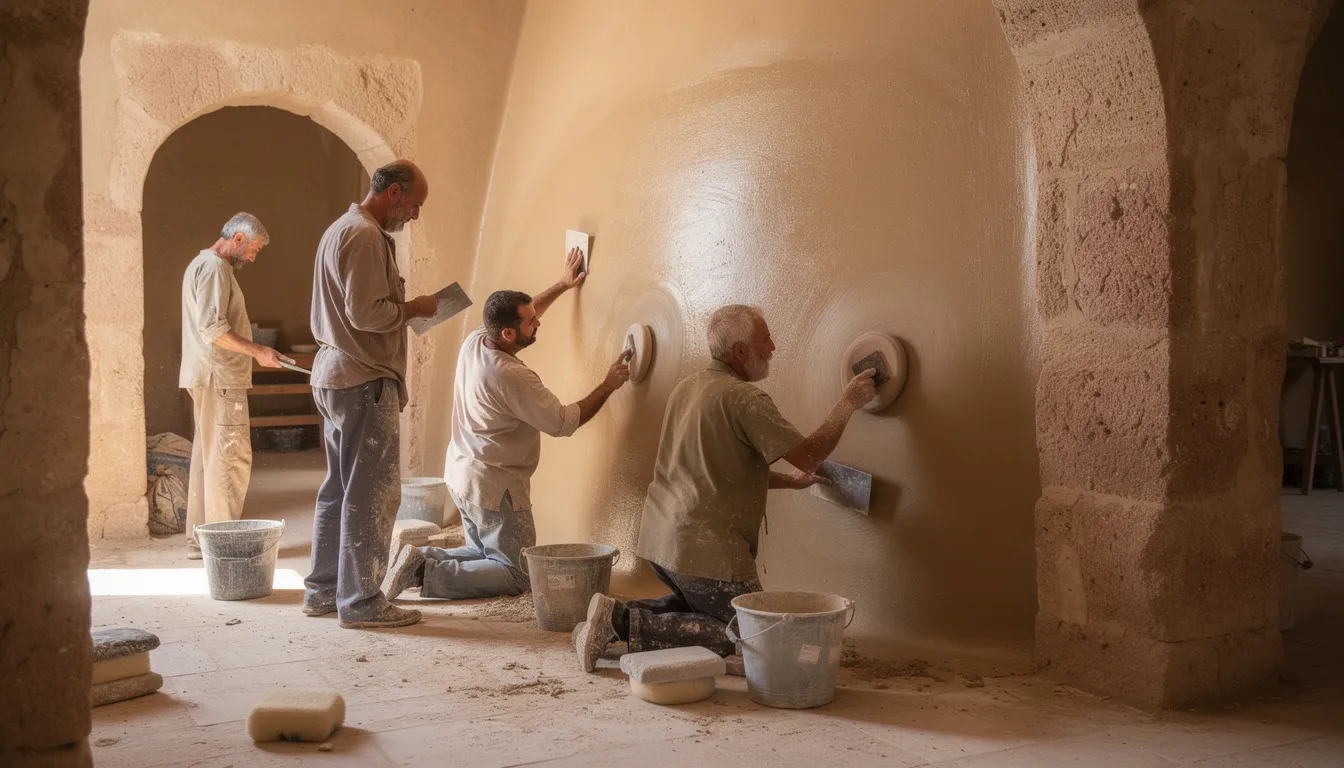
Tadelakt is a polished, waterproof plaster used in riads, providing smooth wall surfaces. Tadelakt lime plaster represents one of the most distinctive traditional materials used in riad construction. This waterproof plaster, made from limestone quarried near Marrakech, creates smooth, lustrous surfaces that resist moisture while developing a subtle patina over time. Skilled artisans apply tadelakt in multiple layers, polishing each coat with flat stones and treating the final surface with olive soap to achieve its characteristic water-resistant properties.
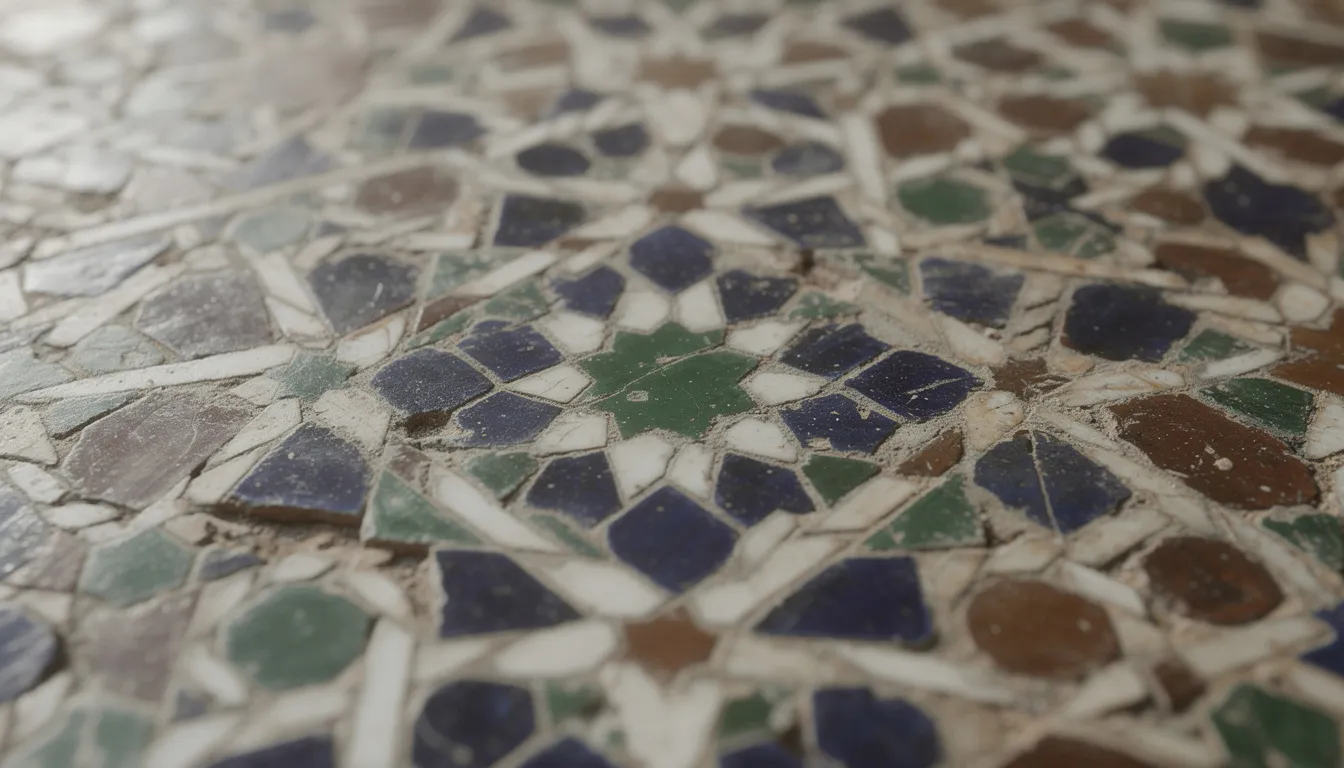
Zellige tiles are a defining feature of Moroccan riad design, known for their intricate geometric patterns and vibrant colors. Zellige terra cotta tiles constitute the foundation of Morocco’s renowned decorative tilework tradition. Craftsmen shape these tiles by hand from clay sourced from the Salé region near Rabat, creating geometric shapes that fit together to form complex, colorful mosaics. The firing process produces subtle color variations that give zellige its distinctive character, while the hand-cut edges create slight irregularities that animate the surface with light and shadow.
Atlas Mountain cedar wood provides the primary structural timber for beams, doors, and decorative screens throughout traditional riads. This aromatic wood resists insects and moisture while accepting intricate carving that showcases traditional Moroccan woodworking techniques. Cedar’s natural preservative properties make it ideal for Morocco’s climate, while its pleasant scent contributes to the sensory experience of interior spaces.
Local stone and clay bricks form the load-bearing walls and foundations that support riad structures. Stone quarried from regional sources provides durability while maintaining visual harmony with the surrounding landscape. Clay bricks, often made from earth excavated during courtyard construction, offer excellent thermal properties while utilizing readily available local materials.
Iron work appears throughout riads in window grilles, door hardware, and decorative elements that combine security with aesthetic appeal. Moroccan blacksmiths forge these iron components using traditional techniques passed down through generations, creating functional hardware that also serves as decorative art.
These authentic materials play a key role in the intricate decorative arts and crafts that adorn traditional riads.
The decorative arts within Moroccan riad architecture represent some of the world’s most sophisticated traditional craftsmanship, transforming functional spaces into galleries of Islamic art and geometric patterns. These ornamental features reflect centuries of artistic development that combine technical mastery with spiritual symbolism.
Geometric stucco patterns, created from gypsum plasterwork, cover walls and ceilings throughout traditional riads with intricate designs that demonstrate mathematical precision and artistic vision. Skilled artisans carve these patterns by hand, creating relief surfaces that play with light and shadow while incorporating symbolic meanings related to Islamic culture. The plasterwork often features muqarnas honeycomb vaulting in transitional spaces and niches, creating three-dimensional compositions that seem to dissolve the boundaries between walls and ceiling.
Carved cedar wood panels showcase another pinnacle of Moroccan craftsmanship, featuring arabesque and calligraphic motifs that combine religious symbolism with natural forms. These carved wood elements appear in doors, window screens, and room dividers, creating filtered light effects while maintaining privacy. The traditional technique of mashrabiya wooden screens provides privacy while allowing air circulation, demonstrating the integration of functional and aesthetic considerations that characterize riad design.
Colorful painted ceilings feature traditional Moroccan color palettes that complement the overall decorative scheme while providing visual relief from the geometric patterns below. These painted surfaces often incorporate floral motifs and geometric borders that frame the ceiling space while introducing vibrant colors that enliven interior spaces.
Zellige tilework represents the pinnacle of Moroccan decorative arts, requiring specialized knowledge and techniques that take decades to master. Master craftsmen, known as maâlems, hand-cut each geometric shape from fired clay tiles, creating precise forms that fit together to create complex patterns without visible joints.
The traditional color palette includes cobalt blue, white, green, yellow, and brown, with each color requiring specific firing techniques and clay preparations. Regional variations in patterns and color combinations reflect local traditions while maintaining the mathematical principles that underlie all zellige designs.
Installation techniques require specialized master craftsmen who understand both the geometric principles and practical methods necessary to create large-scale tilework installations. The process involves laying tiles in predetermined patterns while maintaining precise alignments and joints that create seamless surfaces.
The beauty and intricacy of these decorative arts are closely tied to the spatial organization and room hierarchy found within Moroccan riads.
The spatial organization within Moroccan riads reflects a sophisticated understanding of family life, social customs, and functional requirements that evolved over centuries of use. This carefully planned hierarchy of spaces ensures that each area serves its intended purpose while maintaining the privacy and comfort essential to traditional Moroccan life.
The ground floor typically houses public spaces, including reception areas and guest rooms designed to accommodate visitors without compromising family privacy. These spaces feature the finest decorative arts and furnishings, demonstrating the family’s social status while providing comfortable environments for entertaining guests. The ground floor often includes specialized areas for local cuisine preparation and storage, connecting the home to daily Moroccan life.
Upper floors provide private family quarters and sleeping chambers arranged around the central courtyard to maintain visual connections with the interior garden while ensuring privacy from neighboring buildings. These rooms typically feature large windows facing the courtyard that maximize natural light and air circulation while maintaining the inward focus that characterizes riad design.
Specialized rooms serve specific functions within the overall household organization. Traditional riads often include a hammam (bath house) that provides private bathing facilities with sophisticated heating and water systems. Kitchen areas feature traditional design elements adapted to local cuisine preparation, while storage areas accommodate the household goods and seasonal items essential to family life.
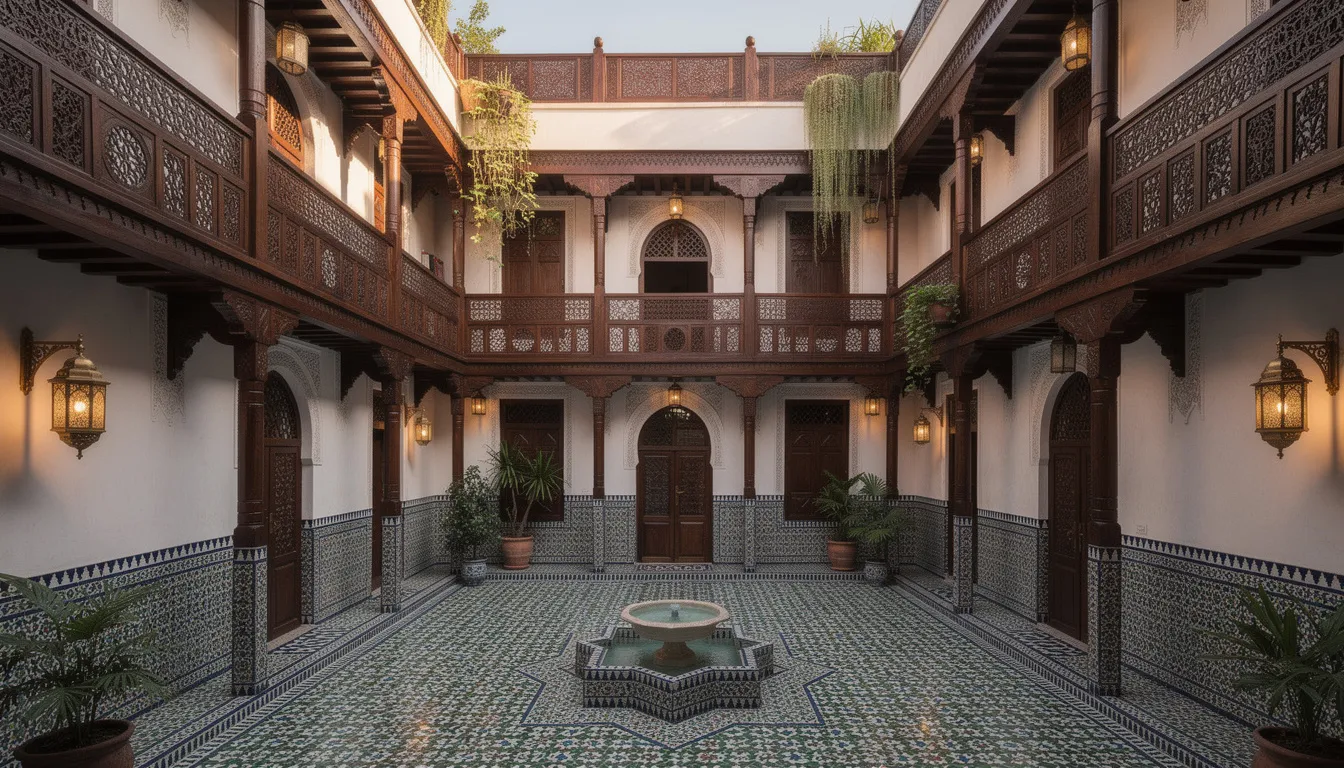
Bhou alcoves function as semi-open living spaces that face the courtyard, providing flexible areas that can serve multiple purposes throughout the day. These transitional spaces blur the boundaries between interior and exterior environments while offering comfortable seating areas that take advantage of the courtyard’s cooling effects.
Rooftop terraces extend the home’s living space upward, providing areas for laundry, relaxation, and panoramic views of the surrounding city. These elevated spaces offer relief from summer heat while creating outdoor rooms that connect residents to the broader urban context.
With the spatial organization in mind, it becomes clear how Islamic architectural principles are woven into every aspect of riad design.
Islamic architectural principles profoundly influence every aspect of Moroccan riad architecture, creating spaces that reflect religious values while meeting practical needs. These principles transform functional buildings into environments that support spiritual contemplation and family harmony.
The emphasis on interior rather than exterior decoration reflects Islamic cultural values that prioritize inner spiritual development over outward display. This principle manifests in riad design through plain street facades that conceal elaborate interior decorations, teaching humility while creating surprise and delight for those invited within.
Geometric patterns throughout riads represent the infinite nature of divine creation while avoiding human imagery that might compete with spiritual focus. These mathematical compositions demonstrate the underlying order of creation while providing meditative focal points that support contemplation and prayer.
Water symbolism appears throughout the riad design as references to purification and paradise described in Islamic culture. The central fountain and water features create connections to spiritual concepts while providing practical cooling and acoustic benefits. The sound of flowing water masks street noise while creating auditory environments that support peaceful reflection.
Orientation considerations influence room layouts to accommodate prayer direction (qibla) requirements, ensuring that inhabitants can fulfill religious obligations within their homes. Many riads include designated prayer spaces or arrange rooms to facilitate proper orientation during daily prayers.
Gender-specific spaces reflect traditional Islamic culture and social customs while providing comfort and privacy for all family members. Traditional riads often feature separate areas for men and women, allowing families to maintain cultural practices while enjoying the benefits of shared spaces like the central courtyard.
The integration of these Islamic design principles creates homes that function as spiritual sanctuaries while meeting all practical requirements for family life in Morocco’s demanding climate and social environment.
The environmental strategies embedded in riad design further demonstrate the sophistication of Moroccan architecture.
Moroccan riad architecture demonstrates remarkable sophistication in climate adaptation, utilizing passive environmental design strategies that create comfortable living conditions without mechanical systems. These time-tested approaches offer valuable lessons for contemporary sustainable design while showcasing the wisdom embedded in traditional architecture.
Passive cooling through courtyard stack effect and cross-ventilation forms the foundation of riad environmental systems. The central courtyard functions as a thermal chimney, drawing hot air upward while pulling cooler air through surrounding rooms. This natural ventilation system, enhanced by careful window placement and interior door arrangements, maintains air circulation throughout the structure even during calm weather conditions.
Thick walls provide thermal mass that moderates interior temperatures by absorbing heat during hot days and releasing it slowly during cooler nights. These walls, often exceeding 18 inches in thickness, create stable interior temperatures that remain comfortable even when exterior conditions fluctuate dramatically. The thermal mass effect reduces temperature swings and delays peak heat gain until evening hours when outdoor temperatures begin dropping.
Strategic window placement minimizes solar heat gain while maximizing airflow and natural light penetration. Traditional riads feature small openings on street-facing walls that limit heat intrusion while providing necessary ventilation. Larger windows face the central courtyard where they benefit from shading and cooling effects created by the interior garden.
Water features create evaporative cooling that can reduce ambient temperatures by several degrees while adding humidity to dry air. The central fountain and any additional water elements work in conjunction with vegetation to create a microclimate that moderates temperature and provides acoustic masking of street noise.
Vegetation selection focuses on plants that provide cooling shade, pleasant fragrance, and practical benefits while thriving in Morocco’s arid climate. Fruit trees offer seasonal variety and fresh produce, while aromatic plants contribute to the sensory experience without requiring excessive water. This careful plant selection creates lush greenery that enhances comfort while respecting water conservation needs.
These environmental adaptations are further shaped by regional variations across Morocco.
Morocco’s diverse regions have developed distinctive interpretations of riad architecture that reflect local materials, climate conditions, and cultural influences while maintaining the core principles that define these traditional houses. Understanding these regional variations reveals the adaptability and richness of Moroccan architectural traditions.
Region | Key Features |
|---|---|
Marrakech | Red sandstone construction, robust details, simpler ornamentation, Atlas Mountain influences |
Fes | Elaborate plasterwork, refined decorative details, complex geometric tilework |
Meknes | Imperial elements, grand proportions, elaborate entrance sequences |
Tetouan | Andalusian influences, white-washed walls, unique color combinations and motifs |
Regional differences extend to courtyard proportions, with some cities favoring more intimate spaces while others develop larger courtyards that accommodate extended family groups. Decorative emphasis also varies, with some regions prioritizing tilework while others focus on plasterwork or carved wood elements.
These regional variations demonstrate how traditional architecture adapts to local conditions while preserving essential cultural and functional characteristics across different geographic and social contexts.
The preservation and restoration of these unique structures is essential to maintaining Morocco’s architectural heritage.
The preservation of Moroccan riad architecture faces complex challenges that balance historical authenticity with contemporary needs, requiring innovative approaches that honor traditional craftsmanship while addressing modern requirements. These efforts represent crucial work to maintain Morocco’s architectural heritage for future generations.
UNESCO World Heritage considerations guide medina conservation efforts that protect entire urban districts while allowing necessary adaptations for contemporary life. These preservation frameworks recognize that traditional riads cannot survive as museum pieces but must evolve to remain relevant for current inhabitants. The challenge lies in maintaining architectural integrity while accommodating modern infrastructure and changing lifestyle needs.
Traditional craft revival programs train new artisans in historic techniques that risk disappearing without active preservation efforts. Master craftsmen work with younger apprentices to transfer knowledge of zellige tilework, plaster carving, and wood craftsmanship that requires decades to master. These programs ensure continuity of Moroccan craftsmanship while creating economic opportunities that support traditional skills.
Modern building code adaptations require careful negotiation between safety requirements and historic preservation goals. Contemporary standards for electrical systems, plumbing, and structural safety must be integrated sensitively into historic structures without compromising their architectural character. This process often requires custom solutions that respect traditional construction methods while meeting current performance standards.
Conversion challenges arise when historic riads are adapted for tourism use, requiring a balance between visitor needs and cultural authenticity. Many riads have been converted from family residences to boutique accommodations, creating economic incentives for preservation while potentially altering their essential character. Successful conversions maintain spatial organization and decorative integrity while adding modern amenities that enhance rather than compromise the traditional experience.
Documentation efforts work to record traditional construction methods and decorative patterns before they disappear, creating archives that support future restoration work. These records capture both technical specifications and cultural knowledge that inform proper restoration techniques while educating craftsmen and architects about authentic approaches to riad architecture.
Preservation efforts are complemented by modern adaptations and the global influence of Moroccan riad architecture.
Contemporary architects and designers worldwide draw inspiration from Moroccan riad architecture, incorporating traditional principles into modern projects that adapt ancient wisdom to current needs. This global influence demonstrates the enduring relevance of riad design principles while creating new interpretations that honor traditional sources.
Contemporary architects in Morocco incorporate riad principles into modern buildings that serve current lifestyle needs while maintaining connections to architectural heritage. New construction projects often feature central courtyards, traditional materials, and passive cooling strategies while accommodating contemporary infrastructure and space requirements. These projects demonstrate how traditional architecture can evolve without losing its essential character.
International design influence appears in luxury hotels and residential projects worldwide that adopt riad-inspired courtyards, water features, and decorative elements. High-end developments from California to Dubai incorporate Moroccan design elements, creating exotic environments that appeal to global markets while spreading awareness of Moroccan architectural traditions.
Sustainable design lessons from traditional riad environmental strategies offer valuable guidance for contemporary green building efforts. The passive cooling systems, thermal mass principles, and water conservation approaches developed over centuries provide time-tested solutions that complement modern sustainable technologies. These traditional strategies often outperform contemporary mechanical systems while requiring no external energy inputs.
Integration of modern amenities within traditional architectural character requires careful design that respects historical precedents while meeting current expectations. Successful projects incorporate contemporary conveniences like air conditioning, modern kitchens, and wireless networks without compromising the spatial organization or decorative integrity that defines authentic riad architecture.
Educational programs promote understanding of Riad architectural heritage through academic study, cultural tourism, and professional development opportunities. Universities, museums, and cultural organizations work to document and disseminate knowledge about Moroccan architecture while training new generations of architects and craftsmen who can carry these traditions forward.
The continuing influence of Moroccan riad architecture demonstrates how traditional building wisdom remains relevant for contemporary challenges, offering strategies for sustainable design, cultural preservation, and human comfort that transcend geographic and temporal boundaries. As global interest in sustainable and culturally responsive architecture grows, the principles embodied in these remarkable traditional houses provide valuable guidance for creating environments that honor both human needs and environmental constraints.
Whether you’re planning to experience Morocco through staying in a riad, studying traditional architecture, or simply appreciating the cultural richness of Islamic design, Moroccan riads offer profound lessons about creating spaces that nurture both body and spirit. These extraordinary buildings remind us that architecture at its finest serves not just practical needs but also deeper human aspirations for beauty, comfort, and connection to cultural heritage.
Riad gardens are the beating heart of traditional Moroccan riads, offering a serene oasis tucked away from the lively rhythm of the bustling city. True to the very origin of the term riad—derived from the Arabic word “ryad,” meaning “garden”—these enchanting spaces are far more than decorative courtyards; they are an essential element of Moroccan architecture and culture, embodying the spirit of hospitality, tranquility, and artistic heritage.
Step through the narrow streets of the medina and into a riad, and you’ll find yourself surrounded by lush greenery, vibrant colors, and the gentle sound of water trickling from a central fountain. The interior courtyard, framed by the rooms of the traditional Moroccan house, is often adorned with intricate tile work, colorful mosaics, and carved cedar wood, all showcasing the finest Moroccan craftsmanship. Fruit trees—such as orange, lemon, and pomegranate—stand alongside stately palm trees and fragrant flowering plants, creating a microcosm of nature that offers both shade and a sense of peace.
The design of riad gardens is deeply rooted in Islamic architecture and Islamic art, where geometric patterns, arches, and water features are used to create harmony and balance. These gardens are not only visually stunning but also serve practical purposes: they provide natural light and ventilation to the surrounding rooms, moderate the temperature, and offer a cool retreat from the Moroccan sun. The central courtyard becomes a gathering place for family and friends, a symbol of generosity and welcome that is central to Moroccan life.
Traditional materials such as zellige tiles, cedar wood, and hand-carved plasterwork are combined with vibrant colors and lush greenery to create a space that is both timeless and inviting. The interplay of natural elements and artistic detail reflects the very essence of traditional Moroccan design, where every feature is thoughtfully crafted to enhance both beauty and comfort.
Many riads in Marrakech and other historic cities have been lovingly restored, preserving their traditional architecture and interior design while introducing modern comforts. Staying in a riad allows travelers to experience firsthand the unique charm of these gardens—whether relaxing by the central fountain, enjoying the scent of citrus blossoms, or simply soaking in the peaceful atmosphere that stands in stark contrast to the energy of the city outside.
Riad gardens are more than just beautiful spaces; they are a living testament to Morocco’s rich cultural heritage and the enduring appeal of traditional architecture. For anyone seeking to experience Moroccan culture, architecture, and interior design, exploring the gardens and outdoor spaces of a riad is an unforgettable journey into the heart of Moroccan life.
To fully appreciate the cultural impact of these spaces, it is important to recognize their place within the broader tapestry of Moroccan culture.
When choosing where to stay in Morocco, travelers are often faced with the choice between regular hotels and the unique charm of traditional Moroccan houses known as riads. While regular hotels may offer familiar comforts and standardized services, they often lack the intimate connection to local culture that makes a trip truly memorable. In contrast, riads offer an authentic experience that immerses guests in the traditions and daily rhythms of Moroccan life.
Riads are traditional Moroccan houses that have been lovingly restored and transformed into guesthouses, each one reflecting the artistry and heritage of Moroccan architecture. Unlike the often impersonal atmosphere of larger hotels, riads are typically smaller, family-run establishments where hospitality is personal and heartfelt. The architecture of a riad, with its inward-facing rooms, lush gardens, and peaceful courtyards, creates a sense of sanctuary and privacy that is rarely found in regular hotels.
Staying in a riad allows guests to experience the warmth of local culture, from the welcoming hosts to the traditional Moroccan design that fills every corner of the house. The use of traditional materials, vibrant colors, and handcrafted details sets riads apart, offering a glimpse into the country’s rich artistic heritage. For travelers seeking more than just a place to sleep, riads offer a unique opportunity to connect with the spirit of Morocco and enjoy a truly immersive stay.
Stepping into a traditional Moroccan riad is like entering a hidden world where the vibrant energy of the bustling city melts away, replaced by an atmosphere of tranquility and refined beauty. The very design of a Moroccan riad—with its inward focus, lush greenery, and serene interior courtyard—invites guests to experience the heart of Moroccan culture in a way that no regular hotel can offer.
Staying in a riad is more than just accommodation; it’s an immersion into the Moroccan way of life. The architecture itself, centered around a peaceful courtyard garden adorned with colorful tiles, fruit trees, and a central fountain, reflects centuries of tradition and the deep-rooted values of privacy, hospitality, and harmony. These riad gardens are not only visually stunning, with their vibrant mosaics and lush plantings, but they also serve as a gathering place where family and friends come together to share stories, laughter, and the flavors of local cuisine.
Every detail of a traditional Moroccan riad—from the intricate tilework and carved wood to the gentle sound of water and the scent of citrus blossoms—showcases the artistic heritage and craftsmanship that define Moroccan architecture. The inward-focused design, a key principle rooted in Islamic culture, creates a sanctuary where guests can unwind, reflect, and connect with the local culture away from the outside world.
Experiencing riad living means waking up to the soft light filtering through the courtyard, savoring a breakfast of fresh fruit and traditional pastries, and feeling the coolness of the shaded garden even as the city outside buzzes with life. It’s about discovering the cultural richness of Morocco through its traditional architecture, tasting the authentic flavors of local cuisine, and appreciating the artistry that infuses every corner of the house.
For travelers seeking a deeper connection to Morocco, staying in a riad offers a unique opportunity to witness the very essence of Moroccan culture. It’s a chance to slow down, embrace the beauty of traditional design, and gain a true understanding of the values and traditions that have shaped Moroccan life for generations. In every sense, riad living is an invitation to experience the cultural richness, warmth, and timeless charm of Morocco from the inside out.
Moroccan architecture is a captivating fusion of Islamic, Arabic, and Mediterranean influences, each layer contributing to the country’s distinctive visual and cultural identity. At the heart of this tradition are Moroccan riads—traditional Moroccan houses that embody the very essence of Moroccan life and design. The term riad, derived from the Arabic word “ryad” meaning “garden,” highlights the central role of the interior courtyard or garden in these homes, an ancient feature that continues to define Moroccan architecture today.
Step inside a traditional Moroccan riad, and you are immediately enveloped by a sense of tranquility and artistry. The inward focus of these houses is a key design principle, with rooms arranged around a lush interior courtyard filled with fruit trees, vibrant flowers, and often a central fountain. This garden oasis not only provides a peaceful escape from the bustling city outside but also serves as a natural cooling system, harnessing the power of shade, water, and airflow to create a comfortable microclimate. The ground floor typically houses public areas, while private rooms are tucked away on the upper levels, ensuring both intimacy and a strong sense of community.
One of the most striking characteristics of Moroccan architecture is its celebration of intricate tile work and geometric patterns. Colorful tiles—known as zellige—adorn floors, walls, and fountains, their vibrant colors and complex designs reflecting the artistic heritage and craftsmanship for which Morocco is renowned. Carved wood, especially cedar, is another hallmark, gracing doors, ceilings, and screens with delicate motifs that showcase the skill of local artisans. These traditional materials, combined with the use of large windows and doors opening onto the courtyard, flood the interior with natural light and create a seamless connection between indoor and outdoor spaces.
The architecture of Moroccan riads is also defined by its sense of privacy and seclusion. From the outside, these houses present plain, unassuming walls to the narrow streets of Marrakech and other historic cities, concealing the beauty within. This inward focus is rooted in Islamic design principles, emphasizing the importance of family life and personal sanctuary. The result is a unique charm that sets Moroccan riads apart from regular hotels and modern buildings, offering guests an immersive experience of Moroccan culture and hospitality.
Every detail of a traditional Moroccan riad—from the lush greenery of the courtyard to the vibrant colors and intricate tilework—reflects the country’s rich cultural heritage. Staying in a riad is not just about accommodation; it is an invitation to experience the Moroccan way of life, where hospitality, artistry, and a deep connection to nature are woven into the very fabric of the home. Whether wandering the narrow streets of Marrakech or relaxing in the serene embrace of a riad’s garden, visitors are sure to be captivated by the timeless beauty and unique character of Moroccan architecture.

Compare Morocco group tour agencies by trip style, reviews, pace, transport and inclusions. Learn wh...
Read this article
Uncover what a Marrakech to Fes desert tour offers, including camel rides, desert camps, and rich cu...
Read this article
Join our Merzouga Overnight Tour for an authentic desert experience. Enjoy camel rides, comfortable ...
Read this articleWant cool tour deals and tips about Morocco? Enter your email and we’ll send them to you each month!
