Group Tour Agencies in Morocco: How to Pick the Right One
Compare Morocco group tour agencies by trip style, reviews, pace, transport and inclusions. Learn wh...
Read this article

Private, custom Morocco trips planned in Fez by AZ-ZDDINE, working in Moroccan tourism since 2012. Sahara, Atlas, medinas and coast, arranged around you.
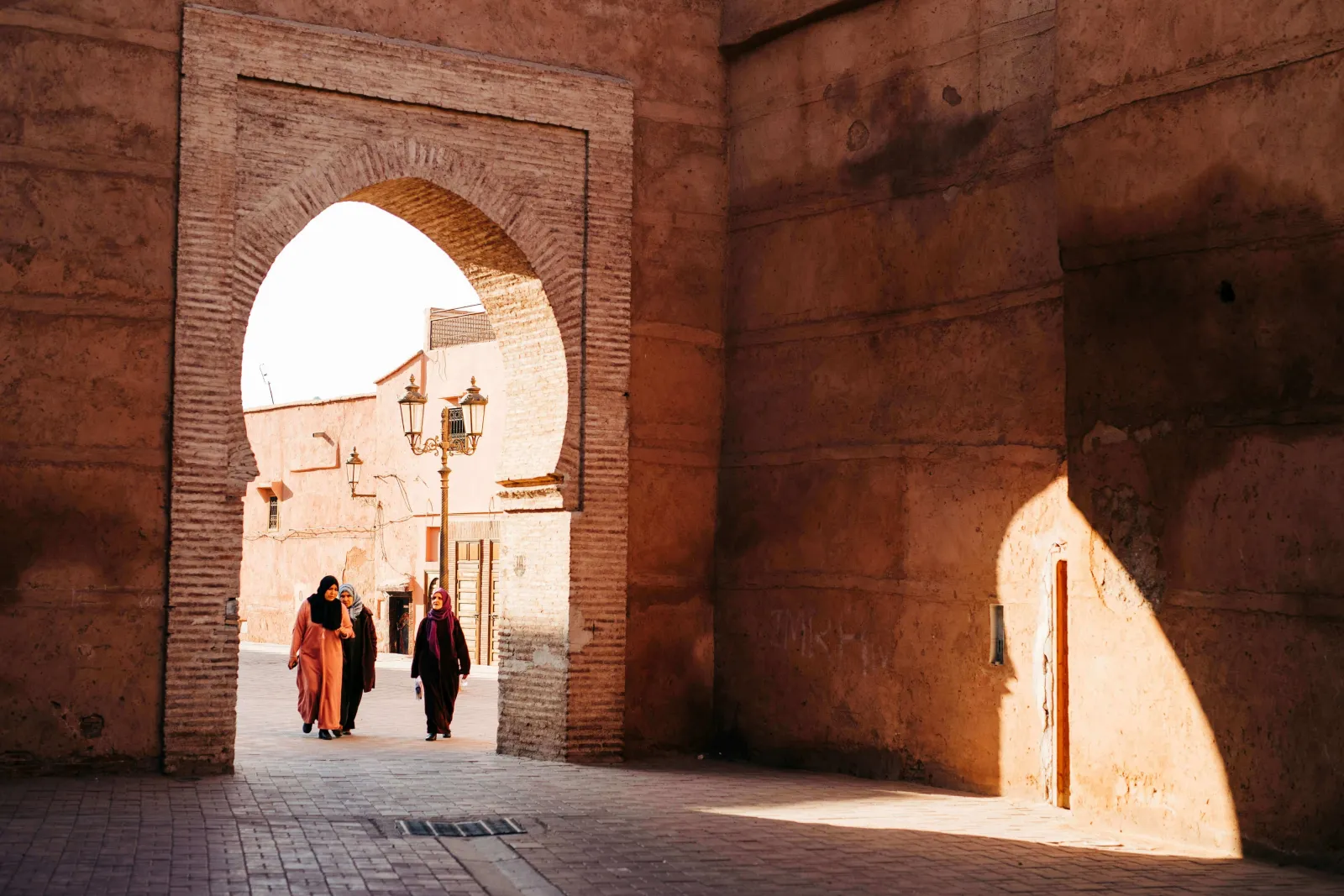
The city of Fez, Morocco, is Morocco’s cultural capital, oldest imperial city, and spiritual heart, with the UNESCO-listed medina of Fez covering Fes el Bali and Fez el Jdid.
Fez is generally safe for Americans and other international visitors when you use common-sense precautions, licensed guides, and reliable transfers.
Travellers come for the Fez Medina, Bou Inania Madrasa, al Attarine Madrasa, al Qarawiyyin mosque, Chouara Tannery, Moroccan cuisine, crafts, riads, and routes to the Atlas Mountains and the Sahara Desert.
Morocco Classic Tours is based in Fez and arranges private guided tours, day trips, desert camps, camel treks, and custom Morocco itineraries from the city.
Plan at least 2–3 days if you can; one day works for highlights, but the old medina rewards slower walking, mint tea breaks, and time to get pleasantly lost.
Fez sits in northern morocco, northeast of the Middle Atlas Mountains, along the Wadi Fès. Founded in 789 A.D. by Idris I, then expanded in 809 by Idris II, the ancient city has deep roots in Moroccan heritage and is one of the oldest continuously inhabited cities in the world.
The city of Fez has around 1.25–1.3 million residents in the mid-2020s, making it Morocco’s second or third largest city, depending on the measure used. It is divided into Fès el Bali, the oldest city; Fès el jdid, the 13th-century “new city” with the royal palace; and Ville Nouvelle, the modern district developed after the French Protectorate established in 1912, which led to the preservation of the historic medina and the development of a new modern district called Ville Nouvelle.
Where is Fez, Morocco, on the map? It is about 200 km east of Rabat, roughly 300 km from Casablanca by train, and around 300 km northeast of Marrakech. Fez is one of the imperial cities, a former political capital, and has been called the “Mecca of the West” and the “Athens of Africa” because it became a center of Islamic learning and culture.
Is Fez, Morocco, worth visiting? Yes, especially if you prefer living history over polished spectacle. Fez feels less commercial than Marrakech, with winding streets, private houses, workshops, donkeys, bakeries, zawiyas, and historic monuments still woven into daily life.
What is Fez famous for? Fez is recognized as a UNESCO World Heritage Site and boasts one of the largest car-free urban zones globally. The medina of Fez is one of the largest and best-preserved medieval urban areas in the world, while the University of al-Qarawiyyin, founded in 857, is considered the oldest continuously functioning institute of higher education in the world; UNESCO also recognizes Al-Qarawiyyin as the oldest continuously operating degree-granting university in the world.
Travellers also come for leather goods, zellij, cedar wood, brass, carpets, and the historical tanneries. Fez is known for its tanneries, where artisans use natural dyes to create leather goods, showcasing traditional craftsmanship that has remained largely unchanged for centuries. It is also an ideal base for Morocco Classic Tours itineraries to Meknes, Volubilis, the blue city of Chefchaouen, the Atlas Mountains, and the Sahara Desert camps.
Fez is renowned for its ancient tanneries, particularly the Chouara Tannery, where leather is processed using traditional methods that date back centuries. Artisans use natural dyes and organic treatments, such as pigeon droppings and lime, to create high-quality leather goods. The process is visible from viewing terraces above the tannery pits, offering a unique glimpse into this time-honored craft.
The city is also celebrated for its intricate zellij tilework, a hallmark of Moroccan architecture. Zellij involves assembling small, hand-cut glazed tiles into complex geometric patterns, which adorn fountains, walls, floors, and courtyards throughout Fez. This decorative art form is especially prominent in madrasas, palaces, and mosques.
Cedar wood carving is another traditional craft in Fez. Artisans skillfully carve doors, ceilings, and furniture from local cedar, creating elaborate designs that reflect Islamic and Moorish influences. The Nejjarine Museum of Wooden Arts & Crafts showcases the best of this tradition, with displays of doors, chests, and tools.
Fez’s souks are filled with the sound of metalworkers hammering brass and copper into lamps, trays, and teapots. The Seffarine Square is particularly known for its coppersmiths, who continue to use age-old techniques to produce beautiful and functional items.
Handwoven carpets and textiles are another specialty of Fez. Berber rugs, djellabas, and kaftans are crafted using traditional looms and natural dyes, making them sought-after souvenirs for visitors.
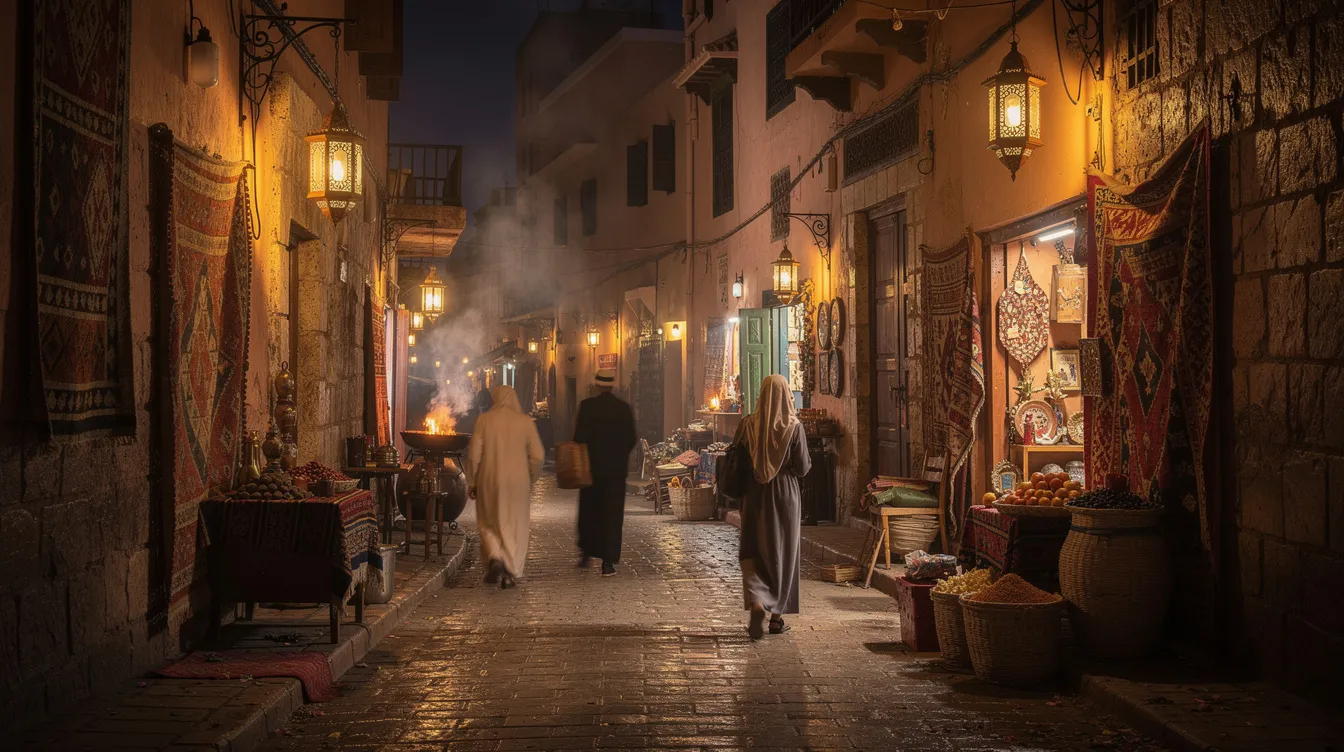
The medina of Fez became a UNESCO World Heritage Site in 1981 for its outstanding universal value; UNESCO describes it as one of the world’s best conserved historic towns. This old medina is among the best-preserved medieval Islamic cities, showing Islamic architecture, Moorish and Moroccan styles, floral motifs, geometric patterns, intricate tile work, and elaborate timber carvings.
The historic city of Fez consists of two main medina quarters: Fes el-Bali and Fes Jdid. The Fes el-Bali medina is known for its narrow winding streets, bustling souks, and ancient monuments. Fez el Bali began between 789 and 809, grew on both sides of the river, including the east bank, and was unified by the Almoravids around 1070; Almohad walls were completed by 1204. Today, El Bali contains nearly 10,000 winding alleys and is mostly only accessible on foot.
Fez el Jdid was founded in 1276 by the Marinids as a royal and military quarter. It includes Dar al Makhzen, the Royal Palace of Fes, whose ornate gates and gardens serve as the residence of the King of Morocco when in Fez, plus the Jewish quarter, or Mellah. Fez was a noted center of Jewish intellectual and cultural influence from the 10th to 11th centuries, and the Mellah grew further after Iberian expulsions in the late 15th century.
Use this as your practical “what to see in Fes, Morocco” list. Most principal monuments are in the medina, so comfortable shoes are necessary for exploring the cobblestone streets of Fez.
Sight | Why visit |
|---|---|
Bab Boujeloud / blue gate | The Bab Boujeloud, or Blue Gate, is a major entrance to the medina and is adorned with intricate zellij work in blue and green. Morocco Classic Tours often begins guided tours at main gates like Bab Boujloud, Bab Rcif, or Bab Guissa. |
al qarawiyyin | The Al-Qarawiyyin Mosque was established in 857 and is considered the oldest continuously functioning institute of higher learning in the world. Non-Muslims cannot enter the Qarawiyyin mosque, but can glimpse courtyards from nearby lanes. |
Bou Inania Madrasa | The Medersa Bou Inania, built between 1351 and 1356 by Sultan Abu Inan, is noted for intricate zellij tile mosaics and is one of the few medersas that allow entry for non-Muslims; its stunning courtyard, carved cedar, and central courtyard show traditional Moroccan architecture. |
Al Attarine Madrasa | Near Souk el-Attarine, this Marinid school shows ornate architecture, cedar ceilings, and delicate zellij. Madrasas in Fez, like the Bou Inania and Al-Attarine, showcase intricate zellij tilework and ornate architecture. |
Chouara Tannery | The Chouara Tannery is one of the oldest tanneries in the world, dating back to the 11th century, and has been processing leather in the same way for centuries. |
nejjarine museum | The Nejjarine Museum of Wooden Arts & Crafts is housed in an 18th-century fondouk and showcases the rich tradition of wooden arts in Morocco, including doors, chests, and tools. |
Dar Batha Museum | A former palace with ceramics, woodwork, textiles, and zellij. |
Jnan Sbil Gardens | Jnan Sbil Gardens, created around 1880, serve as a public park with lush greenery and fountains, located between Fes el-Bali and Fes Jdid. |
merenid tombs | The Merenid Tombs, located just outside the medina, provide panoramic views of Fez and date back to the 14th century. |
Mellah and Ibn Danan Synagogue | Essential for understanding Fez’s multi-faith past. |
The royal palace gates, Dar al Makhzen, ruined garden restaurants, palais amani rooftops, and riad courtyards add texture between monuments. For the current heritage context, see the UNESCO Medina of Fez listing. | |
Start at Bab Boujloud, walk Talaa Kebira, visit Bou Inania Madrasa, continue toward al Qarawiyyin mosque and Al Attarine Madrasa, then pause for fresh mint tea. At midday, eat near Seffarine Square, Batha, or a rooftop terrace.
In the afternoon, visit Chouara Tannery with a licensed guide, browse nearby leather souks, and stop at Nejjarine Museum if time allows. Late afternoon, take a taxi or guided transfer to the Merenid tombs for sunset, then return for dinner in a riad, Fes, the ruined garden, or another medina restaurant.
The Fez Medina is not only a museum; it is a major industry zone for artisans. Visitors can witness artisans at work in Fez’s souks, creating traditional crafts such as leather goods, carpets, and metalwork. Around Seffarine Square, you hear metalworkers; in Souk el-Attarine, you smell spices and perfume; in textile lanes, you see looms, djellabas, and kaftans.
How do you visit the leather tanneries in Fez? Usually, you enter through a leather shop, climb to viewing terraces, watch the vats, and then decide whether to buy bags, belts, poufs, or jackets. The city is known for its historical tanneries, particularly the Chouara Tannery, which is one of the oldest in the world and has maintained traditional practices for centuries.
Does the Fez tannery smell really bad? It can. Traditional methods use natural treatments, including pigeon droppings, lime, and dyes, so the smell is sharp and organic. Visitors are recommended to carry mint leaves to manage the strong odors in some areas, like the tanneries; shopkeepers often offer mint sprigs. The smell is manageable from terraces, and it is part of understanding how Fez has a rich history tied to leather production, with tanning techniques still in use today at the tanneries being centuries old.
What should I buy in FES? Compare quality before buying leather goods, Berber rugs, brass lamps, cedar-wood boxes, ceramics, spices, savon beldi, and a fez hat. Morocco Classic Tours can arrange shopping-focused guided tours to reputable cooperatives, so bargaining stays fair and relaxed. Bargaining is expected in the souks, but always do so respectfully and with a smile.
Beyond leather, Fez is a treasure trove for other crafts. Look for handwoven Berber rugs, intricate brass lamps, cedar-wood boxes, colorful ceramics, and traditional Moroccan clothing such as djellabas and kaftans. Each item reflects the city’s rich artisan heritage.
Supporting local artisans by purchasing directly from workshops or reputable cooperatives ensures fair compensation and helps preserve traditional crafts. Morocco Classic Tours can guide you to authentic artisan workshops and help you avoid tourist traps.
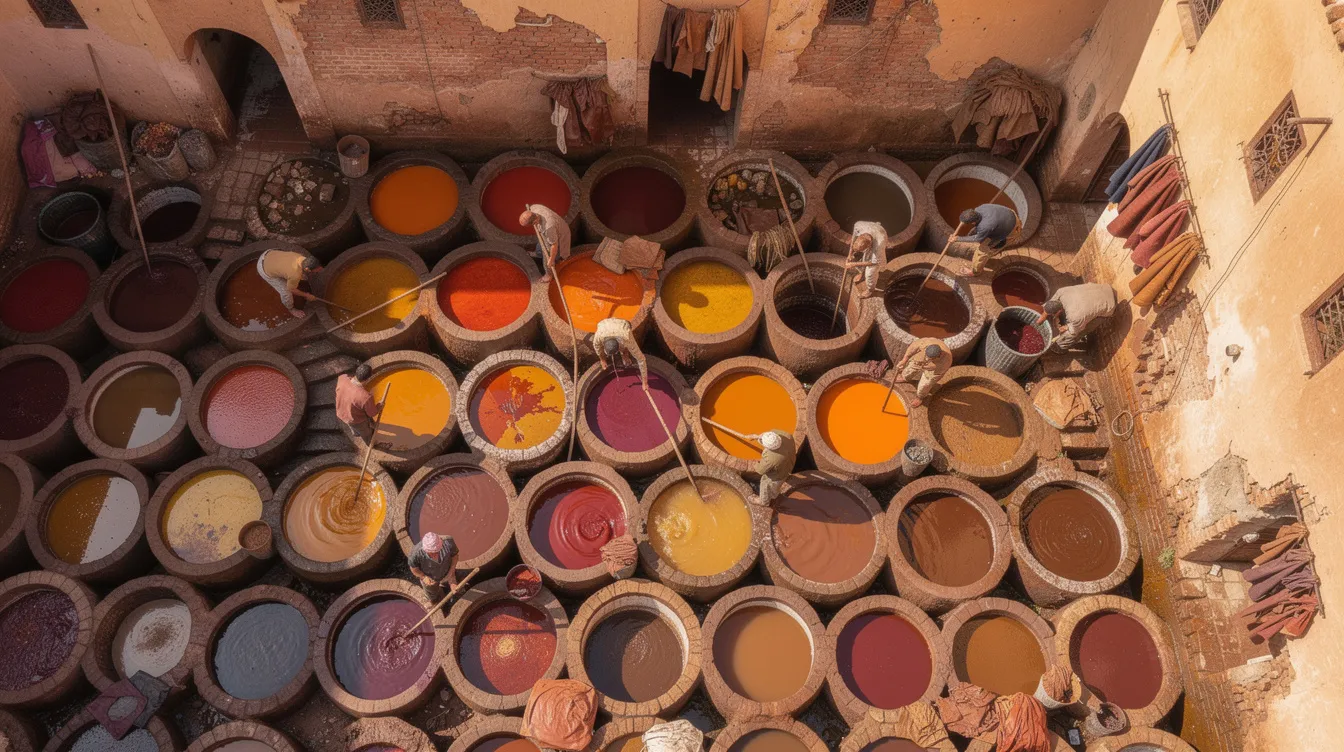
Fez is often considered Morocco’s gastronomic capital. Traditional Fassi cuisine is celebrated for its balance of sweet and savory flavors and the use of aromatic spices, making Moroccan cuisine here especially refined.
Try Fassi pastilla with pigeon or chicken, almonds, cinnamon, and pastry; Fassi with chicken and lentils over shredded msemen; khlii preserved spiced meat; bessara fava bean soup; and lamb or beef with prunes and almonds. Sweet specialities include almond pastries, sellou, figs, pomegranates, and oranges.
Traditional Moroccan cuisine can be enjoyed at several restaurants in Fez, including the Ruined Garden and Café Clock, where a camel burger offers a modern twist. Many riads and a cooking school experience offer cooking classes: guests shop in the souks, return to a central courtyard, and prepare lunch.
Can you drink alcohol in Fes, Morocco? Yes, but discreetly. Fez is conservative, so alcohol is mainly in licensed hotels, selected restaurants, and some venues outside the tight medina core; Morocco Classic Tours can advise appropriate places.
How do I get to Fez, Morocco? Fly into Fès–Saïs Airport, take ONCF trains from Casablanca, Rabat, Tangier, Meknes, or Marrakech, or arrive by private driver. If arriving from Casablanca Mohammed V Airport, you can take a connecting domestic flight, train, or arrange a private transfer to Fez.
Is there a high-speed train from Marrakech to Fez? Not directly. Morocco’s Al Boraq high-speed service runs on the Tangier–Rabat–Casablanca axis; Marrakech to Fez usually means conventional ONCF trains with a change, taking about 6–7 hours. Check ONCF for schedules.
How to get from Fez airport to the Medina? The drive usually takes 20–30 minutes. Use official taxis with agreed fares, or book a private transfer, especially at night. Because cars cannot enter much of Fes el Bali, drop-offs are usually at Bab Boujloud, Bab Rcif, or another gate.
Getting around Fez means walking inside Fez el Bali and Fez el Jdid, using petit taxis for Ville Nouvelle, and arranging drivers for day trips. The city operates a public transit system with various bus routes, but first-time visitors often find taxis simpler. The winding alleys of the medina are often challenging to navigate, especially at night, so taking a taxi at night is advisable for longer journeys due to navigation difficulties in the medina.
Is Fes, Morocco, safe for Americans? Generally, yes. Violent crime is rare; the main risks are pickpocketing, pushy touts, taxi overcharging, aggressive sales tactics near tanneries and main gates, and scams involving unofficial guides. The U.S. State Department advises increased caution for Morocco overall; see its Morocco travel advisory.
Practical advice: keep valuables secure, avoid isolated alleys late, use licensed guides, and be careful on uneven pavements and around traffic near city gates. Local guides can help visitors navigate the busy and winding streets of the medina safely, and a guided tour is a great way to learn about the history and navigate the complex medina.
Fez remains religious and conservative. Dress modestly, respect prayer times, do not enter mosques unless permitted, and ask before photographing people. Visitors to Fez can engage with local traditions by exploring religious sites, enjoying traditional music, and participating in festivals. Cultural festivals in Fez include the Fez Festival of World Sacred Music and the Festival of Sufi Culture, showcasing traditional performances.
What’s the Average Salary in Fez, Morocco? Wages are modest compared with Western countries, and many people work in crafts, tourism, services, and the public sector. Bargain respectfully and tip fairly.
Fez’s historical roots span over a millennium. Fez was historically a multicultural crossroads, influenced by various waves of immigration, including refugees from Andalusia in the 9th century, and it became a significant trading hub between Africa and Europe.
The city reached its apex during the Marinid dynasty, especially between the 13th and 15th centuries. Fez was under the Marinid dynasty during its golden age in the 13th and 14th centuries, when many historical buildings were constructed. Under the Marinid dynasty, Fez gained its reputation for political and religious scholarship, and historically, Fez’s intellectual life was dominated by the University of Al-Qarawiyyin and various religious schools known as madrasas.
Fez was the capital of Morocco multiple times throughout its history, particularly under the Marinid and ‘Alawi dynasties. References to Sultan Moulay, Sultan Moulay Hassan, and Moulay Idriss II still appear in local memory and monuments. The Tijani Sufi order, which originated in Fez, has been influential in spreading spirituality and scholarship in West Africa, and the city is often considered the spiritual heart of Morocco, with numerous zawiyas that attract religious pilgrims.
Fez also played a central role in the Moroccan nationalist movement against colonial rule and Moroccan independence. After 1956, the split between medina and ville nouvelle remained, while restoration programs addressed overcrowding and fragile historic buildings.
Fez makes an excellent starting point for the Middle Atlas, cedar forests, Berber villages, and the Sahara Desert routes. Popular day trips include Meknes, Volubilis, Moulay Idriss Zerhoun, Sefrou, and Chefchaouen.
If the Sahara is the reason you came, the drive south is a journey in itself. We set out the routes, the real distances and how many days each one needs in our guide to desert tours from Fes.The classic desert route goes through Ifrane, Azrou’s cedar forests, Midelt, the Ziz Valley, and Merzouga. Morocco Classic Tours arranges private drivers, desert camps, camel treks, and flexible returns to Fez or Marrakech. Fez also fits naturally into imperial cities tours linking Rabat, Meknes, Fez, and Marrakech.
Is the fez hat Moroccan or Turkish? The tarboosh became famous in Ottoman Turkey and the eastern Mediterranean, but its name is linked to the city of Fez because red dye and some early production were associated with Fez and North Africa. Its story is shared, not only place-owned.
Can non-Muslims wear a fez? Yes, respectfully. It is not a religious requirement, but avoid treating it like a joke costume, especially in religious spaces or solemn ceremonies. You can see souvenir and ceremonial versions in the medina, and some artisans explain how they are made.
Morocco Classic Tours is a Fez-based travel agency offering private, customizable Morocco journeys. We focus on cultural immersion, comfort, English-speaking guidance, and practical logistics that make Fez easier to enjoy.
Our Fez experiences include half-day and full-day city tours of Fez el Bali and Fez el Jdid, tanneries, artisan workshops, rooftop views, food tastings, architecture walks, Jewish heritage tours, photography walks, and culinary tours. Accommodation in Fez often includes cultural experiences, such as cooking classes or guided city tours offered by riads, and we can coordinate those with your itinerary.
Fez is known for its traditional riads, which are traditional Moroccan houses with an interior garden or courtyard. Numerous historic houses known as riads have been converted into hotels or guesthouses for tourists. Riad Fes is considered one of the most luxurious and beautiful riads in Fez, featuring traditional Moroccan architecture and gardens; Riad Fes Maya is a charming and conveniently located riad in the heart of the medina; palais amani offers traditional architecture with modern comforts and rooftop views; Dar Seffarine is an affordable guesthouse in a restored 14th-century riad; Le Grand Alcazar is a quieter riad with old tiles and carvings; and Riad Tizwa is a family-run riad known for its calming atmosphere and beautiful courtyard. Riads in Fez are characterized by intricate black-and-white tiles, detailed hand carvings, private houses adapted for guests, and open-air terraces with stunning city views.
Many travelers recommend staying in the medina to fully immerse in local culture, because the Fez medina is a UNESCO-listed area and one of the oldest and largest car-free urban zones in the world. For day trips, multi-day Sahara journeys, beach extensions, or custom private departures, contact Morocco Classic Tours through the Book Now button or enquiry form.
No. As of the mid-2020s, Al Boraq high-speed trains serve the Tangier–Rabat–Casablanca corridor, not the full Marrakech–Fez route. Travellers use conventional trains, usually 6–7 hours with a change, or book a private transfer.
With 24 hours, focus on Bab Boujloud, Talaa Kebira, one madrasa, the al-Qarawiyyin surroundings, Chouara Tannery, and the Merenid Tombs. With 2–3 days, add Jnan Sbil, the Mellah, royal palace gates, Nejjarine Museum, shopping, and a food tour.
Printed maps are available in some riads, but offline maps are more useful. Mark your riad, Bab Boujloud, Bab Rcif, and major sights. Getting lost in the Fez medina is a recommended and enjoyable experience for visitors, but hiring a licensed guide on day one saves time.
Yes, especially with private guiding, short walking segments, and riads near main routes. Strollers can be difficult in narrow lanes, so plan breaks in Jnan Sbil, riad courtyards, or rooftop cafés.
Spring and autumn are best for walking and nearby mountain routes. Summer can be very hot, while winter brings chilly nights. Festival lovers may plan around the Fez Festival of World Sacred Music or the Festival of Sufi Culture.
Compare Morocco group tour agencies by trip style, reviews, pace, transport and inclusions. Learn wh...
Read this article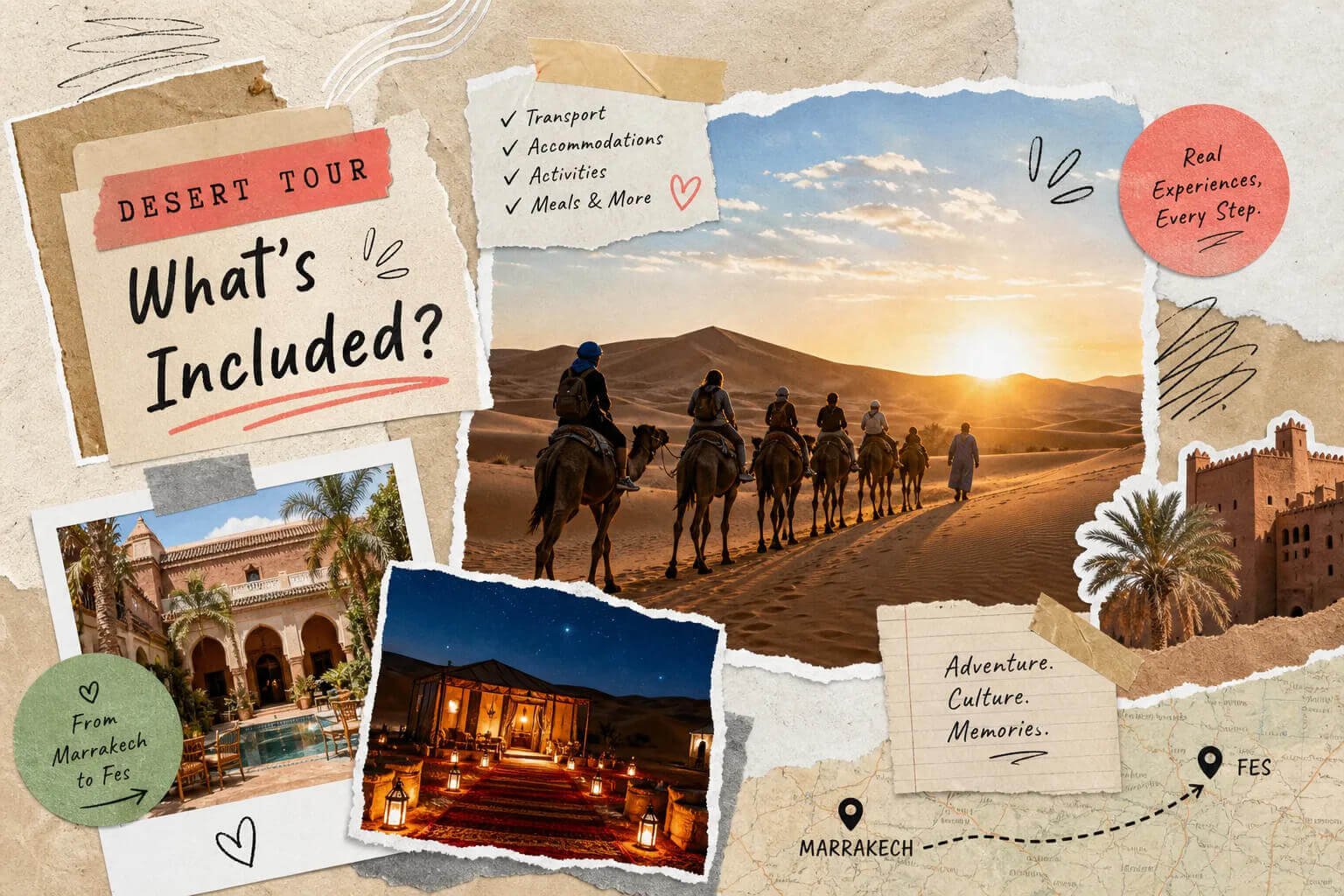
Uncover what a Marrakech to Fes desert tour offers, including camel rides, desert camps, and rich cu...
Read this article
Join our Merzouga Overnight Tour for an authentic desert experience. Enjoy camel rides, comfortable ...
Read this articleWant cool tour deals and tips about Morocco? Enter your email and we’ll send them to you each month!
