Group Tour Agencies in Morocco: How to Pick the Right One
Compare Morocco group tour agencies by trip style, reviews, pace, transport and inclusions. Learn wh...
Read this article

Private, custom Morocco trips planned in Fez by AZ-ZDDINE, working in Moroccan tourism since 2012. Sahara, Atlas, medinas and coast, arranged around you.
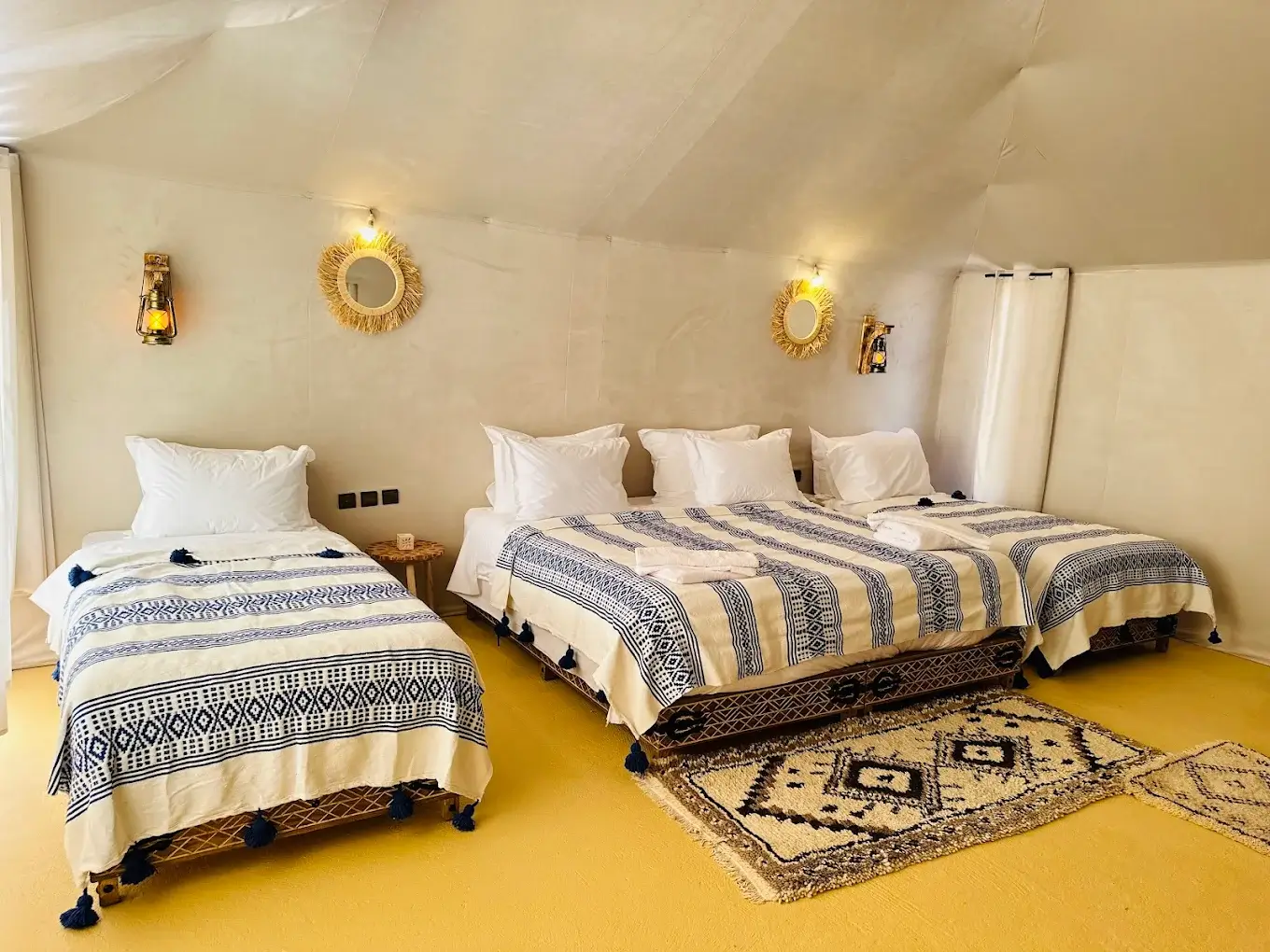
Morocco Classic Tours offers both luxury and traditional Sahara desert tents in Merzouga and Erg Chebbi, creating experiences that blend nomadic tradition with modern comfort. Here’s what you need to know before booking your desert adventure:
Sahara Desert Morocco tents range from basic Berber-style camel-hair shelters to fully equipped luxury camps with en-suite bathrooms and electricity
Morocco Classic Tours organizes private desert tent experiences, including camel treks, guided excursions, and stargazing from Fez, Marrakech, and other cities.
Typical prices start around €80–€120 per person per night for shared mid-range tents, while luxury camps run €250–€700+ per couple per night, depending on season and inclusions.
Camping in organized Sahara camps is legal and generally safe, while unsupervised wild camping in Morocco is restricted and not recommended for visitors.
A Sahara desert Morocco tent experience typically means spending one or more nights in a tented camp among towering dunes, often reached by a late-afternoon camel ride as the sun begins its descent toward the horizon.
The two main settings for these adventures are Erg Chebbi near Merzouga and Erg Chigaga near M’hamid. Erg Chebbi sits roughly 8–9 hours by road from Marrakech and about 6–8 hours from Fez, making it the more accessible option for most travelers. Erg Chigaga, meanwhile, offers a more remote and rugged journey for those seeking deeper isolation.
A typical overnight program works like this: pickup in a nearby town, transfer or camel trek to camp, sunset watching from a dune crest, dinner with traditional music around the fire, a night under the stars in your tent, and a sunrise return the following morning. The rhythm of desert life takes over, and the outside world fades into the distance.
Morocco Classic Tours focuses on small-group and private tented stays that balance comfort with authentic Berber hospitality. Guests experience the three-tiered tea ceremony symbolizing life’s journey from bitterness through sweetness to perfection, hear traditional drum sessions, and taste tagines slow-cooked for hours.
Picture this: watching the Milky Way stretch across the sky over Erg Chebbi in October, when the air is cool and clear, and millions of stars become visible in what astronomers rate as some of the darkest skies on the planet.
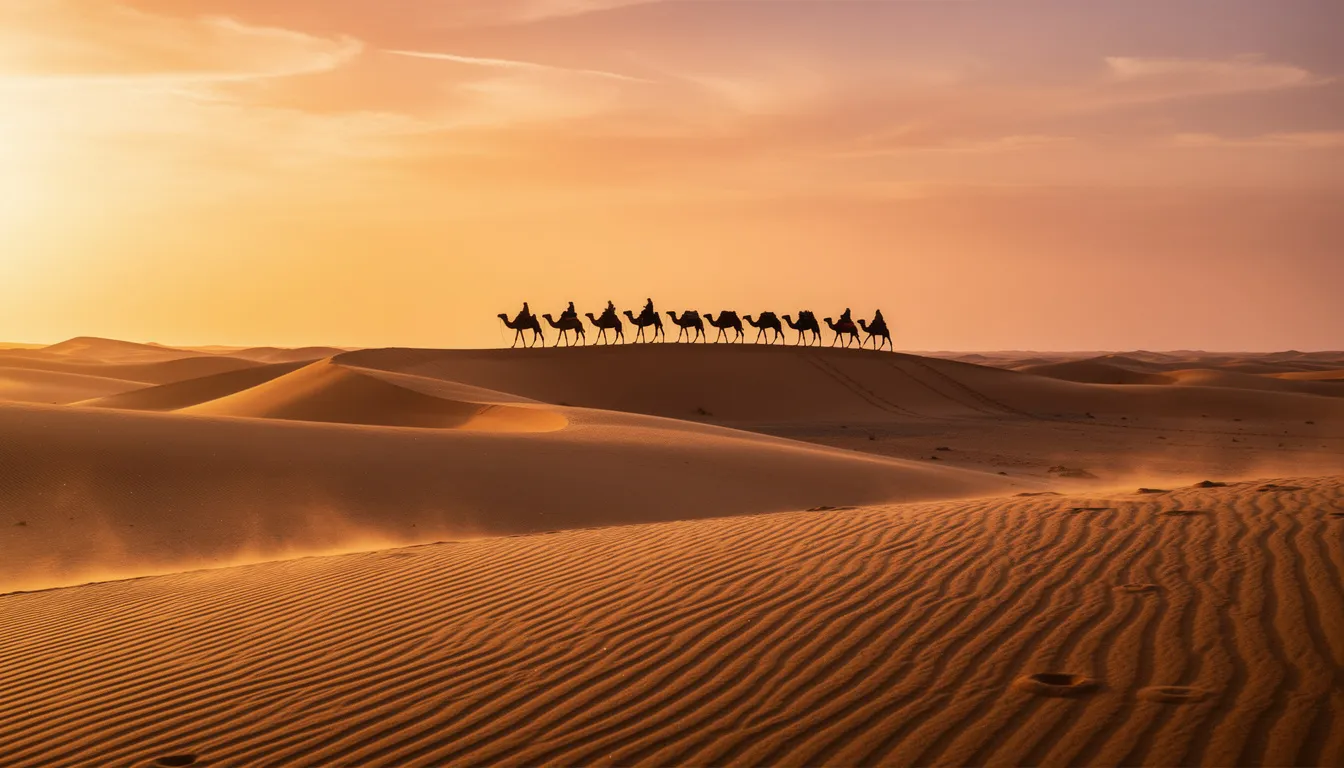
Different travelers can choose between traditional nomad tents, standard tourist camps, and high-end glamping tents. Your choice shapes the entire experience, from how you sleep to what amenities you’ll have at your fingertips.
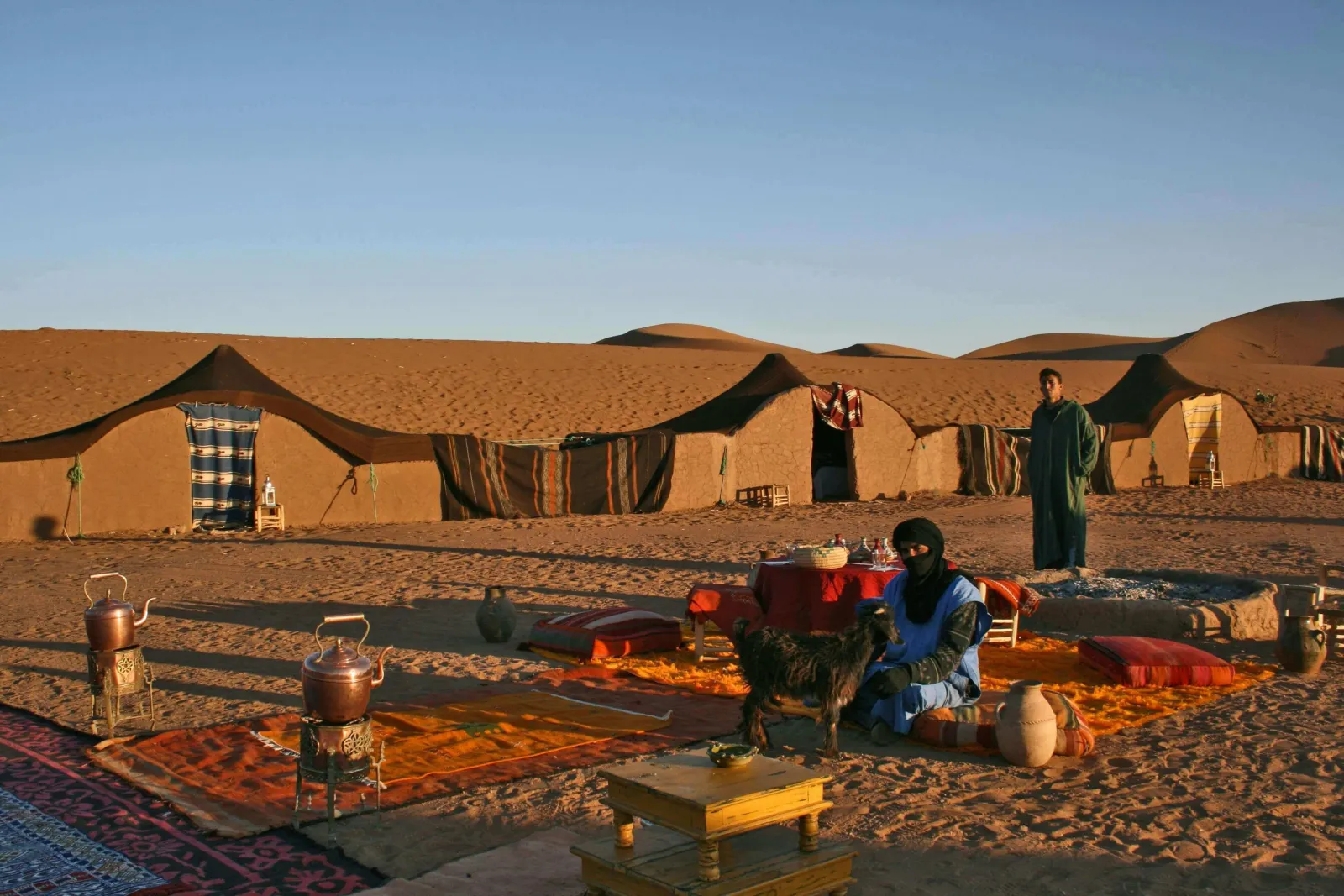
The original Sahara tents were woven from camel and goat hair by nomadic families who traversed the desert for centuries. Known as bayt al-sha’r, these structures feature a low, elongated profile with dark fabric that provides natural insulation against the region’s extreme temperature swings—sometimes reaching 40°C differences between day and night.
The black or brown material breathes in the heat, blocks harsh winds, and creates a space where air can circulate naturally. Central poles, guy ropes, and wooden stakes form a simple but effective structure designed for the harsh desert environment.
Canvas structures with proper beds, shared bathroom blocks, simple furnishings, and solar-powered LED lighting serve budget and mid-range travelers well. These camps typically accommodate 10–20 guests in clustered setups that foster social interaction around evening drum sessions and fireside storytelling.
Expect clean linens, basic showers, and communal dining areas where you’ll share dinner and mint tea with fellow travelers. The experience prioritizes authenticity over luxury amenities.
Sahara Desert luxury Morocco tents elevate the experience dramatically. Large canvas or khaïma-style pavilions span 40–60 square meters, outfitted with king-size beds draped in high-quality linens, Persian rugs laid wall-to-wall, brass lanterns casting ambient glows, and carved cedarwood furniture.
Many include private en-suite bathrooms with flush toilets, pedestal sinks, and hot-water rain-style showers powered by solar panels.
The difference between a shared camp and a private camp arrangement can transform your experience. Shared camps mean meeting other travelers and enjoying group activities, while private camps offer seclusion with dedicated staff and customized service.
Morocco Classic Tours can arrange both options in Merzouga and other Sahara gateways, matching the experience to your preferences and travel style.
Step inside a luxury desert tent and you’ll find lantern-lit pathways leading to richly patterned carpets, carved wooden furniture, and Moroccan textiles that create warmth and beauty in the middle of nowhere.
Typical in-tent amenities include:
Feature | Description |
|---|---|
Bedding | Comfortable mattresses with high-thread-count linens |
Lighting | Bedside lamps, often solar-powered |
Climate control | Fans for summer, gas heaters for winter |
Power | Charging outlets for phones and cameras |
Storage | Armoires and side tables for bags |
Seating | Low poufs and cushions for lounging |
Many luxury tents in Erg Chebbi and Erg Chigaga include private bathrooms separated by solid or canvas walls, featuring flush toilets, basins, and hot-water showers using eco-purifiers to recycle greywater in this water-scarce region.
Design details blend tradition and comfort through Berber rugs, tadelakt-style finishes, brass lamps, and low seating areas. The art of Moroccan craftsmanship shows in every piece, from zellige tile accents to hand-carved woodwork.
Seasonal considerations matter. In winter (December–February), high-end tents provide extra wool blankets and gas heaters to combat temperatures that can drop to near 0°C. In hotter months, ventilation, ceiling fans, and light-colored fabrics help keep interiors cool and comfortable even when the ground outside radiates heat.
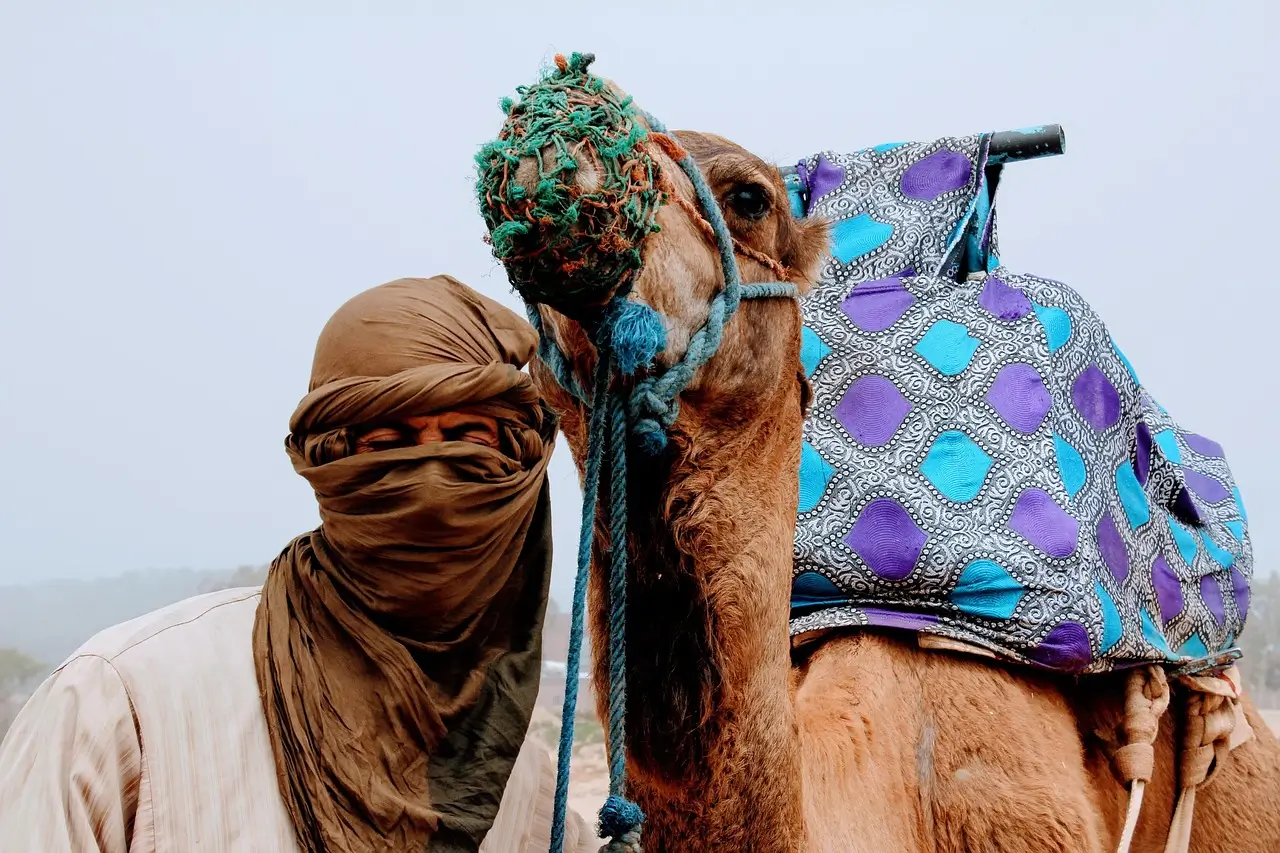
Morocco’s desert nomads—the Ait Atta, Tuareg, and other groups—have traversed these sands for centuries, and their tents inspired today’s Sahara camps. Understanding this tradition adds depth to your journey.
Camel and goat hair tents are handwoven from panels that start naturally dark and fade to brown over time. This construction provides insulation, wind resistance, and breathability as temperatures change throughout the day and night. The fabric essentially breathes with the desert.
The simple structure relies on central or multiple poles, guy ropes, and wooden stakes. The low height is designed to catch the breeze and create shade rather than stand tall against the wind. Form follows function in every aspect.
Morocco Classic Tours may include visits to real nomad encampments near Merzouga or the Ziz Valley, allowing guests to compare tourist tents with authentic family shelters and share time with the women and men who still live this way.
Cultural etiquette when entering nomad tents:
Remove shoes if asked
Accept tea with the right hand
Ask before taking photos
Sit where indicated by your host
Two main dune systems dominate Morocco’s desert camping scene: Erg Chebbi near Merzouga and Erg Chigaga near M’hamid. Lesser-known areas near Erfoud also offer alternatives for travelers seeking something different.
Accessible from both Fez and Marrakech, Erg Chebbi features tall golden dunes reaching up to 250 meters high. A wide range of camp types serves travelers from backpackers to honeymooners, and popular sunset camel rides capture that iconic Sahara moment.
The region hosts over 100 camps and draws hundreds of thousands of visitors annually. The journey from Marrakech takes you through the High Atlas Mountains, past ancient kasbahs, and along dramatic gorges.
More remote and accessed via a 4x4 track beyond M’hamid, Erg Chigaga offers fewer camps and a greater sense of isolation. Star-shaped dunes stretch up to 300 meters high. This destination suits travelers with extra time and an appetite for adventure off the beaten path.
Morocco Classic Tours books camps featuring private clusters of 4–10 luxury tents with en-suite facilities, lounge tents, and dedicated staff. The collection of partner camps meets strict quality standards for hospitality, cleanliness, and safety.
Multi-day itineraries combine Sahara tent nights with city stays in Marrakech, Fez, or Ouarzazate, plus stops in the Atlas Mountains, gorges, and oases throughout the region.
Desert conditions change rapidly—hot sun by day, cool or cold at night, and sand everywhere. Smart packing greatly improves comfort and helps you enjoy every moment of your adventure.
Clothing essentials:
Breathable long-sleeve shirts (UPF50+ recommended)
Light hiking trousers
Warm fleece or down jacket for winter nights
Comfortable closed-toe walking shoes
A scarf or shemagh to protect from the sun and sand
Personal items:
High-SPF sunscreen (50+ zinc-based works best)
Polarized sunglasses
Lip balm with SPF
Basic medications and any required prescriptions
Personal toiletries (camps have limited supplies)
Comfort and sleep items:
Light sleep sack liner if preferred
Earplugs for nocturnal wind or wildlife sounds
Eye mask for circadian reset under bright full moons
Extra thermal layers for December–February when temperatures near Merzouga can drop close to 0°C
Practical accessories:
Small headlamp or flashlight (red mode preserves night vision)
Power bank (20,000mAh handles multi-day phone use)
Soft daypack
Reusable water bottle (3L+ capacity recommended)
Camera or smartphone for sunrise and night-sky photography
Experienced operators stress minimalism—aim for under 10kg of personal gear fitting a 40L daypack, as 4x4 transfers limit luggage space.
This checklist helps travelers maximize rest and comfort, especially in basic or mid-range camps where amenities are simpler.
Lightweight merino or cotton sleepwear works well for cooler nights. In winter, thermal base layers and warm socks make a significant difference when temperatures drop, and the fire burns low.
A compact travel pillow adds neck support if you’re particular about sleep. A lightweight travel blanket or shawl provides extra warmth when sitting outside by the fire after dinner.
Bring a small dry bag or zip-lock bags to keep electronics and valuables protected from sand and dust inside the tent. Desert silica infiltrates everything, so protection matters.
On Morocco Classic Tours trips, bedding is always provided with clean linens. Most camps supply everything guests need, so personal sleeping bags aren’t necessary unless you specifically request more rugged camping experiences.
Rather than listing competitors, this section describes what makes certain camps stand out and what Morocco Classic Tours looks for when selecting partners.
Common hallmarks of highly reviewed camps:
Quality Indicator | What to Look For |
|---|---|
Cleanliness | Daily linen refreshes, sand-free rugs |
Hospitality | Staff fluent in multiple languages, attentive service |
Food quality | Fresh ingredients, well-prepared tagines |
Camel welfare | Regular veterinary care, appropriate loads |
Environmental practices | Solar power, composting, and water recycling |
Location critically affects ratings. Camps set slightly away from main tracks ensure quieter nights, darker skies for stargazing, and less engine noise—yet remain reachable by 4x4 or camel within 30–45 minutes.
Morocco Classic Tours prioritizes licensed operations that comply with Moroccan regulations, maintain safety standards, and respect local communities and nomadic traditions. This care ensures customers have experiences they’re happy to share.
Illustrative scenarios:
A private honeymoon tent with candlelit dinner, rose-petal turndown, and astronomer-led stargazing session
A family-friendly camp with larger tents, flexible bed configurations, and earlier meal times for children
Luxury in the Sahara context means privacy, attentive service, high comfort levels, and curated experiences—not just expensive decor in the middle of the dunes.
Typical inclusions at high-end camps include private en-suite tents, multi-course dinners featuring dishes like harissa-spiced lamb mechoui and harira soup, generous breakfasts, hot water, soft lighting, and activities like guided walks or short 4x4 excursions.
Realistic price ranges:
Camp Category | Price Range (per couple/night) |
|---|---|
Quality luxury | €250–€400 |
Ultra-luxury | €500–€700+ |
Peak season surcharge | +10–20% |
Morocco Classic Tours can arrange VIP transfers (private drivers from Marrakech, Fez, or Errachidia) and tailor-made experiences like private musicians performing Berber music or surprise desert proposals under the stars.
While luxury tents offer hotel-like comfort, guests remain in a remote environment. Service focuses on safety, flexibility, and local cultural immersion rather than recreating a city hotel experience.
Visitors can book Sahara tent experiences via local Moroccan agencies, international tour operators, or directly with camps. Each approach has trade-offs in terms of cost, flexibility, and local knowledge.
Morocco Classic Tours operates as a specialist Morocco-based operator arranging private and small-group Sahara expeditions, including transport, guided visits, and tented overnights throughout the region.
Advantages of using a Morocco-based agency:
Up-to-date local knowledge of weather patterns
Real-time information on road conditions
Direct relationships with camp operators
Understanding of safety regulations
Often, 20% lower costs through direct supplier ties
Key services Morocco Classic Tours typically provides:
Hotel pickups in Marrakech or Fez
English- or French-speaking drivers with licensed 4x4 vehicles
Pre-booked desert camps matched to your comfort level
Optional add-ons like sandboarding or quad biking
Transparent itineraries with clear tent specifications
Look for licensed operators with clear itineraries, transparent pricing, and specific information about tent categories and camp facilities before you purchase any package.
Costs vary by camp category (standard vs. luxury), season, and whether the experience is part of a longer tour or a stand-alone overnight. Understanding these factors helps you order the right experience for your budget.
Approximate nightly price ranges:
Tent Category | Per Person/Night | Notes |
|---|---|---|
Shared standard | €80–€120 | Dinner, breakfast, and a camel ride included |
Mid-range | €150–€200 | Better facilities, smaller groups |
Luxury (main camp) | €245+ | En-suite, all meals, premium service |
Private luxury | €275–€300 | Dedicated space for small groups |
Ultra-luxury | €500–€700+ | Exclusive camps, bespoke experiences |
Complete packages from cities like Marrakech or Fez with transport, sightseeing stops, and one or two desert tent nights may range from several hundred to over a thousand euros per person, depending on length and comfort level.
Sample package pricing:
3-day Marrakech-Merzouga shared tour: approximately €143/person
4-day Marrakech roundtrip (1 guesthouse + 2 camp nights): approximately €1,700/2 people
5-day extended route with Draa Valley: approximately €2,340/2 people
Morocco Classic Tours tailors quotes to group size, travel dates, and preferences. Contact the agency directly for detailed, up-to-date pricing via email or the website contact form.
Booking can be done entirely online before arrival, and early planning is recommended for peak months like March–April and October, when 80% of camps fill up 3–6 months ahead.
Simple booking process:
Choose travel dates and starting city (Marrakech, Fez, Ouarzazate, Errachidia)
Select comfort level of tents (standard, luxury, private)
Confirm itinerary details
Complete payment with Morocco Classic Tours
Share your preferences—honeymoon celebration, family trip, photography focus, trekking interests—so the agency can select the most suitable camps and tent types for your dreams.
Typical confirmation details include:
Clear description of the tent category and sizes
Meals and activities included
Timing for desert transfers and camel rides
Meeting points and driver contact information
Ready to book?
Use the “Book Now” option on the Morocco Classic Tours website
Request a custom quote via the contact form
Subscribe to receive special offers and seasonal deals
Wild camping regulations in Morocco are strict, especially near borders, protected areas (52 national parks), and inhabited zones. The beginning of any desert trip should include understanding these rules.
Independent wild camping in the Sahara dunes—pitching your own tent far from staffed camps—is generally discouraged and may be restricted by authorities for safety and security reasons. Infractions can result in fines of €500 or more and eviction.
Camping is legal when done in authorized, licensed desert camps or on private land with explicit permission from the landowner or local authorities.
Morocco Classic Tours uses only legal, authorized camp partners that comply with Moroccan tourism and environmental regulations set by ONMT (the Moroccan tourism board).
For safety, comfort, and cultural respect, booking recognized Sahara camps rather than attempting unsupervised wild camping remains the best approach.
For most visitors, camping in organized Sahara camps in Morocco is considered safe when done with reputable operators.
Environmental safety considerations:
Temperature extremes require proper clothing and hydration
Wind and occasional sandstorms (haboobs) can reduce visibility
Camps and guides monitor weather forecasts and adapt plans accordingly
Staff ensure proper water intake (4L per person per day recommended)
Security aspects:
Authorized camps coordinate with local gendarmes
Staff remain on site overnight
Guides know the terrain around Merzouga or M’hamid thoroughly
Satellite communications are available in quality camps
Morocco Classic Tours provides licensed drivers and local guides who accompany guests, assist with language barriers, and manage any issues that arise during your event.
Serious incidents are rare in established tourist areas, but common-sense precautions apply: watch your footing on steep dunes, stay with the group at night, and follow guide instructions. The ground can be uneven, and disorientation comes easily when every dune looks similar.
Merzouga and the surrounding Erg Chebbi region are among Morocco’s most visited desert areas and are generally safe for tourists.
Roads from Fez and Marrakech to Merzouga are paved and regularly used by tour vehicles, with common overnight stops in cities like Midelt or Ouarzazate along the way. The hour-by-hour journey becomes part of the adventure.
Morocco Classic Tours uses experienced drivers familiar with mountain passes and desert roads, especially in winter when conditions can change quickly with snow at higher elevations.
The village itself is small and tourism-oriented, with typical petty risks like in any travel destination, but little history of serious crime against organized tour guests. Local people depend on tourism and maintain welcoming hospitality that has built their reputation over the years.
Standard travel precautions:
Keep valuables secure
Respect local customs and dress modestly
Inform your guide of any health issues before desert excursions
Carry identification and emergency contacts
Absolutely. For many visitors, the Sahara tent experience becomes the highlight of their entire Morocco trip—a memory that lingers long after the journey ends.
Key rewards include:
Sunrise and sunset paint the dunes in shades of gold, orange, and pink
Night skies with minimal light pollution (Erg Chebbi rates as Bortle Scale 2, rivaling the world’s best dark sites)
Traditional music around the campfire as drums echo across the sands
The feeling of remoteness from everyday life and a break from digital overload
Love of silence that reveals itself only in empty spaces
Cultural aspects add significant value. Berber hospitality, tasting local dishes like tagine and couscous in a desert setting, and learning about nomadic history and ancient caravan routes create meaning beyond simple sightseeing. You capture something that no photo can fully convey.
The practical trade-offs are real: long drives from cities like Marrakech and Fez, and one or two nights in basic conditions if you don’t choose luxury tents. But most travelers consider it well worth the effort.
Morocco Classic Tours turns the long transfer days into part of the experience by stopping at viewpoints, oases, gorges like Todra and Dades, and Atlas mountain towns along the way. The story unfolds gradually rather than rushing toward the destination.
Sample itinerary concepts show the structure of what Morocco Classic Tours offers, providing a framework you can explore and customize.
One night in a desert tent, with stops in the High Atlas, Ait Benhaddou kasbah, and the Dades or Todra Gorges. Sunset camel ride, dinner under the stars, sunrise return—all the essential elements in a compact journey.
One or two nights in Sahara tents, passing through the Middle Atlas, cedar forests where Barbary macaques live, and Ziz Valley oases with beautiful palm groves. This route lets you end in a different city from where you started, making efficient use of your time.
Family-focused itineraries feature shorter camel rides, earlier dinners, and flexible sleeping arrangements. Photography-focused versions arrange earlier or later camel departures to capture the best light, private guides, and extra time for sunrise or night-sky shots when the stars form patterns across the darkness.
All itineraries are customizable based on your timing, budget, and interest in luxury versus more rustic tent settings. Share your vision, and Morocco Classic Tours will create something designed specifically for you.
The most comfortable months are usually March–May and late September–November, when daytime temperatures in Erg Chebbi and Erg Chigaga stay warm but not extreme. Summer (June–August) can push temperatures above 45°C in the dunes, while winter (December–February) brings cold nights that can drop near freezing. Morocco Classic Tours can recommend specific dates based on your tolerance for heat and interest in quieter versus busier seasons.
One night is enough to experience sunset, dinner, stargazing, and sunrise—the most common choice for first-time visitors. Two nights allow time to fully relax, try more activities like sandboarding or 4x4 excursions, and explore the dunes without rushing. Morocco Classic Tours often recommends two nights for guests coming from far away or those combining a desert stay with photography or special celebrations.
Many Sahara camps in Merzouga and Erg Chebbi are family-friendly and can accommodate children in larger tents or with extra beds. Parents should consider the length of the drive, temperature conditions, and children’s comfort with camel rides and sleeping in a new environment. Morocco Classic Tours tailors itineraries for families with shorter camel rides, earlier dinners, and flexible arrangements. Children ages 5–11 typically pay reduced rates when sharing parental tents.
Most camps serve Moroccan dishes such as vegetable or meat tagines, couscous, salads, harira soup, and fresh bread, often followed by fruit or simple desserts. Breakfast typically includes bread, jams, cheese, olives, eggs, and mint tea or coffee. Morocco Classic Tours and its partner camps can usually accommodate common dietary preferences or restrictions (vegetarian, vegan, gluten-free) when informed in advance—just ensure your needs are communicated at the time of booking.
Many desert camps use solar power, providing limited electricity for lighting and charging phones and cameras during certain hours. Mobile phone coverage in areas like Erg Chebbi near Merzouga is often available but can be weak or intermittent deep among the dunes. Consider the desert stay as an opportunity to disconnect somewhat, breathe freely, and be present—while relying on Morocco Classic Tours staff and camp teams for essential communication if needed.
Compare Morocco group tour agencies by trip style, reviews, pace, transport and inclusions. Learn wh...
Read this article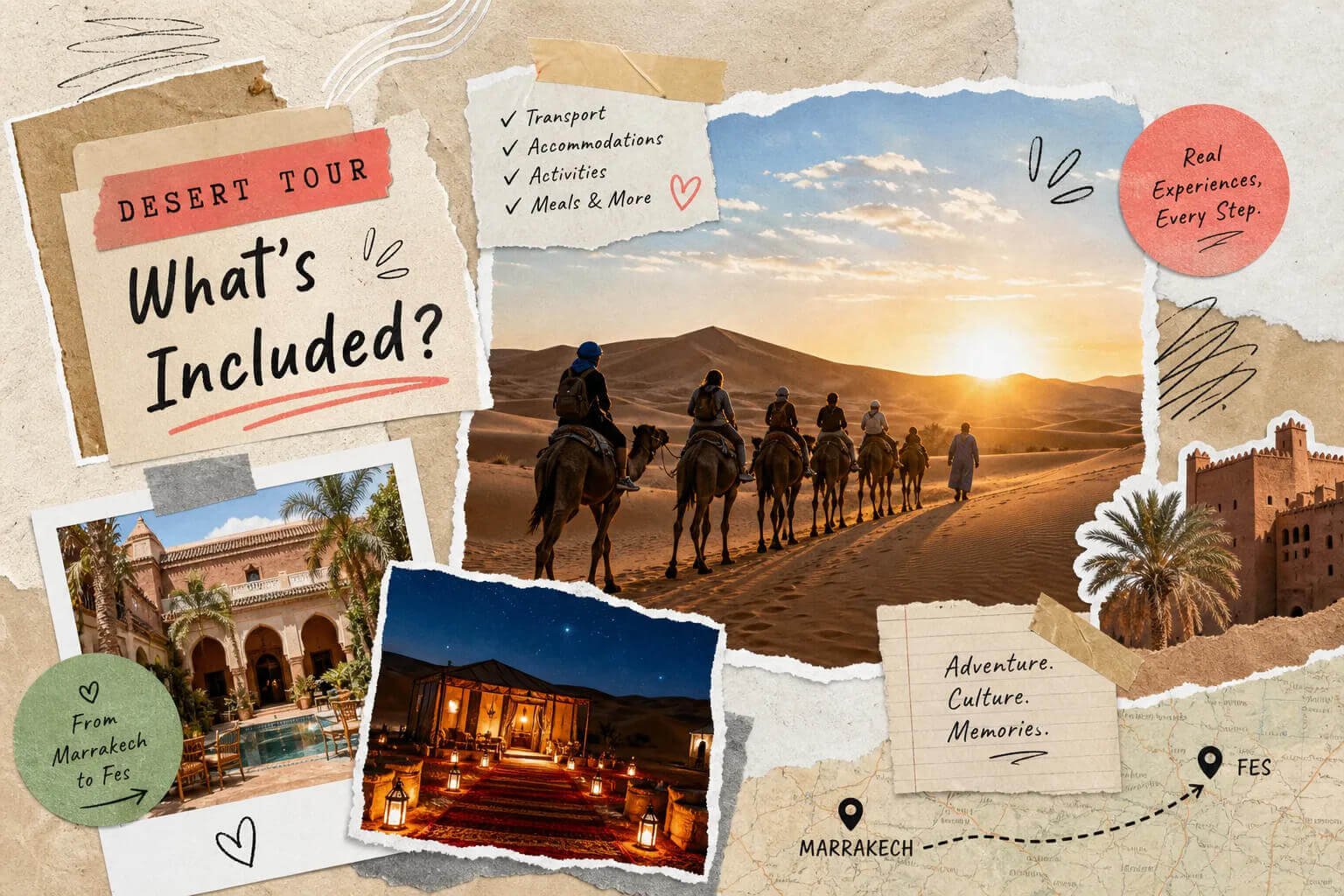
Uncover what a Marrakech to Fes desert tour offers, including camel rides, desert camps, and rich cu...
Read this article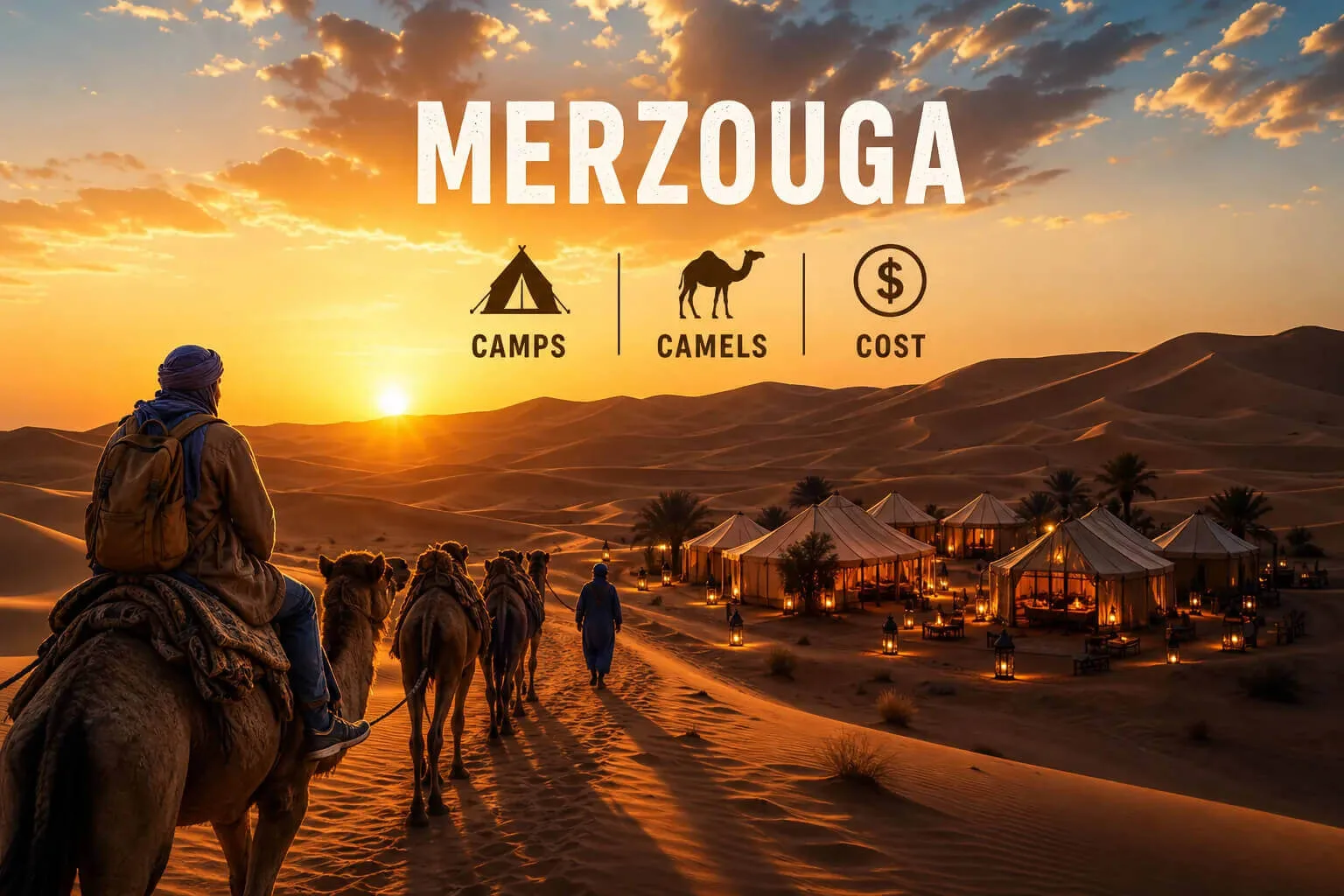
Join our Merzouga Overnight Tour for an authentic desert experience. Enjoy camel rides, comfortable ...
Read this articleWant cool tour deals and tips about Morocco? Enter your email and we’ll send them to you each month!
