How to Spend 3 Days in Marrakech: A Memorable Itinerary for Travelers
Discover how to make the most of 3 days in Marrakech with our detailed itinerary. Experience the cit...
Read this article

Suspendisse interdum consectetur libero id. Fermentum leo vel orci porta non. Euismod viverra nibh cras pulvinar suspen.
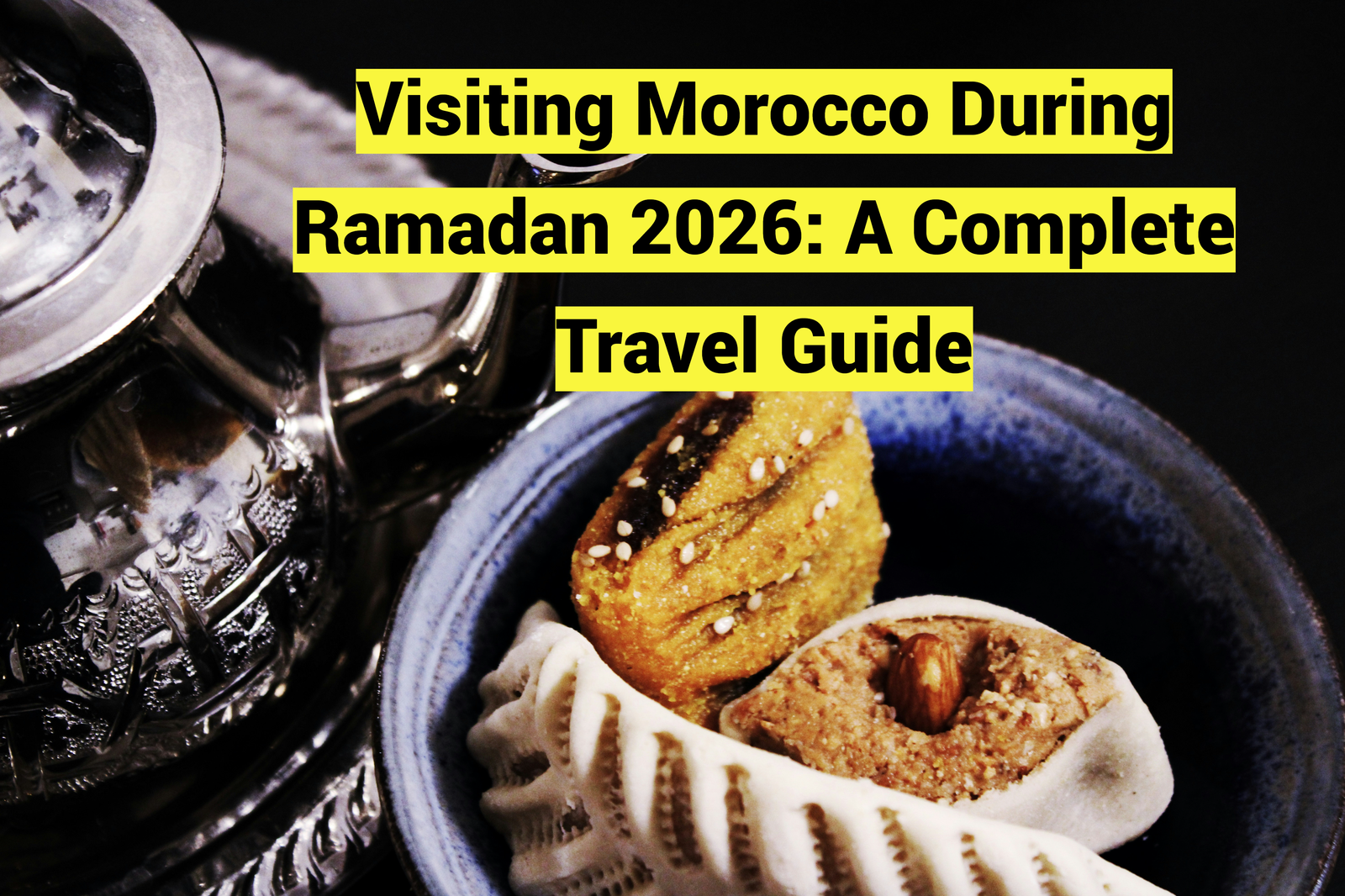
Visiting Morocco during Ramadan offers one of the most authentic cultural experiences available to travelers in this Muslim country. The holy month in 2026 falls approximately between February 17 and March 18, based on the Islamic lunar calendar, and transforms daily life across the country in profound ways. For many travelers seeking genuine immersion into Moroccan culture rather than surface-level tourism, this sacred time presents unique opportunities unavailable during the rest of the year.
This guide covers everything international visitors need to know about navigating Morocco during Ramadan—from understanding local customs and adjusted schedules to experiencing the magical evening celebrations that define this blessed Ramadan period. Whether you’re planning to explore the imperial cities, venture into rural areas, or simply absorb the spiritual atmosphere, this content addresses the practical realities alongside the cultural rewards.
Is it a good time to visit Morocco during Ramadan? Yes—Ramadan in Morocco rewards prepared travelers with extraordinary cultural immersion, unique seasonal foods like harira soup, and access to festive traditions that families gather to celebrate each night after sunset.
By reading this guide, you will:
Understand how Ramadan shapes daily life and what to expect across major cities and smaller towns
Learn essential etiquette to respect local customs while traveling comfortably
Navigate adjusted business hours, transportation, and dining with confidence
Experience authentic iftar celebrations and connect meaningfully with Moroccan people
Plan your itinerary around the rhythms of this sacred month
Ramadan represents the ninth month of the Islamic calendar, during which Muslims worldwide observe fasting from dawn to sunset as one of the Five Pillars of Islam. In Morocco, a deeply religious country, this holy month carries particular weight—the entire nation shifts its rhythm to accommodate spiritual reflection, daily prayers, and community gatherings. Unlike destinations like Dubai or Istanbul where Ramadan observance has become more relaxed, Morocco takes this sacred time seriously, creating a fundamentally different travel environment.
The exact dates for Ramadan 2026 depend on the sighting of the crescent moon, with the first day expected between February 17-19 and concluding around March 18-19. Because the Islamic calendar is lunar-based, confirmed dates are typically announced only 24-48 hours before the month begins. Eid al-Fitr, the three-day celebration marking Ramadan’s end, is anticipated around March 20, 2026.
During this period, fasting hours in Morocco run from approximately 4 AM to 8 PM, though sunset times vary throughout the one month duration. February and March bring mild spring weather—ideal conditions for exploring tourist attractions without summer heat, making this timing doubly appealing for many travelers who can adapt to the adjusted schedule.
For Moroccan people, Ramadan extends far beyond abstaining from food and drink. The month emphasizes self reflection, charity (zakat), and strengthened community bonds. Extended family connections intensify as families gather for the evening meal each night, and special prayers called Taraweeh fill mosques after sunset. Many Moroccans describe this as their most spiritually meaningful time of year.
The streets take on a distinctive character—quiet and contemplative during daylight hours, then erupting with energy once the call to prayer signals the breaking of the fast. Understanding this dual nature of daily life during Ramadan prepares visitors for what it’s like to travel in Morocco during this transformative period.
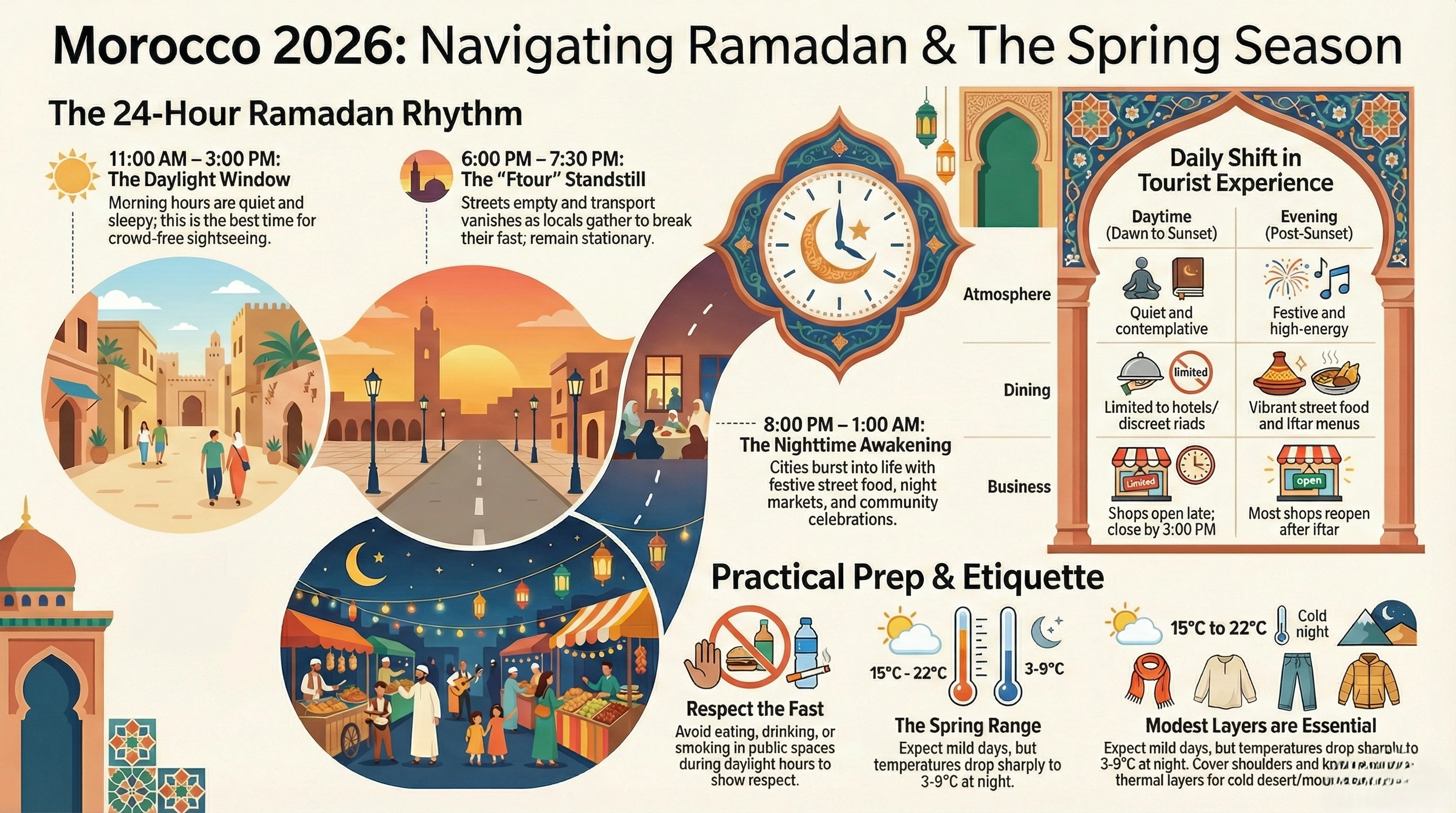
The rhythm of Morocco during Ramadan reverses typical patterns. Daytime moves slowly, almost meditatively, while nights burst with celebration and activity. Grasping this fundamental shift allows travelers to plan effectively and appreciate both phases of each day.
Mornings during Ramadan have a distinctly sleepy quality. Many businesses don’t open until 11 AM or noon, and the usual bustle of Moroccan streets gives way to peaceful quiet. This creates ideal conditions for visiting tourist sites and photographing medinas without crowds. Museums and cultural attractions typically open between 9-10 AM but close earlier than usual—often by 3 PM—to allow staff to return home before the fast breaks.
During daylight hours, visitors should avoid eating, drinking, or smoking in public spaces. While non Muslims face no legal restrictions, showing respect for those observing the fast is essential etiquette. Many restaurants that remain open for tourists cover their windows with curtains, maintaining discretion. This quieter atmosphere offers unique opportunities for contemplative exploration, though the compressed window for activities requires prioritization.
The period between 6:00-7:30 PM marks the most dramatic transition. Approximately thirty minutes before sunset, a mass exodus occurs—citizens rush home, taxis vanish from streets, shop shutters close, and the usual chaos transforms into eerie stillness. This “Ftour rush” represents both a logistical challenge and a magical moment.
After sunset, Morocco awakens spectacularly. Streets fill with families, children play until 1 AM or later, and street food stalls spring to life with traditional Ramadan specialties. The atmosphere becomes festive rather than frenetic. Food stalls serve dates (the traditional fast-breaking food), the beloved harira soup, and chebakia (sesame cookies soaked in honey). Mint tea flows freely as friends and neighbors visit. Many riads and restaurants offer special iftar menus for 150-300 MAD ($15-$30 USD), providing tourists access to authentic break the fast experiences.
This evening transformation offers the most enriching experience of Ramadan travel—opportunities to share meals with locals, witness genuine celebrations, and understand why many Moroccans cherish this generous Ramadan period above all others.
The final days of Ramadan build toward Eid al-Fitr, a three-day festival of feasting, gift-giving, and celebration. Streets fill with families in their finest clothing, and the joyful atmosphere provides a fitting conclusion to weeks of spiritual discipline. Travelers present during this transition witness Morocco at its most celebratory.
Successfully visiting Morocco in Ramadan 2026 requires adapting standard travel approaches to the holy month’s unique rhythms. Transportation, timing, and accommodation choices all require thoughtful consideration.
Book accommodations early — February-March represents Morocco’s pleasant spring season, and Ramadan period demand can affect availability. Riads in medinas offer proximity to evening festivities while hotels provide reliable meal service throughout the day.
Plan itineraries around iftar times — Structure each day with morning sightseeing (10 AM-2 PM), afternoon rest, and ensure you reach your destination by 5:30 PM. Remaining stationary during the 6:00-7:30 PM window avoids the transport crisis when taxis and ride-sharing services become effectively unavailable.
Pack appropriately for cultural respect and spring weather — Dress modestly throughout your visit, particularly during this sacred time. Lightweight layers work well for variable March temperatures.
Research local customs and greetings — Learning phrases like “Ramadan Mubarak” (blessed Ramadan) or “Ramadan Kareem” (generous Ramadan) demonstrates respect and opens doors to warm interactions with locals.
Factor | Traditional Riads | Hotels | Desert Camps |
|---|---|---|---|
Daytime Meals | Available, often discreet | Full service maintained | Generally available |
Iftar Experience | Authentic, intimate | Formal buffets | Unique under-the-stars |
Cultural Immersion | High—family atmosphere | Moderate | High—Berber traditions |
Evening Accessibility | Medina location for festivities | May require transport | Remote, self-contained |
Advance Booking Priority | Essential | Recommended | Essential |
For travelers prioritizing cultural connection, traditional riads place you within walking distance of nightly celebrations. Hotels suit those valuing convenience and uninterrupted routine. Desert camps offer singular Ramadan experiences with Berber families, though the remote setting means less access to city festivities. |
First-time visitors often express concerns about Ramadan travel logistics. Most challenges have straightforward solutions with proper preparation.
Tourist-oriented restaurants in major cities like Marrakech (Medina and Guéliz), Fez, and Chefchaouen remain open during daylight hours, though selections narrow. Hotels consistently maintain standard meal service for guests. Stock up on snacks and water from supermarkets the evening before—large stores in cities operate normally. In smaller towns and rural areas, options decrease significantly, making self-provisioning more important.
Train schedules change during Ramadan, with the national operator ONCF releasing special timetables that typically include long breaks around sunset. Book train tickets several days ahead, as many Moroccans travel to visit family during the holy month. Plan morning activities and build rest periods into afternoons. Tour operators experienced with Ramadan rhythms build flexibility into itineraries—morning departures, midday breaks, and avoidance of the Ftour window keep travelers comfortable while respecting local patterns.
To ensure a respectful and enjoyable visit during Ramadan, keep these etiquette tips in mind:
Avoid eating, drinking, or smoking in public during daylight hours out of respect for those fasting.
Public displays of affection should be avoided during Ramadan out of respect for the spiritual focus of the month.
Dress modestly, covering shoulders and knees, especially in non-touristy areas during Ramadan, as dressing modestly is appreciated.
Greet people warmly with “Ramadan Mubarak” or “Ramadan Kareem.”
Drinking alcohol becomes more discreet during Ramadan; while larger hotels continue service, local shops significantly reduce availability, and consumption should remain private.
When in doubt, observe and follow local behavior—small gestures of cultural sensitivity often lead to deeper connections.
Moroccan people appreciate visitors who make genuine efforts to respect local traditions, and these simple actions can open doors to warm interactions and even invitations to share in iftar celebrations.
Ramadan 2026 offers an exceptional window for experiencing authentic Moroccan culture during a sacred time that transforms ordinary life into something extraordinary. The adjusted rhythms require flexibility, but the rewards—vibrant evening celebrations, traditional seasonal foods, spiritual atmosphere, and genuine connection with Moroccan people—create memories impossible to replicate during other months.
To prepare for your Ramadan visit:
Confirm travel dates around February 17 - March 18, 2026, monitoring lunar calendar announcements
Book accommodations 2-3 months ahead, prioritizing locations matching your immersion preferences
Contact experienced tour operators to arrange itineraries adapted to Ramadan timing
Learn basic greetings and cultural expectations before arrival
Plan daytime activities within the compressed 10 AM-3 PM window, keeping evenings free for iftar experiences
Many travelers find that visiting Morocco during Ramadan becomes a highlight of their travel experiences—a chance to witness authentic traditions, share meals with welcoming families, and understand daily life shaped by spiritual practice. Related experiences worth exploring include the imperial cities of Fez and Meknes during this peaceful period, Sahara Desert camps offering Berber Ramadan hospitality, and Atlas Mountain spring hikes when daytime temperatures prove ideal for trekking.
are resaurants open in Morocco during Ramadan?
Yes, restaurants in Morocco are generally open during Ramadan. The experience of dining during Ramadan in Morocco can actually be quite special, especially if you join in an Iftar meal!
Can tourists eat and drink during Ramadan in Morocco?
Yes—non Muslims face no legal restrictions. However, showing respect means eating and drinking discreetly, ideally inside restaurants, hotels, or private spaces rather than publicly on streets during daylight hours.
How do business hours change during the holy month?
Most businesses open later (11 AM-noon) and close earlier (3 PM). Hotels maintain normal schedules. Evening hours extend later than usual, with many shops reopening after iftar and remaining active past midnight.
What should visitors wear during Ramadan?
Dress modestly throughout Morocco, especially during Ramadan. Cover shoulders and knees, avoid tight or revealing clothing, and consider this sacred time as an occasion for respectful attire in all public spaces.
Is alcohol available during Ramadan in Morocco?
Larger hotels and some tourist-oriented restaurants continue serving alcohol, though more discreetly. Local shops significantly reduce availability, and consumption should remain private out of respect for those observing the fast.
How to respectfully interact with locals observing Ramadan?
Greet people with “Ramadan Mubarak” or “Ramadan Kareem.” Avoid eating or drinking in their presence during fasting hours. Accept invitations to iftar graciously—sharing the evening meal represents meaningful cultural exchange. Show genuine interest in traditions and ask questions respectfully.
Will Ramadan affect my holiday in Morocco?
Ramadan will reshape your travel experience rather than diminish it. Expect adjusted hours, quieter daytimes, and vibrant evenings. With proper planning around the schedule changes, Ramadan enhances rather than hinders most visits.
Is it okay to eat in public in Morocco during Ramadan?
While not illegal for tourists, eating publicly during fasting hours is considered disrespectful. Eat inside restaurants, hotels, or private spaces. Many restaurants serving tourists during the day cover windows to maintain discretion.
Is it okay to visit Marrakech during Ramadan?
Absolutely—Marrakech remains fully accessible during Ramadan. Tourist restaurants in the Medina and Guéliz stay open, riads operate normally, and tourist attractions welcome visitors. The famous Jemaa el-Fnaa square comes alive after sunset with food stalls and entertainment.
Can men wear shorts in Morocco during Ramadan?
While not prohibited, shorts during Ramadan may draw unwanted attention and show less respect for the sacred month. Long trousers or pants below the knee demonstrate cultural awareness and receive more positive responses from locals.
Visiting Fez during Ramadan?
Fez offers a particularly authentic Ramadan experience as Morocco’s spiritual capital. The ancient medina becomes peaceful during daytime—ideal for exploring without crowds. Evening celebrations in the old city feel especially genuine, with families gathering in neighborhood squares and traditional iftar foods available throughout the medina’s winding streets.
Discover how to make the most of 3 days in Marrakech with our detailed itinerary. Experience the cit...
Read this article
Discover essential tips on what to wear in Morocco to ensure comfort and respect local customs. Read...
Read this article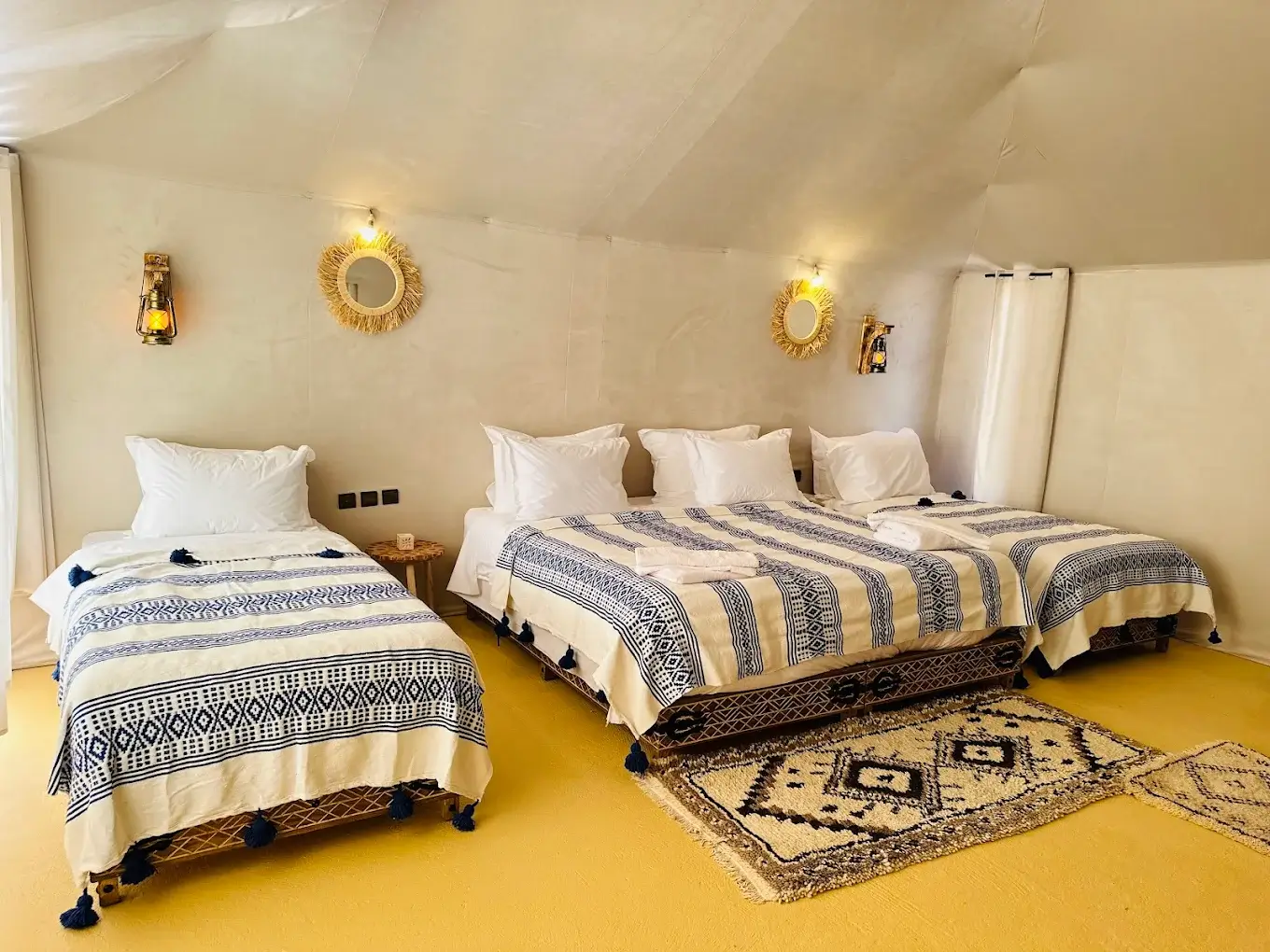
Discover an unforgettable 3-day tour from Fes to Merzouga. Experience the stunning desert landscapes...
Read this articleWant cool tour deals and tips about Morocco? Enter your email and we’ll send them to you each month!