Group Tour Agencies in Morocco: How to Pick the Right One
Compare Morocco group tour agencies by trip style, reviews, pace, transport and inclusions. Learn wh...
Read this article

Private, custom Morocco trips planned in Fez by AZ-ZDDINE, working in Moroccan tourism since 2012. Sahara, Atlas, medinas and coast, arranged around you.
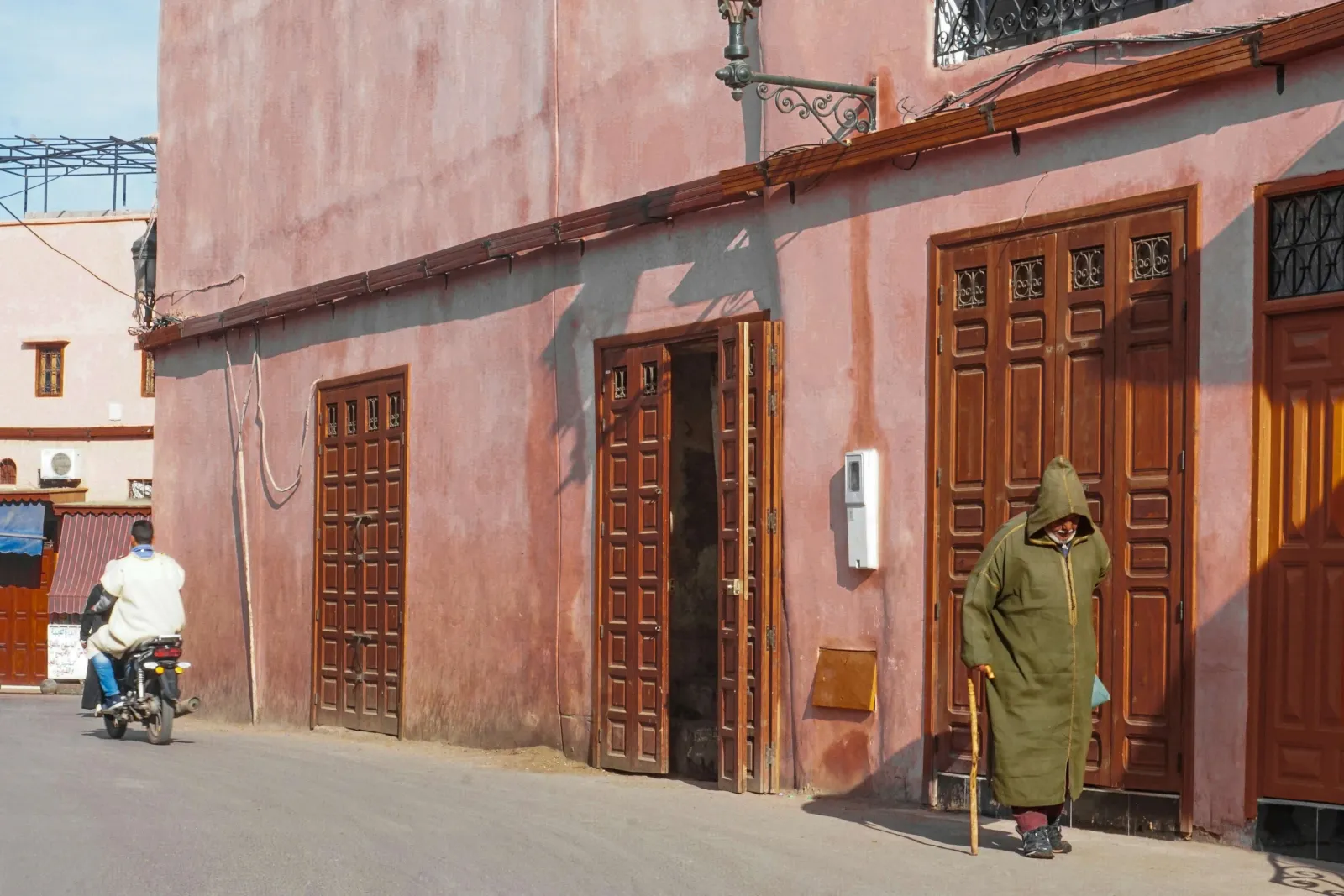
Morocco is a conservative country with flexible dress expectations—tourists aren’t required to veil, but covering shoulders and knees (especially for female travelers) is safest and most comfortable across medinas, rural areas, and religious sites.
Choose breathable fabrics like cotton, linen, and merino wool, and always pack warm layers for cooler evenings, Atlas Mountains excursions, and desert nights that can drop near freezing in winter.
What to wear changes dramatically by month and region: coastal cities like Essaouira and Agadir stay milder year-round, while Marrakech, Fez, and the Sahara get extremely hot in summer and quite cold in winter.
Sneakers, closed-toed shoes, and sturdy sandals are ideal for medinas, desert treks, and Atlas hikes—save flip flops for pools, hammams, and beaches only.
Morocco Classic Tours can tailor packing advice to each traveler’s specific itinerary, whether you’re exploring imperial cities, sleeping in desert camps, hiking snow-capped mountains, or relaxing at beach resorts.
There is no official national dress code in Morocco, but this is a muslim country where locals genuinely appreciate visitors who dress respectfully. Outside big cities and tourist hotspots like Marrakech and Casablanca, conservative dress becomes increasingly important. The general principle is simple: keep shoulders and knees covered, avoid skin-tight clothing, and skip very low necklines or midriff-baring tops when walking through streets and medinas.
Both women and men can dress in what might be called “smart casual” for most situations. Think long pants or maxi skirts paired with loose blouses or collared shirts. In modern neighborhoods and coastal resort areas, you may see tourists in shorts and tank tops without issue. However, in old medinas, visiting villages, mountain towns, and during mosque visits, dressing appropriately attracts less unwanted attention and feels more respectful to local customs.
Can you wear sneakers in Morocco? Absolutely yes. Comfortable walking shoes are essential for navigating the cobbled alleys of Fez, the bustling souks of Marrakech, and the kasbahs of Rabat and Chefchaouen. Sneakers offer the support and grip you need on uneven surfaces, making them far superior to sandals for daily city exploration.
Morocco Classic Tours guides are always happy to provide real-time advice in each city or village, helping travelers adjust their outfits day by day based on the specific locations and activities planned.
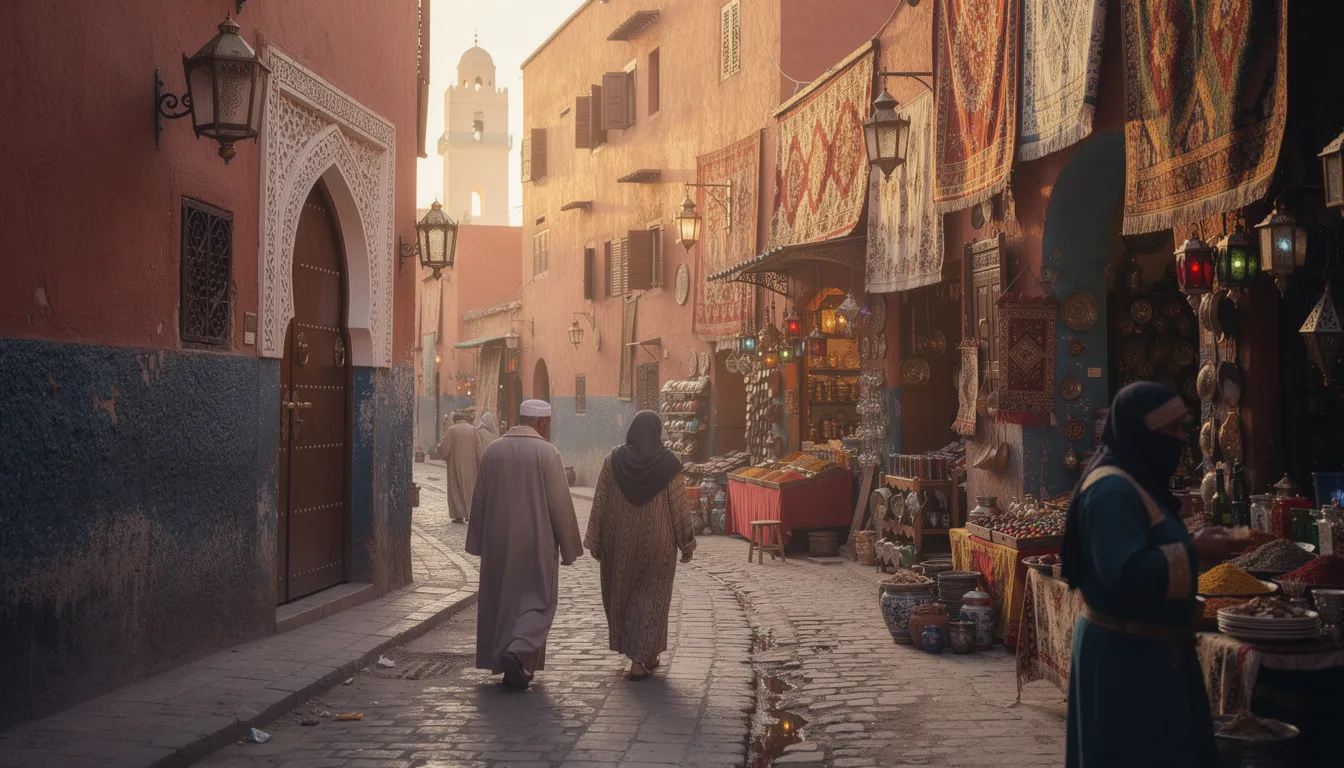
Morocco’s dress culture reflects a fascinating blend of Arab, Amazigh (Berber), African, and European influences. Walk down any major street in Rabat or Casablanca, and you’ll see jeans, traditional djellabas, elegant kaftans, and Western business suits all coexisting harmoniously. This diversity means there’s no single “correct” way to dress—but there are definitely approaches that work better than others for visitors.
Moroccan women typically wear long skirts or trousers paired with tops featuring at least short or three-quarter sleeves. Some women dress modestly with headscarves, while many women in cities like Rabat and Casablanca walk with uncovered hair, wearing contemporary Western-style clothing. The key is that most local culture favors covered rather than exposed skin in public spaces.
Moroccan men generally wear long pants with polo shirts or button-ups. You’ll rarely see shorts on local men except among younger generations or at the beach. Older men often wear the traditional djellaba—a long, hooded robe—paired with leather babouche slippers, particularly in medinas and rural areas.
Tourists aren’t expected to dress exactly like locals, but avoiding very revealing clothes helps you blend in and reduces unwanted comments. Very short shorts, spaghetti straps, crop tops, and clingy dresses tend to draw attention in ways that make exploring less enjoyable. Dressing modestly doesn’t mean sacrificing style—it simply means making thoughtful choices.
For evening dinners at upscale restaurants, rooftop lounges, and some riads, expect smart-casual dress codes. Both men and women should plan for long pants, closed shoes, and neat tops for these occasions. When booking through Morocco Classic Tours custom private tours, we can advise which venues have specific requirements.
The importance of breathable fabrics and layering cannot be overstated for Morocco travel. Daytime and nighttime temperatures can differ by 20-30°F (about 10-15°C), meaning the outfit that keeps you cool during afternoon medina walks might leave you shivering at an evening rooftop dinner.
Recommended fabrics include:
Fabric | Best Use | Why It Works |
|---|---|---|
Cotton | Everyday wear | Breathable, affordable, easy to find |
Linen | Hot weather | Excellent airflow, dries quickly |
Merino Wool | Base layers | Temperature-regulating, odor-resistant |
Bamboo/TENCEL | All seasons | Soft, moisture-wicking, sustainable |
Stick with neutral colors like beige, olive, navy, white, and black that mix and match easily. These tones also reflect heat better than dark synthetics. Add a few colorful pieces for photos in Chefchaouen’s blue streets, Marrakech’s vibrant medina, or the golden Sahara dunes. | ||
Avoid packing heavy, non-breathable synthetics that trap sweat—especially for summer visits to Marrakech, Fez, Merzouga, and Zagora. These materials can lead to discomfort and even heat rashes during long days of exploration. | ||
Many travelers make the mistake of bringing too much. Focus on capsule packing with versatile items that work for city walks, camel treks, desert camps, and evening dinners at riads. A well-planned wardrobe of 8-10 mix-and-match pieces can cover a two-week Morocco trip comfortably.
Leave luggage space to buy local pieces during your journey. Lightweight cotton djellabas, kaftans, scarves, and leather slippers from Fez, Marrakech, or Taroudant support local artisans and suit the climate perfectly—plus they make wonderful souvenirs and gifts.
Morocco’s climate varies dramatically by region. Coastal areas (Casablanca, Essaouira, Agadir) enjoy milder conditions year-round, while inland cities (Marrakech, Fez, Meknes) experience more extreme temperatures. The Atlas Mountains are significantly colder at elevation, and the Sahara Desert offers scorching hot days but surprisingly cold nights, especially in the winter months.
The following guidance covers what clothes to wear in Morocco across the most-searched travel months, with approximate temperature ranges and specific outfit recommendations. When you book with Morocco Classic Tours, we customize this advice for your exact route—whether that’s a Fez to Merzouga to Todra Gorge to Marrakech loop or an Atlantic coast-focused itinerary.
January is Morocco’s coldest month. In Marrakech and Fez, expect daytime temperatures around 13-18°C (mid-50s to mid-60s°F), with nights often dropping to 5°C (low 40s°F). Desert nights and Atlas Mountains can approach or dip below freezing, while coastal cities like Agadir remain slightly milder.
Essential January packing:
Long-sleeve tops and light sweaters
Warm fleece or wool mid-layer
Medium-weight jacket (especially for desert camps or Atlas excursions)
Long pants or jeans
Thermal leggings for cold nights
Warm socks and closed-toe sneakers or light boots
Warm pajamas (many riads lack central heating)
Desert camps can feel extremely cold after sunset in January, so layering is essential for staying warm during evening activities and overnight stays.
February remains wintery, similar to January but with slightly longer days. Rain is possible in northern Morocco (Tangier, Chefchaouen, Rabat), and snow often covers the Atlas at higher altitudes.
February layering strategy:
Thermal or merino base layer
Sweater or fleece mid-layer
Packable down or synthetic jacket
Scarves, beanies, and gloves for Atlas excursions
Waterproof or water-resistant outer layer
Temperatures during nighttime camel treks can dip close to 0°C (32°F), so don’t underestimate the need for warm layers even if daytime feels pleasant.
March marks early spring in Morocco. Marrakech and Fez see daytime highs around 18-23°C (mid-60s to low 70s°F) with cooler evenings. The Atlas remains chilly, while the desert warms during afternoons but stays cold at night.
March wardrobe mix:
Midweight long-sleeve tops
1-2 short-sleeve shirts
Light sweater or cardigan
Light jacket for evenings
Long cotton or linen pants, maxi skirts, or loose chinos
Leggings or tights for high Atlas excursions
This month is ideal for Morocco Classic Tours’ imperial cities plus Sahara routes, requiring outfits that handle both cool city mornings and sunny desert afternoons.
April brings full spring conditions with many cities reaching 20-25°C (high 60s to mid-70s°F) during the day. Cooler nights persist, wildflowers blanket the countryside, and hiking conditions in the lower Atlas valleys are excellent.
April outfit recommendations:
Breathable long pants and maxi dresses
Long-sleeve or three-quarter-sleeve tops
Light sweater or denim jacket for evenings
Light rain jacket for northern Morocco
Sun hat and UV-protective accessories
The strong sun becomes increasingly important to consider—sun protection, sunglasses, and a hat are essential for day trips and city tours.
May feels like early summer in Marrakech and Fez, with highs often reaching 25-30°C (mid-70s to mid-80s°F). Coastal areas remain pleasant, and most regions offer ideal weather for diverse activities.
May essentials:
Lightweight, loose pants and culottes
Midi or maxi dresses in breathable fabrics
Tops with short or three-quarter sleeves
Light cardigan or shawl for air-conditioned spaces
Modest swimwear for riad pools or Atlantic beaches
Wide-brim hat for sun protection
This prime month works beautifully for mixed itineraries combining Marrakech, Atlas, Sahara, and Essaouira with a 10-day Morocco itinerary for first-time visitors or a focused 7-day Marrakech activities itinerary, so pack versatile pieces that transition across climates.
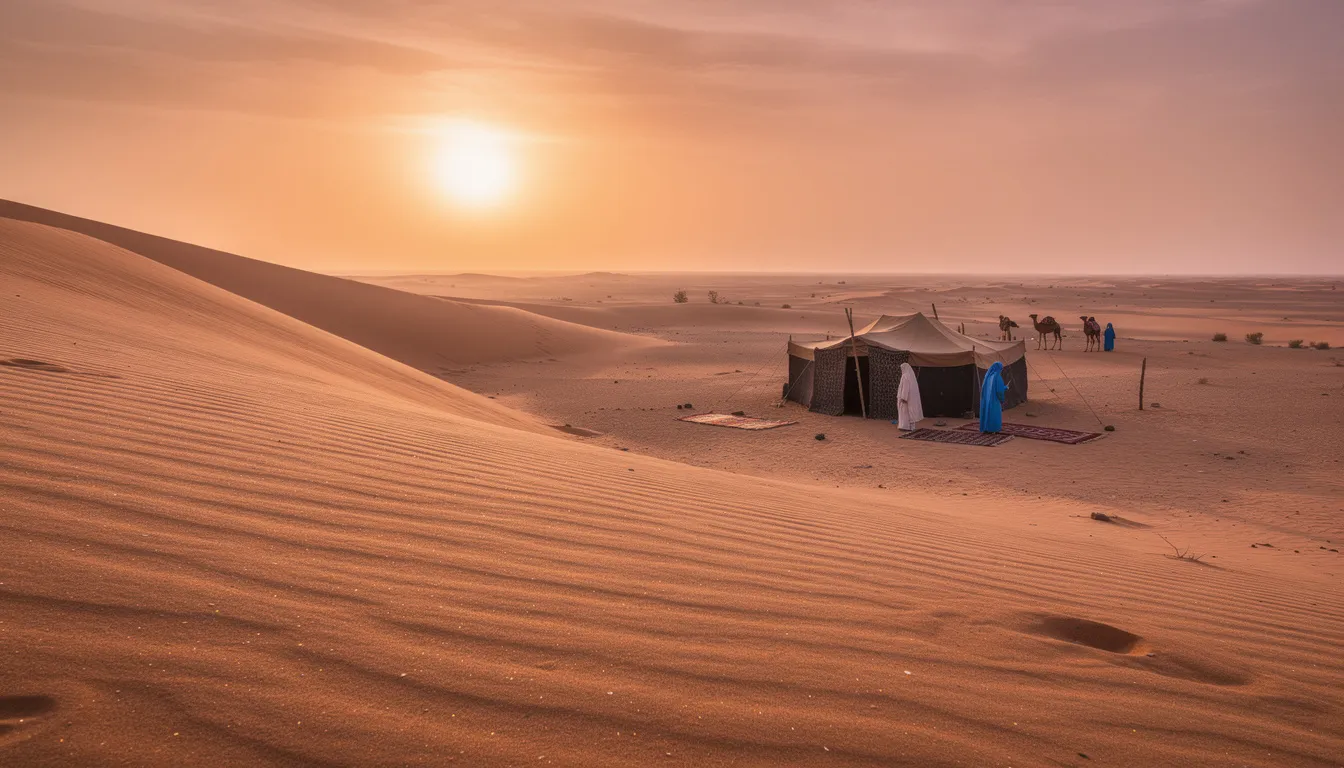
September is late summer, still hot in Marrakech, Fez, and the Sahara with many days reaching 30-35°C (mid-80s to mid-90s°F). Nights begin cooling slightly, and coastal areas are very pleasant.
September priorities:
Very lightweight, loose clothing
Linen pants and wide-leg trousers
Airy maxi dresses and flowy dresses
Breathable tops that cover shoulders
Wide-brim hat and UV sunglasses
At least one warmer layer for cooler evenings
The Moroccan sun remains intense, so prioritize sun protection with UPF-rated shirts or cover-ups, especially on desert tours and coastal day trips.
October is one of the best months to visit Morocco. Inland cities and the Sahara remain warm (mid-20s°C / 70s°F) with comfortable evenings and cooler nights.
October balance:
Summer-weight cotton and linen for daytime
Light sweater, cardigan, or fleece for desert camps
Outfits that transition from day sightseeing to evening dinners
Smart-casual maxi dresses or chinos with a blouse
October is popular for Morocco Classic Tours’ desert camps and camel treks, where long sleeves and long pants help with both modesty and warmth after sunset.
November brings real autumn to Morocco. Inland daytime highs drop to around 16-22°C (60s°F), evenings cool significantly, and Atlas and Sahara nights can be very cold.
November necessities:
Long-sleeve tops and lightweight sweaters
Warm mid-layer (fleece or merino)
Proper jacket for desert camps and mountain guesthouses
Long pants, jeans, or travel trousers
Optional thermal leggings for sunrise camel rides
Coastal cities like Essaouira and Agadir remain milder but windy—a windproof layer or shell jacket proves useful there.
December is winter in Morocco. Coastal cities stay mild (often 15-20°C / high 50s to high 60s°F by day), but Marrakech and Fez feel cold in shade and evenings. Atlas towns and Sahara nights approach or drop below freezing.
December warm layers:
Long-sleeve base layers
Sweaters and fleece
Light down jacket
Windproof or waterproof outer layer
Warm sleeping clothes and socks
Layering pieces that can be removed during sunny afternoons
Morocco Classic Tours’ Sahara itineraries in December require serious attention to warmth for overnight desert camping.
This section translates cultural and seasonal advice into specific wardrobe pieces. The recommendations work for both women’s and men’s clothing, making it easy for couples and mixed groups to pack together efficiently. All suggestions suit typical Morocco Classic Tours itineraries, combining imperial cities, the Atlas Mountains, and the Sahara Desert.
For a 10-14-day trip, pack 4-6 tops, mixing breathable t-shirt options, three-quarter-sleeve tops, and 1-2 long shirt styles for sun coverage and evenings.
Avoid very low cut shirts and thin spaghetti straps camisoles as standalone outerwear in medinas. Sleeveless is generally acceptable in cities if the neckline and overall fit are modest. Button-up or tunic-style shirts work beautifully for both men and women—they look smart, protect from the sun, and layer easily over a tank top when needed.
For desert tours and multi-day excursions, merino or technical travel tops dry faster and resist odors, reducing packing needs significantly.
Women should consider packing 1-3 midi or maxi dresses or maxi skirts made from breathable fabrics. These should cover at least to the knee when walking and sitting—comfort and coverage go hand in hand.
Shirt-dresses or wrap dresses offer excellent versatility: dress them up for dinners in Marrakech or Fez, dress them down with sneakers for daytime sightseeing. Avoid very tight bodycon dresses or very short skirts outside resort settings, as they stand out and invite more attention.
Long dresses and flowy skirts photograph beautifully in Chefchaouen, Ait Ben Haddou, and the Sahara while maintaining a respectful appearance—especially on tours linking Marrakech, Fez, and Casablanca.
Long, loose trousers, wide-leg linen pants, flowy pants, travel chinos, or comfortable joggers form the core of most outfits for both men and women. These are the foundations of dressing conservatively without sacrificing comfort.
Women can wear skinny jeans or leggings if their hips and bottom are covered by a longer tunic or long tunic shirt reaching mid-thigh—a great alternative to looser styles for those who prefer fitted bottoms.
Many Moroccan men rarely wear shorts in cities, but tourists—especially men—can wear shorts without major issues in hot months, particularly in coastal areas and tourist centers. However, wearing pants (even lightweight ones) looks more local and often feels more comfortable culturally.
Avoid very short shorts in medinas and small towns. Longer, mid-thigh or knee-length options work better for both comfort and respect.
Every traveler should pack at least one warm layer regardless of the season. A fleece, cardigan, or light jacket handles desert nights and mountain elevations that can turn chilly even in spring and autumn.
A light waterproof or water-resistant jacket is valuable for winter or spring visits, especially in northern Morocco cities like Tangier, Tetouan, and Chefchaouen, where rain occurs more frequently.
A simple blazer or smart cardigan works well for more formal dinners in Casablanca, Rabat, or luxury riads in Marrakech. Choose compact layers that pack small, since many Morocco Classic Tours itineraries move across multiple climate zones within a single week.
Comfortable closed-toe good walking shoes or sneakers are essential for navigating uneven medina alleys, steep steps, dust, and occasional mud. This isn’t optional—your feet will thank you.
Sturdy sandals with straps and decent soles work for warm-weather walking and coastal towns. However, bring sandals only as supplements, not replacements for comfy shoes with proper support. Flip flops belong at pools and beaches only.
For desert tours, closed-toe sneakers or hiking boots protect from hot sand and stones during camel treks and dune walks, particularly on 3-day tours from Fes to Merzouga. Some travelers also enjoy buying local leather babouche slippers for indoor use at riads—comfortable but not suitable for long cobbled walks.
Bikinis and one-piece swimsuits are completely normal at hotel and riad pools and on many Atlantic beaches. However, walking through town in just swimwear is never acceptable—always have a cover-up ready.
More modest swimwear, like one-pieces, bikinis with good coverage, or tankinis, work best for mixed or family public beaches. A lightweight kaftan, sarong, or long shirt-dress makes the perfect cover-up when moving between rooms and pool or along beach promenades.
Rash guards or UV shirts are excellent for sun-sensitive travelers and for water sports in Essaouira, Agadir, or Dakhla.
The strong sun in Morocco—especially in the Sahara and High Atlas—demands a wide-brim or baseball hat, polarized sunglasses, and high-SPF sunscreen. These aren’t optional accessories; they’re essential protection.
A lightweight scarf or pashmina serves multiple purposes for both men and women: sun protection, wind and sand barrier in the desert, and extra coverage in conservative areas or religious sites. Consider this your best friend for versatile travel.
Crossbody day bags with secure closures work best for Medina exploring. Anti-theft or lockable bags are useful but not mandatory for most areas.
Simple jewelry is preferable to flashy watches or heavy gold in crowded markets—both for cultural subtlety and practical security.
Common concerns about harassment and modesty are valid but manageable. Respectful clothing combined with situational awareness goes a long way toward comfortable travel. Female tourists are not required to wear a headscarf in Morocco, but many women walking through Fez medina, Meknes, rural Atlas villages, and conservative neighborhoods feel more comfortable with their shoulders, cleavage, and knees covered.
Style can be “conservative chic”—long, flowy dresses, loose trousers, and tunics that still feel stylish in photos without being overly revealing. Dressing modestly doesn’t mean frumpy; it means thoughtful.
Morocco Classic Tours can advise solo female travelers on what’s appropriate in each region and can arrange female guides when requested.
Successful combinations for female tourists include long pants with a loose blouse, a maxi dress with three-quarter sleeves, or leggings with a long tunic covering the hips and bottom.
Avoid strapless tops, very low-cut V-necks, and super-short shorts in busy medinas like Fez el-Bali or Marrakech’s old city. These choices consistently attract more unwanted attention.
Carry a lightweight scarf to throw over your shoulders when entering more conservative streets, mosque outer courtyards, or when feeling observed. For evening dinners at nice restaurants or rooftops, modest but elegant dresses or jumpsuits are perfect—covered but fashionable.
Not all mosques in Morocco are open to non-Muslims, but for those that are (and for religious complexes and shrines), modest dress is essential and non-negotiable.
Mosque dress requirements for women:
Cover shoulders, chest, and legs to the ankles
Long skirts or loose trousers (not skinny jeans)
Non-clingy top with sleeves past elbows covered
Scarf to cover hair if requested
Avoid tight jeans, sheer fabrics, and loud prints
A scarf should always be in your day bag for quick hair coverage if requested by staff or signage at religious sites. Guides from Morocco Classic Tours will remind travelers before visits and can help ensure appropriate dress.
For camel rides and walking around dunes in Merzouga or Zagora, pack long, loose cotton or linen pants and a breathable long-sleeve shirt. This combination protects from sunburn, sand, and insects far better than shorts and tank tops while still staying cool in desert heat.
A buff or scarf for wrapping around the face and neck proves invaluable during windy conditions or jeep rides across desert terrain.
For activities like hiking in the Atlas Mountains, visiting the Agafay Desert near Marrakech, or coastal surfing lessons, sports bras, moisture-wicking tops, and modest athletic wear (long or capri-length bottoms with non-revealing tops) work perfectly.
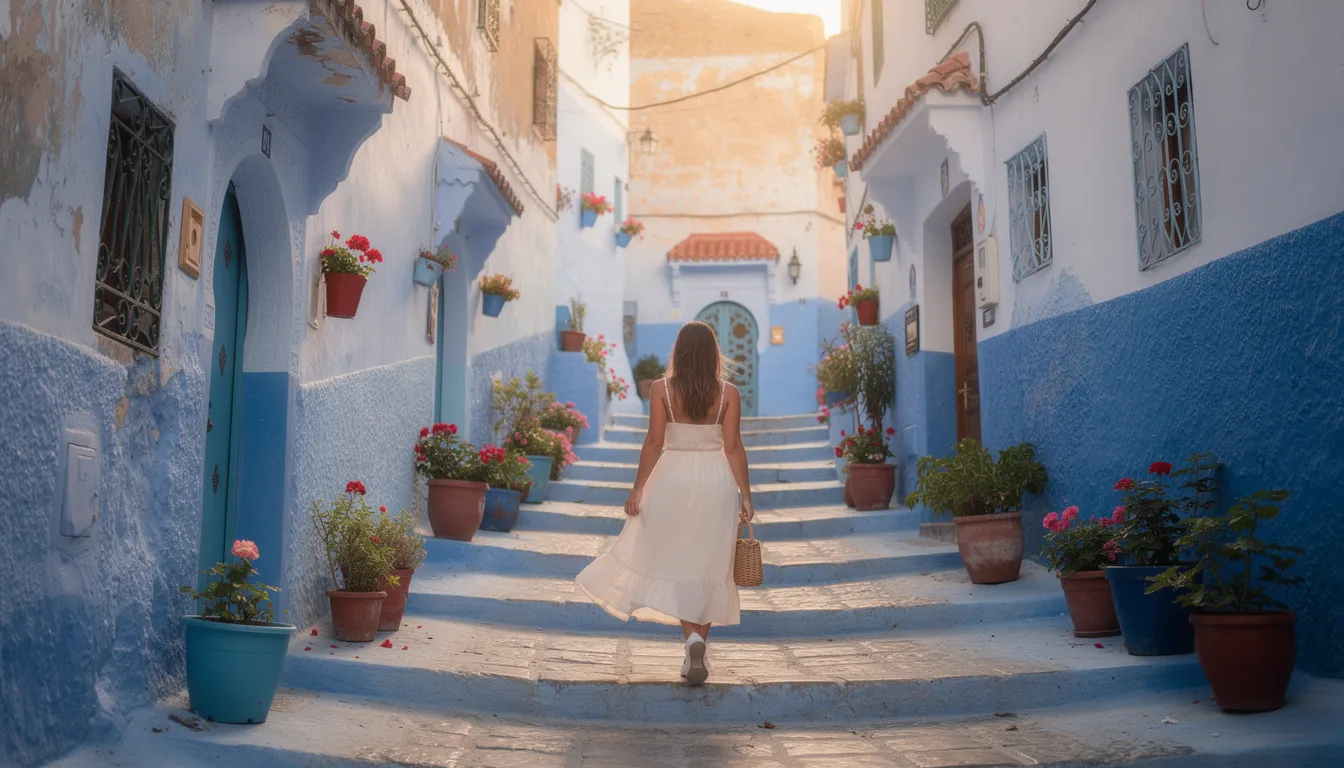
Men’s clothing guidelines are simpler but still lean toward long pants and short- or long-sleeve shirts rather than tank tops. Men don’t need to wear traditional djellabas—collared shirts or neat t-shirts with full-length trousers help blend in easily across most settings.
Tourists wearing shorts are generally accepted, especially in hot months and beach areas, but long pants look more local and presentable for city sightseeing and dinners. Morocco Classic Tours can advise when shorts are practical (day hikes, desert afternoons) versus when long pants feel more comfortable culturally (city tours, mosque exteriors), especially on senior-friendly Morocco tours.
Cotton or linen pants paired with t-shirts, polos, or button-up shirts cover most urban situations in Marrakech, Fez, Rabat, or Casablanca. This formula works across temperature ranges when you adjust fabric weight seasonally.
Avoid sleeveless tops or very loose athletic tank tops in traditional neighborhoods—this level of casualness can seem out of place. Plan to bring at least one nicer shirt and a good pair of dark trousers or chinos for evening meals at riads or higher-end restaurants.
A light jacket will prove useful for evening café culture, particularly in winter months or in inland cities with cooler nights.
Knee-length shorts are fine for tourists in warm weather conditions, especially on coastal promenades, hikes, and during daytime sightseeing in Marrakech and other tourist areas. Don’t let anyone tell you that you absolutely cannot wear shorts—you can, with awareness.
Avoid very short athletic shorts in conservative or rural areas. Looser, longer cuts attract less attention and often feel more comfortable anyway.
Breathable sportswear works well for hiking and trekking, but throw on a light long-sleeve shirt over sleeveless tops when passing through villages and small communities. Running gear and gym outfits are perfectly acceptable in hotel gyms and on organized treks with Morocco Classic Tours, but less appropriate for city center strolls.
This practical checklist helps travelers respect Moroccan local culture while feeling comfortable throughout their trip. Understanding different dress code expectations across regions makes the difference between blending in and standing out.
Do cover shoulders and knees in medinas, rural areas, and when visiting religious sites or family spaces, especially for female travelers.
Do choose loose, breathable fabrics that protect from the Moroccan sun and heat instead of very tight synthetic pieces that trap sweat
Do bring a scarf or shawl each day for quick coverage in conservative areas or religious sites, plus evening warmth
Do wear comfortable shoes with closed toes or sturdy sandals for city walks, souks, kasbahs, and ruins
Do adapt your outfit based on location: coastal resorts are more relaxed; small Atlas villages benefit from extra modesty.
Don’t walk through town in swimwear, even in beach destinations—always cover up between beach/pool and hotel.
Don’t rely on very short skirts, strapless tops, or see-through clothing as your main wardrobe outside Marrakech and Agadir tourist zones.
Don’t assume evenings will be hot just because days are; desert nights and Atlas Mountains can be surprisingly cold.
Don’t wear high heels or slick-soled shoes on Medina cobblestones—opt for stable soles with grip instead.
Don’t forget respectful dress when invited to a local home or family meal—err on the modest side for these special experiences.
Guides working with Morocco Classic Tours reinforce these tips on the ground, helping travelers adjust day-to-day as itineraries evolve, and can recommend the best Morocco tours and travel packages that match your style and comfort level.
Normal travel clothing passes through Moroccan customs without any issues. The focus is on avoiding offensive items and contraband, not restricting everyday wardrobe choices. Morocco Classic Tours can help clarify specific questions before arrival, especially for travelers bringing specialized sports or technical gear—simply reach out via our contact page.
Everyday clothing, sneakers, sandals, modest swimwear, hats, and scarves are all perfectly fine and widely used by visitors and locals alike. Sportswear, hiking gear, and UV-protective clothing are allowed and highly useful for Atlas hikes, desert treks, and multi-day tours.
Travel irons and small garment steamers are generally allowed but may need adapters due to different voltage (220V) and plug type (European two-pin).
Avoid clothing with explicit or offensive slogans, nudity, or insulting religious imagery—these can cause genuine discomfort or conflict. While there’s no specific ban, it’s simply respectful to leave provocative items at home.
Camouflage patterns can sometimes cause extra scrutiny at borders; full military-style camo outfits are best avoided. Religious symbols like crosses aren’t banned, but aggressively provocative or proselytizing slogans on clothing should stay home.
For completeness: travelers must not bring illegal drugs, certain weapons, or drones without permission—but these are outside the clothing scope of this guide.
Whether you’re shopping before your first trip or planning to pick up pieces in Morocco’s famous medinas, finding the right wardrobe is easier than you might expect. Morocco Classic Tours encourages supporting local artisans and can include shopping stops in Fez, Marrakech, Rabat, or coastal towns during your itinerary, often combined with curated day trips to nearby highlights.
Look for modest travel ranges, long tunics, maxi dresses, and travel pants from mainstream outdoor and travel brands available online or in major retail stores. Many companies now offer collections specifically designed for destinations with modest dress expectations.
Search for garments labeled “sun-protective,” “UPF,” or “cruise collection”—these often emphasize coverage and breathable fabrics perfectly suited for Morocco. Chain stores typically offer linen collections in spring and summer, including loose shirts, culottes, and maxi skirts ideal for Moroccan heat.
Before traveling, try on outfits together (tops paired with bottoms) to ensure they’re both modest enough and comfortable for long days of walking and sitting.
Major cities like Marrakech, Fez, Rabat, and Casablanca offer both traditional souks and modern boutiques selling cotton and linen garments. The variety is remarkable, and prices are generally very reasonable; you’ll find many of them featured in our Morocco travel blog and destination guides.
Handwoven djellabas, kaftans, tunic tops, and scarves in Fez and Marrakech medinas are perfectly adapted to the local climate—locals have been perfecting these designs for centuries. Morocco Classic Tours can include visits to women’s cooperatives and artisan workshops where travelers buy ethically made clothing and accessories directly from makers.
Tailors in Fez or Marrakech can sometimes adjust or custom-make simple garments within a day or two for longer stays—a wonderful way to go to local markets and return with perfectly fitted pieces.
Buy UPF-rated shirts, hats, and swimwear from travel and outdoor brands before departure, as specialized items are less common in traditional souks. The investment is worthwhile given Morocco’s intense UV conditions.
Long-sleeve rash guards and UV t-shirts are ideal for travelers planning surfing, kitesurfing, or extended coastal stays in Essaouira, Agadir, or Dakhla. For Essaouira, you can match your wardrobe to one of the best hotels in Essaouira for every style of traveler, while our Agadir complete travel guide helps you plan beach days around the sun and wind. Pair UPF tops with Moroccan-bought lightweight pants or skirts to combine technical sun protection with local style.
Pack at least one UV-protective piece if spending several days in the Sahara with Morocco Classic Tours—the reflected sunlight from sand intensifies exposure significantly.
Focus on clothing categories rather than specific brand names: lightweight hiking pants, travel skirts, tunics, merino base layers, and UV shirts all serve Morocco trips well. The qualities to prioritize are breathable, quick-drying, wrinkle-resistant, and modest in cut.
The same types of clothing used for Mediterranean, Middle Eastern, or North African trips generally work perfectly for Morocco too. Mix technical travel pieces with local purchases during your trip to create stylish, climate-appropriate outfits that tell the story of your journey, especially when you’re following one of our best tour packages in Morocco.
Active travelers need clothing that balances performance (breathability, range of motion) with cultural awareness when moving through rural villages and local communities. This guidance covers Atlas Mountains hikes, desert treks, camel rides, and active day trips frequently included in Morocco Classic Tours itineraries.
Pack moisture-wicking t-shirts or long-sleeve tops, hiking pants or leggings with an overlong shirt, and sturdy hiking boots or trail runners for the Atlas ranges and Rif Mountains. These combinations keep you comfortable across varying terrain and conditions.
Temperatures vary widely with altitude, so bring a warm mid-layer and windproof shell for summits or early-morning starts. Women should avoid very short running shorts on village trails; mid-thigh or longer shorts, capris, or full-length leggings with a tunic top feel more comfortable culturally when exploring places like Rabat and its surroundings, as outlined in our Rabat complete travel guide.
Hats, sunglasses, and light gloves prove useful for higher-altitude treks and winter/spring hiking when conditions can change rapidly.
Long, loose cotton or linen pants, long-sleeve breathable shirts, and closed shoes remain the best choices for camel rides in Merzouga, Erg Chebbi, or Erg Chigaga. Exposed skin quickly becomes sunburned or sand-irritated.
Even in summer, cold nights arrive quickly once the sun sets. Pack a warm layer, socks, and possibly light thermals for overnight desert camps with Morocco Classic Tours.
A large scarf or shemagh wraps around the head and face during windy conditions or sandstorms—experienced desert travelers consider this essential equipment. Simple, darker colors handle desert dust better than white, which stains more visibly.
Hotel gyms accept normal Western workout gear, including shorts, leggings, and tank tops, with no special restrictions. Indoor exercise facilities operate much like those anywhere in the world, and many visitors also enjoy relaxing days at the best swimming pools in Marrakech, where similar casual swim and gym wear is common.
For outdoor running in cities or towns, mid-thigh or longer shorts work for men, while capris or full-length leggings with a longer top suit female tourists better. Shorter shorts aren’t banned, but they may attract extra stares—decide based on your comfort level.
Early morning or seaside promenades (Casablanca Corniche, Agadir, Tangier) are generally more relaxed environments for joggers and provide beautiful running routes—our Casablanca city guide and Tangier travel guide highlight some of the best waterfront spots.
Morocco Classic Tours, based in Fez, regularly plans private tours combining imperial cities, Sahara desert camps, camel treks, Atlas hiking, and coastal stays. This experience across every region of Morocco means our team truly understands packing needs for diverse itineraries and seasons.
When travelers book with us, we provide tailored packing checklists by month and region. A December Fez–Merzouga–Marrakech loop requires very different preparation than a May Marrakech–Atlas–Essaouira itinerary. We customize our recommendations based on your specific dates, destinations, and planned activities, drawing on the expertise shared on our About Morocco Classic Tours page.
Ready to plan your Morocco trip? Contact Morocco Classic Tours or use our “Book Now” option to receive customized wardrobe and packing suggestions specifically for your travel dates and itinerary, including advice that pairs your outfits with the best places to stay in Marrakech. We’re here to help you arrive prepared and focus on the incredible experiences ahead.
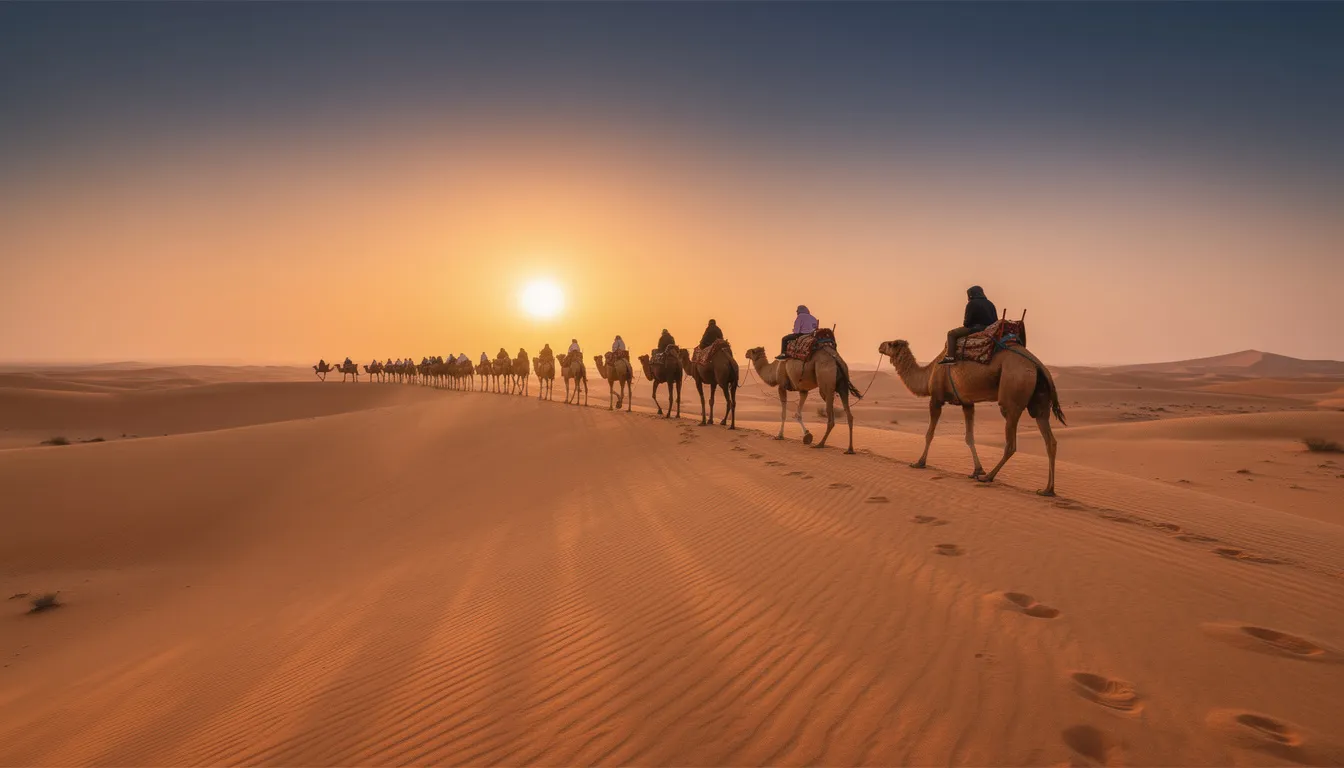
One outfit decision deserves its own warning, because a camel saddle is a wooden frame under a blanket and bare legs against it for an hour is the mistake people most regret. We set out what to wear on a camel in our camel riding guide.
Jeans are widely worn by both locals and tourists and work well in cooler months (October through April) and for all evenings year-round. However, during peak summer (June through August) in Marrakech, Fez, and the Sahara, heavier denim becomes uncomfortably hot. Pack one pair of jeans plus lighter cotton or linen trousers for flexibility across different temperatures and activities.
Foreign women are not required to cover their hair in Morocco’s general public spaces. However, some religious sites may ask women to cover their hair as part of visiting rules, so carrying a scarf is always helpful. Some women choose to cover their hair in very conservative areas simply to feel more comfortable, but this remains entirely a personal choice for tourists—not a legal or universal requirement.
Leggings are perfectly acceptable when worn under a longer top, dress, or tunic that covers the hips and bottom—this is actually common among younger Moroccan women, too. However, wearing leggings as pants with short tops in medinas and rural areas can feel overly revealing. Leggings work particularly well as a practical base layer for cooler evenings, Atlas hikes, and desert nights when paired with modest upper layers.
Clean, low-profile sneakers are absolutely acceptable for most situations, including casual dinners in riads and many restaurants. For more upscale or fine-dining venues, travelers may prefer closed shoes that look slightly smarter, but dress codes are typically relaxed for tourists. Sneakers remain the best choice for daily exploration because of uneven pavement, stairs, and long walking distances throughout Morocco.
Wear a layered outfit: breathable long pants, a t-shirt or long-sleeve top, and a light jacket or sweater that can be removed as temperatures change between home, airplane, and Morocco. Choose comfortable sneakers or slip-on shoes suitable for immediate walking in medinas after landing. Select an outfit that would also feel culturally appropriate if heading straight into a city visit with Morocco Classic Tours before checking into your hotel.
Compare Morocco group tour agencies by trip style, reviews, pace, transport and inclusions. Learn wh...
Read this article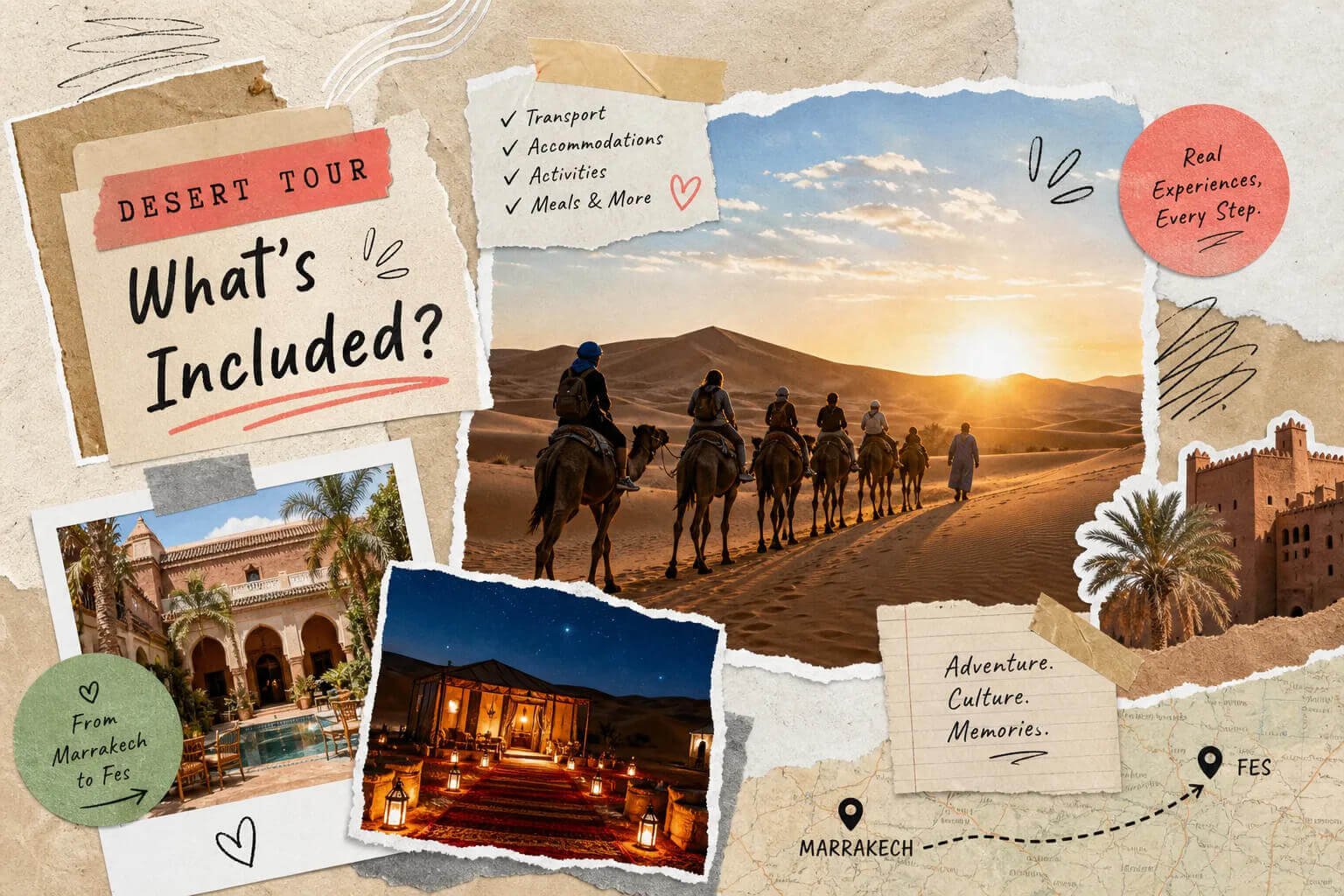
Uncover what a Marrakech to Fes desert tour offers, including camel rides, desert camps, and rich cu...
Read this article
Join our Merzouga Overnight Tour for an authentic desert experience. Enjoy camel rides, comfortable ...
Read this articleWant cool tour deals and tips about Morocco? Enter your email and we’ll send them to you each month!
