University of Al Quaraouiyine: The World's Oldest Academic Institution
Explore the rich history and significance of the University of Al Quaraouiyine, the world's oldest a...
Read this article
Suspendisse interdum consectetur libero id. Fermentum leo vel orci porta non. Euismod viverra nibh cras pulvinar suspen.
When planning your first visit to Morocco’s red city, three key questions immediately arise: how long should you stay, when should you go, and what should you expect? The ideal duration to explore Marrakech is 3-4 days, allowing time to absorb the medina’s chaos and venture beyond the city walls. The best months to visit are March through May and September through November, when temperatures hover between 20-30°C (68-86°F) rather than the scorching 40°C+ (104°F) summer heat. This trip works perfectly as either a standalone city break, part of a broader Morocco itinerary, or an excellent winter sun escape from Europe.
Why Marrakech deserves your attention:
UNESCO World Heritage medina with labyrinthine souks
Jemaa el-Fna’s nightly transformation into Africa’s largest outdoor restaurant
Easy access to Atlas Mountains, Agafay Desert, and Atlantic coast
Authentic riad accommodation in restored merchant houses
Exceptional local cuisine from street food stalls to palace restaurants
Daily budget expectations for mid-range travelers (2025):
€80-120 / £70-100 / $85-130 per day including accommodation, meals, transport, and attractions
Budget travelers: €40-60 / £35-50 / $45-65 daily
Luxury travelers: €200+ / £175+ / $220+ daily
Some activities, tours, or services may incur extra cost, so travelers should account for optional expenses in their planning.
Safety overview: Marrakech is generally safe for tourists, with violent crime rare. Main concerns include persistent touts, overcharging scams, aggressive motorbike traffic in narrow medina alleys, and occasional pickpocketing in crowded areas.
Essential pre-booking knowledge:
Climate reality: Summer temperatures exceed 40°C (104°F), making midday sightseeing unbearable
Cultural norms: This Muslim country expects visitors to dress appropriately and dress modestly, with conservative attire that covers shoulders and knees, especially near religious sites, to show respect for local customs and avoid unwanted attention.
Haggling culture: Bargaining is expected in souks and for many taxis—starting prices are often inflated 3-5 times
Marrakech, known as the red city for its distinctive ochre-colored buildings, presents an intoxicating blend of medieval medina authenticity and modern Moroccan sophistication. The ancient walled city sits dramatically against the snow-capped High Atlas Mountains, while the French-built ville nouvelle offers tree-lined boulevards and contemporary restaurants. This geographical positioning makes the city an ideal base for diverse experiences, from desert adventures to mountain trekking.
Concrete attractions that define the Marrakech experience:
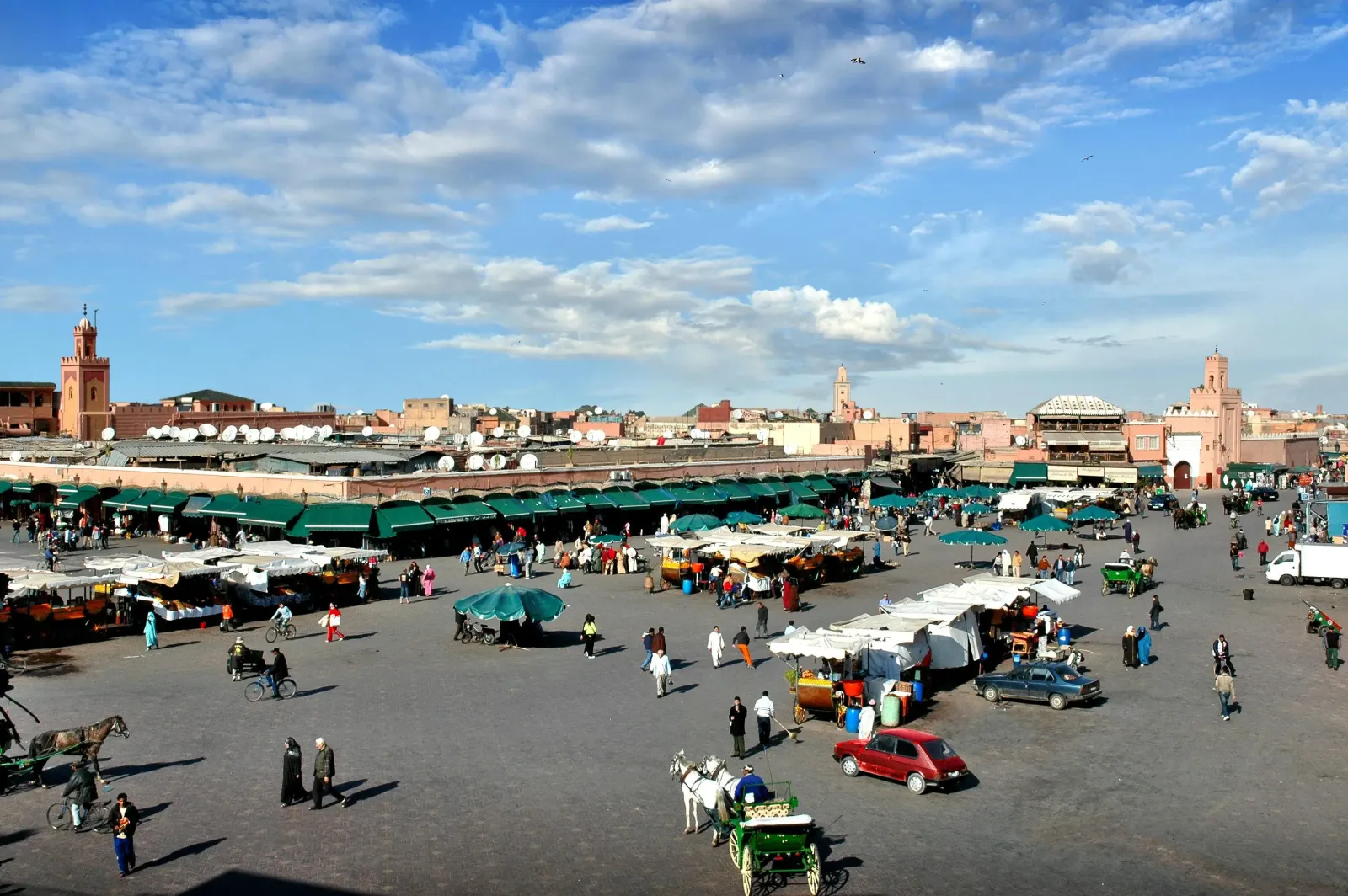
Jemaa el-Fna Square (el Fnaa square): Morocco’s most famous main square, also known as el Fnaa square, transforms nightly into a UNESCO-protected spectacle of food stalls, storytellers, and musicians. It serves as the central hub for street performers, market activities, and vibrant cultural experiences.
Majorelle Garden & Musée Yves Saint Laurent: Cobalt-blue botanical gardens housing the fashion designer’s former studio and an extensive Berber art collection
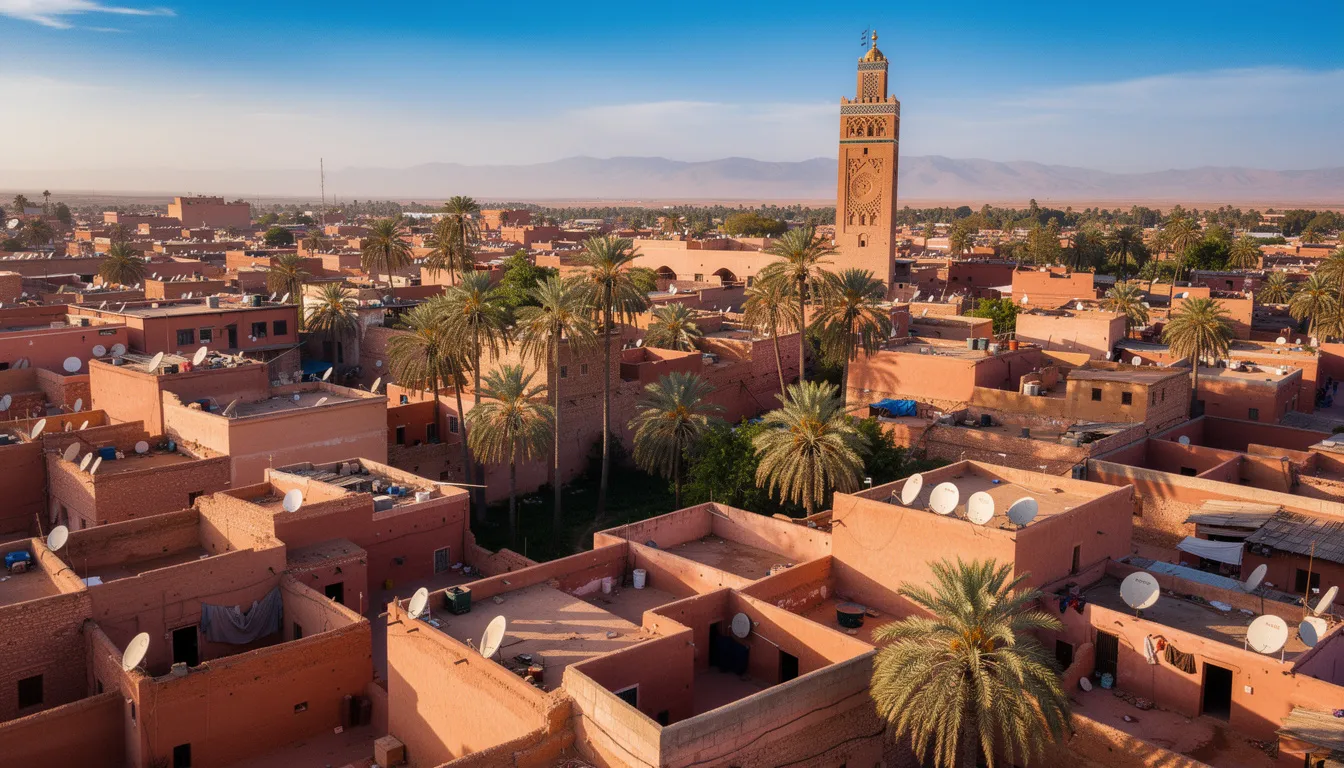
Koutoubia Mosque: The city’s architectural landmark whose 12th-century minaret serves as a navigation point throughout the medina
Bahia Palace: A 19th-century palace showcasing traditional Moroccan craftsmanship with intricate tilework and carved cedar ceilings
Authentic hammam experiences: Traditional steam baths using black Beldi soap and argan oil treatments
Rooftop terraces: Sunset viewing platforms offering panoramic views across the red city to the Atlas Mountains. For a modern dining or relaxation experience in a garden setting, Le Jardin is a recommended spot.
Exploring the Marrakech medina is fun and full of surprises, with its labyrinth of laneways, colorful souks, and lively interactions with shop owners. People watch is a popular activity in bustling public spaces like Jemaa el-Fna, where you can observe local street performers, vendors, and tourists in the heart of the city.
Marrakech Menara Airport (RAK) has transformed into one of Africa’s most connected hubs, handling over 7 million passengers annually with direct flights from major European cities. Low-cost carriers now offer 3.5-hour flights from London, 3-hour connections from Paris, and competitive routes from Madrid, making this destination increasingly accessible for weekend breaks and longer Morocco explorations.
The city’s strategic location enables remarkable day trips within 1-3 hours: the Agafay Desert’s lunar landscape for camel rides and quad biking, Ouzoud Waterfalls cascading through olive groves, traditional Berber villages in the Ourika Valley, and the Atlantic coastal town of Essaouira with its UNESCO-listed medina.
Marrakech suits these traveler types particularly well: For travelers seeking a rich and well-planned experience, consider this 7-day itinerary of activities to do in Marrakech, Morocco.
Culture enthusiasts seeking authentic experiences beyond typical tourist areas
Photography lovers drawn to the interplay of architecture, light, and street life
Food travelers eager to explore local cuisine from street food to fine dining
Couples seeking romantic riad accommodations and intimate experiences
Families with older children/teenagers who can handle the busy city atmosphere
However, first time visitors who feel overwhelmed by intense sensory experiences, aggressive vendors, or cultural differences might find Marrakech challenging without proper preparation.
The optimal windows to visit morocco are March through May and September through November, when comfortable temperatures allow full-day exploration without the extreme heat that characterizes summer months. These periods offer the perfect balance of pleasant weather, manageable crowds, and reasonable accommodation prices.
Temperatures: 18-28°C (64-82°F) with cool evenings perfect for rooftop dining
Atlas Mountains display wildflower blooms, ideal for day trips and trekking
Ramadan timing varies yearly—check current dates as it affects restaurant hours during daylight and creates livelier evening atmospheres
March offers the best value before European Easter holidays drive up prices
Daytime temperatures: 35-45°C (95-113°F) making midday activities uncomfortable
Survival strategy: early morning starts, afternoon siestas, late evening activities
Hotel pools become essential rather than optional
Significantly fewer crowds but many locals leave the city during peak heat
Weather mirrors spring conditions with reliable sunshine
Perfect timing for Atlas Mountains excursions and desert overnights
October through early November offers excellent conditions before winter tourist season
Daytime: 15-22°C (59-72°F) requiring layers for temperature variations
Nighttime temperatures can drop significantly, making unheated riads uncomfortable
Popular “winter sun” escape destination, especially around Christmas and New Year when prices peak
February often provides the best winter weather with fewer crowds
Ramadan affects daylight dining options and alcohol availability
Eid celebrations create family-focused atmospheres with reduced tourist services
Marrakech International Film Festival (typically November/December) brings celebrity attention but inflated accommodation prices
Late April (post-Easter): excellent weather, reasonable prices, manageable crowds
Early October: ideal temperatures, harvest season in Atlas Mountains
Mid-February: winter sun escape with fewer tourists than December/January
Three full days provides the ideal duration for first time visitors to absorb Marrakech’s intensity while sampling its major attractions. Two days feels rushed for anyone wanting to explore beyond surface-level tourist areas, while four days allows the addition of a meaningful day trip to the Atlas Mountains or Agafay Desert. This timeline assumes you’re staying within or near the medina for easy access to major sights.
Morning (9:00-12:00): After checking into your riad and recovering from travel, begin with an orientation walk to the Koutoubia Mosque. While non-Muslims cannot enter, the exterior provides an excellent introduction to Moroccan Islamic architecture and serves as a reference point for navigation. Walk through the olive groves surrounding the mosque before heading to Jemaa el Fnaa square, the main bustling area of Marrakech. This vibrant spot is perfect to people watch—observe street performers, vendors, and tourists as you take in the square’s daytime personality with snake charmers, fruit vendors, and henna artists.
Afternoon (14:00-17:30): Enter the medina through the main souk entrances near Jemaa el-Fna, focusing on Souk Semmarine for textiles and leather goods, then Souk el Attarine for spices and traditional crafts. Don’t attempt to see everything—instead, follow your nose and curiosity while getting comfortably lost. End at Place des Épices for mint tea and panoramic views from Café des Épices’ rooftop terrace.
Evening (19:00-22:00): Return to Jemaa el Fna as it transforms into Morocco’s largest outdoor restaurant. Navigate the numbered food stalls (stalls 20-35 are typically reliable for grilled meats and harira soup) and embrace the chaos of shared tables, competing vendors, and evening entertainment.
Morning (8:00-11:30): Arrive at Majorelle Garden when it opens to avoid crowds and harsh midday light. The cobalt-blue villa houses the Musée Yves Saint Laurent, requiring 1.5-2 hours for the combined experience. Pre-booking online is essential during peak season as daily visitor numbers are limited.
Midday (12:00-14:30): Lunch in the Gueliz district at modern cafés like those near Majorelle Garden or venture to Café Majorelle for a garden-view meal. For a tranquil garden dining experience in the medina, consider Le Jardin, a popular restaurant set in a lush courtyard oasis. This modern area provides a refreshing contrast to medina intensity.
Afternoon (15:00-18:30): Return to the medina for the restored Medersa Ben Youssef, a 14th-century Quranic school showcasing intricate geometric tilework and peaceful courtyards. Follow this with the nearby Maison de la Photographie for historical perspectives on Moroccan life. Spend remaining time wandering quiet medina backstreets away from main tourist routes.
Evening (19:30-22:00): Dine at a traditional riad restaurant like Dar Yacout or Le Foundouk for an elegant introduction to refined moroccan cuisine. Consider ending with a traditional hammam experience at a local bathhouse—public options cost around 30 MAD while luxury hotel spas charge 500+ MAD. If you're planning to explore more of Morocco's coastal charm, Essaouira is a must-visit with its UNESCO-listed medina and vibrant atmosphere.
Option A: Atlas Mountains Excursion
Depart early (8:00) for Ourika Valley or Imlil village. This full-day trip includes scenic drives through Berber villages, short hikes to waterfalls or mountain viewpoints, and traditional lunch in a family home. Return by evening (17:00-18:00) with mountain air still in your lungs and perspectives on rural Moroccan life.
Option B: Agafay Desert Experience
Afternoon departure (15:00) to the rocky Agafay Desert, just one hour from the city center. Activities include camel rides, quad biking across lunar landscapes, and sunset dinner under desert stars. This provides desert experience without the 9-hour commitment required for Sahara expeditions.
Option C: City Completionist Day
For those preferring urban exploration, visit Bahia Palace’s 19th-century opulence, the atmospheric ruins of El Badi Palace, and the recently restored Saadian Tombs with their gold-leaf Islamic calligraphy. Afternoon relaxation at La Mamounia’s gardens (day passes available) or your riad’s rooftop pool provides respite from walking. End with afternoon tea overlooking the medina.
Timing considerations: Avoid midday palace visits during hot months. The golden hour (16:00-18:00) provides the best photography light throughout the city, while early mornings (8:00-10:00) offer cooler temperatures and fewer crowds at popular attractions.
The following attractions represent Marrakech’s essential experiences, each requiring different time investments and offering distinct perspectives on moroccan culture. Current 2025 entry prices and practical visiting tips help optimize your time and money.
Jemaa el Fnaa square (also known as el Fnaa square) is a fun and lively place at the heart of Marrakech, famous for its vibrant street life and as a favorite spot to people watch. This main square serves as the city’s perpetual theater, transforming throughout the day from a relatively quiet space with fruit sellers and snake charmers to Africa’s most vibrant outdoor dining scene after sunset. During daylight hours, watch traditional performers including Berber musicians, storytellers speaking in moroccan arabic, and yes, the controversial snake charmers—though many travelers now avoid these due to animal welfare concerns.
The square’s evening metamorphosis begins around 17:00 when over 100 food stalls assemble their mobile kitchens. Navigate by stall numbers (displayed prominently) and follow locals’ choices for the freshest food. Stalls 14-18 specialize in seafood, 20-35 focus on grilled meats and tagines, while 40+ offer vegetarian options and sweet treats.
Safety and practical tips:
Agree photo prices before posing with performers (typically 10-20 MAD)
Keep valuables secure—pickpockets target distracted tourists
Don’t feel pressured to eat at the first stall that beckons you
Use the numbered stall system to remember where you ate well
The medina’s 9,000+ stallholders operate within an organized system dating to the 11th century, where different trades cluster in specific areas. Souk Semmarine handles textiles and leather, metalworkers congregate near Place des Épices, while spice vendors create aromatic clouds along narrow passages leading to Jemaa el. Exploring the vibrant atmosphere of the souks is fun—visitors can witness artisans at work and haggle for spices and handicrafts, making wandering through the laneways both entertaining and memorable.
Getting lost is inevitable and part of the experience, but save offline maps on google maps and drop a pin at your riad before exploring. The medina’s maze-like structure follows medieval logic, not modern navigation systems. Use landmarks like the Koutoubia Mosque minaret (visible from many rooftop terraces) and major gates as reference points.
Optimal visiting strategy:
Mid-morning (10:00-12:00) offers manageable crowds and cooler temperatures
Avoid peak afternoon heat when narrow alleys become stifling
Watch for speeding scooters—they have right of way on these ancient streets
Wear closed-toe shoes to protect feet from uneven surfaces and occasional animal waste
This restored 14th-century Quranic school represents Islamic architectural achievement at its pinnacle, housing 900 students in its heyday. Recent restoration work has revealed original zellij tilework, carved cedar ceilings, and the sophisticated hydraulic system that provided running water throughout the complex.
Allow 45-90 minutes to appreciate the intricate geometric patterns and peaceful courtyards that contrast sharply with medina chaos outside. The central courtyard’s marble fountain and surrounding student cells showcase how Islamic geometric principles create both beauty and functionality.
Visiting tips:
Entry: 50 MAD (2025 prices)
Best photography light: early morning or late afternoon
Combine with nearby Maison de la Photographie for historical context
Audio guides available for deeper architectural understanding
The Bahia Palace, built in the late 19th century, demonstrates Moroccan craftsmanship through room after room of painted cedar ceilings, marble columns, and geometric tilework. Its gardens and courtyards showcase the traditional riad concept on a palatial scale, while the harem quarters reveal how wealthy families lived during Morocco’s pre-colonial period.
Located nearby, the Saadian Tombs remained sealed for centuries until French archaeologists rediscovered them in 1917. These 16th-century mausoleums feature some of Morocco’s finest decorative work, including gold-leaf Quranic inscriptions and intricate marble carving that influenced palace construction throughout North Africa.
Combined visiting strategy:
Entry: 70 MAD each (2025 prices)
Located in southern medina—visit both in same afternoon
Allow 2-3 hours total for thorough exploration
Morning visits avoid afternoon crowds and heat
Jacques Majorelle’s botanical garden, painted in his signature cobalt blue, creates an oasis of calm filled with exotic plants from five continents. Yves Saint Laurent purchased and restored the property in 1980, eventually choosing to have his ashes scattered here. The museum showcases both Saint Laurent’s haute couture and an impressive collection of Berber artifacts.
This represents Marrakech’s most popular attraction, receiving over 1 million visitors annually. The contrast between the vivid blue buildings and desert plants creates extraordinary photographic opportunities, while the museum provides context for understanding contemporary Moroccan culture.
Essential visiting information: For those interested in exploring more of Morocco, you can find a variety of Morocco day trips with local guides from several major cities.
Combined ticket: 150 MAD (garden + museum)
Garden only: 70 MAD
Opening hours: 8:00-18:00 (closes 17:30 in winter)
Pre-booking recommended during peak season
Allow 1.5-2 hours for complete experience
La Mamounia represents Marrakech’s most legendary hotel, where Churchill painted and Hollywood stars still retreat. Non-guests can access the gardens for afternoon tea or evening drinks, experiencing palatial luxury without the accommodation cost. The hotel’s hammam and spa services set global standards for traditional treatments.
The city’s rooftop culture provides stunning perspectives across the red city toward the Atlas Mountains. Café des Épices near Place des Épices offers affordable mint tea with panoramic views, while Le Grand Balcon du Café Glacier provides sunset cocktails overlooking Jemaa el-Fna’s evening transformation. For a modern take on traditional Moroccan cuisine in a lush garden setting, Le Jardin is a must-visit restaurant, blending contemporary style with the tranquility of a restored medina oasis.
Traditional hammams offer more than relaxation—they’re social institutions where locals gather weekly for deep cleansing rituals using black Beldi soap and vigorous exfoliation. Public hammams (30-50 MAD) provide authentic experiences, while luxury hotel versions (300-500 MAD) offer comfort and English-speaking attendants.
Participating in a Moroccan cooking class with local families is a fun and highly recommended way to learn how to prepare classic Moroccan dishes such as tagines and couscous. Cooking classes often start with a trip to the local market to select fresh ingredients, adding to the immersive experience. Marrakech is known for its unique Moroccan cuisine, which features unconventional flavor combinations and subtle spices. Must-try dishes include tagines, couscous, and salads made with ingredients like carrots and dates. Three-hour workshops (typically 600 MAD) include market visits, hands-on preparation, and shared meals.
Evening entertainment ranges from traditional Gnawa music performances to contemporary rooftop bars. Seek out authentic storytelling sessions in Jemaa el-Fna where masters maintain oral traditions passed down through generations, though understanding requires some French or Arabic language skills.
Marrakech operates as a predominantly muslim country with deeply rooted traditions, yet the city has adapted to international tourism while maintaining its cultural identity. Successfully navigating this balance requires understanding both religious customs and modern Moroccan social norms that govern daily interactions.
It is important to dress appropriately and dress modestly in Marrakech, especially by covering shoulders and knees, to show respect for local customs and avoid unwanted attention. Modest dressing demonstrates respect and reduces unwanted attention, particularly important for solo women travelers. In the medina and near religious sites, ensure shoulders covered and avoid shorts, short skirts, or revealing necklines. Lightweight linen and cotton clothing works perfectly for the climate while meeting cultural expectations. Scarves serve multiple purposes: covering shoulders when entering religious areas, protecting from dust during windy periods, and providing warmth during cool evenings.
Hotel pools and riad courtyards typically allow standard swimwear, but cover up when walking through public areas. Men should avoid going shirtless outside designated pool areas.
Greeting customs blend Islamic traditions with French colonial influence. “As-salaam alaikum” (peace be upon you) shows cultural awareness, though “Bonjour” works equally well in tourist areas. Always use your right hand for giving and receiving items, including money, food, and business cards—the left hand is considered unclean in Islamic culture.
Photography etiquette demands permission before photographing people, especially women and elderly men. Always ask for permission before taking photos of people or performances, especially in Jemaa el-Fnaa, to respect local customs. Many locals appreciate small payment (5-10 MAD) for posed photos, while candid street photography requires discretion and cultural sensitivity.
Tipping culture is deeply embedded:
Restaurants expect 10% for good service
Porters and guides appreciate 20-50 MAD depending on service length
Small coins for everyday favors (directions, assistance) maintain positive relationships
During Islam’s holy month, fasting occurs from sunrise to sunset, affecting restaurant hours, alcohol availability, and general city atmosphere. Respect fasting locals by avoiding eating, drinking, or smoking in public during daylight hours. Iftar (breaking fast) creates celebratory evening atmospheres in restaurants and Jemaa el-Fna, offering unique cultural experiences for visitors.
Licensed hotels, riads, and designated restaurants serve alcohol, but many local eateries do not. Discretion is key—avoid public intoxication and carrying alcohol visibly in the medina. Wine and beer are increasingly common in upscale establishments, though prices reflect import duties and cultural limitations.
Moroccan Arabic (Darija) and French serve as primary languages, reflecting historical Arab conquest and French protectorate periods. English prevails in tourist areas, hotels, and major restaurants, but learning basic phrases demonstrates respect:
“Shukran” (thank you)
“La, shukran” (no, thank you—essential for declining persistent vendors)
“Bshal hada?” (how much is this?)
“La fahamt” (I don’t understand)
“Wakha” (okay/yes)
Understanding these cultural frameworks transforms potential frustrations into enriching cross-cultural exchanges, making your time in this beautiful city more rewarding for everyone involved.
Accommodation choice dramatically influences your Marrakech experience, with the fundamental decision between historic medina immersion and modern district convenience shaping your entire trip. The traditional riad versus contemporary hotel debate adds another layer, each offering distinct advantages for different travel styles and budgets.
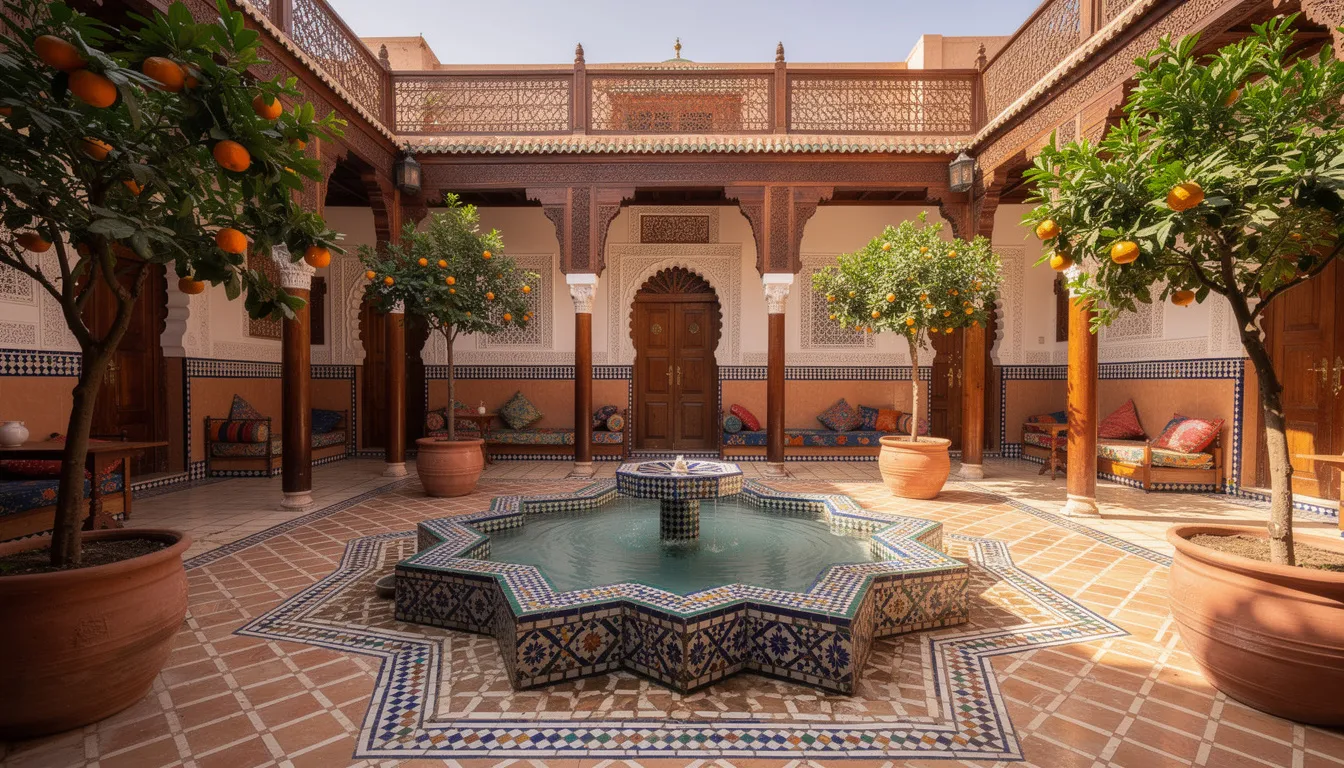
Riads—traditional courtyard houses converted into intimate guesthouses—provide quintessentially Moroccan accommodation within the medina’s heart. These typically 5-10 room properties feature central courtyards with fountains, intricate zellije tilework, and rooftop terraces offering Atlas Mountains views and evening refuge from street-level intensity.
Riad advantages:
Authentic architecture with centuries-old craftsmanship
Prime medina locations within walking distance of major attractions
Personalized service with staff knowledge of local culture
Traditional breakfast featuring msemen pancakes, fresh bread, and preserves
Rooftop terraces for sunset views and private relaxation
Often better value than international hotels for similar luxury levels
Riad challenges:
Narrow staircases without elevators (consider for mobility limitations)
Rooms can be small by international hotel standards
Navigation to your door may require walking through maze-like alleys
Limited parking—most arrange porter service from nearest vehicle access point
Varying English language skills among staff
Potential noise from call to prayer, street activity, and neighboring properties
Around Jemaa el-Fna: Central location with easy landmark navigation, but expect consistent street noise, aggressive vendors, and tourist-focused pricing. Ideal for first-time visitors wanting immediate access to the main square’s energy.
North Medina (near Ben Youssef Medersa): More atmospheric and maze-like with fewer tourist crowds. Many riads offer superior architecture and peaceful courtyards. Requires comfort with navigation uncertainty but provides authentic medina life experience.
Kasbah Area (near Saadian Tombs): Residential neighborhood feel with local markets, traditional hammams, and family life. Less obvious tourist infrastructure but genuine cultural immersion. Walking to Jemaa el-Fna takes 15-20 minutes through interesting neighborhoods.
Gueliz: French-built new city featuring wide boulevards, international cafés, modern shopping, and easy taxi access. Hotels here offer Western amenities, reliable Wi-Fi, and English-speaking staff. Perfect for travelers preferring familiar comforts while exploring Marrakech during day trips.
Hivernage: Upscale hotel district near major international chains, conference facilities, and modern infrastructure. Larger hotels with pools, fitness centers, and business amenities suit families and resort-style travelers. However, requires taxis for medina access and lacks neighborhood character.
Budget Options (800-1,200 MAD per night): Clean riads with basic amenities, shared or simple private bathrooms, rooftop access, and traditional breakfast. Look for properties with recent reviews mentioning cleanliness, helpful staff, and functioning Wi-Fi.
Mid-Range Excellence (1,500-3,000 MAD per night): Beautifully restored riads featuring private bathrooms, air conditioning, swimming pools or plunge pools, quality linens, and knowledgeable concierge service. Many offer cooking classes, guided medina tours, and airport transfer arrangements.
Luxury Experiences (3,500+ MAD per night): Palace-level riads with suites, private hammams, full-service spas, gourmet restaurants, and dedicated butler service. La Sultana and similar properties offer unprecedented luxury within authentic medina settings.
International Hotel Options: The Oberoi Marrakech (Hivernage) features 28-acre gardens, multiple pools, and contemporary luxury starting around 3,000 MAD. La Mamounia represents legendary hospitality with its palatial gardens, world-class spa, and celebrity heritage, commanding premium pricing especially during peak season.
Practical booking considerations: Many riads arrange airport transfers for 150-200 MAD, essential since medina streets prohibit vehicle access to most entrances. Confirm exact meeting procedures and have property contact information readily available. Book well in advance for peak travel periods (December-January, Easter, European summer holidays) when the best properties fill months ahead.
Successful Marrakech travel requires preparation for unique challenges including persistent vendors, cultural differences, and infrastructure realities that differ significantly from European standards. Understanding common scams, health precautions, and navigation strategies prevents disappointment while enhancing your cultural immersion.
Water safety protocols: Never drink tap water in Marrakech, including for brushing teeth. The local water system, while improving, can cause stomach upset for visitors unaccustomed to different mineral content and treatment methods. Purchase large water bottles from supermarkets (5-10 MAD for 1.5 liters) and carry a reusable bottle for refilling. Most riads provide complimentary bottled water.
Traveler’s diarrhea: Affects 5-10% of visitors despite precautions. Pack electrolyte replacement tablets, anti-diarrheal medication, and know that this typically resolves within 2-3 days. Seek medical attention for severe symptoms, high fever, or dehydration.
Sun protection requirements: Marrakech’s high altitude (450 meters) and desert proximity create intense UV exposure requiring SPF 30+ sunscreen, wide-brimmed hats, and sunglasses. Even winter months demand protection due to reflected light from ochre buildings and clear skies. Dehydration occurs rapidly—consume 3+ liters daily during active exploration.
Climate adaptation strategies: Summer heat exceeding 40°C (104°F) necessitates lifestyle adjustments: early morning activities (7:00-11:00), midday rest periods, and evening exploration (17:00-22:00). Air conditioning becomes essential rather than luxury during June-August.
The moroccan dirham (MAD) operates as a closed currency, meaning exchange outside Morocco is limited. ATMs throughout Marrakech provide the best exchange rates, typically found at banks, major hotels, and shopping centers. Daily withdrawal limits usually cap at 3,000 MAD, so plan accordingly for longer stays.
Current exchange rate fluctuates around:
1 EUR = 10.5-11 MAD
1 GBP = 12-12.5 MAD
1 USD = 10-10.5 MAD
Cash management strategy: The medina operates primarily on cash, especially for street food, taxis, and souk purchases. Carry small denominations (20, 50, 100 MAD notes) for easier transactions and tips. Many vendors claim inability to change large bills when negotiating better prices.
Credit cards work at upscale restaurants, hotels, and some tourist-oriented shops, but cash remains king for authentic experiences. Notify banks of Morocco travel to prevent card blocking.
Bargaining and overcharging: Initial prices in souks and taxi negotiations often start 3-5 times reasonable final prices. This isn’t personal—it’s traditional commerce expecting negotiation. Start offers around 40-50% of quoted prices and remain prepared to walk away. Genuine sellers will call you back with better offers if interested in sales.
Unsolicited “help” and guides: Well-dressed individuals offering directions or medina tours often expect significant payment afterward. Only ask for help from stationary people: shopkeepers, café staff, or your riad’s reception. Polite but firm responses—“La, shukran” (No, thank you)—repeated consistently discourage persistent approaches.
Common taxi scams: Taxi drivers may claim meters are broken, quote inflated fixed prices, or take circuitous routes. Insist on meter usage for short trips or agree fixed prices before departing. Standard medina trips should cost 15-30 MAD, while airport transfers range 100-150 MAD depending on destination and time.
Children and false emergencies: Children sometimes approach claiming to be lost or needing help, leading tourists toward shops expecting commission purchases. Genuine emergencies are rare—direct children toward police or shopkeepers rather than following them.
Petty crime prevention: Violent crime against tourists is rare, but pickpocketing occurs in crowded areas like Jemaa el-Fna and busy souks. Use cross-body bags, avoid displaying expensive jewelry or electronics, and store passports in accommodation safes. Money belts work well for carrying daily cash and credit cards.
Traffic and transportation safety: Scooters dominate narrow medina alleys with aggressive driving styles. Walk single file, stay alert for horn warnings, and press against walls when necessary. Horse-drawn calèches share some streets with cars—watch for unpredictable horse behavior near Jemaa el-Fna.
Solo female traveler considerations: Women traveling alone often receive more attention through catcalls, marriage proposals, or persistent vendor approaches. Confident body language, modest dress covering shoulders, and firm responses reduce unwanted attention. Consider joining group tours after dark rather than walking alone through less-populated medina areas.
Evening safety protocols: Well-lit main streets remain safe throughout the evening, but avoid dark, empty alleyways after 22:00. Jemaa el-Fna stays active and relatively secure until midnight due to constant crowds and police presence.
Google Maps limitations: GPS accuracy suffers in narrow medina alleys due to building density and satellite interference. Download offline maps before exploring and mark important locations (your riad, major landmarks) for reference. The medina’s organic layout confuses digital navigation designed for grid systems.
Landmark navigation: Use the Koutoubia Mosque’s minaret as a reference point visible from many rooftop terraces. Learn major gates (Bab Agnaou, Bab Doukkala) and main squares for orientation. Most locals provide directions relative to these landmarks rather than street names.
Communication solutions: Local SIM cards offer better value than international roaming for longer stays. Orange and Inwi provide coverage throughout the city with data packages starting around 50 MAD for weekly plans. Wi-Fi availability varies significantly between modern hotels and traditional riads.
Understanding these practical realities allows focus on Marrakech’s incredible culture, architecture, and cuisine rather than preventable frustrations. Preparation and awareness transform potential challenges into manageable inconveniences within an otherwise extraordinary travel experience.
Transportation in Marrakech operates on two distinct systems: the pedestrian-only medina where walking reigns supreme, and the modern city where taxis, buses, and ride-sharing apps provide connectivity. Understanding these different zones and their transportation options optimizes both time and money while ensuring safe navigation through this busy city.
Marrakech Menara Airport (RAK) sits approximately 6 kilometers from the city center, with several transportation options offering different price points and convenience levels. The official petit taxi rank outside arrivals charges fixed rates: 70-100 MAD to Gueliz, 100-120 MAD to the medina, depending on exact destination and time of day.
Airport transport alternatives:
Hotel/riad transfers: Most accommodations arrange pickups for 150-200 MAD, including assistance with luggage and navigation to exact doorsteps
Ride-sharing apps: Uber and Careem operate from the airport with transparent pricing and GPS tracking
Airport shuttles: Shared services cost 20-30 MAD per person but require multiple stops and longer journey times
Car rental: International brands operate at the airport, though driving in the medina is impossible and parking extremely limited
Arrival strategies: Taxi drivers at the airport can be aggressive in securing customers. Walk to the designated taxi rank rather than accepting approaches in the arrivals hall. Confirm the destination and price before entering any vehicle, and ensure drivers use meters for trips within the city or agree on fixed prices for longer distances.
The medina’s 900-year-old street system accommodates pedestrians, donkey carts, handcarts, and scooters within passages sometimes barely 2 meters wide. Walking remains the primary transportation method, but requires awareness of traffic patterns and safety considerations.
Pedestrian survival guide:
Scooters dominate narrow alleys, often traveling at dangerous speeds with minimal warning. Listen for horn honks—which serve as “move aside” signals rather than angry protests—and immediately press against the nearest wall or doorway. Scooter traffic peaks during morning (8:00-10:00) and evening (17:00-19:00) commute periods.
Donkey and mule carts transport goods throughout the medina, often loaded precariously with construction materials, bottled water, or household items. These animals have right-of-way and limited maneuverability in tight spaces.
Navigation realities: Realistic walking times between major landmarks:
Jemaa el-Fna to Koutoubia Mosque: 5 minutes
Jemaa el-Fna to Bahia Palace: 15-20 minutes
Jemaa el-Fna to Ben Youssef Medersa: 20-25 minutes
Ben Youssef to Majorelle Garden: 25-30 minutes (exiting medina required)
Footwear recommendations: Closed-toe shoes with good grip prevent injuries on uneven surfaces, marble steps, and occasional animal waste. Comfortable walking shoes matter more than style—you’ll easily spend 6-8 hours daily walking on varied surfaces from ancient stone to modern sidewalks.
Red petit taxis serve Marrakech’s transportation backbone, connecting medina, Gueliz, airport, and attractions like Majorelle Garden. These small vehicles (usually Renault or Dacia models) accommodate up to 3 passengers and use meters for city trips, though negotiation often proves necessary.
Petit taxi practicalities: Standard meter rates start around 1.40 MAD with incremental increases per distance and waiting time. However, many taxi drivers prefer fixed prices, especially for tourist destinations. Typical fixed rates include:
Medina to Majorelle Garden: 20-30 MAD
Medina to train station: 25-35 MAD
Cross-city trips: 15-25 MAD
Evening surcharge: 50% increase after 20:00
Taxi navigation tips: Carry your accommodation’s business card or address written in Arabic—many drivers speak limited English or French. Learn major landmark names in local pronunciation. “Majorelle” becomes “Major-ELL,” while “Jemaa el-Fna” sounds like “J’MA-el-F’na.”
Calèches (horse-drawn carriages): These romantic but slow carriages operate near Koutoubia Mosque and Jemaa el-Fna, charging 150-200 MAD per hour for 2-4 passengers. While photogenic, they’re impractical for efficient transportation and raise animal welfare concerns during hot weather. Evening rides offer more comfortable temperatures and atmospheric lighting.
Public buses: City buses connect major districts for 4-6 MAD per journey, though they’re often overcrowded and lack air conditioning. The tourist-oriented bus system links medina, Gueliz, and major attractions with numbered routes and posted schedules, but service frequency varies significantly.
Bicycle rental: Several companies offer bicycle rentals for 80-150 MAD daily, practical for exploring Gueliz and reaching nearby attractions. However, cycling within the medina is virtually impossible due to narrow passages and pedestrian density.
Daily movement patterns: Plan activities geographically to minimize transportation costs and time. Group medina sights together for walking days, then use taxis for excursions to Majorelle Garden, modern districts, or restaurant districts outside the old city walls.
Evening transportation: Taxi availability decreases after 22:00, especially for medina destinations where drivers face navigation challenges on dark, narrow streets. Book return transportation when dining outside the medina or arrange with restaurants to call taxis.
Peak hour awareness: Morning (8:00-9:00) and evening (17:00-18:00) rush periods create traffic congestion throughout the city. Factor extra time for taxi journeys during these periods, particularly when catching flights or meeting scheduled tours.
Google Maps adaptation: Download offline maps before exploring, but understand that GPS accuracy suffers in the medina’s dense urban environment. Use the app for general direction-finding rather than turn-by-turn navigation, especially within the old city’s organic street pattern.
Understanding Marrakech’s transportation ecosystem prevents frustration while enabling efficient exploration of this fascinating beautiful city. Patience, preparation, and cultural awareness transform navigation challenges into part of the authentic Moroccan experience.
Marrakech’s culinary landscape spans from aromatic street food in Jemaa el-Fna’s food stalls to refined palace restaurants, offering visitors authentic tastes of local cuisine shaped by Berber, Arab, and French influences. Understanding traditional dishes, dining customs, and food safety enables confident exploration of Morocco’s gastronomic treasures.
Tagines: The National Dish
Named after the distinctive cone-shaped cooking vessel, tagines represent Morocco’s most iconic culinary export. Slow-cooked stews combine meat, vegetables, and preserved fruits with complex spice blends including ras el hanout (mixture of 20+ spices). Classic variations include:
Chicken with preserved lemons and olives: Marrakech’s signature preparation balancing salt, citrus, and herbs
Lamb with prunes and almonds: Sweet-savory combination reflecting medieval trade route influences
Vegetable tagine: Seasonal vegetables with chickpeas, perfect for vegetarian travelers
Fish tagine: More common in coastal areas but available in upscale Marrakech restaurants
Couscous: Friday’s Traditional Meal
Hand-rolled semolina grains steamed over aromatic broths, traditionally served Fridays after mosque prayers. Accompaniments vary seasonally but typically include vegetables, lamb or chicken, and rich broths infused with saffron and ginger. Many restaurants offer couscous throughout the week for tourists unfamiliar with traditional timing.
Street Food Specialties
Pastilla (B’stilla): Flaky pastry layers filled with spiced pigeon or chicken, almonds, and cinnamon sugar, representing Morocco’s sophisticated culinary heritage
Harira soup: Tomato-based soup with lentils, chickpeas, and fresh herbs, traditionally consumed to break Ramadan fasts but available year-round
Makouda: Spiced potato fritters served hot from street vendors, perfect snack food
Sfenj: Ring-shaped doughnuts fried fresh and dusted with sugar, popular breakfast item
Grilled brochettes: Seasoned meat skewers cooked over charcoal fires in the medina’s narrow alleys
Traditional salads and mezze:
Zaalouk: Smoky grilled eggplant salad with tomatoes, garlic, and olive oil
Taktouka: Roasted pepper and tomato salad with preserved lemons
Moroccan salads: Fresh vegetable combinations dressed with olive oil, lemon, and herbs, served at most meal beginnings
Mint tea: Morocco’s National Drink
Known locally as “atay,” this sweet green tea with fresh spearmint leaves accompanies every meal and social interaction. The ritualistic preparation involves multiple pourings from height to create foam, serving in small glasses throughout the day. Refusing tea can be considered rude, though explaining dietary restrictions (diabetes, caffeine sensitivity) is understood.
Fresh juices and local beverages:
Orange juice: Freshly squeezed from vendors throughout Jemaa el-Fna, though quality varies significantly
Almond milk: Traditional drink served hot or cold, especially popular during Ramadan
Café au lait: French colonial influence evident in strong coffee culture throughout modern districts
Local soft drinks: Pom (local orange soda) and other regional brands offering alternatives to international options
Alcohol availability:
Licensed restaurants, hotels, and bars serve wine, beer, and spirits, though selection and pricing reflect import duties and cultural limitations. Local wines from regions near Meknes offer surprising quality at reasonable prices. Discretion regarding alcohol consumption respects local customs, especially during religious periods.
Street food selection criteria: Choose vendors with high turnover rates—busy stalls prepare fresh food constantly while empty stands may serve reheated items. Look for stalls where locals eat, especially families and older residents who understand quality standards.
Hygiene observations:
Select food cooked fresh to order rather than pre-prepared items sitting under heat lamps
Avoid raw salads and unpeeled fruits if you have sensitive stomach
Carry hand sanitizer for cleaning before eating, especially at street vendors
Drink bottled water exclusively, avoiding ice unless from reputable establishments
Spice adaptation: Moroccan cuisine uses significant spice quantities that may overwhelm unaccustomed palates. Start with milder dishes (chicken tagines, vegetable couscous) before progressing to spicier preparations. Most restaurants accommodate spice level requests.
Traditional medina dining: Dar Yacout offers palace-like ambiance with set menus showcasing refined moroccan cuisine, though prices reflect the theatrical presentation and tourist positioning. Le Foundouk provides more accessible traditional dining with excellent tagines and atmospheric courtyards.
Modern fusion experiences: Gueliz district restaurants blend Moroccan techniques with international influences, offering familiar preparations for cautious eaters while maintaining local ingredient quality. These establishments typically feature English menus, wine lists, and air conditioning.
Vegetarian-friendly options: Many traditional dishes naturally accommodate vegetarian diets, though understanding ingredients requires careful communication. Vegetable tagines, lentil dishes, and fresh salads provide varied options, while modern cafés offer international vegetarian cuisine.
Patisseries and sweet treats: French colonial influence created exceptional pastry culture throughout Marrakech. Traditional Moroccan pastries include almond-filled chebakia during religious holidays, honey-soaked dates, and various nut-based confections. French-style patisseries offer croissants, pain au chocolat, and elaborate cakes.
Meal timing and structure: Lunch typically occurs 12:00-14:00 with dinner starting around 19:00-20:00, though tourist restaurants accommodate earlier dining preferences. Traditional meals begin with bread, olives, and salads, followed by main courses, then fruit and sweet treats.
Sharing and hospitality: Moroccan dining emphasizes communal eating with shared dishes and generous hospitality. Hosts take pride in ensuring guests eat well—politely accepting food offerings while indicating when full prevents offense.
Ramadan considerations: During Islam’s holy month, many restaurants close during daylight hours or offer limited menus. Evening iftar celebrations create festive atmospheres with special menus and extended hours after sunset. Non-Muslim tourists can still find dining options but should exercise discretion regarding public eating and drinking.
Tipping and payment: Restaurant tipping follows the 10% standard for good service, though small local establishments may not expect gratuities. Cash payment predominates except in upscale hotels and tourist-oriented restaurants accepting credit cards.
Understanding Marrakech’s food culture transforms dining from mere sustenance into cultural immersion, revealing centuries of trade route influences, religious practices, and regional adaptations that created this distinctive and delicious cuisine.
The medina’s labyrinthine souks create one of the world’s most immersive shopping experiences, where 9,000+ stallholders continue centuries-old trading traditions within specialized market areas. Understanding souk organization, authentic products, and effective bargaining strategies ensures rewarding purchases while supporting local artisans and their families.
Medieval urban planning organized the medina’s souks by trade guilds, a system largely maintained today despite tourism’s influence. This geographical specialization helps navigate the maze while understanding price variations between tourist-oriented areas and local markets.
Primary souk areas:
Souk Semmarine: Main textile and leather thoroughfare connecting Jemaa el-Fna to deeper medina areas, featuring carpets, clothing, bags, and tourist favorites
Souk el Attarine: Spice and pharmacy souk filled with aromatic herbs, traditional cosmetics, and medicinal preparations
Souk des Babouches: Slipper makers crafting traditional pointed shoes in various colors and qualities
Souk Haddadine: Metalwork quarter producing lanterns, tea sets, jewelry, and decorative objects
Rahba Kedima: “Old square” featuring spice pyramids, traditional remedies, and dried fruits creating Instagram-worthy displays
Craft workshop areas: Beyond main tourist routes, specialized workshops continue traditional production methods. Carpet weavers, leather tanners, ceramic artists, and woodworkers operate in quarter-specific areas where prices often reflect actual production costs rather than tourist markup.
Spices and culinary products: Morocco’s position on historic trade routes created sophisticated spice culture worth exploring beyond tourist purchasing. Quality indicators include:
Ras el hanout: Complex spice blends should contain 20+ ingredients with visible saffron threads (expensive but authentic)
Saffron: Real saffron threads appear deep red with sweet, hay-like aroma; avoid powdered versions which may be adulterated
Preserved lemons: Traditional preparation process creates soft, salty citrus essential to Moroccan cooking
Argan oil: Authentic oil should smell nutty, not fishy, and come from cooperative sources with proper labeling
Textile and leather goods:
Berber carpets: Hand-knotted vs machine-made differences apparent in knot density, pattern irregularities (indicating handwork), and natural wool texture
Leather products: Quality leather feels soft and supple; avoid items with strong chemical odors indicating poor tanning processes
Scarves and textiles: Natural fibers (cotton, silk, wool) breathe better than synthetic blends common in tourist-grade items
Metalwork and decorative arts:
Lanterns: Hand-forged metalwork shows slight irregularities and tool marks; mass-produced items appear perfectly uniform
Tea sets: Traditional designs feature intricate engraving and proper weight indicating quality brass or silver content
Jewelry: Handcrafted pieces show individual characteristics while machine-made items appear identical
Haggling represents cultural exchange rather than confrontation, with successful negotiation depending on mutual respect, patience, and understanding of local customs. Vendors expect bargaining and often quote initial prices 3-5 times their acceptable final price.
Effective bargaining approach:
Research approximate fair prices by observing multiple vendors and noting price ranges
Start at 40-50% of quoted price while maintaining friendly demeanor
Prepare to walk away—this often triggers the vendor’s best offer
Know your maximum spending limit before beginning negotiations
Bundle multiple items for better overall pricing
Cash payment often secures additional discounts
Cultural bargaining etiquette: Express genuine interest in craftsmanship and ask about production methods. Vendors appreciate customers who understand artistic value beyond mere price considerations. Learning basic Arabic phrases (“bshal hada?” - how much is this?) shows cultural respect and often improves negotiations.
Timing advantages: Early morning and late afternoon negotiations often yield a better price when vendors are less pressured by crowds. End-of-day purchases sometimes secure better deals as sellers prefer completing sales rather than storing inventory.
Payment and documentation: Carry sufficient cash in small denominations (20, 50, 100 MAD notes) to avoid “no change” excuses during final negotiations. For expensive items like carpets, request detailed receipts including vendor contact information, item descriptions, and prices for customs and shipping purposes.
Quality verification: Examine items carefully before purchasing, checking for defects, proper construction, and authentic materials. Most sales are final, and returning to find vendors within the medina maze proves difficult.
Shipping arrangements: Reputable carpet and large item vendors offer international shipping services, though costs can exceed item values. Verify shipping companies, insurance coverage, and delivery timeframes. Some travelers prefer hand-carrying smaller items to avoid shipping uncertainties.
Counterfeit awareness: Popular items including argan oil, designer leather goods, and silver jewelry often appear in counterfeit versions. Purchase from established vendors, cooperatives, or shops with verifiable reputations rather than street-level sellers.
Price comparison methodology: Visit 3-4 vendors selling similar items before making purchases. Note price ranges, quality differences, and vendor personalities to identify the best value propositions.
Local market exploration: Venture beyond main tourist souks to neighborhood markets where locals shop. These areas offer authentic products at genuine local prices, though language barriers and cultural differences require more patience.
Cooperative shopping: Women’s cooperatives throughout Morocco produce high-quality argan oil, textiles, and crafts while providing fair wages and authentic products. These organizations often offer fixed pricing eliminating bargaining stress while ensuring ethical purchasing.
Group buying power: Shopping with other travelers or tour groups sometimes enables bulk purchasing discounts. Coordinate with fellow visitors to negotiate better prices for multiple items from single vendors.
Understanding souk culture transforms shopping from potentially frustrating tourist extraction into meaningful cultural exchange, supporting local artisans while acquiring unique items unavailable elsewhere in the world. The process becomes as valuable as the products themselves, creating lasting memories of authentic moroccan culture.
Marrakech’s strategic location provides access to dramatically diverse landscapes within 1-3 hours, from the High Atlas Mountains’ snow-capped peaks to the Agafay Desert’s lunar terrain and Atlantic coastal towns. These excursions offer respite from the medina’s intensity while showcasing Morocco’s geographical and cultural diversity.
Ourika Valley: Accessible Mountain Experience
This popular half or full-day excursion (90 minutes each way) follows the Ourika River through traditional Berber villages, terraced hillsides, and eventual waterfalls requiring moderate hiking. The valley showcases rural Moroccan life largely unchanged for centuries, with women weaving carpets, children herding goats, and families cultivating small agricultural plots. For more travel tips and inspiration, see our Morocco travel blog.
Seven waterfalls provide the main attraction, though reaching the upper cascades requires 2-3 hours hiking on rocky terrain. Most visitors content themselves with the first two waterfalls accessible via 45-minute walks from the road. Riverside cafés offer fresh trout, tagines prepared with local vegetables, and mint tea while enjoying mountain air significantly cooler than Marrakech’s urban heat.
Practical considerations:
Best timing: Spring and autumn for comfortable hiking temperatures
Footwear: Sturdy shoes essential for rocky, sometimes wet trails
Duration: Half-day tours (4-5 hours total) vs full-day experiences (7-8 hours) including lunch
Group size: Small groups (6-8 people) provide more flexible timing and authentic interactions
Imlil and Mount Toubkal Area: Serious Mountain Immersion
For more adventurous travelers, Imlil village serves as the basecamp for North Africa’s highest peak, Mount Toubkal (4,167 meters). Day trips don’t attempt summit climbs but explore traditional Berber villages, enjoy panoramic Atlas views, and experience mountain hospitality through family-hosted lunches.
The 2.5-hour drive from Marrakech winds through increasingly dramatic scenery, reaching altitude where snow appears even in summer months. Village visits reveal traditional architecture, agricultural techniques adapted to mountain conditions, and social structures maintaining centuries-old customs.
Agafay Desert: Accessible Sahara Alternative
Located just 40 kilometers from Marrakech, the Agafay Desert offers desert experiences without the 9-hour commitment required for actual Sahara expeditions. This rocky, lunar landscape provides dramatic sunset vistas, camel rides, and stargazing opportunities while maintaining easy access to city amenities.
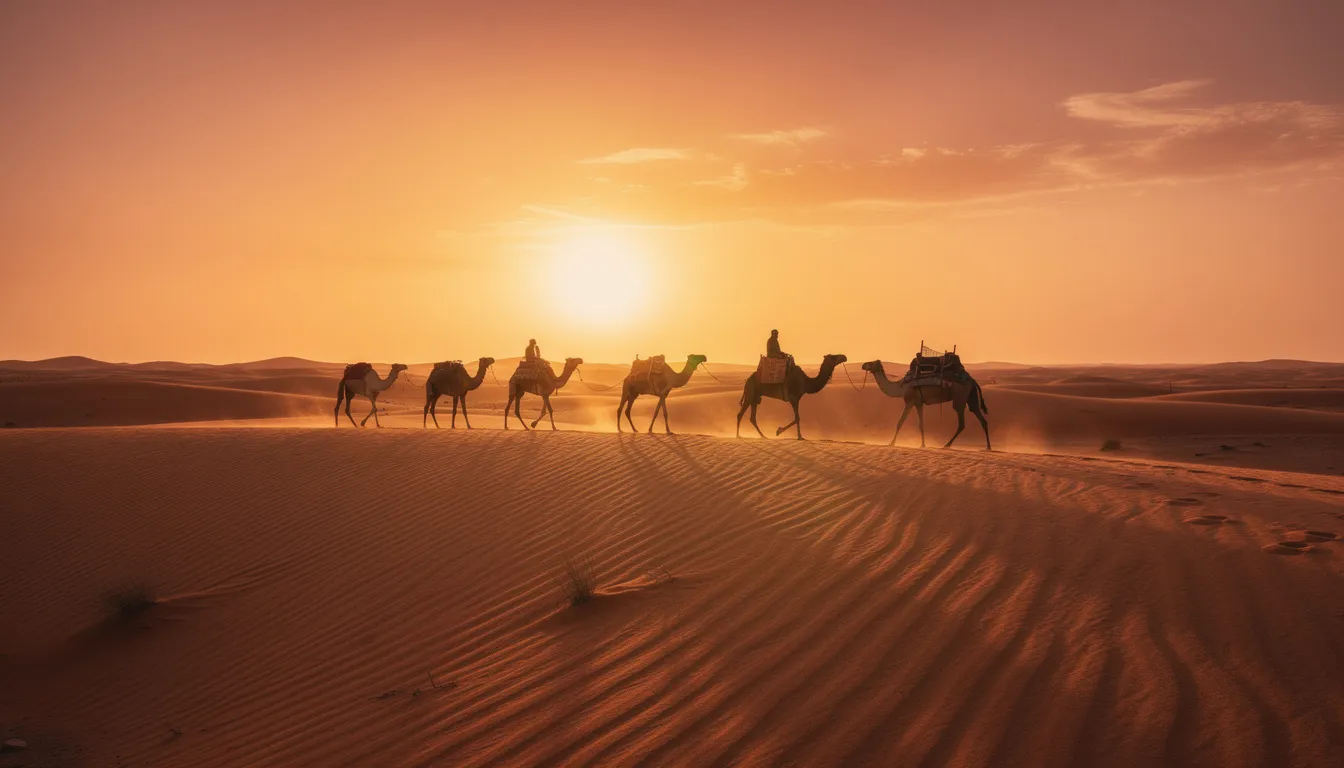
Half-day excursions typically depart Marrakech around 15:00, include camel rides across rolling stone plateaus, traditional dinner under desert stars, and return by 22:00. Full-day options add quad biking adventures across the desert terrain, visits to local villages, and extended time for photography.
Activities and experiences:
Camel ride experiences: Traditional desert transport offering perspective on historical caravan routes
Quad biking: High-energy exploration of desert terrain with various skill levels accommodated
Desert dining: Traditional meals prepared over open fires featuring local specialties
Stargazing: Clear skies and minimal light pollution create exceptional astronomical viewing
Sahara Desert Expeditions: Multi-Day Commitments
Genuine Sahara experiences require 2-3 day commitments with overnight stays in desert camps. Popular destinations include Zagora (6-8 hours driving) and Merzouga (8-10 hours), each offering different desert landscapes and cultural experiences.
These extended trips include scenic drives through Atlas passes, visits to UNESCO World Heritage sites like Ait Benhaddou (filming location for numerous Hollywood productions), and authentic Berber cultural immersion. However, long driving times and basic accommodation conditions suit only committed desert enthusiasts.
Ouzoud Waterfalls: Morocco’s Most Spectacular Cascades
These impressive waterfalls, 3 hours from Marrakech, drop 110 meters through olive groves creating multiple viewing levels and photography opportunities. Local Barbary macaques (the only primate species native to Morocco) inhabit the area, though feeding them is discouraged for both safety and conservation reasons.
Multiple viewing platforms provide different perspectives on the three-tiered falls, while boat rides approach the base for dramatic up-close experiences. Riverside restaurants serve fresh fish and traditional tagines with waterfall soundtracks replacing urban noise.
Access and timing:
Road conditions: Well-maintained but winding mountain roads require 3+ hours total driving
Best seasons: Spring for wildflowers, autumn for comfortable temperatures
Photography: Morning light (9:00-11:00) and late afternoon (16:00-18:00) provide optimal conditions
Lake Takerkoust: Closer Natural Escape
This artificial lake, 45 minutes from Marrakech, offers water sports, lakeside dining, and Atlas Mountain views without lengthy travel commitments. Activities include kayaking, stand-up paddleboarding, and boat excursions to smaller islands dotting the lake.
Several upscale restaurants line the shoreline, providing peaceful dining alternatives to medina intensity. This destination suits travelers seeking nature connection without full-day time commitments.
Essaouira: Atlantic Coast UNESCO Town
This fortified coastal city, 2.5-3 hours from Marrakech, provides dramatic contrast to inland heat and intensity. UNESCO-recognized ramparts surround a medina significantly more manageable than Marrakech’s sprawling maze, while Atlantic breezes moderate temperatures year-round.
Portuguese and French colonial influences created architectural styles distinct from typical Moroccan cities. The fishing port supplies renowned seafood restaurants, while artisan cooperatives produce high-quality woodwork and textiles. Many travelers extend Essaouira visits to 1-2 nights, enjoying beachfront hotels and cooler coastal climate.
Day trip practicalities:
Driving time: 2.5-3 hours each way on well-maintained roads
Activities: Medina exploration (2-3 hours), beach time, seafood dining, artisan workshops
Weather: Consistently 5-10°C cooler than Marrakech with Atlantic winds
Choosing tour operators: Compare online reviews focusing on guide quality, group sizes, and included services. Private tours cost 2-3 times group rates but offer flexibility for photography stops, timing adjustments, and personal interests. Small groups (4-8 people) balance cost efficiency with personalized attention.
Included services verification: Confirm what’s included: hotel pickup/drop-off, entrance fees, meals, guide services, and transportation quality. Hidden costs for optional activities, drinks, or gratuities can significantly increase final pricing.
Seasonal considerations: Summer mountain trips provide relief from city heat but may include afternoon thunderstorms. Desert excursions during winter months require warm clothing for nighttime temperature drops to near-freezing levels.
Equipment recommendations: Bring sun protection (hat, sunscreen, sunglasses), comfortable walking shoes, layered clothing for temperature variations, camera equipment with extra batteries (cold weather drains power quickly), and reusable water bottles.
These day trips from Marrakech showcase Morocco’s incredible geographical diversity while providing cultural experiences impossible within the city boundaries. Each destination offers unique perspectives on Moroccan life, from mountain Berber traditions to desert nomad heritage and coastal influences that shaped this complex and fascinating country.
Understanding 2025 pricing across accommodation, dining, transportation, and activities enables realistic budget planning while identifying opportunities for significant savings without sacrificing authentic experiences. Currency fluctuations, seasonal variations, and tourism recovery factors influence current pricing structures throughout Marrakech. Travelers should also be aware that some activities, tours, or services may incur extra cost, so it's important to account for optional expenses when planning your trip.
Budget travelers (€40-60 / £35-50 / $45-65 daily):
Accommodation: Basic riad or hostel (800-1,200 MAD/night)
Food: Street food, local restaurants, minimal alcohol (200-300 MAD/day)
Transport: Walking, occasional petit taxis (50-100 MAD/day)
Attractions: Selective major sites, free experiences (100-200 MAD/day)
Shopping: Small souvenirs, essential items only (150-300 MAD/day)
Mid-range travelers (€80-120 / £70-100 / $85-130 daily):
Accommodation: Quality riad or boutique hotel (1,500-3,000 MAD/night)
Food: Mix of restaurants, some upscale dining, occasional drinks (400-600 MAD/day)
Transport: Taxis as needed, day trip transport (150-250 MAD/day)
Attractions: All major sites, guided tours, experiences (300-500 MAD/day)
Shopping: Quality souvenirs, moderate purchases (300-600 MAD/day)
Luxury travelers (€200+ / £175+ / $220+ daily):
Accommodation: Palace hotels, luxury riads (3,500+ MAD/night)
Food: Fine dining, hotel restaurants, premium alcohol (800-1,200 MAD/day)
Transport: Private transfers, premium tour services (400-800 MAD/day)
Attractions: Private guides, exclusive experiences, spa treatments (600-1,000 MAD/day)
Shopping: High-end crafts, significant purchases (1,000+ MAD/day)
Accommodation pricing factors: Peak season rates (December-January, European holidays) can increase prices 50-100% above shoulder season levels. Christmas and New Year periods command premium pricing, especially at luxury properties. Advanced booking (3+ months) secures better rates and availability at preferred properties.
Many riads include traditional breakfast (bread, preserves, mint tea, sometimes eggs) worth 80-150 MAD daily when purchased separately. Riad taxation adds 2.5% city tax plus tourist tax (varies by property rating) to advertised rates.
Food and beverage costs:
Street food meals: 30-60 MAD for filling portions of tagine, grilled meats, or soup
Casual restaurant dining: 80-150 MAD for set menus including soup, main course, and tea
Mid-range restaurants: 200-400 MAD per person for wine-accompanied dinners
Upscale dining: 500-800 MAD for refined restaurants with alcohol and ambiance
Coffee and tea: 15-25 MAD at street cafés, 40-80 MAD at tourist-oriented establishments
Bottled water: 5-8 MAD for 1.5-liter bottles, 15-25 MAD at restaurants
Transportation costs:
Airport transfers: 100-150 MAD by taxi, 200-300 MAD arranged by accommodations
Petit taxi rides: 15-40 MAD for cross-city journeys depending on distance and negotiation
Day trip transport: 200-400 MAD for shared group trips, 800-1,500 MAD for private tours
Walking predominates within the medina, reducing daily transport costs significantly
Major attraction entrance fees (2025 pricing):
Bahia Palace: 70 MAD
Saadian Tombs: 70 MAD
Ben Youssef Medersa: 50 MAD
Majorelle Garden: 70 MAD (garden only), 150 MAD (garden + museum)
Combined tickets: Some sites offer packages reducing individual pricing
Accommodation savings: Book directly with riads during shoulder seasons (February-March, November) for negotiated rates excluding booking platform commissions. Multi-night stays often secure discounts, especially for 4+ consecutive nights. Consider staying in less central medina areas where authentic riads charge significantly less than properties near Jemaa el-Fna.
Food budget optimization: Eat where locals eat—small neighborhood restaurants serving workers and residents offer authentic cuisine at fraction of tourist restaurant costs. Street food provides exceptional value, with complete meals under 50 MAD. Avoid hotel restaurants except for special occasions, as pricing includes significant location premiums.
Lunch at local establishments costs 40-80 MAD compared to 200-400 MAD at tourist-oriented restaurants serving identical dishes. Buy bottled water from grocery stores (5-8 MAD for large bottles) rather than restaurants charging 3-4x markup.
Transportation efficiency: Walk extensively within the medina to avoid taxi costs while experiencing authentic neighborhood life. Use public buses (6 MAD per journey) for longer distances instead of taxis when time permits. Book day trips directly with operators rather than through hotel concierges to avoid commission markups.
Share taxis with other travelers when visiting attractions outside the medina. Most petit taxis accommodate 3 passengers, making split fares economical for groups.
Attraction bundling: Group geographically close attractions to minimize transport costs. Visit Bahia Palace, Saadian Tombs, and El Badi Palace in single walking tours through the southern medina. Plan Majorelle Garden visits with nearby Gueliz dining or shopping to maximize taxi efficiency.
Shopping negotiation: Never accept first quoted prices in souks—initial offers typically start 3-5 times acceptable final prices. Compare prices across multiple vendors before purchasing. End-of-day shopping sometimes secures better deals as vendors prefer sales to inventory storage.
Purchase small gifts and souvenirs from cooperative shops offering fixed pricing and fair wages rather than dealing with aggressive market vendors seeking maximum tourist profits.
Seasonal timing advantages: Visit during shoulder seasons (February-March, October-November) for optimal weather with lower accommodation costs and reduced competition for services. Ramadan periods offer unique cultural experiences but limited daytime dining options.
Avoid European school holiday periods when accommodation rates peak and sites become overcrowded, affecting both costs and experience quality.
Currency exchange optimization: Use bank ATMs for best exchange rates rather than currency exchange booths charging high commissions. Withdraw larger amounts less frequently to minimize per-transaction fees, though respect daily limits typically capped at 3,000 MAD.
Hidden costs awareness: Factor gratuities into budgets—tipping culture expects 10% at restaurants, 20-50 MAD for guides, and small coins for various services. Riad staff appreciate 100-200 MAD total tips for multi-night stays with good service.
Import duties make alcohol expensive—wine costs 200-400 MAD per bottle at licensed restaurants. International brand items (toiletries, snacks) carry significant markups compared to local alternatives.
Understanding these cost structures enables informed spending decisions that maximize authentic experiences while maintaining reasonable budgets, transforming potentially expensive mistakes into smart cultural investments.
Entry procedures for Morocco have streamlined significantly in recent years, though requirements vary by nationality and travel purpose. Most Western visitors can enter visa-free for tourism, but understanding current regulations, customs procedures, and arrival logistics prevents complications and ensures smooth border crossing experiences.
Visa-free entry (90 days maximum): Citizens from European Union countries, United Kingdom, United States, Canada, Australia, New Zealand, and many other developed nations can enter Morocco without advance visa applications for tourism stays up to 90 days. This policy, implemented to boost tourism, covers the vast majority of international visitors to Marrakech.
Entry documentation requirements:
Passport validity: Minimum 6 months remaining from entry date
Blank pages: At least 2 empty pages for entry/exit stamps
Return ticket: Proof of onward/return travel (digital copies acceptable)
Accommodation proof: Hotel confirmations, riad bookings, or invitation letters
Financial means: Demonstration of sufficient funds (rarely checked but required legally)
Important verification: Visa requirements change periodically. Always verify current regulations through official Moroccan embassy websites or consulates in your home country before travel. Tour operators and travel agents may have outdated information, making official sources essential for accuracy.
Immigration process: Marrakech Menara Airport (RAK) handles over 7 million passengers annually, creating significant queues during peak arrival periods. European charter flights and low-cost carriers often arrive simultaneously, causing 30-60 minute waits at immigration counters.
Immigration officers typically ask basic questions: purpose of visit, accommodation details, and planned departure dates. Have accommodation addresses readily available—many officers request specific hotel or riad names and locations. Remain patient and courteous; questioning represents standard procedure rather than suspicion.
Customs regulations and currency rules: Morocco permits duty-free importation of personal items, gifts up to 2,000 MAD value, and limited alcohol quantities (1 liter spirits, 1 liter wine). Professional photography equipment requires temporary import documentation for valuable cameras and lenses.
Currency import/export limitations: Moroccan dirham import/export is officially limited to 2,000 MAD, though enforcement focuses primarily on large commercial amounts. Foreign currency import is unlimited but amounts exceeding $10,000 USD equivalent require declaration forms.
The closed currency system means moroccan dirham cannot be exchanged outside Morocco, making spending or exchanging remaining currency essential before departure. Airport exchange counters offer reasonable rates for converting leftover dirhams back to major international currencies.
While Morocco doesn’t legally require travel insurance for tourist entry, comprehensive coverage is highly recommended given healthcare costs, evacuation expenses, and activity risks common to Moroccan adventures.
Essential coverage components:
Medical treatment: Private healthcare costs can be substantial; public facilities may not meet international standards
Emergency evacuation: Medical evacuation to Europe costs $50,000-100,000 USD
Activity coverage: Specify trekking, quad biking, camel riding, and other adventure activities in policies
Theft and loss: Valuable electronics, cameras, and personal items face higher theft risks in tourist areas
Trip cancellation: Flight disruptions, illness, or political situations can necessitate itinerary changes
Pre-existing medical conditions: Declare all medical conditions and medications to insurance providers. Carry prescription medications in original containers with accompanying prescriptions or doctor letters, especially for controlled substances requiring special customs documentation.
Vaccination requirements: Morocco requires yellow fever vaccination only for travelers arriving from countries with yellow fever transmission risk. No other vaccinations are mandatory for direct travel from Europe, North America, or other developed regions.
Recommended preventive measures:
Routine vaccinations: Ensure current status for measles, mumps, rubella, diphtheria, tetanus, pertussis, polio, and influenza
Hepatitis A and B: Recommended for all travelers due to potential exposure through food, water, or local contact
Typhoid: Consider for travelers eating outside tourist restaurants or visiting rural areas
Rabies: Recommended for extended stays, rural travel, or activities involving animal contact
Health documentation: Carry vaccination certificates and medical records, especially for ongoing treatments requiring medication continuation. European Health Insurance Cards (EHIC) are not valid in Morocco, making private travel insurance essential.
Exit procedures: Departure from Marrakech involves standard security screening plus occasional customs checks for purchased items and cultural artifacts. Large purchases like carpets, metalwork, or significant quantities of spices may require proof of legitimate purchase and payment of applicable duties.
Cultural export restrictions: Antique items, artifacts, and items of cultural significance require special export permits. Authentic Berber carpets, traditional crafts, and artisanal products purchased from legitimate vendors rarely face restrictions, but sellers should provide proper receipts for valuable items.
Currency exchange deadline: Exchange remaining moroccan dirham before security screening, as post-security areas offer limited exchange services. Airport exchange counters typically operate until final daily departures but may have restricted hours during low-traffic periods.
Departure tax and fees: Airport departure taxes are typically included in ticket prices, but verify with airlines for budget carriers that may charge additional fees. Some low-cost carriers impose extra charges for baggage, seat selection, and other services not included in basic ticket prices.
Understanding these entry and exit procedures eliminates common arrival stress while ensuring compliance with Moroccan regulations. Preparation prevents delays and allows immediate focus on cultural immersion rather than administrative complications that could diminish initial Marrakech impressions.
Successful Marrakech travel requires strategic packing that balances cultural appropriateness, climate adaptability, and practical functionality within typically limited luggage space. Understanding local shopping availability, seasonal temperature variations, and infrastructure differences enables smart packing decisions that enhance rather than complicate your Moroccan adventure.
Modest dress requirements: Pack clothing that covers shoulders and knees for medina exploration and religious site proximity. This cultural requirement doesn’t mean sacrificing comfort—lightweight linen and cotton provide breathability while meeting local modesty standards. Long-sleeve shirts and light cardigans serve dual purposes: sun protection and cultural appropriateness.
Women’s clothing: Flowing pants, maxi skirts, and tunics provide comfortable movement while navigating uneven medina surfaces. Scarves or wraps offer versatility: shoulder covering when needed, warmth during cool evenings, and dust protection during windy conditions common in desert regions.
Temperature adaptation clothing: Marrakech’s semi-arid climate creates significant temperature variations between day and night, especially during cooler months when evening temperatures can drop 15-20°C below daytime highs. Pack layers rather than heavy clothing: light base layers, medium-weight shirts, and a warm jacket or fleece for evening comfort.
Summer travel: Prioritize breathable fabrics that dry quickly, long sleeves for sun protection, and hats with wide brims for shade during midday heat exceeding 40°C (104°F).
Footwear selection: Comfortable closed-toe walking shoes are non-negotiable for medina exploration. Ancient streets feature uneven stone surfaces, occasional animal waste, and narrow passages where ankle protection prevents injuries. Quality walking shoes should offer good grip, ankle support, and quick-drying materials for unexpected water encounters. Pack one pair of dressier sandals or shoes for upscale restaurant dining and riad evening relaxation. Flip-flops work well for hotel/riad pool areas but provide inadequate protection for street walking.
Climate and environment protection: High-SPF sunscreen (30+) is essential year-round due to Marrakech’s altitude and intense sun reflection from ochre buildings. Pack enough for daily reapplication, as quality sunscreen costs significantly more in Morocco than home countries.
Wide-brimmed hats and sunglasses: Protect faces and necks while providing style options for photography. Sunglasses with UV protection reduce eye strain from bright conditions and dust particles common during windy periods.
Hydration and health maintenance: A reusable water bottle with good insulation maintains cool water temperatures during hot weather exploration. While you shouldn’t drink tap water, hotel and riad staff happily refill bottles with bottled water, reducing plastic waste and ongoing purchase costs—a smart tip for sustainable travel experiences in Morocco.
First-aid kit: Pack a basic kit including band-aids, antiseptic wipes, pain relievers, anti-diarrheal medication, and any prescription medications with extra quantities for travel delays. Include electrolyte replacement packets for hot weather activities when dehydration risks increase.
Personal hygiene adaptations: Many traditional riads and budget accommodations provide basic soap and towels but may not include Western amenities like shampoo, conditioner, or body lotions. Pack travel-size versions of preferred brands rather than relying on local availability or quality. Toilet paper availability varies significantly—upscale hotels provide it reliably while some local establishments and public facilities may not. Pack a small emergency supply for peace of mind, especially for day trips to rural areas.
Navigation and communication devices: Download offline maps before arrival, as google maps accuracy suffers in narrow medina alleys where GPS signals struggle with building interference. Offline maps still provide general direction finding even without data connectivity.
Portable power banks: Essential due to heavy navigation, translation app usage, and photography draining smartphone batteries faster than normal. Pack charging cables for all devices, considering that replacement cables in Morocco may not fit your specific devices.
Photography equipment: Camera equipment faces theft risks in crowded tourist areas, so pack modest-looking cases rather than expensive-branded bags. Extra batteries and memory cards cost significantly more in Morocco than home countries, making advance preparation cost-effective. Consider waterproof cases or bags for protection during Atlas Mountains day trips where weather can change rapidly, potentially including unexpected rain or snow at higher elevations.
Essential documentation: Carry passport copies separate from originals, stored in different luggage compartments or left at accommodation safes. Include copies of travel insurance policies, emergency contact lists, and medical prescription information for customs or medical emergencies.
Travel insurance documentation: Should include 24-hour emergency contact numbers and policy numbers readily accessible without internet connectivity. Many insurance companies provide offline-accessible apps for policy information.
Financial security measures: Money belts or hidden pouches provide security for daily cash, backup credit cards, and emergency funds without appearing obvious to potential pickpockets. Split money across multiple locations rather than carrying all funds in single wallets or purses.
Notify banks: Inform them of Morocco travel to prevent card blocking due to unusual location usage. Carry backup cards from different providers in case of card loss, theft, or technical issues with Moroccan ATM systems.
Thoughtful gesture items: Pack small gifts from your home country—postcards, regional specialty foods, or cultural items—for riad staff, guides, or local families who show hospitality. These gestures often create memorable cultural exchanges that enhance travel experiences beyond typical tourist interactions.
Language learning tools: Phrasebooks, translation apps, or basic Arabic/French phrases written in notebooks demonstrate cultural respect and interest in communication beyond English-only interactions.
Summer adaptations (June-August): Prioritize lightweight, quick-drying fabrics and maximum sun protection. Pack cooling towels, extra electrolyte supplements, and after-sun care products for inevitable heat exposure. Consider small fans or cooling devices for accommodation without reliable air conditioning.
Winter considerations (December-February): Include warm layers for evening temperatures potentially dropping to 5-10°C. Many traditional riads lack central heating, making personal warmth items essential for comfortable sleeping. Waterproof jackets protect against occasional winter rain in the Atlas Mountains region.
Spring/Autumn optimization (March-May, September-November): These ideal seasons require versatile layering systems adapting to 20°C temperature swings between day and night. Pack light sweaters, long pants, and medium-weight jackets for temperature flexibility.
Understanding these packing essentials ensures comfort, cultural appropriateness, and practical functionality throughout your Marrakech adventure. Smart packing prevents common tourist frustrations while enabling focus on cultural immersion rather than equipment problems or cultural misunderstandings that could diminish this extraordinary travel experience.
Marrakech rewards travelers who embrace cultural intensity, sensory overload, and occasional chaos as integral parts of an authentic North African experience. This red city offers extraordinary rewards—architectural marvels, incredible food culture, warm hospitality, and easy access to diverse landscapes—but demands patience, cultural sensitivity, and realistic expectations about infrastructure and Western comfort levels.
You’ll thrive in Marrakech if you:
Enjoy cultural immersion over sanitized tourist experiences
Appreciate authentic local cuisine and street food adventures
Find energy in bustling markets, street life, and constant activity
Value photography opportunities showcasing architecture, street scenes, and dramatic landscapes
Seek adventures beyond typical European city breaks
Enjoy negotiating, bargaining, and cultural exchanges with locals
Consider alternatives if you:
Feel overwhelmed by persistent vendors, noise, or cultural differences
Require familiar Western amenities and infrastructure standards
Dislike hot weather, dust, or semi-arid climate conditions
Prefer structured, predictable travel experiences
Have limited patience for language barriers or cultural misunderstandings
The ideal Marrakech itinerary spans 3-4 days exploring the city thoroughly, plus 1-2 days for Atlas Mountains or Agafay Desert excursions that showcase Morocco’s remarkable geographical diversity. This timeframe allows proper cultural acclimatization while sampling the destination’s various facets without rushing through experiences that deserve thoughtful attention.
Many first time visitors discover that Marrakech challenges preconceptions while creating transformative travel memories. The combination of medieval Islamic architecture, Berber cultural traditions, French colonial influences, and modern Moroccan entrepreneurship creates complexity rarely found in single destinations.
Ready to begin planning your next trip to this beautiful city? Start by checking current flight prices to marrakech airport from your departure city, research accommodation options that match your comfort preferences and budget, and decide whether to add Atlas Mountains trekking, Agafay Desert adventures, or coastal Essaouira extensions to your Moroccan adventure. Marrakech awaits with its ancient stories, vibrant culture, and unforgettable experiences that will easily spend their way into your travel memories forever.
Explore the rich history and significance of the University of Al Quaraouiyine, the world's oldest a...
Read this article
Discover the top glamping spots in the Sahara Desert for a luxurious escape. Experience comfort unde...
Read this articleDiscover the best Morocco holiday packages from India, featuring unique experiences and stunning lan...
Read this articleWant cool tour deals and tips about Morocco? Enter your email and we’ll send them to you each month!