Morocco in Spring: Real Conditions Travelers Need to Know
Discover Morocco in Spring, the perfect season for exploring Marrakech, the Atlas Mountains, coastal...
Read this article

Suspendisse interdum consectetur libero id. Fermentum leo vel orci porta non. Euismod viverra nibh cras pulvinar suspen.
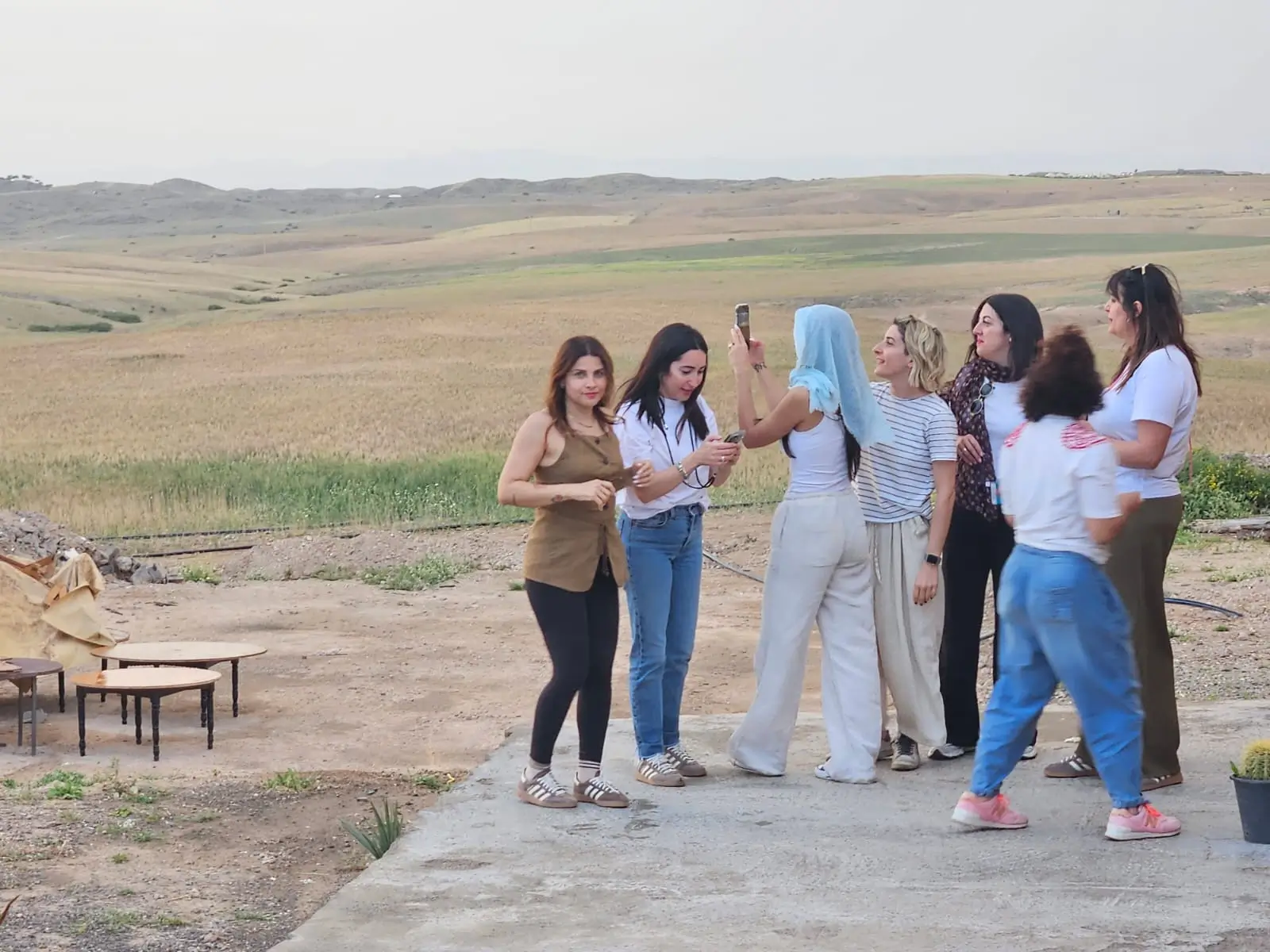
Moroccan women live in a country where reform and tradition meet every day. For travelers, understanding women in Morocco means looking beyond simple stereotypes: legal progress is real, but family expectations, region, class, and rural life still shape what freedom looks like.
The status and role of women in Moroccan society are undergoing rapid change, especially since the 2004 family law reforms under King Mohammed VI.
Morocco is one of the more progressive countries in North Africa on women’s rights on paper, yet gaps remain around child marriage, inheritance, and access to resources.
Solo female travel in Morocco is possible and generally safe with cultural sensitivity, modest dress, and common sense precautions.
Traditional clothing such as djellabas and caftans coexist with jeans, tunics, and Western style in major cities.
Morocco Classic Tours, a Fez-based local operator, helps women travelers navigate Moroccan culture respectfully while meeting local women in cities, villages, and cooperatives.
In a Marrakech café, you may see a young Moroccan woman in jeans, checking her phone, speaking Arabic, French, and perhaps English with friends. A few hours away in the High Atlas, another woman may be tending animals, preparing couscous, or helping children while men occupy the visible street space. Both are part of modern Morocco. One may attend university and delay marriage; the other may have married young and built her daily life around family and land. This contrast is not a contradiction. It is the reality of a country moving quickly, but unevenly. For first-time visitors, the difference between Marrakesh and rural areas can be surprising. For Moroccans, it is part of everyday life.
Since Morocco's Family Code was reformed in 2004 to improve women's rights, Moroccan women gained stronger rights in divorce, custody, and marriage. The official legal marriage age is 18, but judges still authorize thousands of underage marriages yearly, often cited at over 20,000 in some reports.
In Casablanca, Rabat, Fez, Tangier, and Marrakech, many Moroccan women work, drive, study, manage money, and participate in public life. In rural areas, women primarily manage the household, work in agriculture, care for animals, and raise children.
The emotional reality is often quieter than the legal story. Many women balance respect for husbands, mothers, fathers, and families with private ambitions for education, work, travel, or entrepreneurship. At Morocco Classic Tours, our guides see this contrast daily when guests move from medinas to remote villages. Tea with women who bake bread, weave rugs, or run small shops often challenges every easy assumption tourists bring.
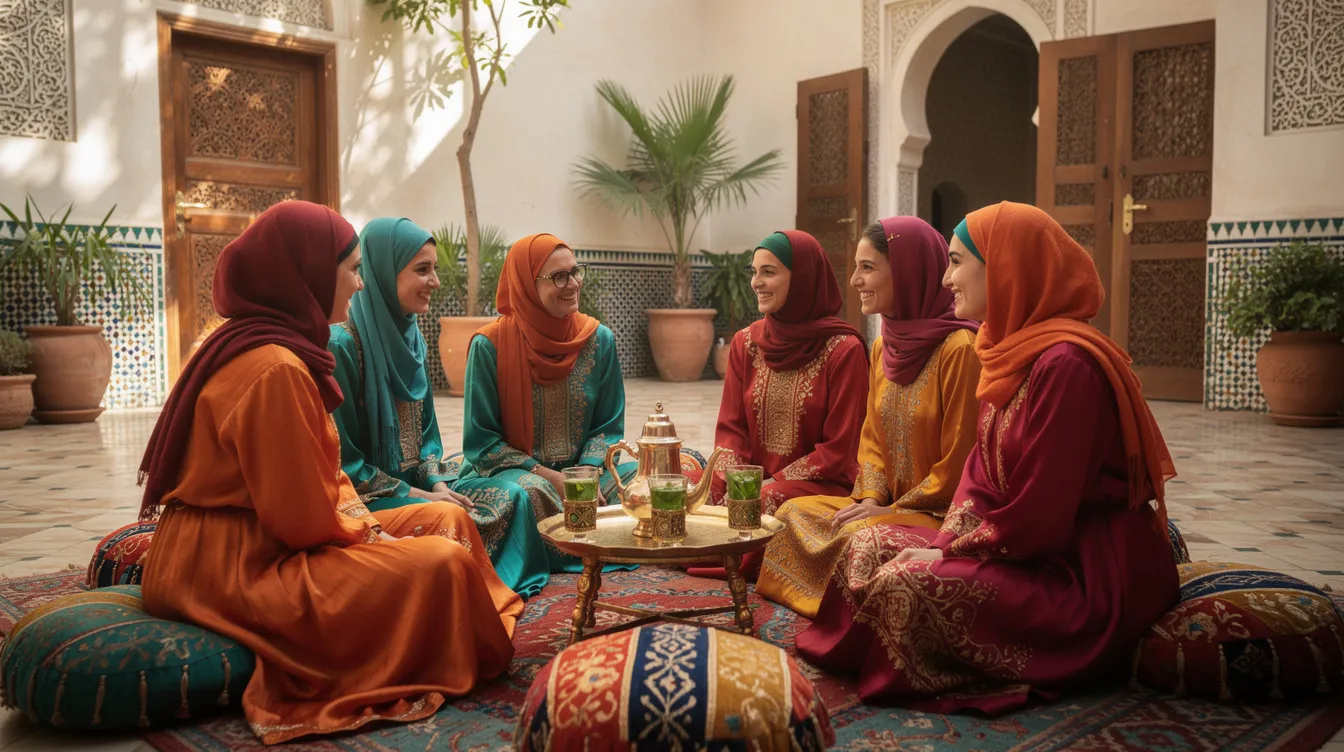
Modern women’s rights in Morocco are deeply rooted in reforms under King Mohammed VI, especially the 2004 Moudawana update and the 2011 Constitution. Advocacy groups for women’s rights have been active in Morocco for social change, and women have increasingly engaged in public life in Morocco despite facing many challenges.
Key legal points include:
The legal marriage age is 18, though exceptions remain a major concern.
Women may initiate divorce, including khula and judicial divorce.
Morocco repealed Article 475 of its penal code in January 2014.
In 2018, Morocco enacted a law banning sexual harassment in public places, often called the Hakkaoui law, though enforcement is uneven.
Polygamy is still allowed in Morocco but is uncommon; it requires judicial permission, financial proof, and the first wife’s consent.
Women have made significant strides in education and political representation in Morocco. Women serve in important political positions such as cabinet ministers and provincial governors in Morocco. As of 2011, 66 of 395 seats in Morocco's parliament are held by women, and Morocco has seen a rise in women's parliamentary representation from 1% in 2003 to 17% in 2015.
There are still significant disparities between men and women regarding access to resources in Morocco. In inheritance, daughters generally receive half the share of sons under Islamic law, a subject of national debate around gender equality and equal rights.
So, what aren’t women allowed to do in Morocco? Very little is formally banned. Women can drive, work, vote, own property, travel alone, and pursue higher education. The bigger limits are often informal: conservative families, reputation, community pressure, and expectations around being a wife, mother, or daughter.
Women’s roles differ sharply between urban centers and rural areas such as the Atlas Mountains, Middle Atlas, Anti-Atlas, Sahara oases, and small villages. In major cities, women work as doctors, engineers, teachers, shop owners, government employees, influencers, and entrepreneurs. Women make up the majority of university students in Morocco, and many girls in Morocco study engineering or IT at technical colleges.
In rural Morocco, daily routines can start before sunrise. Women may bake bread in home or communal ovens, collect water or firewood, work fields, prepare meals, care for animals, and manage household finances. Girls are expected to help with household chores from an early age. Women in rural Morocco often marry young and focus on family, and many rural women in Morocco cannot read or write.
Women are essential to the informal economy and agriculture in Morocco. Historically, women in Morocco faced structural barriers to economic participation, and overall female labor force participation in Morocco remains low. Women’s labor force participation in Morocco hovers around 26%, depending on the measure used.
At the same time, women are rapidly becoming entrepreneurs in various sectors in Morocco. Cooperatives in argan oil, saffron, rugs, pottery, and food production give local women income and visibility. Moroccan women play vital roles in preserving cultural traditions, including cooking and handicrafts, and women are primary custodians of Moroccan cultural traditions and heritage.
Girls’ education has expanded enormously since the 1990s. Girls' primary school enrollment rose from 52% in 1991 to 112% in 2012, a gross enrollment figure showing major progress. Literacy rates for adult women are almost 70% compared to 85% for men, and 32.7% of women above 25 have a high school education.
Morocco also has a powerful historical symbol: Al-Qarawiyyin in Fez, founded in 859 by Fatima al-Fihri, is widely recognized as the world’s oldest continuously operating university. Today, Moroccan women are increasingly visible in STEM, medicine, law, tourism, entrepreneurship, and media. Many young women speak Arabic, French, Amazigh, and increasingly learn English.
What’s the average salary for women working in Morocco? Low-wage service jobs may pay around 2,000–3,000 MAD per month, mid-level office roles often range from 4,000–8,000 MAD, and professional roles can go higher. Still, women are concentrated in lower-paid sectors and informal work, and the gender pay gap remains large. Salary surveys place Morocco’s overall average gross monthly salary around MAD 8,500, with a lower median closer to MAD 5,500.
Can you find a job in Morocco as a woman? Yes, but foreigners need the right visa, work permit, and often an employer willing to handle paperwork. Common sectors include education, NGOs, tourism, language schools, and hospitality. Being a woman is not a formal barrier under law, but language, culture, paperwork, and adaptation matter.
There is no single way Moroccan women dress. Traditional clothing is still important, but many women wear jeans, tunics, sneakers, dresses, and modern fashion in daily life.
The djellaba is a long, loose-fitting robe worn daily, often with a hood. The caftan is often worn for special occasions and is decorative, especially for Eid, engagements, and formal dinners. Takchita is a two-piece version of the caftan for weddings, usually worn with an ornate belt.
Traditional shawls vary by region and indicate a woman's origin. In Amazigh communities, colors, brooches, necklaces, and weaving patterns may carry regional meaning. Women often wear multiple layers of clothing for modesty and tradition, especially in conservative villages. In desert towns like Merzouga, lightweight wraps protect the head from sun and sand; in the High Atlas, wool layers protect against cold.
Do women in Morocco wear hijab? Many do, and other women do not. Some wear loose scarves, turbans, or full hijab; most women choose according to family, Islam, age, class, belief, and region. There is no legal obligation to cover the head.
Can women dress freely in Morocco? Legally, yes. Socially, modesty matters. Dressing conservatively is crucial for women travelers in Morocco, especially outside tourist areas. Covered shoulders, limited cleavage, knees covered, and long sleeves in villages are practical choices. In Marrakesh, Casablanca, and coastal cities, fashion is more relaxed; in rural areas, religious towns, or family homes, conservative dress shows respect.
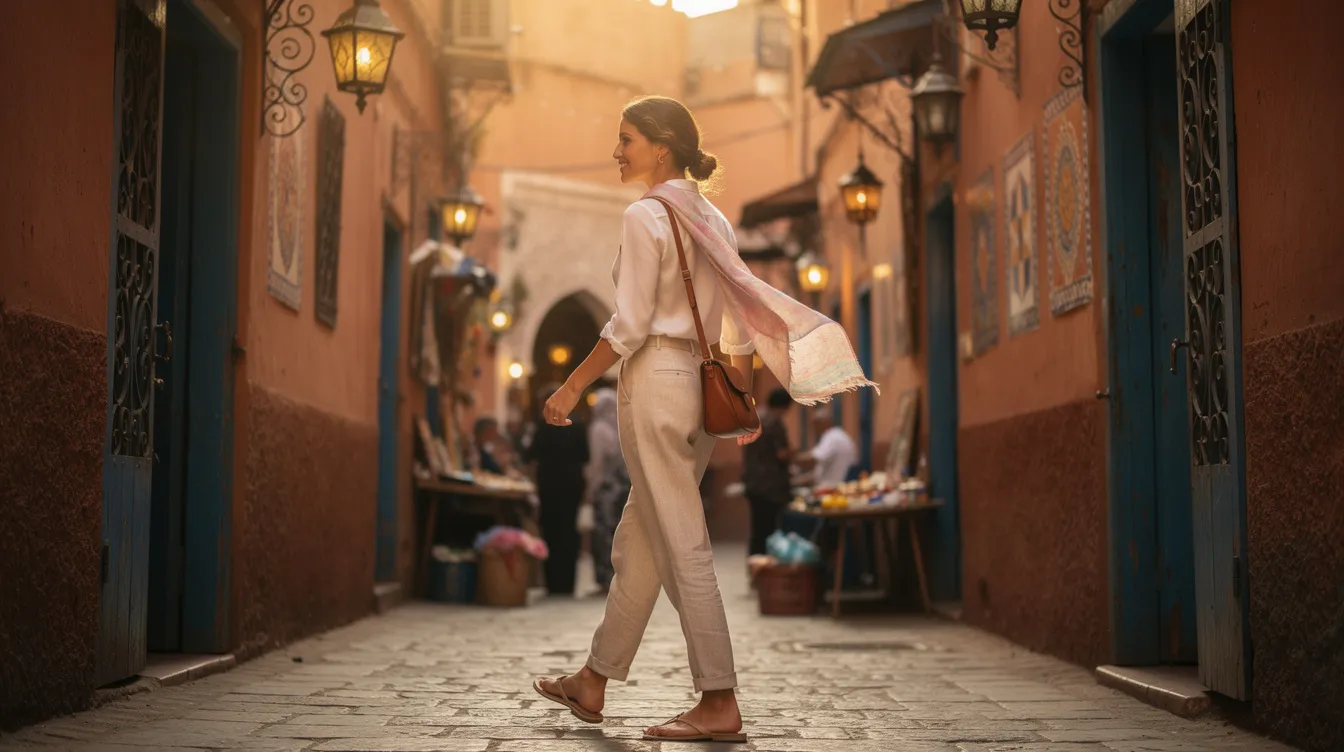
Moroccan culture is family-centered, but public romance is understated compared with many other countries. Public displays of affection are frowned upon for women in Morocco, especially in conservative communities.
Is public affection allowed for couples in Morocco? Mild hand-holding by married or long-term couples is usually tolerated in big cities. Kissing, hugging, or overt affection can attract disapproval and, in extreme cases, police attention under public decency rules. Morocco has laws against public affection, especially for unmarried couples, and sex outside marriage remains illegal.
For Moroccan couples, hotels may ask for a marriage certificate. Foreign tourists usually face looser enforcement in tourist areas, but discretion is wise.
For etiquette, greet men with a nod or verbal greeting unless they offer a handshake. In conservative settings, avoid prolonged eye contact; prolonged eye contact can be read as too personal. Always ask before taking photos of women and children. When in doubt, ask your guide.
Is Morocco dangerous for women? Generally, no. Violent crime against tourists is rare, but solo female travelers may attract unwanted attention in Morocco, especially in crowded medinas or bus stations. Women’s safety concerns are usually about catcalling, comments, persistent sellers, or being followed at a distance.
Useful responses include:
Ignore comments and walk with purpose.
Say “La, shukran” - no, thank you.
Move toward families, shopkeepers, or busy streets.
Use licensed taxis and agree on the meter.
Avoid dark, empty streets late at night.
Choose central, well-reviewed riads, sit near other women or families on trains and buses, and keep valuables secure. Morocco is female-friendly for prepared travelers, but common sense matters.
From the Morocco Classic Tours perspective, private transfers, vetted guides, and carefully selected riads reduce stress for solo women, first-time visitors, and families. Our desert excursions, camel rides, ATV experiences, and Sahara camps are organized with security and comfort in mind.
Also note: public drunkenness can cause problems, topless sunbathing is not accepted, and photographing security sites is restricted.
Many tourists meet mostly male drivers, guides, and shopkeepers, missing women’s perspectives hidden in private spaces. To meet women respectfully, choose settings where contact is natural: cooking classes, women-only hammams, cooperatives, rural schools, weaving workshops, or family-hosted meals.
Where can you buy authentic argan oil from women's cooperatives? Look between Agadir and Essaouira, in the Souss-Massa region, and in the foothills of the Anti-Atlas. Good cooperatives show on-site production, clear labels, transparent pricing, and details such as culinary or cosmetic grade.
When visiting homes, dress modestly, bring dates or pastries if invited, remove shoes when asked, and let conversation unfold. Women may be shy at first but often open up over tea, bread, and shared tasks.
Morocco Classic Tours can include women-led experiences such as baking bread with village women, joining an Amazigh henna ceremony, visiting an argan cooperative, or arranging a respectful hammam visit.
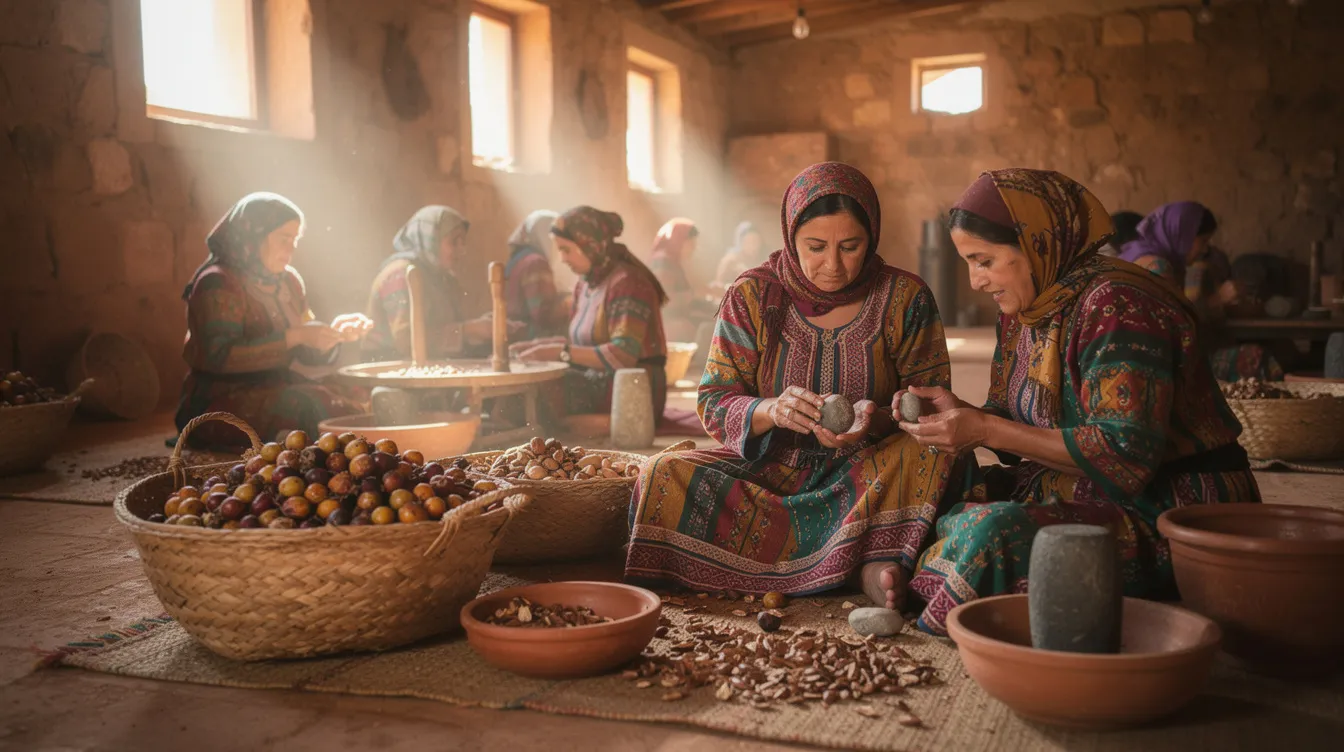
Contemporary women in Morocco are part of a long story. Amazigh tribes were matrilineal in the 4th to 6th centuries, and Kahina was a legendary Amazigh military leader against Arab expansion. Amazigh women create traditional silver jewellery, including brooches and necklaces, and Amazigh women play vital roles as healers and marriage brokers. Aisha Qandisha is a famous figure in Amazigh folklore.
In Fez, Fatima and Mariam al-Fihri founded Al-Qarawiyyin and Al-Andalus mosques in the 9th century, shaping religious and intellectual life. Women also participated in resistance to French and Spanish colonialism, especially in Rif and Atlas regions, through logistics, protection, and sometimes direct support.
Modern writers and thinkers such as Fatima Mernissi and Laila Lalami have explored gender, identity, the arab world, the Middle East in comparison, and Moroccan society. Their work continues to influence debates on women's rights, freedom, and gender equality.
For women planning private Morocco trips, the best approach is simple: pack for comfort, respect, and flexibility.
Bring:
Breathable trousers or long skirts
Loose tops covering shoulders
A light scarf
Comfortable closed shoes for medinas
Warm layers for Atlas Mountain tours and Sahara nights
Swimwear for hotel pools or hammams
Dress codes vary. Marrakesh and Casablanca allow more relaxed style, while Fez, villages, and religious settings call for modesty. Our guides advise each day based on the activity, whether it is a food tour, family visit, beach excursion, mosque exterior, or market walk.
Experiences especially meaningful for women travelers include women-only hammams, henna evenings, home-style cooking, Atlas villages, and overnight stays near cooperatives. In conclusion, traveling well in Morocco is not about fear; it is about respect, preparation, and choosing people who understand the country.
Contact Morocco Classic Tours to design a custom route that connects Morocco’s iconic sights with genuine encounters with Moroccan women.
The average height of a Moroccan woman is around 160 cm, or about 5 ft 3 in, according to available anthropometric studies such as this urban Moroccan women's health study. Height varies by genetics, nutrition, age, and region, with younger urban generations sometimes slightly taller than older populations.
Many Moroccan women wear hijab, and many do not. Styles range from loose scarves to conservative coverings. Foreign women are not expected by law to cover their hair, but covering shoulders and cleavage is recommended in conservative areas for comfort and respect.
In cities, girls and young women meet in cafés, study together, visit malls and beaches, follow social media, and attend language or skills courses. In rural areas, free time is more family-oriented, with visits to neighbors, help in fields, and weekly souk trips. Phones and social media are increasingly present everywhere.
Yes. Foreign women can use women-only public hammams, where bathing areas are separate from men. Wear bikini bottoms or underwear, bring a towel and flip-flops, and consider going with a local woman or guide the first time. Morocco Classic Tours can arrange this respectfully.
Yes. It is legal and acceptable for women to travel alone or with female friends in Morocco. Some older or rural Moroccans may find it unusual, but the tourism industry is used to solo female travelers, and private tours help protect comfort, freedom, and safety.
Discover Morocco in Spring, the perfect season for exploring Marrakech, the Atlas Mountains, coastal...
Read this article
Explore the best Morocco tour packages for Singapore travelers in 2026, featuring Marrakech, Sahara ...
Read this article
Explore Morocco's most popular tours, from the bustling markets of Marrakech to the serene Sahara De...
Read this articleWant cool tour deals and tips about Morocco? Enter your email and we’ll send them to you each month!