Group Tour Agencies in Morocco: How to Pick the Right One
Compare Morocco group tour agencies by trip style, reviews, pace, transport and inclusions. Learn wh...
Read this article

Private, custom Morocco trips planned in Fez by AZ-ZDDINE, working in Moroccan tourism since 2012. Sahara, Atlas, medinas and coast, arranged around you.
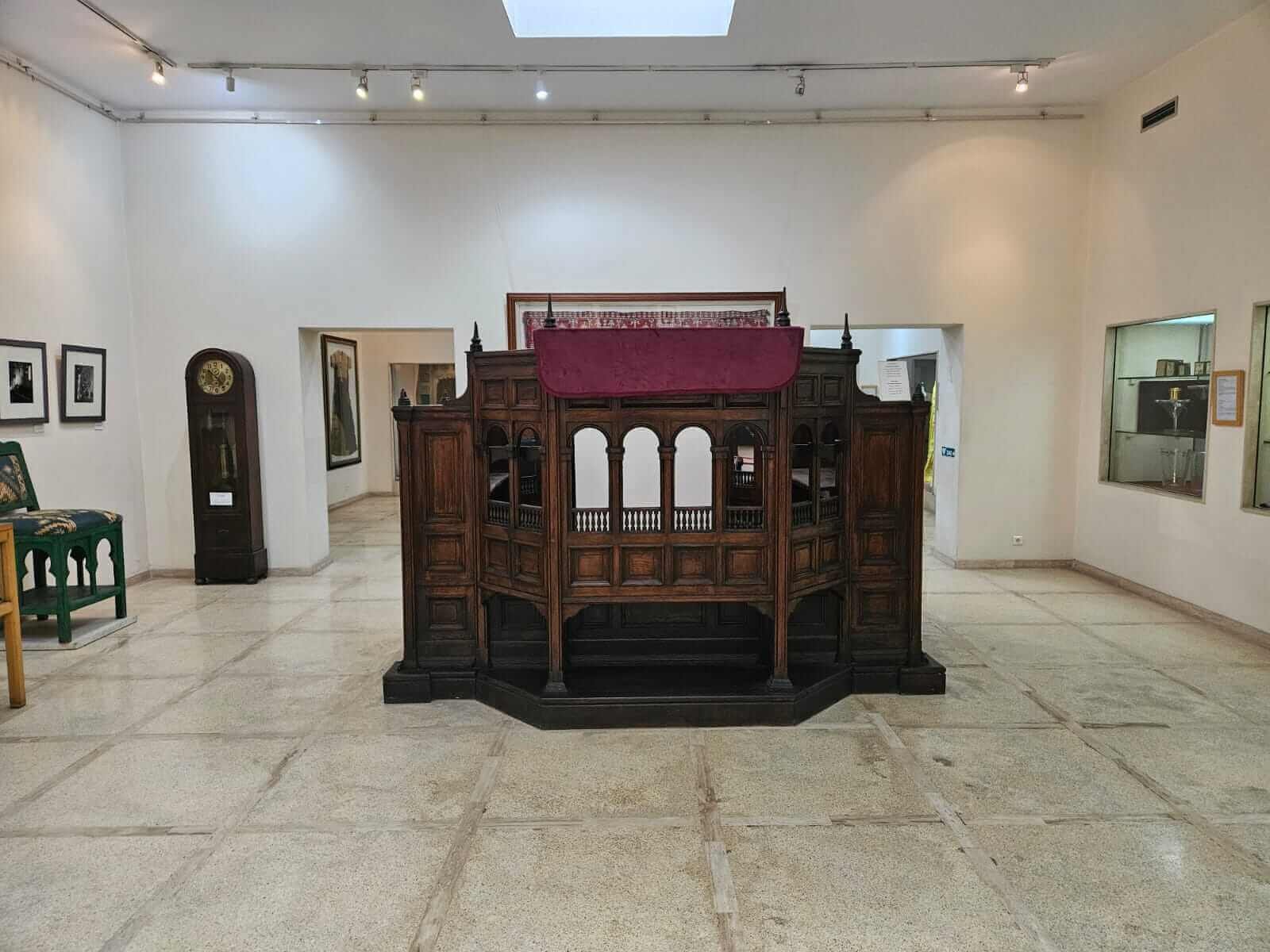
The Museum of Moroccan Judaism, or musée du judaisme marocain, is the only Jewish museum and only museum devoted to Judaism in the arab world, located in Casablanca’s Oasis district.
The museum was established in 1997 inside a former 1948 Jewish orphanage and reopened in a 2016 ceremony associated with King Mohammed VI.
Typical hours are Monday–Friday, around 10:00–17:00, with an entrance fee of MAD 50.00; bring cash and check locally because hours can change.
Must-see exhibits include synagogue reconstructions, torah scrolls, the Megilat Hitler manuscript, Berber Jewish costumes, Hanukkah lamps, jewelry, photographs, and ritual objects.
Morocco is generally safe and welcoming for Jewish travelers, especially in Casablanca, where the country’s largest remaining Jewish community still lives.
The Museum of Moroccan Judaism, Casablanca, is one of the most meaningful cultural stops in the city. Set in the quiet Oasis neighborhood, the museum of Moroccan Judaism preserves Jewish Moroccan cultural heritage through objects, stories, photographs, costumes, manuscripts, and synagogue interiors that connect visitors with centuries of Moroccan Jewish culture.
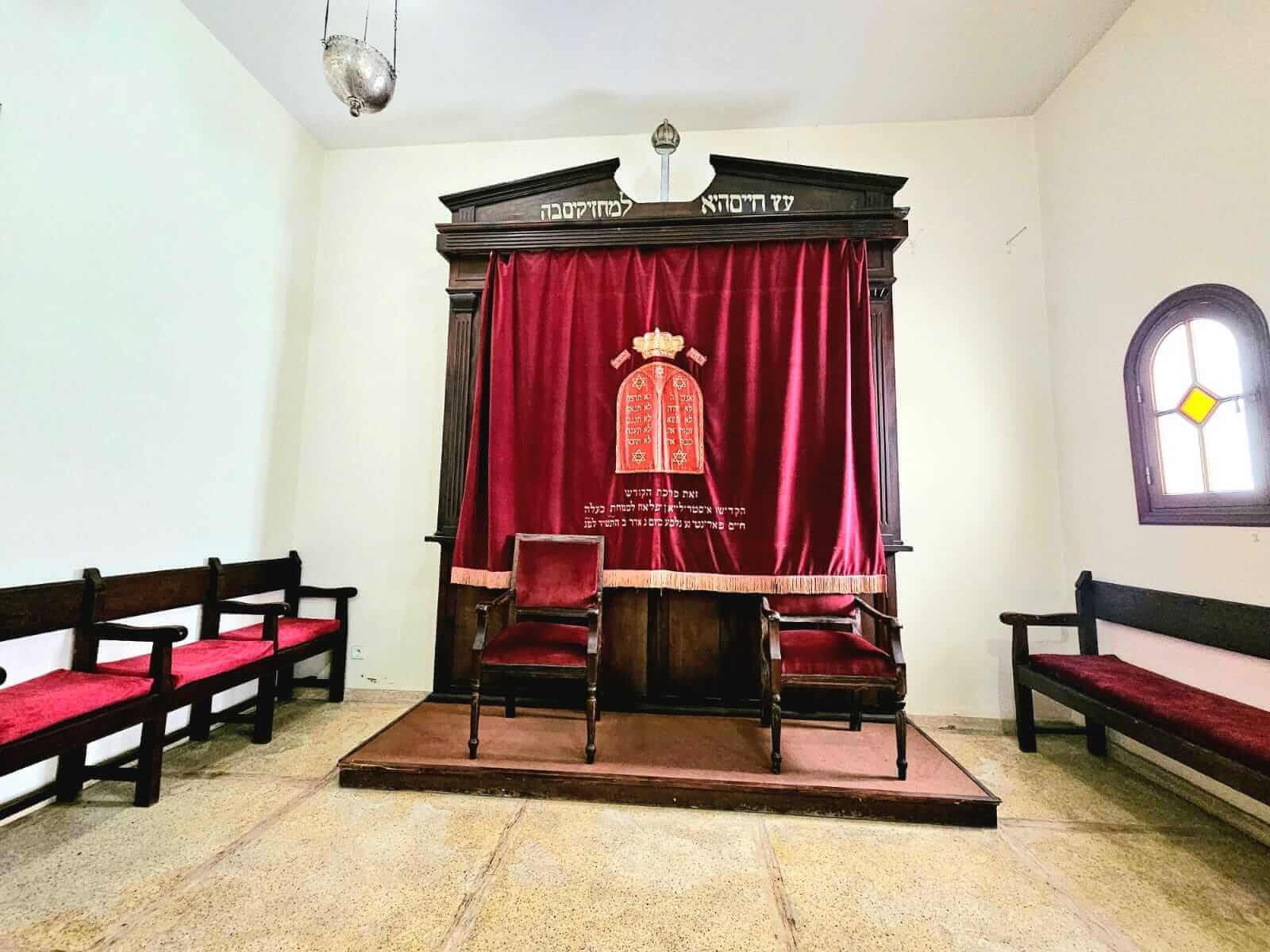
The museum building began as the Murdock Bengio Home for Children, a Jewish orphanage constructed in 1948, and was transformed into a museum in 1997. The museum was opened by King Mohammed VI of Morocco on December 20, 2016, after renovation and rededication, reinforcing its role as a symbol of pluralism in Moroccan society. Morocco Classic Tours can include the museum in a private Casablanca Jewish heritage itinerary for travelers interested in Jewish life, history, and community memory in morocco.
Moroccan jews constitute an ancient community that played a significant role in Morocco’s history. Jewish presence in North Africa dates back many centuries, long before the arrival of Sephardic Jews after the 1492 expulsion from Spain. Before the founding of the State of Israel in 1948, there were about 250,000 to 350,000 jews in Morocco, making it the largest Jewish community in the muslim world. Major Moroccan Jewish communities lived in Casablanca, Fez, Meknes, Marrakesh, Essaouira, Rabat, and Tangier.
What is the most Jewish city in Morocco? In modern times, Casablanca became the largest Jewish center. By the mid-20th century, more than half of Morocco’s Jews lived there, and Casablanca’s Jewish community remains the country’s largest today. Current estimates suggest that approximately 2,000 to 2,500 Jews remain in Morocco, primarily in Casablanca, with roughly 1,000 to 1,500 in the city. Hundreds of thousands of people of Moroccan Jewish origin now live in Israel, France, Canada, America, and other diaspora communities.
Why did most Jews leave Morocco? The majority of Moroccan Jews emigrated out of the country between the 1950s and 1970s due to rising Arab nationalism, antisemitism, opposition to the State of Israel, regional wars, and better economic opportunities abroad. After Morocco’s independence in 1956, Moroccan Jews faced pressure to justify their identity as the country moved toward a more Arab nationalist perspective. The decline of mixed political parties and the demise of pro-Jewish publications restricted Moroccan Jews’ ability to speak out against anti-Semitism post-independence. This migration reflects broader regional geopolitical tensions and identity crises within Moroccan society. At the same time, King Hassan II emphasized that Moroccan Jews, regardless of where they live, retain their Moroccan nationality and rights as citizens.
The museum is located slightly off the main city center of Casablanca, at 81 rue chasseur Jules Gros in the Oasis area. The museum building was originally established as the Murdock Bengio Home for Children, a Jewish orphanage founded in 1948 by Célia Bengio in memory of her husband. In the late 1970s, the building served as a yeshiva and community center before becoming the Moroccan Jewish Museum in 1997.
The museum was initiated by notable Jewish Moroccans, including Serge Berdugo, Jacques Toledano, Boris Toledano, and Simon Levy, through the Foundation of Jewish Moroccan Cultural Heritage. The Foundation of Jewish Moroccan Cultural Heritage initiated the establishment of the Museum of Moroccan Judaism to raise awareness of Jewish identity in Moroccan national discourse. Organizations like the Foundation of Jewish Moroccan Cultural Heritage are also working to promote Jewish identity within Moroccan public discourse.
Zhor Rehihil serves as the museum’s curator and is a Moroccan Muslim, a detail that many visitors find meaningful. Most funding for the museum comes from private sources, while the curator position is funded by the Moroccan Ministry of Culture. The museum has a total area of 700 square meters and is set within a peaceful garden, offering a serene atmosphere for contemplation. Its modest villa architecture, leafy courtyard, exhibition rooms, and simple display cases make the experience intimate rather than overwhelming.
The Museum of Moroccan Judaism serves to rehabilitate the memory of Jews in Morocco and their role as indigenous nationals. The museum emphasizes the long history of peaceful coexistence between Moroccan Jews and Muslims, and its narrative aims to show that Moroccan Jews share traditional dress, customs, family life, music, foodways, and neighborhood rhythms with Moroccan Muslims. In this way, it reminds visitors that the Jewish community was an integral part of Morocco’s social and cultural fabric.
The museum contains exquisite reproductions of Moroccan synagogues, including wooden arks, bimah platforms, benches, and stained-glass details. These reconstructions help visitors imagine worship in Moroccan synagogues from Fez, Meknes, Casablanca, and smaller Atlas communities.
Look for torah scrolls, silver Torah crowns, finials, velvet mantles, mezuzahs, a Hanukkah menorah, Hanukkah lamps, shofar horns, spice boxes, prayer books, and bar mitzvah bags. These artifacts show how religious life blended Hebrew tradition with Moroccan craftsmanship. Some wall plaques include Hebrew, Arabic, French, and Judeo-Arabic inscriptions connected to synagogue donations, blessings, or worship instructions.
The museum displays a collection of Jewish Berber history, including costumes and jewellery such as khmisa pendants. You may see the keswa lkbira, a richly embroidered ceremonial dress associated with Moroccan Jewish women in cities like Fez, along with headpieces, wedding necklaces, silver anklets, fibula brooches, and hamsa-style amulets.
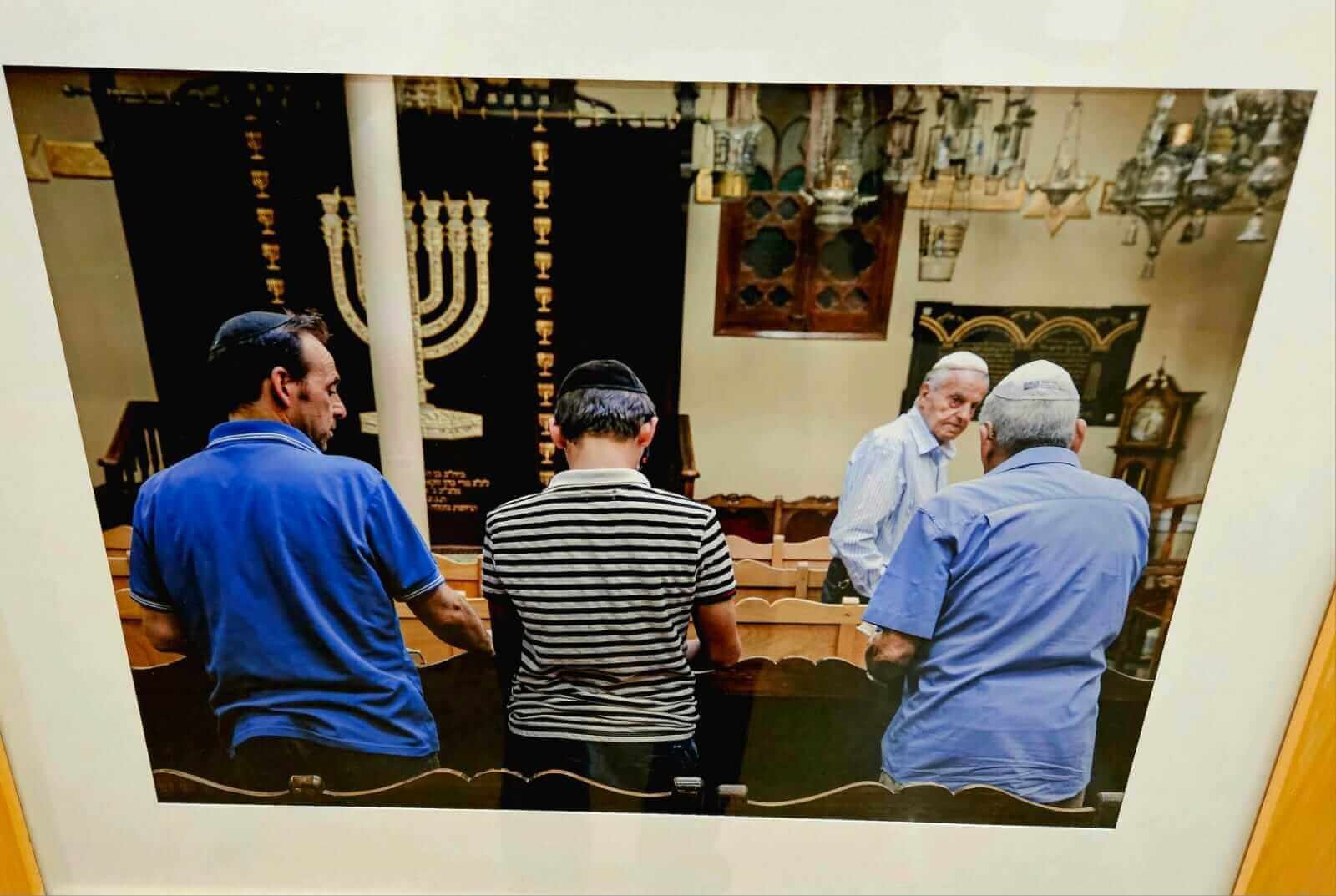
Berber Jewish garments from the Atlas Mountains often mirror the colors, woven belts, and tribal patterns used by muslim neighbors. Photographs of weddings, bar mitzvahs, market scenes, and family portraits help visitors picture Jewish life in Casablanca, Fez, Essaouira, and rural mellahs. The museum also features a reconstructed jewelry-making workshop created using the workbench and tools of Jewish silversmith Saul Cohen.
Photographs of weddings, bar mitzvahs, market scenes, and family portraits help visitors picture Jewish life in Casablanca, Fez, Essaouira, and rural mellahs. The museum also features a reconstructed jewelry-making workshop created using the workbench and tools of Jewish silversmith Saul Cohen.
The museum preserves Hebrew, Judeo-Arabic, and Judeo-Berber manuscripts, including prayer books, commentaries, and community records. One important display is a historic Book of Deuteronomy manuscript, often cited as an example of Jewish scholarship continuing in Morocco into the modern era.
A significant historic document in the museum is the Megilat Hitler, sometimes written as Megillat Hitler. This rare Moroccan document describes the persecution of Jews in North Africa by Nazi Germany and Vichy authorities, using a literary style inspired by the biblical Book of Esther. It is one of the museum’s strongest reminders that Jewish history in Morocco includes both coexistence and vulnerability.
The museum includes ketubbot, letters, notarial records, and objects related to trade, crafts, music, and public life. Some displays show the importance of Jewish advisors, merchants, artisans, and musicians in Moroccan history.
The exhibits are thoughtfully curated to highlight close relationships between Jewish and Muslim neighbors in Morocco. They also show how Moroccan Jewish and Muslim families often shared similar food customs, clothing styles, local dialects, and social spaces while preserving distinct religious traditions. Temporary art exhibitions may include photographs, paintings, and sculptures related to Jewish life.
For most travelers, the museum is easy to visit independently, but details can change. Double-check current hours and prices locally or with Morocco Classic Tours before you go.
Address: 81 Rue du Chasseur Jules Gros, Oasis, Casablanca, Morocco
Ticket price: MAD 50.00 per adult
Reductions may be available for students or groups, and a polite request for a donation may be made upon exiting the museum to support preservation work.
Typical opening hours: Monday–Friday, about 10:00–17:00
It is often closed on Saturdays, many Sundays, Moroccan public holidays, and some Jewish holidays. The museum typically closes at 5 PM, but it is wise to arrive earlier because it may close around 4 PM if there are fewer visitors.
Visit duration: about 30 minutes to an hour; history lovers may want 90 minutes
Many visitors recommend planning to visit the museum during cooler parts of the day, like mornings or late afternoons, to enhance the experience. The museum lacks air conditioning, so it can get warm, especially during hot days. Bring water, especially during warmer months, due to the absence of AC.
Visitors typically spend about 30 minutes to an hour exploring the exhibits in the museum. Photography rules can vary, so it is best to check for signage or ask staff before taking pictures. Keep a quiet tone around ritual objects and avoid touching display cases or religious items.
The museum has basic facilities but no café or on-site kosher restaurant. Casablanca does have kosher restaurants and kosher-friendly community options, and Morocco Classic Tours can help arrange kosher or vegetarian meals as part of a private tour.
Accessibility may be limited by steps, narrow doors, and older villa architecture. Wear light clothing with modest coverage, especially if you plan to combine the museum with synagogues, cemeteries, or other religious sites.
Labels are mainly Arabic and French, with some Hebrew; guided tours may be possible. Keep a quiet tone around ritual objects and avoid touching display cases or religious items.
A registered petit taxi or pre-booked private transfer is the simplest option. Ask the driver to use the meter or agree on the fare before departure.
Ride-hailing apps are increasingly available in Casablanca and can be a convenient way to reach the museum, especially for visitors unfamiliar with local taxi practices.
Public transport is possible, but most first-time visitors find it easier to take a taxi or use a private driver.
Morocco Classic Tours can include transport to and from the museum as part of a custom Casablanca sightseeing day, especially if you want to add Temple Beth-El, the Old Jewish Cemetery, or the Hassan II Mosque.
Taxis are available at Casablanca Mohammed V International Airport and can take you directly to the museum. It is advisable to agree on the fare before departure.
Private transfer services can be arranged in advance for a smoother and more comfortable journey from the airport to the museum.
The airport is connected to Casablanca city center by train. From the train station, you can take a taxi or ride-hailing service to the museum.
If you are arriving in Casablanca and wish to visit the museum on the same day, plan your arrival time and transportation accordingly, considering the museum’s closing hours.
To understand Jewish life in Casablanca, pair the museum with active synagogues, the old Jewish cemetery, and historic Jewish streets near the city center.
Where is the Jewish quarter in Casablanca? Unlike older Moroccan cities with a more defined enclosed mellah, Casablanca’s Jewish life spread across several neighborhoods as the city grew. Historic Jewish areas developed near the medina and port, while modern institutions are found around Sidi Belyout, Boulevard d’Anfa, Quartier Gautier, Oasis, and other districts.
Today, Casablanca supports schools, community offices, kosher butchers, synagogues, and social centers for a population of roughly 1,000–1,500 Jews. Access inside schools and private clubs is usually restricted, but a local guide can sometimes arrange appropriate introductions.
Current estimates suggest that approximately 2,000 to 2,500 Jews remain in Morocco, primarily in Casablanca, with roughly 1,000 to 1,500 in the city. Hundreds of thousands of people of Moroccan Jewish origin now live in Israel, France, Canada, America, and other diaspora communities.
Moroccan Jews constitute an ancient community that played a significant role in Morocco’s history. Jewish presence in North Africa dates back many centuries, long before the arrival of Sephardic Jews after the 1492 expulsion from Spain.
The Moroccan government acknowledges the “Hebraic” legacy in its constitution as part of national identity, and Morocco’s updated 2011 constitution acknowledges Hebraic influences as a pillar of national unity, promoting ethnic and religious pluralism.
Essaouira’s Bayt Dakira and restored synagogues in Fez show how heritage work is expanding across the country. These journeys are especially rewarding for families and small groups who want flexibility around Shabbat, holidays, kosher meals, and slower cultural visits.
A strong half-day or full-day Casablanca Jewish heritage tour can include:
Museum of Moroccan Judaism
Temple Beth-El
Old Jewish Cemetery
Historic Jewish streets near the medina and port
Hassan II Mosque
Place Mohammed V or the Corniche
Kosher or vegetarian-friendly lunch by prior arrangement
Private vehicles can pick up guests from hotels, riads, Casa Port, the train station, the airport, or Casablanca Port. For a relaxed full-day experience, allow 6–8 hours.
Morocco Classic Tours can customize hotel level, route, kosher-friendly meals, mobility needs, airport transfers, and guided tours to fit your group’s interests and requirements.
Casablanca is only one chapter in a larger story. Morocco Classic Tours can design routes linking Casablanca with Fez, Meknes, Rabat, Marrakesh, Essaouira, and other heritage centers. Travelers can combine Jewish history with imperial cities, Sahara Desert camps, camel treks, food experiences, Atlas villages, and Atlantic beaches.
These journeys are especially rewarding for families and small groups who want flexibility around Shabbat, holidays, kosher meals, and slower cultural visits.
The entrance fee to the Museum of Moroccan Judaism is MAD 50.00, usually payable in cash in Moroccan dirhams.
The museum typically opens Monday to Friday from around 10:00 to 17:00. It is often closed on Saturdays, many Sundays, Moroccan public holidays, and some Jewish holidays.
Many visitors recommend planning to visit the museum during cooler parts of the day, like mornings or late afternoons, to enhance the experience.
Bring water, especially during warmer months, due to the absence of AC. Wear light clothing with modest coverage, especially if you plan to combine the museum with synagogues, cemeteries, or other religious sites.
Photography rules can vary, so it is best to check for signage or ask staff before taking pictures. Keep a quiet tone around ritual objects and avoid touching display cases or religious items.
Individual visitors usually do not need advance tickets. You can normally buy your ticket on arrival during opening hours. Larger groups or travelers wanting a specific guide language should arrange ahead with the museum or Morocco Classic Tours.
Wear modest, comfortable clothing. Shoulders and knees should be covered if you plan to visit synagogues, cemeteries, or mosques on the same day. Men may be asked to wear a head covering inside a synagogue.
Yes. The museum welcomes visitors of all backgrounds interested in Moroccan history, culture, and Jewish heritage. Some synagogues also welcome non-Jewish visitors outside service times when visits are arranged respectfully.
Yes, the museum is small and manageable for families. Children often connect with the visual exhibits, including traditional dress, photographs, jewelry, and synagogue objects. A private guide can adapt the visit with simple stories about family traditions and coexistence.
Yes. The museum and Hassan II Mosque can easily fit into one Casablanca day. A private driver or guided tour with Morocco Classic Tours helps coordinate mosque tour times, museum hours, lunch, and traffic without unnecessary stress.
Compare Morocco group tour agencies by trip style, reviews, pace, transport and inclusions. Learn wh...
Read this article
Uncover what a Marrakech to Fes desert tour offers, including camel rides, desert camps, and rich cu...
Read this article
Join our Merzouga Overnight Tour for an authentic desert experience. Enjoy camel rides, comfortable ...
Read this articleWant cool tour deals and tips about Morocco? Enter your email and we’ll send them to you each month!
