Group Tour Agencies in Morocco: How to Pick the Right One
Compare Morocco group tour agencies by trip style, reviews, pace, transport and inclusions. Learn wh...
Read this article
Private, custom Morocco trips planned in Fez by AZ-ZDDINE, working in Moroccan tourism since 2012. Sahara, Atlas, medinas and coast, arranged around you.
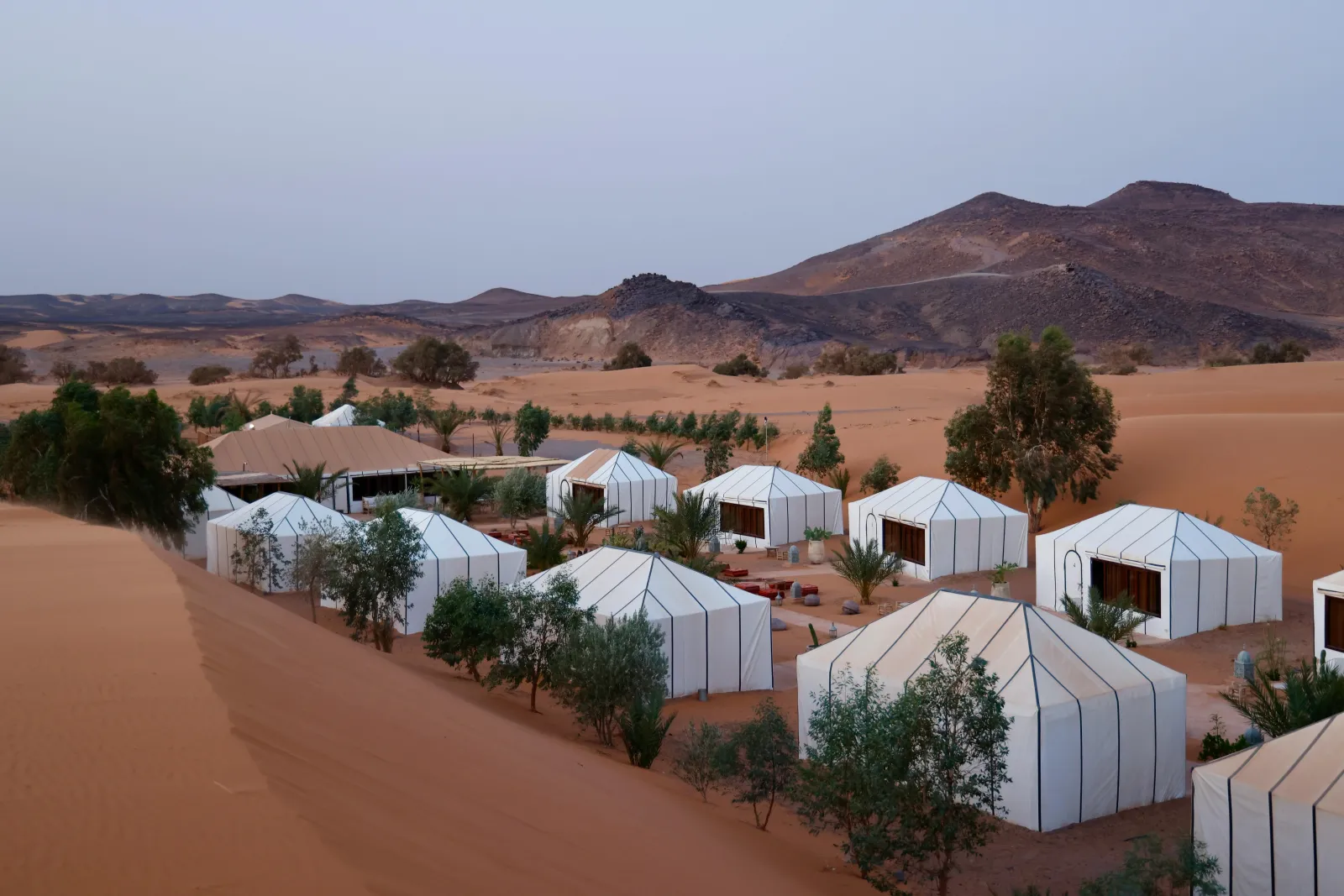
Most of what you read about Moroccan desert camps was written by someone who stayed in one camp, once, and liked it. That is useful, but it does not tell you what you actually need to know: whether the bathroom is really inside the tent, whether the hot water lasts, how long the drive honestly takes, and what the price you have been quoted is leaving out.
I am Az-zddine. I plan private trips from Fes and I have been working in Moroccan tourism since 2012. The camps I use are at Erg Chebbi, near Merzouga. I do not own them — I partner with them, I inspect them before I send anyone, and I change partners when they slip. That is the view this guide is written from.
The day you reach the dunes is a travel day. You arrive in the late afternoon at Khamlia, on the edge of the sand, where the camp team meets you. Your luggage goes into a Jeep and is driven in ahead of you, so it is waiting inside your tent before you get there. The 4x4 run from the road to the camps I use takes about twenty to twenty-five minutes.
You arrive to mint tea and Moroccan cookies, or a cold drink if the weather is warm. Then comes the camel ride, which takes about an hour and is timed to put you on the dunes at sunset. It is an excursion out from the camp and back, not the way you get there — a detail a lot of articles get wrong.
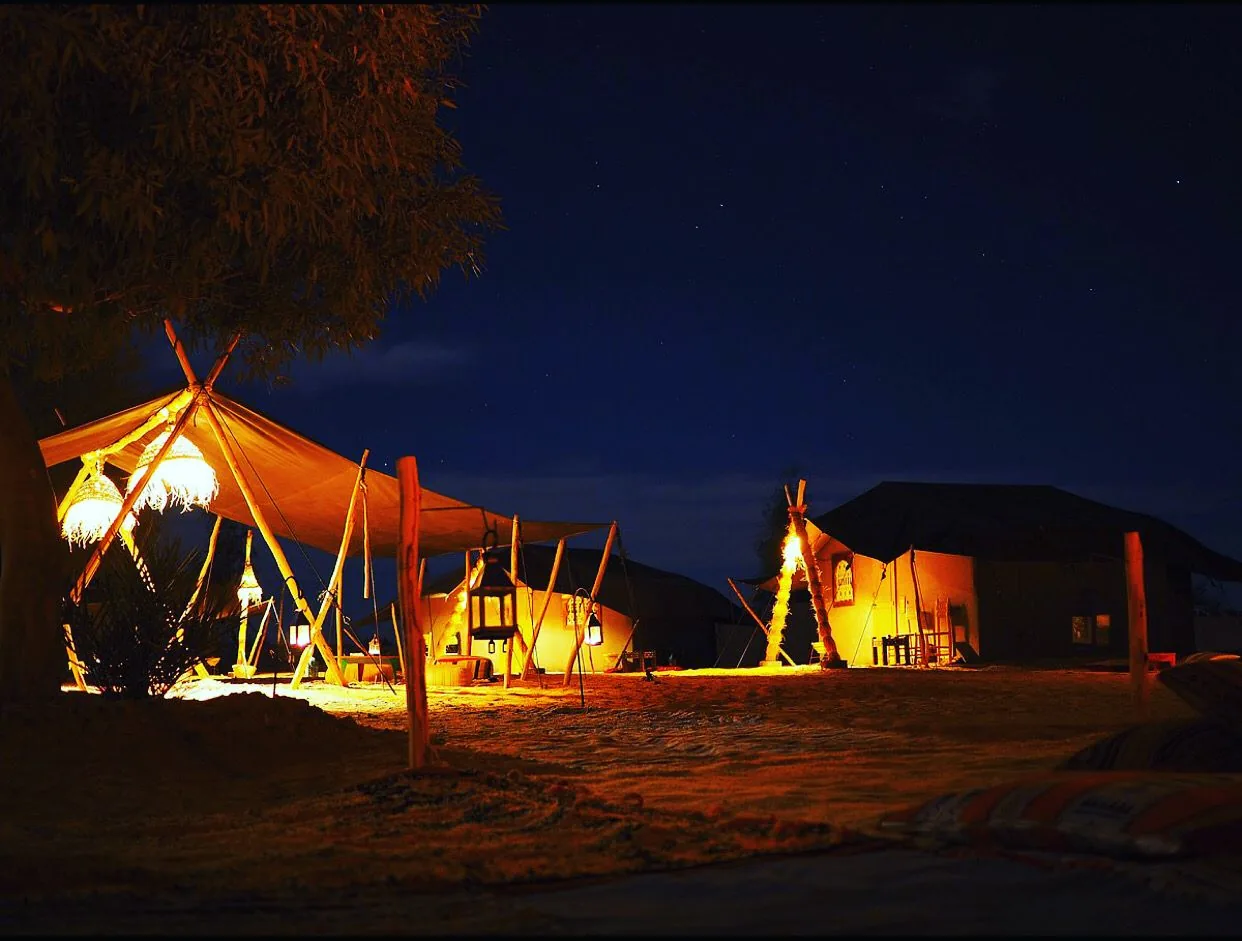
One of the camps we use at Erg Chebbi, after dark.
Dinner follows. The menu changes from day to day and usually runs to a Moroccan soup, a tagine, chicken or beef, and more than one course. Vegetarian and vegan food is not a problem at the camps I use, and they will adapt for international guests — rice instead of bread, for instance. If you have a serious food allergy, do not rely on a general assurance, including mine: tell me when you book and I will get it confirmed by the specific camp in writing.
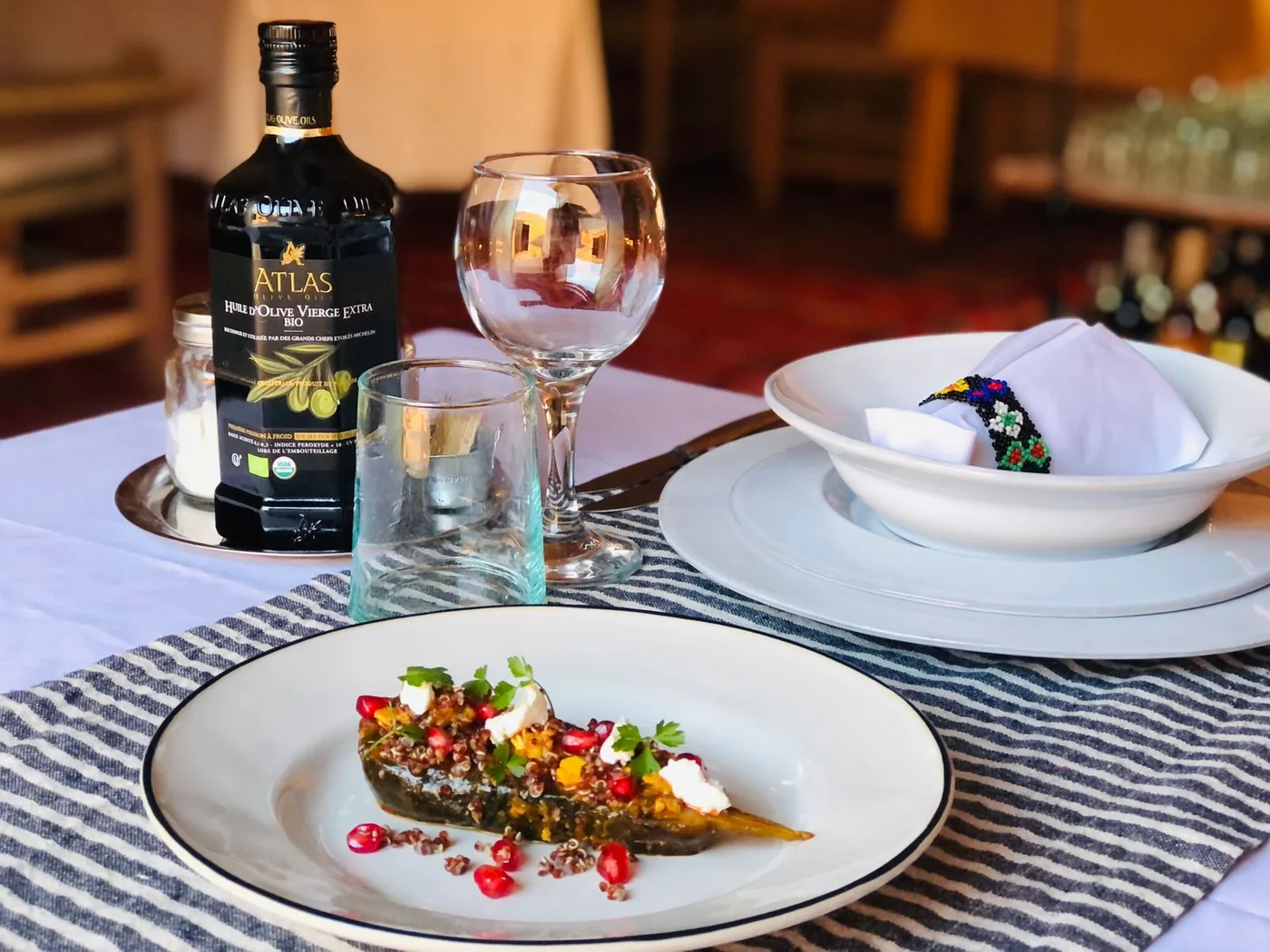
A vegetarian dish at one of the camps we use. The menu changes from night to night.
After dinner there is usually a fire, drumming and dancing with local musicians, and then the part nobody expects to matter as much as it does: the sky. There is no light anywhere to compete with it. Most people stay out far longer than they planned. Sunrise the next morning is the other thing guests talk about afterwards.
This is the question I am asked most and the one almost no article answers, so here it is plainly. At the camps I use, the bathroom is private and inside your tent. It has a sink, a toilet that flushes, a shower, towels, soap and toiletries, and sometimes a hair dryer. The tent has a proper bed, Moroccan furnishings, electric light, and sockets for charging a phone or a camera.
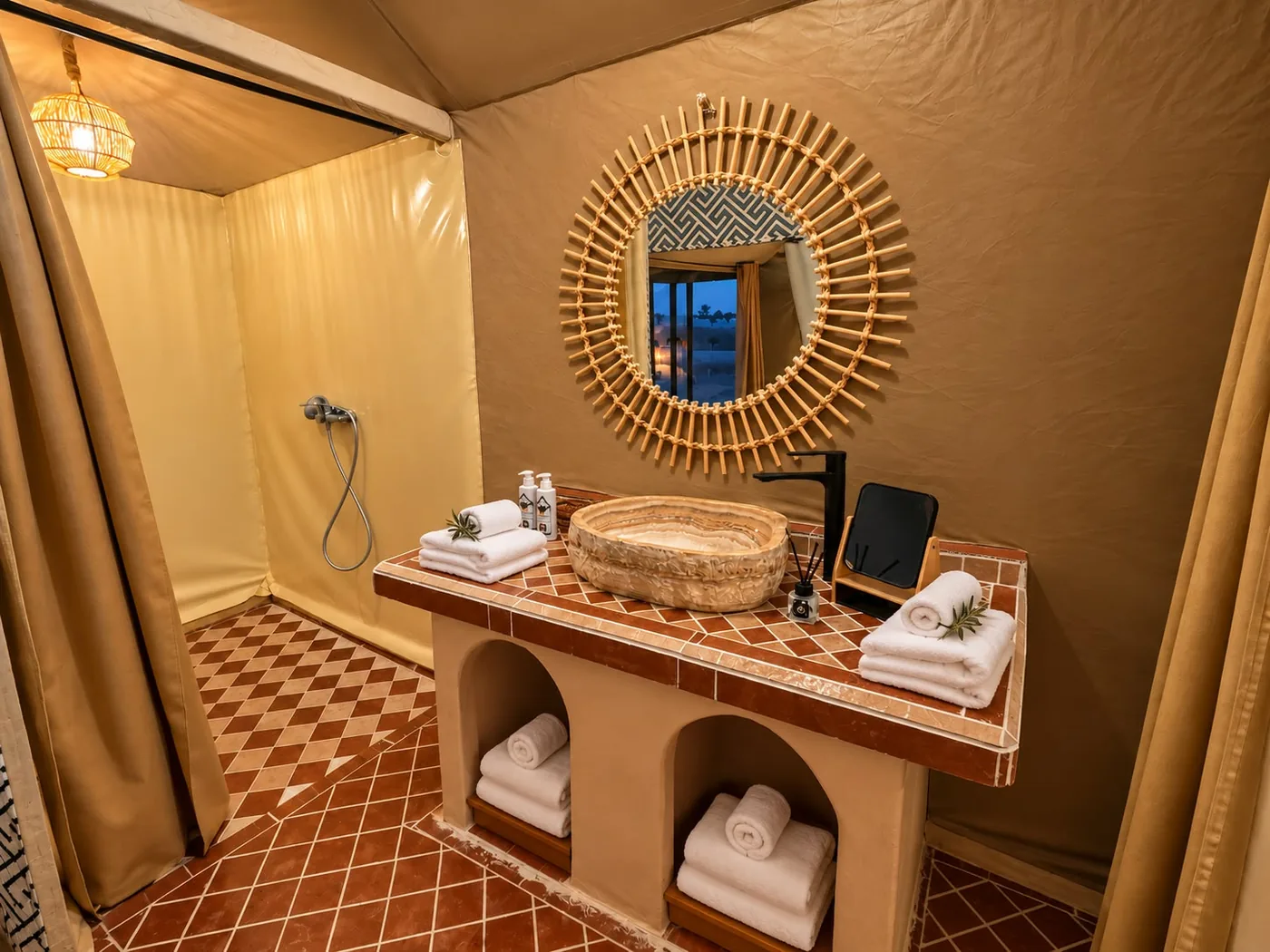
The bathroom inside the tent: the sink and the shower.
Now the honest part. The hot water is heated by solar panels and the camp's own power, and it can run short when a camp is full. I will not tell you it never happens, because it does, and it is one of the two problems that make me raise a camp with its owner, and move on if it is not fixed. If a camp is full, ask the staff when the water is hottest.
Electricity at the camps I use runs through the night. Charging a phone or a camera is fine. If you depend on medical equipment overnight — a CPAP machine, for example — tell me when you book. I arrange the power with the camp directly in those cases. But treat any verbal assurance, mine included, as not good enough on its own: ask for written confirmation of continuous power, the socket type and what happens during an outage, and bring a backup if your doctor would want one.
Air conditioning in summer and heating in winter are available in the tents I book. Ask which specific tent you are getting and what hours it runs, because this varies by camp and by room category, and "luxury" on a website does not tell you which one you have been sold.
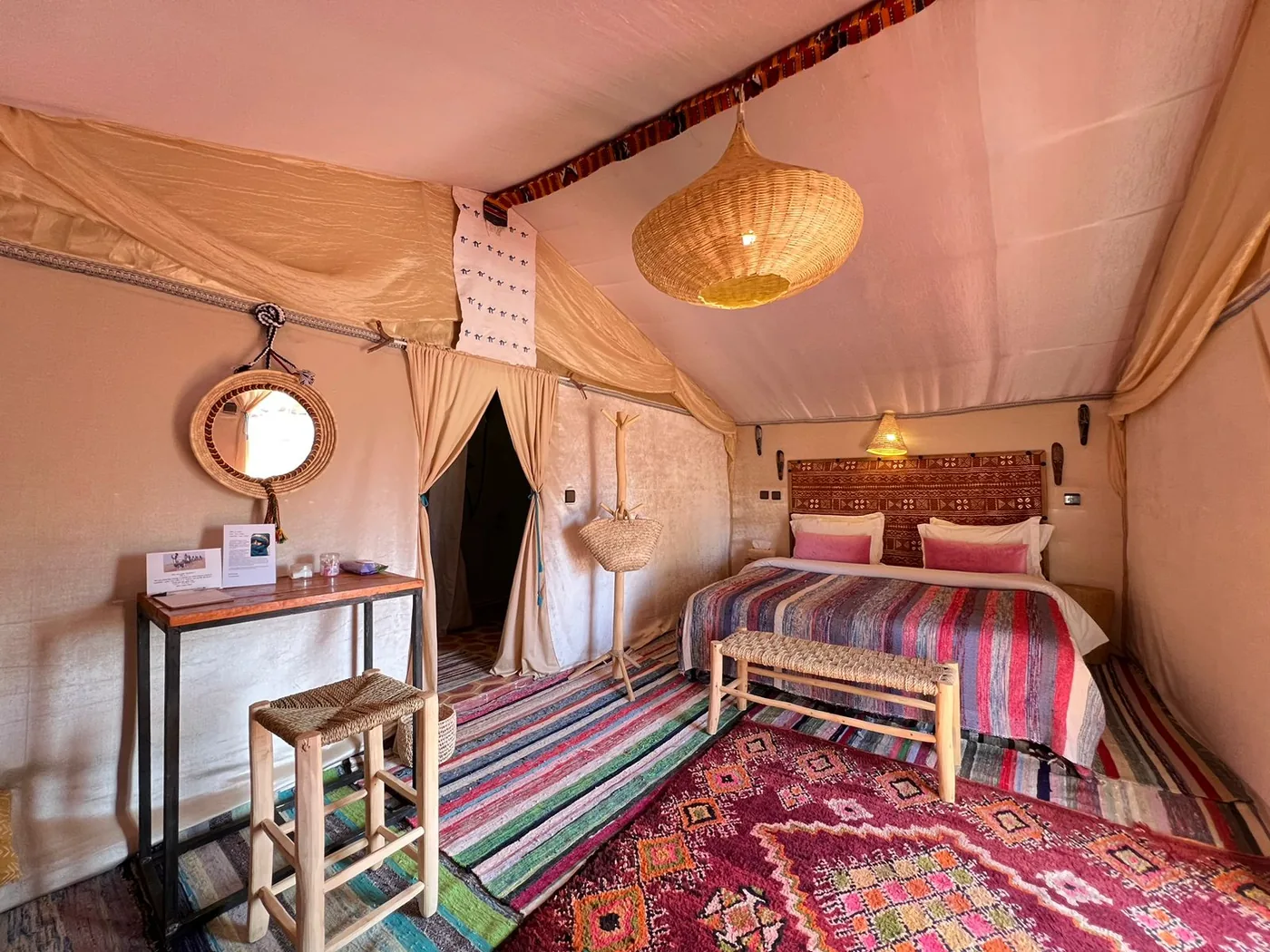
A tent at one of the camps we use at Erg Chebbi.
Three places get sold as "the Moroccan desert" and they are not the same thing. Google's own summary lumps them together and gets the travel times wrong, so this is worth getting straight before you book anything.
| Erg Chebbi (Merzouga) | Erg Chigaga (M'Hamid) | Agafay | |
|---|---|---|---|
| Landscape | Tall sand dunes | Sand dunes, remoter | Stony, rocky ground — not sand dunes |
| Getting there | Paved road to the edge, then 20–25 min by 4x4 | About 60 km of rougher driving past M'Hamid | 40–50 min from Marrakech |
| Suits | Most first visits | Longer trips, people who want remoteness | A weekend in Marrakech, or no time for the long drive |
| Do we work there? | Yes — all our camps | No | No camp of ours |
I send almost everyone to Erg Chebbi, and the reason is the road rather than the sand. You reach the edge of the dunes on tarmac, so the rough part of the journey is twenty minutes, not two hours. The drive down is also better: mountains, then stony plateau, then the Ziz Valley with its palms between red cliffs, fossil country around Erfoud, and only then the dunes. Erg Chigaga is a genuine Sahara dune field and the extra remoteness is real, but it costs you roughly another sixty kilometres of hard driving from M'Hamid, and it makes more sense on a longer itinerary than a short one.
Agafay is not the Sahara. It is stony desert about forty to fifty minutes from Marrakech, and it is sold with photographs that look like dunes because the light is beautiful there. I recommend it honestly to one kind of traveller: someone with a weekend in Marrakech, a family or a couple short on days, or anyone who does not want a long drive. If that is you, it is a good night out and I will arrange it. If you came to Morocco to see the Sahara, Agafay is not it. We have a separate guide on where to stay in the Agafay desert if that is the trip you want.
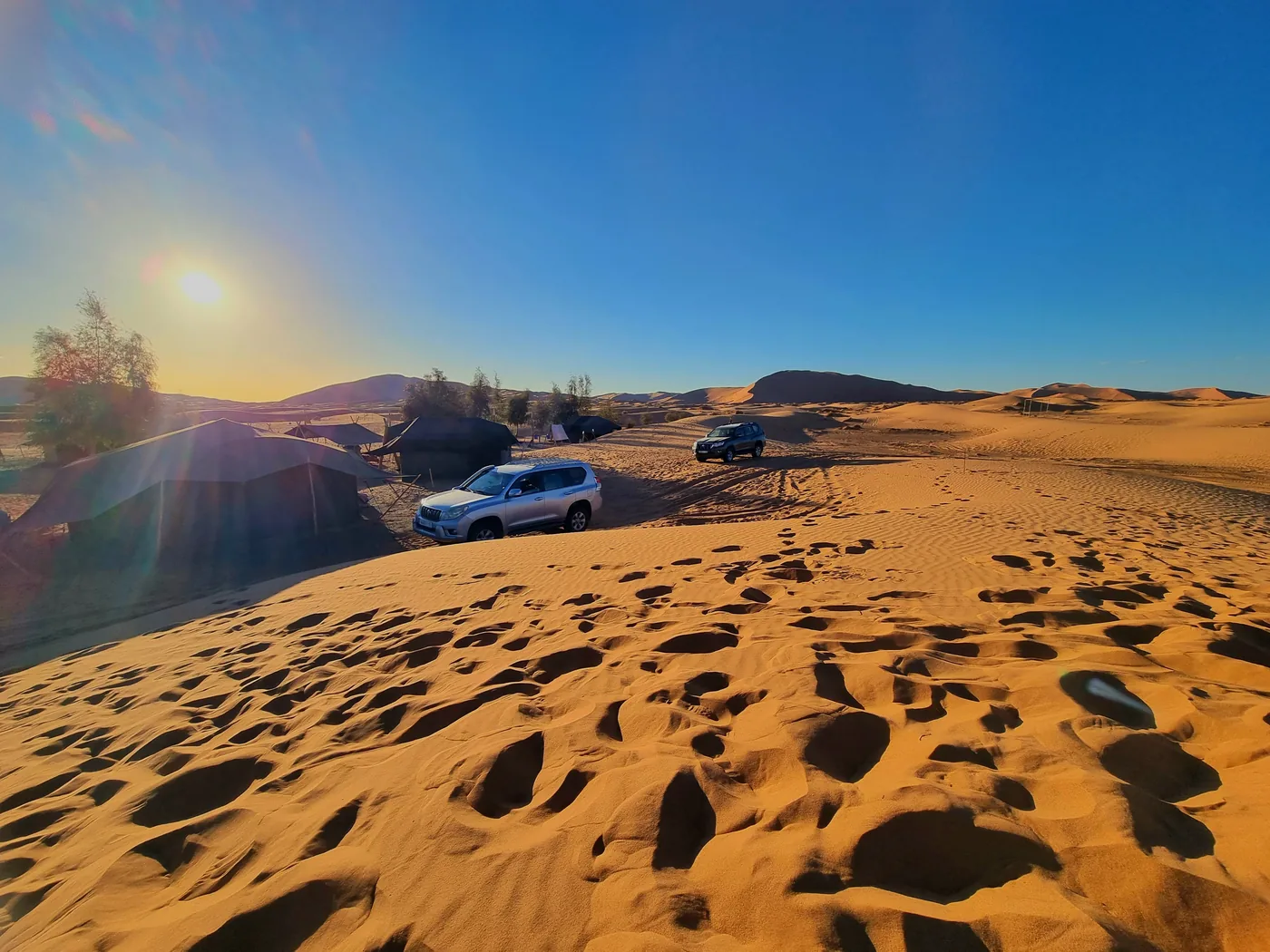
One of the camps we use at Erg Chebbi, with the tall dunes behind.
You will read that Erg Chebbi is "an eight to ten hour drive from Marrakech or Fes", as if the two were the same journey. They are not. From Fes it is about 470 km and roughly seven hours of driving, inside a full travel day with lunch at Midelt and stops where they are worth making. We leave Fes at 7:30 in winter and 8:30 in spring, because the camel ride is at sunset and the daylight has to be accounted for. From Marrakech it is nearer nine hours. If a seller will not tell you the departure time and the stops, you are being sold a bus schedule, not an itinerary. Our Fes-to-Merzouga desert trip sets out the route day by day.
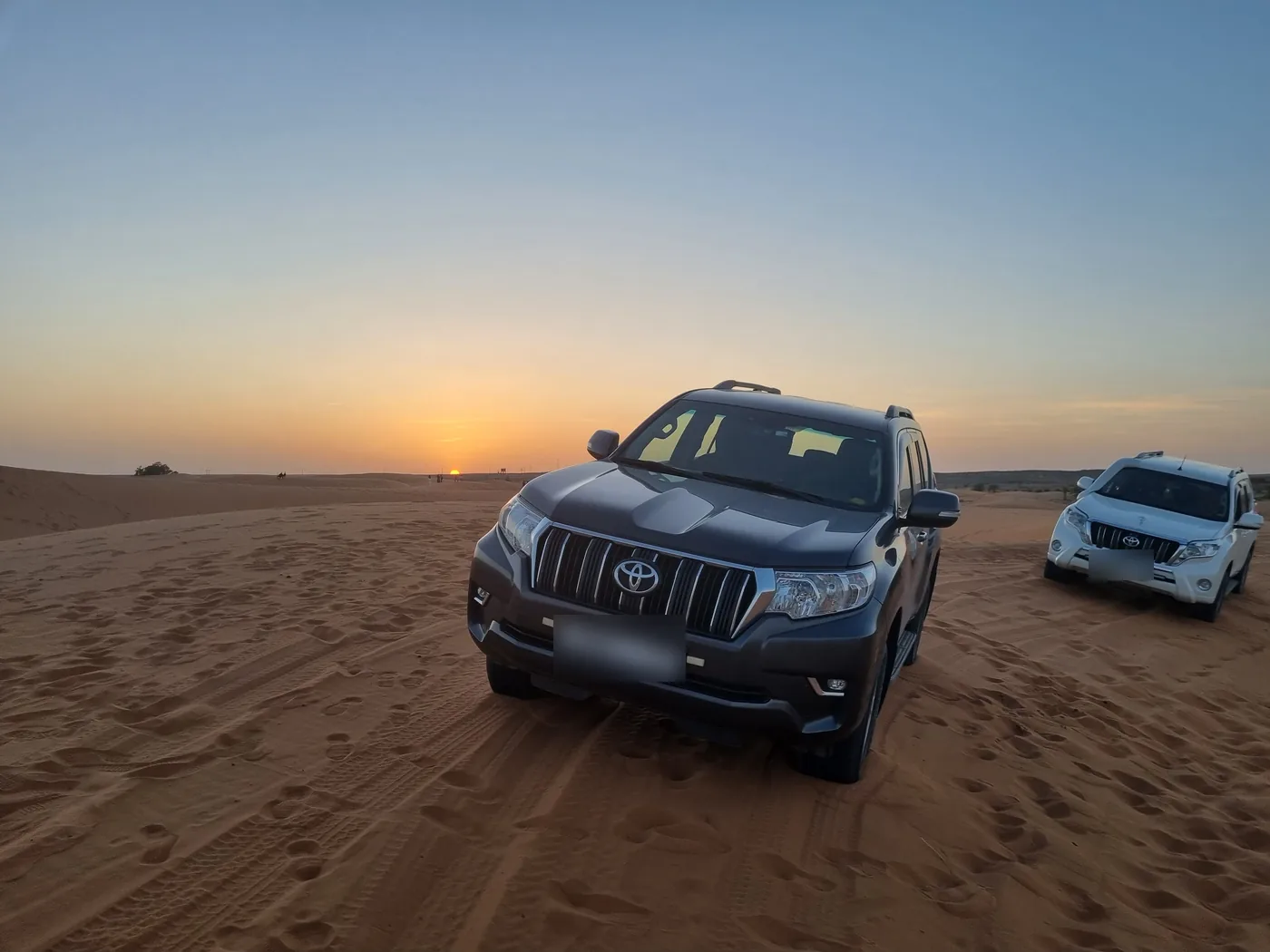
Our 4x4s on the sand at Erg Chebbi. The last stretch to the camp is off the tarmac.
Here are real numbers. Per person, for one night including dinner, the tent, breakfast and the camel ride: from about $100 at the standard level, about $200 at the comfort level, and about $300 at the luxury level. Christmas and the spring peak add roughly ten to twenty per cent. Those are our figures for the camps we book, not a market average, and they assume two people sharing.
Bottled water is extra at most camps, and you are welcome to bring your own. Wine and other alcohol, where a camp serves it, is extra and ordered in the restaurant.
Tipping at the camp. You tip the camel handler, and it is expected rather than optional: around 100 to 200 dirhams, roughly $10 to $20 per person, given directly to the man who led your camel. Bring it in dirhams, because foreign coins cannot be exchanged in Morocco and are no use to him. The cook and the serving staff are usually tipped together, as one amount left for the team, and that part is up to you.
Now take those numbers and test any offer you are given. If a whole private trip is quoted at $350 per person with a driver and hotels included, the camp night alone at the comfort level is around $200 of it. That leaves roughly $150 per person for two or three days of private vehicle, fuel, a driver, and the other hotels. It is not my place to say any particular trip is bad value — I do not know its length, its hotels or what it includes. But you can do that arithmetic yourself, and you should, because it tells you which corner is being cut.
What gets compromised at the bottom of the market, in my experience, is rarely the dunes. It is the vehicle, the driver and your freedom. A cheap group departure means shared transport — up to twenty people in one vehicle is not unusual on the cheapest departures — long driving days, few stops, a fixed schedule, a restricted choice of restaurants, and a certain pressure to go along with the group's shopping and dining. A driver on a low margin may get you there without being able to tell you anything about what you are passing. None of that is dishonest. It is simply not explained before you pay, and once you have paid and joined the group there is very little you can change.
This is the practical part, and it works whoever you book through, including me.
Do not come in July or August for a desert trip. The heat is genuinely difficult — daytime temperatures reach around 45°C — and it will spoil the thing you came for. If those are your dates, go to the coast instead: Essaouira, Agadir, Tangier, Casablanca or Rabat will give you a far better week. I will tell you the same thing if you ask me in mid-August.
From September through spring the Sahara is comfortable. What surprises people is the gap between afternoon and night. In January, nights at Merzouga typically run 2 to 6°C, and late December through February is the cold stretch. The tents have blankets and heating, but bring a warm layer for the evening, and another for the mountains on the way, which are colder than the desert.
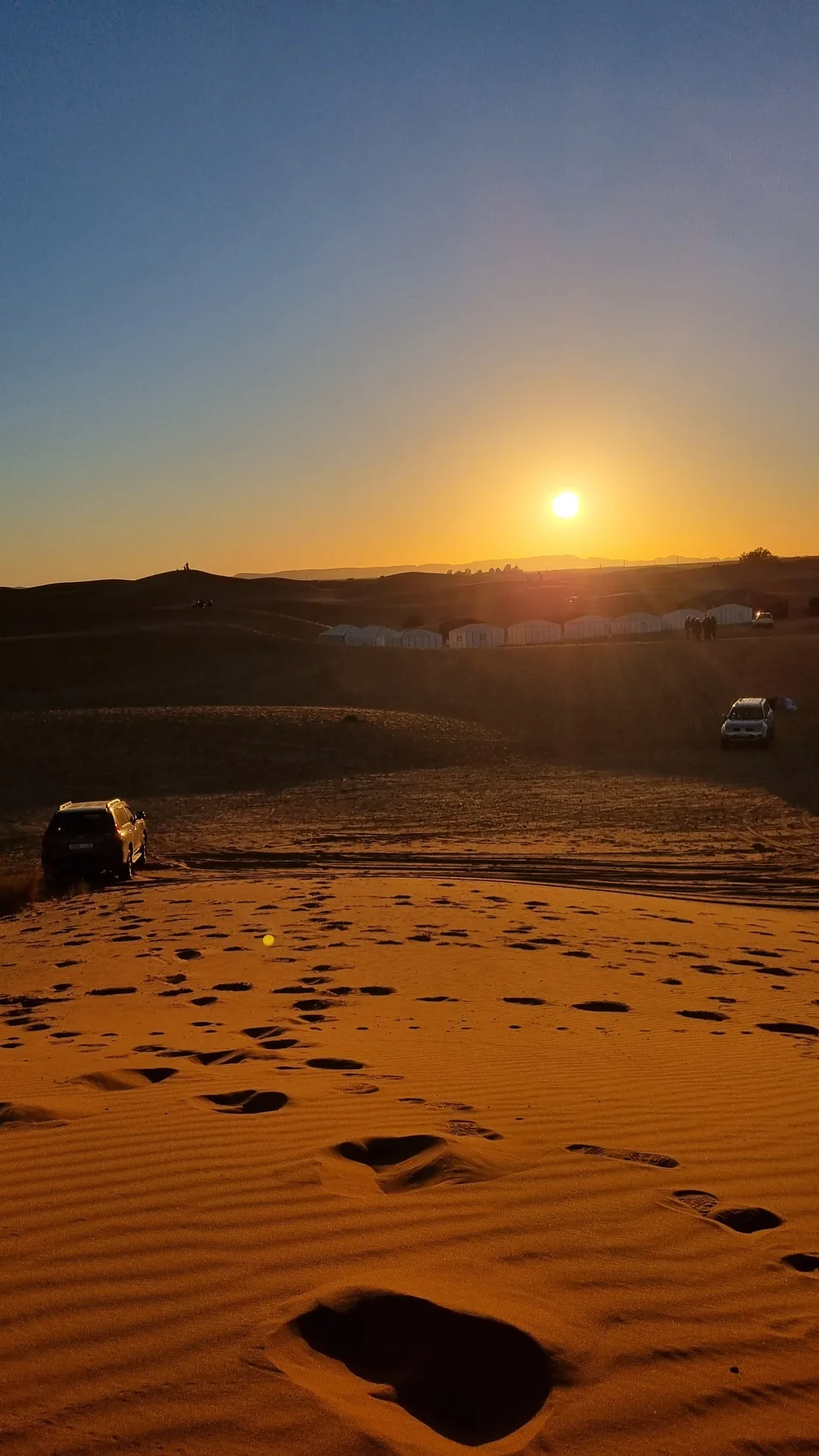
Sunrise from the camp. Worth the early start.
There is mobile reception at the camps I use, on Maroc Telecom and Orange, and guest wifi that works best around the restaurant. Do not count on a signal out in the dunes.
I would rather lose the booking than put someone somewhere they will not enjoy.
If you have back or joint trouble, or limited mobility, think carefully. The camel ride is uncomfortable for a bad back, and so is a 4x4 crossing soft dunes, which is bumpier than most people picture. In those cases I often recommend a hotel near the paved road rather than a camp out in the sand — you still get the dunes, the sunrise and the quiet, without the two parts that hurt. If you want the camp anyway, I can arrange a 4x4 transfer and you can judge it. What I cannot do is promise you a wheelchair-accessible camp or transfer, because I have not verified one; if that is what you need, we confirm physical access with the property before anything is booked.
With children, three or four years old and upwards is generally fine and they usually love it. I would not take a baby to a camp in the cold stretch from late December to February.
Before I put a guest in a camp, we go and visit. We look at the restaurant, the tents, the bathrooms, the location, the service and the staff, and we often go back more than once before we book anyone in. The point of the visit is to compare the real place with its photographs, because the photographs are always of the best corners.
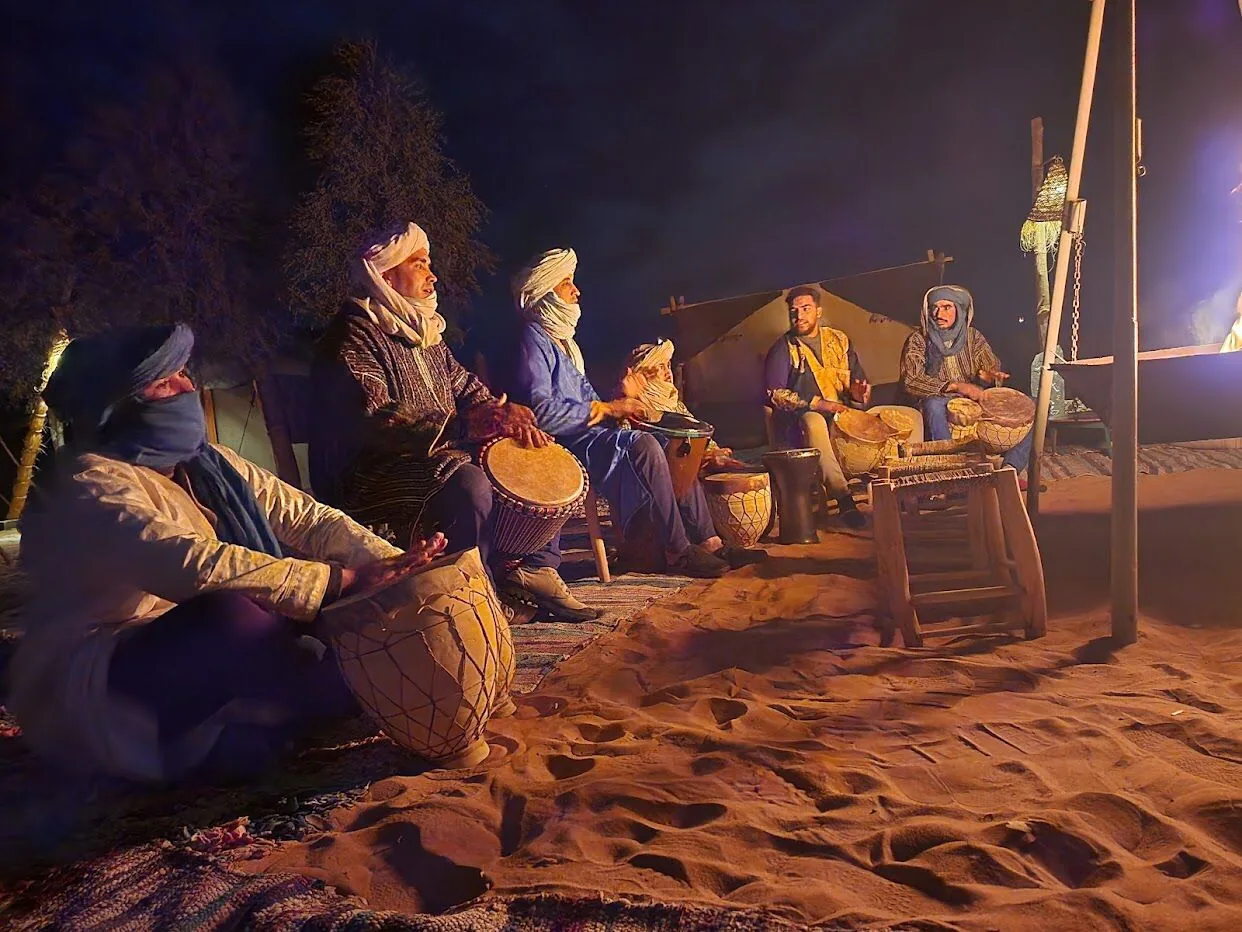
Drumming after dinner with the camp's musicians.
After that, what keeps a camp on our list is guest feedback. Two things have actually gone wrong: hot water running short, which is usually the limits of solar heating, and service dropping off after a change of staff. When that happens I raise it with the camp directly, give them a fair chance to put it right, and move to a different partner if it does not improve. That is the whole mechanism. It is not dramatic, but it is the reason I can tell you what the bathroom looks like.
Weather is the one thing none of us controls. A windstorm or heavy rain overnight happens, and a sandstorm means the camel ride is postponed rather than ridden through — usually to sunrise the next morning, which is no worse and often better.
If you want to know who you are dealing with, the licences we hold and how we work are set out on our about page.
There is no single best camp, and anyone who names one without asking about your trip is selling rather than advising. What decides it is the room category, whether the bathroom and the heating belong to that category, how far the camp sits from the road, and how recently anyone actually checked the place. Ask for the camp's name, look it up, compare guest photographs with the camp's own, and ask what is included. The checks above matter more than any ranking.
For one night per person, including dinner, the tent, breakfast and the camel ride: from about $100 at the standard level, about $200 at comfort level and about $300 at luxury level, with roughly ten to twenty per cent more at Christmas and in the spring peak. Bottled water and alcohol are extra. Those are our prices for the camps we use, based on two people sharing, not a market average.
Yes, if you have a weekend in Marrakech, or you are short on days, or you do not want a long drive. Agafay is stony desert forty to fifty minutes from the city and it makes a genuinely good night. No, if you came to see the Sahara — Agafay has no sand dunes, and the photographs that suggest otherwise are flattering the light.
Erg Chebbi for most first visits, because the paved road reaches the edge of the dunes and the 4x4 leg is only twenty to twenty-five minutes. Erg Chigaga if you have a longer trip and you want more remoteness, accepting roughly sixty extra kilometres of rough driving from M'Hamid. Our camps are all at Erg Chebbi.
Yes, and almost everyone does it in a fixed camp rather than with their own tent. At the camps we use that means a proper bed, a private bathroom inside the tent with a flushing toilet and a shower, electric light and sockets, dinner and breakfast, and a camel ride at sunset.
Look for recent photographs posted by guests rather than by the camp, showing places you can recognise — the dining tent, the camel area, a tent interior. Check the dates on them, and check they match the property you are being sold. It is not a perfect test, but a camp with plenty of recent, consistent guest photographs of identifiable places is a much safer bet than one with a wall of text and no pictures from anyone but itself.
Compare Morocco group tour agencies by trip style, reviews, pace, transport and inclusions. Learn wh...
Read this article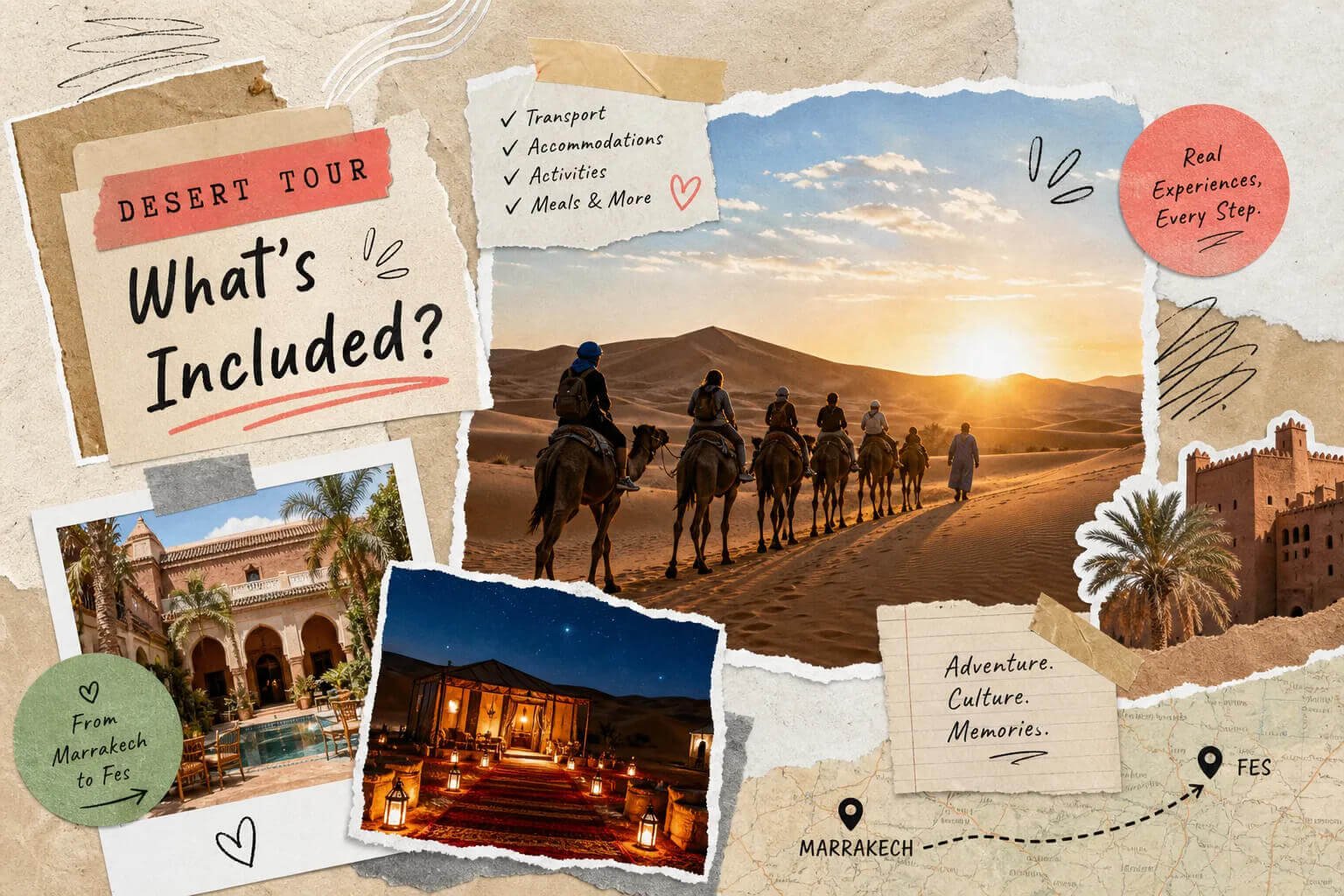
Uncover what a Marrakech to Fes desert tour offers, including camel rides, desert camps, and rich cu...
Read this article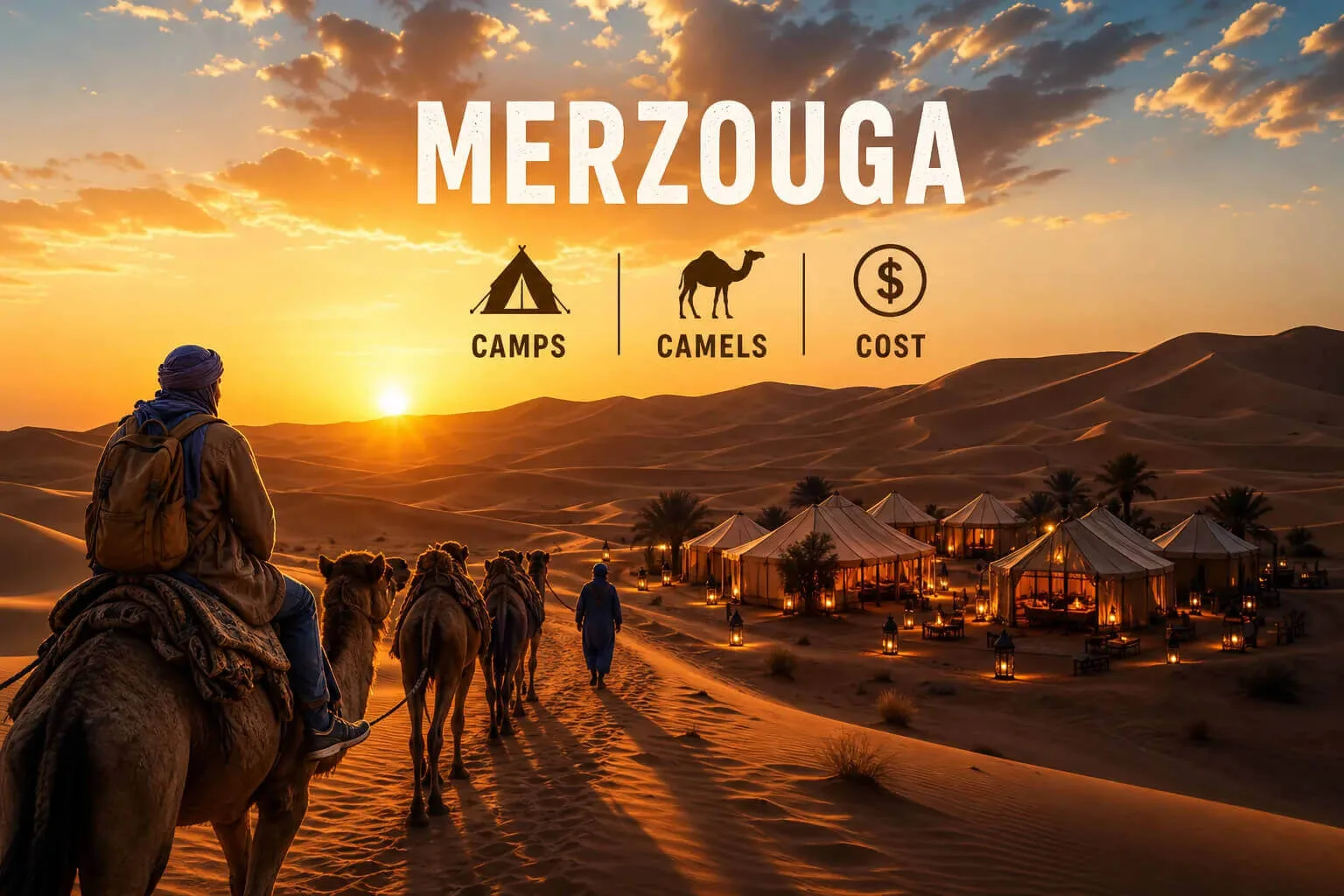
Join our Merzouga Overnight Tour for an authentic desert experience. Enjoy camel rides, comfortable ...
Read this articleWant cool tour deals and tips about Morocco? Enter your email and we’ll send them to you each month!
