Is the Agafay Desert Worth a Day Trip from Marrakech?
Is a day trip to the Agafay Desert from Marrakech worth it? Absolutely! Enjoy scenic beauty, thrill...
Read this article

Suspendisse interdum consectetur libero id. Fermentum leo vel orci porta non. Euismod viverra nibh cras pulvinar suspen.

Moroccan design is a colorful, pattern-rich style rooted in Islamic, Berber, Arab-Andalusian, and Mediterranean influences—and Morocco Classic Tours guests can experience it firsthand in riads, desert camps, and historic medinas across the country.
The core elements of Moroccan style include zellige tiles, carved wood, arches, rugs, lanterns, fabrics, and metalwork, all of which work beautifully in both traditional and modern interiors.
Moroccan patterns carry deep meaning: geometric forms symbolize divine order, arabesque motifs represent flowing nature, and calligraphic designs transform sacred text into visual art. This style is commonly called Moroccan, Moorish, or Moroccan-Moorish design.
You can incorporate Moroccan design at home through selective additions—a statement rug in the living room, patterned cushions in the bedroom, zellige-style tiles as backsplashes, or decorative lanterns in corners—without overdoing any single trend.
Travelers seeking authentic design inspiration can see centuries of craftsmanship in Fez, Marrakech, Chefchaouen, and the Sahara through Morocco Classic Tours itineraries.
Moroccan design and style is a unique blend of Amazigh (Berber), Arab-Islamic, Andalusian, Sub-Saharan, and French influences that has evolved over more than a millennium. This guide is designed for homeowners, interior designers, and enthusiasts looking to understand or incorporate Moroccan design into their spaces. Walk through the medinas of Fez, Marrakech, or Tangier, and you encounter this blend at every turn—from the intricate tilework of ancient fountains to the carved cedar doors of historic palaces.
The visual traits that define Moroccan interiors are unmistakable: saturated colours like cobalt blue, saffron, emerald, and terracotta set against complex geometric shapes, flowing arabesque patterns, graceful arches, and layered textiles that create rich texture in every room. This is a design language that engages all the senses, not just sight.
In architectural and interior contexts, Moroccan design is sometimes called “Moorish style” or “Moroccan-Moorish design,” particularly when referring to arched doorways, courtyards, and elaborate tilework. The term “Moorish” historically described Islamic architecture across North Africa and medieval Spain, while “Moroccan” emphasizes the specific regional evolution that occurred in imperial cities over centuries.
The historical roots run deep. Fez was founded in the 9th century and became a center of learning and craftsmanship. Marrakech rose to prominence in the 11th century under the Almoravid dynasty. Meknes emerged as an imperial capital in the 17th century. Throughout this development, Islamic architectural rules—including the avoidance of figurative religious imagery—pushed artisans toward geometric abstraction and mathematical precision. Artisan guild traditions preserved and transmitted these techniques across generations.
In the following sections, you'll discover the historical evolution, signature elements, materials, and practical tips for applying Moroccan design in your home.
The historical roots of Moroccan design run deep. Fez was founded in the 9th century and became a center of learning and craftsmanship. Marrakech rose to prominence in the 11th century under the Almoravid dynasty. Meknes emerged as an imperial capital in the 17th century. Throughout this development, Islamic architectural rules—including the avoidance of figurative religious imagery—pushed artisans toward geometric abstraction and mathematical precision. Artisan guild traditions preserved and transmitted these techniques across generations.
Famous examples anchor these principles in real spaces. The Bahia Palace in Marrakech showcases painted wooden ceilings and zellige-covered walls. Al-Qarawiyyin in Fez, founded in 859 CE, remains one of the oldest continuously operating universities in the world, its architecture a masterclass in Moroccan patterns and carved stucco.
For travelers, Moroccan design isn’t something you merely observe—it’s something you inhabit. Sleep in a riad with a courtyard fountain burbling beneath orange trees. Share a meal on low seating around a brass tray table. Relax in a hammam lined with zellige tiles. This is the lifestyle that Morocco Classic Tours guests encounter throughout their journeys, where design and daily life interweave seamlessly.
Moroccan interiors are defined by recurring elements rather than a strict rulebook. These key elements can be layered gradually in any home, allowing you to build atmosphere over time rather than committing to a full renovation at once.
Arches form the architectural signature of Moorish architecture. The horseshoe arch and ogee arch—formed by two serpentine curves meeting at a point—appear in doorways, windows, and decorative niches throughout Morocco. These openings define spaces, filter light, and create a visual rhythm that draws the eye through a room.
Courtyards and riads represent the heart of traditional Moroccan homes. The riad—an inward-facing house built around a central courtyard—provides privacy from the street, temperature regulation in Morocco’s hot climate, and a gathering space for family and guests. Fountains typically occupy the center, serving both practical cooling functions and symbolic purposes, representing paradise in Islamic tradition.
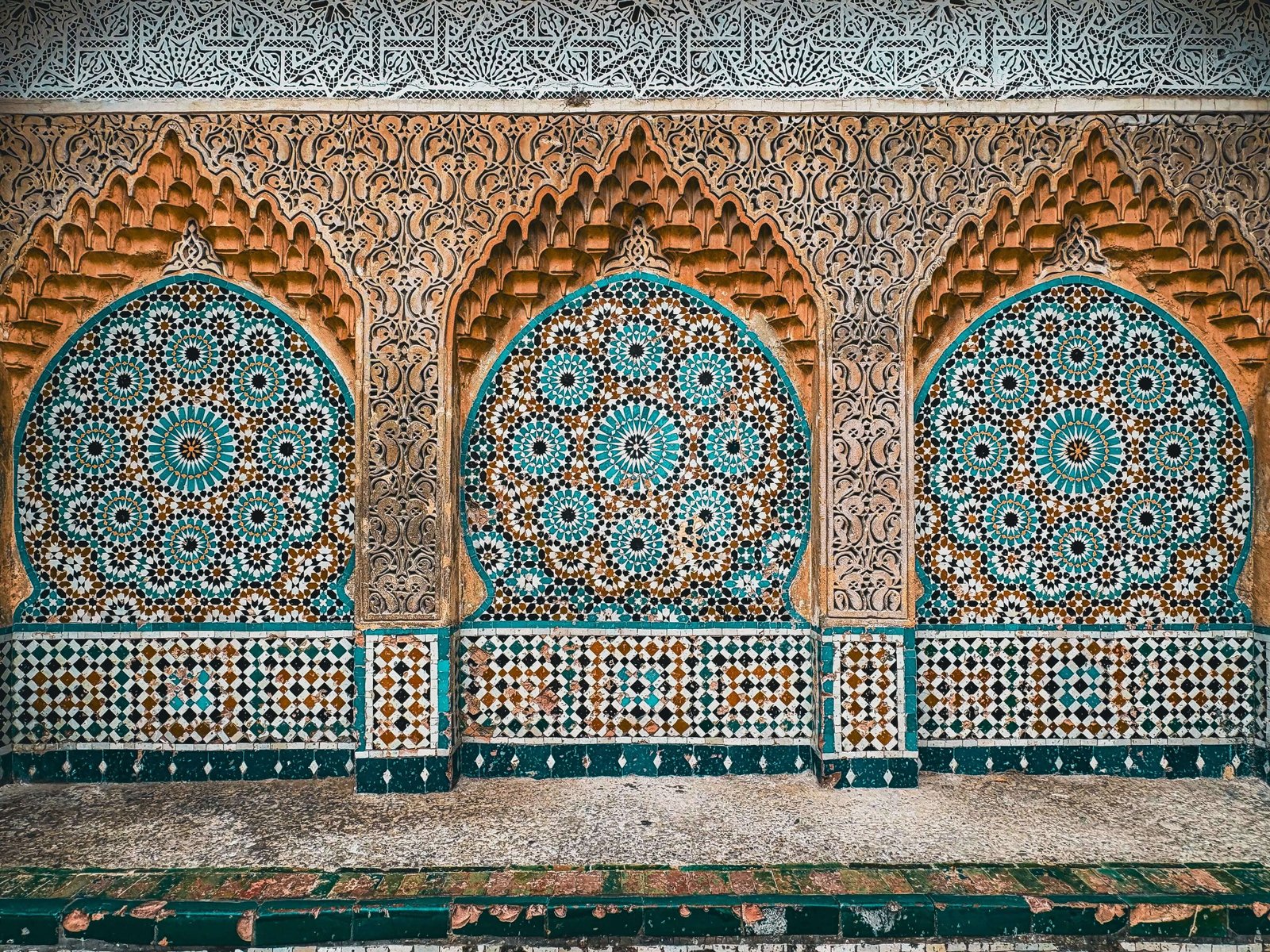
Tiles, particularly zellige (also spelled zellij), constitute one of Morocco’s most distinctive decorative traditions. These hand-cut pieces of glazed faience fit together to form elaborate geometric motifs, often based on radiating star patterns. The technique dates to the 10th century and became widespread during the Marinid dynasty in the 14th century.
Carved plaster, known locally as gebs, covers walls and ceilings with dense floral arabesques, geometric patterns, and calligraphic compositions. Because plaster is relatively inexpensive and easily sculpted, it allowed artisans to create elaborate surface decoration accessible to a range of patrons.
Carved and painted wood—particularly aromatic cedar—appears in ceilings, doors, and canopies. Many buildings feature sloped wood-frame ceilings with geometric patterns in their arrangement and painted decoration. Cedar’s natural scent contributes to the sensory experience of Moroccan interiors.
Patterned metalwork in brass and copper features prominently in trays, lanterns with colored glass, and inlaid side tables. Punched-metal lanterns create distinctive dappled light patterns that transform a space after dark.
What makes Moroccan design distinctive is how these sensory layers work together: the visual complexity of repeating patterns, the sound of water in a courtyard fountain, the smell of spices and cedar, the soft touch of wool rugs and leather poufs underfoot. Morocco Classic Tours guests encounter these elements in riad stays in Fez and Marrakech, and in traditional homes we visit throughout the old medinas.
Moroccan design is characterized by ornate geometric patterns, vibrant colors, layered textures, and artisanal craftsmanship. The style blends Berber, Arab, and Mediterranean influences into a cozy, cohesive, and vibrant aesthetic.
Now, let’s explore how these essential elements are used in different areas of Moroccan homes and decor.
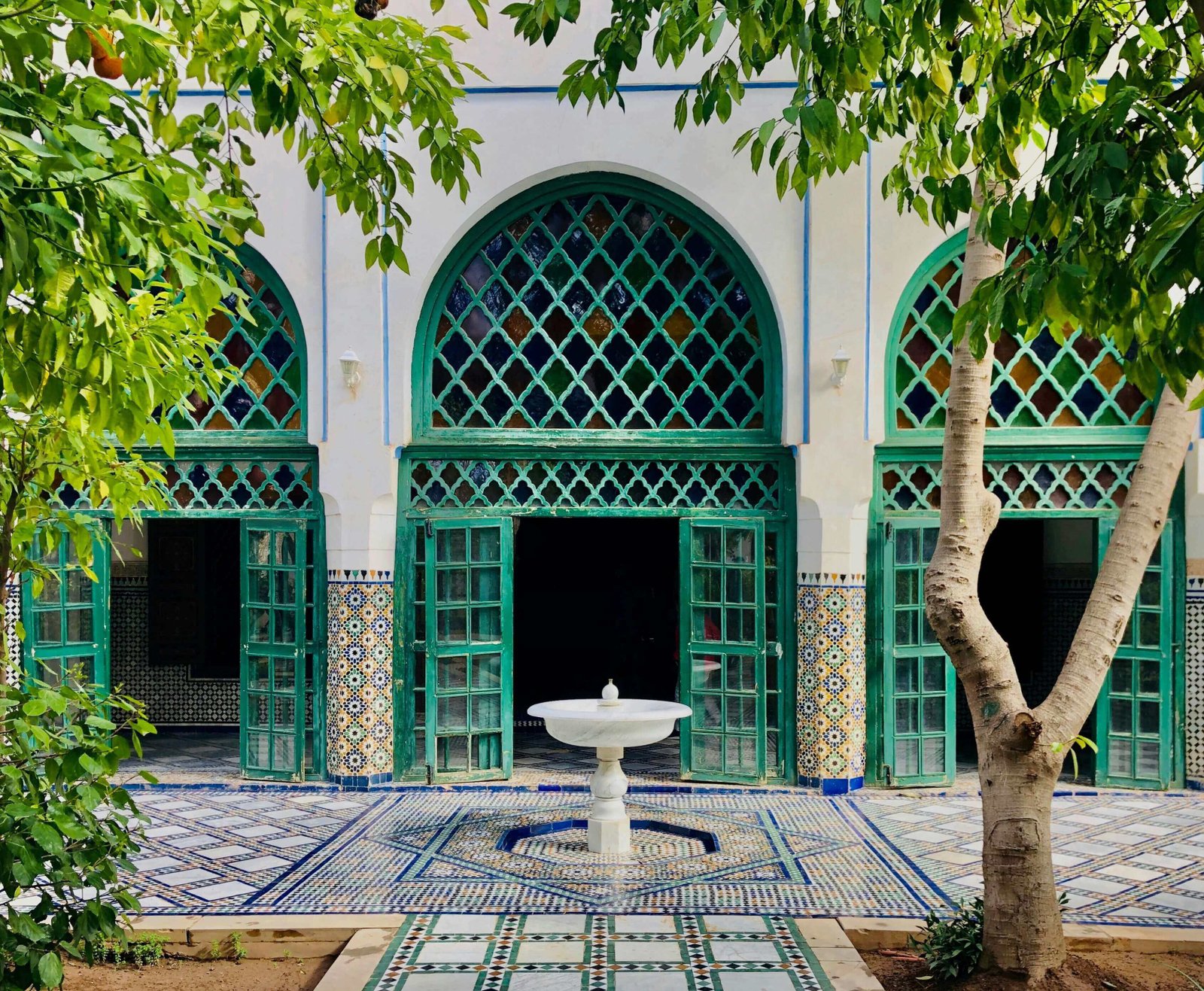
The art style of Morocco represents a sophisticated blend of Islamic geometric art, Amazigh symbolism, Arab-Andalusian ornament, and local craftsmanship applied across architecture, textiles, metal, and ceramics. This tradition spans more than a thousand years and continues in artisan workshops today.
Moroccan patterns fall into three main families:
Geometric patterns: Stars, polygons, lattices, and interlacing forms created with mathematical precision. Eight-point stars appear frequently, generated through the hasba method where pre-established shapes combine to create complex compositions.
Arabesque patterns: Scrolling vines, stylized leaves, and flowing organic forms that developed early in the architecture of al-Andalus.
Calligraphic patterns: Arabic script—particularly Quranic verses and divine names—transformed into ornamental art, with Kufic script rendered decoratively across architectural surfaces.
Intricate tile work, known as Zellij, features repeating geometric patterns and is characteristic of Moroccan design.
Intricate patterns and geometry in Moroccan design frequently feature arabesque motifs and Islamic geometric designs on tiles, plasterwork, and metal.
Luxurious textiles in Moroccan décor include plush rugs, embroidered pillows, silk, velvet drapes, and fringed wedding blankets.
Rich color palettes in Moroccan décor include deep reds, sapphire blues, emerald greens, saffron, and desert tones against neutral bases.
Lighting in Moroccan homes often comes from ornate, hammered metal lanterns casting dappled, warm, diffused light.
Natural materials such as stone, terracotta, leather, and carved wood are commonly used in Moroccan design to reflect traditional craftsmanship.
What do Moroccan patterns mean? The symbolism runs deep. Geometric shapes represent divine order and infinity, reflecting Islamic philosophical principles that human artisans cannot fully comprehend divine perfection, so geometric abstraction represents this transcendence. Star patterns with their radiating symmetries relate to balance, harmony, and cosmological order. Amazigh (Berber) motifs, distinct from Islamic geometric forms, connect to protection, fertility, and nature, preserving pre-Islamic spiritual traditions within the broader design vocabulary.
The historical development of these intricate patterns spans several dynasties. The Almoravids (11th-12th centuries) introduced complex interlacing arches and ornamental techniques from the east. The Almohads (12th-13th centuries) created prototypes for monumental minarets and decorative schemes. The Marinids (13th-15th centuries) refined zellige mosaic tilework to unprecedented complexity. Famous sites like the Bou Inania Madrasa in Fez and the Ben Youssef Madrasa in Marrakech showcase the integration of zellige, carved stucco, and calligraphic elements at their most refined.
Human and animal figures are notably rare in Moroccan design, particularly in religious and architectural contexts. Islamic aniconism—the avoidance of representational imagery—led artisans to push abstraction and mathematical sophistication instead. This aesthetic necessity drove innovation in geometric and calligraphic expression, creating the distinctive visual language we recognize today.
Moroccan interior design is a layered, cozy, sensual style built around low seating, textiles, tiles, arches, and filtered light. Unlike minimalist approaches that strip away decoration, Moroccan style embraces abundance—but always with purpose, designed for hospitality and rest.
A typical moroccan style home or riad follows an inward-facing plan centered on a courtyard. The central fountain provides both cooling and an ambient soundtrack of trickling water. Orange or lemon trees often shade the space. Carved doors open onto rooms arranged around this central axis. Floors and dado-height walls gleam with zellige tilework, creating visual continuity throughout the ground floor.
Textiles play a crucial role in creating the warmth and comfort that define Moroccan interiors. Kilim and Beni Ourain rugs anchor seating areas—Beni Ourain rugs from the Middle Atlas Mountains feature high pile with cream base colours and black geometric lines, while flat-weave kilims use naturally dyed wool in striped or geometric patterns. Sabra (cactus silk) cushions add texture and sheen. Wedding blankets called handira, decorated with sequins and elaborate embroidery, often hang as wall hangings or drape over furniture. Heavy embroidered curtains function as doors or dividers, filtering light while maintaining privacy.
The furniture and accents complete the atmosphere. Brass or copper trays double as serving pieces and table surfaces. Punched-metal lanterns cast intricate shadow patterns across neutral walls when lit. Leather poufs provide flexible seating. Inlaid side tables with marquetry sit beside low sofas. In Fez and Meknes, particularly, carved wooden ceilings feature geometric patterns that draw the eye upward.
Moroccan interiors often feature comfortable, low seating with floor cushions, poufs, and low benches for relaxed lounging. These elements foster hospitality and relaxation in Moroccan homes.
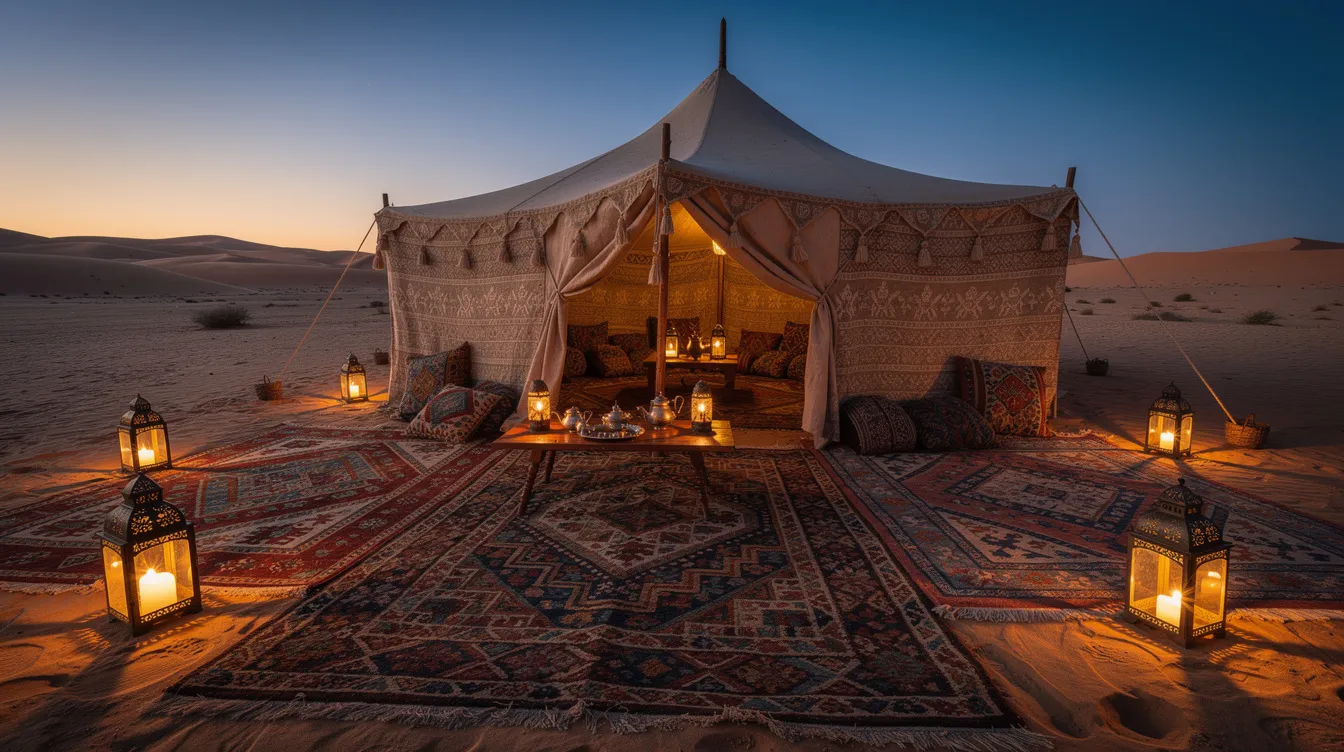
Outdoor spaces extend this design language. Roof terraces in Marrakech offer sunset views over the medina. Blue-washed walls in Chefchaouen create a monochromatic wonderland of texture and light. Desert camps in the Sahara transform the landscape into an extension of Moroccan design—tents decorated with Moroccan fabrics and rugs, lanterns glowing against the night sky, creating a luxurious ambiance in the most remote settings. Morocco Classic Tours guests experience all these environments, from urban riads to desert wilderness.
Many readers want to apply Moroccan style selectively—perhaps transforming just the living room or adding accents to a bedroom—without redesigning their entire house. This approach works beautifully because Moroccan design elements are inherently adaptable.
For a Moroccan design living room, start with low seating or add floor cushions to a conventional sofa arrangement. Layer a Beni Ourain or kilim rug as the foundation. Add one or two lanterns—either hanging or tabletop—to create that characteristic filtered light. A brass tray on a simple stand serves as both a focal point and a functional surface. Consider a stenciled or tile-backed niche as an accent wall. Keep the rest relatively simple to let these statement pieces center stage.
A Moroccan-designed bedroom benefits from soft, filtered light above all else. A carved or fabric-upholstered headboard creates presence. Add a patterned throw in warm spice tones or calming blues. A small zellige-style tiled panel or stenciled motif above the bed suggests the architectural details of a traditional riad. The mood should feel restful and enveloping—rich colors without being overwhelming.
For a home office or reading corner, scale down the approach. A small kilim defines the space. A leather pouf provides comfortable additional seating. A pierced metal lamp or pendant casts interesting shadows across your desk. A patterned wallpaper or stenciled panel behind your chair creates a sense of place without requiring major renovation.
Terraces and balconies translate Moroccan design beautifully to outdoor spaces. Cluster several lanterns of varying heights. Add simple terracotta pots with herbs or succulents. Lay a patterned outdoor rug suitable for weather exposure. A small mosaic table—even a modern interpretation—evokes the riad feeling. These elements create an escape inspired by Moroccan rooftop terraces, even in a modern apartment setting.
Understanding the materials that create Moroccan style helps you make informed choices for your own space. Each category—rugs, tiles, fabrics, and wall treatments—carries specific traditions and practical considerations.
The rug anchors nearly every Moroccan room. Beni Ourain rugs originate from the Middle Atlas Mountains, featuring high-pile wool with cream base colours marked by black geometric lines. Their modern aesthetic, despite traditional origin,s makes them versatile for both Moroccan and contemporary interiors. Boucherouite rugs emerged in the mid-20th century as resourceful weavers created colorful compositions from recycled textile waste—they suit bohemian and eclectic spaces beautifully. Flat-weave kilims use naturally dyed wool in striped or geometric patterns, offering a lighter weight option suitable for layering. Regional variations reflect distinct tribal traditions, making each piece unique.
Zellige represents Morocco’s most labor-intensive and distinctive tile tradition. These small, hand-chipped glazed tiles have been produced since at least the 10th century, with the technique becoming widespread during the Marinid period. The hasba system involves fabricating glazed squares (typically 10 cm per side), then cutting them by hand into pre-established shapes that fit together into complex mosaics. Classic colours include green, blue, brown, white, and black.
Is Zellige tile too trendy? The concern is understandable given its current global popularity. However, zellige carries a thousand-year heritage in Morocco—this is a living tradition, not a passing fashion. To use it thoughtfully and avoid a dated look, consider smaller applications like backsplashes rather than entire walls, classic color combinations rather than novelty palettes, and integration with other Moroccan elements rather than isolation as a lone design statement.
Moroccan fabrics include textured cottons, wool, sabra (cactus silk), and elaborately embroidered textiles. The patterns appearing in fabrics echo the same geometry and symbols seen in tiles and metalwork, creating visual coherence throughout an interior. Wedding blankets with sequin embroidery combine both Islamic geometric and Amazigh symbolic traditions. The weight, texture, and warmth of these materials contribute significantly to the tactile and cozy atmosphere that defines Moroccan homes.
While traditional Moroccan interiors rely on painted stucco, carved plaster, and tilework rather than wallpaper, contemporary interpretations increasingly use Moroccan design wallpaper to achieve similar effects affordably. Moroccan wall stencils offer another flexible option, allowing you to create a pattern on accent walls behind a sofa, bed, or dining table. These treatments reference Medina wall decoration and riad niches while adapting to modern renovation constraints.
Building a moroccan style interior works best as a gradual process rather than an all-at-once transformation. This phased approach prevents overwhelming your space and allows you to find the balance that feels right.
Phase 1: Establish your color palette. Choose between cool tones (blues, whites, silvers) inspired by Chefchaouen and coastal Morocco, or warm tones (terracottas, saffrons, ochres) drawn from Marrakech and desert regions. This decision guides all subsequent choices.
Phase 2: Add one strong element. This might be a statement rug, a tiled accent wall, or Moroccan design wallpaper behind your sofa or bed. Let this piece establish the pattern vocabulary for the room.
Phase 3: Layer textiles and lighting. Add patterned cushions that complement your foundation piece. Introduce one or two lanterns for that characteristic filtered light. Consider a throw blanket or decorative poufs.
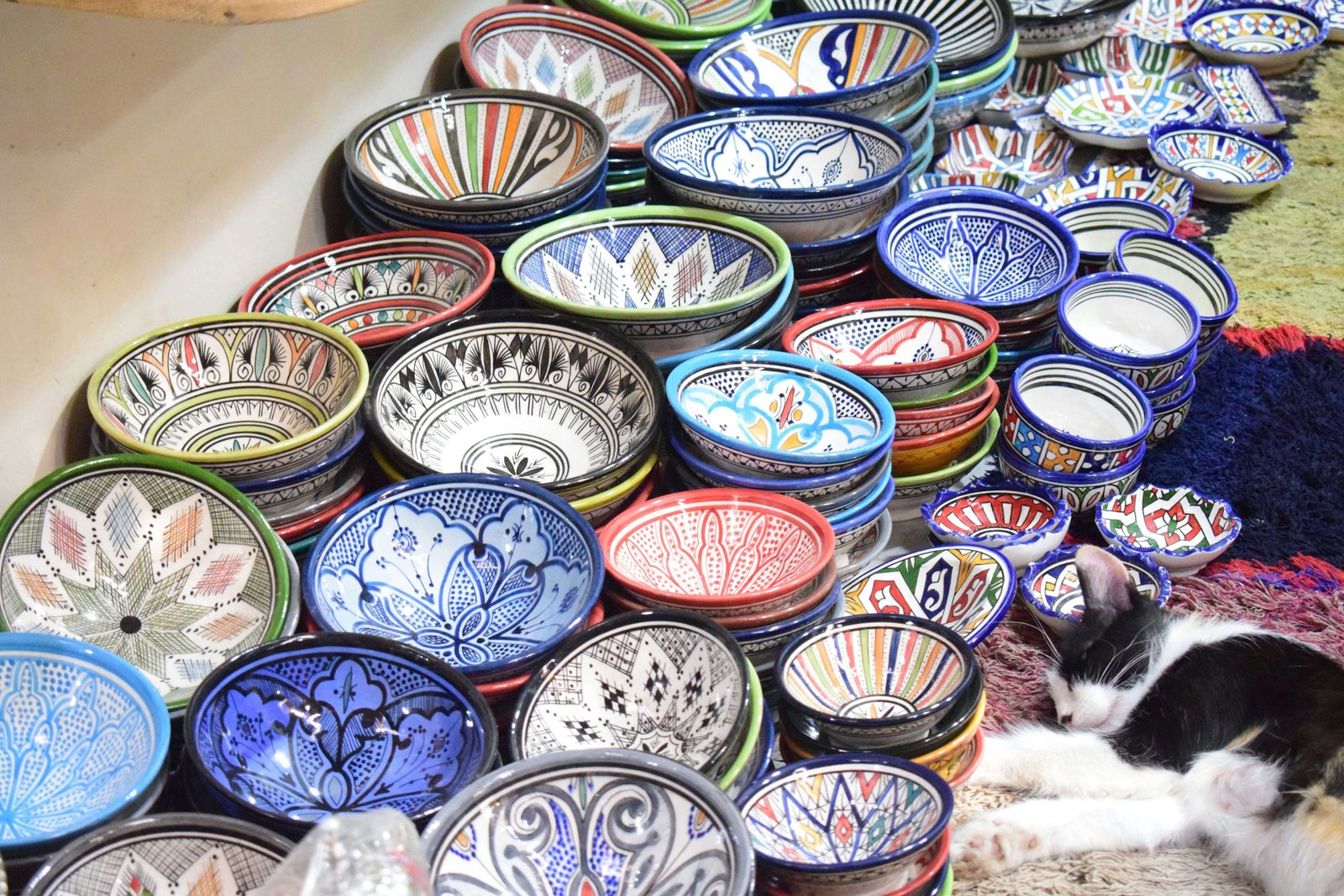
Phase 4: Incorporate smaller accessories. Brass trays, metalwork accents, ceramic pieces, and organic materials like wood and leather add depth without competing for attention.
A practical example: Start with a neutral contemporary sofa. Add a Beni Ourain rug beneath. Place two or three patterned cushions against the sofa. Hang a single statement lantern above a brass tray table. This creates a coherent Moroccan design without overwhelming a modern space.
Moroccan interiors often feature comfortable, low seating with floor cushions, poufs, and low benches for relaxed lounging. These elements foster hospitality and relaxation in Moroccan homes.
Do | Don’t |
|---|---|
Balance pattern with solid colours | Cover every surface in competing patterns |
Vary textures across materials (wool, metal, wood, clay) | Use only one material family |
Prioritize quality, authentic pieces when possible | Fill the room with cheap replicas |
Let bold colors breathe against neutral walls | Combine too many saturated hues in small rooms |
For deeper inspiration, consider experiencing authentic interiors firsthand. Morocco Classic Tours itineraries include sleeping in traditional riads in Fez, watching zellige being made in artisan workshops, and seeing how Moroccan design evolved in palaces and madrasas across centuries.
Phase 1: Establish your color palette. Choose between cool tones (blues, whites, silvers) inspired by Chefchaouen and coastal Morocco, or warm tones (terracottas, saffrons, ochres) drawn from Marrakech and desert regions. This decision guides all subsequent choices.
Phase 2: Add one strong element. This might be a statement rug, a tiled accent wall, or Moroccan design wallpaper behind your sofa or bed. Let this piece establish the pattern vocabulary for the room.
Phase 3: Layer textiles and lighting. Add patterned cushions that complement your foundation piece. Introduce one or two lanterns for that characteristic filtered light. Consider a throw blanket or decorative poufs.
Phase 4: Incorporate smaller accessories. Brass trays, metalwork accents, ceramic pieces, and organic materials like wood and leather add depth without competing for attention.
A practical example: Start with a neutral contemporary sofa. Add a Beni Ourain rug beneath. Place two or three patterned cushions against the sofa. Hang a single statement lantern above a brass tray table. This creates a coherent Moroccan design without overwhelming a modern space.
The best way to understand Moroccan design style is to see and feel it in real spaces across Morocco. Photographs and home décor recreations capture elements, but nothing replaces walking through a medina where these traditions originated and continue today.
Our tours through Fez, Marrakech, Meknes, and Chefchaouen let guests stay in beautifully restored riads where zellige, carved cedar, and painted plaster create immersive environments. Visit palaces like Bahia in Marrakech or madrasas like Bou Inania in Fez to see architectural details at their most refined. Watch artisans in workshops demonstrating zellige cutting, carpet weaving, and metalwork—techniques passed down through generations.
Sahara Desert experiences extend Moroccan design into the landscape itself. Sleep in a desert camp where rugs are laid out on the sand, lanterns glow in communal tents, and the night sky becomes the ultimate backdrop. This connection between interior design and natural environment captures something essential about Moroccan culture that can’t be replicated elsewhere.
We customize itineraries for design lovers who want deeper engagement. Extra time in Fez allows exploration of artisan quarters and tile souks. Architecture-focused walks in Marrakech’s medina reveal layers of history in doorways, fountains, and hidden courtyards. Visits to rug cooperatives in the Atlas Mountains connect you directly with weavers and their traditions.
Ready to see these patterns, textures, and rich colors in their authentic context? Browse our Morocco Classic Tours packages, request a custom itinerary, or contact us to plan a design-focused journey that brings this thousand-year tradition to life.
This FAQ answers additional common questions about Moroccan design that expand on the topics covered above.
Moroccan design is commonly called “Moroccan style” or “Moroccan interior design” in contemporary usage. In broader historical contexts, it’s often referred to as “Moorish” or “Moroccan-Moorish” architecture. The term “Moorish” historically described Islamic architecture across North Africa and medieval Spain during the Islamic period, while “Moroccan” emphasizes the specific regional evolution in cities such as Fez, Rabat, and Marrakech. You can see Moorish influences beyond Morocco—the Alhambra in Granada, Spain, shares the same vocabulary of arches, tiles, and carved stucco that appears in Moroccan palaces and madrasas, reflecting centuries of cultural exchange across the Mediterranean.
Absolutely. Moroccan style adapts remarkably well through selective touches rather than wholesale transformation. A single rug, a few patterned cushions, one distinctive lantern, or a tiled backsplash can introduce Moroccan character without requiring an entire riad layout. The key is keeping walls light and neutral, then adding one or two statement pieces—perhaps a Moroccan design rug and one tiled or wallpapered accent wall. This approach prevents overwhelming compact spaces while creating a focal point that transforms the room’s mood. Many Morocco Classic Tours guests return home and recreate details from their favorite riads in just one corner or room.
Moroccan colour palettes center on several families: deep blues (like Chefchaouen’s famous walls and Marrakech’s Majorelle Garden), warm reds and ochres (reflecting Marrakech’s clay-colored ramparts), saffron and gold, emerald and jade greens, plus chalky whites and neutrals. Regional geography influences preferences—coastal and northern areas may favor cooler palettes while desert regions embrace warm earth tones and sunset-inspired shades. For your own space, choose one dominant family (cool blues or warm terracottas) and support it with neutrals, adding small accents in contrasting jewel tones for visual interest without chaos.
While Moroccan design shares Islamic and Arab influences with other Middle Eastern traditions, it reflects additional inputs that create a distinct regional identity. Strong Amazigh (Berber) traditions, Andalusian-Spanish heritage from centuries of cultural exchange, and Mediterranean influences all shape the aesthetic. Distinctive traits include the zellige mosaic technique unique to Moroccan craftsmanship, the riad courtyard house form, and specific rug traditions from Atlas Mountains villages. French colonial history and Atlantic trade also gave Moroccan cities a different architectural mix compared to the Levantine, Persian, or Gulf regions. The result is a design language that cannot be accurately categorized as simply “Middle Eastern”—it is distinctly Moroccan.
For iconic Moroccan design, visit the medina and madrasas of Fez—particularly the Bou Inania Madrasa, where zellige, carved stucco, and calligraphy reach extraordinary refinement. In Marrakech, the Bahia Palace and El Badi Palace demonstrate different eras of royal Moroccan style. The Hassan Tower area in Rabat showcases monumental Almohad architecture. For pure color inspiration, Chefchaouen’s blue-washed walls create an unforgettable environment. Beyond monuments, stay in restored riads in Fez or Marrakech to experience traditional layouts, tiles, and woodwork up close in a lived setting. Morocco Classic Tours designs itineraries combining these architectural highlights with artisan visits to rug cooperatives, tile ateliers, and desert camps—bringing the full range of Moroccan design traditions into a single journey.

Is a day trip to the Agafay Desert from Marrakech worth it? Absolutely! Enjoy scenic beauty, thrill...
Read this article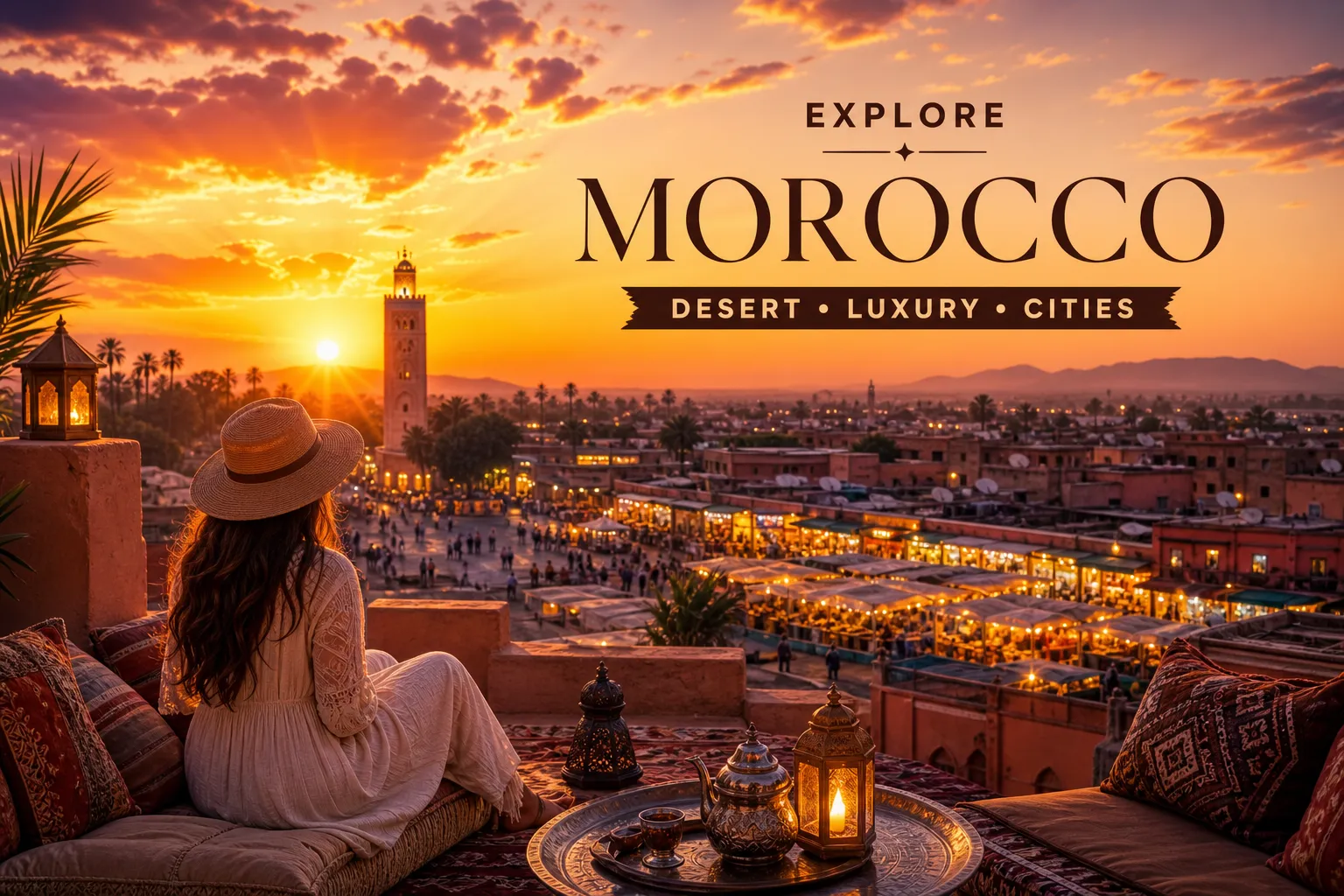
Discover the best Morocco tours in 2026! Explore stunning deserts, luxurious experiences, and vibran...
Read this article
Wondering how long to stay in Fes, Morocco? Uncover the ideal number of days to immerse yourself in ...
Read this articleWant cool tour deals and tips about Morocco? Enter your email and we’ll send them to you each month!