Group Tour Agencies in Morocco: How to Pick the Right One
Compare Morocco group tour agencies by trip style, reviews, pace, transport and inclusions. Learn wh...
Read this article

Private, custom Morocco trips planned in Fez by AZ-ZDDINE, working in Moroccan tourism since 2012. Sahara, Atlas, medinas and coast, arranged around you.
Essaouira, Morocco is a relaxed Atlantic port city in western Morocco, known for its UNESCO-listed medina, blue-and-white streets, windy beaches, and fresh seafood. Historically known as Mogador, it blends Amazigh, Arab, Jewish, and European influence into one of the most rewarding stops on any Morocco itinerary.
For international travelers looking for a calmer, more authentic side of Morocco—whether you are planning a family trip, a couple’s escape, or a solo adventure—Essaouira offers a mix of history, coastal scenery, and outdoor activities that feels very different from the country’s larger cities. Here is what to know before you visit Essaouira, from its location, safety, and history to the medina’s must-see sights, beach and cultural experiences, shopping, food, Jewish heritage, Game of Thrones filming spots, the best time to go, where to stay, and how to plan a private or customizable tour with Morocco Classic Tours.
Essaouira (formerly Mogador) is a relaxed Atlantic port city roughly 2.5–3 hours west of Marrakech, famous for its UNESCO World Heritage Site medina, windy beaches ideal for kite surfing, and beautifully designed 18th-century city walls.
The city is safe to visit, generally calmer and less overwhelming than Marrakech, with friendly locals and a laid-back vibe that suits families, couples, and solo travelers alike.
Essaouira is worth visiting either as a 2–3 day coastal break on a longer Morocco itinerary or as a full day trip from Marrakech, with Morocco Classic Tours offering private transfers and customizable tours between the two cities.
On the Morocco map, Essaouira sits on the Atlantic Ocean coast, north of Agadir and west of Marrakech, earning its reputation as the windy city of Africa - ideal for kite surfing, camel rides, and horse riding along Essaouira beach.
Signature experiences include wandering the ancient medina and ramparts, visiting the fish market, tasting fresh seafood and argan oil products, exploring nearby argan tree groves, and spotting Game of Thrones filming locations on the stone walls.
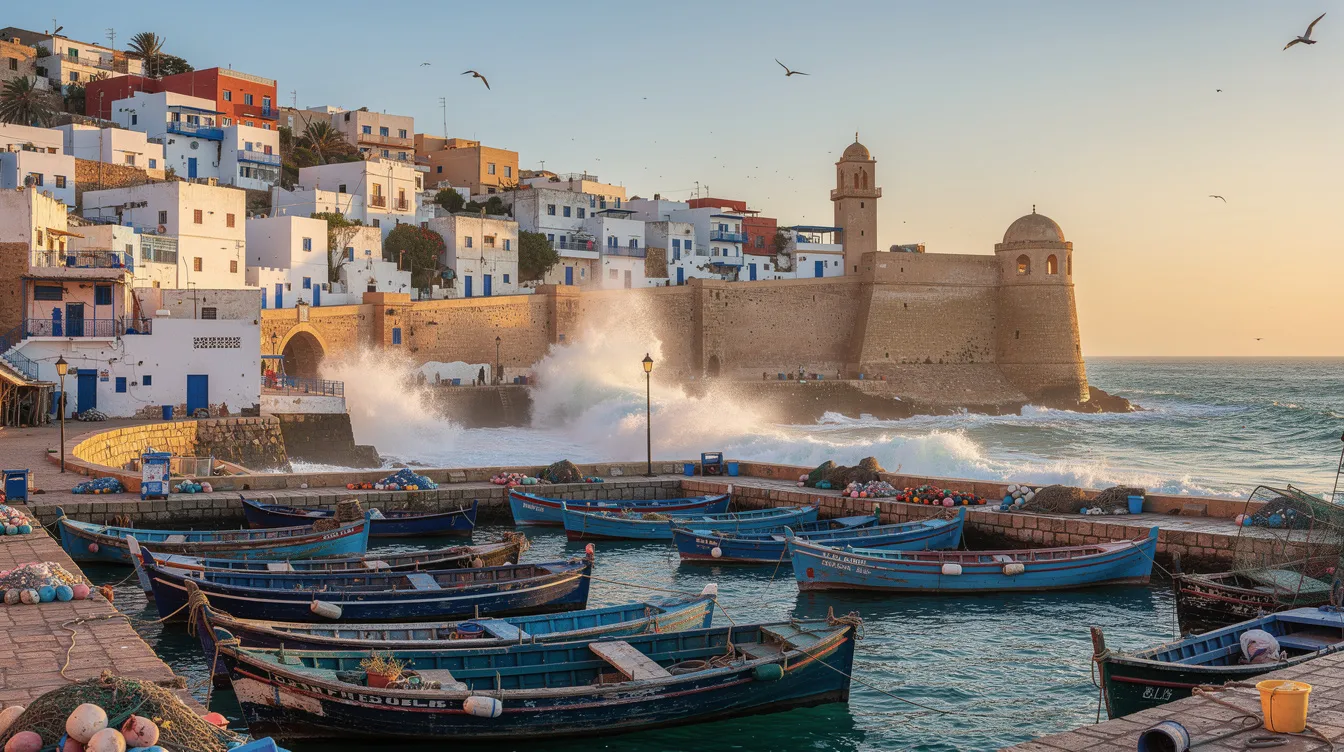
Essaouira is a mid-sized Atlantic city in western Morocco, formerly known as Mogador, positioned at coordinates roughly 31°30′N and 9°46′W. On the Morocco map, it sits about 190 km west of Marrakech, roughly 350 km southwest of Casablanca, and around 170 km north of Agadir - perfectly located between Morocco's imperial cities and the southern coast.
The layout is compact and walkable. The Essaouira medina occupies a peninsula, flanked by the old fishing port and city walls on one side and Essaouira Beach stretching south on the other. The modern part of town extends inland behind the ramparts. Most visitors arrive at the bus station or via private transfer at the edge of the medina, then walk through gates like Bab Marrakech, Bab Doukkala, or Bab el Marsa to reach riads and the main Hassan Square area.
Essaouira has been inhabited since prehistoric times. From ancient trading post to 18th-century royal port to today's creative seaside retreat, its history explains why the city walls and medina plan look the way they do.
Ancient and Medieval Roots. Phoenician and Carthaginian traders established stations on the offshore Mogador islands around the 7th century BCE. During the Roman era, the area produced valuable purple dye from murex sea snails. The name "Mogador" may derive from the local saint Sidi Mogdoul.
Portuguese Fortress. In 1506, the Portuguese built a small fortress and stone walls, turning it into a fortified Atlantic outpost. Essaouira's medina was established in 1773 under Portuguese influence and Moroccan vision, though their direct control faded within decades.
Foundation of Modern Essaouira. In the 1760s, Sultan Mohammed III commissioned French engineer Théodore Cornut to design a new port city with straight streets and bastioned ramparts in the Vauban style, adapted to North African tradition. This is why the medina features symmetrical and straight streets, unlike most Moroccan medinas, and why Essaouira's medina features a mix of European and North African architecture. The city was built to channel caravan trade from the Sahara via Marrakech to European powers overseas.
Jewish and European Trade. Moroccan jews were encouraged to settle and manage customs houses. Foreign merchants from France, England, the Netherlands, and Portugal opened consulates. By 1867, Jewish residents comprised roughly half of Essaouira's population of about 12,000 - a golden age of multicultural commerce.
Decline and Rebirth. The 1844 Bombardment of Mogador by the French Navy damaged parts of the ramparts. As shipping routes shifted to Tangier and Casablanca, the port declined. After independence in 1956, the old city slowly reinvented itself. Essaouira's medina became a UNESCO World Heritage Site in 2001 for its exceptional late-18th-century fortified layout. Today, modern Essaouira thrives as a hub for Gnaoua music, surf culture, and film productions, including Game of Thrones.
Essaouira is generally considered one of the safer destinations in morocco for international visitors. The atmosphere is noticeably calmer than major Moroccan cities like Marrakech or Casablanca. Essaouira offers a relaxed atmosphere compared to larger Moroccan cities, and many Moroccans themselves holiday here for exactly that reason.
Compared to Marrakech, street hassle and scams tend to be milder. Shopkeepers inside the medina are often more laid-back, though visitors should still expect some haggling. The city has a smaller population - about 77,966 as of the 2014 census - and fewer vehicles inside the old medina.
Common concerns include petty pickpocketing in crowded souks, occasional overcharging at some fish stalls near the port, and unlicensed guides. Standard precautions apply: watch valuables, agree on prices beforehand, and use registered guides and taxis.
At night, main areas like Place Moulay Hassan, the promenade, and medina narrow streets stay lively and safe. Avoid dark, deserted corners late at night. Solo and female travelers generally feel comfortable; modest dress away from the beach helps, and centrally located riads provide extra reassurance.
For food safety, stick to bottled water, choose busy food stalls with high turnover, and be cautious of very cheap street vendors if you have a sensitive stomach. Morocco maintains visible security around major tourist sites, and Essaouira has not been associated with major incidents in recent years.
Essaouira is absolutely worth visiting. It's one of the most beautiful places on Morocco's coast, offering a mix of history, beach life, surf culture, and a slower pace that contrasts strongly with the energy of other Moroccan towns like Marrakech and Fez. The city is known for its blue-and-white architecture, and its famous artisan workshops and craftsmanship, particularly in thuya wood, give it a creative edge. The city has a vibrant arts scene and attracts artists and musicians year-round.
A day trip from Marrakech lets you walk the ramparts, wander through the medina of Essaouira, grab lunch at the fish market, and stroll along the beach. That's a solid taster - but it's rushed.
Two full days is a comfortable minimum to explore the medina, city walls, fish market, and beach without hurrying. Three to four days allow time for kite surfing lessons, camel riding in the dunes, a hammam visit, cooking classes, and argan tree excursions nearby. Photographers, surfers, and food lovers benefit most from overnight stays.
Morocco Classic Tours can integrate Essaouira into longer private Morocco trips - for example, a Grand Morocco Tour 10 Day that loops through the Atlas Mountains, Sahara desert camps, and the coast.
Here are the experiences that make morocco Essaouira one of the favourite places for travelers who visit morocco:
Wander the Essaouira medina. The grid-like layout makes it easier to navigate than Fez. Look for blue doors, art galleries, thuya-wood workshops, spice stalls, and relaxed shopping where sellers are less pushy than in other Moroccan cities.
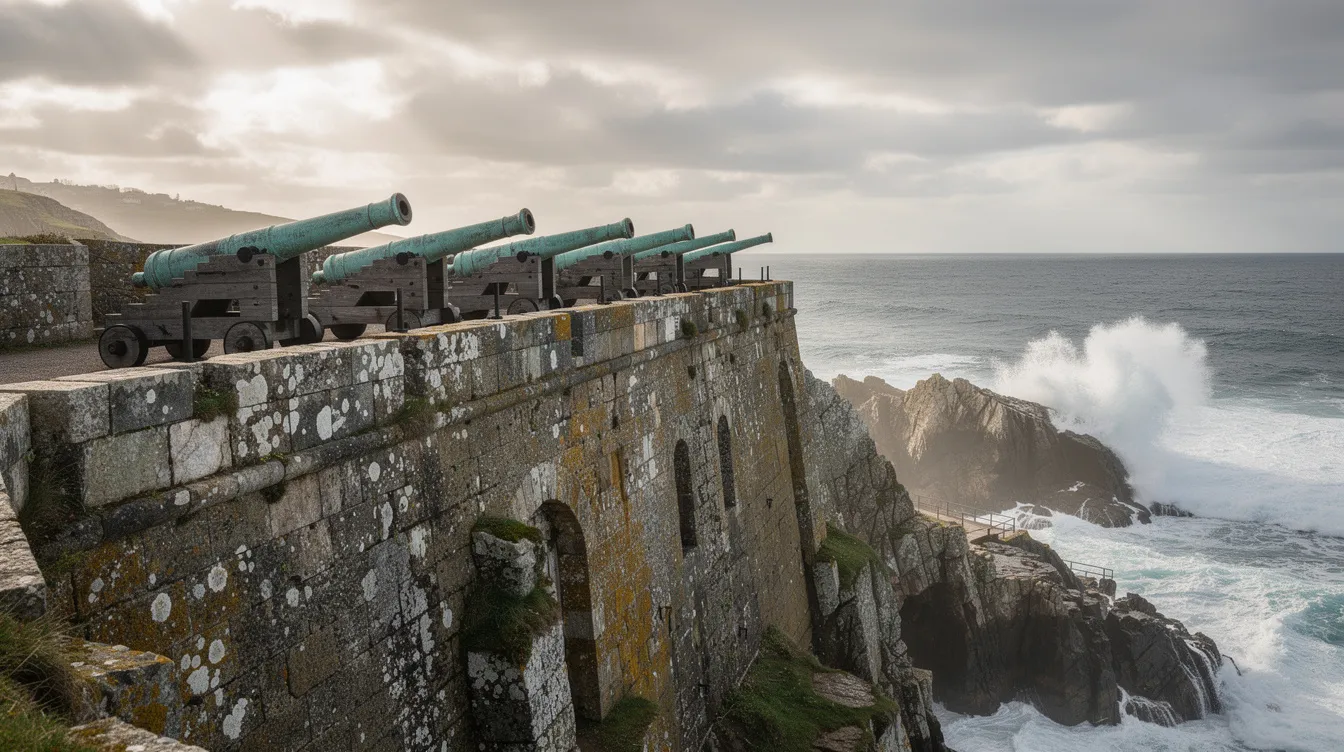
Walk the city walls and ramparts. Skala de la Ville and Skala du port date to the 18th century - the city walls of Essaouira were built in the 18th century - and feature bronze cannons with a spectacular view of Mogador Island and the Atlantic Ocean. Parts served as a filming location for Game of Thrones (Astapor, Season 3).
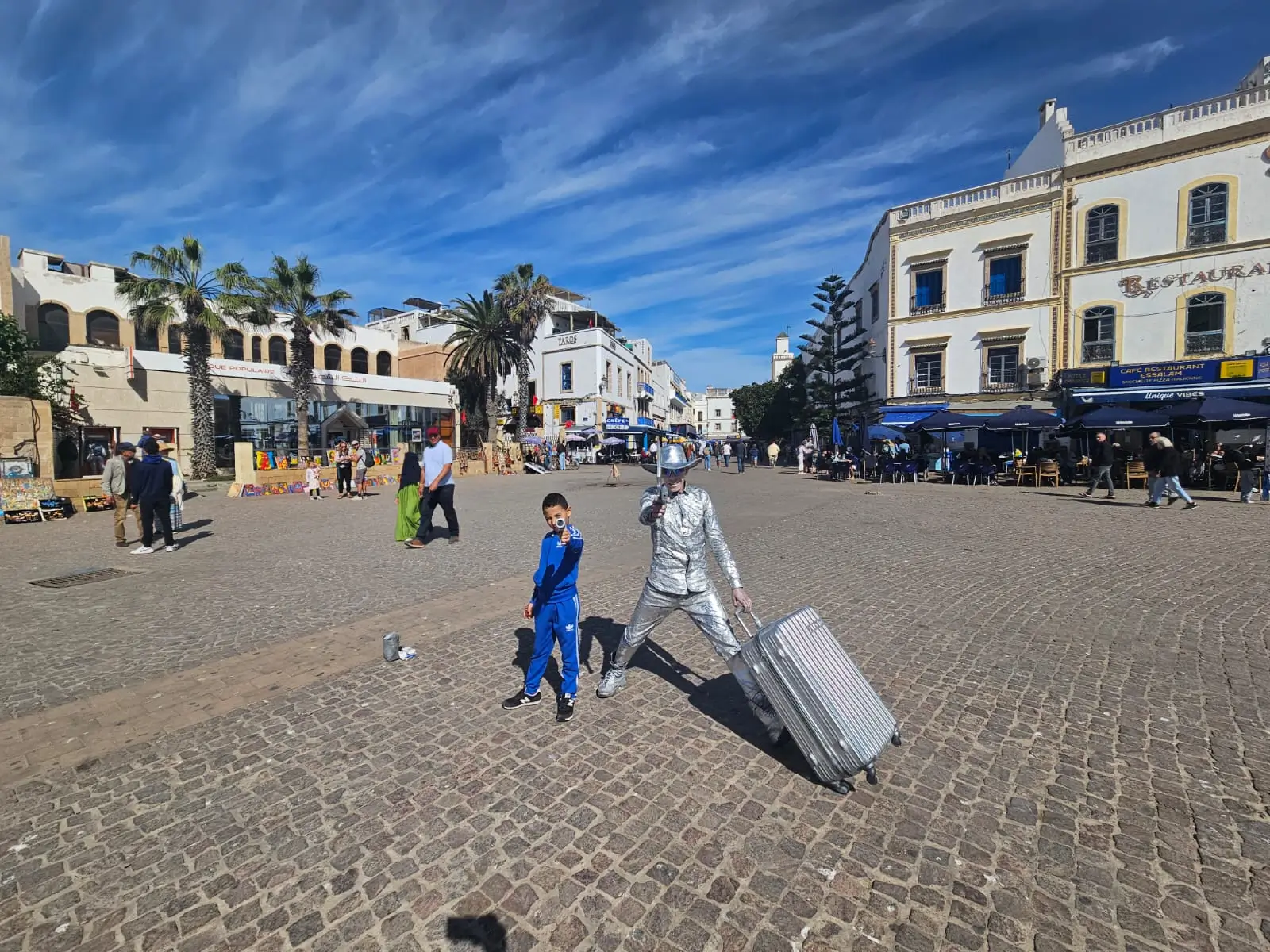
Visit Place Moulay Hassan. This central square between the port and medina is the main gathering point, with café terraces, street musicians, and the focal point during the Gnaoua World Music Festival, which celebrates traditional Afro-Maghrebin rhythms.
Explore the port and fish market. Essaouira's fishing port is bustling with activity. Blue fishing boats line the harbor. Essaouira's fish market offers fresh seafood daily, and simple grill stalls let you choose your own fish and have it cooked on the spot - the day's catch prepared minutes after purchase.
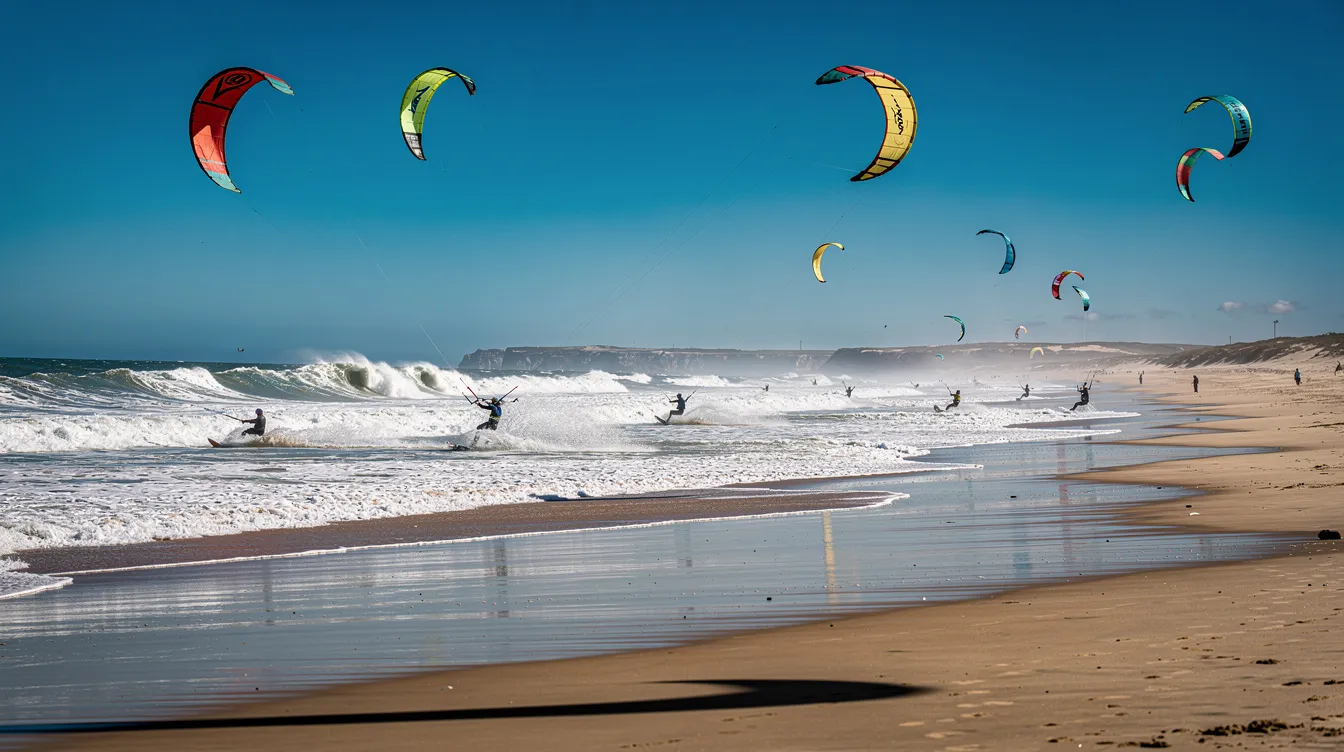
Relax on Essaouira beach. Essaouira's beach is 5 kilometers long, wide and windy rather than a classic sunbathing spot, and perfect for walking, watching kite surfers, or joining horseback riding and camel rides along the shore.
Cultural stops: The Sidi Mohamed Ben Abdallah Museum covers regional history. Bayt Dakira and restored synagogues in the mellah reveal Jewish Essaouira heritage. Visitors can also experience a traditional hammam - hammams are a traditional cleansing ritual in Moroccan culture.
For a deeper list, see our Top 10 Things to Do in Essaouira.
Essaouira is often referred to as the "Wind City of Africa." Near-constant Atlantic breezes shape everything from the beach culture to the local cuisine.
Water sports. Kitesurfing is popular due to Essaouira's strong winds, and the beaches in Essaouira are popular for kitesurfing and windsurfing. The main bay suits beginners and intermediates. Surfing lessons are available for beginners in Essaouira, and surf rentals cost about 10 to 20 EUR per day. For more consistent waves, Sidi Kaouki beach is a 30-minute drive from Essaouira, on the beach south of the city.
Camel rides are available along Essaouira's beach. Camel rides can last from one hour to two hours, are family-friendly and suitable for children, and offer scenic views of the coastline and dunes. Camel rides can include stops for picnics or mint tea - sometimes even a glass of royal tea served Berber-style. Horse riding is equally popular, with operators running along the shoreline.
Adventure options. Guided quad tours around Diabat beach - which was a popular hippie hangout in the 1970s, with ties to the legend of Jimi Hendrix visiting the area - take riders through dunes and argan tree groves. Private tours in Essaouira can include camel rides and quad biking as part of customizable packages.
Morocco Classic Tours can pre-book trusted surf schools, riding stables, and quad-biking partners, bundling them into private Essaouira packages.
The old medina of Essaouira is a wonderful place to slow down. It's chilled, artistic, and far less chaotic than bigger Moroccan cities.
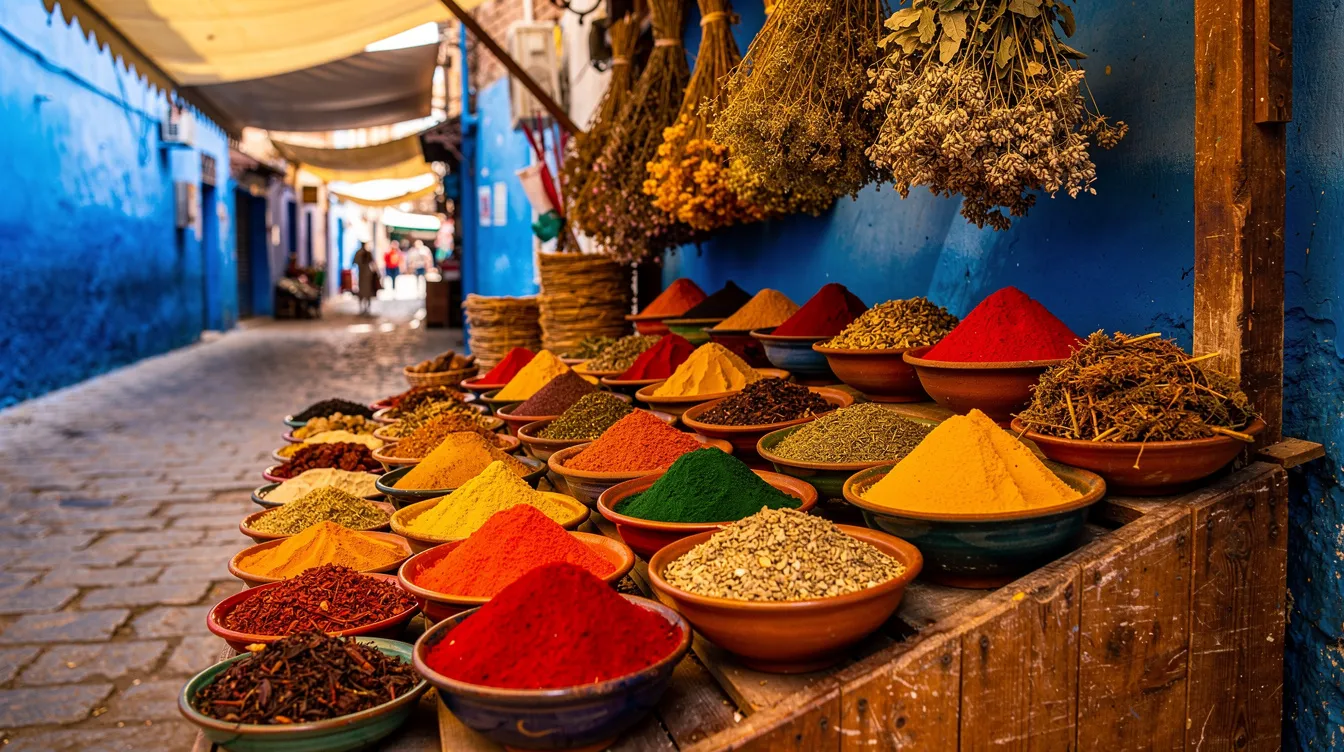
Shopping highlights include thuya wood workshops producing inlaid boxes, cooperatives selling argan oil (Essaouira is renowned for its argan oil production), spice merchants with saffron and royal tea blends, leather shops, and galleries exhibiting Berber-inspired paintings. For buying tips, see What to Buy in Morocco.
Argan oil guidance: Look for women's cooperatives or reputable boutiques outside the most touristy strips. Understand the difference between cosmetic argan oil and the culinary version used in salads and drizzled over grilled fresh fish.
Food scene. Essaouira's medina has numerous options for traditional Moroccan cuisine. Street vendors in Essaouira sell fresh crepes with various toppings, and the city is famous for freshly grilled seafood. Local restaurants in Essaouira serve delicious seafood dishes. Most restaurants offer tagines, couscous, and grilled fish. Cooking classes in Essaouira teach traditional Moroccan dishes like tagine and other traditional Moroccan recipes. Many restaurants along the port area and medina alleys cater to all budgets.
Alcohol. Can you drink alcohol in Essaouira? Yes - in licensed venues such as hotel bars, certain restaurants, and lounges. It's rarely advertised with big signs. Public drunkenness is frowned upon; consume respectfully.
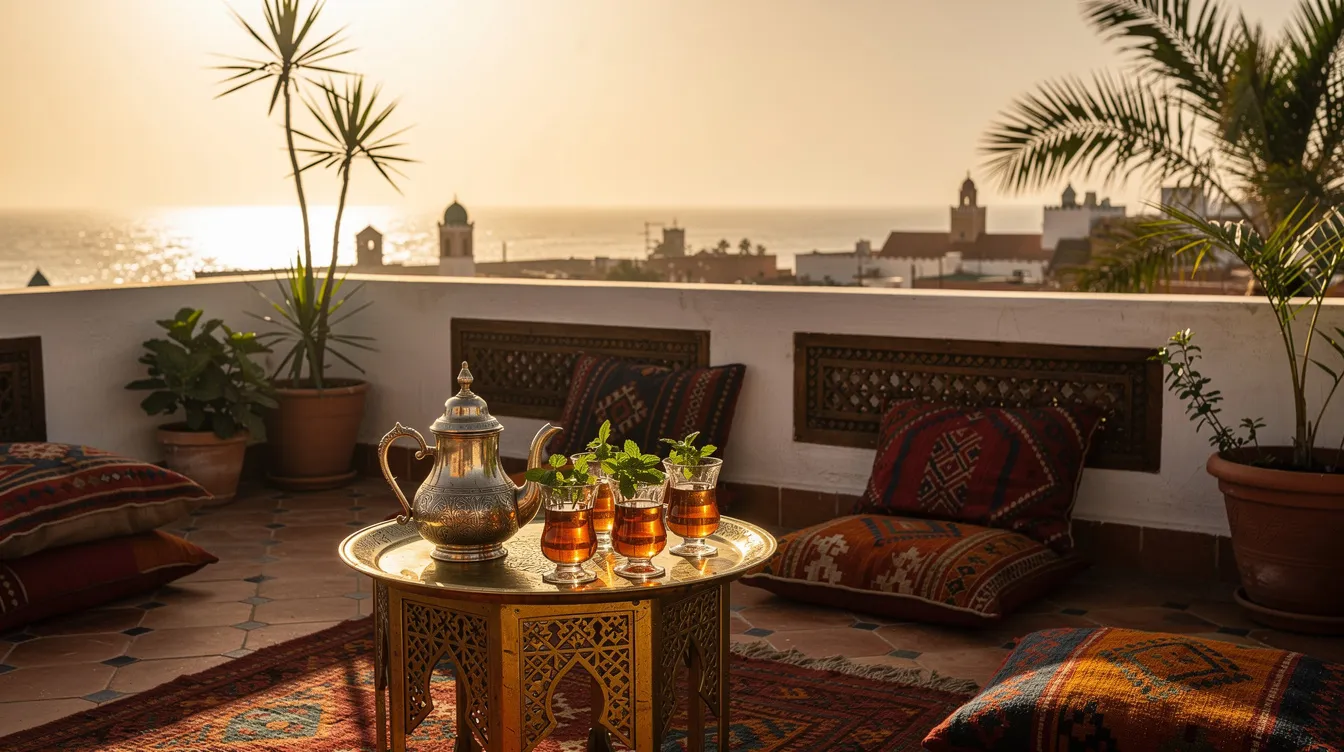
Cultural life. Gnaoua music blends sub-Saharan African and Moroccan influences, and small venues host jam sessions. The June Gnaoua and World Music Festival transforms the city walls and Hassan Square area into open-air stages. Leave time to simply wander the narrow streets, stopping for mint tea on a rooftop terrace with ocean views - it's one of Essaouira's greatest pleasures and what makes it a great destination.
Essaouira once had a large, influential Jewish community deeply involved in trade, and the city has a rich multicultural heritage including Amazigh, Arab, Jewish, and European communities. Traces of this past remain visible today.
The historic mellah (Jewish quarter) sits near the medina center, with narrow alleys that once housed merchants and distillers. Visitors can explore the old Jewish cemetery, Haim Pinto Synagogue, Simon Attias Synagogue, and the Bayt Dakira cultural center.
From the late 18th to early 20th centuries, many of Essaouira's leading traders and customs officials were moroccan jews, acting as intermediaries between the sultan's court and foreign merchants from other countries.
Why did the Jews leave Essaouira? Mid-20th-century factors drove mass emigration: the creation of the State of Israel in 1948, economic decline of the port, urban migration to Casablanca and abroad, and political uncertainties around Morocco's independence in 1956. Most Jewish families left between the 1940s and 1960s.
Today only a very small Jewish presence remains, but synagogues and cemeteries have been restored as part of Morocco's broader effort to preserve Jewish heritage. Morocco Classic Tours offers dedicated Morocco Jewish Tours with local experts for travelers interested in family roots and interfaith heritage.
Fans of Game of Thrones will recognize parts of Essaouira's city walls from scenes set in Astapor, the "Red City" where Daenerys first encounters the Unsullied in Season 3.
Main filming locations:
Skala de la Ville - the sea-facing ramparts overlooking the Atlantic, used for Daenerys's arrival scenes and the "Walk of Punishment" sequence.
Sqala du Port - near the fish market, used for harbor scenes of Astapor.
What visitors see today: preserved stone parapets, rows of bronze cannons facing the ocean, and views over the old fishing port and Mogador Island. All this is accessible on foot from the medina gates.
Self-guided walk: Start at Bab el Marsa, pass through the harbor and fish market, climb onto Sqala du Port, then walk along the ramparts. Visit early morning or near a beautiful sunset for softer light and fewer crowds. Wear good shoes - surfaces can be slippery after Atlantic spray.
For the full rundown of Moroccan filming spots, read our Game of Thrones in Morocco: Complete Guide to Filming Locations.
Essaouira's climate is mild and ocean-moderated year-round, with average daytime temperatures around 18–23°C - much cooler than inland cities even in midsummer.
Season | Temperature | Crowds | Best For |
|---|---|---|---|
May–Sep (high season) | 22–26°C highs | Busiest, especially Jul–Aug | Kite surfing, windsurfing, festivals |
Apr–May, Sep–Oct (shoulder) | 20–24°C | Moderate | General sightseeing, families |
Nov–Feb (winter) | 18–20°C highs, 11–13°C lows | Quietest | Budget travel, photography, medina exploration |
The Gnaoua and World Music Festival (typically June) is the city's biggest event, drawing international artists and filling riads fast - book early. On windy days, pack layers and a scarf for sand protection. For month-by-month detail, check our Essaouira Weather by Month guide. | |||
Most visitors reach Essaouira via Marrakech or Agadir. Essaouira is approximately 3 hours from Marrakech.
By air. Essaouira airport (ESU), about 16 km from the medina, has limited international flights - often seasonal routes from French cities - plus domestic connections. Marrakech (RAK) and Casablanca (CMN) airports offer far more frequent international service.
By bus from Marrakech. Supratours runs roughly 7 buses daily in both directions, with modern air-conditioned coaches. CTM offers at least one direct connection each way. Tickets cost around 100 MAD (≈ €9–10). Duration is about three hours. Private bus companies from Bab Doukkala are cheaper but less comfortable. Arrive 30 minutes early, label luggage, carry valuables on board, and keep a sweater handy - air conditioning can be strong.
By private transfer. Morocco Classic Tours offers Marrakech to Essaouira private transfer services in air-conditioned vehicles with English-speaking drivers, door-to-door pick-up, flexible departure times, and optional stops at argan oil cooperatives or scenic viewpoints.
From other cities. Agadir is roughly 3 hours south; Casablanca about 4.5–5 hours north. No train service exists to Essaouira. Morocco Classic Tours can organize multi-leg itineraries like our Casablanca, Essaouira & Agadir package.
Essaouira offers three main accommodation zones:
Inside the medina walls. Riads are traditional Moroccan houses built around a central courtyard, offering rooftop terrace views and immediate access to souks and restaurants. Prices for riads in Essaouira average 30-40 euros per night for two. Riad Azul is a recommended charming B&B. Note that some riads can be harder to access with heavy luggage due to car-free alleys.
Beach and promenade hotels. Modern hotels along the seafront south of the medina offer ocean views, pools, and easier taxi access - good for families and water-sports enthusiasts.
Countryside villas. Secluded stays in the argan tree hills a short drive from the old city suit longer retreats.
Accommodation options in Essaouira range from hostels to luxury hotels. For curated picks, see our guide to the 13 Best Hotels in Essaouira Morocco for Every Style of Traveler.
Morocco Classic Tours organizes customizable Marrakech to Essaouira private trips, from same-day excursions to multi-day coastal itineraries.
A typical private day trip includes early pick-up from your riad in Marrakech, a scenic 2.5–3 hour drive through argan tree country, an optional stop at a women's argan oil cooperative, a guided walking tour of the medina and city walls, free time for lunch at the fish market, and spectacular sunsets along the beach before returning. Walking tours in Essaouira can be booked privately or in groups.
Advantages over group tours: flexible timing, ability to tailor stops (more time at the fish market, a camel riding session, or cooking classes), private driver-guide insights, and comfort during the journey.
Multi-day options. Trips can be extended to 1–2 nights, combined with Agadir, Taghazout, or Atlas Mountain villages, or folded into longer Morocco tours including Sahara desert camps and cultural city stays. Essaouira offers customizable tours for various activities year-round. Essaouira's beach is popular for kitesurfing and surfing lessons, and we can pre-book these alongside your transfer. Add Essaouira to any of our Morocco Private Tours for a seamless experience.
Ready to plan? Contact Morocco Classic Tours via our website or email to design a private Essaouira itinerary that matches your pace, interests, and travel dates.
Topic | Advice |
|---|---|
Currency | Moroccan dirham (MAD). ATMs near medina gates. Most restaurants accept cards; food stalls and fish market are cash-only. |
Tipping | 5–10 MAD in cafés; 10–15% in restaurants. Small tips for guides, drivers, and porters appreciated. |
Dress | Modest, comfortable clothing (shoulders and knees covered) away from the beach. Layers for wind and cooler evenings. Swimwear on the beach only. |
Health | Strong sun protection, light scarf for windy days and sand. Basic first-aid kit recommended. Keep passport copies; store originals in riad safes. |
Etiquette | Ask before photographing people. Greet with "Salam alaykum" - learning a few phrases in Moroccan Arabic or French goes a long way. Respect prayer times and religious sites. |
Language | Many locals speak French, Moroccan Arabic, and Amazigh; English is common in tourist areas. The city's multicultural roots reflect arab cultures and Berber traditions. |
Morocco Classic Tours provides pre-departure information sheets and on-the-ground WhatsApp support to answer practical questions during guests' stays in Essaouira and across Morocco. This great place deserves an informed visit - a little preparation makes all this even more enjoyable. | |
Many travelers perceive Essaouira as calmer and more relaxed than Marrakech, with fewer aggressive touts and a generally slower pace. Petty crime can occur in both cities, but the crowds and hectic traffic in Marrakech tend to feel more overwhelming. In either historic city, staying aware of belongings, avoiding deserted areas late at night, and using licensed guides are the best safeguards. Essaouira is a great place for those who want Morocco's charm without the intensity.
Essaouira is popular with tourists, especially during high season and the Gnaoua Festival, but it still retains a strong local community and a working fishing port. Some fish stalls and souvenir shops near the main gates overcharge visitors. Walk a little deeper into the medina or choose recommended vendors to enjoy authentic experiences without inflated prices. It is not a tourist trap - it's a living, breathing town where locals go about their daily business alongside visitors.
Buy tickets online or at bus stations for companies like CTM and Supratours. Buses typically depart from central Marrakech stations and arrive at Essaouira's bus station just outside the medina. Arrive 30 minutes early, label luggage for the hold (a small baggage-handling fee may apply), carry valuables on board, and keep a sweater handy.
A single day trip from Marrakech lets you see the key highlights - medina, port, ramparts, and beach - but a longer stay of 2–3 days gives time to relax, try kite surfing or cooking classes, and enjoy evenings on rooftop terraces. If your schedule is tight, a private transfer or day tour through Morocco Classic Tours maximizes time on the ground and avoids waiting for shared transport.
May and late September–October offer the best balance of pleasant weather, reliable breezes, and manageable crowds. High season (July–August) is ideal for water sports but busiest and most expensive. Winter months bring quieter streets and lower rates, though seas can be choppier and evenings cooler.
Compare Morocco group tour agencies by trip style, reviews, pace, transport and inclusions. Learn wh...
Read this article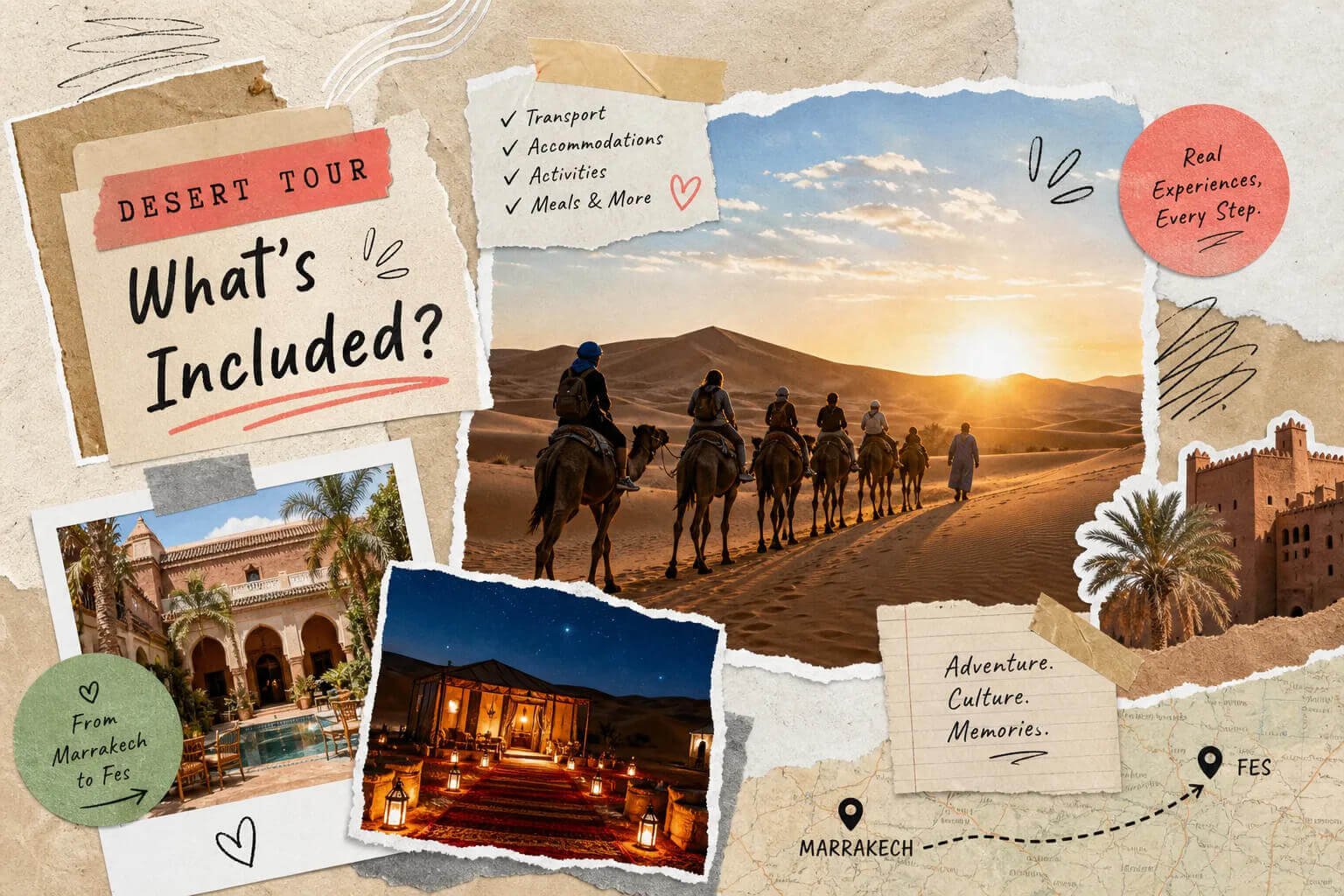
Uncover what a Marrakech to Fes desert tour offers, including camel rides, desert camps, and rich cu...
Read this article
Join our Merzouga Overnight Tour for an authentic desert experience. Enjoy camel rides, comfortable ...
Read this articleWant cool tour deals and tips about Morocco? Enter your email and we’ll send them to you each month!
