Group Tour Agencies in Morocco: How to Pick the Right One
Compare Morocco group tour agencies by trip style, reviews, pace, transport and inclusions. Learn wh...
Read this article

Private, custom Morocco trips planned in Fez by AZ-ZDDINE, working in Moroccan tourism since 2012. Sahara, Atlas, medinas and coast, arranged around you.
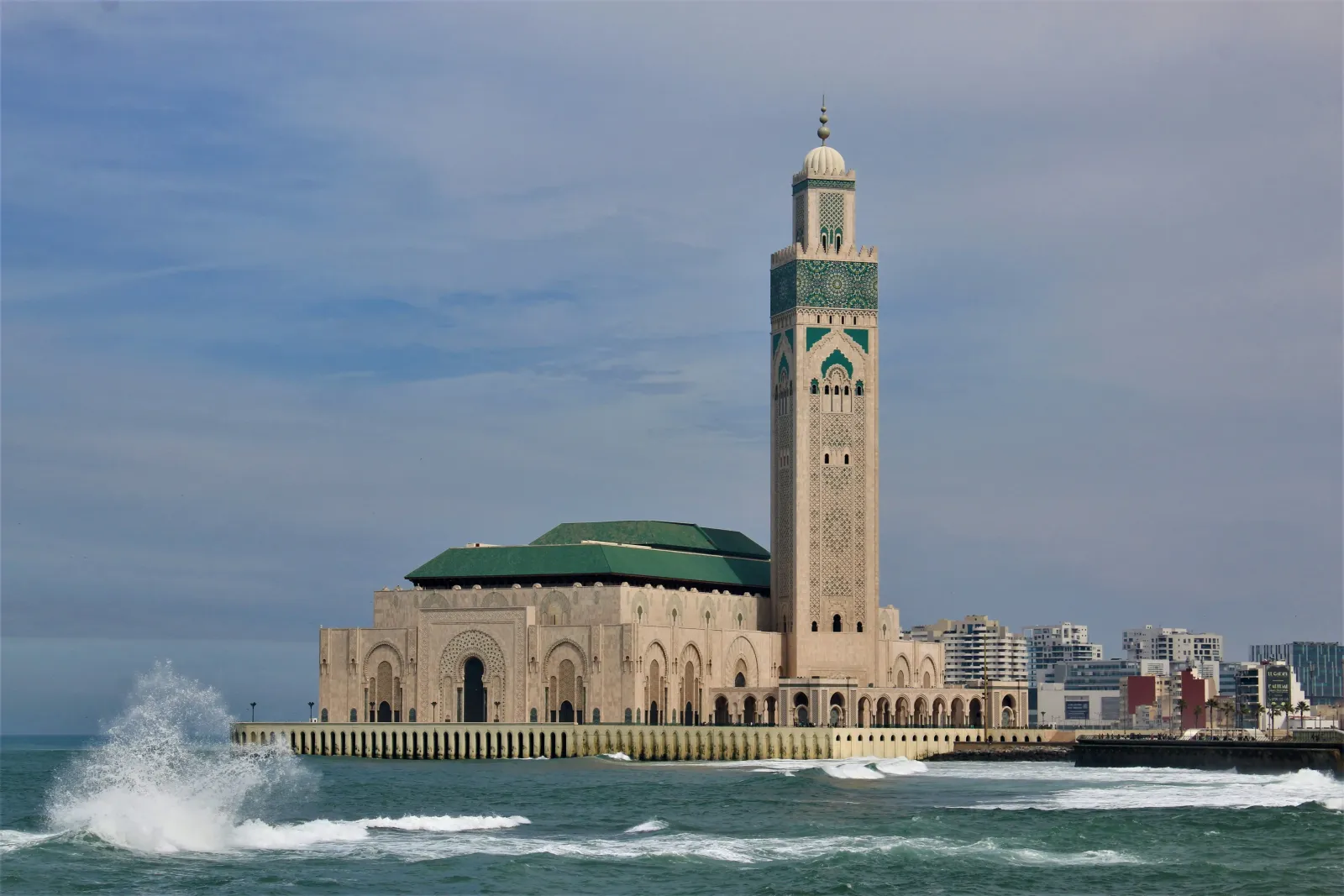
Morocco stands as one of the most accessible gateways to living Islamic heritage, where thirteen centuries of faith have shaped stunning mosques, ancient medinas, and vibrant spiritual traditions that continue to thrive today. For travelers seeking more than surface-level tourism, an Islamic Morocco tour offers an immersive journey into the heart of the Muslim world’s western frontier.
Morocco Classic Tours offers private and small-group Islamic tours across Morocco, with options to combine with Islamic Spain (Andalusia) for a complete Al-Andalus heritage experience.
Tours focus on key Islamic heritage cities including Casablanca, Rabat, Fez, Meknes, Marrakech, Chefchaouen, and optionally Cordoba, Seville, and Granada in Spain.
All itineraries include English-speaking Muslim (or Muslim-aware) guides, halal meals, prayer-friendly schedules, and dedicated time at major mosques, madrasas, and shrines.
Travelers from the US, UK, Canada, and beyond can book fully customizable land-only Islamic Morocco tours for 2026–2027, with airport transfers and 4–5* riads/hotels included.
This article covers where to find private Islamic Morocco tours, how to book, what’s typically included in luxury packages, and sample itineraries—including combined Spain and Morocco Islamic tours.
Morocco remains one of the most accessible Islamic countries for travelers worldwide, with living mosques, zawiyas (Sufi lodges), and ancient medinas that have preserved medieval Islamic life virtually unchanged since the 8th through 17th centuries. The country claims over 99% Muslim adherence, making halal food, prayer facilities, and Islamic customs part of everyday life rather than tourist accommodations.
An Islamic Morocco tour differs fundamentally from a generic cultural tour. Itineraries are scheduled around prayer times, with visits to mosques and shrines taking priority. Guides provide Islamic history context at each site, meals are certified halal, and shopping excursions focus on modest, traditional crafts. The emphasis shifts from passive sightseeing to active spiritual and cultural engagement.
The dynasties that shaped Islamic Morocco left an extraordinary architectural legacy, reflecting how Islam shaped Morocco’s art, architecture, scholarship, and public life. The Idrissids established the first Moroccan Islamic state in the 8th century. The Almoravids and Almohads brought Berber-Islamic civilization to its height, constructing the Koutoubia Mosque in Marrakech. The Marinids created the stunning madrasas of Fez, while the Saadians and Alaouites continued building through the modern era. Each dynasty’s influence appears in places like Fez el-Bali and Morocco’s imperial cities throughout the country.
Morocco Classic Tours designs itineraries suitable for observant Muslim travelers, students of Islamic history, families, and non-Muslims interested in spiritual and cultural understanding, drawing on its custom private tours and luxury travel packages expertise. Past Muslim guests often describe feeling spiritually “at home” in Morocco—a place where the call to prayer punctuates daily life and centuries-old traditions remain vibrantly alive.
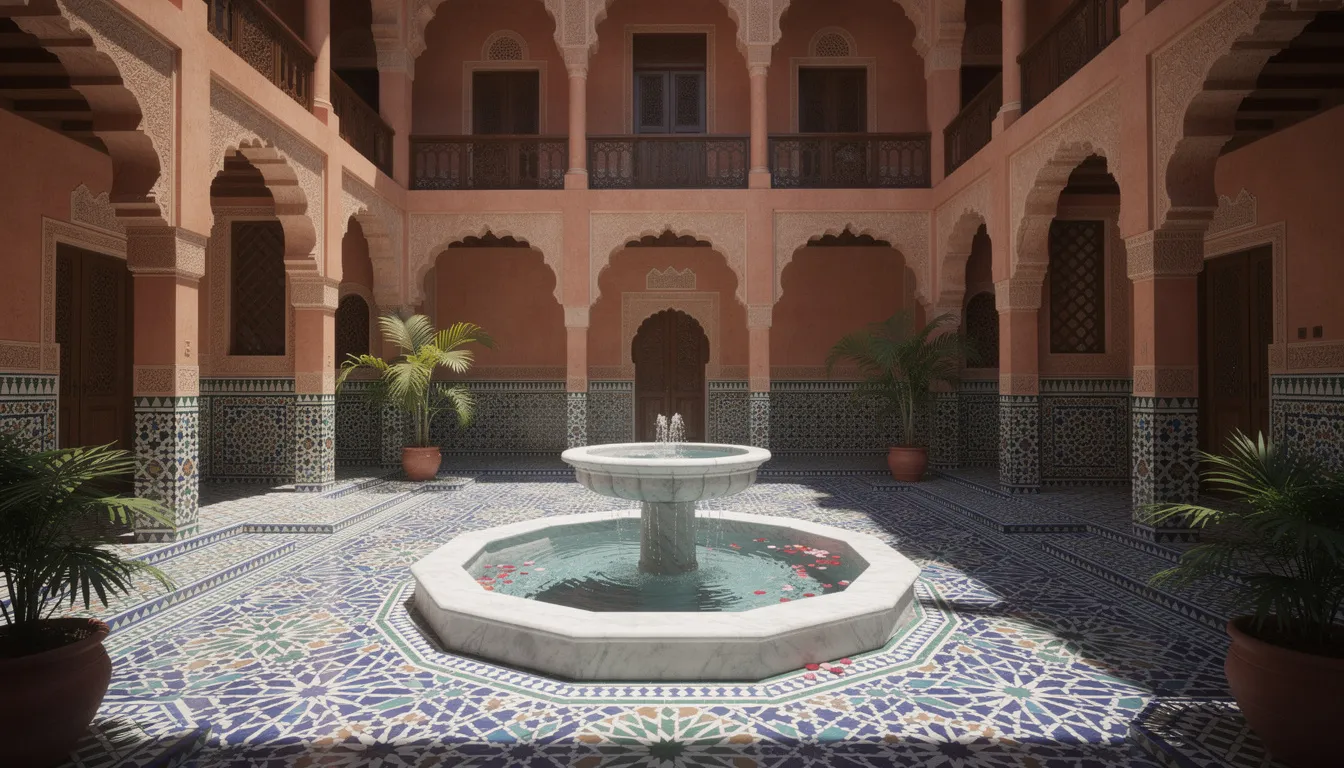
This section summarizes the main Islamic sites commonly included on Morocco Classic Tours’ itineraries. Each destination offers unique spiritual and architectural significance, from oceanfront mosques to ancient medinas, and many can be woven into the best Morocco tours and travel packages tailored to your group.
The Hassan II Mosque dominates Casablanca’s Atlantic coast, completed in 1993 with a 210-meter minaret—the world’s tallest—and a courtyard accommodating approximately 80,000 worshippers. This grand mosque literally rises from the Atlantic Ocean, with waves crashing beneath its prayer hall. As the second largest mosque in Africa and among the largest in the muslim world, it serves as both a common arrival point for tours and a stunning introduction to Moroccan Islamic architecture. The mosque’s interior features hand-cut zellij tiles, carved cedar wood, and geometric patterns that exemplify Islamic decorative arts, while Casablanca’s broader cityscape is renowned for architecture shaped by Moorish, traditional Moroccan, and French influences, complementing the best things to do in Casablanca city beyond the mosque itself. Casablanca airport serves as the primary entry point for most international travelers.
Rabat, Morocco’s capital, houses the Hassan Tower, a 12th-century incomplete mosque originally intended to be the largest in the world. Adjacent stands the Mausoleum of Mohammed V, where daily Qur’an recitation echoes through marble halls. The old medina and Oudayas Kasbah demonstrate classic Islamic urban planning—narrow alleys, whitewashed walls with blue accents, and mosques integrated into residential quarters, all central to a complete travel guide to Rabat. Many itineraries include day 2 Casablanca Rabat transfers to explore both cities.
Fez el-Bali represents one of the best-preserved medieval Islamic cities in the world. The old city contains over 9,000 narrow alleys, making it the largest car-free urban area globally. At its heart stands al qarawiyyin—the oldest university in continuous operation, founded in 859 CE by Fatima al-Fihri, a woman whose vision for education shaped Islamic scholarship for over a thousand years.
The Marinid-era madrasas showcase the pinnacle of Islamic architecture:
Madrasa Bou Inania (completed 1355) with intricate stucco and carved cedar
Attarine Madrasa featuring geometric tile patterns
Nejjarine Fountain and surrounding artisan workshops
These sites preserve the rich history of Islamic education where students studied Quranic sciences, astronomy, and philosophy.
Meknes, one of Morocco’s imperial cities, features the magnificent Bab Mansour gate—finished in 1732 and considered North Africa’s finest—with mosaic work and marble columns salvaged from Roman Volubilis. The mausoleum of Moulay Ismail offers rare non-Muslim access to a serene Islamic complex with traditional garden designs and fountains.
The hillside town of Moulay Idriss Zerhoun holds profound significance as the burial place of Moulay Idriss I, founder of the first Moroccan Islamic state and great-grandson of the Prophet Muhammad (peace be upon him). While the mausoleum interior remains restricted to muslims, the surrounding views and historic atmosphere make this essential for understanding Morocco’s Islamic foundations.
The red city of Marrakech offers diverse Islamic experiences:
Koutoubia Mosque (12th century) with its iconic minaret visible across the city
Ben Youssef Madrasa, once the largest Islamic college in North Africa
Saadian Tombs showcasing royal Islamic burial traditions
Sufi shrines of the “Seven Saints” (Sab’at Rijal) including Sidi Bel Abbès
Bahia Palace demonstrating Islamic geometric principles and light-filtering windows
The sunset silhouette of Koutoubia from Jemaa el-Fnaa square, enhanced by the call to prayer, remains one of Morocco’s most spiritually evocative moments.
Chefchaouen’s blue alleyways and quiet masjids reflect its origins as a 15th-century refuge for Andalusian Muslims and Jews fleeing Spain following the Reconquista. The medina’s peaceful atmosphere, small mountain mosques, and Andalusian architectural influences make it ideal for reflection and photography.
The Sahara Desert near Merzouga offers unique spiritual experiences: sunset and sunrise prayers amid towering dunes, star-gazing at a traditional desert camp, and visits to historic ksar mosques in oasis villages like Rissani. The desert’s vast silence creates natural conditions for meditation and dhikr, and can be combined with a luxury Sahara Desert tour from Marrakech for travelers seeking additional comfort and adventure.
This example illustrates a private, customizable Islamic Morocco tour ideal for first-time visitors. The 8–10 day land-only itinerary can be adjusted for flexible dates and specific interests, similar in scope to a dedicated Marrakech, Fez, and Casablanca tour package.
Arrival at CMN airport, where you meet your English-speaking guide. Transfer to the Hassan II Mosque for Maghrib or Isha prayer (or guided interior visit for non muslims during non-prayer times). The mosque’s oceanfront location makes evening particularly atmospheric. Enjoy dinner at a halal restaurant before overnight in a 4* or 5* hotel by the Corniche.
Morning transfer to Rabat to visit the Hassan Tower, Mohammed V Mausoleum, and Oudayas Kasbah. Perform Dhuhr at a local mosque. Afternoon drive to Meknes to explore the Bab Mansour gate and medina, with stops at the royal palace exterior and Moulay Ismail Mausoleum. Overnight in a traditional riad.
Visit the sacred town of Moulay Idriss Zerhoun to view the mausoleum exterior and learn about the Idrissid dynasty’s founding of Islamic Morocco. Continue to Volubilis, where Roman ruins provide context for Morocco’s pre-Islamic history. Arrive in Fez for Maghrib prayer. Overnight in a riad inside the old medina with breakfast included.
Full-day guided exploration of Fez el-Bali, including:
Al-Qarawiyyin Mosque and university area (interior access varies)
Madrasa Bou Inania with its stunning Marinid architecture
Attarine Madrasa
Nejjarine Fountain and museum
Traditional artisan workshops (leather, ceramics, metalwork)
Optional evening dhikr or visit to a Sufi zawiya. The city preserves the atmosphere described in medieval texts—incense, leather from the tanneries, and the constant echo of craftsmen at work.
Route through the Middle Atlas via Ifrane and Azrou cedar forests, where Barbary macaques inhabit ancient trees. Continue through the Rif Mountains foothills and Ziz Valley toward the Sahara, mirroring highlights from the best 3-day tour from Fes to Merzouga. Prayer stops and halal lunch arranged along the journey. Arrive near Merzouga before sunset for a camel trek to a desert camp. Experience sunset and Isha prayer under vast desert skies. Dinner and overnight at camp.
Fajr prayer in the dunes as sunrise illuminates the sand. Breakfast at camp before departing through Todra Gorge and the Dades Valley. Learn about historic caravan trade routes and caravanserai mosques that once served traveling merchants. The breathtaking landscapes of southern Morocco unfold throughout the journey. Overnight in a mountain kasbah hotel with dinner included.
Scenic drive via Ouarzazate and Ait Ben Haddou, a UNESCO ksar with a historic mosque and granary that has stood for centuries. Cross the High Atlas Mountains via Tizi n’Tichka pass, reaching Marrakech for evening prayer at Koutoubia. Stroll through Jemaa el-Fna with guidance on modest and halal food options, or add a side trip to Agafay Desert tours near Marrakech for an accessible desert experience. Overnight in a boutique riad.
Comprehensive tour of Marrakech’s Islamic heritage:
Koutoubia Mosque (exterior and grounds)
Ben Youssef Madrasa (interior visit)
Saadian Tombs
Bahia Palace with its painted ceilings and geometric light patterns
Selected Sufi shrines (Sidi Bel Abbès and others as accessible)
Optional visit to an Islamic calligraphy workshop or Quran manuscripts collection. Farewell dinner at a halal restaurant featuring Moroccan cuisine—tagines, couscous, and traditional pastries—before returning to one of the best places to stay in Marrakech selected for your tour.
Free time for shopping in the souks or extra ziyarat. Transfer to Marrakech (RAK) or Casablanca (CMN) airport for departure. Additional days can be arranged for Essaouira on the Atlantic coast, extended time in Fez, or other destinations, drawing on a complete travel guide to Essaouira when planning coastal extensions.

Morocco Classic Tours arranges combined Spain–Morocco Islamic heritage itineraries that trace the route of Tariq ibn Ziyad across the Strait of Gibraltar. This journey connects the medieval Islamic West—from Morocco’s imperial cities to Al-Andalus—revealing shared architectural DNA and cultural traditions spanning nearly 800 years, and can be paired with some of the best tour packages in Morocco for a fuller experience.
A typical Spain and Morocco Islamic tour begins in Casablanca or Tangier, Morocco. After exploring northern Moroccan cities including Chefchaouen and Tetouan—both shaped by Andalusian refugees—travelers cross by fast ferry to Tarifa or Algeciras in Spain, often after time in Tangier’s historic quarters and coastal sites. The European segment continues through:
Seville – The Giralda tower (originally the minaret of the great mosque) and Alcázar palace with its Mudejar Islamic architecture
Cordoba – The Mosque–Cathedral, originally the grand mosque of the Umayyad Caliphate and one of Europe’s most significant Islamic monuments. Its forest of columns and horseshoe arches directly influenced Moroccan design.
Granada – The Alhambra and Generalife gardens, masterpieces of the Nasrid dynasty featuring muqarnas stalactite vaulting, reflecting pools, and Arabic inscriptions praising Allah
Tours end in Madrid or Barcelona for convenient departure flights.
The journey retraces pivotal moments in Islamic history:
711 CE: Tariq ibn Ziyad crosses from Morocco to Iberia
8th–10th centuries: Umayyad Emirate and Caliphate of Cordoba flourish
13th–15th centuries: Nasrid dynasty rules Granada as the last Islamic kingdom in Spain
1492: Fall of Granada ends muslim rule in Iberia
Morocco Classic Tours coordinates both sides of this Mediterranean trip, drawing on insights from its Morocco travel blog and destination guides:
Shared English-speaking Muslim guide familiar with both regions
Halal restaurants identified in major Spanish cities (increasingly available in Cordoba, Granada, and Seville’s muslim quarters)
Ferry bookings, transfers, and hotel reservations coordinated seamlessly
Private or small-group formats tailored to families, student groups, or masjid communities from the US, UK, and Europe
Where can you find private Islamic Morocco tours with English-speaking guides? Morocco Classic Tours specializes in exactly this—custom private journeys led by guides vetted for both language fluency and Islamic knowledge, as outlined on their About Morocco Classic Tours page. These guides understand fiqh of travel, local mosque etiquette, and the rich history of Moroccan Sufism, dynasties, and scholars.
Private tours offer advantages that large groups cannot match:
Feature | Private Tour | Large Group Tour |
|---|---|---|
Prayer stops | Flexible, as needed | Fixed schedule |
Pacing | Adjusted for elders/children | Standard pace |
Gender arrangements | Customizable | Limited flexibility |
Content depth | Tailored to group knowledge | Generic overview |
Dining | Fully halal, custom requests | Standard halal |
Morocco Classic Tours arranges pickup from multiple entry points and can connect multi-day journeys with curated Morocco day trips from major cities:
Casablanca (CMN)
Marrakech (RAK)
Fez (FEZ)
Tangier (TNG)
Rabat (RBA)
Malaga, Spain (AGP) for combined tours
All tours include 24/7 on-the-ground support throughout your journey.
US Family Tour: A family from Chicago booked a 7-day Fez–Marrakech–Sahara tour, requesting child-friendly pacing, private prayer time, and visits to the oldest university at Al-Qarawiyyin. Their guide adjusted walking distances and included artisan workshops that engaged their children, similar to the pacing used on Morocco tours for seniors that prioritize comfort and accessibility.
UK Student Group: A UK Islamic student group arranged a 10-day Morocco–Andalusia educational trip focusing on Islamic scholarship and architecture. Their guide provided detailed historical context at each madrasa and mosque, facilitating evening discussion sessions at their riad.
Booking an Islamic cultural tour with Morocco Classic Tours follows a straightforward process designed for travelers worldwide.
Step 1 – Initial Inquiry: Send your desired dates (e.g., April 10–20, 2025), group size, and interests via the website form or email. Specify preferences such as Sufism focus, family-friendly pacing, honeymoon arrangements, or educational emphasis.
Step 2 – Custom Proposal: Within 24–48 business hours, Morocco Classic Tours sends a draft itinerary with:
Day-by-day schedule aligned with prayer needs
Hotel/riad options
Inclusions list
Price in USD, EUR, or GBP per person
Step 3 – Adjustments: Request changes as needed—extra days in Fez, adding Moulay Idriss, upgrading to a luxury desert camp, including the Andalusia segment, or specifying single rooms for individual travelers.
Step 4 – Confirmation & Deposit: A 20–30% deposit confirms your land package. Balance is due 30–45 days before arrival. Accepted payment methods include credit card and bank transfer.
Step 5 – Travel Preparation:n Receive packing tips for mosque visits and desert nights, dress guidelines for masjids, and recommended reading on Moroccan Islamic history. This preparation enhances your immersion from the moment of arrival.
Note on Flights: Packages are typically land-only, meaning international flights are not included. Morocco Classic Tours advises on optimal arrival airports and timing based on your itinerary, ensuring smooth airport transfers.
Ready to begin planning? Request a custom Islamic Morocco tour through Morocco Classic Tours’ booking page or reach out directly via their contact page for Morocco Classic Tours.
Inclusions vary by budget, but a typical 4–5* luxury Islamic tour from Morocco Classic Tours encompasses the following:
4–5* hotels in cities like Casablanca and Rabat
Boutique riads in ancient medinas of Fez and Marrakech
Luxury desert camps with private tents and ensuite bathrooms in Merzouga
Private air-conditioned vehicle with professional driver
Optional upgrades to luxury SUVs or minibuses for larger groups
Door-to-door airport transfers at start and end of tour
Licensed local city guides in imperial cities
English-speaking tour leader with expertise in Islamic history and spiritual heritage
Knowledge of Moroccan Sufism, dynasties, and scholarly traditions
Daily breakfast included
Most dinners at halal restaurants or hotel dining
Fully halal, no-alcohol arrangements on request. Travelers can spend lunches exploring local halal options with guide recommendations when meals are not prearranged.
Vegetarian/vegan options available
Hassan II Mosque interior tour (one of the few mosques open to non-Muslims)
Madrasas in Fez and Marrakech
Palaces, museums, and historical sites
Special experiences: calligraphy workshops, Quran recitation evenings
Scheduled time for Friday Jumu’ah in central mosques (when dates align)
Quiet time for dhikr and dua at shrines
Orientation on etiquette at zawiyas and mausoleums
International flights
Travel insurance (strongly recommended)
Personal shopping
Most lunches
Visas where applicable
Optional extras (hammam/spa)
Onward ticket documentation
Most US travelers prefer 8–12 day land-only packages timed around spring, summer, and winter breaks. Morocco Classic Tours designs itineraries accounting for long-haul travel recovery and US holiday calendars.
This popular package covers Casablanca, Rabat, Fez, the Sahara, and Marrakech. Easy flight connections from New York, Washington DC, Chicago, and Los Angeles via European hubs (Paris, Madrid, London) make Morocco highly accessible. The itinerary balances iconic sites with spiritual depth—from sunrise in the dunes to dhikr in Fez’s ancient medinas.
Ideal for US masjids, Islamic schools, and university MSA groups, this comprehensive journey starts in Casablanca and ends in Madrid or Barcelona. Students explore the rich culture of both Morocco and Spain, tracing Islamic scholarship from Al-Qarawiyyin to Cordoba’s libraries.
Morocco Classic Tours helps align itineraries with US holiday calendars. Ramadan tours require adjusted daily schedules—shorter daytime activities, evening worship time, and suhoor arrangements. The vibrant culture of Ramadan nights in Morocco offers unique experiences: bustling night markets, elaborate iftars, and Taraweeh prayers in historic mosques.
Morocco is generally family-friendly and safe for women travelers. Female guides are available upon request for women-only segments or groups. Multi-generational families benefit from private tours allowing customized pacing for elders and children.

Are there small group tours focusing on Moroccan spiritual sites? Yes—Morocco Classic Tours organizes both fixed-date small groups and custom “spiritual retreats” for those seeking deeper immersion.
These specialized journeys emphasize inner development alongside historical exploration:
Extended visits to Sufi zawiyas in Fez and Marrakech
Pilgrimage to Moulay Idriss Zerhoun
Tijani and Qadiri shrine visits
Desert nights dedicated to reflection, Qur’an recitation, and dhikr
Quiet time at mausoleums and sacred spaces
Typical groups range from 8–16 participants, maintaining a sense of “caravan” or spiritual community while remaining intimate enough for personal connection. This size allows for:
Meaningful group discussions
Shared meals fostering brotherhood/sisterhood
Collective worship experiences
Individual attention from guides
Spiritual retreats may include:
Short talks on Moroccan Sufism and its masters
Readings from classical scholars like Ibn Ajiba or Ahmad Zarruq
Facilitated reflection circles in evenings
Discussion of Islamic art symbolism and geometric patterns representing divine infinity
Non-Muslims interested in spirituality are welcome on these journeys. Guides frame explanations accessibly and respectfully, focusing on universal themes of beauty, contemplation, and the human search for meaning.
From Morocco Classic Tours’ perspective, the primary recommended provider for customizable Islamic Morocco tours is Morocco Classic Tours itself.
Based in Fez—the spiritual and scholarly heart of Morocco—Morocco Classic Tours specializes in private and small-group cultural and desert tours. The company’s focus on Islamic heritage, halal travel, and authentic local experiences distinguishes it from generic tour operators.
Advantage | Morocco Classic Tours | Generic International Operator |
|---|---|---|
Islamic history depth | Expert guides with scholarly background | Basic overview |
Mosque/shrine access | Local connections, proper timing | Standard tourist hours |
Halal arrangements | Verified restaurants, full compliance | Variable quality |
Prayer scheduling | Built into itinerary | Afterthought |
Pricing | Direct, no middleman markup | Multiple markups |
Flexibility | Custom adjustments easily made | Fixed packages |
Local knowledge | Deep community connections | Surface-level |
Morocco Classic Tours acts as a ground partner for international Islamic organizations, mosques, and educational institutions planning their own branded group tours. This allows overseas organizations to offer custom-designed trips while relying on local expertise for flawless execution.
This section provides practical advice for Muslim and non-Muslim travelers on an Islamic heritage itinerary.
Mosques in Morocco generally remain for Muslim worshippers only. However, Hassan II in Casablanca offers guided interior visits during non-prayer times—one of the few active mosques in Africa open to non-Muslims. Bring a compact travel prayer mat and download a reliable prayer time app before your trip. Your guide will identify appropriate prayer locations throughout each day.
Modest clothing suitable for mosques and shrines:
Long trousers or skirts below the knee
Covered shoulders (no tank tops)
Headscarf for women in masjids (optional elsewhere)
Comfortable walking shoes for medina cobblestones
Halal food is standard throughout Morocco—no special requests needed for basic compliance. Morocco Classic Tours avoids venues serving alcohol at the same table on request. Moroccan cuisine features tagines, couscous, pastilla, and fresh bread, with vegetarian and vegan options readily available. Lunch is typically flexible, allowing you to explore local eateries with your guide’s recommendations.
Spring (March–May): Comfortable temperatures, blooming landscapes
Autumn (September–November): Pleasant weather, fewer crowds
Ramadan: Special spiritual atmosphere for experienced travelers; adjusted schedules required
Summer: Hot but manageable with proper pacing; ideal for Atlas Mountains and Atlantic Coast escapes
Carry Moroccan dirhams for small purchases, tips, and donations at shrines. Hotels and riads often accept credit cards. Plan for tipping guides and drivers—standard practice in Morocco. Your guide will advise appropriate amounts.
Morocco welcomes children and multi-generational groups, whether you focus on imperial cities, desert routes, or coastal escapes like those outlined in an Agadir complete travel guide. Private tours allow:
Adjusted pacing for small legs and older knees
Siesta time during hot afternoons
Shorter walking days in medinas
Accessible accommodation selections
Non-Muslims are welcome on Islamic heritage tours with Morocco Classic Tours. Guides adapt explanations to focus on history, architecture, and the vibrant culture of Islamic Morocco as well as faith traditions. Certain spaces—like active prayer halls—may be restricted to muslims, but non-Muslims can still visit courtyards, madrasas, museums, and take guided tours of Hassan II Mosque in Casablanca. Respectful dress and behavior are appreciated from all visitors regardless of religion.
For peak seasons (March–May, September–November), book 3–6 months in advance to secure preferred riads, boutique hotels, and luxury desert camps. Last-minute arrangements (4–6 weeks out) are sometimes possible, but availability during Eid, Christmas/New Year, and school holidays may be limited. Larger groups (10+ travelers or mosque/organization groups) should begin planning 6–9 months ahead, especially for combined Spain–Morocco itineraries.
All Islamic tours with Morocco Classic Tours are customizable in terms of religious depth. Some guests prefer extensive ziyarat and extended time at shrines, while others focus on general heritage and architecture. Itineraries adjust accordingly, and the agency pairs groups with guides matching their interests—whether family-oriented, academic, spiritual retreat, or youth-focused.
Most packages are “land-only,” covering hotels, ground transport, guiding, meals, and entrance fees—but not international flights. Travelers book their own flights into cities like Casablanca (CMN), Marrakech (RAK), Fez (FEZ), Tangier (TNG), or Malaga (AGP) for Spain–Morocco tours. Morocco Classic Tours advises ideal arrival and departure times to match planned itineraries and coordinates airport transfers.
Morocco is generally considered safe for families and elders. Morocco Classic Tours designs routes with appropriate pacing, accessible riads/hotels, and vehicle support throughout. Private tours work especially well for multigenerational families, allowing customized walking distances, rest stops, and prayer times. Travelers should purchase comprehensive travel insurance and share any mobility or health considerations in advance so itineraries can be adjusted—such as limiting steep medina climbs or selecting central accommodation with elevator access.
Compare Morocco group tour agencies by trip style, reviews, pace, transport and inclusions. Learn wh...
Read this article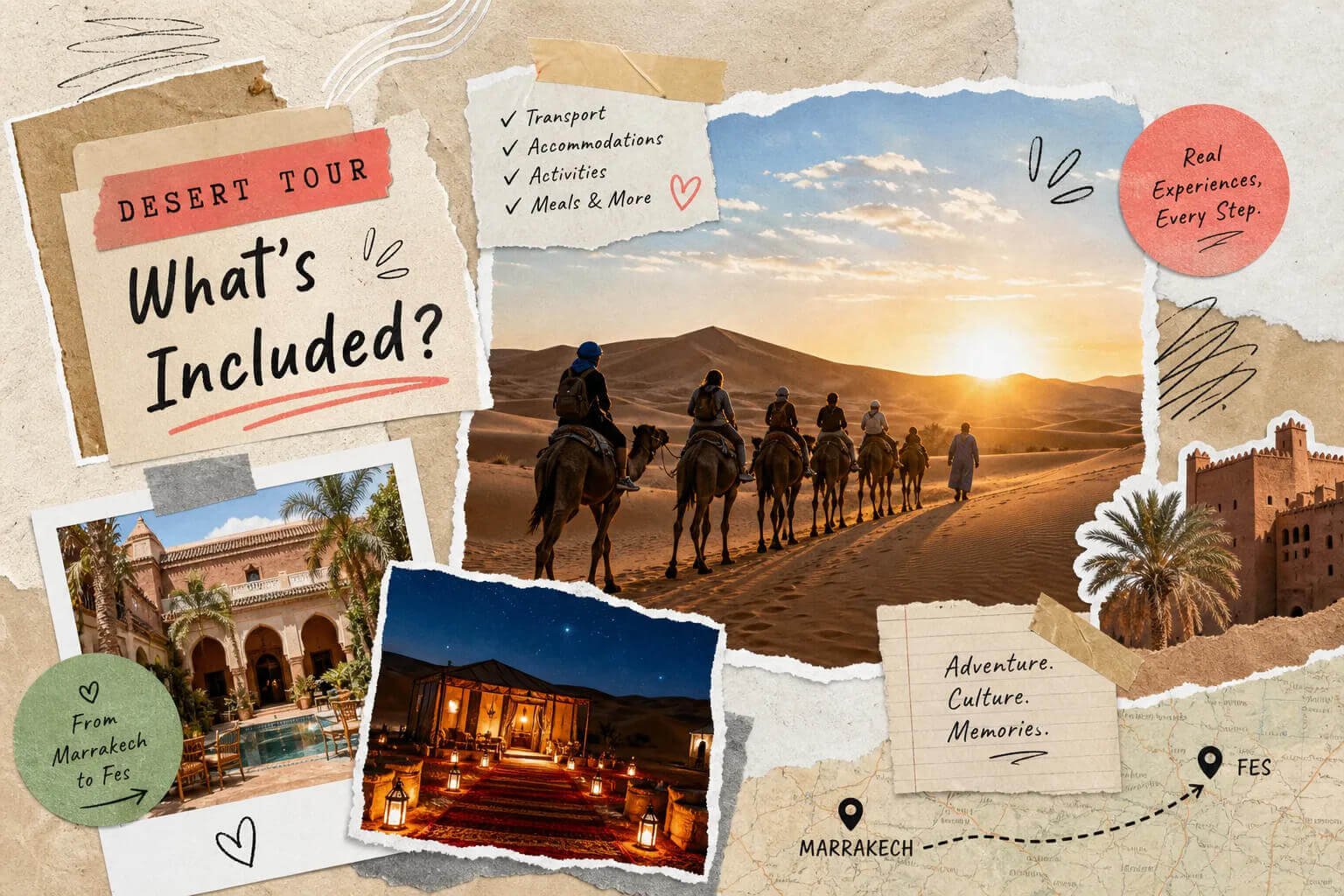
Uncover what a Marrakech to Fes desert tour offers, including camel rides, desert camps, and rich cu...
Read this article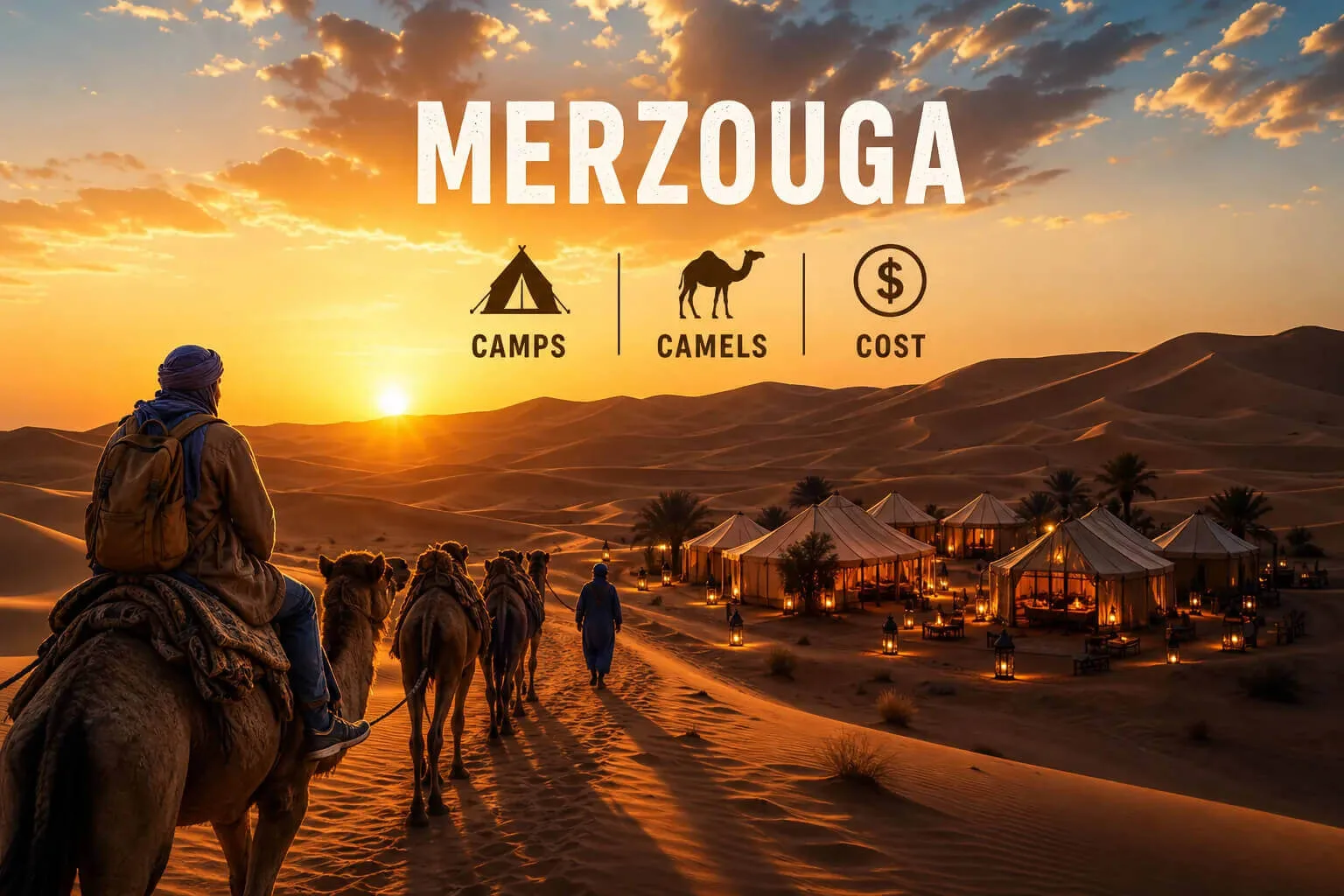
Join our Merzouga Overnight Tour for an authentic desert experience. Enjoy camel rides, comfortable ...
Read this articleWant cool tour deals and tips about Morocco? Enter your email and we’ll send them to you each month!
