How Far Is the Agafay Desert from Marrakech?
The Agafay Desert is a mere 30 minutes from Marrakech! Dive into a world of adventure and natural b...
Read this article

Suspendisse interdum consectetur libero id. Fermentum leo vel orci porta non. Euismod viverra nibh cras pulvinar suspen.
If you are planning a trip and searching forUberMorocco, the short answer is: yes, Uber is back in Morocco, but it does not work everywhere. Uber officially resumed operations in November 2025 with a more regulated model, starting in Casablanca and Marrakech with licensed vehicles and professional drivers, while many other Moroccan cities still rely on classic taxi networks, Careem, inDrive, Yango, hotel transfers, and private drivers.
For travelers, tourists, and locals trying to plan rides in Morocco, that difference matters: transport rules vary by city, airport pickups are not always straightforward, and demand is expected to rise around major events such as AFCON 2025. Below, you will find what Uber currently offers in Morocco, where it is available, how to use the app locally, what to expect at airports, which alternatives make sense in cities where Uber is absent, and the key safety and regulatory points to know before you book.
Uber has officially resumed operations in Morocco as of late November 2025, after a seven-year absence, starting with Casablanca and Marrakech.
Uber relaunched on November 27, 2025, ahead of the Africa Cup of Nations 2025, using only licensed vehicles and professional drivers.
Tourists can use the Uber app in cities where Uber is active, with UberX, UberXL, scheduled bookings, multi-destination trips, cashless payments, and 24/7 customer support.
Uber is not yet active across all Moroccan cities, including Fez, Tangier, Rabat, Essaouira, Meknes, Chefchaouen, and Agadir at the time of writing.
For airports, check the app after landing, use official pickup zones, and keep hotel shuttles or pre-booked airport transfer services as a backup.
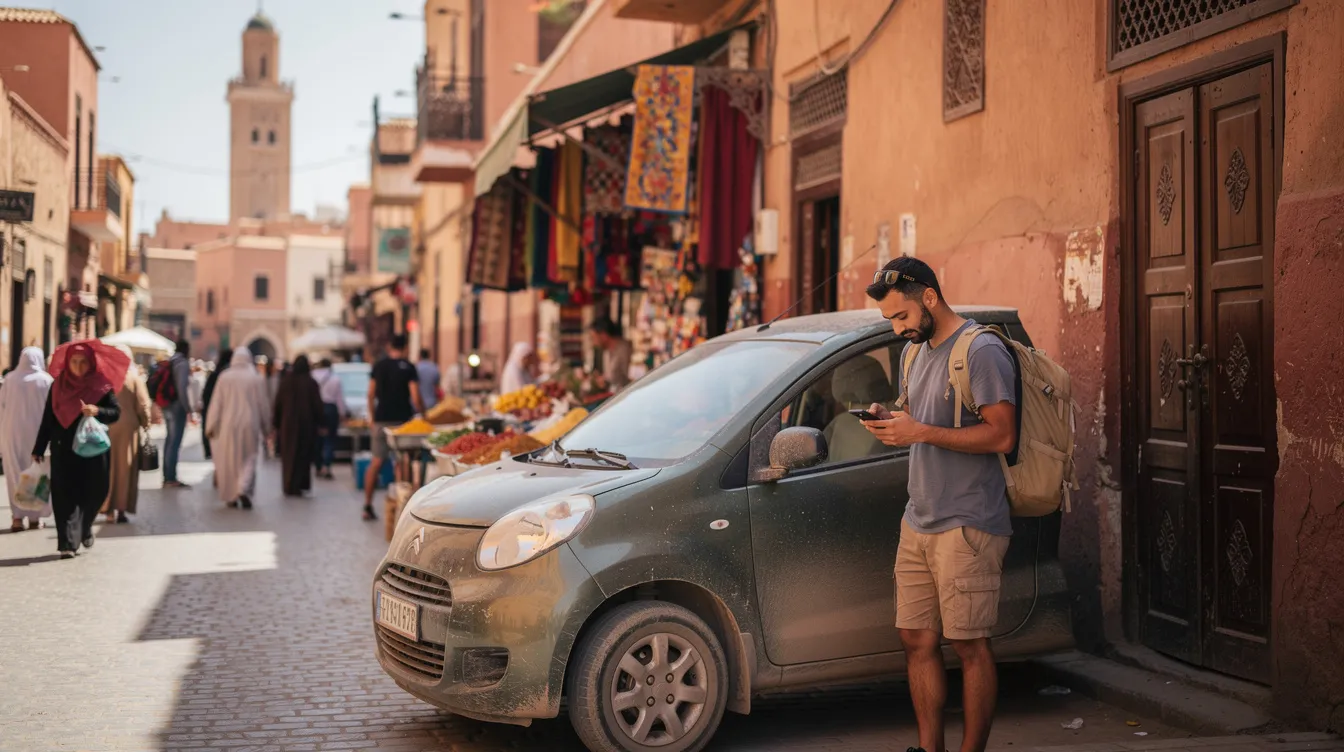
Uber first entered Morocco in the mid-2010s, mainly in Casablanca, before expanding its presence to Rabat. The company faced heavy resistance from taxi unions and legal uncertainty over whether private cars could legally transport passengers through a ride-hailing platform. Uber left Morocco in early 2018 after years of regulatory uncertainty and clashes with taxi unions.
Uber ceased operations in Morocco in 2018 due to regulatory issues and conflict before resuming in November 2025. The relaunch of Uber services is starting with Casablanca and Marrakech, and Uber has resumed operations in Morocco seven years after shutting down its service.
According to Uber’s official Morocco announcement, the ride-hailing company relaunched on November 27, 2025, with a more cautious model designed to avoid the tensions that marked its first period in the market. This relaunch is not a return to the old private-driver model. Uber is operating through exclusive partnerships with licensed transport operators and professional drivers to comply with regulations.
That difference matters.
Only licensed vehicles are permitted to operate under Uber’s platform in Morocco. Uber is limiting access to the platform to companies that already hold transport licenses, and only authorized tourist transport operators can register their vehicles with Uber. In practice, that means the drivers and vehicles must be part of an approved transport company, tourist transport fleet, or similar licensed operation.
The timing is also important. Uber’s return arrives as the country prepares for the 2025 Africa Cup of Nations (AFCON). Uber's re-entry into Morocco is intended to address the nation's mobility requirements in anticipation of major international events, such as the Africa Cup of Nations (AFCON) 2025. The Africa Cup of Nations is expected to attract thousands of spectators from across Africa and abroad, increasing demand for urban mobility services.
This is part of a wider national push. Uber's return to Morocco aligns with the country's goals to modernize urban transportation and strengthens its positioning in a market focused on better connectivity. It also fits Morocco’s broader digital transformation strategy as the kingdom prepares for larger tourism flows and future global events.
However, the law is still catching up with the market. The Ministry of Transport and Logistics in Morocco has stated that the current legal framework for road passenger transport does not include provisions for ride-sharing services. The Moroccan government has acknowledged the growing use of ride-hailing apps and is studying the creation of a regulatory framework to legalize them.
That incomplete framework still creates tension. The lack of clear regulation has led to significant tension and even physical confrontations between traditional taxi drivers and app-based drivers. Transporting passengers via ride-hailing apps without the required authorization is a violation of Moroccan law and can lead to penalties.
Taxi unions in Morocco persist in their opposition to ride-hailing applications, even in the face of increasing user demand for these services. Uber’s operations in Morocco are expected to increase pressure on authorities to clarify the status of ride-hailing services. The regulatory framework for ride-hailing services in Morocco remains incomplete despite the market changing since Uber’s exit.
In other words, Uber is back, but its return is phased, cautious, and closely tied to licensed transport.
Uber coverage in Morocco is city-specific. It is not a nationwide service, and availability can change from one district to another. At the time of writing, Uber’s official relaunch focuses on Casablanca and Marrakech, with other Moroccan cities expected to follow later.
Uber plans to expand to other Moroccan cities in the near future, but for now, travelers should check the Uber app before relying on it.
Casablanca: Uber is active in Morocco’s largest city, including central districts, business areas, main residential neighborhoods, hotel zones, and likely routes toward major transport points. If you are asking, “does Uber work in Morocco Casablanca?” the answer is yes.
Marrakech: Uber is active in Marrakech, including areas such as Gueliz, Hivernage, Medina outskirts, and major hotel zones. If you are asking, “does Uber work in Morocco Marrakesh?” the answer is also yes.
Fez (Fès): Uber is not confirmed as live in Fez. If you are asking, “does Uber work in Morocco Fez?” the practical answer is no or not yet. Use petit taxis, hotel-arranged transfers, Careem if available, or pre-booked private drivers.
Tangier (Tanger): Uber is not confirmed as live in Tangier. If you are asking, “does Uber work in Morocco Tanger?” the answer is no or not yet. Local taxis, Careem, inDrive, Yango, and private transfers are more common.
Rabat: Uber previously operated in Rabat before its 2018 exit, but the 2025 relaunch did not list Rabat as an active city. If you are asking, “does Uber work in Morocco Rabat?” the current answer is no official full relaunch yet.
Agadir: Uber is not confirmed as active in Agadir. Use airport taxis, hotel shuttles, pre-booked transfers, and local taxi services.
Essaouira: Uber is not confirmed as active in Essaouira. Grand taxis and private transfers are common, especially from Marrakech.
Meknes: Uber is not confirmed as active in Meknes. Petit taxis, grand taxis, trains, and private transfers are the usual choices.
Chefchaouen: Uber is not confirmed as active in Chefchaouen. Most travelers use buses, grand taxis, or private drivers from Tangier, Tetouan, or Fes.
Other cities: Coverage is limited, and ride-hailing services can vary quickly depending on regulation, licensing, and local demand.
The best real-time test is simple: open the Uber app, set your pickup location, and see whether UberX or UberXL appears. If no ride categories appear, Uber is not available in that area.
Bolt does not have full nationwide coverage in Morocco, and there is no reliable evidence that Bolt operates broadly across the country in the same way it does in some European or African markets. Different apps enter the market at different speeds because regulation, licensing, and taxi union pressure vary by city.
Using Uber in Casablanca and Marrakech feels similar to using Uber in other countries, but the local operating model is different. The platform connects passengers with licensed transport operators rather than casual private drivers.
To request a ride, follow these steps:
Download and open the Uber app.
Register or log in to your account.
Add a payment method before you need the ride.
Enter your pickup and drop-off in the “Where to?” box.
Confirm the pickup pin on the map.
Choose UberX or UberXL.
Review the estimated price in Moroccan dirhams.
Book the ride and check the driver and vehicle details before getting in.
Uber is offering two services in Morocco: UberX and UberXL.
UberX: The basic, more affordable option for up to four passengers. Best for solo travelers, couples, and small groups without much luggage.
UberXL: Accommodates four to six people in larger vehicles suited for families or small groups. Ideal if you have several suitcases, children, or a group heading to a hotel, airport, restaurant, or event.
In Casablanca, you might use Uber between:
The business district
Casa Port
Maarif
Ain Diab
The Corniche
In Marrakech, you might use Uber between:
Menara Airport
Gueliz
Hivernage
Palmeraie
Medina entrance points
For sightseeing, multi-destination trips can help if you want one ride with a quick stop at a restaurant, hotel, or shopping area.
Payments are primarily digital. Uber’s relaunch messaging emphasizes cashless payments, so assume you need a credit or debit card in the app. Most international Visa and Mastercard cards should work, including many US and EU cards, but it is smart to add and verify your card before traveling.
If your bank blocks the transaction, open your banking app, approve the charge if prompted, or add a backup card. Keep some Moroccan dirhams in cash anyway because not every taxi or transfer service will accept cards.
Verify the number plate.
Check the driver photo.
Confirm the car model.
Sit in the back seat.
Keep valuables out of sight.
Share your trip with a friend or family member.
Do not enter a car if the details do not match the app.
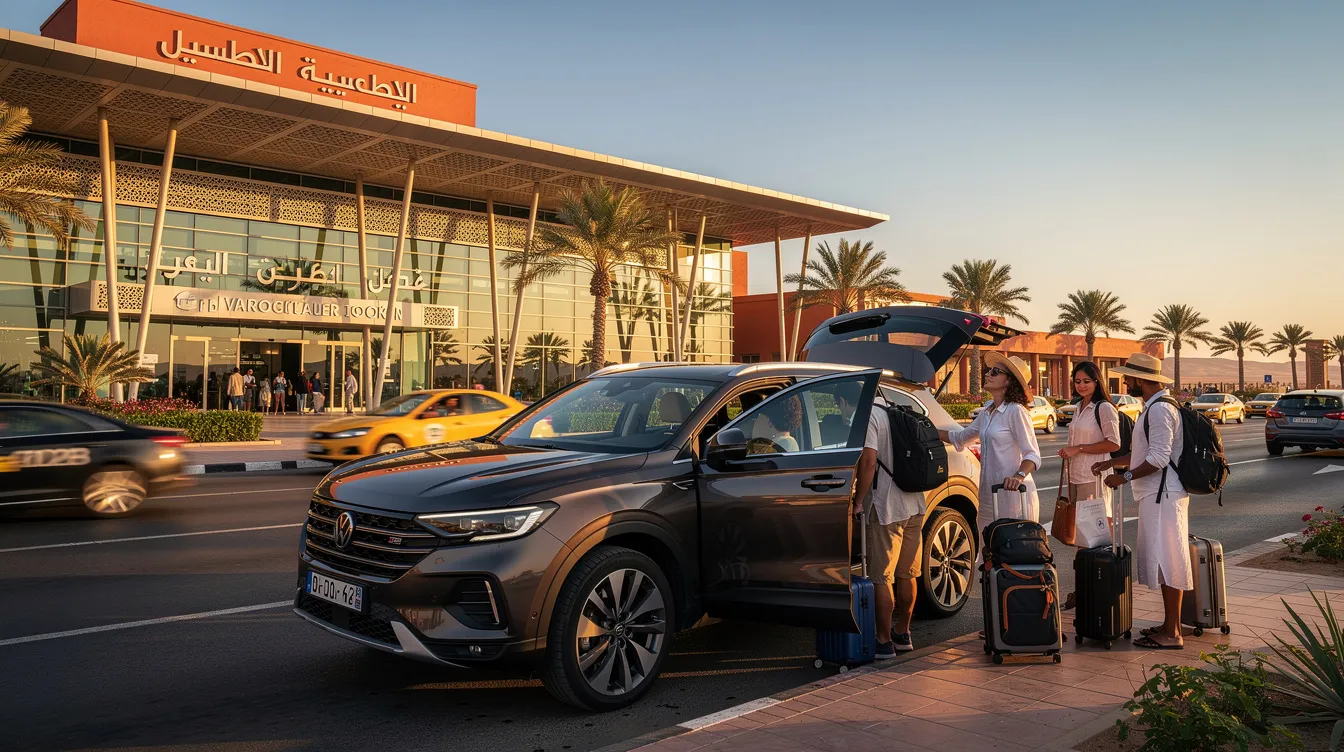
Travelers often first look for Uber right at the airport. In Casablanca and Marrakech, Uber may be useful, but airport pickup rules depend on designated zones, airport procedures, and local enforcement.
Uber serves the Casablanca metropolitan area, so airport trips may appear in the app.
Set your pickup pin carefully after collecting baggage.
Follow any in-app instructions for the pickup point, public car park, or ride-hailing zone.
Watch the driver’s route in the app and confirm the plate number before entering the car.
Uber serves Marrakech, so airport rides may be available.
Drivers may meet passengers outside arrivals, near the public pickup area, or close to the taxi rank in a designated area.
Do not accept random offers from unofficial drivers inside the terminal.
Other airports, including Fez, Tangier, Agadir, Rabat, and Essaouira, may not have Uber coverage. In those cities, use official airport taxis, hotel shuttles, or pre-booked private transfers.
Airport transfer apps for Casablanca and Marrakech usually work like this:
Search for your airport and hotel address.
Choose a car size.
Add flight details.
Confirm the fixed price.
Pay online or choose an approved payment method.
Meet the driver at the agreed arrivals point.
These services can cost more than an app ride, but they are often more predictable for late-night arrivals, families, and first-time visitors.
If you land late, plan ahead. Schedule an Uber ride if the option appears in the app, or book a private airport transfer at least 24 hours before arrival.
Even where Uber is present, Morocco’s classic taxi system remains dominant. Traditional “petits taxis” and “grands taxis” remain popular options for travelers in Morocco, especially outside Casablanca and Marrakech.
Small city taxis that operate only within city limits.
Usually color-coded by city: red in Casablanca, beige or tan in Marrakech, blue in Rabat, and so on.
Often hailed on the street or found at taxi stands.
Usually metered, though some drivers may avoid using the meter with tourists.
Larger shared taxis that connect towns, suburbs, airports, and nearby cities.
Usually operate by route or negotiated fare and may leave once enough passengers are inside.
Prices are often fixed per seat or negotiated for the whole vehicle.
Night trips may cost more.
Tipping is modest and optional; rounding up is usually enough.
If the meter is not on, politely ask: “Compteur, s’il vous plaît?” (“Meter, please?”)
If the driver refuses the meter, agree on the price before getting in or wait for another taxi.
For non-metered rides, check the distance on a maps app and compare with an Uber estimate if Uber is available in that city.
At train stations, bus stations, and airports, use marked taxi stands or official desks.
Avoid unofficial drivers who approach aggressively inside terminals.
Marrakech to Essaouira is often handled by bus, grand taxi, or private transfer.
Tangier to Chefchaouen is commonly done by bus, grand taxi, or private car.
Airport to small-town hotel routes are often better with a hotel transfer.
Moroccans also use ride-hailing apps. Careem operates in Casablanca, Rabat, and Tangier, and is a subsidiary of Uber. inDrive is popular in cities like Casablanca and Rabat and allows passengers to propose their own fare to drivers. Yango is another ride-hailing service available in major cities across Morocco.
Local users may prefer taxis over apps for:
Short inner-city hops.
Quick roadside pickups.
Areas where mobile data is weak.
Routes where they already know the normal price.
Times when app wait times are long.
Uber may become a key player in the formal ride-hailing market, but the traditional taxi network is still essential for moving people around the kingdom.
Careem and other apps can complement Uber in Morocco, especially in cities where Uber is not yet active.
Careem works with app-based booking for licensed taxis or private drivers, depending on the city and local rules. The booking flow is similar to Uber:
Download the Careem app.
Register your account.
Set the pickup point.
Set the drop-off point.
Choose the ride category.
Confirm the ride.
Track the driver in the app.
Is Careem safe in Morocco? Generally, Careem is considered safe when used properly. The app offers driver details, route tracking, ratings, and customer support. As with any ride-hailing service, verify the license plate, check the driver profile, and avoid getting into a car that does not match the app.
Careem’s payment options may include card and cash depending on the service and city. Careem’s own help center says payment options can include credit/debit cards and cash in supported markets. You can add a US credit card by opening the app, going to payment settings, entering the card details, and completing any verification step.
Can you pay for Careem in Morocco with a US credit card? Usually, yes, but foreign cards can sometimes be declined by a bank’s fraud system. Add your card before you travel, carry a backup card, and keep cash in Moroccan dirhams.
There is also an important competition note. Careem is globally owned by Uber, but Uber’s merger with Careem has not been approved by the Moroccan Competition Council due to the lack of a clear legal framework for ride-hailing. More specifically, Uber’s merger with Careem has still not been approved by the Moroccan Competition Council six years after notification.
That shows how unsettled the market remains, even though user demand is strong.
When choosing between apps:
Use Uber in Casablanca or Marrakech when UberX or UberXL appears.
Use Careem in Casablanca, Rabat, or Tangier where available.
Use inDrive if you are comfortable proposing a fare and comparing driver offers.
Use Yango where it is active and has good response times.
Use a dedicated airport transfer if you arrive late, travel with children, or need a guaranteed pickup.
Airport transfers in Morocco are easier when you plan them before you land.
Step-by-step:
Check whether Uber or Careem serves your airport before your flight.
Open the app and run a test search from the airport to your hotel.
After landing, collect your bags first.
Connect to airport Wi-Fi or activate mobile data.
Request the ride only when you are ready to walk to the pickup point.
Follow the app’s pickup instructions.
Confirm the driver name, car model, and number plate.
If the airport does not have Uber:
Pre-book a private transfer online.
Ask your hotel to arrange a driver.
Use the official airport taxi desk.
Check fixed tariffs or printed price lists in the arrivals hall.
Keep the transfer company’s contact number and booking file on your phone.
For safety, use only licensed airport taxis or app-booked drivers. Do not accept offers from unofficial touts who approach you before you reach the official taxi area.
Uber in Morocco uses licensed vehicles and professional drivers under its new model, which makes the service generally safe when passengers follow normal precautions.
Built-in Uber safety features include:
Driver identity and car details before pickup.
GPS tracking.
Trip sharing.
In-app support.
24/7 customer support.
A ride history log in case you need to report an issue later.
Tips for Using Uber Safely:
Verify the number plate.
Check the driver photo.
Confirm the car model.
Sit in the back seat.
Keep valuables out of sight.
Share your trip with a friend or family member.
Do not enter a car if the details do not match the app.
Most Moroccan taxi drivers are professional, and many tourists use taxis without problems. The main issue is usually fare predictability, especially if the meter is not used. Official taxis from marked stands are safer than unmarked cars, especially at airports, stations, and late at night.
Both Uber and Careem apply global safety practices, but travelers should still use normal awareness in busy areas of Casablanca and Marrakech.
The Africa Cup of Nations 2025 is a major reason Uber returned when it did. AFCON will bring large crowds to Moroccan host cities, with fans moving between airports, hotels, stadiums, fan zones, restaurants, and nightlife areas.
The kingdom prepares for the tournament while also trying to improve mobility for residents and visitors. Uber’s relaunch supports this event by offering a more predictable way to book rides in Casablanca and Marrakech.
For AFCON visitors, Uber can help with:
Airport-to-hotel transfers.
Stadium and fan zone travel.
Late-night rides after matches.
Group travel using UberXL.
Faster booking through saved places in the app.
Practical AFCON tips:
Save your hotel, stadium, and fan zone addresses in the Uber app.
Leave earlier than usual.
Compare Uber with official shuttles, trams, walking routes, and taxis.
Use schedule-ahead features where available.
Keep cash as backup in case app rides are delayed.
If Uber performs well during AFCON, it could encourage faster expansion into additional Moroccan cities in the following months.
Uber is active again in Casablanca and Marrakech with licensed vehicles and professional drivers. Careem operates in Casablanca, Rabat, and Tangier. inDrive is popular in Casablanca and Rabat and lets passengers propose their own fare. Yango is also available in major cities across Morocco. Traditional petit taxis and grand taxis remain widely used across the country.
Yes, tourists can use Uber in Morocco where the service is available. Most international Visa and Mastercard cards, including many US cards, should work in the Uber app. Add and verify your card before travel, and keep a backup card or cash in case your bank blocks a foreign transaction.
Uber serves the Casablanca and Marrakech metropolitan areas, so airport rides may appear at Casablanca Mohammed V Airport and Marrakech Menara Airport. Pickup rules depend on airport zones and local instructions in the app. Other airports such as Fez, Tangier, Agadir, Rabat, and Essaouira may not have Uber coverage, so use official taxis, hotel shuttles, or pre-booked transfers.
Bolt does not appear to have broad nationwide coverage in Morocco. Uber currently has stronger official visibility in Casablanca and Marrakech after its 2025 relaunch. In any Moroccan city, choose the app that is active, licensed, and showing reliable response times at your exact pickup point.
For late-night arrivals, AFCON travel, holidays, or family trips, book a private transfer at least 24 hours in advance or schedule an Uber ride if the app supports it. For daytime arrivals in Casablanca and Marrakech, request Uber only after clearing customs and collecting luggage. For cities without Uber, an official airport taxi or hotel transfer is the most reliable option.
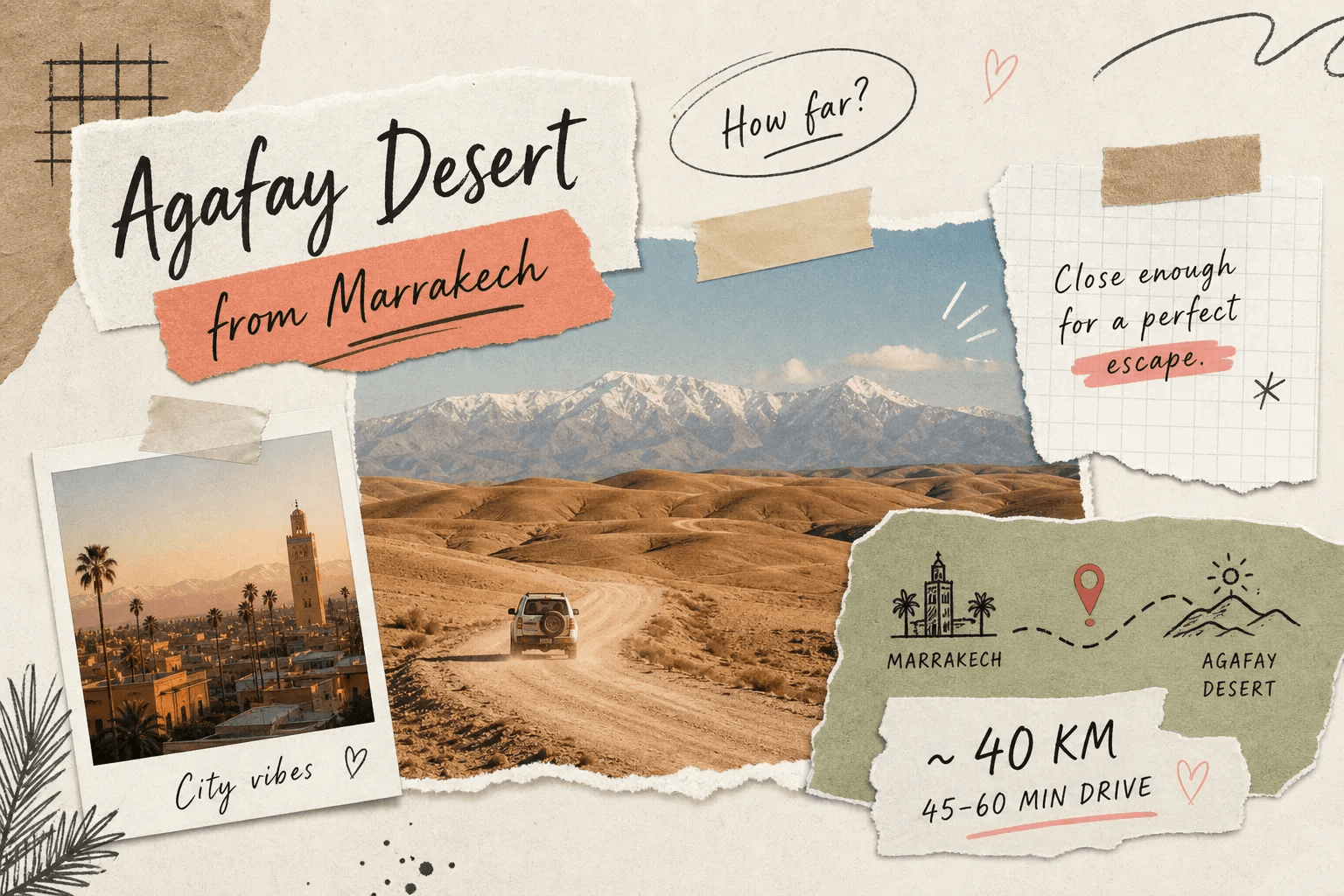
The Agafay Desert is a mere 30 minutes from Marrakech! Dive into a world of adventure and natural b...
Read this article
Is a day trip to the Agafay Desert from Marrakech worth it? Absolutely! Enjoy scenic beauty, thrill...
Read this article
Discover the best Morocco tours in 2026! Explore stunning deserts, luxurious experiences, and vibran...
Read this articleWant cool tour deals and tips about Morocco? Enter your email and we’ll send them to you each month!