How to Spend 3 Days in Marrakech: A Memorable Itinerary for Travelers
Discover how to make the most of 3 days in Marrakech with our detailed itinerary. Experience the cit...
Read this article
Suspendisse interdum consectetur libero id. Fermentum leo vel orci porta non. Euismod viverra nibh cras pulvinar suspen.
Chefchaouen is a small blue-washed mountain town in northern Morocco, nestled in the Rif Mountains about 2.5 hours from Tangier and 4–4.5 hours from Fez, making it easy to pair with imperial cities on a Morocco Classic Tours itinerary.
Most visitors spend one night or two nights wandering the blue medina, photographing the alleys, and hiking to the Spanish Mosque or Akchour waterfalls—two to three full days allow for a relaxed pace.
Getting to Chefchaouen involves road travel from Tangier (closest airport, roughly 2–2.5 hours by car), Fez (4–4.5 hours), or longer journeys from Casablanca and Marrakech via bus, private transfer, or rental car.
Morocco Classic Tours arranges private guided walking tours, airport transfers, and custom multi-day trips that include Chefchaouen alongside the Sahara Desert, Atlas Mountains, and coastal stops.
The town is safe and relaxed compared to big cities, though visitors should dress modestly, respect local culture, and politely decline unsolicited offers from strangers.
Chefchaouen—often called the blue pearl of Morocco—sits cradled between twin mountain peaks in the Rif Mountains, about 115 kilometers south of Tangier and roughly 200 kilometers northwest of Fez. The name itself comes from an Arabic word meaning “look at the horns,” referencing the distinctive twin summits that frame this small, photogenic town.
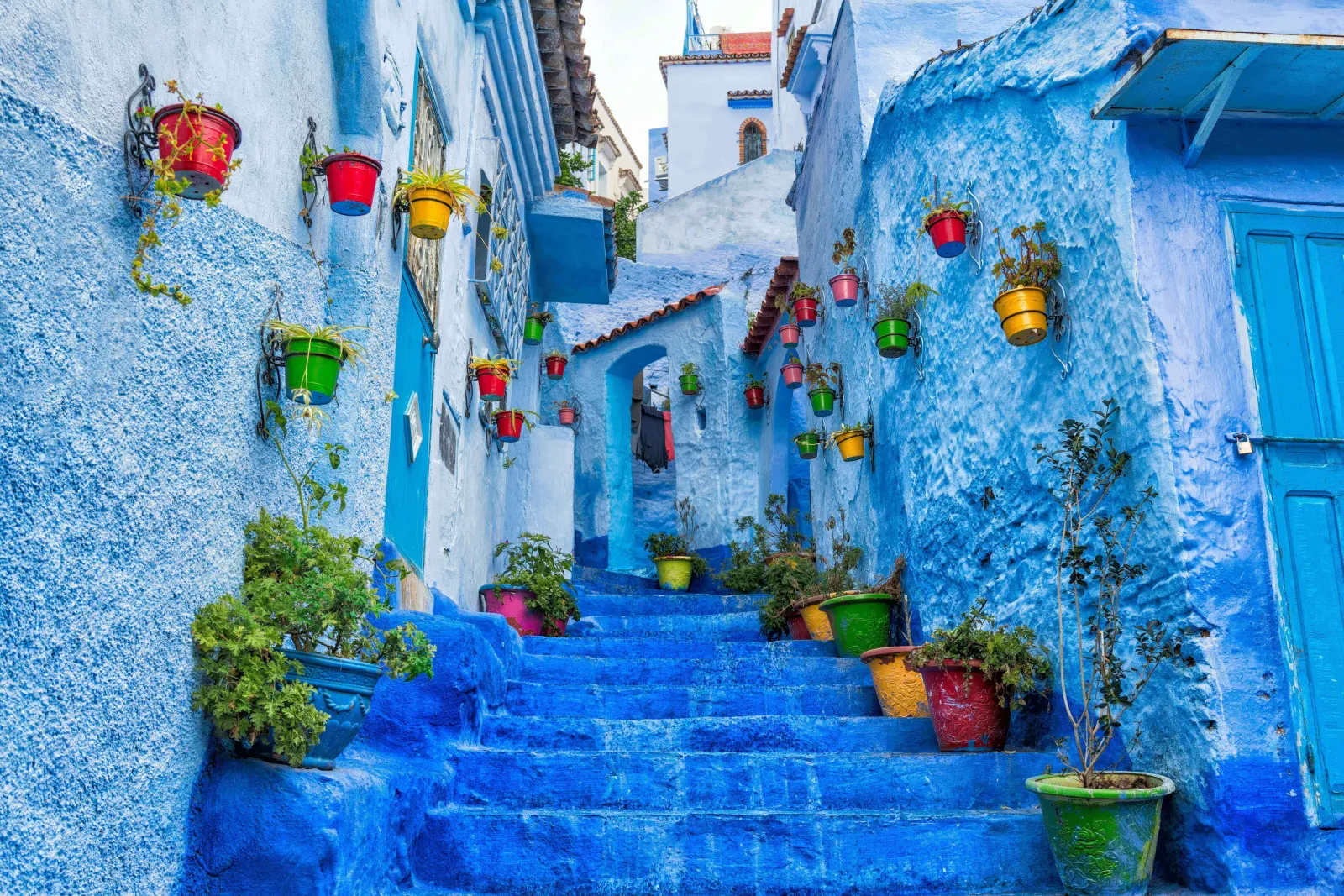
Nearly every wall, doorway, and staircase in the old town is painted blue, creating shades that range from powder blue to deep indigo. The effect transforms simple streets into something almost dreamlike—a pearlescent, oceanic landscape that draws photographers and wanderers from around the world. Founded in 1471 as a fortress against Portuguese invaders, Chefchaouen grew with waves of Muslim and Jewish refugees fleeing the Spanish Reconquista, giving the city a layered cultural history that still echoes through its architecture and traditions.
By the end of this guide, you’ll gain:
An understanding of Chefchaouen’s unique blue heritage and cultural history
Practical tips for getting to Chefchaouen from major Moroccan cities
Recommendations for how many days to spend and what to do in the blue city
Advice on where to stay, what to eat, and how to make the most of your visit
Solutions to common travel challenges in Chefchaouen
This is not a city built for checking off monuments. Chefchaouen rewards visitors who slow down, lose themselves in winding alleys, sip mint tea on a terrace, and take beautiful photos as light shifts across the blue walls. Morocco Classic Tours, based in Fez, regularly includes Chefchaouen on custom Morocco itineraries—it’s the perfect place to begin or break up a journey through imperial cities and the Sahara Desert.
The exact origin of painting buildings blue remains debated, and locals will offer several theories depending on who you ask. The truth likely involves overlapping explanations that accumulated over centuries.
Chefchaouen was founded in 1471 by Moulay Ali Ben Rachid as a small kasbah fortress to defend against Portuguese invasions threatening northern Morocco. The town expanded rapidly as Andalusi Muslims, Moriscos, and Spanish and Portuguese Jews arrived after Granada’s fall in 1492 and the later Morisco expulsions. This blend of refugees shaped the city’s distinctive architecture—curved brick archways, narrow streets, traditional water systems, and landscaped gardens that echo Andalusian influences.
One prominent theory credits Sephardic Jewish refugees for introducing the blue paint tradition. In Jewish mystical practice, blue symbolizes the sky, heaven, and God’s presence—inspired by blue threads in prayer shawls representing divine power. While some blue may have appeared in the 15th–16th centuries, the tradition was likely reinforced by Jewish arrivals in the 1930s, fleeing persecution in Europe. Alternative explanations include practical benefits: blue may repel mosquitoes by mimicking running water, or help keep houses cooler during summer months.
Whatever the original reasons, residents maintain the tradition enthusiastically. Locals repaint the medina several times a year, especially before summer and major holidays like Eid, ensuring the intense Chefchaouen blue that tourists photograph today remains vibrant and fresh.
The short answer: yes, Chefchaouen is worth visiting if you enjoy photography, mountain scenery, and slower-paced travel. This isn’t about big monuments or museums—the appeal lies in wandering streets that feel more like living art installations than urban infrastructure.
Recommended stay duration:
One night: The minimum if you’re pressed for time. You’ll have one afternoon and morning to explore the medina, but you’ll likely feel rushed.
Two nights: Ideal for most visitors. This allows one full day in the blue medina plus a half-day for hiking to the Spanish Mosque or a side trip to Akchour waterfalls.
Three nights: Perfect if you want extra downtime, multiple photography sessions at different times of day, or extended hiking in Talassemtane National Park.
Compared to busier cities like Marrakech and Fez, Chefchaouen feels remarkably calm. There are fewer touts, more relaxed bargaining in the shops, and a village-like ambience that lets visitors breathe. The streets are steep, and sometimes you’ll get lost, but that’s part of the charm—most alleys eventually lead back to the main square.
Day trips from Fez or Tangier are technically possible, but they involve a few hours of transit each way (5–9 hours total), leaving limited time to actually explore. Morocco Classic Tours can arrange private day trips, but generally recommends at least one overnight stay to experience the town’s beauty without rushing, especially if you’re also following a structured 7-day itinerary of activities in Marrakech.
As for the question “What is the prettiest city in Morocco?”—many travelers consider Chefchaouen among the top contenders precisely because of its blue palette and dramatic Rif mountain backdrop. While Marrakech dazzles with its energy, Fez impresses with historical depth, and Essaouira charms with coastal breezes—as highlighted in our Essaouira complete travel guide—Chefchaouen offers something unique: an entire old city painted in shades of sky.
Chefchaouen has no nearby airport and no train station. All access comes by road from larger cities and their airports, which means planning your journey is essential.
Morocco Classic Tours offers private transfers and multi-day tours linking Chefchaouen with Tangier, Fez, Casablanca, Marrakech, and the Sahara Desert, similar in style to their broader range of Morocco tours and travel packages. For many travelers, especially those short on time or traveling with family, a private car with an English-speaking driver proves more comfortable and time-efficient than navigating public buses and taxis independently.
Key transport facts:
Tangier Ibn Battuta Airport is the closest airport to Chefchaouen, with frequent short flights from European hubs like Madrid, Paris, and Barcelona
Fez Saïss Airport is another strong option, particularly for travelers planning to explore the imperial cities
Roads are paved and scenic but winding in sections—motion-sickness precautions are wise for sensitive travelers on mountain stretches.
Taxis cannot enter the pedestrian medina; drop-off is typically near Hotel Parador, Bab El Ain, or the modern bus station below town.
Tangier is the most convenient starting point for reaching Morocco’s blue city. The distance is about 115–120 km, typically requiring 2–2.5 hours by car or private transfer, depending on traffic and weather conditions.
Bus options: CTM and other intercity buses depart from Tangier bus station to Chefchaouen, with a journey time of approximately 2.5 hours. Tickets cost roughly 50–80 MAD one-way, though booking 1–2 days ahead is recommended during high season (spring and autumn). The bus ride through the countryside offers glimpses of green hills and rural Morocco.
Getting to the bus station: Petit taxis within Tangier can take you to the bus station, typically costing 80–120 MAD from the airport. Once you arrive at Chefchaouen’s station, a short taxi ride (10–15 minutes, around 15–20 MAD) brings you uphill to the medina entrance.
Morocco Classic Tours can meet guests at Tangier airport or the ferry port (arriving from Tarifa or Algeciras in Spain) and drive directly to Chefchaouen, with stops for viewpoints over the mountains along the way. This door-to-door service eliminates the hassle of coordinating multiple taxis and buses.
For those driving themselves, rental cars are available at Tangier airport. Paid parking areas exist just below the medina, though navigating narrow uphill streets requires confidence. Check Google Maps for current parking locations before your journey.
The distance from Fez to Chefchaouen is about 200–210 km, with a typical driving time of 4–4.5 hours by private car. The route passes through hilly terrain and small towns, offering a window into Morocco beyond the major tourist hubs.
Bus options: CTM buses from Fez take approximately 4–5 hours with a short rest stop, costing roughly 80–120 MAD. Booking advance tickets is particularly important during the busy spring (March–May) and autumn (September–November) seasons when visitors flood the blue city.
The bus arrives at Chefchaouen’s modern station outside the medina, from where visitors should take a taxi uphill to their riad. This final leg takes about 10–15 minutes and adds a small extra cost to your trip.
Morocco Classic Tours commonly runs Fez–Chefchaouen legs as part of broader Marrakech, Fez, and Casablanca Imperial Cities and Sahara itineraries. These packages often include guided medina tours in Fez, overnight stays in Chefchaouen, and continuation to desert camps near Merzouga—all with seamless private transport between stops.
Starting in Fez and heading north to Chefchaouen makes logical sense for travelers flying into Fez Saïss International Airport from European cities, especially if you plan to loop back through the desert afterward on a luxury Sahara Desert tour from Marrakech.
Chefchaouen sits significantly farther from Casablanca and Marrakech, making same-day visits from those cities impractical.
From Casablanca: The distance exceeds 330 km, with a typical bus or car travel time of 6.5–7.5 hours via Rabat and Tangier. CTM buses cost roughly 200–250 MAD one-way when booked ahead. This is a long day of travel, so most visitors break the journey with overnight stops in Rabat or Tangier.
From Marrakech: Overland journeys can take 10–12 hours by car, or considerably longer by bus with connections through multiple cities. Chefchaouen is better suited for multi-day itineraries rather than quick detours from Morocco’s southern tourist hub.
Morocco Classic Tours can design a north–south route (Casablanca–Rabat–Chefchaouen–Fez–Sahara–Marrakech) that breaks up long drives with sightseeing stops in imperial cities and the Atlas Mountains, similar to their best tour packages in Morocco. This approach transforms what could be an exhausting transit into part of the adventure.
Flight options from the US:
From New York (JFK/EWR), direct Royal Air Maroc flights reach Casablanca (7–8 hours), with connections to Tangier or Fez on domestic flights
From Los Angeles, Atlanta, or Chicago, routes typically connect through European hubs like Paris or Madrid before reaching Moroccan airports.
Once in Tangier or Fez, road travel to Chefchaouen takes 2–4.5 hours, depending on your starting point.
Morocco Classic Tours can coordinate airport pick-ups and onward transfers seamlessly, and you can reach them directly through the contact page.
Chefchaouen’s appeal lies in simple pleasures rather than museum schedules or monument checklists. The best experiences involve wandering without a fixed plan, people-watching from café terraces, and letting the blue streets reveal themselves gradually.
Morocco Classic Tours can arrange private guided walking tours of the medina, evening food tastings featuring local specialties, and day trips to nearby natural sites like Akchour waterfalls.
Key activities at a glance:
Explore blue streets and photograph wall art, doorways, and flower-filled alleys
Visit Plaza Uta El-Hammam and the kasbah with its ethnographic museum
Shop for local crafts—woven blankets, leather goods, goat cheese
Hike to the Spanish Mosque for panoramic sunset views
Take a half-day trip to Akchour waterfalls and Talassemtane National Park
Relax on rooftop terraces with mint tea overlooking the blue rooftops
Most activities require 1–3 hours each, making it pretty easy to fill two full days without rushing. Early morning and late afternoon offer the best light for photos and the most comfortable temperatures for walking, while warmer days can be balanced with a relaxing break at one of the best swimming pools in Marrakech.
The medina is compact, hilly, and largely pedestrian—perfect for exploration on foot. Famous lanes like Calle Sidi Buchuka and Callejon El Asri feature steep blue steps, potted plants cascading down walls, and arched doorways that frame perfect shots.
Chefchaouen wall art appears everywhere: painted doors in geometric patterns, small murals, decorative tiles, colorful flower pots, and textiles hanging over narrow alleyways. The entire town functions as an open-air gallery where the art changes with each turn.
Photography timing:
Sunrise: Empty lanes and soft, diffused light
Late afternoon/golden hour: Warmer tones and activity returning to the shops
Blue hour: Moody atmosphere as the walls seem to glow in fading light
Camera gear recommendations: A lightweight mirrorless or DSLR body works well here. Bring a wide-angle lens (16–35mm range) to capture narrow alleys and a fast prime lens (35mm f/1.8 or similar) for low-light situations. Reliable brands like Sony, Canon, Nikon, and Fujifilm all offer excellent options. Consider a polarizing filter to enhance blue tones against the sky.
Practice respectful photography: ask before photographing locals, especially older residents or women, and avoid blocking narrow lanes with tripods during busy hours.
Plaza Uta El-Hammam serves as the main square and heart of the medina. Lined with cafés and restaurants, it’s framed by the red walls of the 15th-century kasbah and the Grand Mosque with its distinctive octagonal minaret—a design unique to this region.
Spend an hour or two here sipping mint tea, watching the world pass, and admiring the blend of Andalusian and Moroccan architecture against the surrounding blue. This is where you’ll feel the pulse of daily life: children playing, tourists wandering, locals greeting neighbors, much like the relaxed coastal vibe highlighted in our Rabat travel guide.
The kasbah houses a small ethnographic museum displaying traditional clothing, weapons, pottery, and woodwork—a fine introduction to regional history. A modest entry fee grants access, and a short climb to the ramparts rewards visitors with elevated views over terracotta roofs and blue lanes stretching toward the mountains.
Late afternoon and early evening bring the most atmosphere, as locals gather after the heat of the day subsides. Morocco Classic Tours’ guides often begin or end walking tours at this popular spot, as it provides easy orientation and makes a natural meeting point.
One of Chefchaouen’s most rewarding short hikes leads to the Spanish Mosque, an abandoned structure built during the Spanish occupation in the 1920s. The trail begins near Ras El-Maa, a small waterfall at the eastern edge of the medina where locals wash wool in traditional fashion.
The hike takes 20–30 minutes of moderate uphill walking, passing through green hillside and offering increasingly dramatic views. At the top, you’ll find panoramic vistas of the blue city spilling down the mountainside—particularly stunning at sunset as lights begin twinkling across the medina.
Practical tips:
Wear sturdy closed shoes; the path is rocky and occasionally slippery
Bring a light jacket in cooler months (October–March) when evenings turn chilly
Arrive 30–45 minutes before sunset to secure a comfortable spot
Bring a small flashlight or use your phone light for the walk back after dark
Morocco Classic Tours can include a guided sunset walk to the Spanish Mosque in private itineraries—helpful for first-time visitors who prefer company on unfamiliar mountain trails.
The Akchour waterfalls and God’s Bridge rock formation lie inside Talassemtane National Park, about 30 km from Chefchaouen (roughly 45–60 minutes by car or taxi).
Main activities:
Hiking along the river to the lower and upper waterfalls
Swimming in natural pools during warmer months (late spring to early autumn)
Visiting God’s Bridge, a dramatic natural rock arch spanning the canyon
Trails are rocky and uneven, requiring proper hiking shoes, plenty of water, and sun protection—especially in summer when shade is limited. The full hike to both waterfalls and the bridge takes 3–5 hours, depending on pace and swimming stops.
A local guide proves useful for longer hikes or for those unfamiliar with mountain paths. Morocco Classic Tours can pre-arrange guided hiking excursions from Chefchaouen, handling transport and logistics so you can focus on enjoying the natural beauty.
Seasonality note: Winter or heavy rain periods can make trail conditions difficult, with some sections closed or extremely muddy. Check conditions before setting out, and be prepared to adjust plans if the weather doesn’t cooperate.
Chefchaouen’s souks feel more relaxed than those in Marrakech and Fez, making browsing a pleasure rather than a battle. Look for wool blankets and ponchos, handwoven rugs, leather goods, pottery, and locally made goat cheese—the region produces some of Morocco’s finest.
The area is known for high-quality woven textiles and natural dyes. Travelers interested in handicrafts should set aside time for exploring quieter alleys away from the main tourist route near Bab Souk, where artisans work in small workshops.
Bargaining remains expected, but the atmosphere is gentler. Start at roughly half the asking price and work toward a mutually agreeable number. Remember that many items are genuinely handmade—the final price often reflects real labor and skill.
Morocco Classic Tours can arrange tastings of regional specialties like goat cheese and olive oil, or private cooking classes focusing on dishes such as tagine, couscous, and zaalouk. These experiences offer deeper cultural encounters beyond simple shopping and pair well with coastal escapes such as those described in our Agadir travel guide.
When possible, support women-led cooperatives or workshops—they contribute to local livelihoods and produce authentically crafted goods that carry meaning beyond their materials, just as coastal communities do around the Agadir fishing port.
A hammam is a traditional Moroccan bathhouse—part hygiene ritual, part social tradition. Chefchaouen offers both simple local hammams used by residents and more spa-style versions aimed at visitors.
Typical experience: A hot steam room relaxes muscles, followed by application of black soap, vigorous exfoliation with a rough mitt (kessa), and rinsing. The process leaves you remarkably clean and refreshed—perfect after days of walking steep medina streets.
Etiquette:
Bring or rent a towel, flip-flops, and modest swimwear or underwear
Men and women use hammams separately (or at different times in smaller establishments)
Tips are appreciated for the attendant who performs the scrub
Morocco Classic Tours can recommend and book appropriate hammam options based on your comfort level, whether that’s a traditional neighborhood experience or a private session for couples, as part of their senior-friendly and comfort-focused Morocco tours.
A hammam visit pairs beautifully with a day of exploration, especially in cooler months when the hot steam feels particularly welcome.
For maximum atmosphere and easy walking access, stay within or just beside the blue medina. First-time visitors especially benefit from accommodations surrounded by the very streets they’ve come to explore.
Options range from budget guesthouses to stylish riads, with most featuring rooftop terraces offering panoramic views of blue rooftops and Rif mountain peaks. Waking to this view while sipping morning coffee ranks among Chefchaouen’s simple pleasures.
Practical considerations:
Rooms are often compact with stairs instead of elevators
Pack lighter or arrange porter help when available
Wi-Fi can be inconsistent in older buildings
Hot water may come from solar heaters (stronger in the afternoon)
Morocco Classic Tours handpicks riads and small hotels based on cleanliness, service, location, and guest feedback, matching options to different budgets and preferences. Rather than navigating endless booking sites, let their local expertise guide you toward properties that consistently deliver.
Inside the medina: Immersive, picturesque, and perfect for photographers wanting early access to empty alleys. However, you’ll encounter more steps and stairs, no car access, and occasionally challenging navigation to your door. It’s worth it for the experience of living inside the blue world rather than merely visiting it.
Just outside the medina: Easier taxi drop-off, fewer stairs, and sometimes larger rooms with modern amenities. Hotels near the main road work well for guests with mobility concerns but sacrifice some atmospheric magic. The medina remains walkable in minutes.
Check room descriptions carefully for details about private versus shared bathrooms, heating (essential for winter nights), and air-conditioning (welcome during summer). Rooftop terraces make a major difference—many serve breakfast with views that justify the climb.
Morocco Classic Tours typically books centrally-located properties within a short walk of Plaza Uta El-Hammam, balancing convenience with an authentic medina atmosphere, similar to how we curate the best hotels in Essaouira for coastal stays.
A riad is a traditional house built around an inner courtyard, and many in Chefchaouen have been converted into intimate guesthouses with 4–10 rooms. The experience differs significantly from standard hotels.
Typical features:
Carved wooden ceilings and tiled floors
Colorful textiles and traditional décor
Small seating alcoves and reading nooks
Rooms vary significantly even within the same property
Breakfast norms: Fresh bread, local jams, olives, cheese, eggs, and Moroccan mint tea or coffee, typically served in the courtyard or on the rooftop terrace. This leisurely start to the day reflects Moroccan hospitality at its finest.
Noise considerations: Medina streets are quieter than larger cities, but the call to prayer (five times daily, beginning before dawn) and echoing voices may still wake light sleepers. Earplugs help those sensitive to sounds.
Morocco Classic Tours can request specific room types when available—ground-floor rooms for easier access, triple rooms for families, or rooms with better hill views for photography enthusiasts, just as we do in our guide to where to stay in Marrakech.
Chefchaouen’s food scene is casual and homey rather than haute cuisine. Small family-run restaurants line the medina’s squares and side streets, with rooftop cafés offering meals alongside panoramic views.
Must-try dishes:
Tagines: chicken with preserved lemon and olives, beef or lamb with prunes
Couscous, traditionally served on Fridays
Harira soup, especially warming in cooler months
Goat cheese plates—Chefchaouen produces Morocco’s best
Local pastries with honey and almonds
Dining on a terrace overlooking the blue medina at sunset, with mint tea or freshly squeezed orange juice in hand, creates memories that outlast any single dish. The experience matters as much as the menu.
Morocco Classic Tours can recommend trusted eateries, including those with vegetarian or vegan-friendly options, and tailor food tours to dietary needs. Trying at least one simple breakfast at a local bakery—fresh msemen with honey, perhaps—offers a glimpse of daily life beyond the main tourist streets.
Look for simple, well-reviewed restaurants near Plaza Uta El-Hammam and along quieter side streets where locals also dine. Value and authenticity matter more than elaborate tourist-focused menus.
What to seek out:
Rooftop restaurants serving classic Moroccan meals with lingering tea service
Street snacks: fresh beignets in the morning, msemen (layered flatbread) with cheese
Small stalls selling olives, nuts, and dried fruits near the square
Women-owned or family-run eateries that support the local community
Practical notes: Many restaurants accept cash only (Moroccan dirham), with limited card acceptance. Withdraw sufficient cash at ATMs in the newer part of town before ascending into the medina, where banking options disappear.
Morocco Classic Tours’ guides often know which spots serve the most consistent quality and which newcomers are gaining local approval—insider knowledge that saves trial-and-error meals.
Preparing realistically for Chefchaouen means understanding its mountain climate, respecting cultural norms, and packing appropriately for both medina wandering and potential hiking.
Chefchaouen is generally considered safe, with a relaxed atmosphere that depends heavily on tourism. Normal travel awareness applies—watch belongings in crowded areas, trust your instincts about strangers—but violent crime against tourists is rare.
The weather differs from the Sahara or Marrakech. The Rif mountain elevation brings cooler winters and pleasantly mild springs and autumns. Summer can feel warm, but it remains gentler than the interior lowlands.
Morocco Classic Tours serves as a resource for up-to-date, on-the-ground information about conditions, road closures, and cultural events that might affect your plans, and their Morocco travel blog offers additional destination ideas and planning advice.
Chefchaouen ranks among Morocco’s calmer cities, with less aggressive selling and a more village-like feel. Petty theft remains possible in crowded areas, so keep valuables secure and avoid displaying expensive jewelry or electronics unnecessarily.
Common situations to navigate:
Strangers offering unsolicited tours, hotel guidance, or “free” samples often expect payment afterward; politely decline or clarify costs upfront
Cannabis is grown in the surrounding Rif region, and offers to buy are common; purchasing and consuming remain illegal, so decline firmly and avoid legal risk.
Dress modestly (knees and shoulders covered), especially away from main tourist streets.
Avoid public displays of affection
Ask before photographing people, particularly older residents and women
Morocco Classic Tours’ local drivers and guides help steer guests toward reputable services and away from common tourist traps, making navigation smoother for first-time visitors.
Clothing:
Light, breathable layers for spring/autumn: long trousers, loose shirts, light sweater or fleece
Warmer layers plus a waterproof jacket for winter (December–February)
Scarf or shawl for sun protection and mosque visits
Modest clothes for Medina wandering (avoid shorts and tank tops)
Footwear:
Comfortable walking shoes with good grip (Medina streets are steep, sometimes slippery, paved with stone)
Second pair in case of rain or wet conditions
Photography gear:
Reliable camera body (Sony, Canon, Nikon, Fujifilm all work well)
At least one wide-angle lens
Extra batteries and memory cards
Small travel tripod for dawn/dusk shots
Practical extras:
Compact daypack
Refillable water bottle
Sun hat, sunglasses, high SPF sunscreen
Universal power adapter
Basic first-aid kit and personal medications
Small cash wallet with dirhams
Earplugs for light sleepers
Peak seasons (March–May, September–early November): Warm days, cooler evenings, ideal conditions for walking and photography. These months draw the most visitors, so book accommodations and private transfers in advance.
Summer (June–August): Hot, especially at midday, but Chefchaouen’s elevation keeps temperatures slightly cooler than the interior lowlands. Plan early and late-day sightseeing with midday breaks in shaded cafés.
Winter (December–February): Cooler temperatures, occasional rain, and mist that give the blue streets a moody, atmospheric quality. Pack warm layers and waterproof shoes. Fewer tourists mean more intimate exploration.
Special considerations:
Ramadan may change opening hours and daytime rhythms, but it offers special evening meals and a different social atmosphere
Book well in advance for Easter, late December, and popular European holiday periods
Getting to Chefchaouen can involve long road journeys, especially from Casablanca or Marrakech. Public buses may have limited schedules and can sell out during peak seasons. To avoid delays, book tickets in advance or consider private transfers arranged by Morocco Classic Tours for greater flexibility and comfort.
Chefchaouen’s most photogenic alleys and staircases can become crowded, especially during midday and peak tourist seasons. For the best photos with fewer people, explore early in the morning or late in the afternoon. Patience and respectful waiting often yield the perfect shot.
The blue medina’s winding, hilly streets can be confusing for first-time visitors. GPS signals may be unreliable, and signage is limited. To avoid getting lost, use offline maps, ask locals for directions, or book a guided walking tour with Morocco Classic Tours for expert navigation and insider tips.
Chefchaouen fits naturally into broader Morocco routes that span imperial cities, the Atlas Mountains, and the Sahara Desert. Its location makes it an ideal first stop or mid-journey respite.
Typical north-to-south flow: Tangier or Casablanca → Chefchaouen → Fez → Middle Atlas → Sahara Desert (Merzouga) → Todra Gorge → Dades Valley → Marrakech
Morocco Classic Tours specializes in private, customizable journeys for couples, families, and small groups, including a popular 10-day Morocco travel itinerary for first-time visitors. Door-to-door transport with English-speaking drivers eliminates logistical headaches while ensuring you don’t miss key experiences along the way.
Chefchaouen works especially well at the start of a trip as a gentler introduction to Morocco—quieter and more manageable than immediately diving into Fez or Marrakech. Alternatively, it serves as a relaxing break mid-tour between intense city sightseeing and desert camping adventures.
Whether you want two weeks exploring the entire country or a focused week hitting the highlights, including Chefchaouen, adds the kind of unique visual magic that makes Morocco unforgettable.
Ready to plan your journey? Contact Morocco Classic Tours or use the Book Now option on the website to design an itinerary that weaves Chefchaouen into desert camps, camel treks, Atlas hikes, and coastal discoveries.
Chefchaouen stands out as one of Morocco’s most enchanting destinations, offering a blend of striking blue architecture, mountain scenery, and a relaxed pace that invites visitors to slow down and savor the experience. Whether you’re a photographer, a culture enthusiast, or simply seeking a peaceful retreat, the blue city delivers unforgettable memories.
To make the most of your visit:
Plan your transportation and accommodations, especially during peak seasons.
Allow at least one or two nights to fully enjoy the medina and the surrounding nature.
Take advantage of guided tours for deeper insights and easier navigation.
Respect local customs and support community-run businesses for a more authentic experience.
For personalized itineraries, expert guidance, and seamless travel arrangements, reach out to Morocco Classic Tours. Their local expertise ensures your journey through Chefchaouen and beyond is smooth, memorable, and tailored to your interests.
Chefchaouen stands apart for its almost entirely blue-washed medina, dramatic mountain scenery, and notably calmer pace. Where Marrakech buzzes with energy, and Fez impresses with historical depth, Chefchaouen offers an intimate, village-like atmosphere that feels more like exploring an art installation than a traditional city. This makes it particularly appealing for photographers, couples seeking romance, and travelers who want relaxation between busier stops on their Morocco itinerary.
While Chefchaouen historically welcomed Jewish refugees from Spain and later Europe—contributing significantly to the blue paint tradition—the Jewish population today is very small or essentially absent. Most Jewish residents emigrated to larger Moroccan cities like Casablanca or abroad after the mid-20th century. Traces of Jewish heritage remain mainly in architectural influences, the enduring blue-paint tradition, and historical stories rather than active synagogues or community institutions.
No direct flights reach Chefchaouen. US travelers typically fly from cities like New York, Washington, Boston, or Atlanta to Casablanca (often with Royal Air Maroc) or connect through European hubs like Paris, Madrid, or Barcelona. From Casablanca, a short domestic flight to Tangier or Fez brings you within 2–4.5 hours of Chefchaouen by road. Morocco Classic Tours coordinates airport pick-ups and seamless onward transfers, eliminating the stress of navigating connections independently.
Yes. Morocco Classic Tours regularly arranges private guided walking tours of the medina, covering key viewpoints, quieter alleys perfect for photography, and stops at artisan workshops. Tours can be customized for families, dedicated photographers, or travelers particularly interested in history, architecture, or local food traditions. Having a knowledgeable guide helps you find hidden corners that independent visitors often miss.
Chefchaouen suits both families and solo visitors well thanks to its compact size, pedestrian-friendly medina, and relaxed atmosphere. Parents should watch young children on steep or stepped lanes, and carrying smaller kids in a baby carrier often proves easier than navigating with strollers. Solo travelers appreciate the safe environment but may enjoy joining Morocco Classic Tours’ guided excursions for additional security, social connection, and easier navigation of unfamiliar streets.
Discover how to make the most of 3 days in Marrakech with our detailed itinerary. Experience the cit...
Read this article
Discover essential tips on what to wear in Morocco to ensure comfort and respect local customs. Read...
Read this article
Discover an unforgettable 3-day tour from Fes to Merzouga. Experience the stunning desert landscapes...
Read this articleWant cool tour deals and tips about Morocco? Enter your email and we’ll send them to you each month!