Group Tour Agencies in Morocco: How to Pick the Right One (Copy)
Compare Morocco group tour agencies by trip style, reviews, pace, transport and inclusions. Learn wh...
Read this article

We’ve helped people travel around Morocco for more than 15 years. We offer fun and easy packages to see famous places like the mountains, desert, and more.
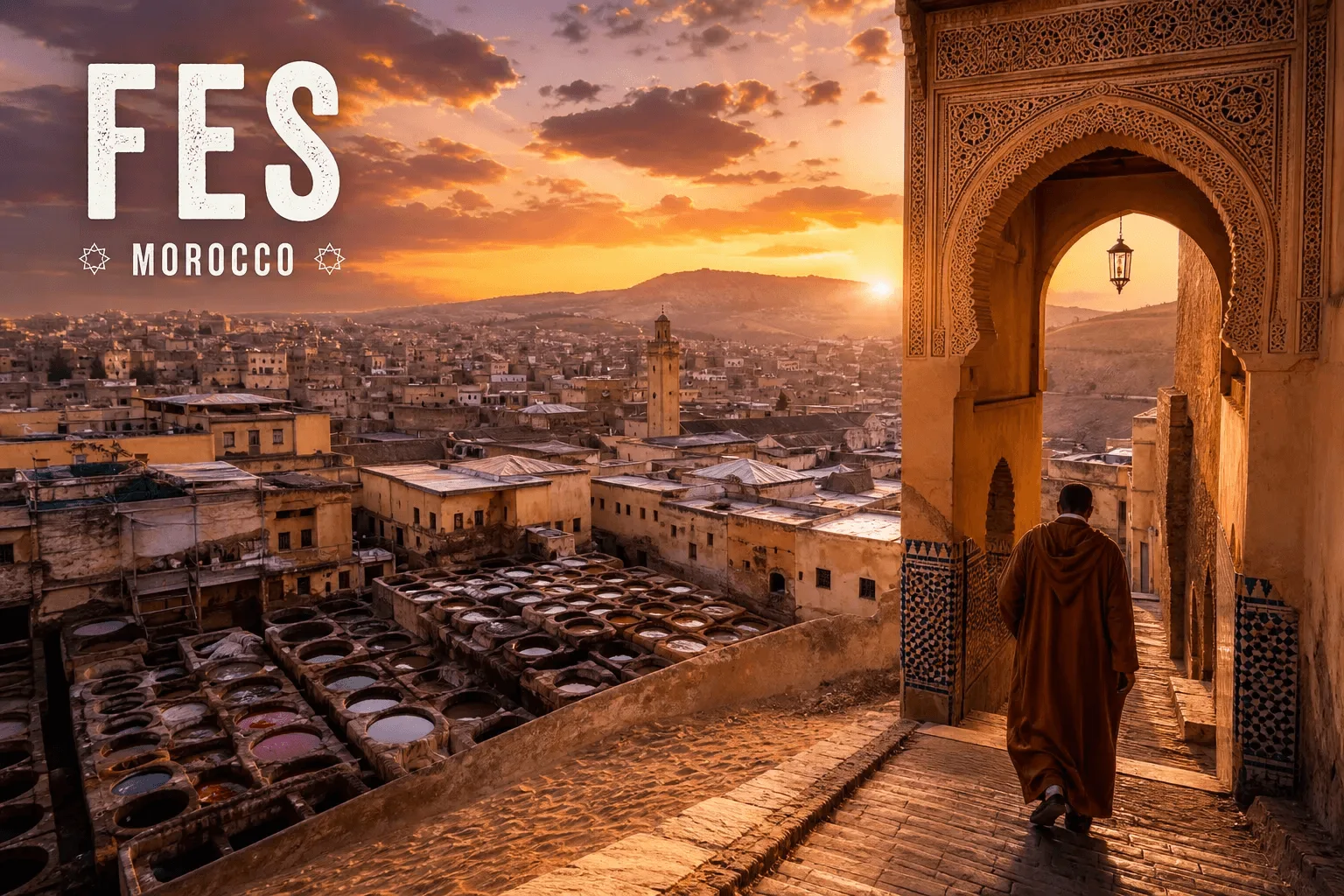
If you're wondering what the best things to do in Fes, Morocco are, this 2-day insider guide will show you the medina's must-see sights and the quieter corners most travelers never find. Fes doesn't perform for tourists. It simply exists, exactly as it has for over a thousand years. Unlike Marrakech, which has learned to dress itself up for visitors, Fes el-Bali pulls you into its own logic: its narrow lanes, competing calls to prayer, and the smell of tanned leather drifting down from the hillside tanneries. There's no theme-park version of Fes. What you see is what has always been there.
The challenge is that the medina has over 9,000 streets and no clear starting point. Most first-timers waste half a day circling the same souk, backtracking through the same archways, and wondering if they've already seen the good parts. This guide solves that. It covers the anchor attractions, the Chouara tannery, Al-Qarawiyyin University, and the quieter corners most travelers never find, all structured into a realistic two-day visit. Our team at Morocco Classic Tours is Fes-based and has spent over a decade walking these streets. A private local guide unlocks layers that no map or travel app can replicate, but this guide will at least make sure you're asking the right questions before you arrive.
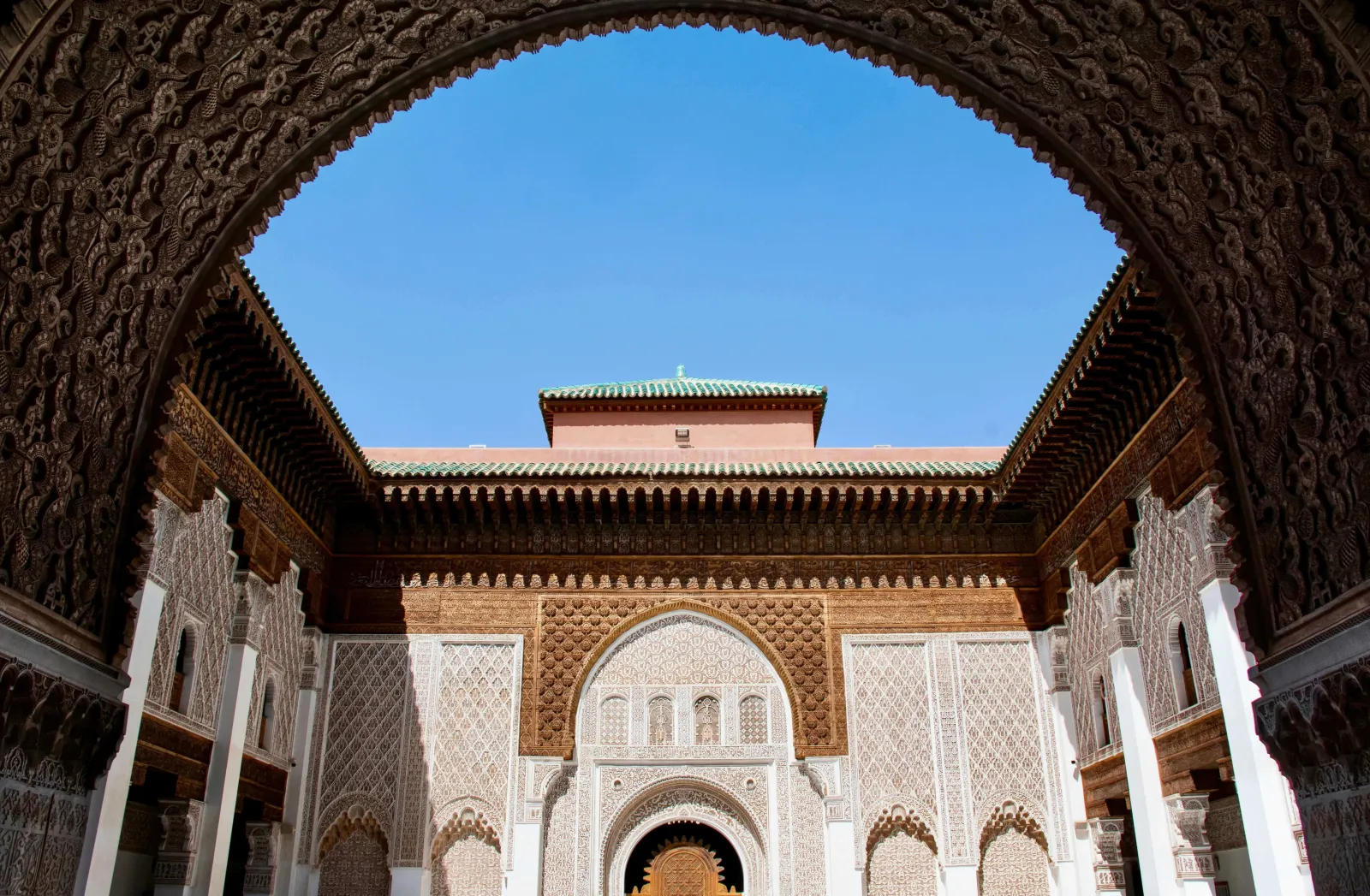
Fes el-Bali is a UNESCO World Heritage Site and one of the world's largest car-free urban areas. That last part matters more than most people realize. It means no motorbikes weaving through the lanes (except in certain outer zones), no taxis, and no way to orient yourself using traffic flow. It's a working city: butchers, tanners, and carpenters all move through the same ancient corridors alongside schoolchildren. You're not visiting a museum. You're stepping into someone else's daily life.
Bab Boujloud, known as the Blue Gate, is the most logical entry point for a first-time visit. The ornate blue-tiled exterior faces the medina's main artery, and the cafes flanking the gate are a good place to sit, order a mint tea, and get your bearings before heading in. Mornings are the best time to enter: cooler air, quieter lanes, and a full hour ahead of organized tour groups. By 9 AM, you want to already be moving.
Bou Inania Madrasa opens around 9 AM (entry runs 20 to 60 MAD depending on the ticket type) and is architecturally the more dramatic of the two major madrasas. Its carved stucco, cedar latticework, and marble floor make it one of the finest examples of Marinid architecture still standing. Plan 30 to 45 minutes here. Al-Attarine Madrasa sits just steps from the Al-Qarawiyyin Mosque entrance and costs about 20 MAD. It's quieter, lighter in feel, and the tilework is exceptional. Spend at least 30 minutes taking it in properly rather than passing through.
The Nejjarine Museum of Wooden Arts and Crafts is the underrated stop that belongs on every Fes sightseeing itinerary. Entry is roughly 20 to 60 MAD, and the rooftop terrace offers one of the better elevated views of the medina without requiring you to buy anything or navigate a leather shop. The surrounding craft lanes, filled with woodworkers and metalworkers practicing trades passed down across generations, extend the visit naturally. It's a good reset point mid-morning before pushing further into the medina.
The Chouara tannery is the most photographed spot in Fes and one of the most misunderstood. It's not a formal paid attraction. You view it from the terraces of leather shops perched above the dyeing vats, and the shop owners will often invite you up, show you around, and then naturally walk you past their merchandise on the way out. Knowing this in advance removes all the anxiety. There's no obligation. The view from the terrace is genuinely extraordinary.
Arrive between 9 and 11 AM for the best visual payoff. The dyeing vats are most active and colorful in the morning light, with workers treading hides through vats of saffron, poppy, cobalt, and mint dye. By early afternoon, some workers break, and the activity thins considerably. The smell is significant, and the shops typically offer a sprig of fresh mint on arrival. Take it. It helps, and it's a kind gesture worth accepting.
Access to the terrace is usually free through the shops, with no formal ticket required. The social contract is simple: accept the mint, enjoy the view, take your photos, and be polite when you leave. Most visitors who feel pressured into buying simply weren't prepared for the format. You can admire the tannery for twenty minutes, say thank you sincerely, and walk out without purchasing anything. That said, the leather goods are genuinely well-made and often fairly priced. If something catches your eye, negotiate calmly and enjoy the interaction.
Al-Qarawiyyin is widely considered the world's oldest continuously operating university, founded in 859 CE by Fatima al-Fihri, a woman of Kairouan origin who used her inheritance to build a mosque and center of learning that never stopped functioning. Both UNESCO and Guinness World Records recognize it as the world's oldest continuously operating university. Non-Muslims cannot enter the mosque or main university buildings, but the experience of standing outside them, understanding what they represent, and walking the surrounding quarter is still genuinely meaningful.
The accessible experience centers on the ornate entrance doors, glimpsed courtyard details, and the Al-Attarine Madrasa directly across from the mosque's entrance. The Al-Qarawiyyin Library, restored and reopened to scholars in 2016, holds manuscripts dating back over a thousand years. You won't be browsing its collection, but the context it adds to the neighborhood is real. This part of the itinerary is about presence and understanding, not access.
Three places reward the traveler who goes beyond the headline sights. The Andalusian Quarter, across the Oued Fes from the main medina, is quieter and architecturally distinct, with fewer tourists and a noticeably slower pace. The Henna Souk near the mosque is a small open-air market that feels genuinely unchanged, where vendors sell natural dyes, kohl, and traditional cosmetics. Seffarine Square, the brass-beaters' square, is one of the most atmospheric Fes medina attractions in the entire city and is consistently overlooked by people who run out of time. These are exactly the places where a local guide proves their worth.
Most travelers try to do too much on day one in Fes and spend day two recovering or skipping things they genuinely wanted to see. The medina is not large, but it is dense, and navigating it burns more energy than it looks. A paced approach across two days is more honest and leaves you actually enjoying the city rather than enduring it.
Start at Bab Boujloud by 9 AM. Walk to Bou Inania Madrasa first, then push toward the tannery for mid-morning viewing between 9:30 and 11 AM. Loop back through Al-Attarine on your return. Lunch near R'cif Square, where you'll find straightforward tagines and a local atmosphere. Spend the afternoon at the Nejjarine Museum, then take a slow wander through the brass and textile souks. This covers roughly 8 to 10 hours at a human pace. Don't rush it.
Day two belongs to the Andalusian Quarter in the morning, the outer perimeter of Al-Qarawiyyin, and Seffarine Square before the midday heat. In the afternoon, consider a hammam session at a traditional Moroccan bathhouse; it's not a tourist activity; it's how locals reset. It's also one of the more quietly memorable things to do in Fes, Morocco. Finish with a rooftop dinner somewhere overlooking the medina at dusk. This day is about texture, not ticking boxes.
Fes is straightforward logistically once you understand its structure. The medina is car-free, so you walk or hire a guide. Beyond the medina walls, the Ville Nouvelle, the train station, and Fes Saïss Airport are all connected by taxis and buses, making getting in and out of the city relatively simple.
From the airport, a grand taxi to the medina runs roughly 120 to 200 MAD depending on time of day. Bus 16 connects the airport to the train station for about 3 to 6 MAD, and from there a petit taxi to the medina costs 10 to 20 MAD. If you're arriving with luggage or late at night, a pre-booked private transfer (around 200 MAD) is the cleaner option and removes the negotiation entirely.
Entry fees are modest across the board: Bou Inania runs 20 to 60 MAD, Al-Attarine is about 20 MAD, and the Nejjarine Museum is 20 to 60 MAD. Bab Boujloud and the Chouara tannery terraces are free. A private guided half-day medina walk runs $50 to $120 per person depending on duration and group size. Free walking tours operate on a tip model; a fair contribution is typically 10 to 20 euros per person.
Staying inside the medina is almost always the right decision for a first visit. Being 10 minutes from the Blue Gate versus a 30-minute taxi from Ville Nouvelle changes the entire character of the trip. The accommodation form that defines the Fes experience is the riad: a traditional courtyard home converted into a guesthouse, often with a rooftop terrace, mosaic tilework, and a breakfast that makes leaving feel unreasonable.
At the budget end (around €60 to €70/night), Riad Lune et Soleil and Riad Tizwa Fes offer solid value and traditional style without the premium price. Mid-range options (€70 to €130/night) include Dar Bensouda and Riad Maya Fes, both well-reviewed and centrally located. For an upscale stay (€90 to €160/night and beyond), Riad Idrissy delivers strong heritage character in the core of Fes el-Bali. Most riads offer airport or train station pickup. Book it. The first-day logistics headache simply disappears.
The Rcif Plaza area is reliable for a lunch tagine without tourist-menu pricing. Street food near Bab Boujloud covers harira soup, msemen flatbread, and sfenj (Moroccan doughnuts), best in the morning. For an evening meal, a sit-down dinner inside a traditional Fes home or riad dining room, featuring pastilla (the city's famous sweet-savory pigeon pie) or slow-braised mrouzia lamb, rounds out the experience properly. Two practical notes before you arrive: dress modestly when entering the deeper medina lanes or any religious site, and confirm prices before sitting down at any restaurant without a posted menu.
Two days is enough to see the landmarks. But the city's real character lives in the unscheduled moments: a wrong turn into a quiet lane, a conversation with a craftsman who's been working the same corner for thirty years, the call to prayer moving across the rooftops at dusk when the whole medina seems to briefly exhale. That's the Fes most travelers don't get to, not because it's hidden, but because they didn't leave enough space in the itinerary.
You now have a working framework for the best things to do in Fes, Morocco: the right sequence of sights, honest logistics, realistic costs, and a clear sense of what to expect before you arrive. If you want to go deeper, the team at Morocco Classic Tours is based in Fes and runs private guided experiences that go well beyond the standard medina walk, the kind of trip where you leave actually knowing the city, not just its highlights. Reach out directly to build a custom itinerary around your travel dates.
Fes will be exactly what you give it. Two days, an open mind, and a willingness to get a little lost is all it takes.
Compare Morocco group tour agencies by trip style, reviews, pace, transport and inclusions. Learn wh...
Read this article Compare Morocco group tour agencies by trip style, reviews, pace, transport and inclusions. Learn wh...
Read this article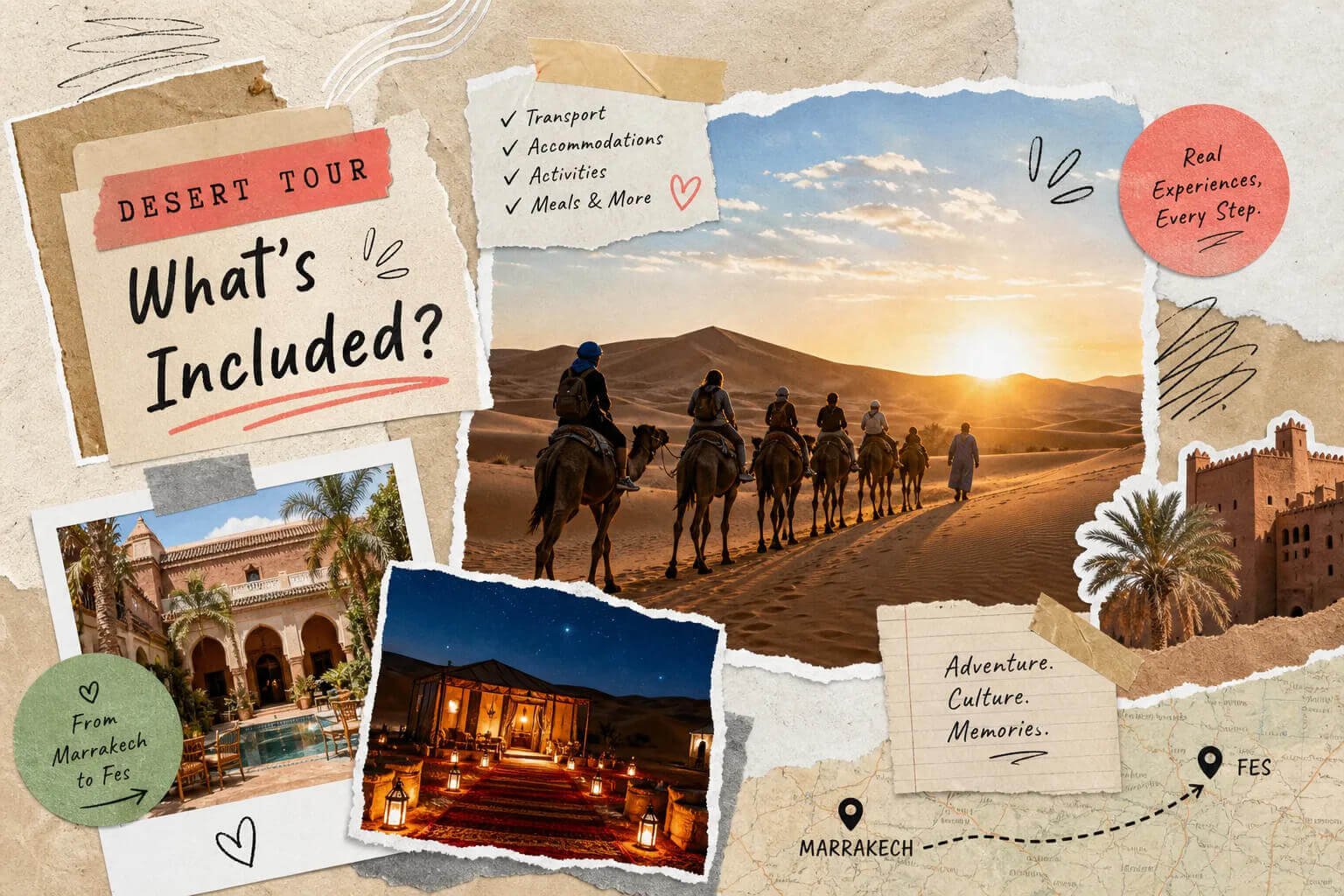
Uncover what a Marrakech to Fes desert tour offers, including camel rides, desert camps, and rich cu...
Read this articleWant cool tour deals and tips about Morocco? Enter your email and we’ll send them to you each month!
