Group Tour Agencies in Morocco: How to Pick the Right One
Compare Morocco group tour agencies by trip style, reviews, pace, transport and inclusions. Learn wh...
Read this article

Private, custom Morocco trips planned in Fez by AZ-ZDDINE, working in Moroccan tourism since 2012. Sahara, Atlas, medinas and coast, arranged around you.
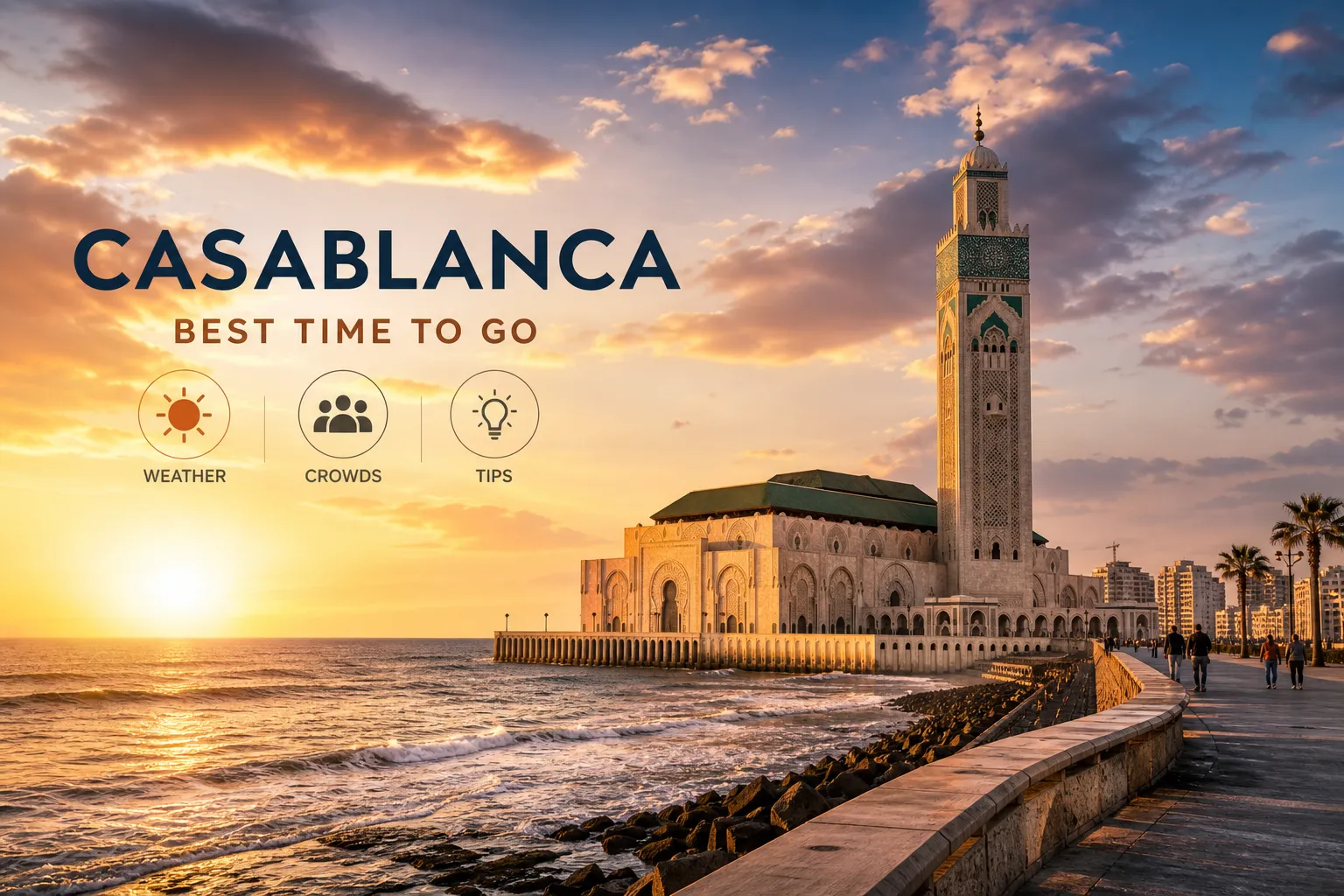
The best month to visit Casablanca depends on whether you want warm water for swimming, manageable crowds, festival programming, or the lowest hotel rates. Picking dates around a flight deal you stumbled across is a reasonable way to save money, but it's a poor way to plan a trip. The fare price won't tell you whether the beach is swimmable, whether the city's main festival is running, or whether you're walking into the rainiest stretch of the year.
Casablanca has a mild Mediterranean-Atlantic climate that keeps temperatures comfortable across nearly every month. But "comfortable" shifts meaningfully from January to December. Thirteen degrees Celsius (55°F) in January, with grey skies and rain, feels very different from 23°C (73°F) in September, with clear skies and a warm sea. That gap matters, especially for a first-time visitor.
This guide breaks down exactly what you get, month by month: temperatures, rainfall, beach conditions, festival timing, and hotel costs. At Morocco Classic Tours, we run Casablanca shore excursions year-round, so we've seen firsthand which months delight first-time visitors and which ones catch people off guard. Here's what we know.
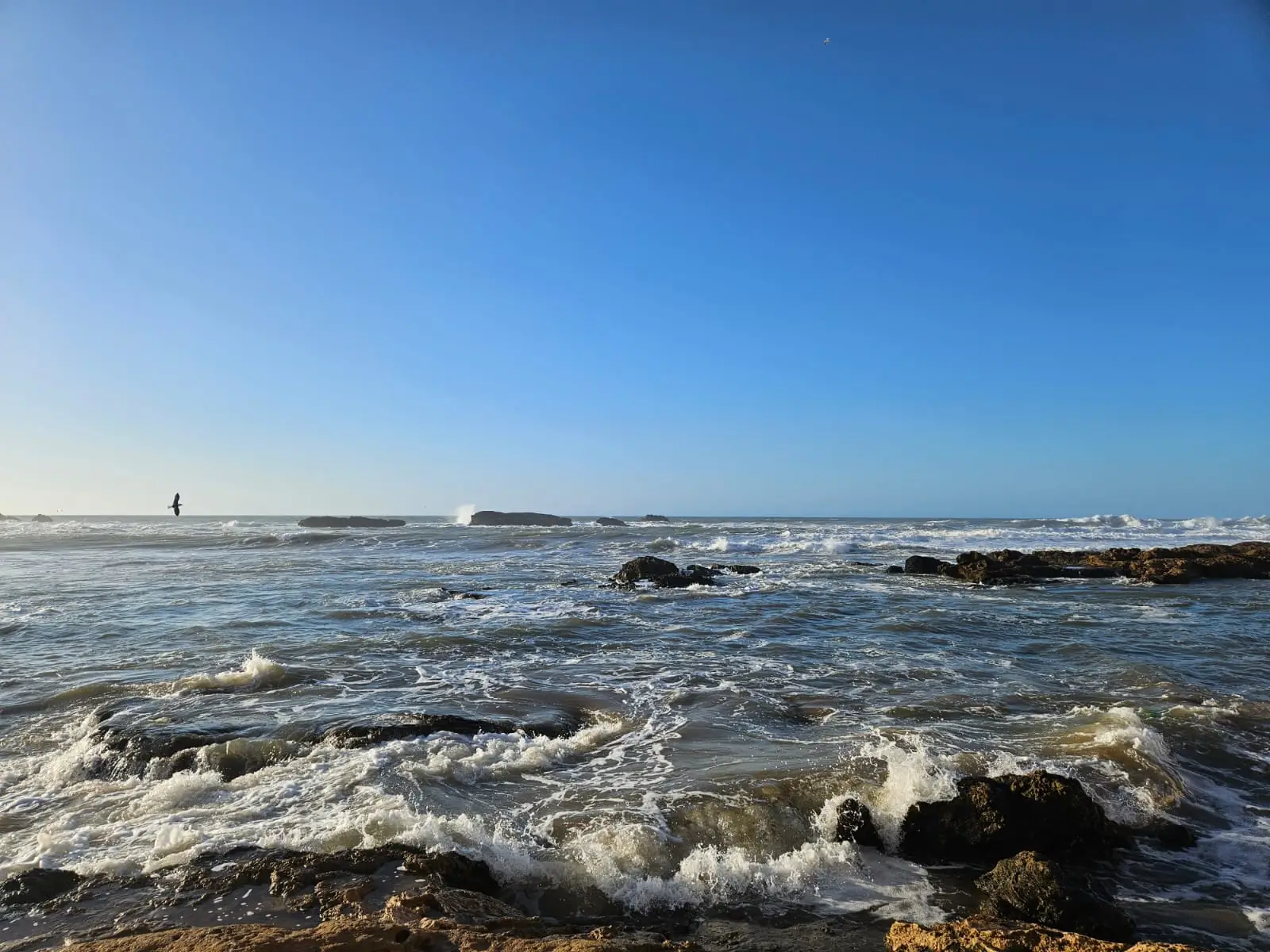
The Atlantic Ocean is the single biggest factor in Casablanca's weather. It acts as a buffer, preventing the extreme summer heat that inland cities like Marrakech and Fez regularly see. While Marrakech can reach 40°C (104°F) in July, Casablanca's average peak is around 23°C (73°F), warm but never brutal. That's the foundational reason Casablanca works as a destination in almost any month.
Temperatures climb gradually from around 13°C (55°F) in January to 23°C (73°F) at peak summer. The range is narrow by global standards. Where months diverge sharply is in rainfall. November is the wettest month at 82.5mm, followed by December and January at 64mm each. By contrast, July averages just 0.5mm for the entire month, and August is effectively dry at 0.4mm. All temperatures throughout this guide are given in Celsius with Fahrenheit in parentheses.
Coastal humidity and consistent sea breezes add one more variable. During summer, the air feels slightly heavier than the thermometer suggests, but the Atlantic breeze that shows up reliably in July and August makes beach days genuinely pleasant rather than oppressive. If you've spent time in a hot, still inland city in summer, Casablanca's coast is the opposite experience.
January and February are the least visited months of the year, and that's actually an asset for the right traveler. Average temperatures of 13°C to 14°C (55°F to 57°F) with 50mm to 64mm of rain across both months mean these are not beach months. But crowds are minimal, hotel rates are at their lowest, and Casablanca feels like a working city rather than a tourist circuit. Hassan II Mosque visits are unhurried, the medina is navigable, and your photos won't have tour groups in every frame. February also hosts the Casablanca International Book Fair, a genuine draw for culturally curious visitors who want something specific to anchor the trip.
March and April mark a real turning point. Temperatures climb to 15°C to 16°C (59°F to 61°F), rainfall drops to 33mm to 43mm, and the spring light transforms how Casablanca's architecture and coastal walks are photographed. The Art Deco quarter looks genuinely beautiful in April light. The trade-off is price: spring is consistently one of the more expensive booking windows, with hotel rates noticeably higher than summer lows on most major platforms. If you're targeting this window, booking 6 to 8 weeks ahead is not optional; it's necessary.
May and June are the strongest windows for first-time visitors. May averages 18°C (64°F) with only 13.6mm of rain; June hits 20°C (68°F) and is nearly bone dry. Sunshine runs 10 hours per day in both months. Crowds are manageable before the full domestic summer rush, and the city is operating at full energy without being overwhelmed. June brings the Casablanca Arab Film Festival (which ran June 5 to 12 in 2026) and the Fête de la Musique on June 21, filling public spaces with free performances. For travelers who want solid sightseeing conditions alongside cultural programming, this is a strong combination.
July and August are the warmest and driest months, both averaging 23°C (73°F) with essentially zero rainfall. Sea temperature reaches 23°C (73°F) in August, its annual peak. Domestic Moroccan tourists pour into the Ain Diab beach area during school holidays, making July and August the busiest months on the coast. The Jazzablanca Festival, one of Casablanca's flagship events, ran from July 2 to 11 in 2026 and drew a serious crowd. Counterintuitively, hotel rates in summer are among the lowest of the year according to KAYAK data, which pegs August at around $132 per night compared to December's $191. The beach energy is real, but so is the value.
September is the single strongest month for most visitors. The sea stays warm at around 22°C to 23°C (72°F to 73°F), crowds thin noticeably as school resumes and domestic tourism winds down, and daytime temperatures ease to a comfortable 23°C (73°F) that doesn't demand you find shade constantly. The L'Boulevard Festival runs from late September into early October, adding a cultural layer for travelers who want it. The combination of warm water, manageable crowds, good light, and festival timing makes September the clearest overall winner when choosing the best time to go to Casablanca.
October is a strong shoulder-season choice with one caveat: rainfall picks back up to 45mm (1.8 inches), spread across the month rather than concentrated in heavy events. For most trips, that means a few overcast days rather than a week of downpours. Temperatures ease to 19°C (66°F), ideal for walking rather than sitting on a beach. International visitors continue returning as the cruise season stays active through fall, so book accommodation a few weeks ahead rather than last-minute.
November and December bring the rainy season back in full force. November is the wettest month at 82.5mm (3.2 inches); December follows at 64mm (2.5 inches). Temperatures drop to 14°C to 17°C (57°F to 63°F). Swimming is off the table in November and December, and the coast loses most of its appeal. December hotel prices also spike; some platforms show it as the most expensive month of the year. The case for visiting then is simple: if you want Casablanca with almost no other tourists and don't mind carrying a rain jacket every day, these months deliver that.
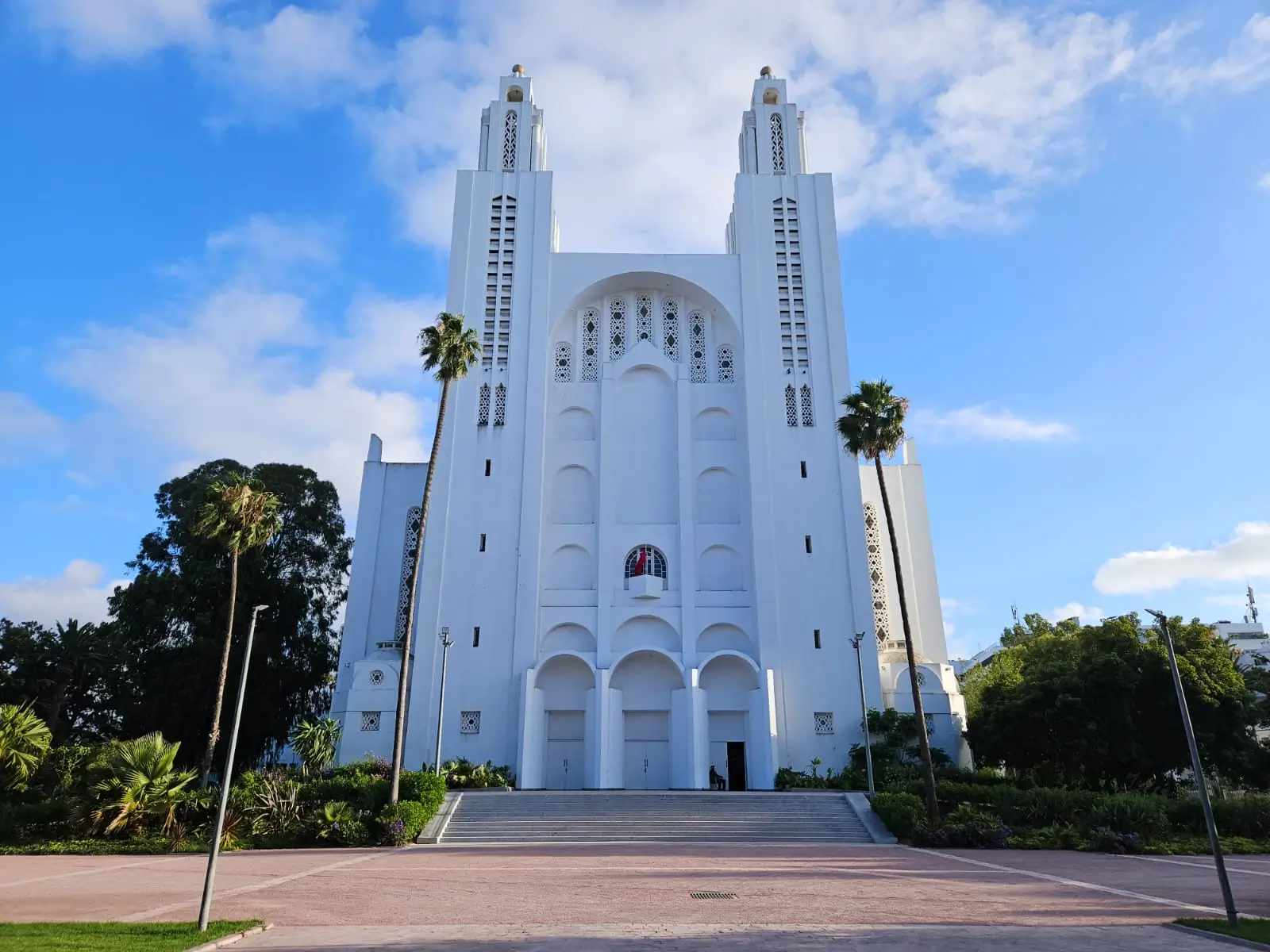
If beaches and swimming are your priority, August and September are the answer. August gives you the warmest water at 23°C (73°F) and the longest beach days, though domestic crowds are at their peak. September delivers nearly the same water temperature, around 22°C to 23°C (72°F to 73°F), with noticeably fewer people. For most international visitors, September offers the best overall beach experience.
Target April to May or September to October. These shoulder windows offer comfortable walking temperatures, excellent natural light, and a city that's busy without being chaotic. You can cover Hassan II Mosque, the Corniche, the Old Medina, and the Art Deco quarter without sweating through the afternoon or hitting a cruise-day crowd surge. Spring festival programming in late May and June adds real value if cultural events belong on your itinerary.
Casablanca is one of the Atlantic coast's major cruise ports, handling more than 100 cruise calls and around 135,000 passengers annually. The busiest arrival seasons cluster around spring and fall, aligning almost exactly with the shoulder-season sweet spots described above. That's useful information, because on active port days, attractions like Hassan II Mosque can see a sudden surge in foot traffic within hours of a ship docking.
At Morocco Classic Tours, we structure our Casablanca shore excursion packages specifically around port arrival schedules. Cruise passengers have a tight window, and a generic city tour booked at the dock doesn't account for the timing logistics that determine whether you actually see the mosque and the Corniche or spend most of your port hours in a van. Our private half-day and full-day excursions are built for travelers who need to move efficiently through the city without wasting time on logistics or waiting for a group tour to fill up.
If you're arriving by cruise ship between April and October, having a pre-planned, port-timed excursion confirmed before you disembark is the practical move. It's the difference between a real city experience and a rushed loop around one attraction.
Packing for Casablanca is straightforward once you match your gear to the season. For winter months (November through February), bring a light rain jacket, comfortable walking layers, and shoes that can handle wet streets. No heavy coat is necessary. For spring and fall visits (March through May, September through October), one light layer for evenings, a compact umbrella for October, and sunscreen cover the essentials. For summer (June through August), light breathable clothing and sunscreen are essential; UV levels hit 9 to 10 at the beach, and you will burn without protection.
One rule that holds across every month: Casablanca is a conservative city outside beach areas. Modest dress matters when you're in the medina, visiting Hassan II Mosque, or moving through residential neighborhoods. A light scarf takes up no space and handles the situation immediately.
On the booking side, here's the straightforward picture:
For most first-time visitors, the best month to visit Casablanca is September. Warm water for swimming, comfortable sightseeing temperatures, thinner crowds after the domestic summer rush, and the L'Boulevard Festival all converge in one month. It's the best overall balance Casablanca offers across the entire calendar year.
If beaches aren't your focus and you want strong walking conditions with spring light, April and May are the strongest alternatives. You'll pay more for hotels, but the sightseeing experience in those months is genuinely excellent.
The honest bottom line: Casablanca's mild Atlantic climate means almost no month is a total write-off. The question isn't "will the weather ruin the trip?" it's "what kind of experience do I want?" Use this breakdown to lock in your travel window, then build the rest of your Morocco itinerary around it.
Whether you're arriving on a cruise ship at the port or flying directly into Mohammed V International Airport, Morocco Classic Tours can structure the Casablanca leg around your schedule. Reach out to our team, and we'll match the timing, the itinerary, and the pace to exactly what you're after.
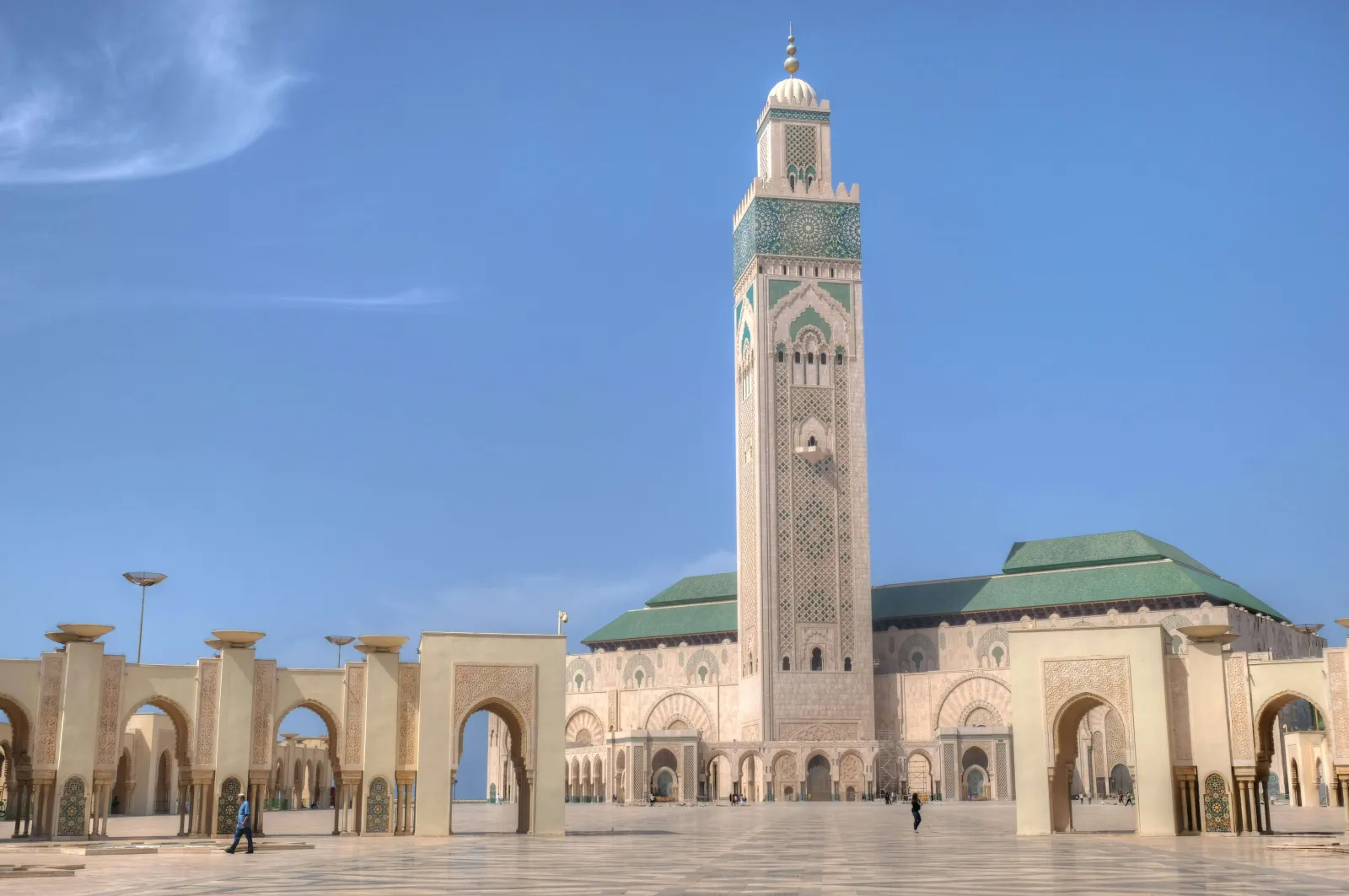
September is the top choice for most travelers. It combines warm sea temperatures around 22°C to 23°C (72°F to 73°F), comfortable daytime highs, thinning crowds after the summer rush, and the L'Boulevard Festival. If beaches aren't a priority, April and May offer excellent sightseeing conditions with spring light and manageable crowds.
June through August typically has the lowest hotel rates despite the warm weather, according to KAYAK data. January and February also offer low rates alongside minimal crowds, though those months are rainy and not suitable for beach visits.
July and August see the highest domestic tourist volumes, particularly along the Ain Diab beach strip. Spring (April to May) and early fall (September to October) bring an increase in international visitors and cruise arrivals.
It depends on your priorities. November through February brings the most rain and cool temperatures in the 13°C to 17°C (55°F to 63°F) range. Beaches are not viable, but the city's cultural sites are uncrowded, hotel rates are low, and the Casablanca International Book Fair runs in February for those who want a specific cultural anchor.
May, June, and September offer the best combination of sunshine, low rainfall, and comfortable temperatures. June averages 10 hours of sun per day with nearly no rain. September adds the bonus of warm sea temperatures for swimming.
Compare Morocco group tour agencies by trip style, reviews, pace, transport and inclusions. Learn wh...
Read this article
Uncover what a Marrakech to Fes desert tour offers, including camel rides, desert camps, and rich cu...
Read this article
Join our Merzouga Overnight Tour for an authentic desert experience. Enjoy camel rides, comfortable ...
Read this articleWant cool tour deals and tips about Morocco? Enter your email and we’ll send them to you each month!
