Group Tour Agencies in Morocco: How to Pick the Right One
Compare Morocco group tour agencies by trip style, reviews, pace, transport and inclusions. Learn wh...
Read this article

Private, custom Morocco trips planned in Fez by AZ-ZDDINE, working in Moroccan tourism since 2012. Sahara, Atlas, medinas and coast, arranged around you.
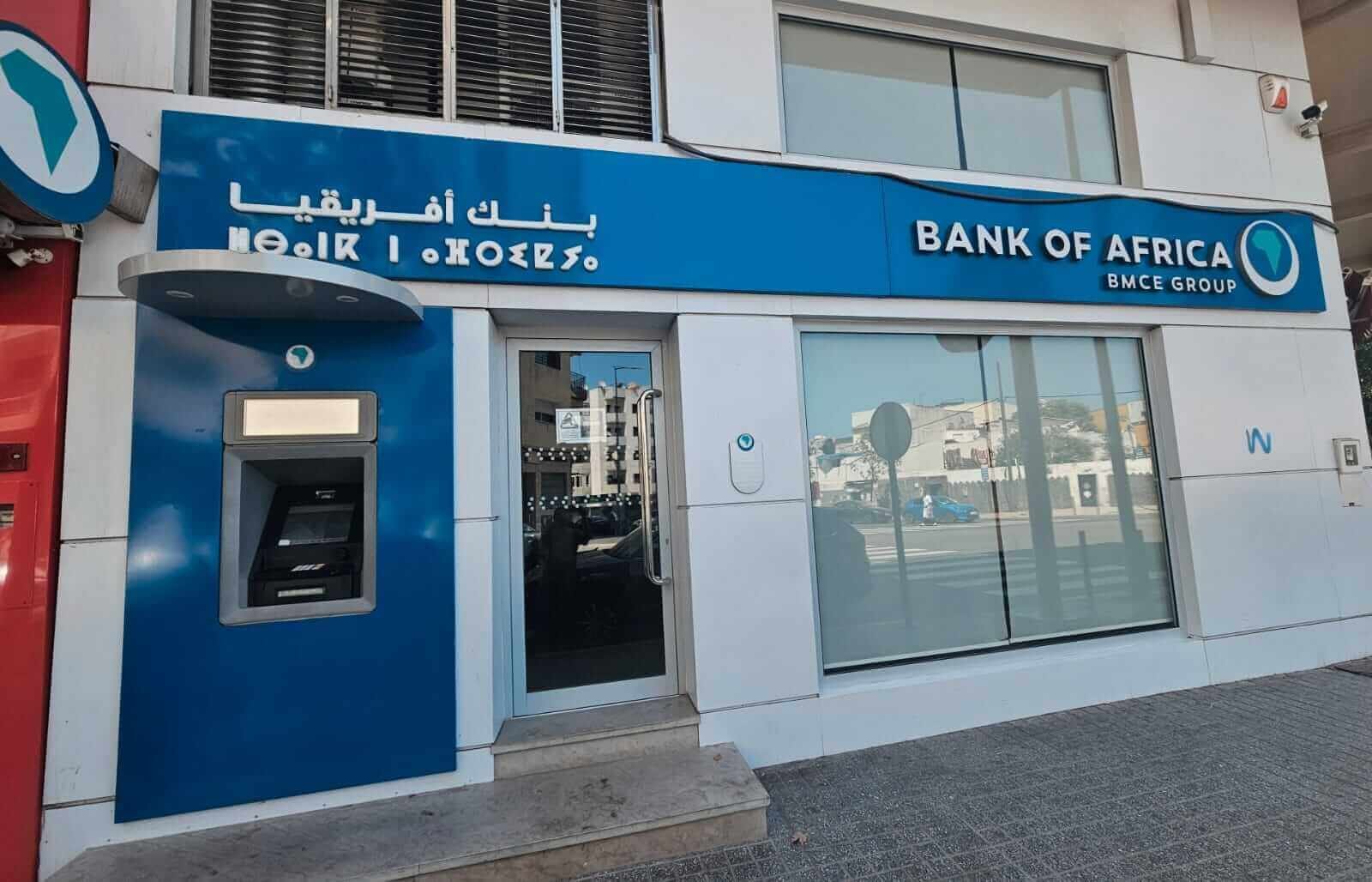
If you are a foreign traveler planning a trip to Morocco, finding the best ATM to use in Morocco for foreigners is essential to save money, avoid hassle, and ensure you always have access to cash. This comprehensive guide covers everything you need to know about using ATMs in Morocco, including withdrawal fees, safety tips, withdrawal limits, and which banks are most reliable for international visitors. Understanding these details will help you avoid unnecessary charges, reduce stress, and make your journey through Morocco’s cities, mountains, and deserts much smoother.
BMCI and Attijariwafa Bank are usually the best choices: BMCI often has higher limits, while Attijariwafa has one of the most reliable networks in major cities.
In 2026, most Moroccan ATMs charge around 35 MAD per withdrawal on foreign cards, so “fee-free” usually means using a good travel debit card from your own bank, not finding a free Moroccan machine.
Morocco is still cash-first: Use your debit card mainly to withdraw cash in Moroccan dirhams, avoid dynamic currency conversion, and choose “Without Conversion” or “Charge in MAD.”
In Merzouga, Imlil, Zagora, the Draa Valley, and rural areas, ATMs may be scarce, empty, or offline. Withdraw enough cash in Marrakech, Fes, Casablanca, Ouarzazate, or Errachidia before Morocco Classic Tours desert or mountain trips.
Yes, most foreign Visa/Mastercard debit cards work in Morocco. No, it is usually not better to let the Moroccan ATM do the currency conversion.
ATMs in Morocco are modern and common in larger cities; they are often labelled GAB or DAB. They dispense only the Moroccan dirham because MAD is a closed currency, so plan to withdraw money in Morocco and spend or exchange remaining dirhams before leaving the country.
Since early 2026, virtually all major bank ATMs now apply withdrawal fees to foreign cardholders. The usual Morocco charge is about 35 MAD per transaction, plus any fee from your home bank. Screens are usually Arabic/French, with English at most ATMs in Morocco in airports and major cities. Most ATMs require a physical bank card with a 4-digit PIN; digital wallets are rarely supported.
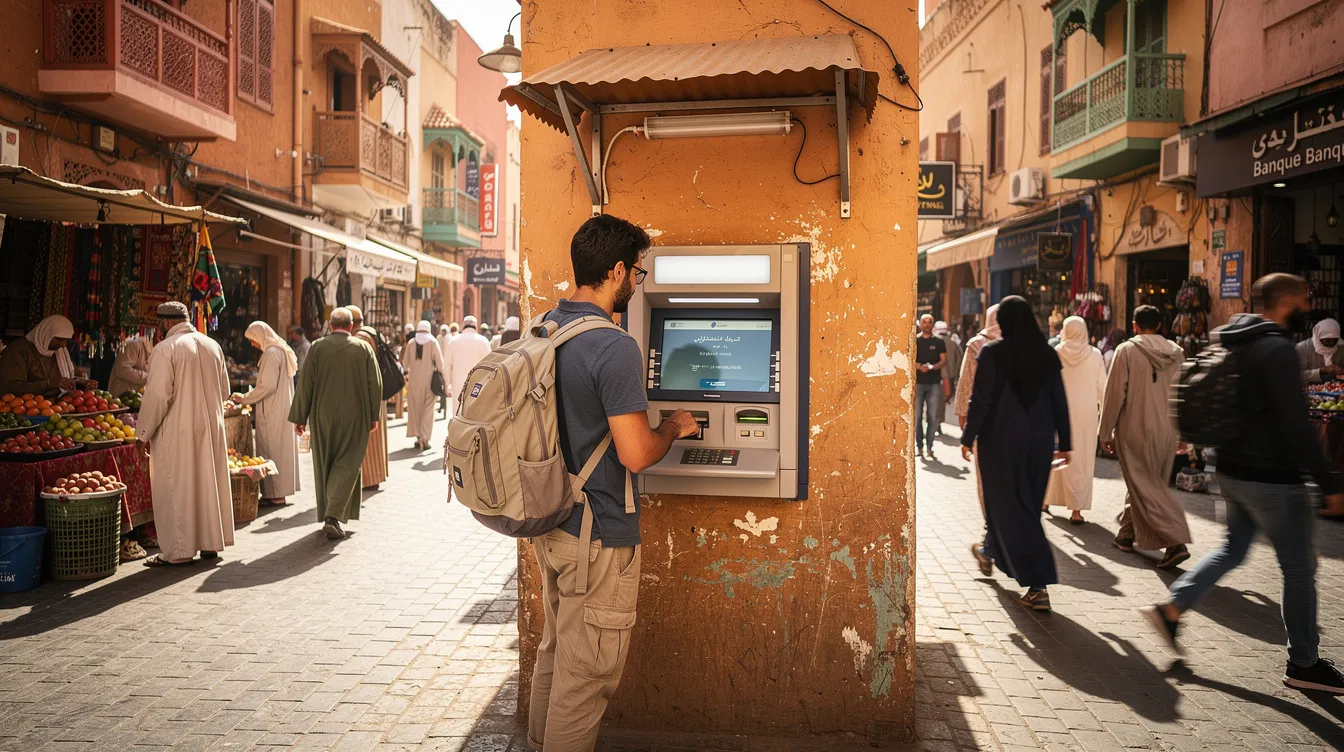
Transitioning from how ATMs function, let’s look at which banks offer the best ATM experience for foreigners in Morocco.
The best ATM is the one that combines reliability, reasonable ATM fees, safe location, and a high withdrawal limit. For 2026, the top picks are BMCI, Attijariwafa Bank, and Bank of Africa. Most major Moroccan banks, including Attijariwafa Bank, BMCI, and Bank of Africa, accept international cards and are reliable options for foreign travelers.
BMCI is often the cheapest ATM to use in Morocco to draw money in larger amounts. Most ATMs in Morocco have a maximum withdrawal limit of 2,000 MAD per transaction, approximately 200 USD, but some ATMs, particularly those from BMCI, may allow higher withdrawal limits of up to 4,000 MAD or even 8,000 MAD in certain locations. That means fewer multiple transactions and fewer 35 MAD fees.
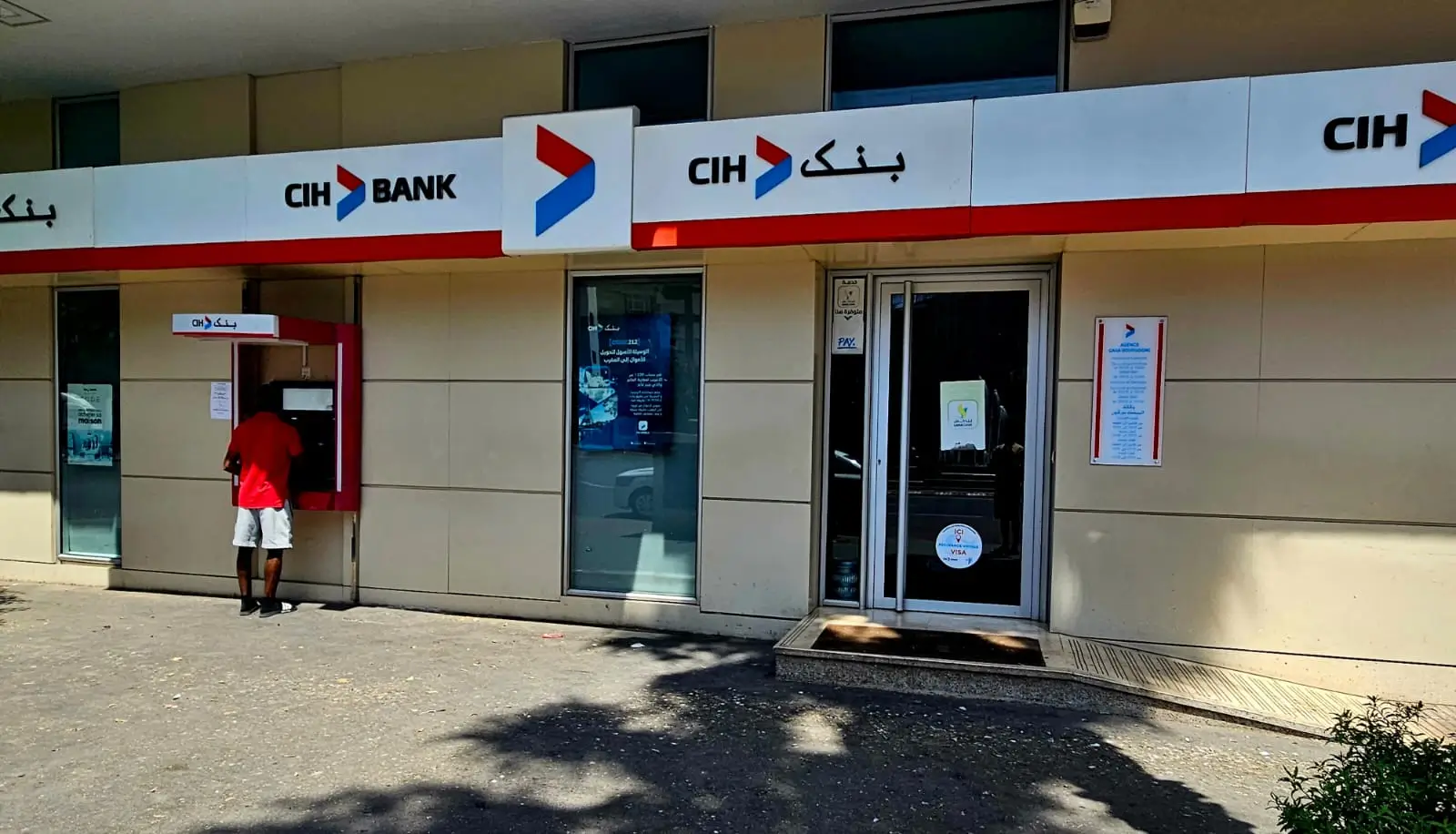
Attijariwafa Bank is the most practical daily choice because its network is large and dependable in Marrakech, Casablanca, Fes, Rabat, Tangier, Agadir, Meknes, and tourist areas. Bank of Africa, Banque Populaire, Société Générale, Crédit Agricole, CDM (Crédit du Maroc), and CIH are good backups. Major bank-affiliated machines, located inside or attached to official bank branches, are the safest and most reliable for international visitors in Morocco. The most reliable ATMs for travelers in Morocco belong to major established retail banks such as CDM, BMCI, Banque Populaire, and Attijariwafa Bank.
Al Barid Bank used to be popular for fee-free withdrawals, and Al Barid Bank has been reported by travelers to charge no local ATM fee for foreign cards, although this is subject to change and should be verified at the machine before confirming a withdrawal. In 2026, it normally also charges about 35 MAD, so its main advantage is coverage in smaller towns. Morocco Classic Tours guides can point guests to reliable bank branch machines before tours depart.
Now that you know which banks to look for, let's explore where to find ATMs across Morocco.
You can find ATMs easily in major cities like Marrakech, Casablanca, Rabat, Fes, Tangier, Agadir, Meknes, and Ouarzazate. ATMs in Morocco are widely available in major cities like Marrakech, Casablanca, and Fes, but access can be limited in rural areas and smaller towns. Look near main avenues, malls, tram stops, train stations, bus stations, and official bank branches.
International airports usually have ATMs. At Casablanca Airport, bank ATMs from Attijariwafa, Banque Populaire, BMCI, Bank of Africa, and Al Barid are found around arrivals, departures, and near the baggage-claim exit; the official Casablanca airport services page is useful for current facilities. Use airport machines for a small arrival withdrawal, then get more cash at city bank ATMs.
Inside medinas, including Marrakech, Fes, and Chefchaouen, machines are more often near gates and wide streets than deep alleys. Search the medina outer ring or use a bank locator. Avoid a standalone machine in a hotel lobby, souvenir zone, or isolated corner when a proper bank is nearby.
With an understanding of ATM locations, let’s examine ATM availability in Morocco’s remote regions.
One common mistake is not carrying enough cash before the Sahara Desert or High Atlas. Are there ATMs in Merzouga? Very few, and they may be non-functional. Withdraw in Errachidia, Erfoud, Rissani, or Ouarzazate before an Erg Chebbi camp.
Are there ATMs in Imlil? Access is variable. Machines in the valley may run out of cash or reject foreign cards, so withdraw in Marrakech first.
Are there ATMs in Zagora, Morocco? Yes, a few, but they can be empty or offline on weekends and holidays; use Ouarzazate or Agdz first and treat Zagora as backup.
Are there ATMs in the Atlas Mountains, Morocco? In scattered villages such as Ait Bouguemez, Toubkal routes, and small Berber towns, often no. Calculate accommodation, meals, tips, and small purchases in advance. Guests booking with Morocco Classic Tours can ask exactly where the last reliable ATM is on their custom itinerary.
Now that you know where to find ATMs, let’s break down the fees and exchange rates you can expect in Morocco.
Three costs matter: the Moroccan bank ATM fee, your own bank fee, and exchange rates. Most Moroccan banks charge a flat fee per withdrawal for foreign cardholders, typically ranging from 15 MAD to 30 MAD, approximately 1.50 to 3 USD, though this can vary by bank. In practice, the majority of bank ATMs in Morocco charge between 22 MAD and 50 MAD per transaction for foreign cardholders, with most charging around 35 MAD.
Your home bank may also charge a foreign transaction fee for using your card internationally, usually 1.5% to 3% of the transaction amount, and sometimes an extra flat ATM fee. Check your bank account terms before travel.
Dynamic currency conversion (DCC) is a service provided by certain ATMs that enables you to make payments in your home currency rather than the local currency; however, it frequently leads to less favorable exchange rates. When using ATMs in Morocco, it is advisable to select “Without Conversion” to avoid unfavorable exchange rates offered by the ATM. Selecting “Without Conversion” at the ATM is crucial to avoid the higher fees associated with DCC, as your bank typically offers a better exchange rate than the ATM operator. To avoid DCC fees, always choose to pay in the local currency, Moroccan dirhams, when prompted by the ATM or merchant. When prompted by an ATM, always choose to decline dynamic currency conversion (DCC) and opt to pay in the local currency, Moroccan dirhams, to avoid unfavorable exchange rates.
Always choose “Without Conversion,” “Charge in MAD,” or similar wording when the ATM asks.
Use a travel-friendly bank account or debit card with low FX costs, such as Wise, Revolut, N26, or a fee-free checking account that reimburses ATM fees.
Check whether your bank has partnerships with Moroccan banks or Global ATM Alliance access.
Consolidate withdrawals: one 4,000 MAD withdrawal costs less than four 1,000 MAD withdrawals because each transaction may trigger a fee.
Avoid airports, hotels, and tourist-only zones for large withdrawals because they can charge higher fees, enforce stricter limits, or show poor exchange rates.
If you need to exchange money, use reputable city exchange offices or a bank, not hotels with weak rates. Major foreign currencies like EUR, USD, and GBP are easiest to exchange.
With a clear understanding of fees and how to avoid extra charges, let’s discuss how cash and cards are used in Morocco.
Morocco is still mostly cash-based. Cash is essential in souks, taxis, petit taxis, street food stalls, public markets, small riads, and for tips. Cards are widely accepted in larger hotels, upscale restaurants, malls, Carrefour, Marjane, train stations, and online payments, including Morocco Classic Tours packages.
Is it better to carry cash or a card in Morocco? Use both. Keep enough cash for 1–2 days, plus emergency cash and a backup card. For how much cash, many travelers need 300–600 MAD per person per day for food, taxis, entries, and snacks, with more cash needed for shopping or private experiences.
Can I use my credit card in the Marrakech Medina? Sometimes. Some riads, galleries, and restaurants display a Visa or Mastercard logo, but many shops prefer cash or claim the terminal is broken. Use your card in Morocco for larger payments and cash for daily purchases.
Now that you know how to balance cash and card use, let’s see if your card will work in Morocco.
For everyday spending decisions, see our cash or card guide for Morocco.
Most travelers from Europe, North America, the UK, Australia, and other regions can withdraw from Morocco ATMs with Visa or Mastercard. Visa and Mastercard are the most widely accepted networks; Maestro, Cirrus, and Plus often work when linked. American Express is less accepted, and Discover/Diners are limited, so carry a mainstream backup card.
Physical debit cards equipped with a 4-digit PIN are required for transactions at Moroccan ATMs; digital wallets are rarely supported. Most machines expect a 4-digit numeric PIN. If your PIN has 6+ digits, shorten it if your bank allows. If you have a signature-only or magstripe card, ask your bank for chip-and-PIN before departure.
Tell your bank you are visiting Morocco to reduce fraud alerts and blocks for suspicious activity. Then monitor your bank account during the trip for unauthorized transactions.
Understanding card compatibility, let’s look at withdrawal limits and strategies for getting cash in Morocco.
Both Moroccan banks and your home bank can limit withdrawals. Common withdrawal limits for ATMs in Morocco typically range between 2,000 and 5,000 MAD per transaction, depending on the bank and machine. Some BMCI machines go higher, making them useful before road trips.
While most ATMs do not impose a daily withdrawal limit, your home bank may have its own daily international withdrawal cap that could affect how much you can take out. Ask your home bank if you can raise it temporarily.
A simple strategy: withdraw larger amounts at safe bank ATMs, ideally BMCI when available, instead of many 500–1,000 MAD withdrawals. ATMs can run out of cash during busy periods, so travelers should always carry backup cash and multiple cards for withdrawals.
With your withdrawal strategy in place, let’s review safety tips and troubleshooting for ATM use in Morocco.
Bank ATMs are generally safe, but use simple tricks. Always use ATMs that are physically attached to a bank branch to ensure better security and easier recovery of your card if it gets swallowed by the machine. It is advisable to withdraw cash during bank operating hours to receive immediate assistance in case of machine errors or card retention.
Avoid using ATMs in isolated areas or during nighttime, as these locations can pose a higher risk for theft or card skimming. Cover your PIN entry when using an ATM to prevent others from seeing your code, which is a standard safety practice globally. Ignore “helpers,” take your cash discreetly, and leave before counting large amounts.
If the ATM keeps your card, go into the bank with your passport if it is open. If closed, call the number on your card and block it. If your card is blocked for fraud, verify the transaction in your banking app. Morocco Classic Tours guests can ask a driver or guide to help with translation at a bank branch.
Now that you know how to stay safe, here’s a quick reference table of major Moroccan banks and their ATM features.
Bank | Best use for foreigners |
|---|---|
Attijariwafa Bank | Large network, reliable everyday ATM choice, common 2,000 MAD limits |
BMCI | Higher 4,000–8,000 MAD limits at some machines; often best for large withdrawals |
Banque Populaire | Strong urban and regional coverage |
Bank of Africa, formerly BMCE | Good city network and international card acceptance |
CDM, Crédit du Maroc | Reliable established retail bank option |
Société Générale Maroc | Common near business districts and shopping areas |
Crédit Agricole Maroc | Useful in many towns and agricultural regions |
CIH Bank | Helpful in residential zones and smaller towns |
Al Barid Bank | Useful coverage where other banks are limited, but not reliably fee-free in 2026 |
With this bank comparison in mind, let’s look at practical tips to minimize ATM fees and get better exchange rates.
Choose a travel-friendly bank account or debit card with low FX costs, such as Wise, Revolut, N26, or a fee-free checking account that reimburses ATM fees.
Check whether your bank has partnerships with Moroccan banks or Global ATM Alliance access.
Always choose “Without Conversion,” “Charge in MAD,” or similar wording when the ATM asks.
Consolidate withdrawals: one 4,000 MAD withdrawal costs less than four 1,000 MAD withdrawals because each transaction may trigger a fee.
Avoid airports, hotels, and tourist-only zones for large withdrawals because they can charge higher fees, enforce stricter limits, or show poor exchange rates.
If you need to exchange money, use reputable city exchange offices or a bank, not hotels with weak rates. Major foreign currencies like EUR, USD, and GBP are easiest to exchange.
Armed with these tips, let’s see how Morocco Classic Tours can help you plan your cash needs for your itinerary.
Morocco Classic Tours helps guests with practical money planning, not just private tours, desert camps, camel rides, food tours, and cultural routes. For Merzouga, Erg Chebbi, and Erg Chigaga trips, we tell travelers where to withdraw before remote areas: Marrakech, Fes, Ouarzazate, Errachidia, Erfoud, or Rissani.
For Imlil, Toubkal, and Ait Bouguemez, guides remind guests that mountain villages may not have full-service bank ATMs. Drivers can help locate trusted branches such as Attijariwafa, BMCI, Banque Populaire, or Bank of Africa and advise on safer withdrawal times.
With all this information, you’re ready to make smart ATM choices in Morocco.
Use big-bank ATMs, especially BMCI and Attijariwafa, when looking for the best ATM to use in Morocco for foreigners.
Withdraw larger amounts to reduce repeated 35 MAD withdrawal fees.
Always choose MAD and decline dynamic currency conversion.
Carry enough cash before remote segments in the Sahara, Draa Valley, and Atlas Mountains.
Morocco is straightforward for foreign cardholders who plan ahead, carry two cards, and avoid expensive currency conversion. Do not stress over finding a perfect fee-free ATM; focus on enjoying the medinas, mountains, and desert.
Planning your route? Discuss your private Morocco trip with our local team. For a route example, read our 7-day Marrakech, Sahara and Fes itinerary.
You will need far less cash than you think if the big costs are settled before you arrive. On a trip with the driving, hotels and meals already arranged, what is left to pay for is lunches, tips and whatever you decide to buy.
No major US retail banks such as Chase, Bank of America, or Wells Fargo operate normal branches or branded ATMs for tourists in Morocco. American travelers use Moroccan banks on Visa, Mastercard, Cirrus, or Plus networks. Some US banks reimburse fees, but you still withdraw from local banks like BMCI, Attijariwafa, or Bank of Africa.
In 2026, fees are mostly standardized around 35 MAD, so the lowest-fee question matters less than withdrawal limit. BMCI can be cheaper overall because higher limits mean fewer paid transactions. The best setup is BMCI plus a low-fee travel debit card from your home country.
For most travelers, major-bank ATMs give a better overall exchange rate than hotels or airport exchange desks, even after fees. Exchanging EUR, USD, or GBP can be useful if you have already hit your card allowance. Avoid changing large amounts at airports unless necessary.
Some riads, restaurants, boutiques, and galleries accept cards, especially if they show a Mastercard logo or Visa sign. Most small craft shops, stalls, taxis, and food vendors are cash-only or strongly prefer cash. Carry MAD for medina spending.
Dispense failures are rare but possible. Note the bank name, ATM location, time, and amount, and keep any receipt or error message. Contact your home bank immediately to open a dispute, and visit the local bank branch if convenient. Refunds can take several business days after the ATM records are checked.
Compare Morocco group tour agencies by trip style, reviews, pace, transport and inclusions. Learn wh...
Read this article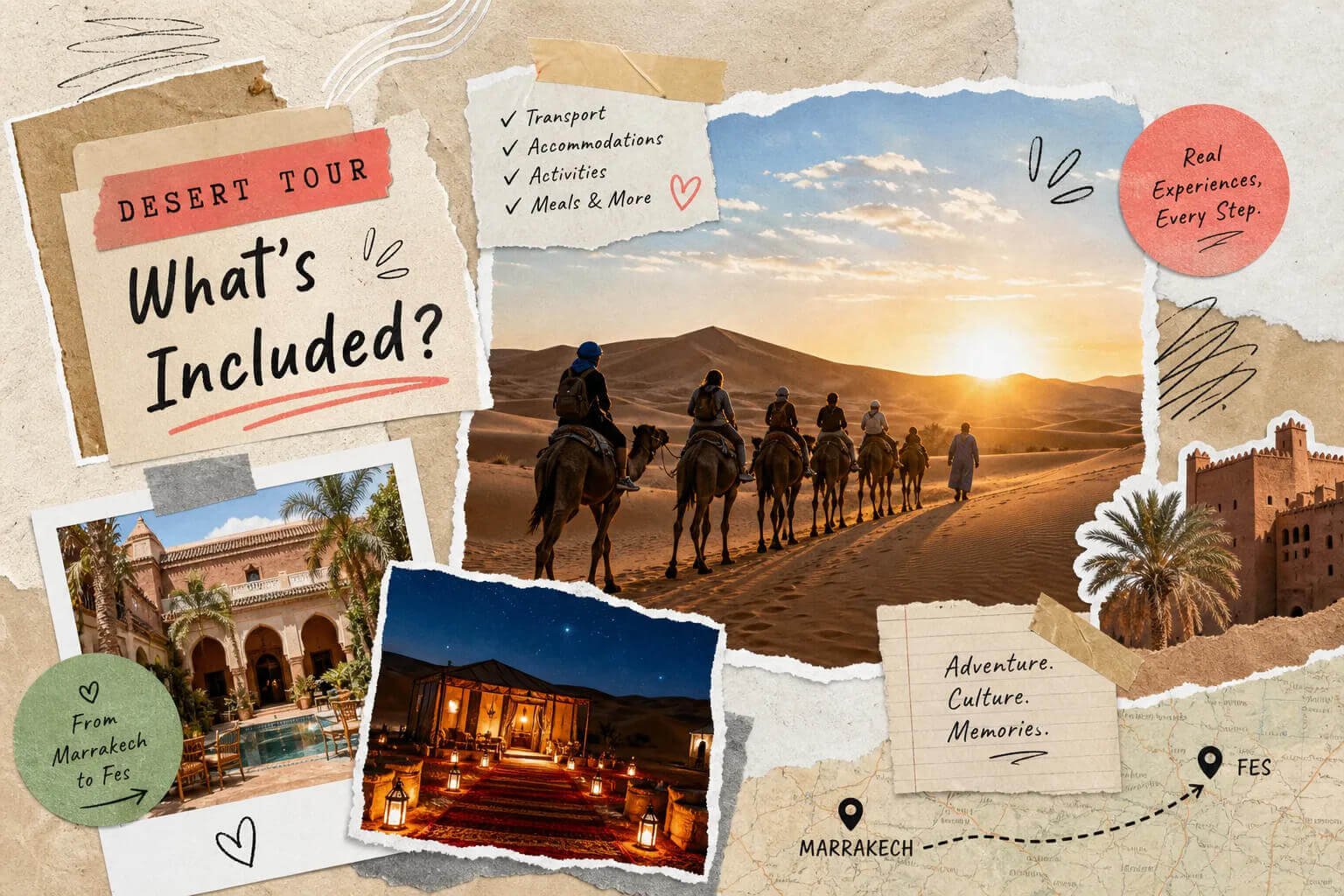
Uncover what a Marrakech to Fes desert tour offers, including camel rides, desert camps, and rich cu...
Read this article
Join our Merzouga Overnight Tour for an authentic desert experience. Enjoy camel rides, comfortable ...
Read this articleWant cool tour deals and tips about Morocco? Enter your email and we’ll send them to you each month!
