Group Tour Agencies in Morocco: How to Pick the Right One
Compare Morocco group tour agencies by trip style, reviews, pace, transport and inclusions. Learn wh...
Read this article

Private, custom Morocco trips planned in Fez by AZ-ZDDINE, working in Moroccan tourism since 2012. Sahara, Atlas, medinas and coast, arranged around you.
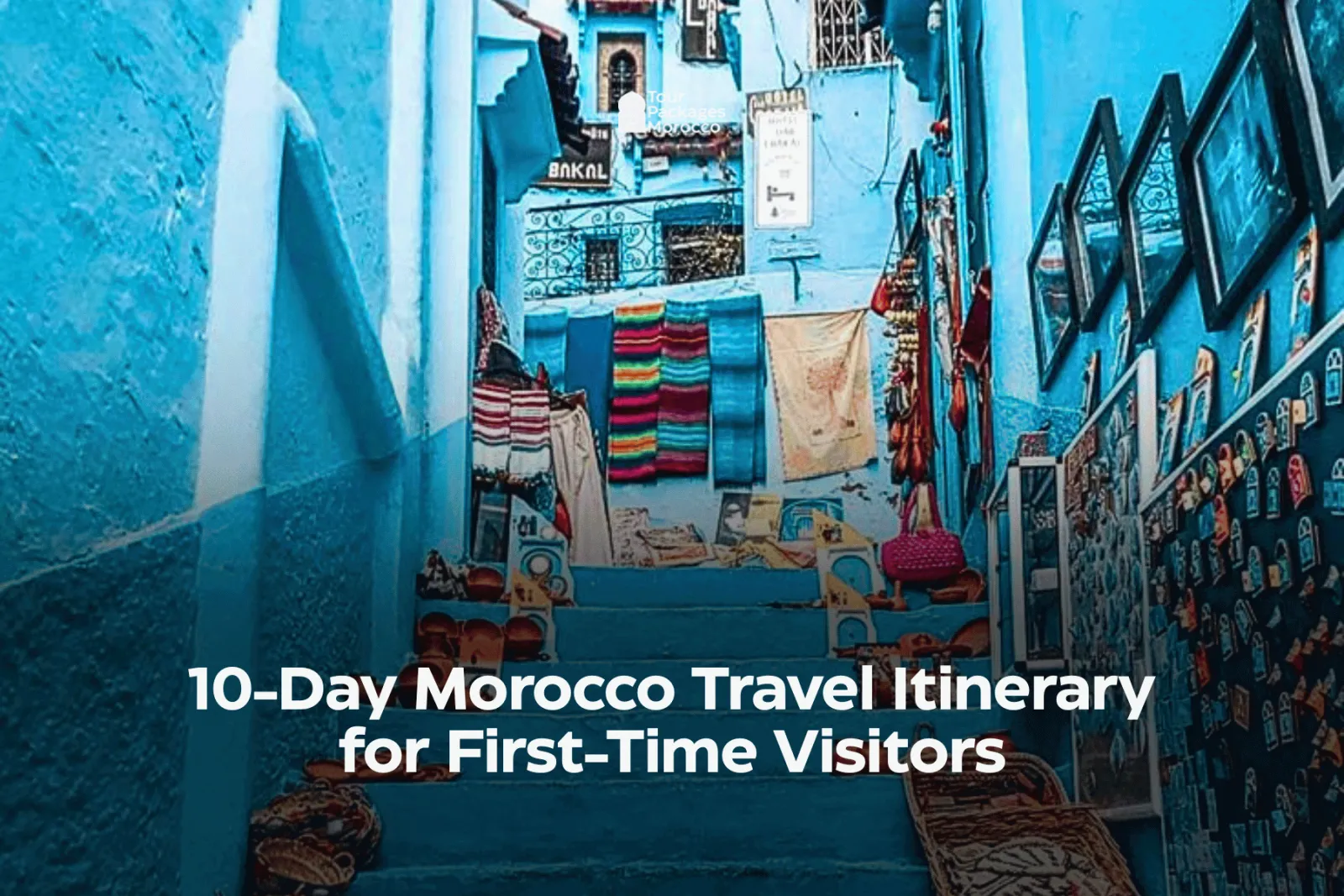
This 10-day Morocco itinerary starts in Casablanca and ends in Marrakech, traveling through Rabat, Chefchaouen, Volubilis and Meknes, Fes, the Merzouga area and the High Atlas. It is a one-way route, not a return-to-Casablanca loop. The plan below uses nine nights and assumes arrival on Day 1 and departure from Marrakech on Day 10.
This is a varied but active first trip, with several accommodation changes and long road sections. The Fes-to-Merzouga day needs particular attention, and sightseeing on arrival and departure days depends on your flight times. For a slower pace, remove a stop or add nights rather than expecting a private driver to eliminate the distances.
If your flights start in Marrakech, use the separate 10-day Marrakech-to-Fes itinerary. That guide follows a different sequence and should be planned around its own departure arrangements.
The route connects the northern cities with Fes, the Sahara and Marrakech without returning to the arrival airport. The overnight allocation below makes the planning assumptions explicit. Accommodation and activities are suggestions until confirmed in an individual booking.
| Day | Route / focus | Suggested overnight |
|---|---|---|
| 1 | Arrive in Casablanca; sightseeing if flight timing permits | Casablanca |
| 2 | Visit Rabat, then continue to Chefchaouen | Chefchaouen |
| 3 | Explore Chefchaouen | Chefchaouen |
| 4 | Travel via selected stops at Volubilis and Meknes to Fes | Fes |
| 5 | Explore Fes | Fes |
| 6 | Long road transfer through the Middle Atlas to Merzouga | Merzouga area |
| 7 | Desert activities and a camp overnight, according to the confirmed arrangement | Selected Merzouga-area desert camp |
| 8 | Travel via Todra Gorge to Dades | Dades Valley |
| 9 | Continue via Ait Benhaddou and the High Atlas to Marrakech | Marrakech |
| 10 | Selected Marrakech visits if time allows; departure | No overnight included in this nine-night outline |
The two nights in Chefchaouen, Fes and the Merzouga area provide some continuity, but transfer days remain substantial. Reversing the route or using Casablanca for departure requires a fresh timing check rather than simply swapping flight labels.
Ask Morocco Classic Tours about a private Casablanca-to-Marrakech itinerary. Share your dates, flight airports and times, party size, preferred pace and accommodation needs. Say whether you want help arranging stays or need transport and guiding around accommodation already booked, and flag any walking or other practical requirements for discussion in the proposal.
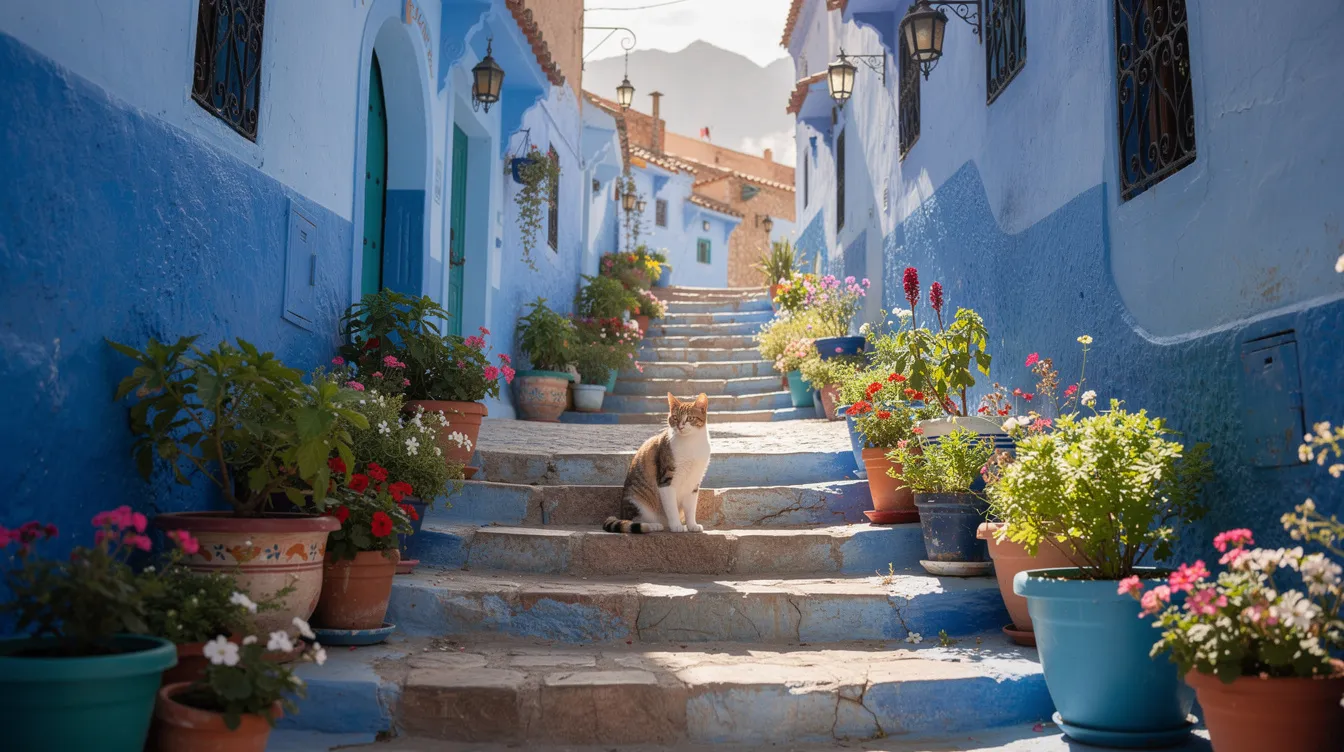
This route begins with arrival in Casablanca. The amount you can see on Day 1 depends on the flight time and how much rest you need, so keep the first day flexible before moving on to Rabat and Chefchaouen on Day 2.
Arrive at Mohammed V International Airport (CMN) and follow the confirmed transfer arrangements for your accommodation. Choose any sightseeing according to your arrival time and the current visitor arrangements.
Hassan II Mosque Highlights:
Stunning retractable roof overlooking the Atlantic Ocean
By late afternoon, take a sunset walk along La Corniche—the oceanfront boardwalk lined with cafes and restaurants. Le Cabestan offers excellent fresh seafood with views over the crashing waves, perfect for an early dinner while adjusting to the time difference.
Transition: After a restful evening in Casablanca, your journey continues north to Morocco’s capital, Rabat.
Travel from Casablanca to Rabat on Day 2, then continue to Chefchaouen. Choose a limited selection of Rabat visits and allow for the full onward road journey rather than planning a full city day before the transfer.
Key Rabat Attractions:
Kasbah of the Udayas – 17th-century fortress with Andalusian gardens and ocean views
Hassan Tower – Unfinished 12th-century minaret standing 44 meters high
Mohammed V Mausoleum – Ornate royal burial site with traditional Moroccan craftsmanship
Medina stroll – Quieter and more relaxed than Fes or Marrakech
If arranging local guiding in Rabat, confirm its duration and how it fits the onward transfer to Chefchaouen. Driving, local guiding and attraction visits are separate arrangements to clarify in the proposal.
If a late arrival leaves too little time for Casablanca and Rabat, remove a visit or add a night. Keep the core overnight sequence clear rather than compressing recovery time, city visits and the onward transfer into one assumed schedule.
Transition: After exploring Rabat’s historic sites, you’ll travel through the Rif Mountains to the enchanting blue city of Chefchaouen.
You arrive in Chefchaouen on Day 2 in this itinerary. Keep Day 3 for exploring the town rather than repeating the transfer from Rabat. Choose your walking route around your interests and energy; the medina includes hills and stairs.
Spend the day exploring the blue alleys, choosing a few visits and leaving time to pause in the squares and cafés.
Visit the Kasbah Museum for ethnographic exhibits and panoramic views
Relax in Outa el Hammam Square with mint tea and people-watching
Climb to the Spanish Mosque for absolutely stunning sunset views over the blue city
Browse small shops for woven blankets, leather goods, and local crafts
Chefchaouen is hilly with many stairs—bring comfortable walking shoes
Pack layers, especially for cooler evenings in the mountains
A local guide can provide orientation and context if you want one; agree the duration and any charge beforehand. When choosing a riad, check its location, steps, room arrangements and arrival access rather than assuming every property suits every traveler.
Transition: After soaking in Chefchaouen’s blue-hued charm, your adventure continues south to ancient Roman ruins and the imperial city of Fes.
The journey from Chefchaouen to Fes via Volubilis and Meknes forms a classic feature of any “best 10-day itinerary for Morocco.” This day combines ancient Roman history with imperial grandeur before arriving at Morocco’s spiritual and intellectual capital.
Leave Chefchaouen early in the morning (aim to arrive early to avoid midday heat) and drive approximately 3 hours to Volubilis. This UNESCO World Heritage site dates to the 2nd century AD and preserves 30+ mosaics depicting scenes like the Labors of Hercules.
Check the current entrance fee and visitor arrangements before the visit.
Allow 1–2 hours with a guide for context on the Arch of Caracalla and the forum.
Best visited early morning when the light is soft, and the crowds are minimal.
A short drive brings you to Meknes, one of Morocco’s four imperial cities. The highlights here are compact:
Bab Mansour – 12-meter triumphal arch adorned with zellij tiles and Koranic inscriptions
Mausoleum of Moulay Ismail – One of the few religious sites open to non-Muslims
Medina and souks – Less overwhelming than Fes, good for a brief exploration
Kasbahs are fortified structures traditionally used for protection and are made of mud-brick, often resembling sand castles.
Continue from Meknes to Fes after your selected visits. Confirm the full day's timing from Chefchaouen, including Volubilis, Meknes, meals and the final transfer, before adding further stops.
Spend the night in Fes before the city visit on Day 5.
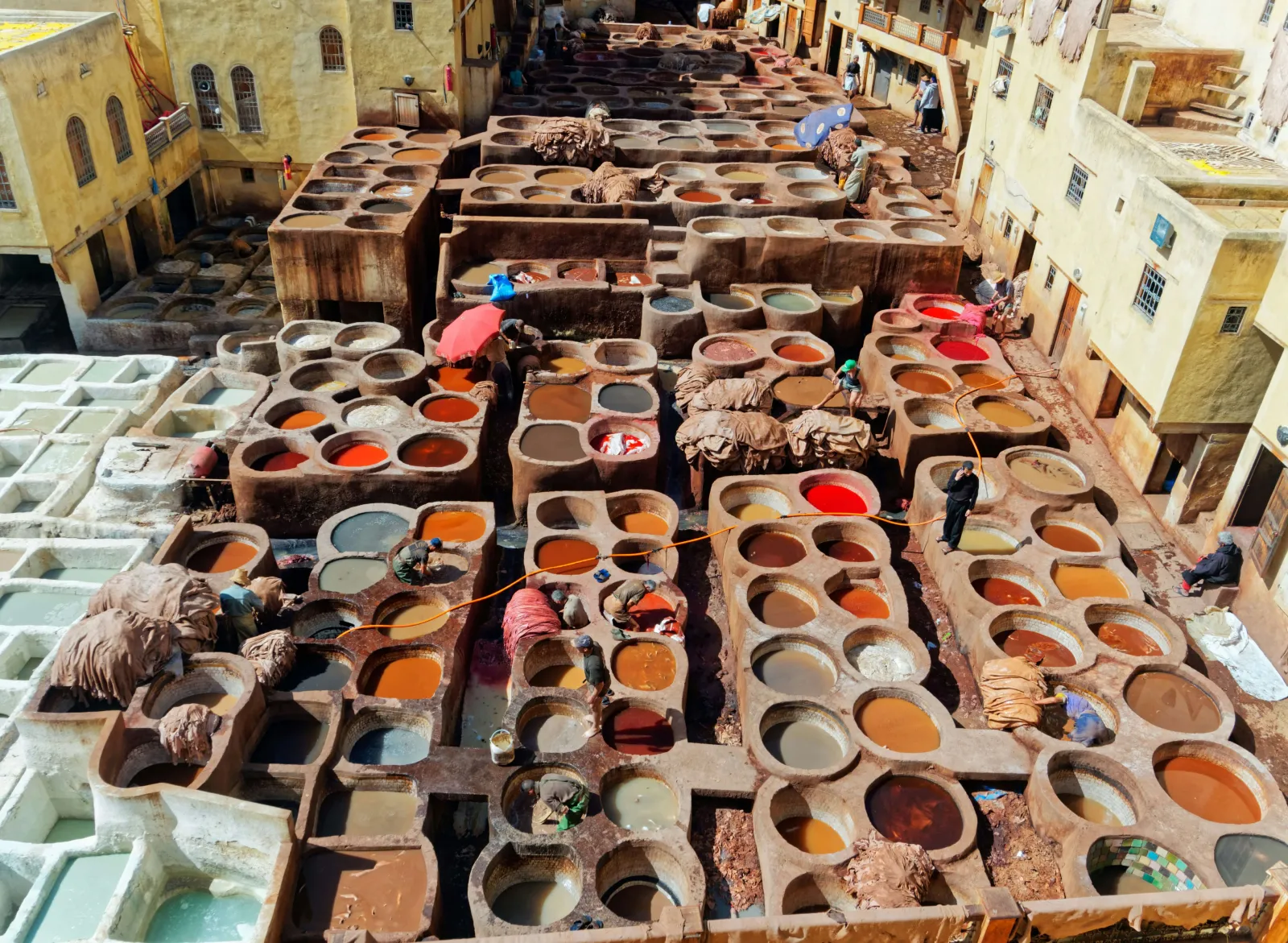
Fes el-Bali rewards time on foot among its lanes, shops and historic buildings. A licensed local guide can help explain the sites and plan a route around your interests; discuss walking demands and breaks when arranging a visit.
Attraction | Why Visit |
|---|---|
Chouara Tanneries | Medieval leather dyeing pits using natural dyes like saffron and pomegranate |
Bou Inania Madrasa | 14th-century Islamic school with intricate cedar carvings and zellij tilework |
Nejjarine Fountain & Museum | Beautifully restored woodworking museum in a former caravanserai |
Al Quaraouiyine Area | View from outside the world’s oldest university (founded 859 AD) |
Artisan Workshops | Watch craftsmen create ceramics, brass, leather goods, and wood carvings |
Blue Gate (Bab Bou Jeloud) | Iconic entrance to the Fez medina, perfect for photos |
The narrow streets wind past leather shops, spice vendors, and hidden courtyards. Pause for traditional Moroccan food at a restaurant with a central courtyard, sampling classics like lamb tagine or pastilla.
Dress modestly (covered shoulders and knees)
Keep valuables secure in the crowded souks
Transition: After a day immersed in Fes’s ancient medina, you’ll set out across the Middle Atlas Mountains toward the golden dunes of the Sahara.
These two days allow for the long journey from Fes and time around Merzouga before continuing west. In this outline, arrive in the Merzouga area on Day 6 and plan the desert camp overnight for Day 7. Confirm the lodging, camp access and activity sequence in your booking; do not promise a sunset activity immediately after a long road transfer.
Treat this as a substantial road day. Choose stops according to the departure time, road conditions and accommodation location, and leave the arrival evening flexible.
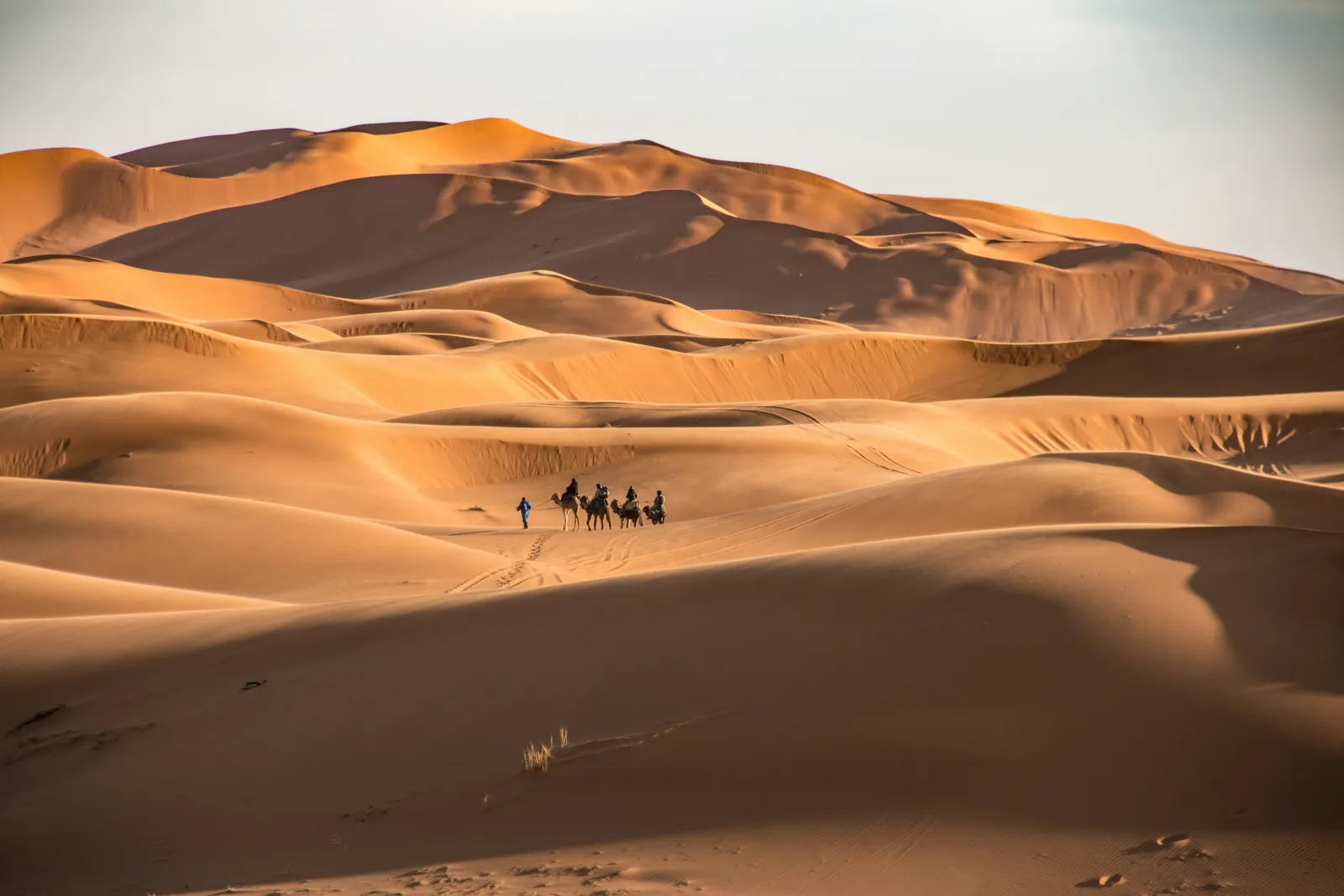
Choose activities around the confirmed camp transfer. Camel rides, vehicle transfers, sandboarding and other excursions are optional unless listed in the booking. Ask about the route, duration, suitability and any additional charge before choosing them.
A camp evening may include dinner and time outdoors; meals, music and other activities depend on the particular booking. Stargazing also depends on weather and local lighting. Compare the proposed tent, bathroom and hot-water arrangements rather than relying on a general comfort label.
With two nights allocated to the area, the order of sunrise visits and other activities depends on the lodging and camp arrangements. Day 8 continues west, so avoid adding activities that conflict with that departure.
If you are considering Agafay instead, treat it as a different excursion and revise the itinerary accordingly. This guide is built around Merzouga and Erg Chebbi; the two options are not interchangeable stops within the same day-by-day plan.
Leave the Merzouga area after breakfast and continue west toward Todra Gorge and Dades. Build the day around the full driving route and chosen stops rather than a guaranteed arrival time.
The gorge is an opportunity to pause among the high rock walls and river scenery. Choose a walk that fits the conditions and your party's needs. Climbing or other guided activities require separate planning and should not be assumed to fit this transfer day.
Continue toward Dades for the overnight in this core plan. The valley, rock formations and viewpoints can appeal to travelers interested in landscape photography. Select stops around daylight and your accommodation location instead of assuming every viewpoint can be visited.
Staying farther west changes the balance between Days 8 and 9. Review the complete driving day and choose stops accordingly; Todra Gorge, Dades viewpoints, a studio visit and Ait Benhaddou should not all be assumed to fit into Day 8. If you choose Ouarzazate for the overnight, update the route table and plan the Ait Benhaddou visit around Day 9's onward journey.
From Dades, continue west toward Ait Benhaddou and then cross the High Atlas to Marrakech. This is another substantial travel day. Choose sightseeing stops according to the full route and keep your Marrakech arrival plans flexible.
Ait Benhaddou offers the chance to explore its fortified-village architecture if the day's timing and conditions allow. The onward road crosses mountain landscapes and villages; allow for breaks rather than treating a driving estimate as the total day.
On arrival, check into your accommodation and choose evening plans according to the time and your energy. A walk near Jemaa el Fnaa, dinner or simply rest may be enough after the journey.
Day 10 is the departure day in this nine-night plan. Choose a short selection of sights only if your flight time permits, and leave room for the airport transfer and check-in. The attractions below are options, not a schedule to complete before every flight. Add another night if you want a full day of Marrakech sightseeing.
The visit durations below are planning estimates rather than confirmed timings; opening arrangements, queues and your pace can change them.
Site | Description | Time Needed |
|---|---|---|
Bahia Palace | 19th-century harem with 2-hectare gardens and painted ceilings | 1–1.5 hours |
Saadian Tombs | 16th-century mausoleums with gold-leaf ceilings, hidden for centuries | 45 minutes |
Ben Youssef Madrasa | Historic madrasa with an ornamental courtyard | 45 minutes |
Koutoubia Mosque | 12th-century mosque with iconic minaret (exterior only for non-Muslims) | 15 minutes |
Jardin Majorelle & Yves Saint Laurent Museum | Cobalt-blue gardens and fashion/Berber artifact exhibits | 1.5–2 hours |
Artisan Souks | Hundreds of leather shops, spice vendors, carpet dealers | 2+ hours |
A hammam, cooking class or artisan visit can replace another activity if it fits your schedule. Confirm any booking and charge rather than assuming it is included.
This itinerary ends in Marrakech. Confirm the transfer to Marrakech Menara Airport (RAK) around your actual departure time. If your flight leaves from Casablanca (CMN), plan that journey separately and check current transport schedules and airport connections. An extra night or a change to the final sightseeing day may be needed; the Casablanca transfer is not included in the timetable above.
A Marrakech arrival calls for a different sequence. The separate 10-day Marrakech-to-Fes guide covers a south-to-north route through the Atlas and Sahara. It is distinct from this Casablanca-start guide.
If you need to start and finish in Marrakech, plan a separate return route. Adding Essaouira or changing desert regions alters the driving and overnight allocation; do not combine all those alternatives with the northern stops here without adding time or removing destinations.
The useful planning unit is the whole day: road travel, visits, meals, breaks and accommodation access. Ask for those details before deciding whether a ten-day route fits your party.
Self-driving requires your own arrangements for the vehicle, insurance, parking, route and accommodation access. Private transport can handle the agreed road sections, but the quote should still specify the vehicle, seating, luggage space, driver language and what is included. Driving is distinct from licensed local guiding; confirm the latter separately.
Trains and buses can support an independently planned trip, but this daily outline does not establish a timed public-transport connection for every stop. Check current services and local transfers before assuming the same overnight sequence works. A city-based itinerary combined with a separately arranged desert segment may be a different option.
Check official entry requirements for your nationality and passport, as well as current travel advice, before booking. Confirm any specific documentation, insurance and activity requirements for your circumstances. This route guide does not establish eligibility to enter the country.
Enquire early when dates, rooms or activities are important to you. Availability and reservation conditions vary, and a draft route is not an accommodation hold unless agreed in writing.
Compare current flights for your actual dates. For this route, arriving at Casablanca (CMN) and departing from Marrakech (RAK) can avoid a return transfer, but compare the complete itinerary and ticket conditions before booking.
If arriving from New York or another long-haul origin, leave room to rest on arrival. Ask the itinerary planner to work around confirmed flight times rather than assuming a particular airline, fare or timetable.
There is no single current price established by this guide. Request a dated quote for your party size, travel dates and the overnight allocation above. General online budget figures are not a confirmed Morocco Classic Tours package price.
Ask about alternative accommodation, fewer optional activities or a simpler route. Compare like-for-like inclusions, and consider the cost of reaching the start city and leaving the final city. Sharing a private trip spreads some transport costs, but the actual per-person price still depends on the proposal.
Morocco’s climate zones range from the Mediterranean coast to the Sahara Desert, making timing important for your day itinerary planning.
Season | Months | Conditions | Notes |
|---|---|---|---|
Spring | March–May | Mild temps, wildflowers, occasional rain | Ideal for deserts and cities |
Autumn | Sept–early Nov | Warm but comfortable, clear skies | Excellent overall conditions |
Summer | June–Aug | Hot (35–45°C in desert/cities) | Challenging in the Sahara and Marrakech |
Winter | Dec–Feb | Cool, occasional snow in the mountains | Good for cities, cold desert nights |
Ten days is a useful length for this selected route, but the appropriate pace depends on your flight times and tolerance for long transfers. It still involves several travel days. If you prefer longer stays or fewer accommodation changes, remove a region or extend the trip.
Ten days can cover the selected stops in this guide, but not the whole country. Extra time in Marrakech, coastal visits or a slower desert journey requires more nights or fewer destinations. Decide what matters most before fixing the route.
| Time available | Planning approach |
|---|---|
| 7 days | Consider the more focused Marrakech–Sahara–Fes route, accepting its long road sections. |
| 10 days | Use the Casablanca-to-Marrakech one-way route described here. |
| More time | Add nights where useful before adding further regions; recheck the complete arrival and departure plan. |
Ramadan (dates shift annually—check before booking) affects opening hours, restaurant availability, and alcohol service during daylight hours. However, it also offers unique cultural insights into Moroccan culture and quieter tourist sites. Major holidays like Eid may close some attractions but feature special celebrations.
Choose an operator by the clarity and suitability of the proposed trip, not only a rating or a general promise of comfort. Read recent, detailed reviews relevant to the kind of journey you want.
Morocco Classic Tours is based in Fez. Request a private itinerary proposal with your dates, party size, interests and preferred pace. If you have already booked accommodation, say so and ask about transport and guiding around those stays. Confirm the specific services and support arrangements in writing.
Morocco's varied coastal, mountain and desert conditions make packing layers useful. Check the forecast for your dates rather than treating example temperatures as a prediction.
Item | Purpose |
|---|---|
Breathable long pants (2–3 pairs) | Modesty, sun protection, and versatility |
Long-sleeve lightweight shirts | Sun protection, mosque visits |
Midi/maxi skirt or dress | Women’s modest option for religious sites |
Warm fleece or light jacket | Mountain passes, desert nights |
Packable rain jacket | Spring/autumn showers |
Scarf or pashmina | Dust protection, modesty, warmth |
Comfortable walking shoes | Medina cobblestones, uneven surfaces |
Sandals | Riads, beach, casual evenings |
Light hiking shoes (optional) | Todra Gorge, Atlas walks |
High-SPF sunscreen – Essential for camel treks and gorge walks
Small daypack (25–40L) – For daily excursions and carry-on for desert overnight
Travel adapter – Type C/E outlets, 220V
Hand sanitizer and tissues – Not all bathrooms are well-stocked
Modest swimwear – Some riad pools are relaxed; others are more conservative
Avoid revealing outfits – Especially in rural areas, old town medinas, and religious sites.
Lightweight headscarf for women – Not required but appreciated in some contexts
Excessive luggage (cobblestone medinas aren’t suitcase-friendly)
Valuables you can’t afford to lose
Complicated electronics requiring specific adapters
Use the route as a starting point for a proposal, then check that the final plan matches your dates, airports and preferred pace.
Adding a cooking class, hammam, hike or extra destination may mean removing another visit or adding time. If the departure airport or overnight stop changes, revise the route table as well. Ask whether any requested change is feasible and how it affects the quote.
Discuss your Casablanca-to-Marrakech plan before finalizing bookings. Any availability or provisional reservation must be confirmed in writing.
Renting a car is one option, not a requirement. You can enquire about private transport for the road sections, with local guiding arranged separately where wanted. Self-driving requires planning for the route, parking and accommodation access. A public-transport version needs its own connection checks and may not follow the same day-by-day timetable.
Review current official travel advice and consider your own circumstances, planned activities and insurance before booking. Ask the operator about the proposed route, weather-related changes, camp access and practical contact arrangements. Using a driver or guide can assist with logistics, but does not remove every travel risk.
Consider each child's needs alongside the long road sections, walking and accommodation changes. Ask about appropriate seating and room arrangements before confirming. More breaks and an extra overnight stop require either more days or fewer destinations.
Ask which language your driver, local guides and accommodation contacts can use before confirming the arrangements. English may be available through tourism services, but should not be assumed for every interaction. Learning a few greetings and keeping written addresses and meeting details can help with independent parts of the trip.
Enquire once approximate dates and priorities are known, especially when you need particular rooms or camp arrangements. Availability varies by season, holidays and property. A last-minute proposal may involve different accommodation or routing; confirm what is actually available and the reservation conditions rather than assuming a draft plan creates a hold.
This itinerary gives you a structured starting point for ten days from Casablanca to Marrakech, including the northern cities, Fes and the Sahara. Use its nine-night allocation to check your flight plans, then adjust the number of stops to match the pace you actually want.
Ready to adapt the route? Request a Casablanca-to-Marrakech itinerary proposal with your dates, airports, number of travelers and preferred pace. Confirm the overnight stops, included services and terms in the written proposal before booking.
Compare Morocco group tour agencies by trip style, reviews, pace, transport and inclusions. Learn wh...
Read this article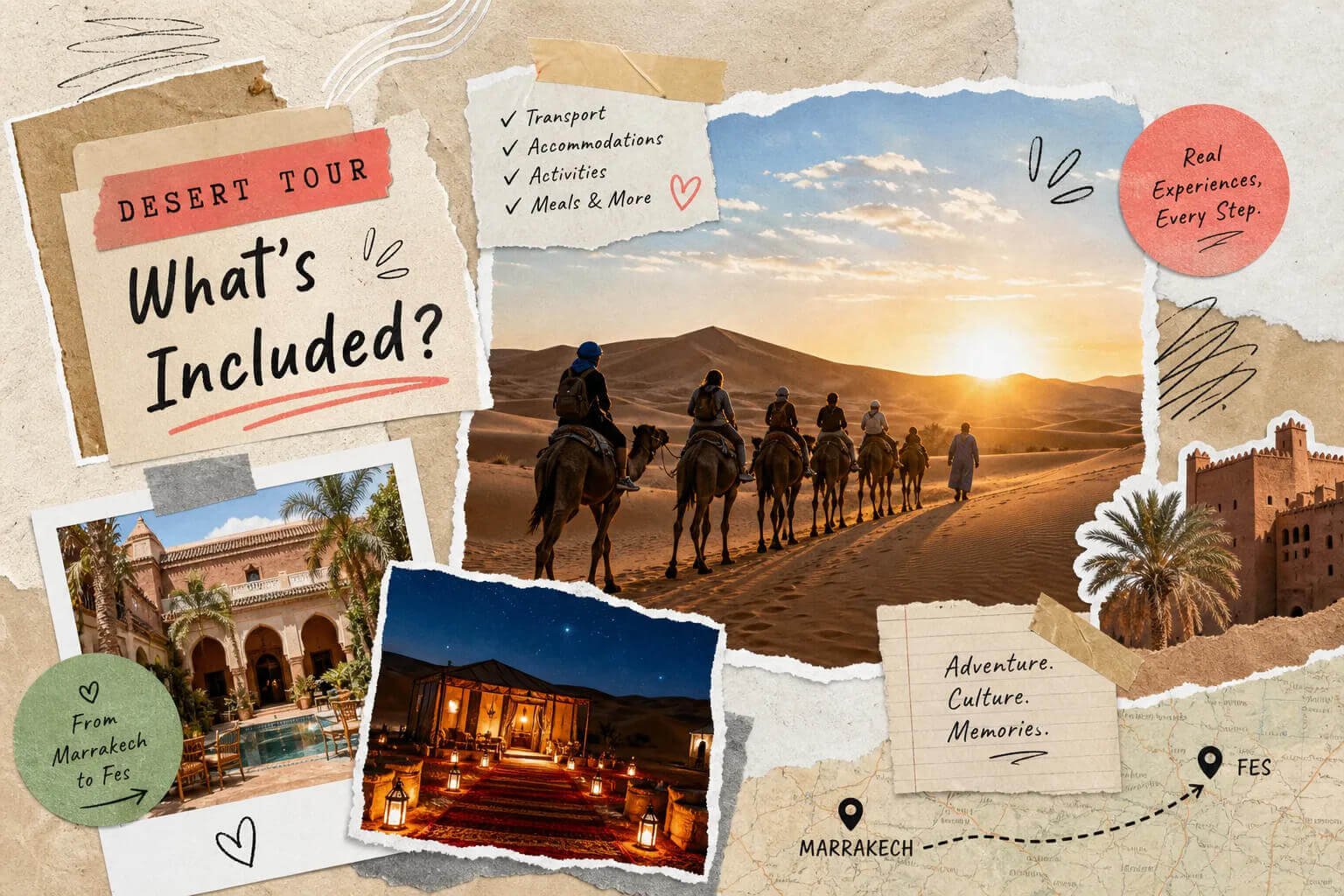
Uncover what a Marrakech to Fes desert tour offers, including camel rides, desert camps, and rich cu...
Read this article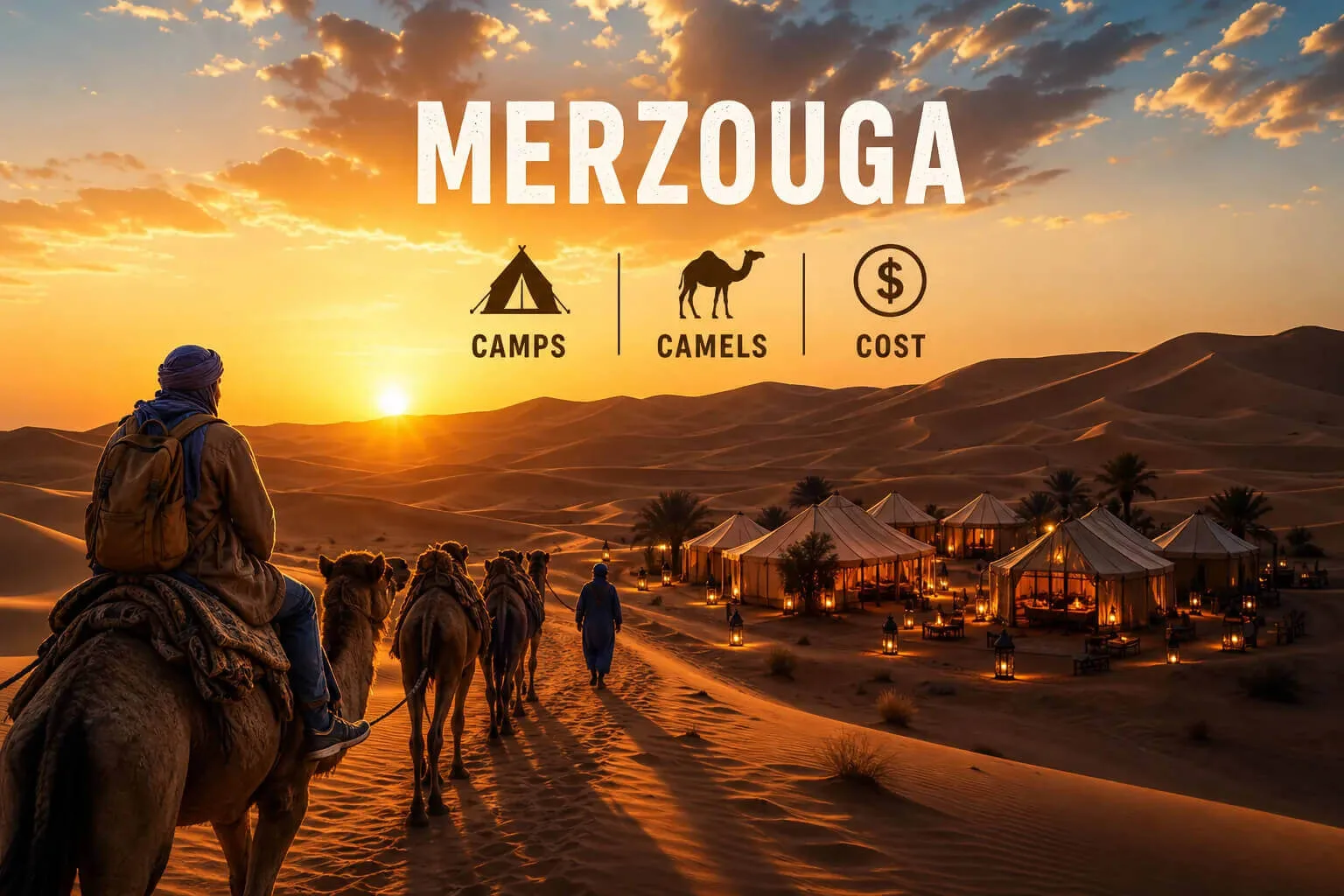
Join our Merzouga Overnight Tour for an authentic desert experience. Enjoy camel rides, comfortable ...
Read this articleWant cool tour deals and tips about Morocco? Enter your email and we’ll send them to you each month!
